

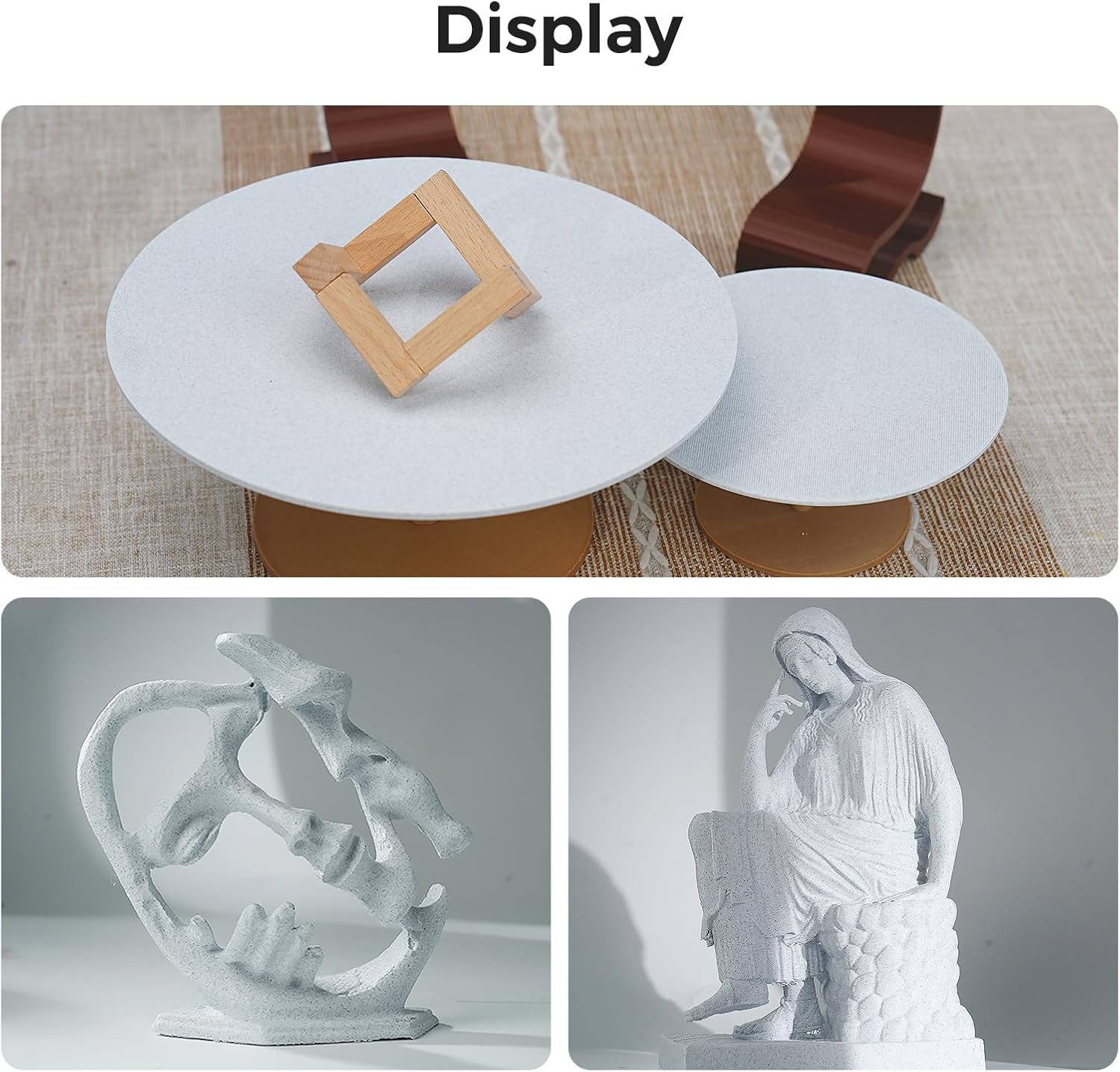
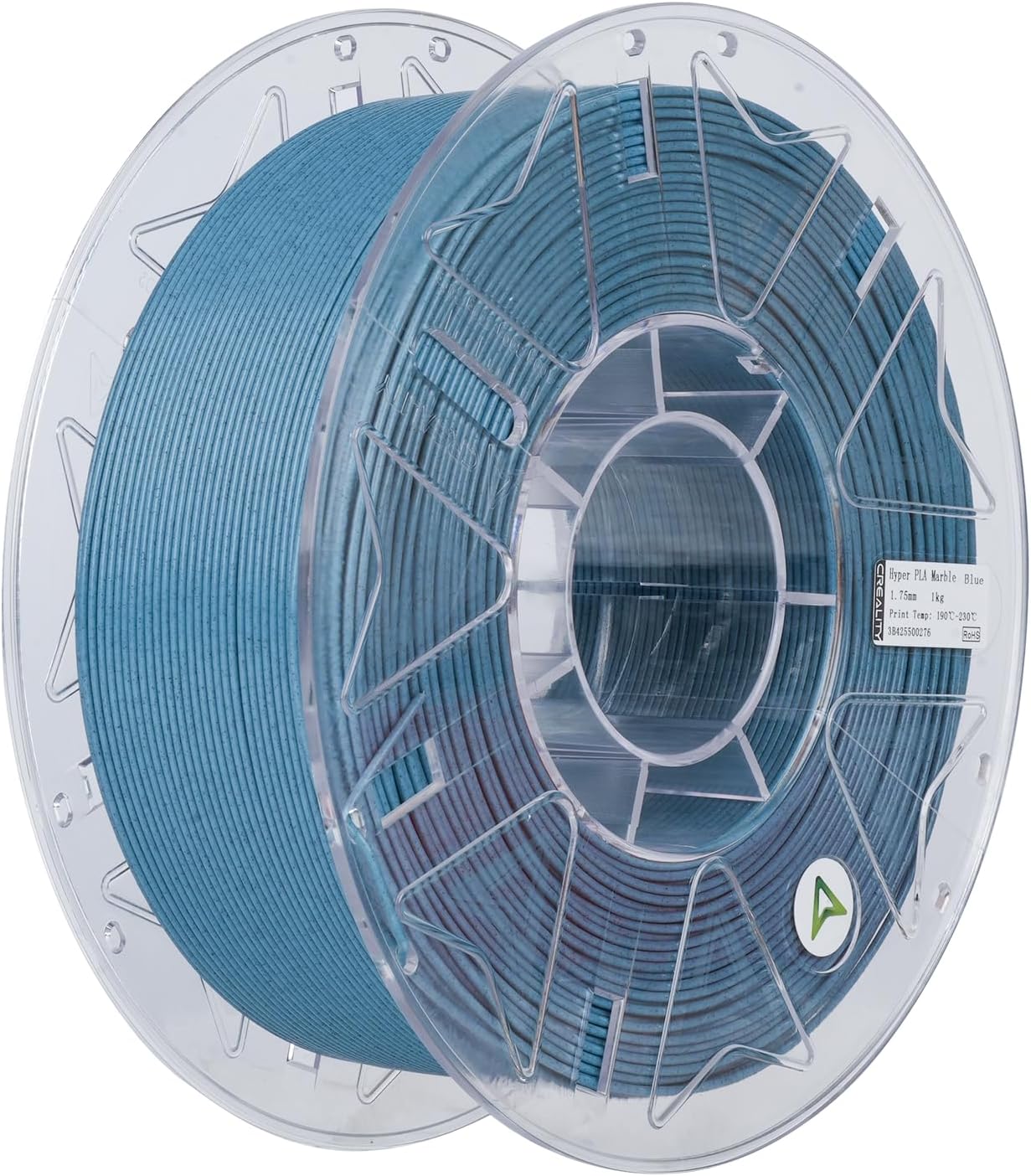
Creality Hyper PLA Marble RFID 1.75mm filament (1kg) for 3D printing, natural marble-like texture
Product description
Key features that matter in daily printing
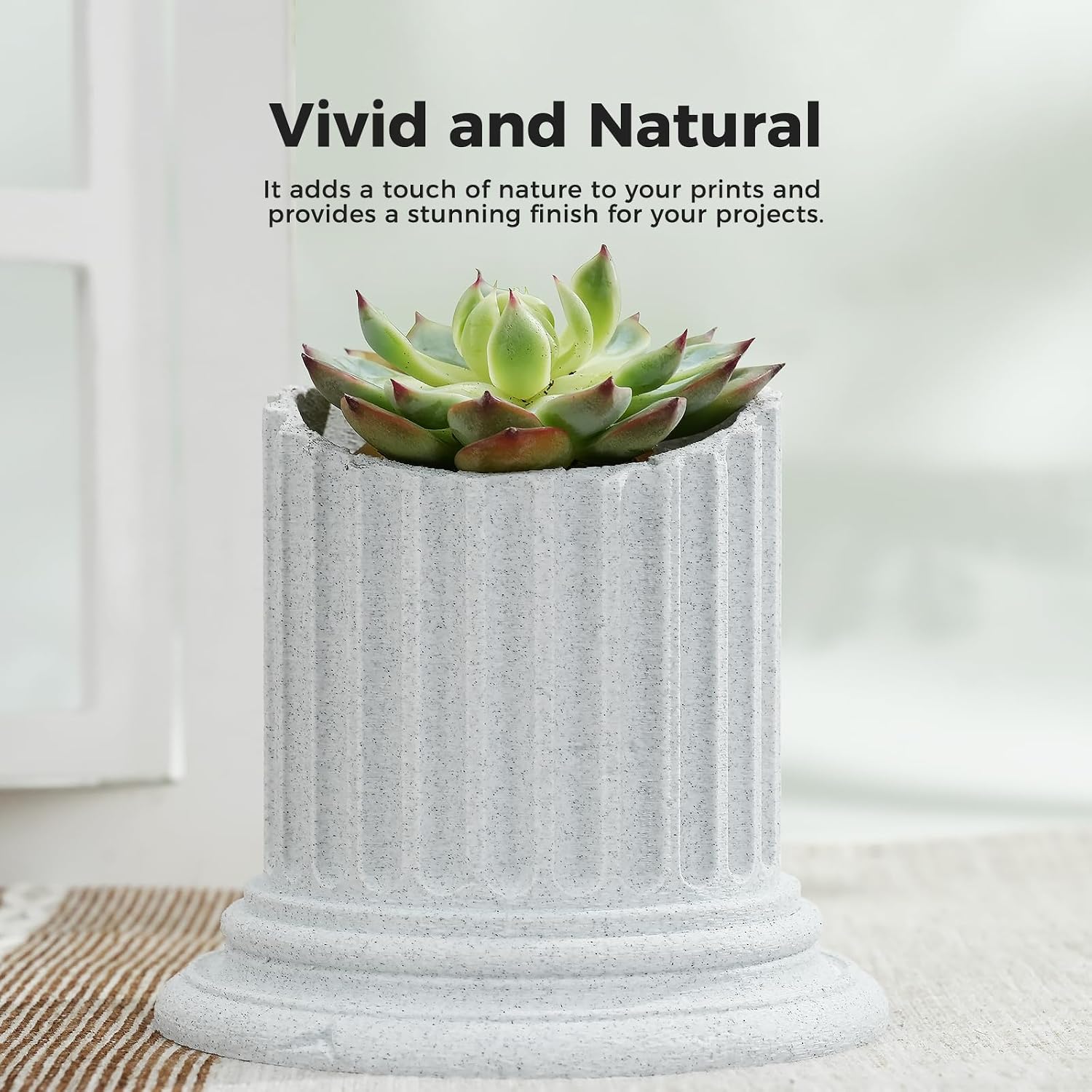
If you want your prints to look like marble without moving up to more complex materials, the Creality Hyper PLA Marble RFID is designed for that “stone” finish. It’s a 1.75mm PLA filament aimed at producing a natural marble-like texture with veining, so the result isn’t just a flat colour—it’s meant to have that organic, slightly random stone effect. On top of the look, it’s also positioned as having a more delicate tactile feel compared with ordinary PLA.
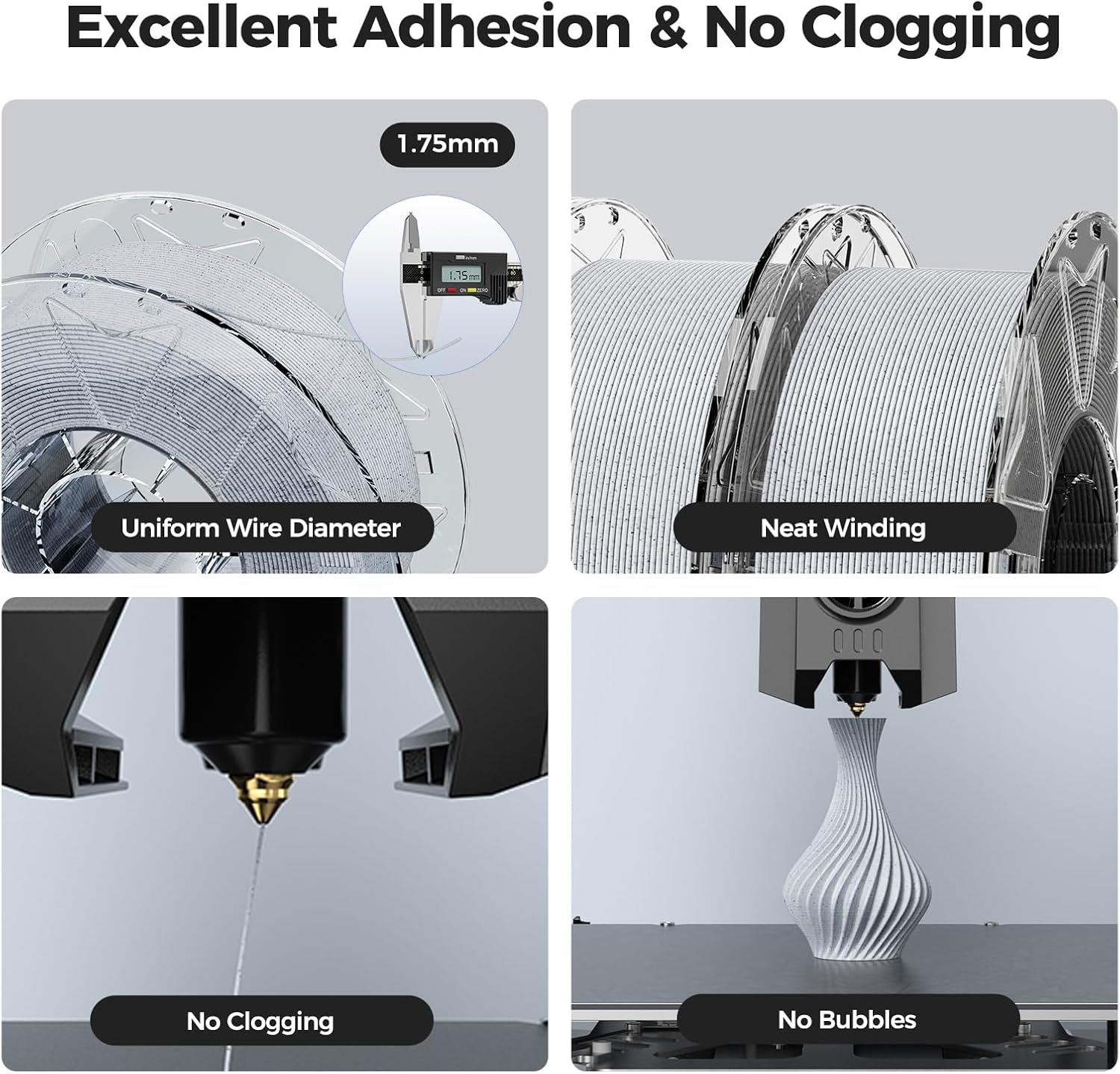
There’s also a practical side to it: the filament comes with a stated dimensional tolerance of ±0.02mm for more consistent extrusion, which is the sort of detail that can help when you’re trying to keep surfaces looking crisp.
The “RFID” part suggests the spool is set up for identification, but the exact benefits depend on your printer and setup—so it’s worth checking that your printer workflow supports whatever RFID means in your specific use case.
What you’ll notice from the marble-like look
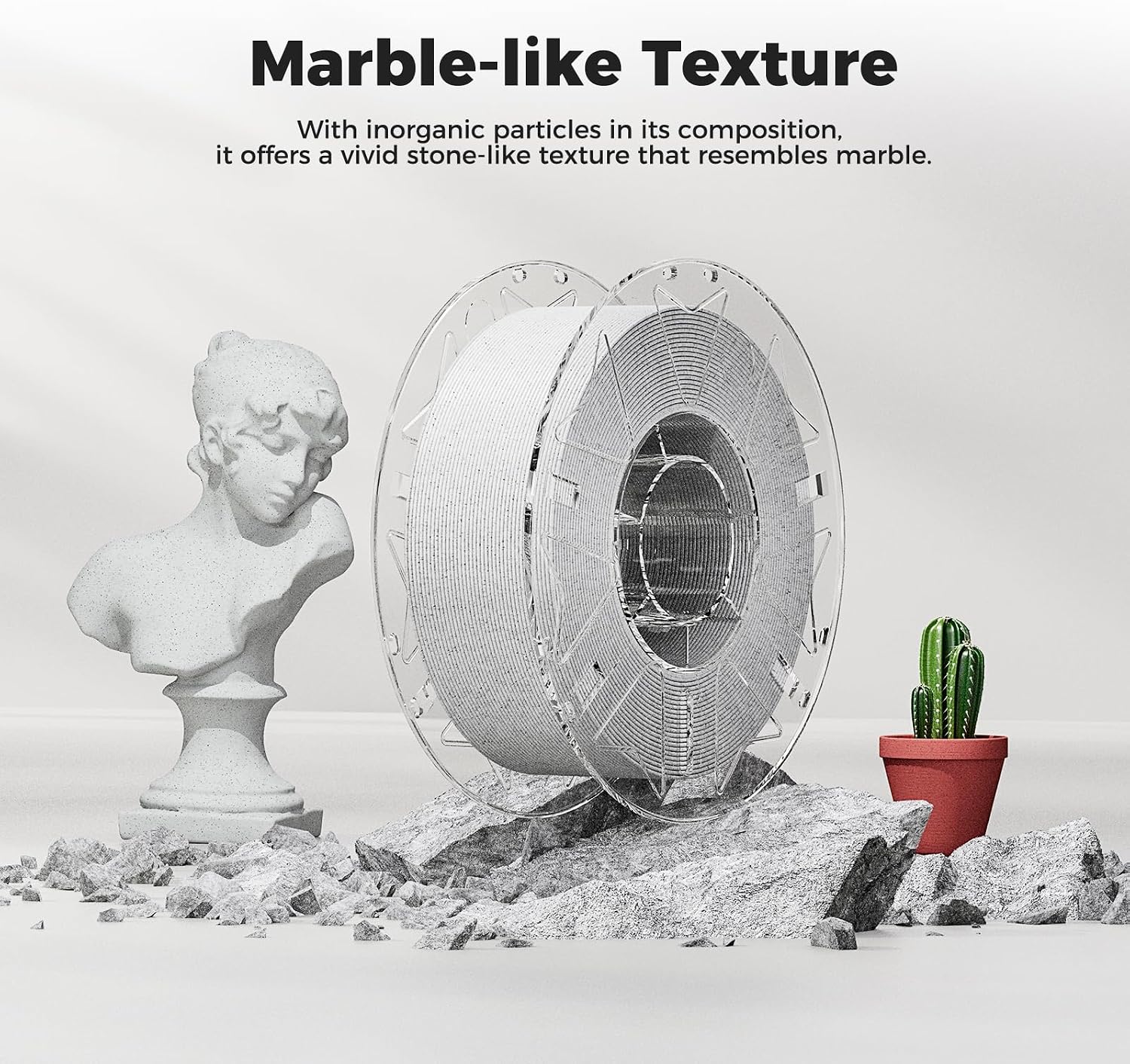
The headline here is the appearance. The filament contains inorganic particles to create a vivid stone texture and veining pattern that’s intended to mimic marble. In practical terms, that means it’s a sensible pick when you’re printing things where the finish will be seen up close—decorative panels, phone stand-style objects, display pieces, or patterned covers.
That said, “marble-like” can still be a style choice rather than a guaranteed identical match to real stone. If you need perfectly controlled veining placement (for example, specific design layouts), you may find it more “marble-inspired” than exact.
Key specs at a glance
- Diameter: 1.75mm
- Stated accuracy/tolerance: ±0.02mm
- Pack size: 1kg spool (2.2lb)
- Intended use: 3D printer filament for mainstream 3D printers
Printing performance, flow, and how it behaves
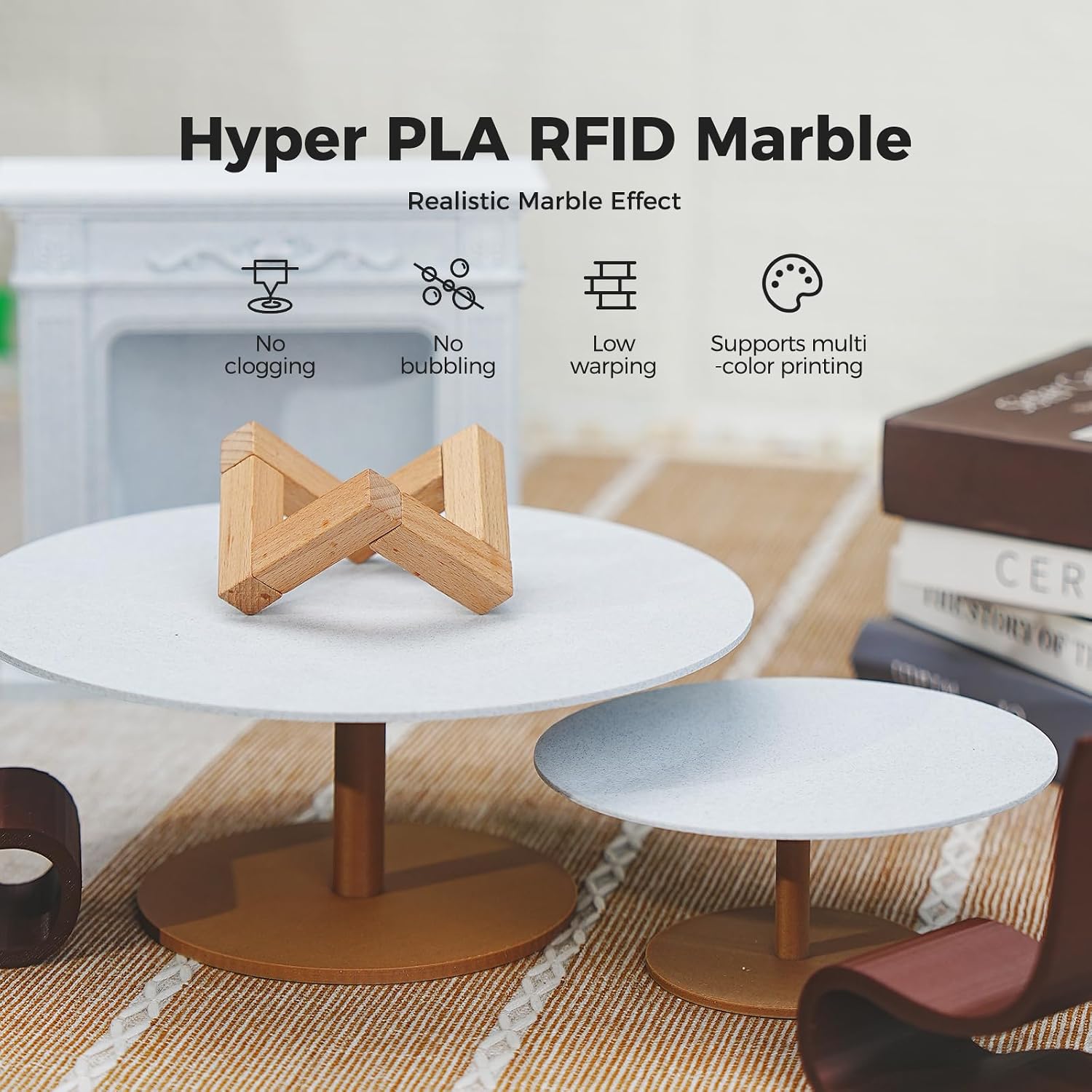
The manufacturer claims smooth printing with virtually no clogging or bubble generation, plus fine-finished forming. That’s the kind of combination that’s particularly valuable if you’ve had frustrating experiences with inconsistent extrusion—thin features and detailed surfaces can be where filament quality shows.
Another plus mentioned is inherent toughness. In everyday terms, that can help with dimensional stability and resistance to deformation and bending compared with more brittle filament types.
One limitation to bear in mind: it’s still PLA-based. So while it’s described as tough, PLA doesn’t generally behave like engineering plastics under heat stress—so if your prints will be sitting in warm conditions, it’s wise to plan accordingly.
Compatibility and setup reality check
The filament is described as fitting most 3D printers and being optimised for integration with Creality 3D printers. That broad “mainstream compatibility” is helpful if you don’t want to chase niche spools.
However, there’s no detailed compatibility list here for specific printer models, hotend types, or any RFID-specific features. If you’re buying specifically because of the RFID angle, it’s worth confirming your printer software/firmware and settings will actually make use of it.
For printing setup, the basics matter: keep things dry. The product guidance is clear that you should store it in a dry, ventilated area away from high temperatures, direct sunlight, and humidity.
Care & maintenance tips for better results
To maintain print quality, treat this filament like you would other moisture-sensitive spools: don’t leave it out for long periods, and if you’re not planning to use the full spool quickly after opening, storing it in a desiccant box is recommended to prevent moisture absorption.
If you’ve ever had stringing or rough layers from damp filament, you’ll appreciate how much this “drying mindset” can affect the final surface—especially for a marble-effect filament where you’ll want consistent extrusion.
When it makes sense to buy it (and when to skip)
Worth considering if you want a marble-like aesthetic with veining, using a 1.75mm PLA filament on a mainstream or Creality-aligned setup. It also makes sense if you care about dimensional consistency (±0.02mm tolerance is a reassuring spec on paper) and you want the printing process to be smoother, with fewer issues like clogging or bubbles.
It may not be the best choice if you need highly predictable, repeatable patterns for design-critical marbling, or if your prints will live in conditions where PLA is likely to struggle. It’s also a bit of a “check first” situation if you’re specifically expecting RFID to deliver a feature in your workflow—because the exact advantages aren’t spelled out here.
Mini FAQ

How does the marble effect work?
The filament is described as containing inorganic particles to create a stone texture and veining similar to marble, aiming for a visually realistic effect and a more delicate tactile experience.
Is it suitable for most 3D printers?
It’s described as fitting most 3D printers and being optimised for integration with Creality 3D printers. Still, there’s no model-by-model list included, so compatibility is “broad” rather than guaranteed for every setup.
Does it clog or create bubbles?
The guidance states virtually no clogging or bubble generation during printing, aiming for smoother flow and consistent output.
What storage helps once the spool is opened?
Store it in a dry, ventilated place away from high temperatures, direct sunlight, and humidity. If you won’t use it right away, using a desiccant box is recommended.
Should you buy it?
Buy the Creality Hyper PLA Marble RFID filament if your main goal is a marble-like, veined look with consistent extrusion on a 1.75mm setup, and you’re happy to treat PLA storage seriously to protect print quality. Skip it if you’re after controlled, exact veining patterns, if your prints will face heat exposure that PLA typically struggles with, or if you’re expecting RFID features without first confirming your printer workflow supports them.