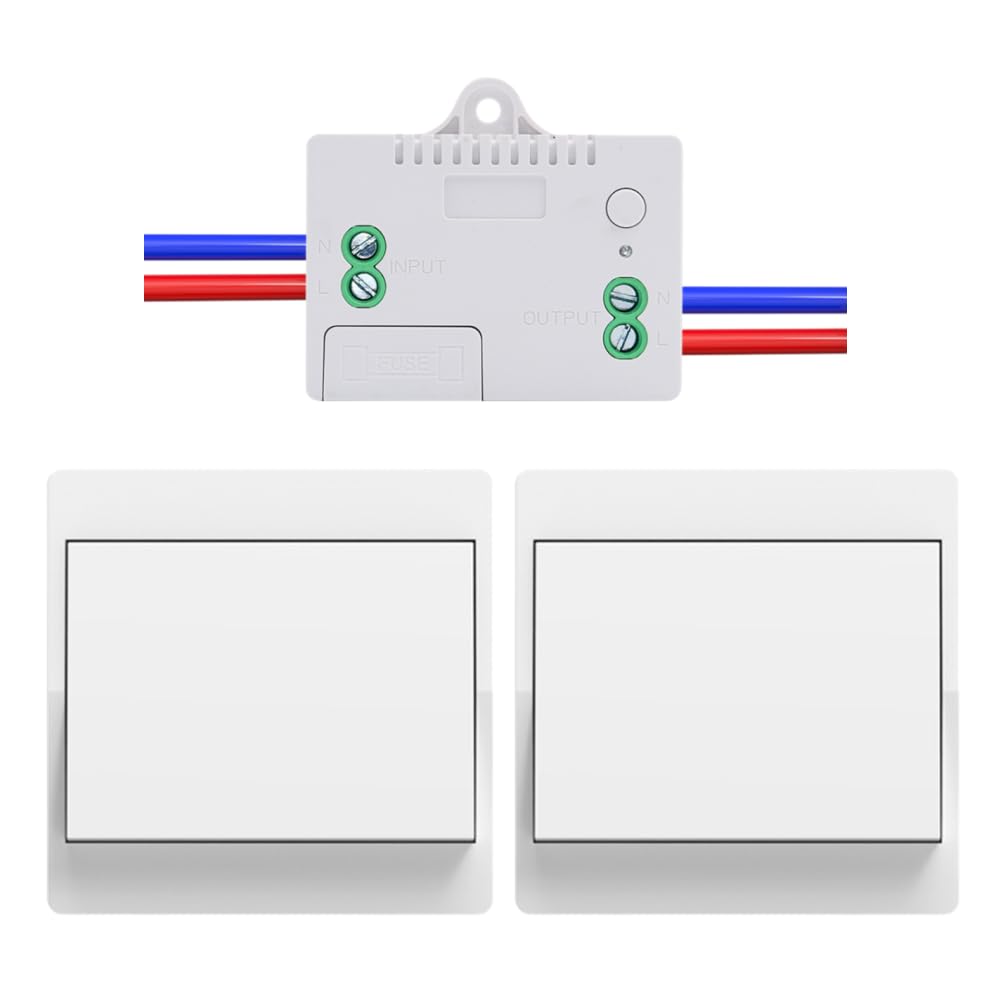
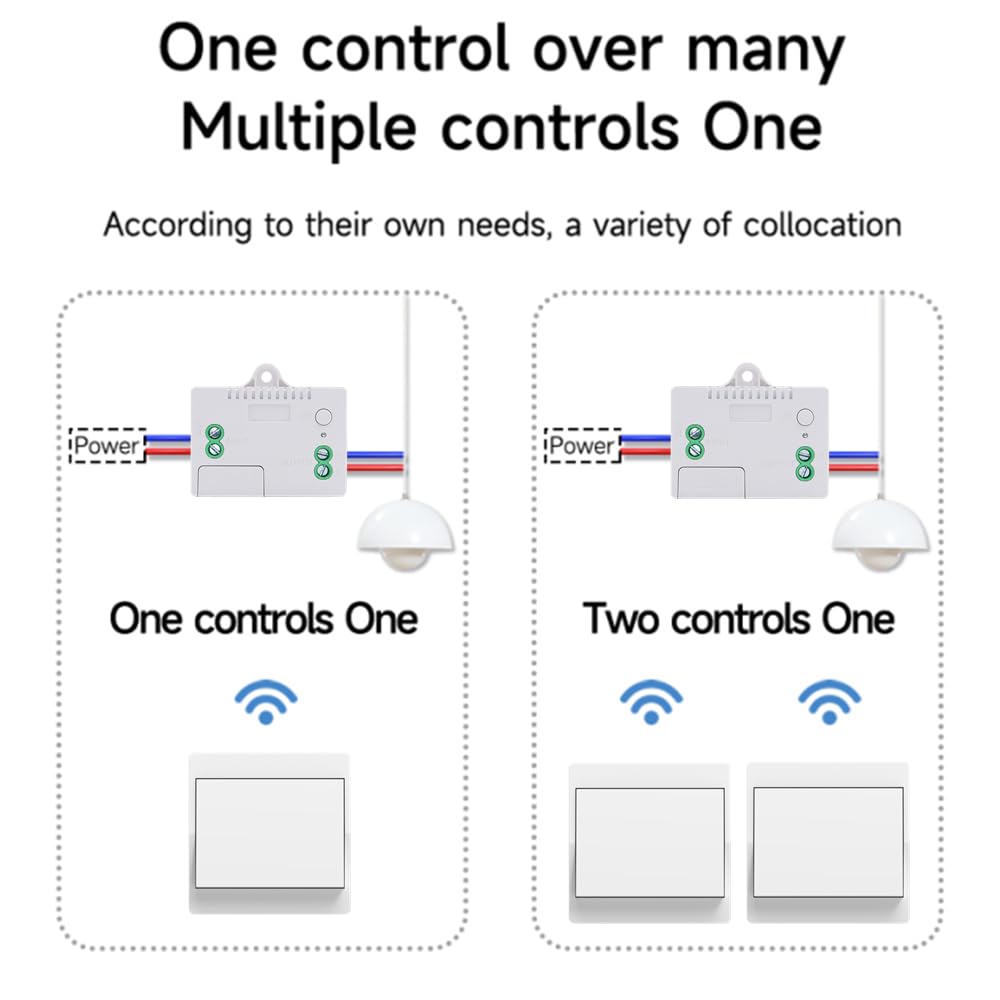
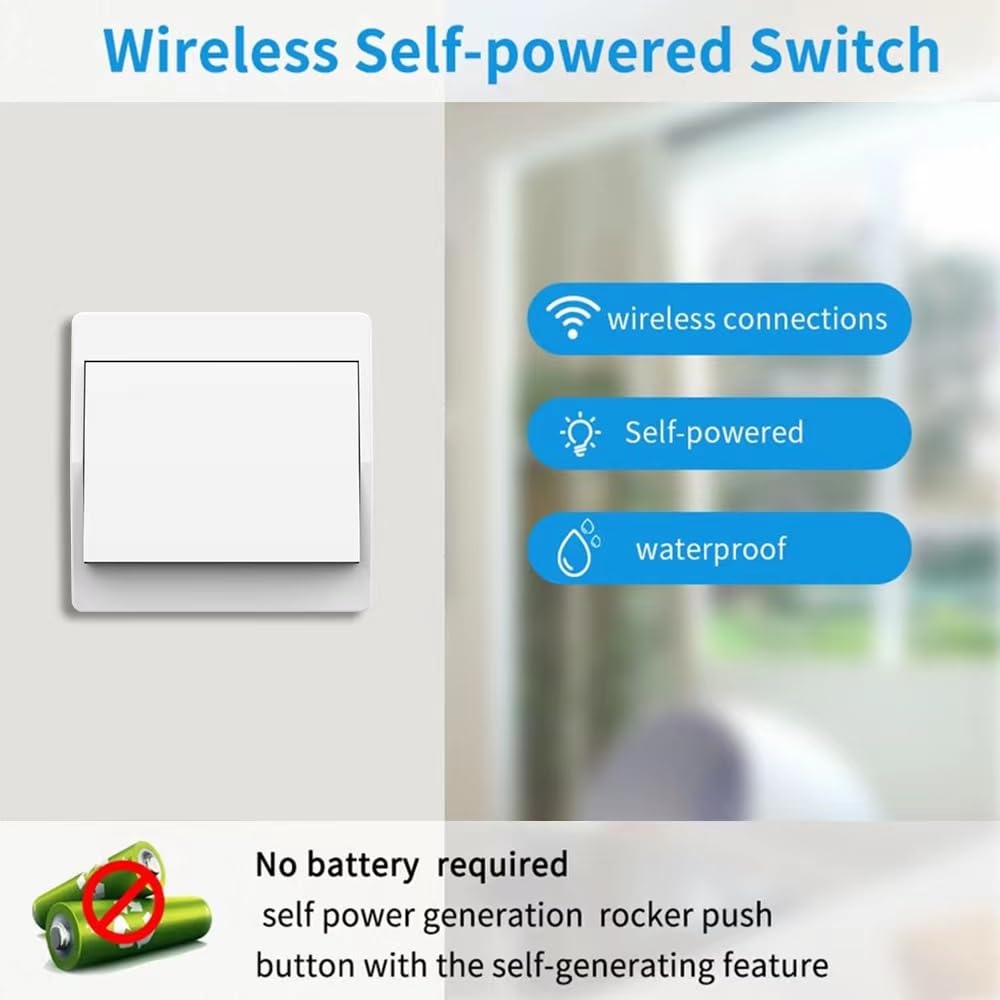
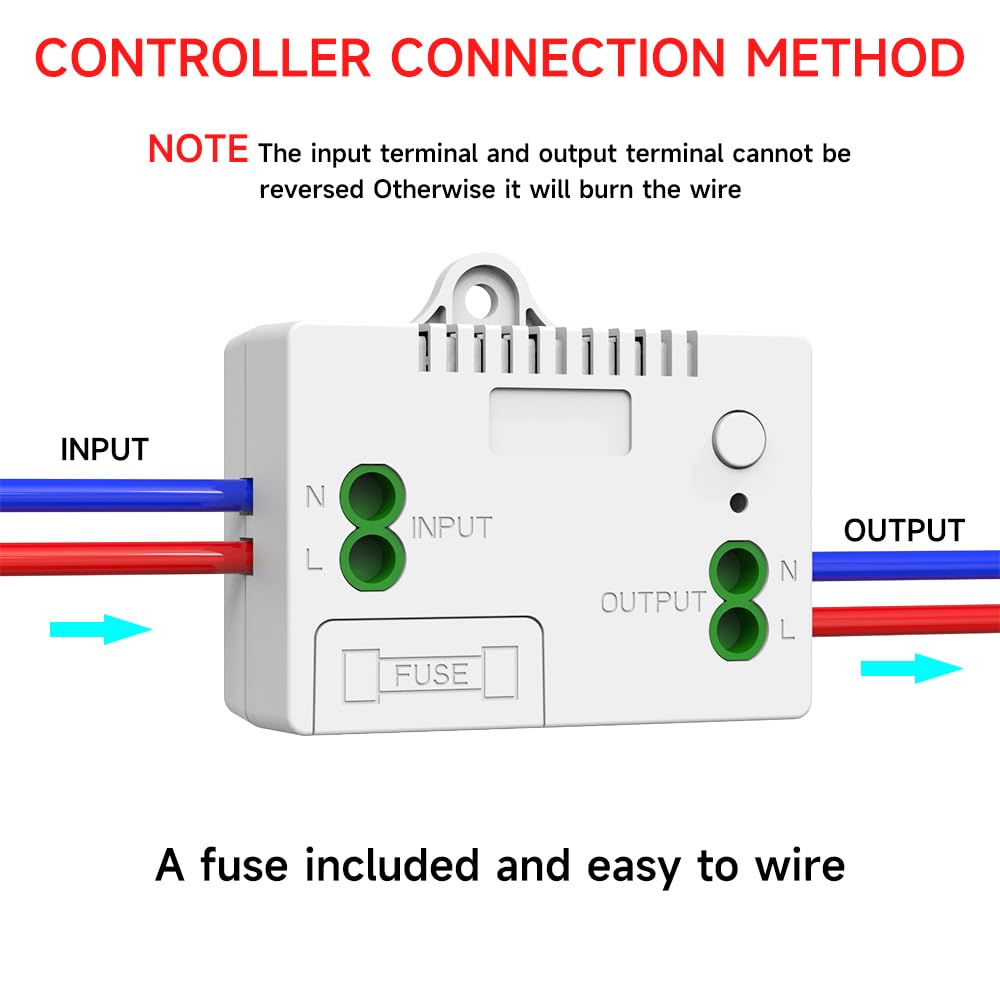
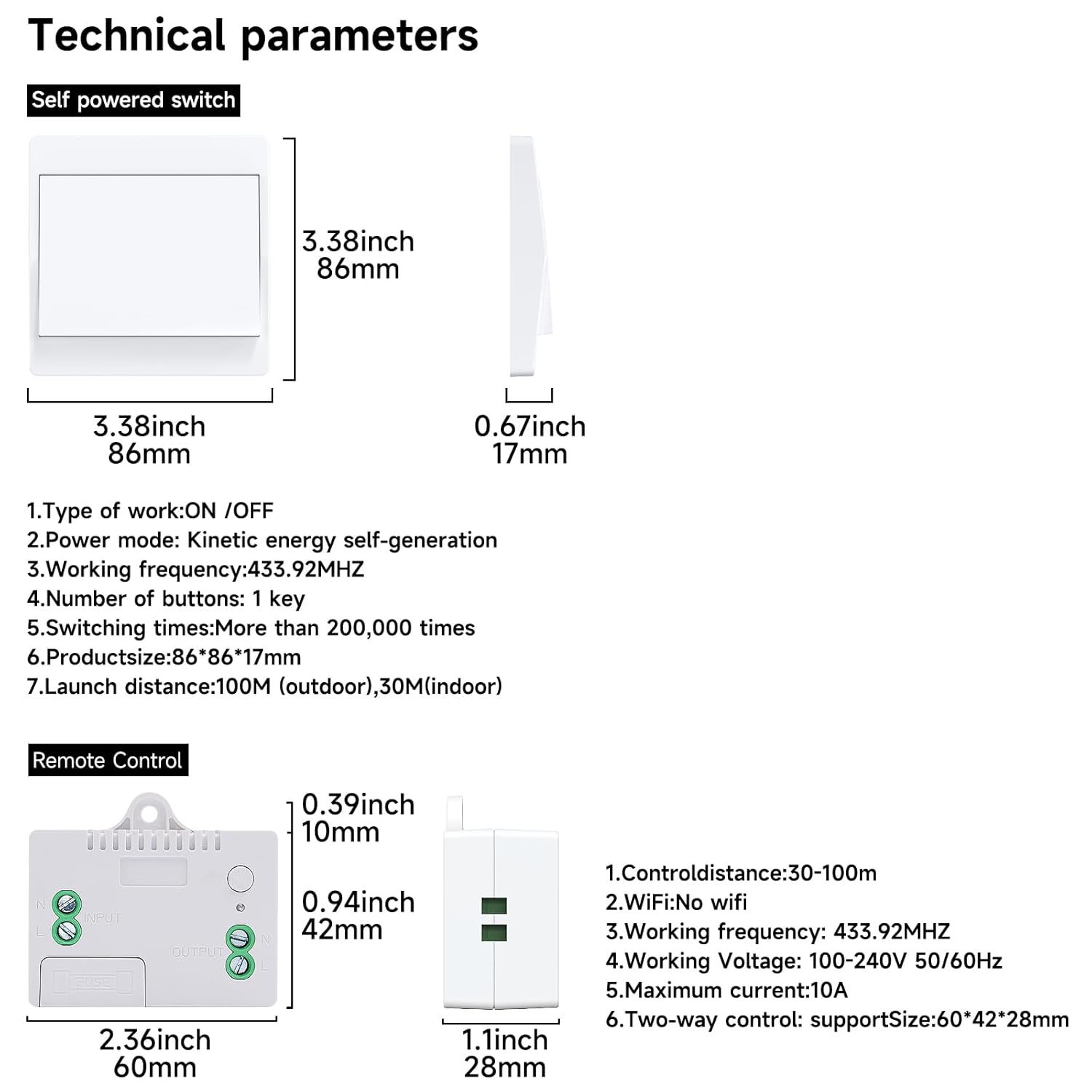
What it is and what it solves\nCerhot’s EU Self-Powered Wireless Light Switch Kit is a battery-free, kinetic energy powered wall switch system. Designed for homes where rewiring is undesirable or impractical, it lets you control lighting without running wires or swapping batteries. By converting the energy from your finger press into a wireless signal, the switch panel communicates with a receiver to turn lights on or off. It’s a pragmatic solution for people seeking a straightforward retrofit that preserves existing wiring while expanding control to convenient, wall-mounted panels.\n\n## How it works\nNo battery, no Wi‑Fi, no complicated setup. Simply press the switch panel, the kinetic energy generated from that press drives a small energy harvest circuit, which then transmits a 433MHz signal to a receiver connected to the live and neutral of the light fixture. The system is designed to avoid code conflicts by matching the product code at factory release, allowing immediate use out of the box in compatible circuits. The receiver accepts a wide AC range (AC100–240V), making it suitable for a broad audience across many regions.\n\n## What stands out in use\nThe kit supports multiple scenarios: you can place a switch panel in high-traffic areas like hallways or stairs, or position it by beds, entrances, or outdoor paths where reaching a traditional switch is tricky. The RF signal is strong enough to pass through walls and doors for indoor control within roughly 50 metres, and up to 150 metres outdoors. It’s inherently simple: press the panel, lights react. A notable practical point is that metal enclosures can shield signals, so it isn’t recommended to install inside a metal box.\n\n## Pros and Cons\n- Pros: battery-free operation, easy installation (no rewiring), compatible with a wide voltage range, capable of controlling multiple light zones without interference, robust RF range for typical homes, suitable for damp environments like bathrooms or courtyards due to low energy emission.\n- Cons: not ideal if you place the receiver inside metal enclosures, or if you need very high-frequency, fast multi‑way switching across complex networks. It may require multiple panels to achieve advanced scene control, and the system relies on RF signals rather than wired certainty, so in extreme layouts you might notice delays or signal drop in busy RF environments.\n\n## Who it’s for\nIt suits homeowners or landlords looking to modernise lighting without significant wiring work. It’s particularly useful in rooms with difficult reach to light switches, outdoor lighting, or spaces like garages and gardens where you want convenient, wired‑less control. It’s also appealing for DIY enthusiasts assembling a modular lighting system that can be expanded with additional panels without interfering with existing setups.\n\n## Who it isn’t for\nIf you need absolute reliability independent of RF conditions, or you work in an environment with heavy metal shielding that blocks signals, this kit may not be the best fit. Similarly, if your lighting plan requires a single, centralised control method across many zones with wired back‑up, you might prefer more conventional or professionally integrated solutions.\n\n## When it makes sense to buy\nConsider this kit when you want a quick, non-invasive upgrade to active lighting control, especially in rooms where reaching the switch is inconvenient or where running new wires is impractical. It’s a reasonable choice if you value battery-free operation and a straightforward setup that won’t disturb existing wiring.\n\n## What to check before buying\n- Confirm your light fitting is on an accessible live/neutral circuit for the receiver.\n- Avoid metal boxes for the receiver location to ensure optimal RF performance.\n- Plan for multiple panels if you want more than one control point per lighting circuit.\n- Be aware of the RF range and your home layout, thick walls or metal barriers can reduce signal.\n\n## Practical example\nIn a two‑story home, you could place a panel at the top of the stairs and one at the bottom, both controlling the same landing lights. With no wiring changes, you press the panels to light up the hall as you approach, then switch off on descent. It’s not a future‑proof smart hub, but a tidy step toward convenient, wireless control.\n\n## How it compares to other approaches\nThis kit sits between basic battery‑less remote options and full smart lighting systems. If you prioritise simplicity, minimal installation work, and avoid dependence on a home Wi‑Fi network, this is a sensible middle ground. If you need centralised, app‑driven control or advanced scenes, you may look at more feature‑rich setups, keeping in mind the incremental cost and installation complexity.\n\n## FAQ (short)\n- Is it waterproof? It is described as suitable for damp environments due to its low energy output, but avoid submersion.\n- Can I use multiple panels with one receiver? Yes, the system supports DIY expansion with multiple switch panels sharing a receiver.\n- Will it work with metal boxes? No, metal can shield RF signals and reduce performance.\n\n## Is it worth it?\nWorth considering if you want a battery‑free, easy‑to‑install wireless switch system for non‑critical lighting control in rooms where wiring would be disruptive. If you need ultra‑reliable, high‑load or highly customisable smart home scenes, this kit may be a stepping stone rather than a final solution.