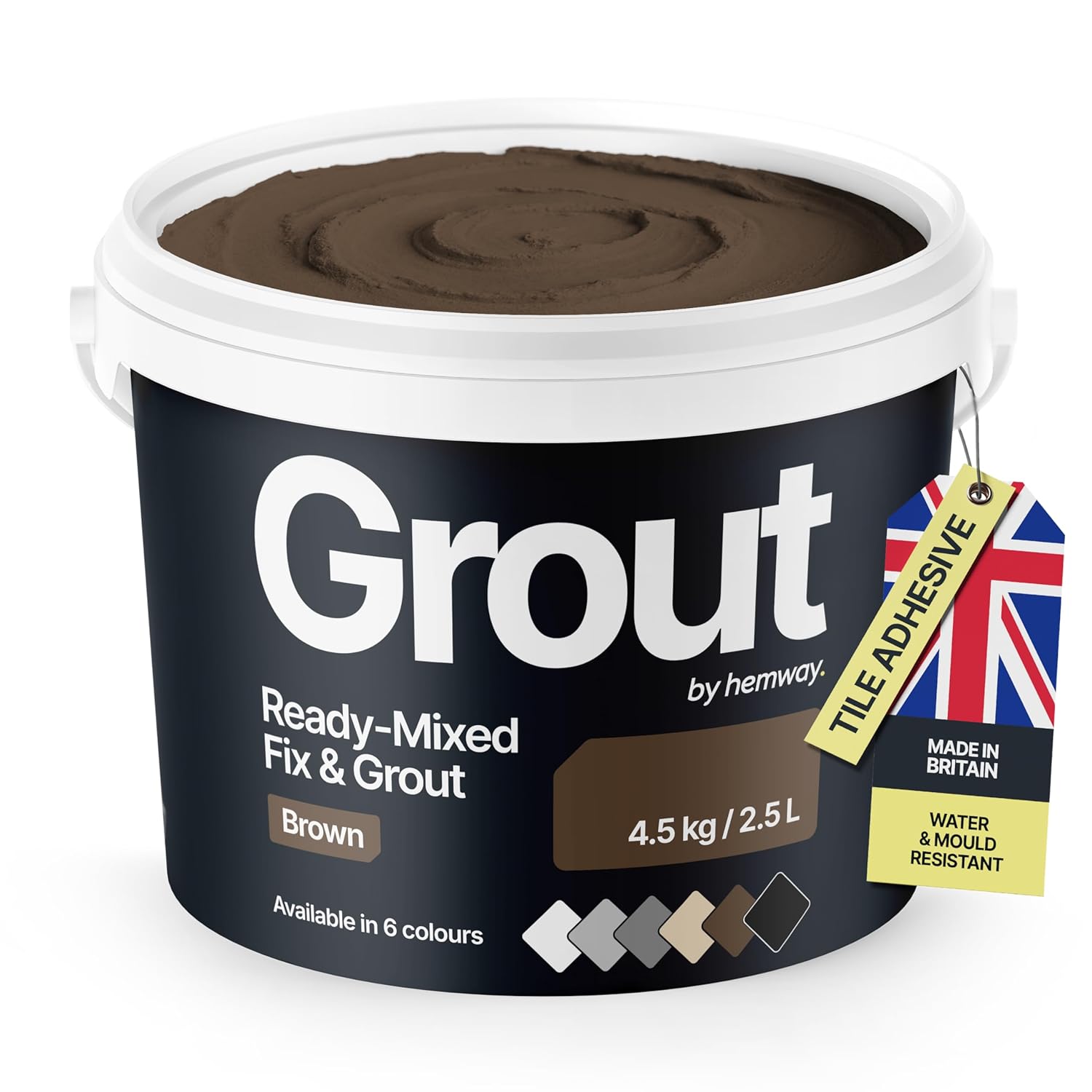
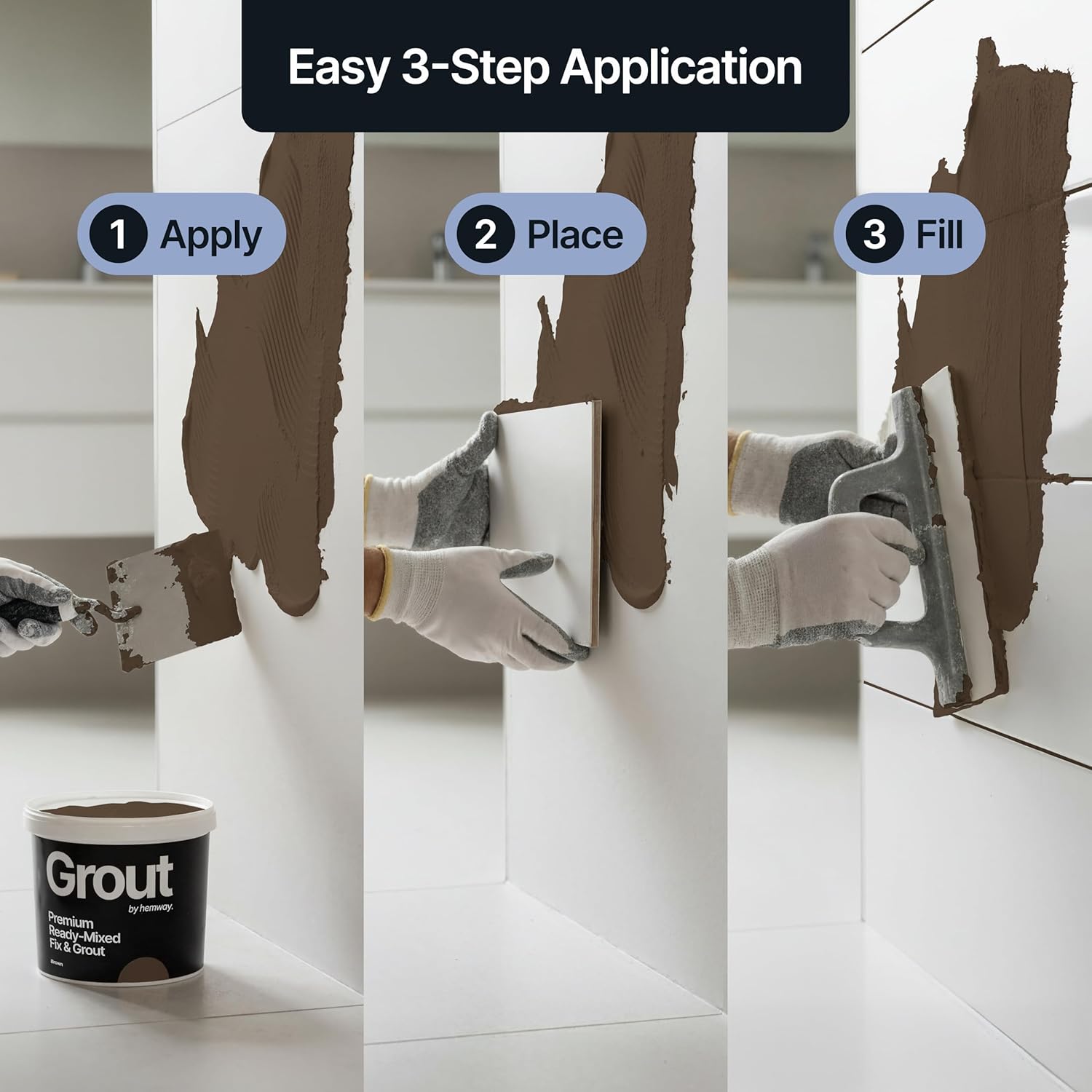
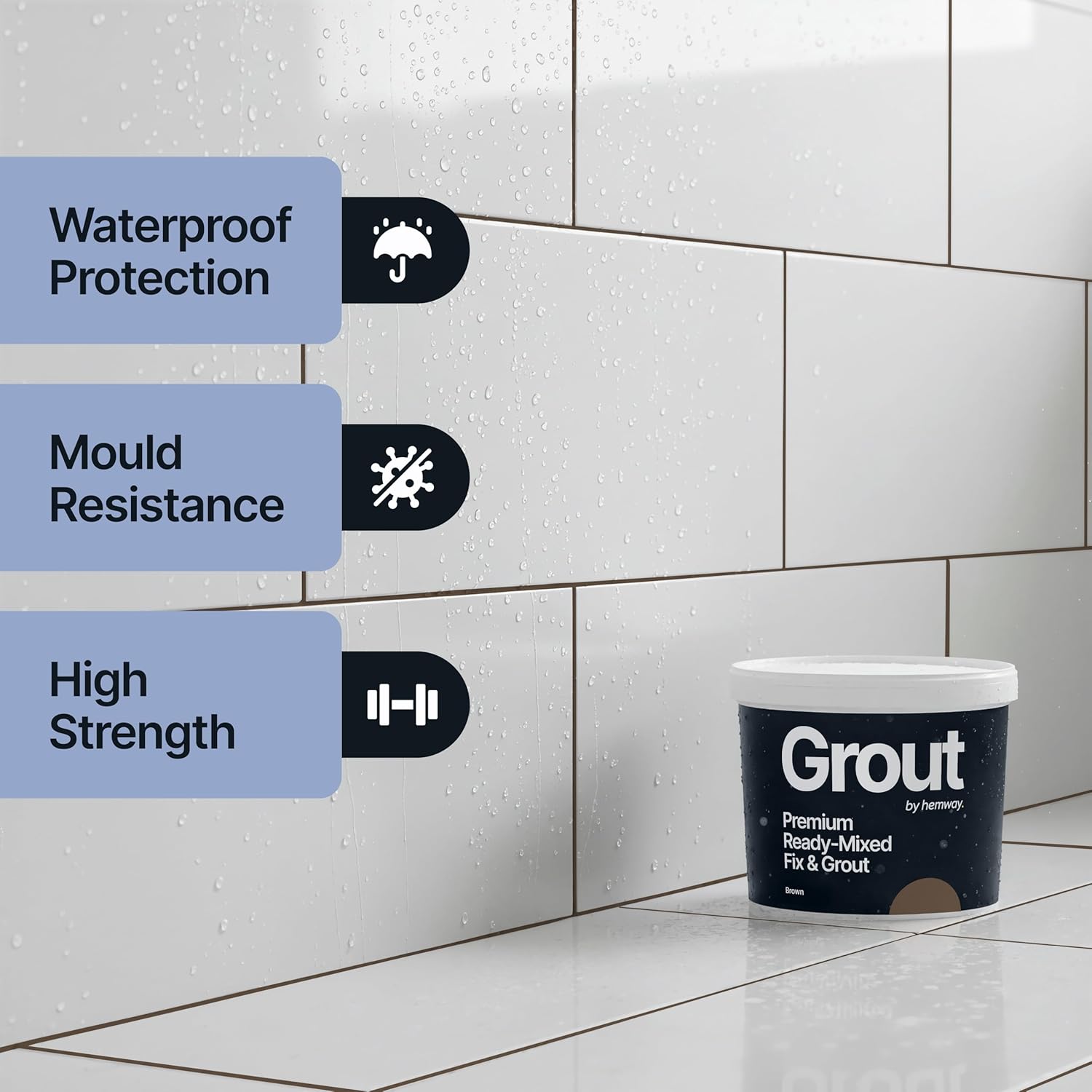
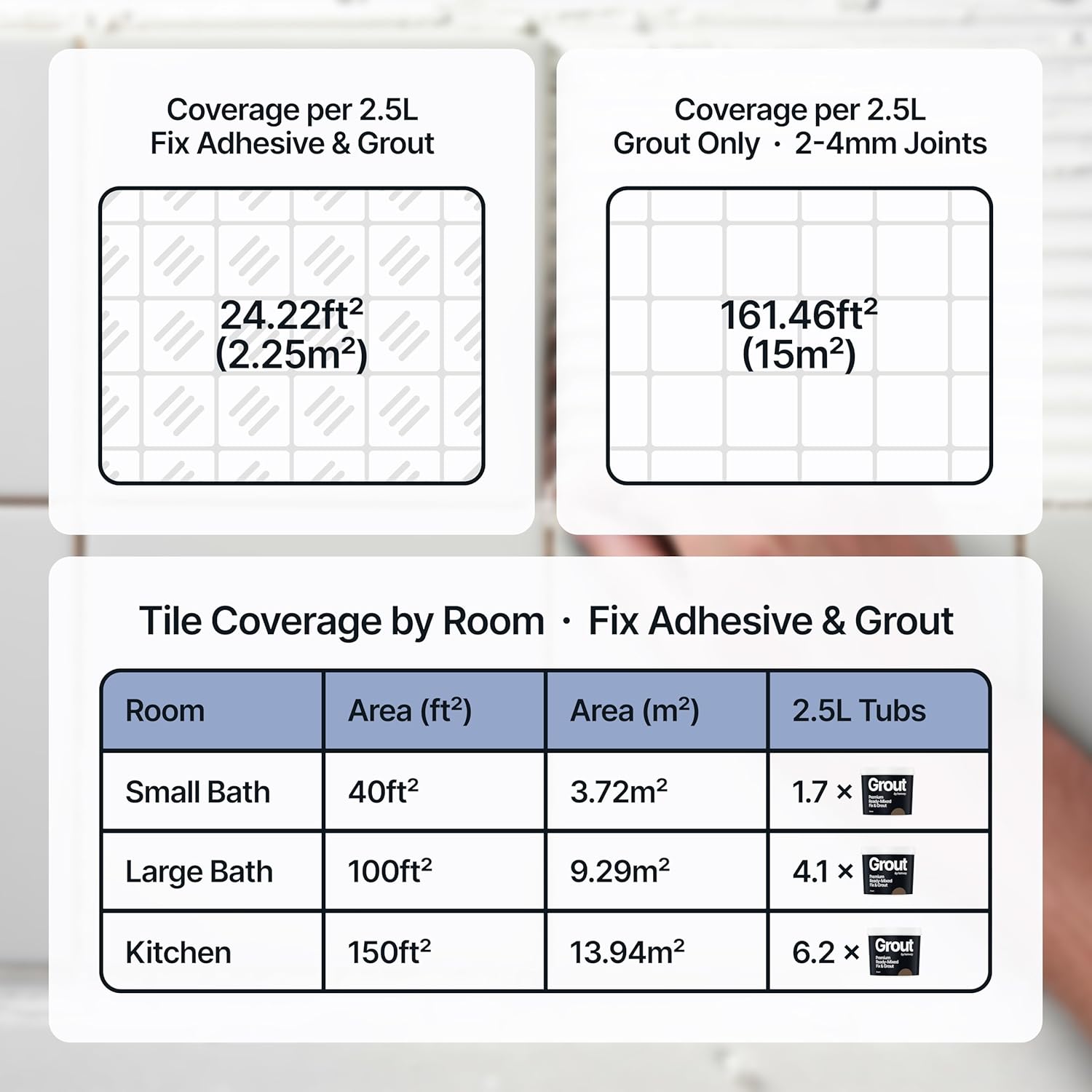
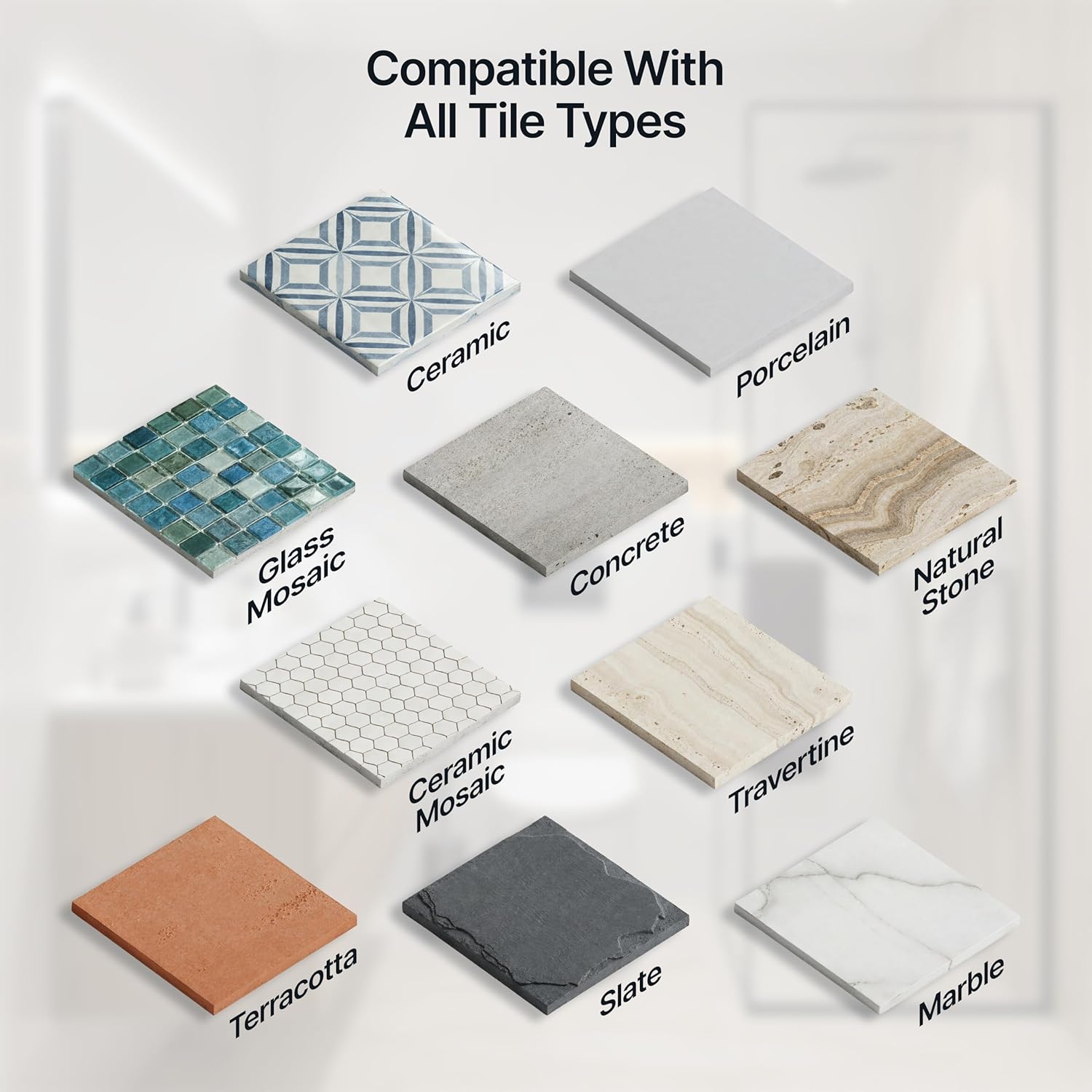
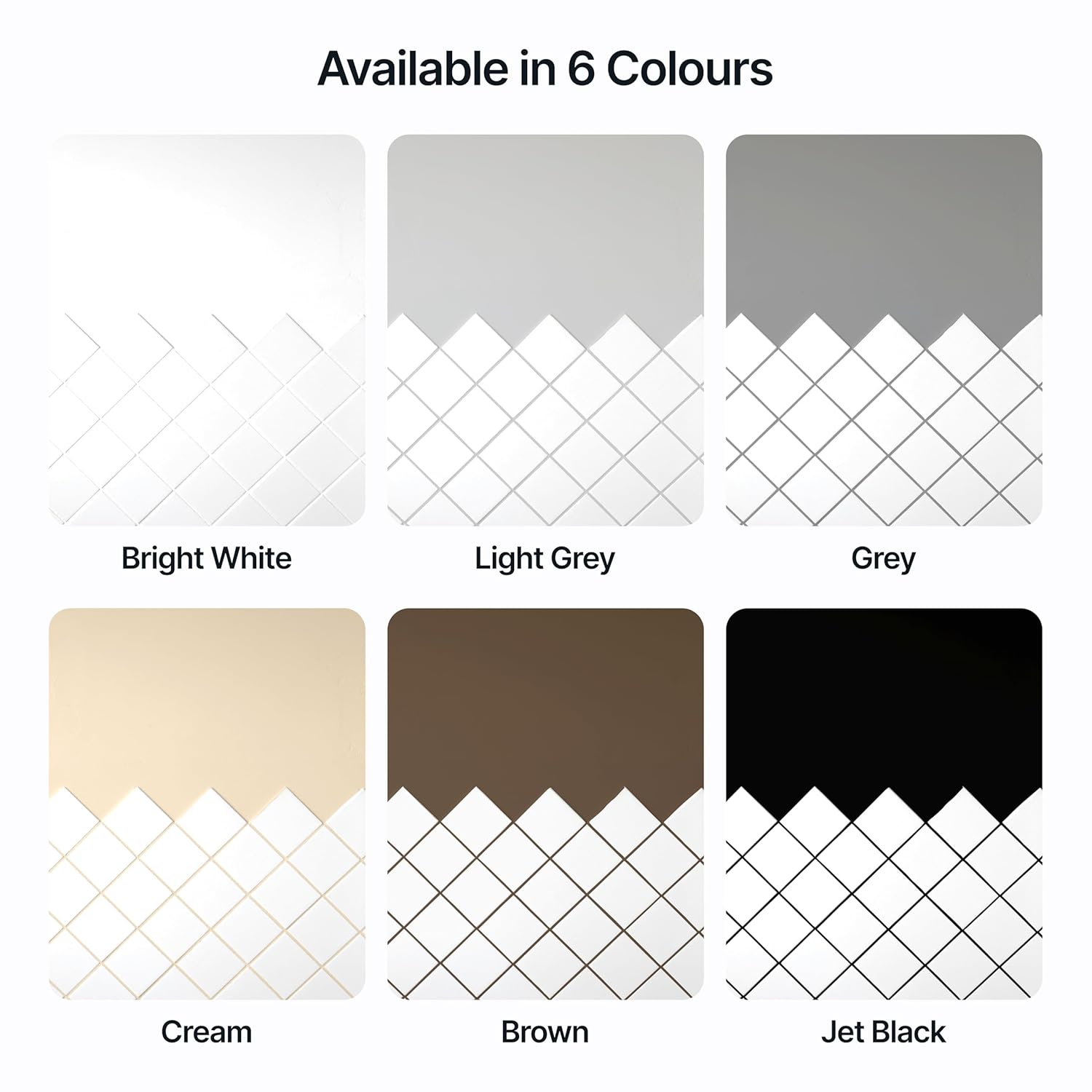
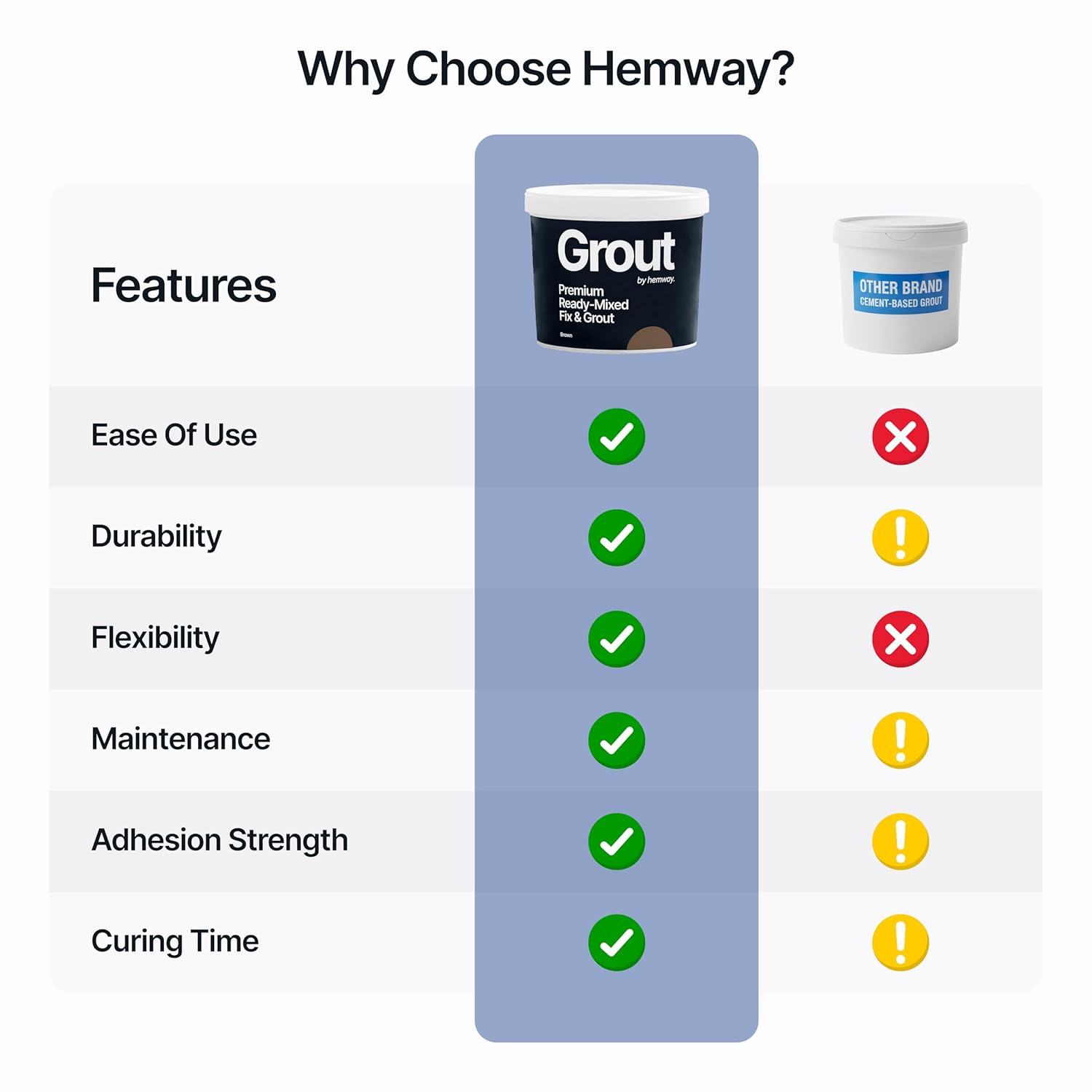
What it is and what it solves\nBrown Ready Mixed Grout & Fix is a versatile, ready-to-use tile grout and wall adhesive designed for DIY and trade tiling projects in bathrooms, kitchens and wet rooms. It aims to simplify tiling by removing the need for manual mixing, while delivering a brown finish that helps hide minor splashes or discolouration over time. On paper, this product combines grout, moisture resistance and adhesive capability in one package, which can streamline small to medium tiling jobs.\n\n## How it works in practice\nThe formula claims water resistance and antibacterial properties to help resist mould growth in damp areas. It is described as anti-fade, anti-shrink and UV-resistant, with a temperature tolerance up to 230°C. For practical use, the product is marketed as quick and easy to apply, offering a claim of 15 m² / 161 ft² coverage and a fast-drying time of 24 hours. The resealable container is a useful touch for ongoing projects or touch-ups.\n\n## Pros and what to watch for\nOn the plus side, the product eliminates mixing steps, which can save time on site and reduce mess. The water-repellent and antibacterial aspects may help in moisture-prone areas like showers and kitchens, and the brown finish can provide a clean, uniform look with fewer staining concerns. The high-heat tolerance is unusual for a ready-mixed grout, which could be a practical benefit in certain environments.\nHowever, there are limits to consider: the description does not specify exact substrate compatibility beyond generic wall & tile use, and performance can vary with surface porosity, movement and grout joint sizes. If your project involves heavy movement, large-format tiles, or non-standard substrates, you might still need to verify suitability for those conditions.\n\n## Who it’s best for\nThis product seems well-suited for DIY enthusiasts and trade tilers tackling bathrooms, wet rooms or kitchens where a brown, low-maintenance finish is desired and the job benefits from a pre-mixed solution. It can be a practical choice for mosaic, limestone, glass, ceramic, porcelain, cement, marble or plaster installations, provided the substrates align with the product’s general claims.\n\n## Who might want to look elsewhere\nIf you require explicit technical specifications for niche substrates, or if your project demands very high movement tolerance, non-porous surfaces beyond the listed examples, or specialised grout colours, you may prefer a product with more detailed guidance or customisable options.\n\n## Before buying, what to check\n- Confirm the tile material and substrate compatibility against the product’s guidance.\n- Consider the joint width and tile size—coverage can vary with larger spaces or uneven surfaces.\n- Check for any local humidity conditions or ventilation that could affect drying times.\n- Ensure you’re happy with a brown grout finish and its maintenance implications over time.\n\n## How it compares in practice\nCompared with separate grout and adhesive products, this ready-mixed option offers convenience and a streamlined workflow for smaller jobs. It may not replace dedicated adhesive or grout systems for high-traffic or long-term heavy-duty tiling projects, where a sector-specific product with detailed performance data could be preferable.\n\n## Practical use example\nImagine retiling a compact bathroom wall where a quick-turnaround is helpful: you mix it by simply stirring the already prepared content, apply as you would a standard adhesive/grout, and expect a finish ready in about a day. The brown tone helps masks minor splashes, reducing visible cleaning needs.\n\n## Final decision: Is it worth it?\nFinal verdict: a solid pick if you prioritise ease of use and a single product for light to moderate tiling tasks in damp spaces, and if a brown finish aligns with your aesthetic. It’s worth considering if you’re after a simple, quick tiling solution for typical home bathrooms or kitchens, but may not be the best option for complex layouts or projects requiring extensive technical specification detail.\n\n## Frequently asked questions\n- Can I use this on glass or mirror surfaces? The information provided lists mosaic, limestone, glass, ceramic, porcelain, cement, marble and plaster as suitable surfaces, but always test a small area first.\n- How long before grouting or sealing is needed after application? The description notes a 24-hour readiness, but drying times can vary with room conditions.\n- Does the product resist mould in wet areas? It is described as water-resistant with antibacterial properties, which can help in damp environments, though no guarantee is given for every scenario.\n\n