


Bosch UniversalTemp infrared thermometer for surface temperatures (-30°C to +500°C)
Product description
If you’re checking surface temperatures regularly, an infrared thermometer can save a lot of hassle compared with waiting for something to cool down for a probe. The Bosch UniversalTemp is built around that simple “point and shoot” idea, with a temperature range that looks genuinely useful for everyday jobs—from freezing appliances to hotter surfaces.
That said, it’s still an infrared model: on paper it measures surface temperature, and results depend on what you’re pointing at and how well the surface matches its selected material setting. If you want something for highly reflective or hard-to-read surfaces, you may need a bit of patience.
What it is and what it’s for
The Bosch UniversalTemp is a handheld infrared thermometer designed to measure the surface temperature of everyday objects. The headline spec is the measuring range of -30°C to +500°C, which is a wide spread for a consumer-style gun.
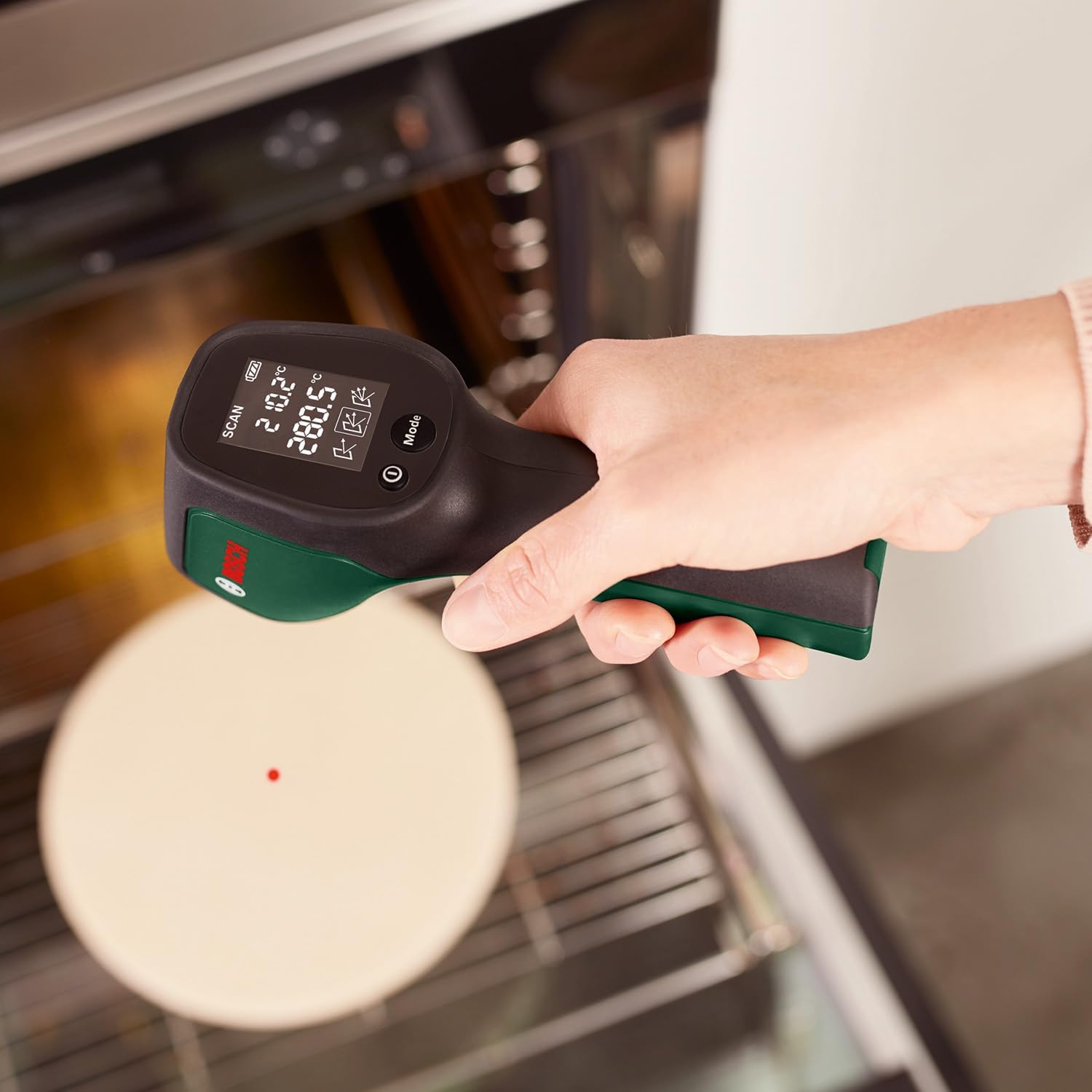
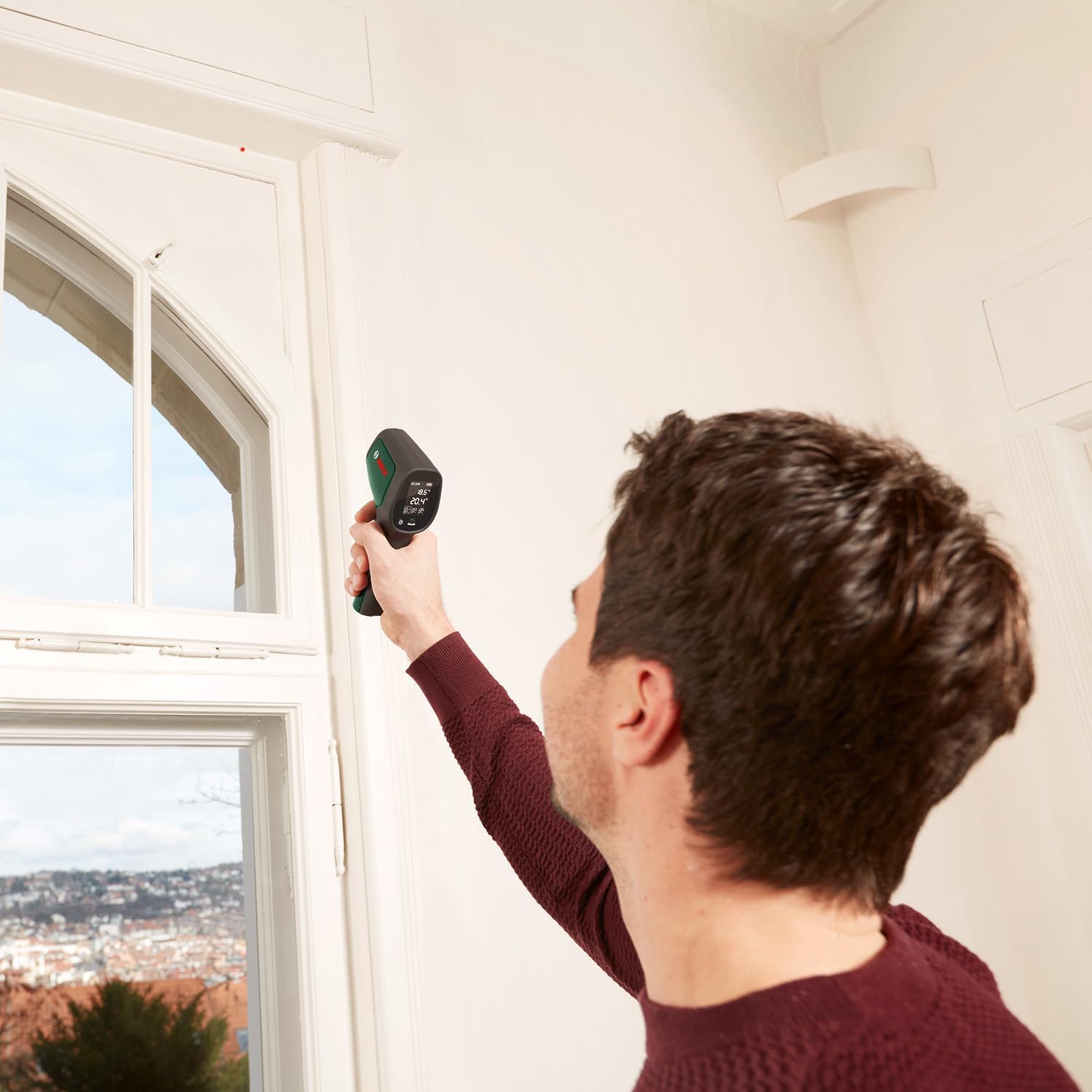
In practice, that makes it the sort of tool you might keep around for household checks and light DIY rather than lab work. The base description even gives examples like freezers and windows, plus cooking-focused items such as pizza stones.
A small micro-scenario: you take a quick reading on a pizza stone before cooking. No probing, no touching—just aim, trigger, and you get a temperature reading for that surface.
The essentials (and the bit people overlook)
Where it differentiates itself is the approach to accuracy. Instead of assuming every surface behaves the same way, it uses three predefined material groups (measuring modes based on material type). Over the long run, this kind of emissivity/material choice is often what separates “it gives me a number” from “that number is usable”.

The thermometer also positions itself as easy-to-use: you point it at the target and measure. If you’re the sort of person who doesn’t want to fiddle with settings every time, that simplicity is a real part of the appeal.
Worth noting, though: it’s still infrared. So if the surface is very shiny, angled, or thinly coated, the reading can be less representative than you’d hope—this is exactly where those material groups matter, and where you may need to experiment a little.
What you’ll notice in use
The measurement range is broad, and that’s a plus if your needs vary. You can reasonably expect it to cover common “cold to hot” checks around the home.
The three material-group modes are the other thing you’ll notice in day-to-day use. Depending on what you’re measuring, you’ll need to pick the closest mode so the thermometer can interpret the surface correctly.
Is it going to feel like a premium precision instrument in every situation? Probably not—this is a user-friendly infrared thermometer, not a calibration lab device. But for practical, repeatable home checks, the “easy and precise measurement” claim makes sense on paper, especially when you use the material-group feature rather than leaving it on whatever default it ships with.
Key specifications
- Name: Bosch UniversalTemp infrared thermometer
- Type: Infrared thermometer (surface temperature measurement)
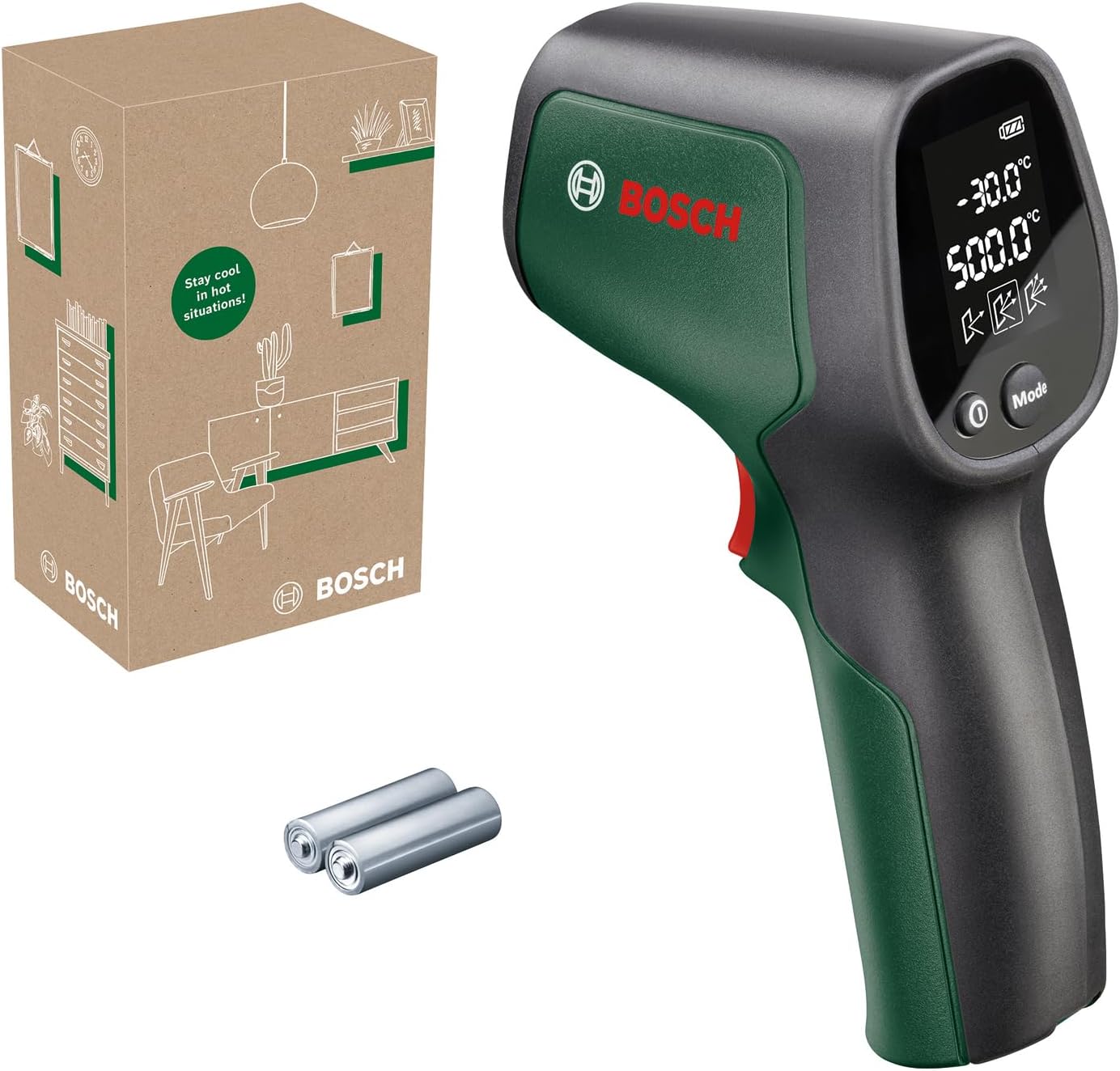
- Measuring range: -30°C to +500°C
- Temperature measurement modes: 3 predefined material groups (measuring modes based on material type)
- Included in the box: UniversalTemp, 2 x AA batteries, Emissivity leaflet, User manual, E-commerce cardboard box
Who it suits, and who should think twice
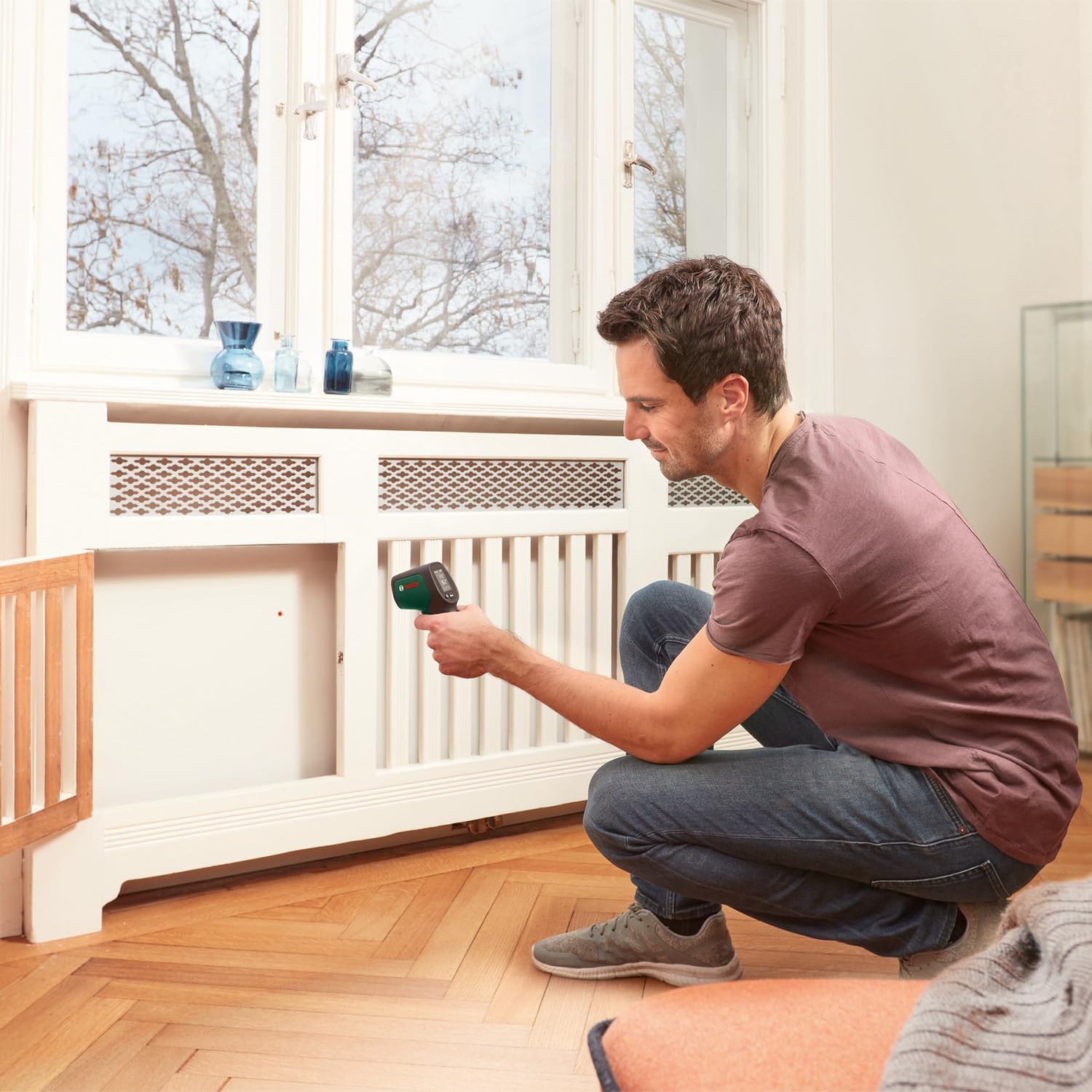
It’s a good fit if you want a versatile infrared thermometer for household tasks, such as checking the temperature of a freezer, assessing surface temperatures on window-related jobs, or monitoring hotter surfaces like a pizza stone.
It may not suit you if you need a tool for precision work where surfaces are tricky to measure and you can’t afford to adjust settings or re-aim for repeatability. Also, if your priority is contact-based measurement (rather than surface readings from distance), you may find an infrared gun frustrating.
You’ll like it if you’re after quick results without probes and you’re willing to use the material-group modes when measuring different surfaces.
Care and practical tips
Infrared thermometers are simple, but a couple of habits help the readings behave. Keep the sensor area clean and avoid measuring through dust or steam. When you can, aim more directly at the target and make sure the reading spot is consistent.
Also, use the emissivity/material guidance that’s provided (the box includes an emissivity leaflet). It’s there for a reason: choosing the right material group can noticeably improve how believable the number is for that surface.
Buying verdict
If you want one tool for a range of everyday surface-temperature checks, the Bosch UniversalTemp is a sensible pick thanks to the broad -30°C to +500°C range and the three material-group modes designed to improve accuracy.
It’s not the best choice if your use case demands contact measurement or if you often deal with hard-to-read surfaces and cannot spare the time to adjust aiming and settings. For most home users, though, it’s the kind of thermometer that’s easy enough to actually keep using, rather than one that ends up in a drawer.
Mini FAQ
Can it measure temperatures below freezing?
Yes—its stated measuring range covers -30°C to +500°C, so it’s intended for very cold surfaces as well as hot ones.
How do the material groups help?
The thermometer offers three measuring modes based on material type, which helps it interpret temperatures from different surface behaviours.
Is it accurate for everyday objects?
On paper it’s designed for “easy and precise measurement” and aims to improve accuracy by letting you choose between the material groups. Exact accuracy will still depend on how the surface and measuring setup match.
What’s included in the delivery?
You get the UniversalTemp unit, 2 x AA batteries, an emissivity leaflet, a user manual, and an e-commerce cardboard box.