

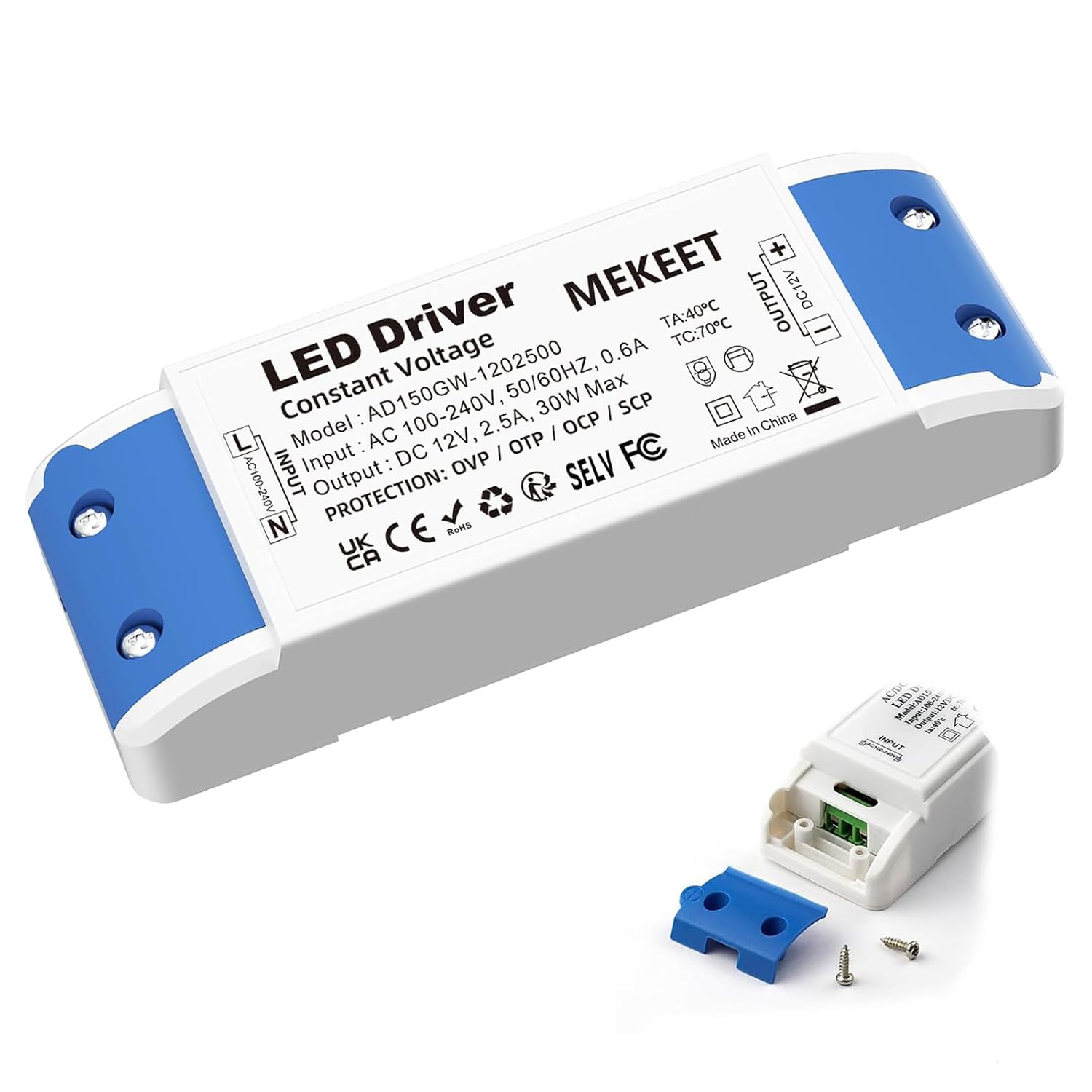
15W 12V Constant Low Voltage LED Power Supply Adapter (1.25A) for LED Strip Lights, G4/MR11/MR16 Bulbs & Ring Doorbell
Reviews
Price
Product description
If you’re putting together a low-voltage LED setup, a decent 12V driver can make the difference between steady light and annoying flicker. This 15W LED power supply is designed to provide constant low voltage DC output, with built-in protection features so it can run more safely in everyday installs.
On paper, it’s aimed at straightforward lighting jobs: small LED strip arrangements, cabinet or step lighting, and 12V LED modules and bulbs like G4, MR11 and MR16. It’s not a “smart” driver, and it won’t suit every project—so it’s worth checking your wattage and voltage requirements before you buy.
The essentials (what it is and what it’s for)
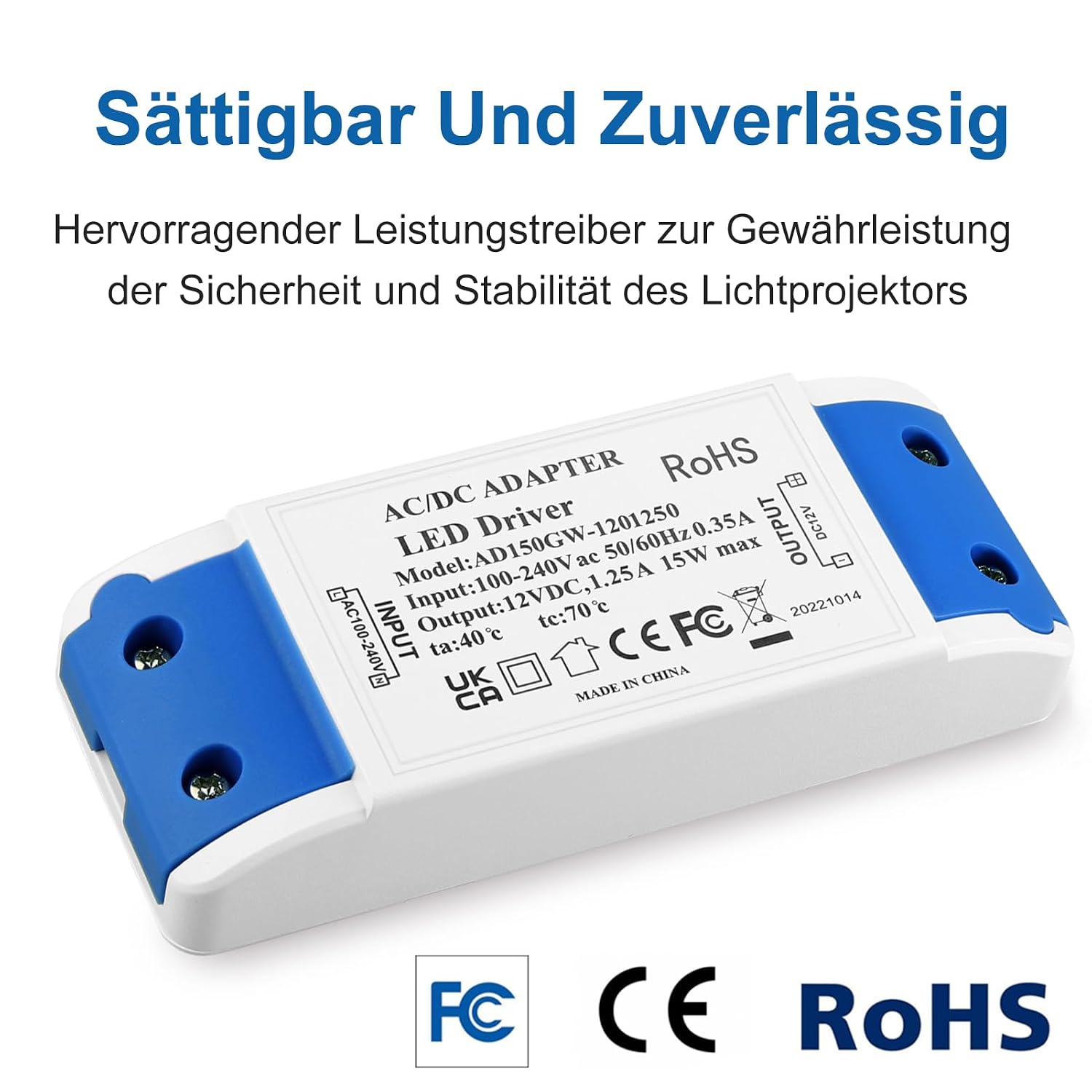
This is a 15W LED transformer-style power adapter that converts household AC input into a constant 12V DC output. The key promise here is a smooth, flicker-free output (“constant low voltage DC”), which is exactly what you want when LEDs are close to eye level or you’re powering multiple points.
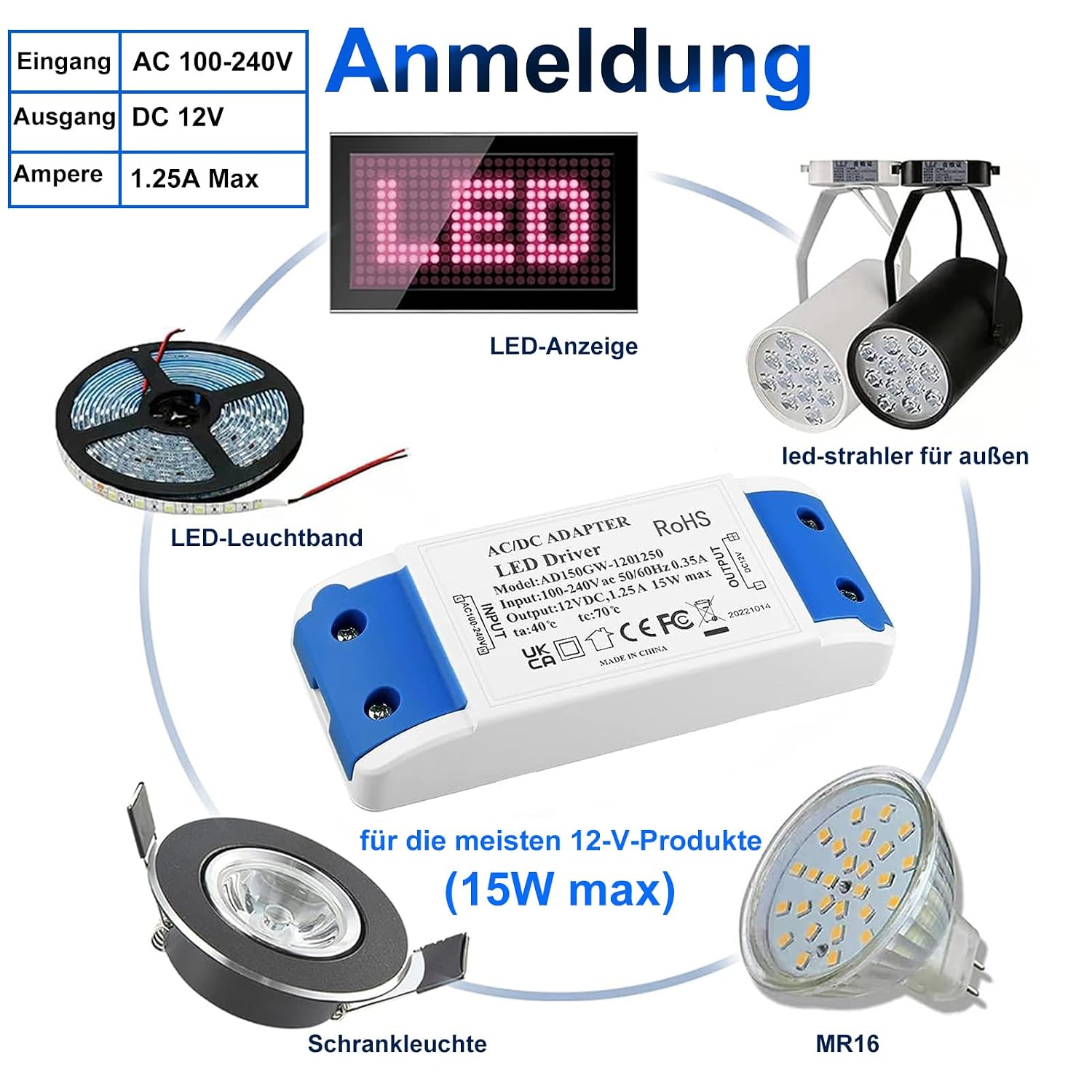
It’s also positioned for use with common 12V LED product types mentioned in the description: LED strip lights, LED photoelectric products, 12V LED modules, and certain halogen-style replacement bulbs (G4, MR11, MR16). The inclusion of “Ring Doorbell” in the stated compatibility suggests it may be used as part of a wider 12V doorbell lighting/power arrangement, but you should still verify your doorbell’s exact power requirements before relying on this.
One practical way to think about it: you’d use this kind of supply when your lighting runs need a stable 12V feed and you’d like fewer headaches than with an underspecified adapter.
Key features that matter day to day
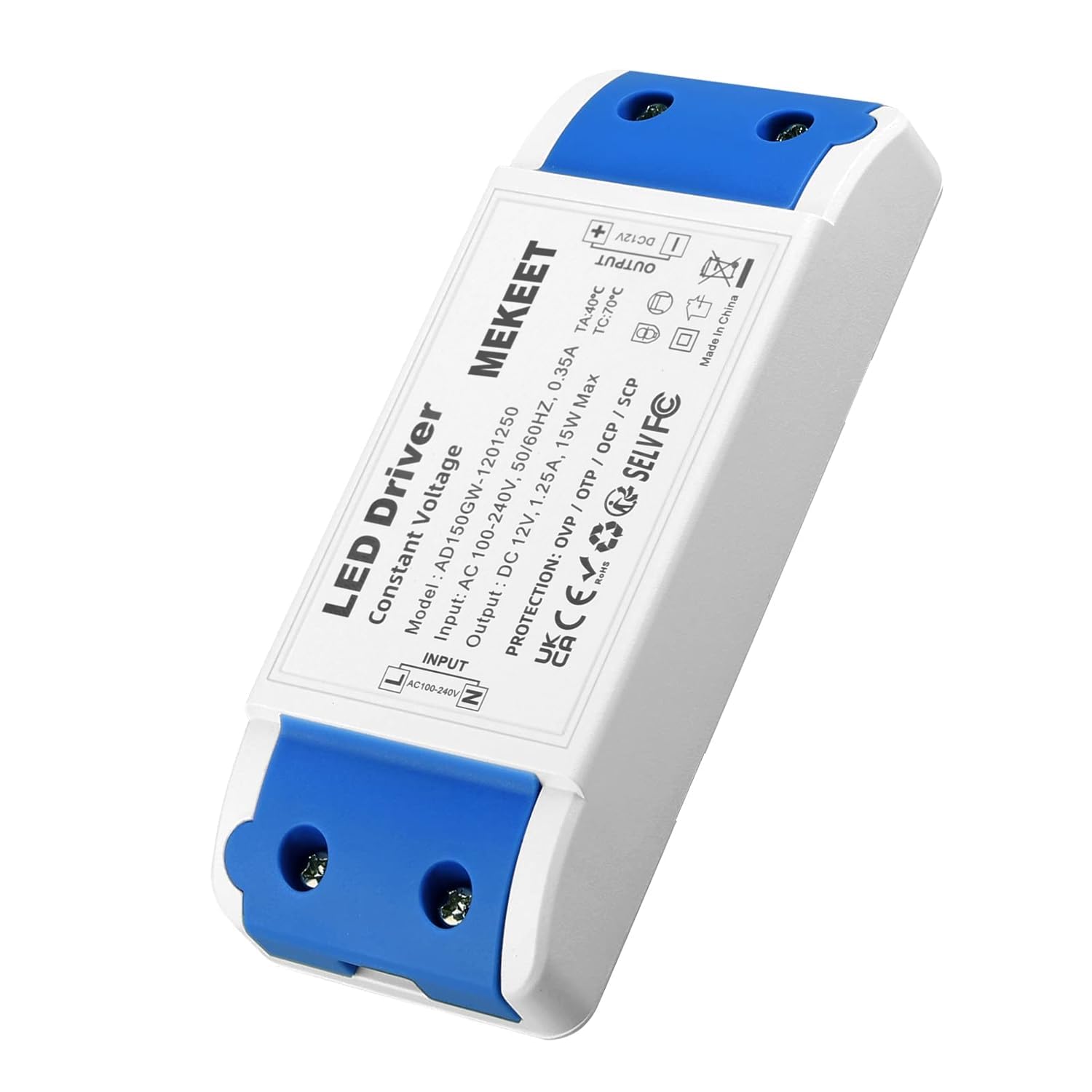
The most convincing parts of this adapter are the focus areas that affect how “nice” the lighting feels in use.
- Flicker-free style output is a major claim, supported by a reference to testing to help secure smooth performance.
- Anti-interference performance is mentioned, which is helpful if you’ve had issues with buzzing or instability when other electrics are nearby.
- Built-in protection against overheating, overload, and short circuits is included. That doesn’t guarantee perfection in every situation, but protection features are exactly what you want in a driver you might leave running 24/7.
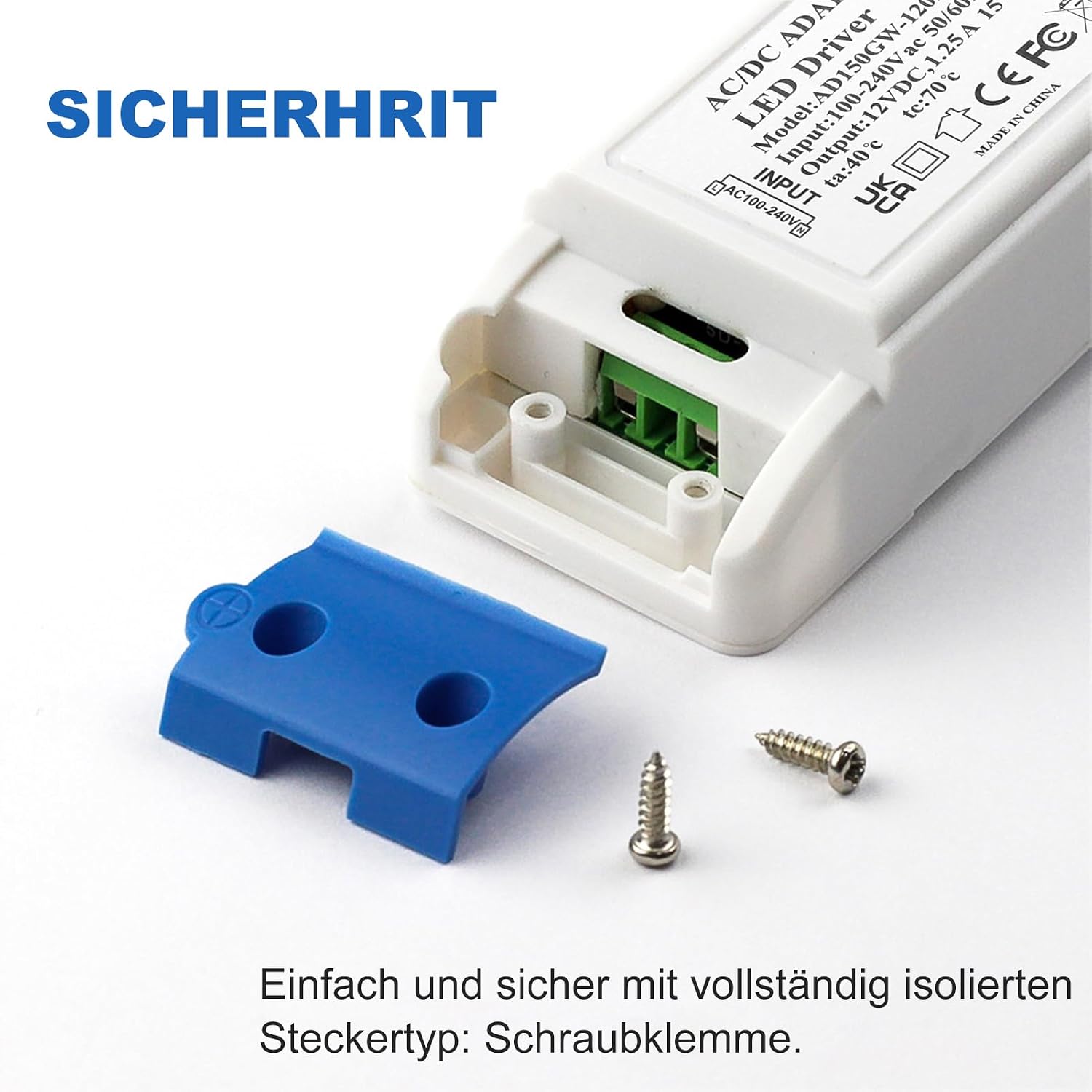
- Connection approach: it uses fully insulated electrical connections with screw-clamp type connectors. For many DIY buyers, that’s easier and more secure than flimsy alternatives—though you’ll still want to tighten properly and avoid straining wires.
The general vibe: it’s built to be “set it up and forget it” rather than something you constantly tinker with.
Tech specs at a glance (so you can check compatibility)
Here are the details that drive whether this will work for your lighting:
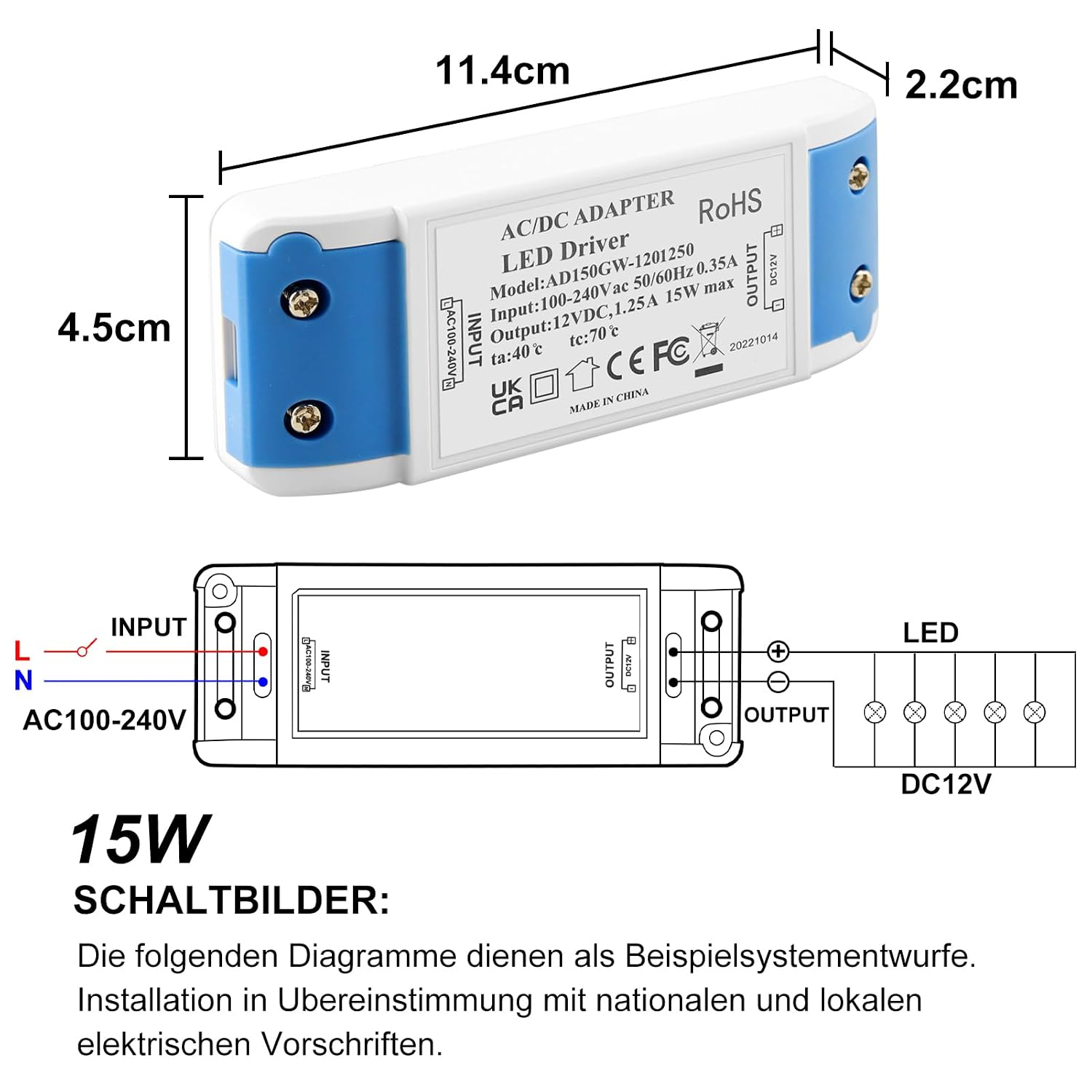
- Input Voltage: AC 100~240V, 50–60Hz
- Output Voltage: 12V DC constant voltage
- Max Power: 15W
- Output Current: 1.25A
- Size: 120mm x 48mm x 23mm
Worth noting: the description says the output voltage error is within plus or minus 5%, and it’s not dimmable. It also mentions that performance between lights matters “only in parallel”, which effectively means wiring approach can affect how things behave.
What to watch before buying (the bits people skip)
This is where things can go wrong—usually not because the adapter “fails”, but because the project doesn’t match the driver.
First, double-check voltage and power. The instructions are quite direct: don’t connect this 12V transformer to projects where the voltage is more than 12V or where power exceeds 15W. That’s a safety risk, not just a performance issue.
Second, confirm whether your LEDs are compatible with constant voltage DC. This supply is described as constant voltage, so it’s intended for 12V LED products that expect that style of input.
Third, consider dimming expectations. Since it’s not dimmable, it’s not the right choice if you want smooth brightness control via a compatible dimmer.
Finally, wiring matters. The description hints at “only in parallel” for getting correct behaviour between lights. If your existing plan uses series wiring or an unusual arrangement, you may need to adjust the setup.
Pros and cons (the honest trade-off)
Pros
This adapter looks like a practical choice if your priority is stable low-voltage feeding.
- Constant 12V DC output with a claim of flicker-free performance
- Overheating, overload, and short-circuit protections are built in
- Screw-clamp type connectors with insulated connections for safer installation
- Designed for common 12V LED products including strip lighting and G4/MR11/MR16 style bulbs
- AC input supports a broad range (100–240V), which is useful across typical UK/EU household supplies
Cons
It may not be the best fit if your requirements extend beyond what it’s designed for.
- Not dimmable, so it won’t suit projects that rely on dimmers
- It caps at 15W max output—if your total load is near or above that, you’ll need a different driver
- The stated output voltage tolerance suggests it’s generally reliable, but not something to treat as lab-precision equipment
- The mention of Ring Doorbell compatibility doesn’t replace checking your specific device’s power requirements
Usage tips for getting the best results
For a typical install, you’re going to want a tidy low-voltage run and sensible load planning.
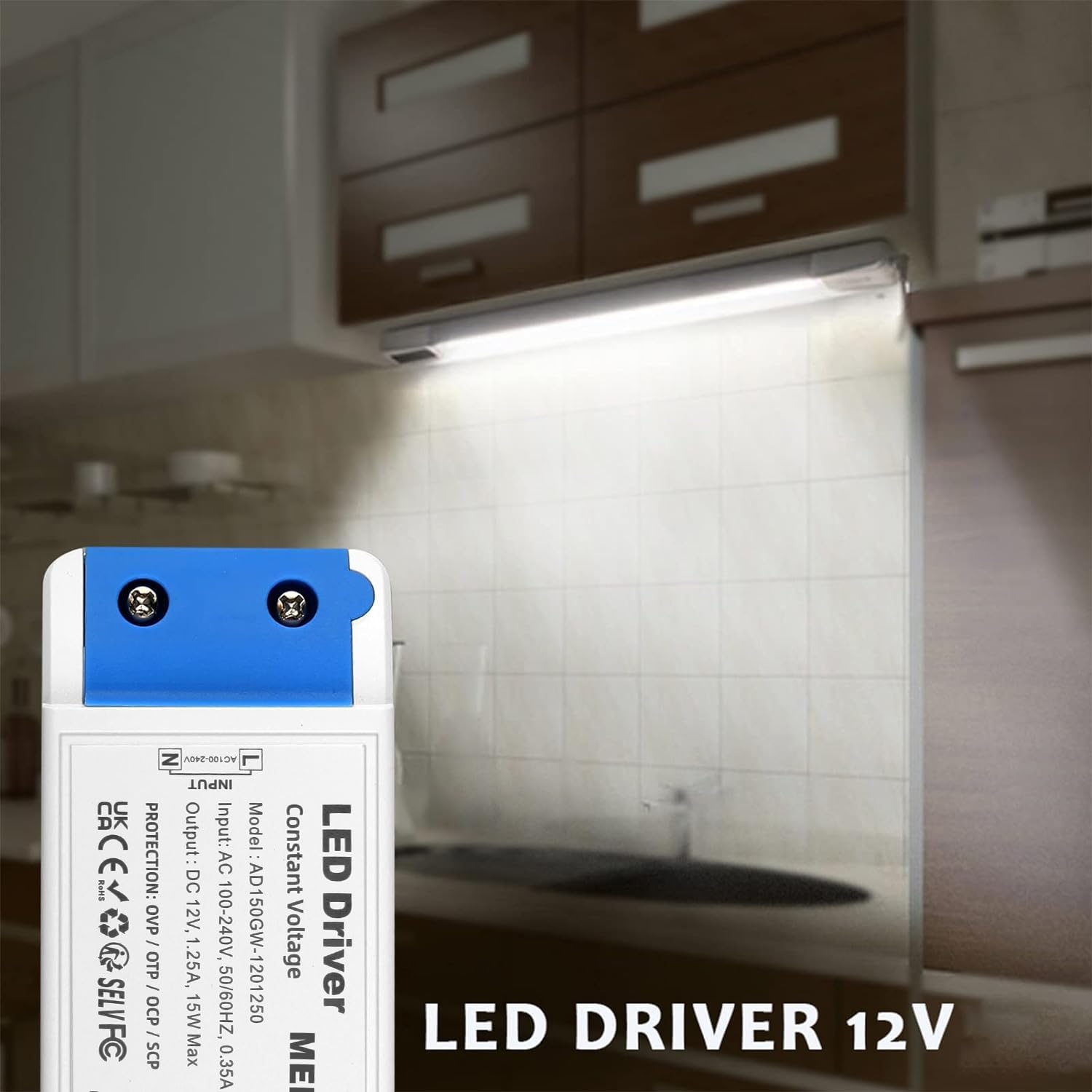
A simple, realistic example: if you’re powering a short stretch of 12V LED strip under a cabinet, you’d calculate the total wattage of the strip (and any additional connected lights). If the combined load stays within 15W max and you wire the lights in a way that matches the “parallel” expectation, you should get the stable constant-voltage behaviour the driver is designed to deliver. If you try to push it beyond capacity, that’s when protection features may trip or the system may behave unpredictably.
Also, don’t bury this driver in a way that blocks airflow if it’s in a warm location. The protection is helpful, but ventilation still matters.
When it makes sense
If you want a straightforward 15W, 12V constant voltage power supply for 12V LED strip lights, cabinet/step lighting, or G4/MR11/MR16-type 12V bulbs, this is the kind of driver that should fit the brief—especially if flicker and interference are things you’re trying to avoid.
It also suits buyers who prefer a clear ceiling (15W max, 1.25A output) and want the reassurance of multiple protective functions mentioned in the description.
When it might not be the best choice
You may want to skip this if:
- Your project needs dimming control
- Your LED setup is likely to exceed the 15W max or doesn’t stay within a 12V constant-voltage expectation
- You’re not sure about your wiring configuration (series vs parallel), because the description specifically references parallel behaviour for connecting multiple lights
- You’re hoping to cover a wide range of voltages beyond 12V—this supply is clearly meant for 12V projects
Final verdict
This 15W 12V constant low voltage LED power supply makes sense if you’re building or replacing a basic low-voltage LED lighting setup and you want stable, non-flickery output with built-in protection. It’s a good match for common 12V LED strip and module-style projects that fit within the 15W maximum, and the screw-clamp connectors are a practical plus.
However, it’s not for everyone: if you need dimming, you’re working with a load that could push past 15W, or your project’s voltage/wiring approach doesn’t align with a 12V constant-voltage driver, then it may be the wrong purchase.
Mini FAQ
Frequently asked questions
Is it suitable for LED strip lights?
The description states it suits LED strip lights and other LED photoelectric products that use 12V.
Does it support dimming?
No. The description explicitly says it is not dimmable.
What’s the maximum I can connect?
It’s rated for 15W max output. The instructions advise not connecting projects where power exceeds 15W.
What input voltage does it need?
It’s listed as AC 100~240V (50–60Hz), which covers typical UK/EU household supply ranges.
How should multiple lights be connected?
The description mentions “only in parallel” for how lights behave between each other, so wiring method is worth checking before you commit.