

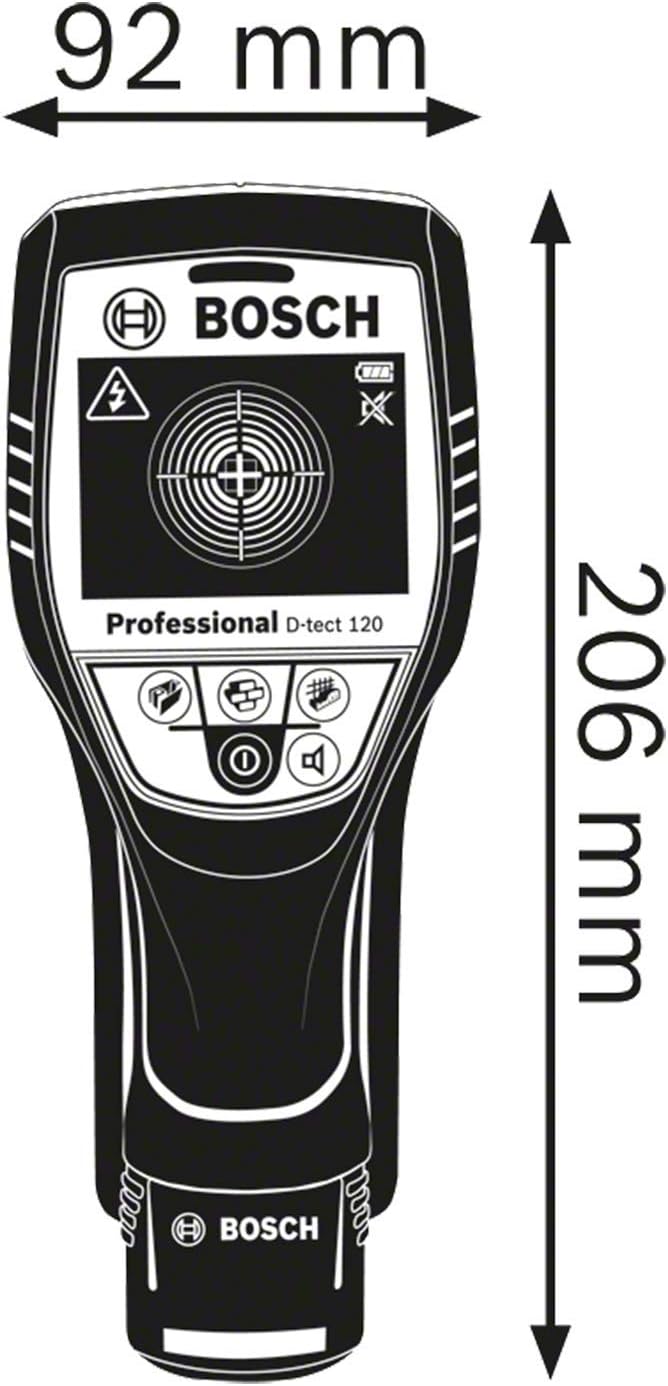
Bosch Professional D-tect 120 Wall Scanner (4×AA) – Blue, for cables and pipes up to 60mm
Reviews
Product description
What it is and why people buy it
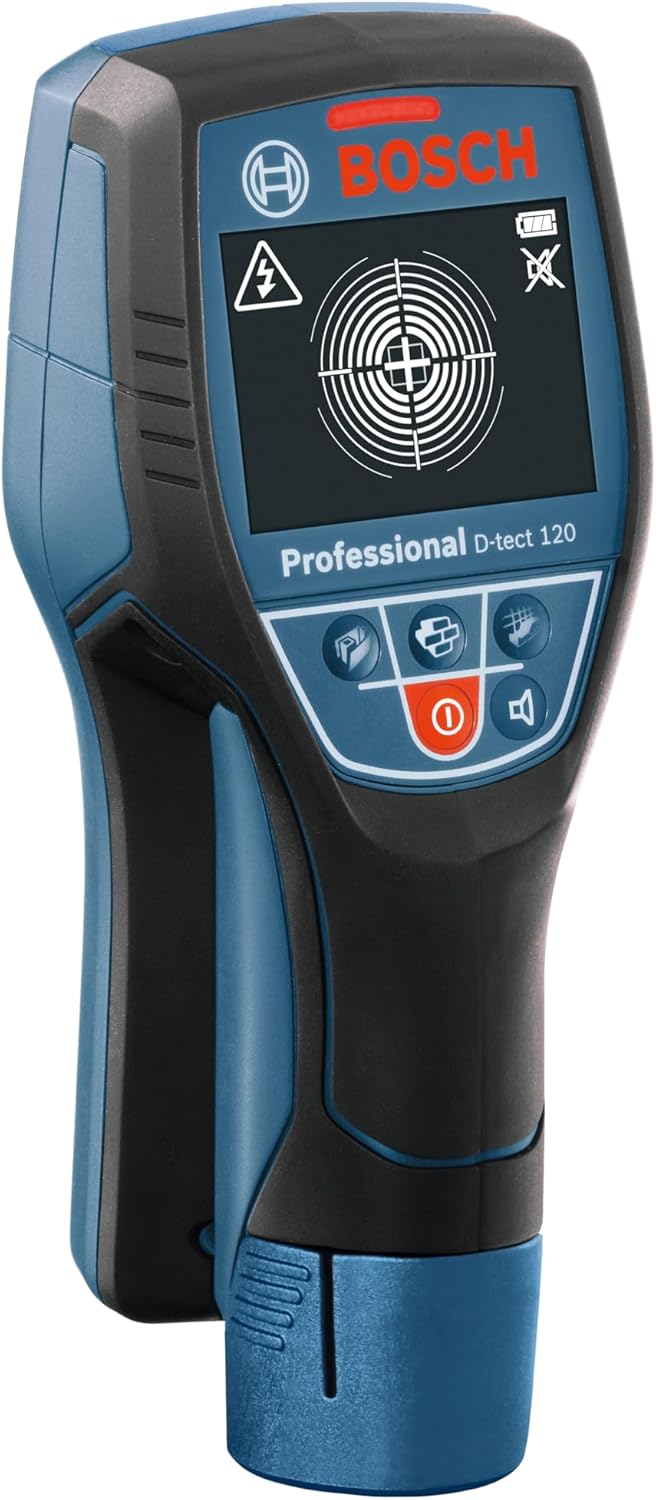
Bosch Professional D-tect 120 is a wall scanner aimed at helping you locate common hidden items before drilling or fixing into a wall. On paper, it focuses on the stuff that tends to cause the most costly moments—cables (including live cable), plastic pipes that are filled with water, and metal types (both ferrous and non-ferrous). It also includes magnetic metal detection, which is a handy detail when you’re dealing with real-world mounting points.
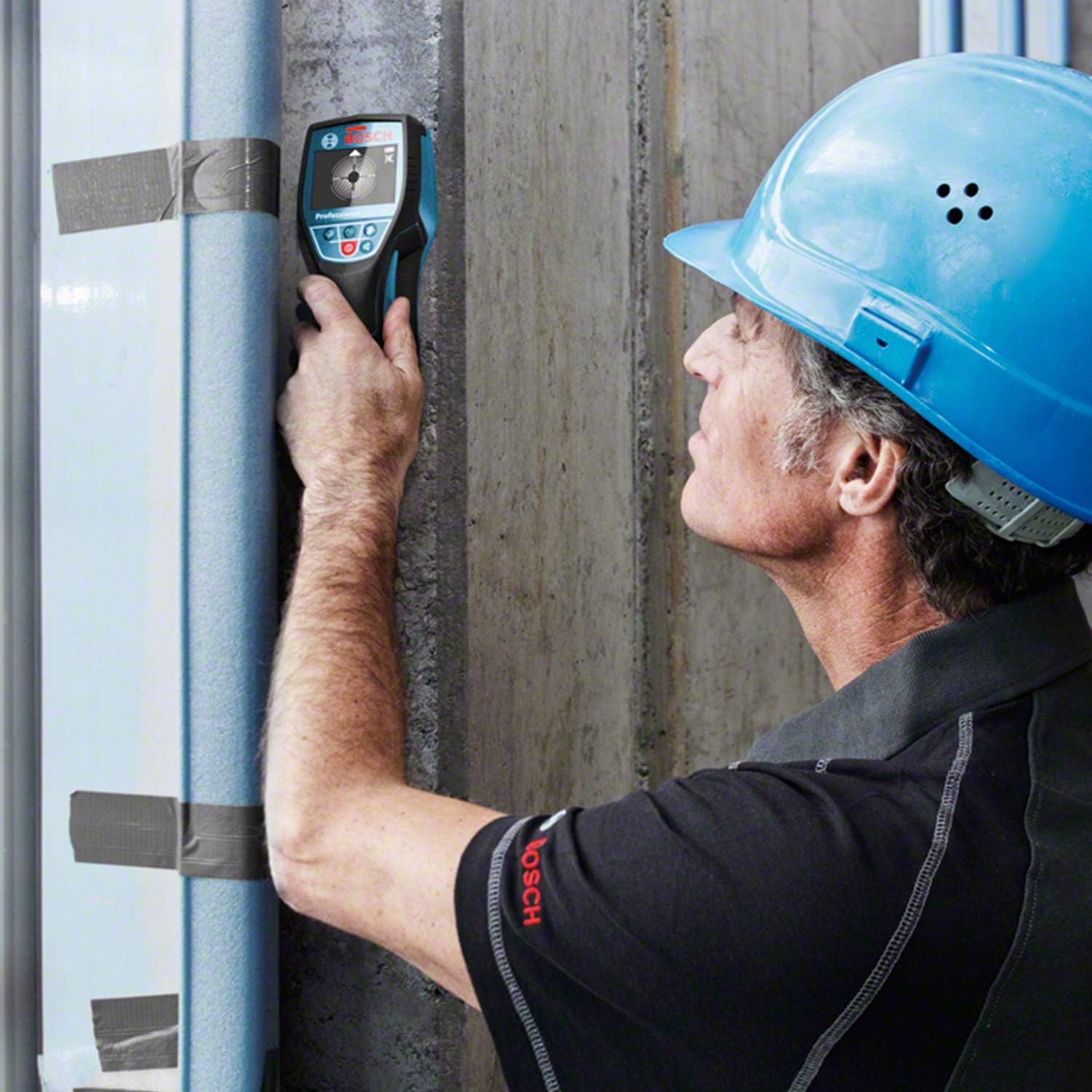
The big buying hook is the “measurement in one point” approach and the patented radar technology Bosch mentions. In practical terms, that translates to getting an immediate visual result instead of faffing about with long sweeping or fiddly calibration—useful when you’re working in tighter spaces where moving the scanner around isn’t great.
Key features you’ll actually use on site
Bosch’s wording covers a few core ideas, and they matter for day-to-day use:
- Radar-based detection (Bosch technology) for identifying cables with and without tension, plastic pipes (when filled with water), and ferrous/non-ferrous metal.
- One-point measurement for quicker visual results, particularly where there isn’t much room to shift the tool.
- Three detection modes so you can match the mode to the material type: drywall (tabiquería seca), concrete (hormigón), and a universal mode when you don’t know what you’re scanning.
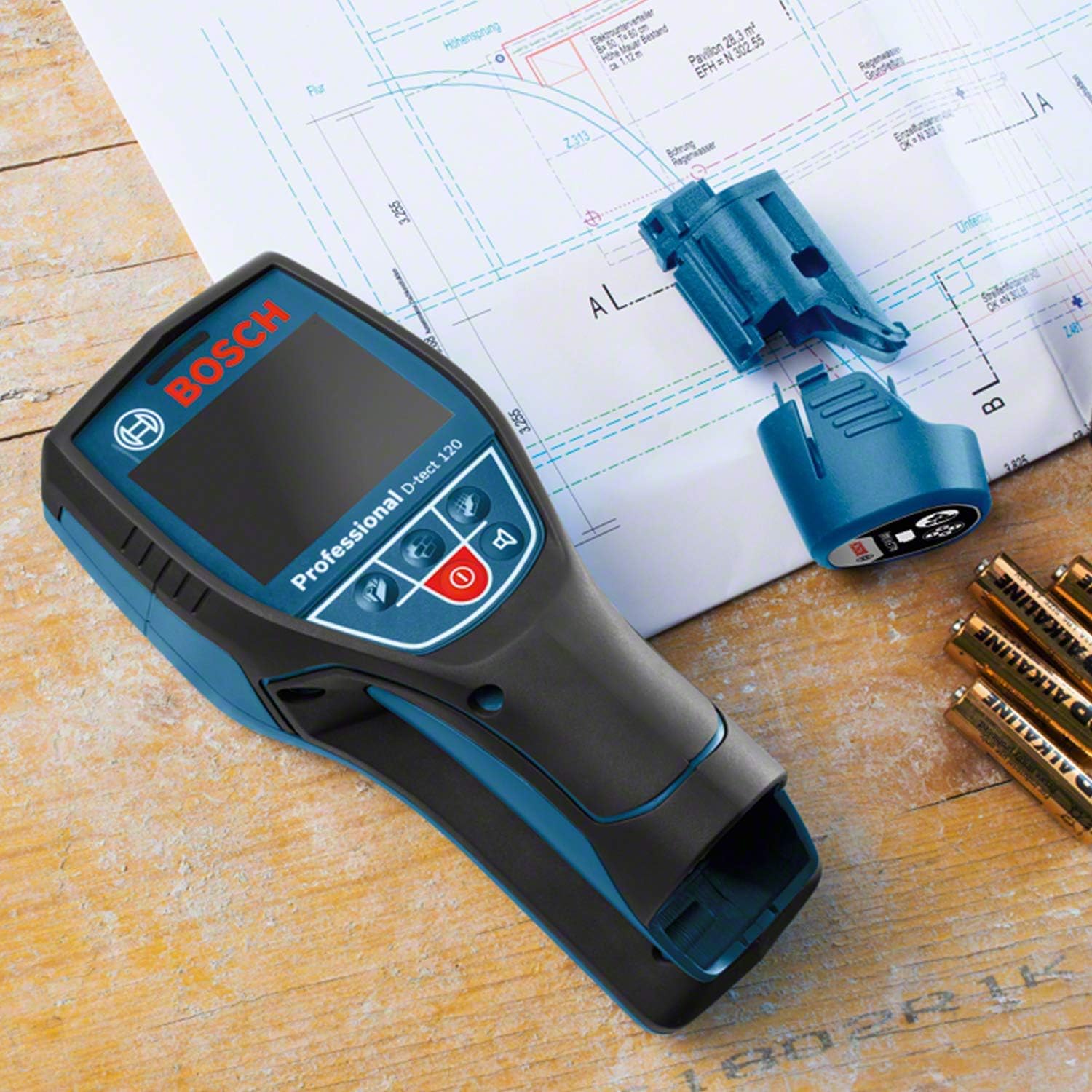
- Dual power options: you can run it from 4×AA batteries (included) or with a 12 V lithium battery using the provided battery adapter.
One thing to keep in mind: it can be very good at finding certain categories of items, but it isn’t a magic “everything in every wall” detector. For example, the plastic pipe detection is described as working for pipes that are filled with water, so if the pipe isn’t at that state, you may not get the same confidence.
Detection depth: what it means for real drilling decisions
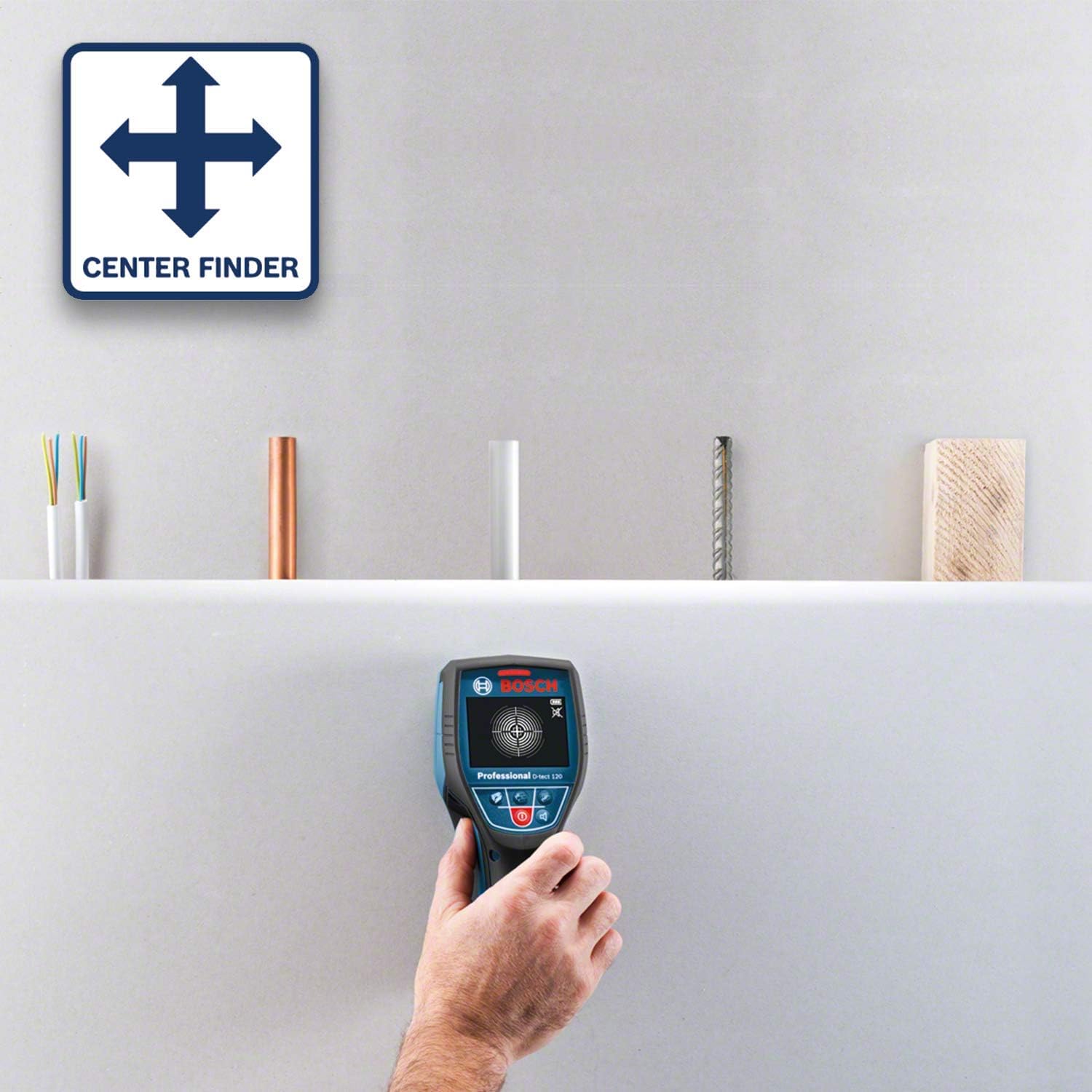
The product details list maximum detection depths for different targets. These figures—plastic pipes up to 60mm, wooden studs up to 38mm, live cables up to 60mm, magnetic metal up to 120mm, and non-magnetic metal up to 120mm—give you a useful sense of range.
But don’t read these as “always reliable at maximum depth”. In real walls, outcomes depend a lot on the material, density, and how well you select the detection mode. If you’re unsure what’s behind the surface, that universal mode helps, but it’s still worth slowing down and checking your readings instead of assuming everything will be perfectly obvious.
How it helps in everyday jobs (a micro example)
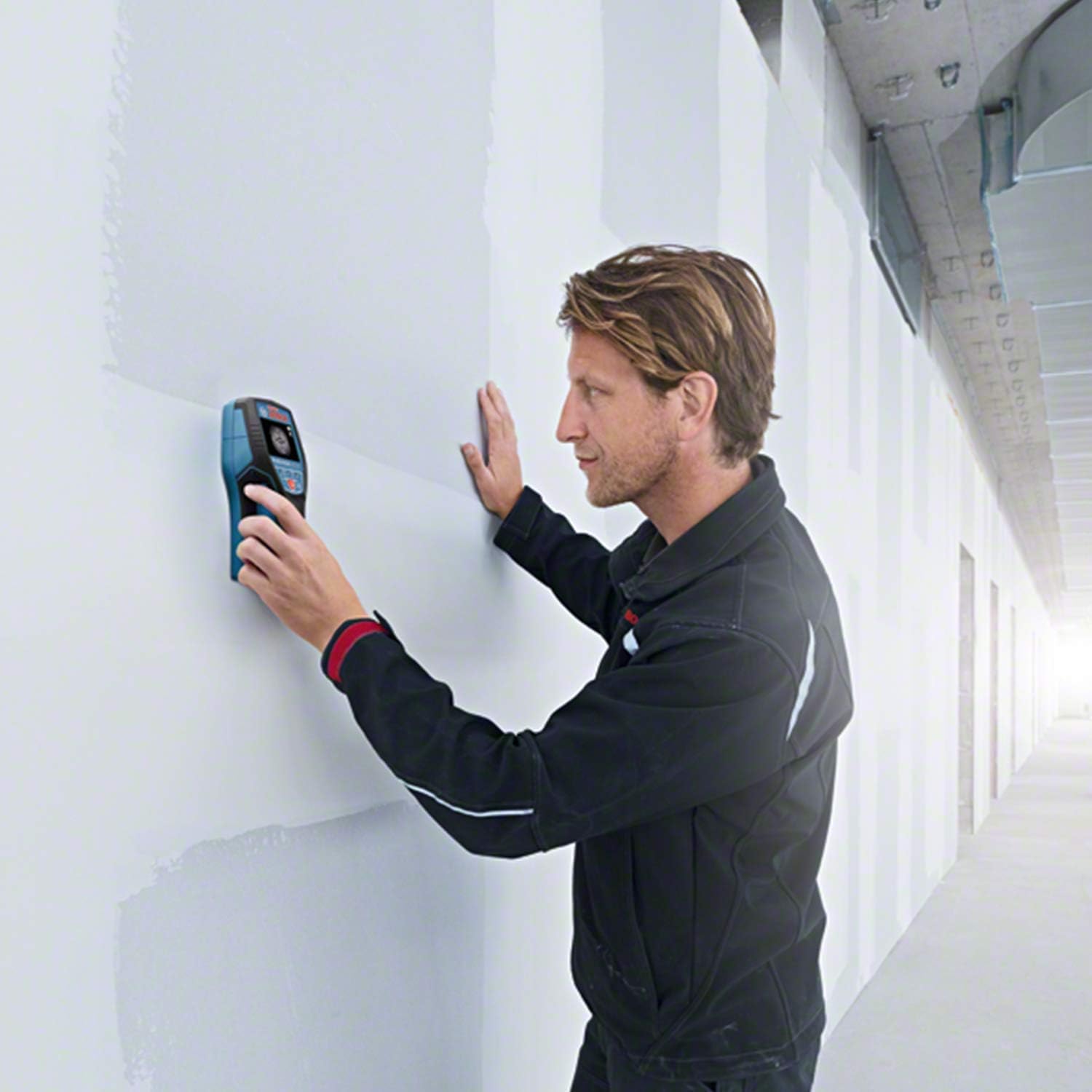
Imagine you’re installing a TV bracket and you need to drill into a wall without guessing where the cable routes run. You can set a suitable detection mode (or use universal if you’re not sure whether it’s drywall or something else), then place the scanner and rely on the one-point measurement for quick visual feedback. The aim is to help you choose a drilling spot that avoids cables—especially when you can’t easily move the scanner across a wide area.
It’s the sort of workflow that suits DIYers and trades alike: check, mark, drill—rather than drilling first and “learning” the wall later.
Power and what’s included
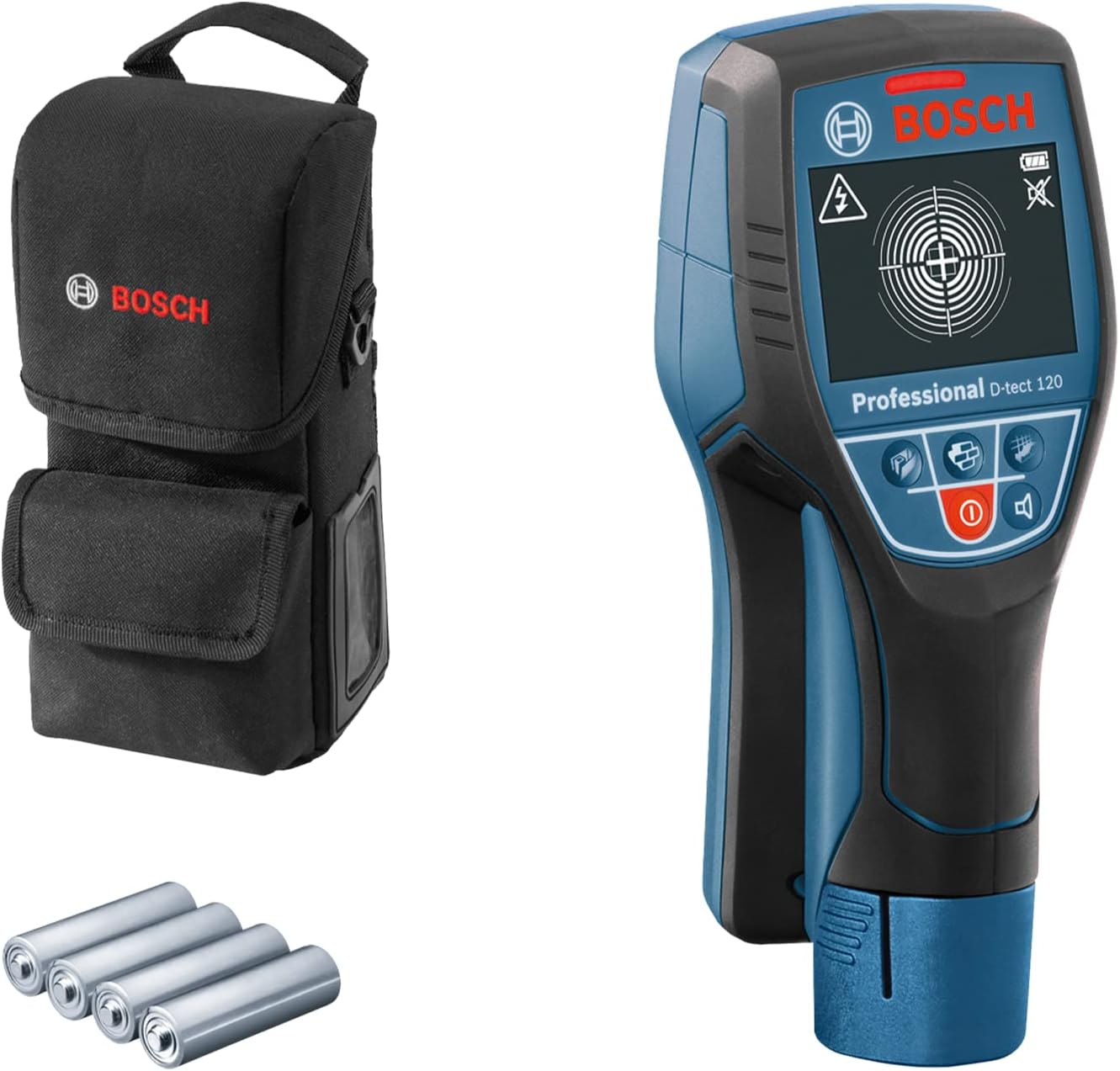
This model is designed with flexibility in mind. You get 4×AA batteries, a battery adapter for a 12 V lithium battery, and also a quick start card plus a protective bag.
For buying decisions, this matters because it reduces the “extras” problem. You can start using it straight away with AA batteries, then switch to a 12 V lithium setup if you already have that ecosystem.
When it’s a good fit (and when to be cautious)
It’s a good fit if you want a wall scanner that covers the most common pre-drill risks—cables (including live cable), water-filled plastic pipes, and both magnetic and non-magnetic metal—plus you value quicker results via one-point measurement.
It makes sense if your jobs involve mixed wall types, or if you sometimes don’t know what you’re scanning until you’re already on the wall. The three detection modes are there for a reason.
It might not be for you if you’re expecting a purely “set-and-forget” detector with guaranteed accuracy regardless of wall conditions. Also, if your main interest is something outside the categories described (or you specifically need performance that’s not addressed in the provided details), you may find other approaches more suitable.
Tech specs
- Type: Wall scanner
- Power: 4×AA batteries (included) or 12 V lithium battery via adapter
- Max detection depth – plastic pipes (water-filled): 60 mm
- Max detection depth – wooden studs: 38 mm
- Max detection depth – live cable: 60 mm
- Max detection depth – magnetic metal: 120 mm
- Max detection depth – non-magnetic metal: 120 mm
- Included in the pack: D-tect 120 wall scanner, 4×AA batteries, battery adapter, quick start card, protective bag
- Colour: Blue
Should you buy it?
It’s worth considering if you want a practical, multipurpose scanner for pre-drill checks and you like the idea of faster one-point visual results—especially for cables and metal, plus water-filled plastic pipe detection. The dual power approach is also a sensible touch for someone who wants to start quickly and then scale up later.
You may want to skip it if you need confidence in situations that fall outside the categories and conditions described (for instance, plastic pipe detection is tied to pipes being filled with water), or if you’re after a specialist tool for a narrower use case.
Mini FAQ
FAQ
Can it detect live cables? Yes—live cable detection is listed, with a maximum detection depth given.
Does it detect plastic pipes? It’s designed to detect plastic pipes that are filled with water (that condition is specifically mentioned).
What if I don’t know what the wall is made of? There’s a universal detection mode intended for situations where the material isn’t known.
What power does it use? It can run on included 4×AA batteries, or on a 12 V lithium battery using the adapter.
What comes in the box? The scanner, 4×AA batteries, a battery adapter, a quick start card, and a protective bag are included.