

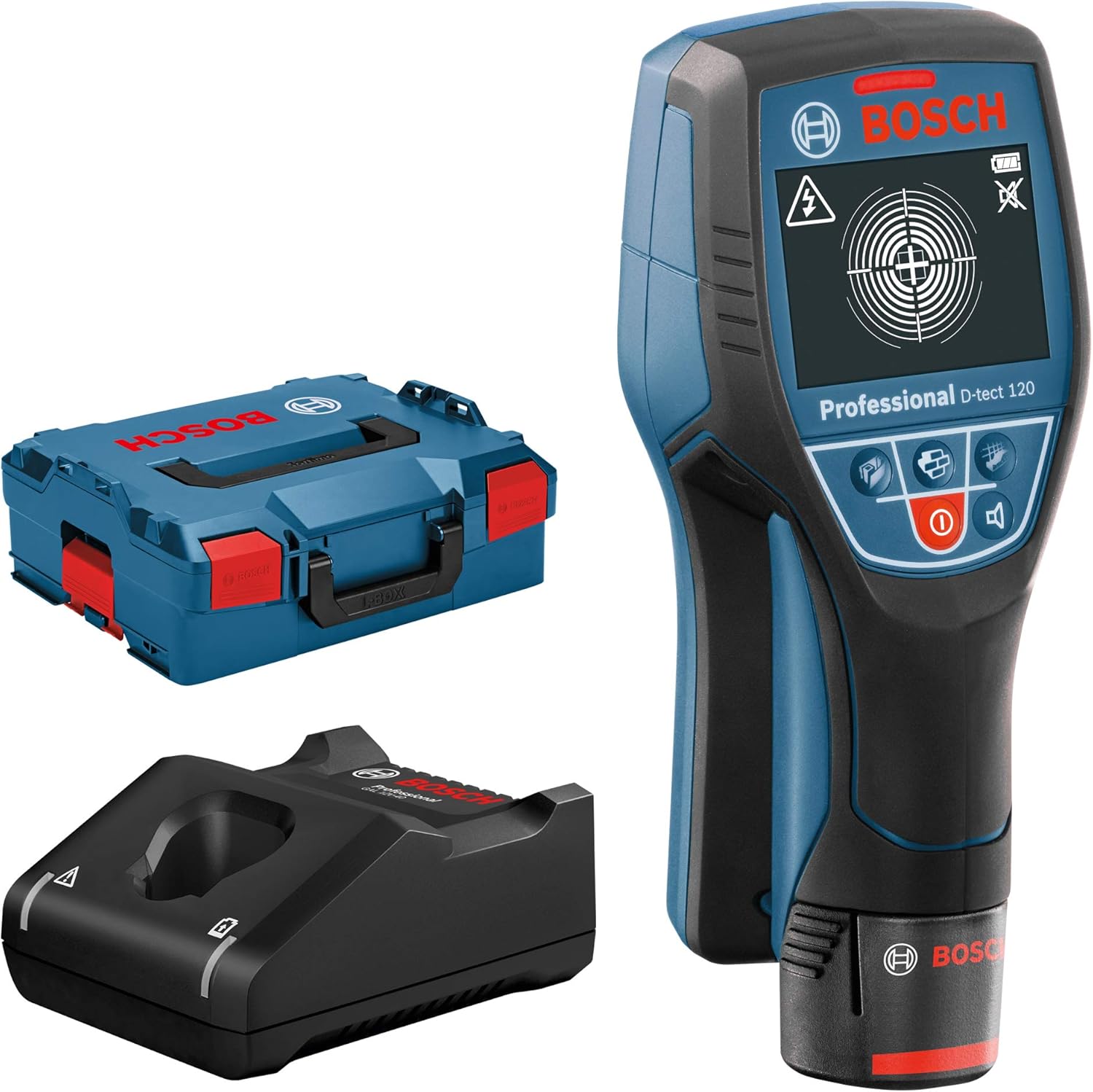
Bosch Professional 12V System D-tect 120 wall scanner (12V battery, in L-Boxx)
Product description
What this Bosch wall scanner is for
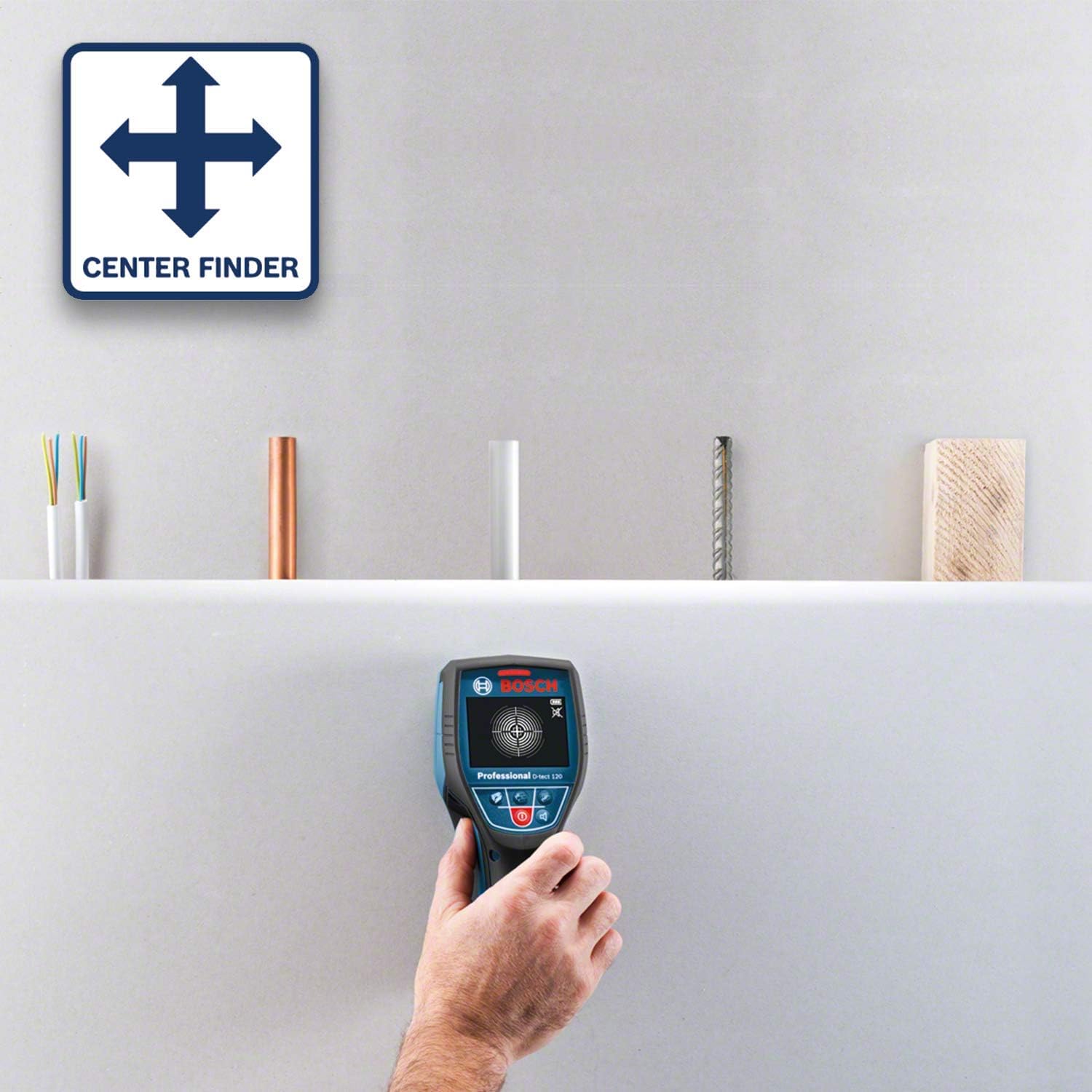
The Bosch Professional 12V System Wall Scanner D-tect 120 is built for one everyday job: helping you work out what’s behind the wall before you drill, screw, or chase cables. It’s designed to spot more than just studs, with radar-style detection aimed at identifying different object types, including live and non-live cables, water-filled plastic pipes, and both magnetic and non-magnetic metal.
In practical terms, it suits anyone who regularly hangs fixtures on internal walls, mounts shelves, installs rails, or does DIY repairs where you can’t just “have a go and see”. It’s also the kind of tool that feels more useful the more you have to work around hidden services.
That said, no scanner is magic. Even with good detection, you still need to work carefully—especially near electrics and where the wall composition might not match the mode you selected.
Key takeaways for real-world use
A few elements of the D-tect 120 stand out on paper, and they matter when you’re in a hurry.
First, it’s positioned as a radar technology stud finder. The brand points to detection of several object categories (including live cables) rather than only timber studs, which can be the limiting factor on simpler finders.
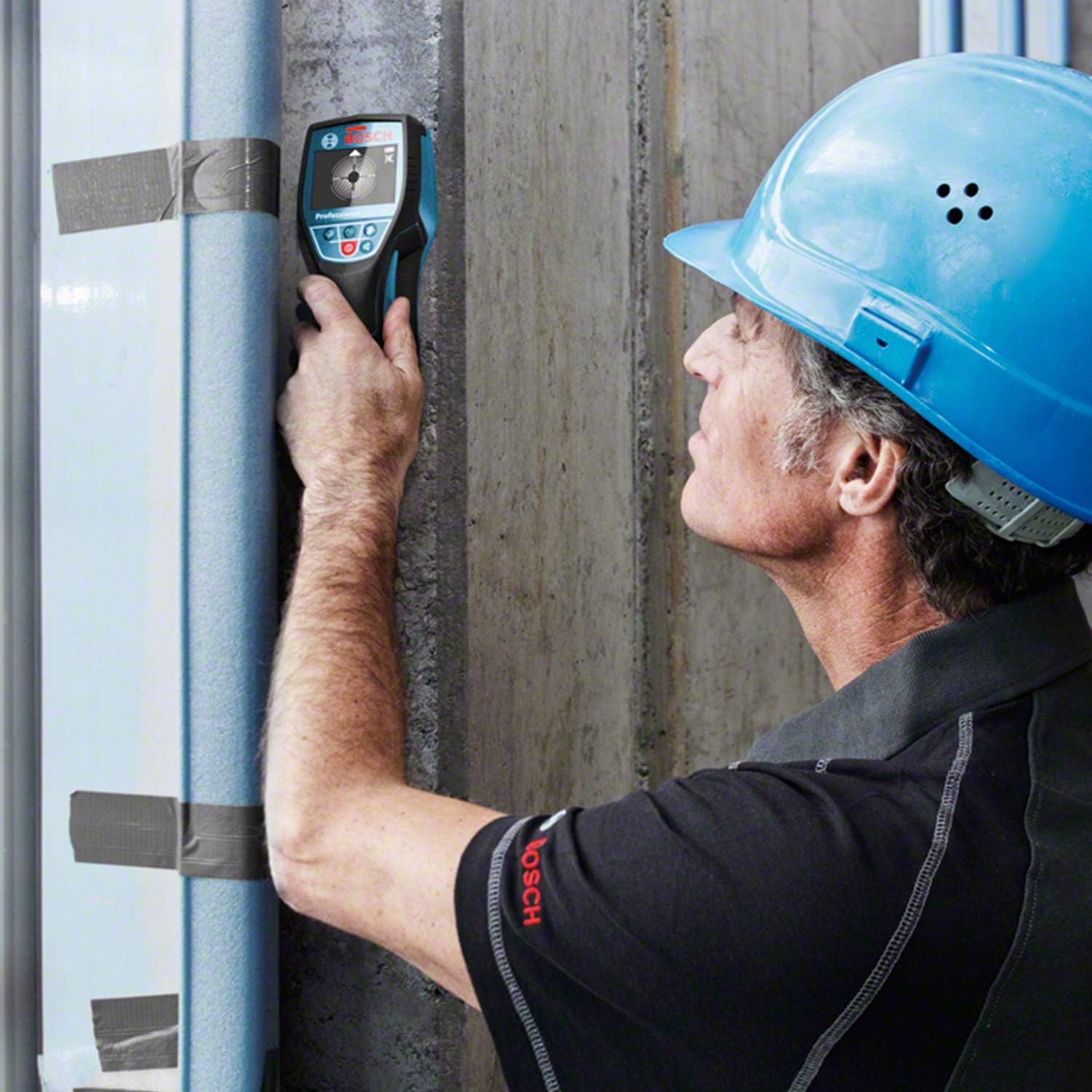
Second, there’s a focus on “immediate results even when there is little or no space to move”. If you’ve ever had a detector that needs a perfect swiping path, you’ll appreciate the attempt to make it work in awkward situations—think narrow gaps, near corners, or when you’re working around a fixture.
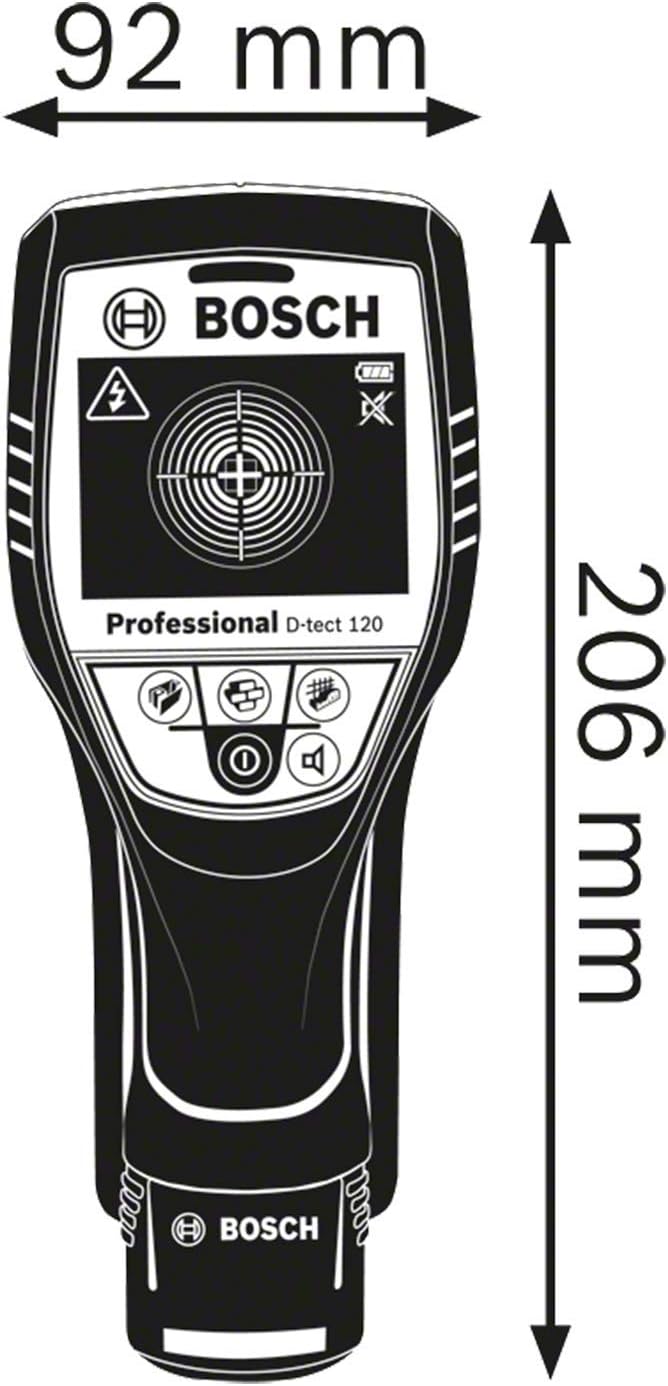
Third, it includes three detection settings: Drywall, Concrete, and a Universal mode if you’re unsure what material you’re dealing with. That’s useful because the “right mode” is often what separates a helpful scan from a frustrating one.
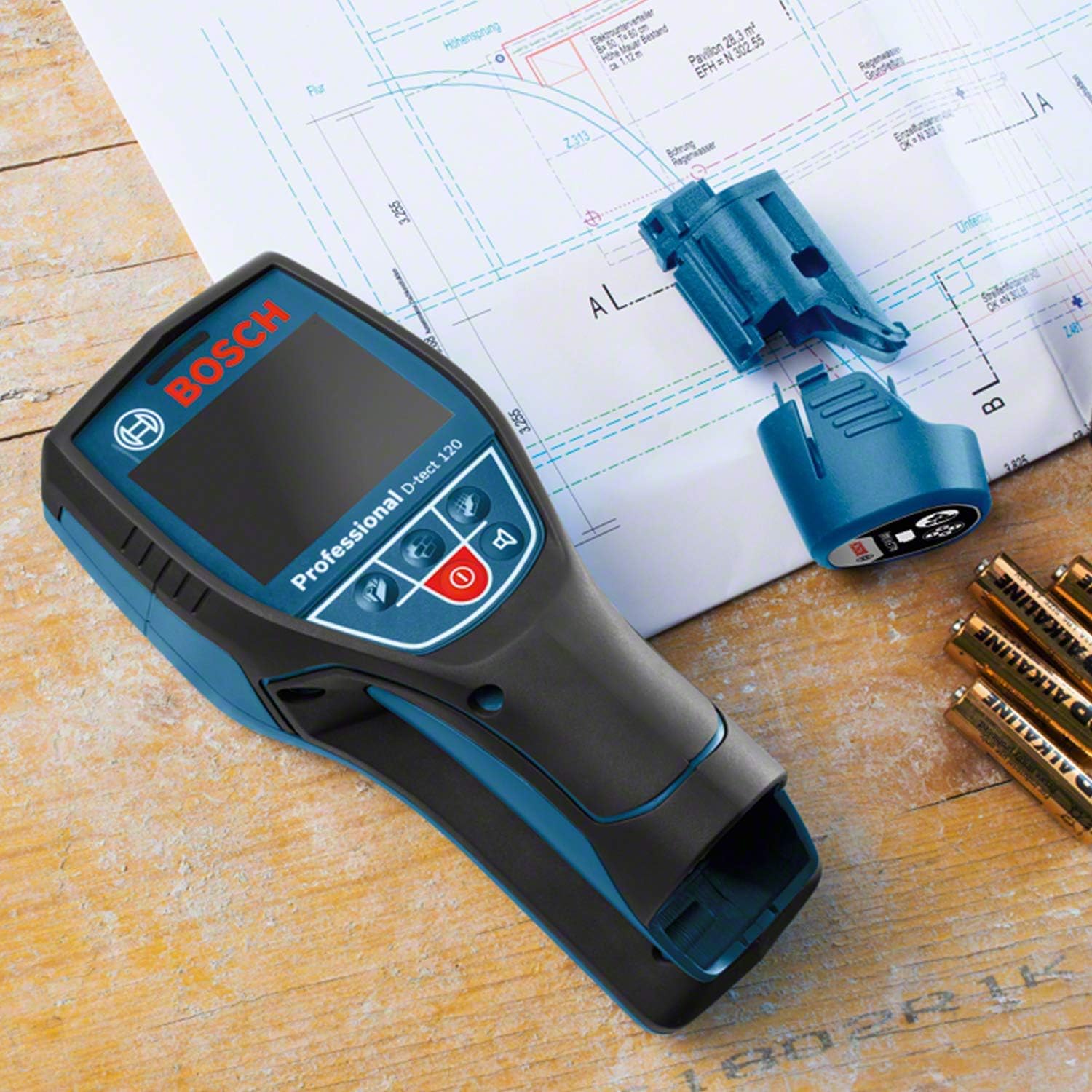
Finally, it’s part of the Bosch 12V System. You can run it with a 12 V Li-ion battery or (with the additionally available adapter) standard AA batteries. If you already live inside a 12V ecosystem, that’s convenient, if not, it’s something you’ll need to account for.
What you’ll notice in use (and where it can fall short)
When you use the D-tect 120, you’re essentially trading time and guesswork for a more informed decision—especially when you’re trying to avoid drilling into cables or pipes.
If you’re scanning on drywall, you’d normally choose the Drywall setting. For concrete-type walls, you’d switch to Concrete. The Universal mode is there for the “I’m not sure” moments, which is common in older properties or mixed construction.
Here’s the important limitation to keep in mind: detection accuracy can be influenced by wall type and the selected mode, plus how the object sits behind the surface. So while it can detect multiple categories, it doesn’t remove the need for careful confirmation and sensible drilling practices.
Also, its detection depth differs depending on what it’s trying to find (with separate maximum depths listed for plastic pipes, wooden studs, live cables, magnetic metal, and non-magnetic metal). If you’re working at the outer edge of those depths, results may be less reliable—so it’s worth planning your drilling position rather than relying on “furthest possible detection”.
Detection settings and maximum detection depth (what matters most)
The D-tect 120 provides three detection settings: Drywall, Concrete, and Universal mode if the material is unknown.
Bosch also provides maximum detection depths that vary by target type: - Water-filled plastic pipes: up to 60 mm - Wooden studs: up to 38 mm - Live cable: up to 60 mm - Magnetic metal: up to 120 mm - Non-magnetic metal: up to 120 mm
Those numbers are the kind you want to look at before buying, especially if you’re often drilling through thicker internal walls or you’re dealing with deeper service runs.
Power options and what’s included
This scanner is dual power source. On one side you can use a 12 V Li-ion battery (within the Bosch 12V system). On the other, you can use standard AA batteries by using the additionally available battery adapter.
In the box, Bosch includes: - Wall Scanner D-tect 120 - 1x 12V battery - quick charger - L-BOXX
So you’re not starting from zero: you get the 12V battery and charger included, which is handy if you’re ready to use it straight away.
Who it suits (and who should consider alternatives)
It’s a good match if you want a wall scanner that goes beyond “stud only” detection, and you frequently encounter mixed wall types, mixed fixings, or you simply want better confidence before drilling.
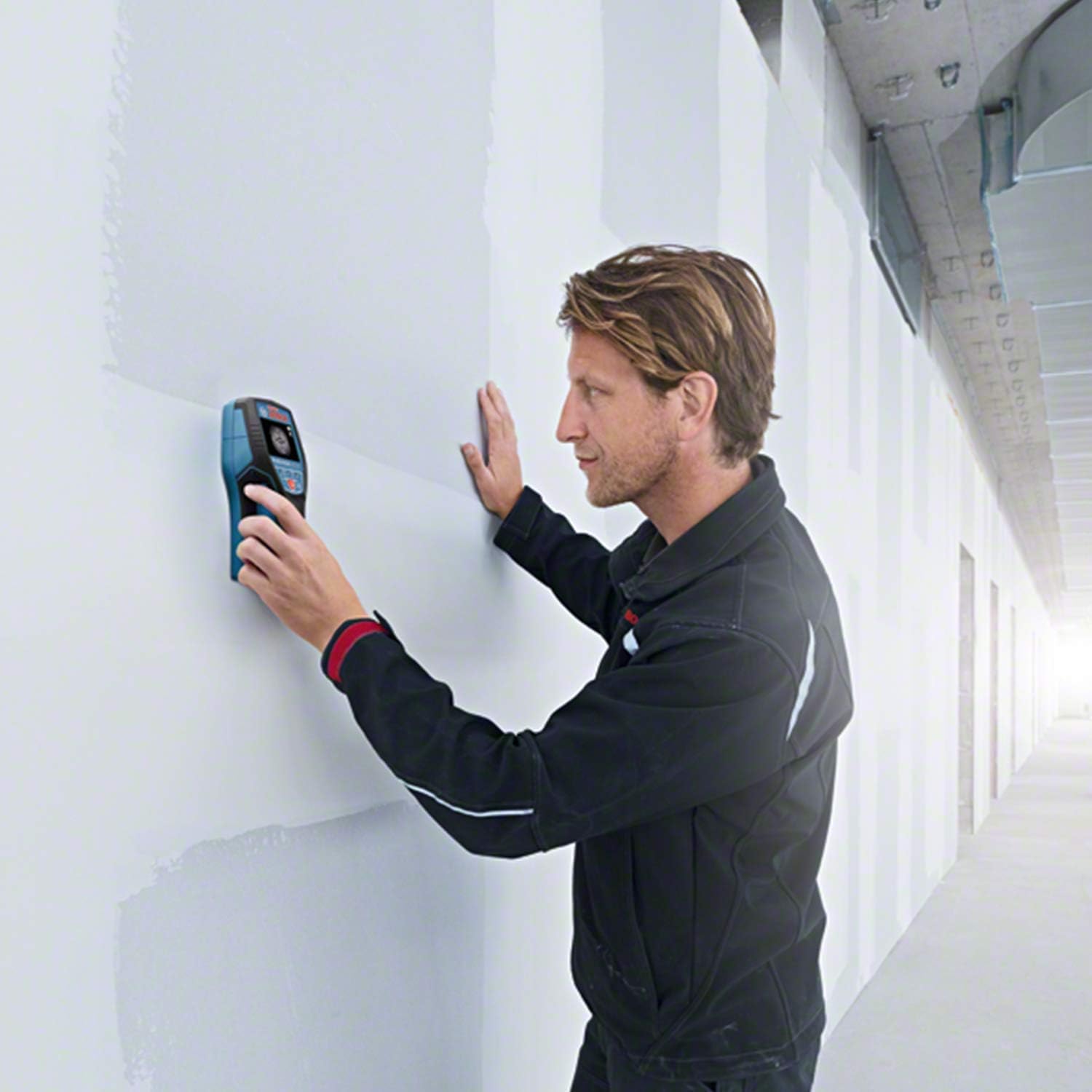
Worth considering if you: - drill into walls for shelves, brackets, TVs, curtain rails, or general fixtures - need to locate both non-metal services (like water-filled plastic pipes) and different metal types - want a tool that’s described as providing immediate results even with limited space to move
You may want to skip it if: - you mainly work on one predictable wall type where a simpler, single-purpose detector would cover your needs - you don’t want to think about detection modes at all (because choosing the right setting is part of getting decent results) - you’re expecting it to replace careful safety practices around electrics and plumbing
Mini FAQ
Can it detect live cables?
The product description states it can detect live and non-live cables, but as with any wall scanner, detection effectiveness still depends on wall conditions and correct mode selection.
What do the detection settings do?
The three settings (Drywall, Concrete, and Universal) are intended to let you choose how the scanner interprets the wall. Universal mode is for when the material is unknown.
Does it work with AA batteries?
It can work with standard AA batteries, but you’d need the additionally available battery adapter to do that.
Is the L-Boxx included?
Yes, it’s included in the pack.
Is it worth it?
If your projects involve drilling into walls where services might be hidden, the Bosch Professional 12V System D-tect 120 is the sort of scanner that makes practical sense. Its radar-focused approach, multi-target detection (including live cable and different metal types), and the “immediate results” idea for tight spaces are all reasons it could earn a place in your toolbox.
However, it’s not a buy-and-forget device. You’ll get the most out of it when you choose the right detection setting for the wall and keep your expectations realistic at the outer limits of the listed detection depths.
So, for DIYers and tradespeople who drill regularly and want more coverage than a basic stud finder, it’s a solid purchase to consider. If you only do occasional fixing and your wall type is always straightforward, you might find that a simpler detector does the job with less hassle.