

BOOBEIR 30M LMR200 Equivalent SMA Male to SMA Female Coaxial Cable (50 Ohm) – Ultra Low-Loss Extension for 5G/6G, WiFi 6E, GPS & More
Product description
What this is and what it’s for
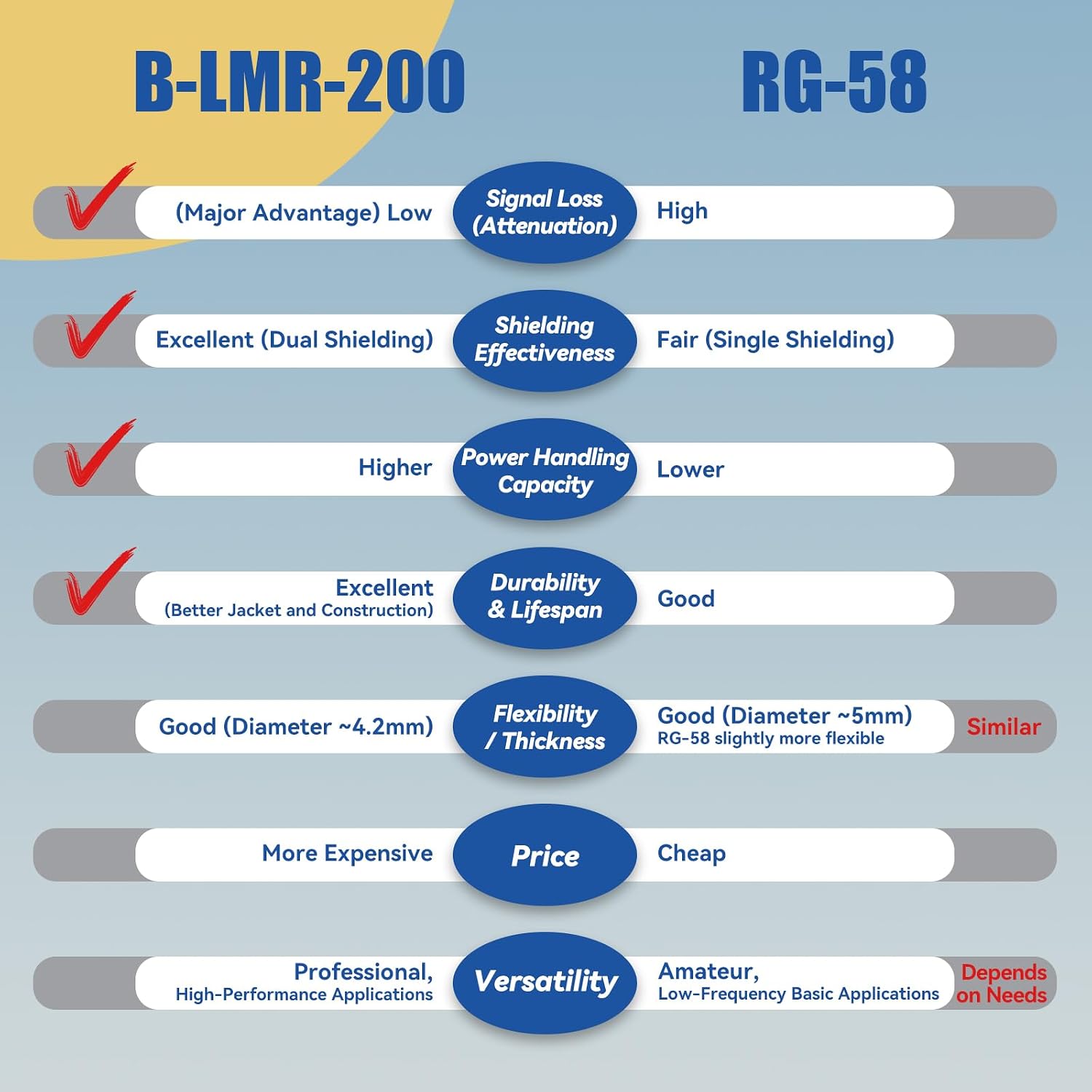
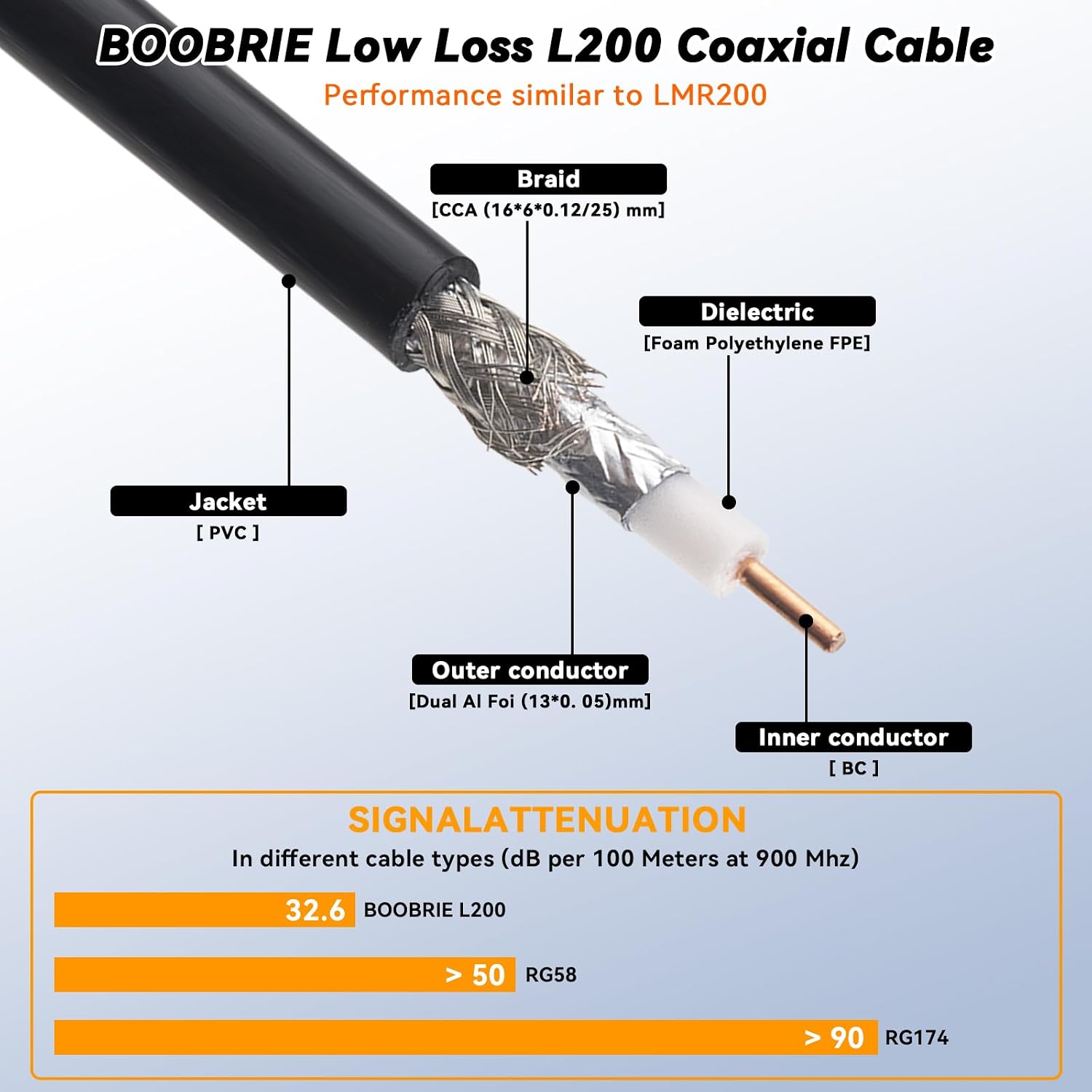
The BOOBEIR 30M SMA male to SMA female coaxial extension is a 50 ohm RF cable designed to extend antenna connections with minimal signal loss. Marketed as an LMR200-equivalent, it uses a copper core and high-density shielding to reduce attenuation compared with typical RG58 leads. If you rely on clear, stable RF signals for 4G/5G antennas, GPS, SDR or amateur radio setups, this kind of longer run can be convenient when you need distance without compromising too much on performance.
The baseline value and what to expect on paper
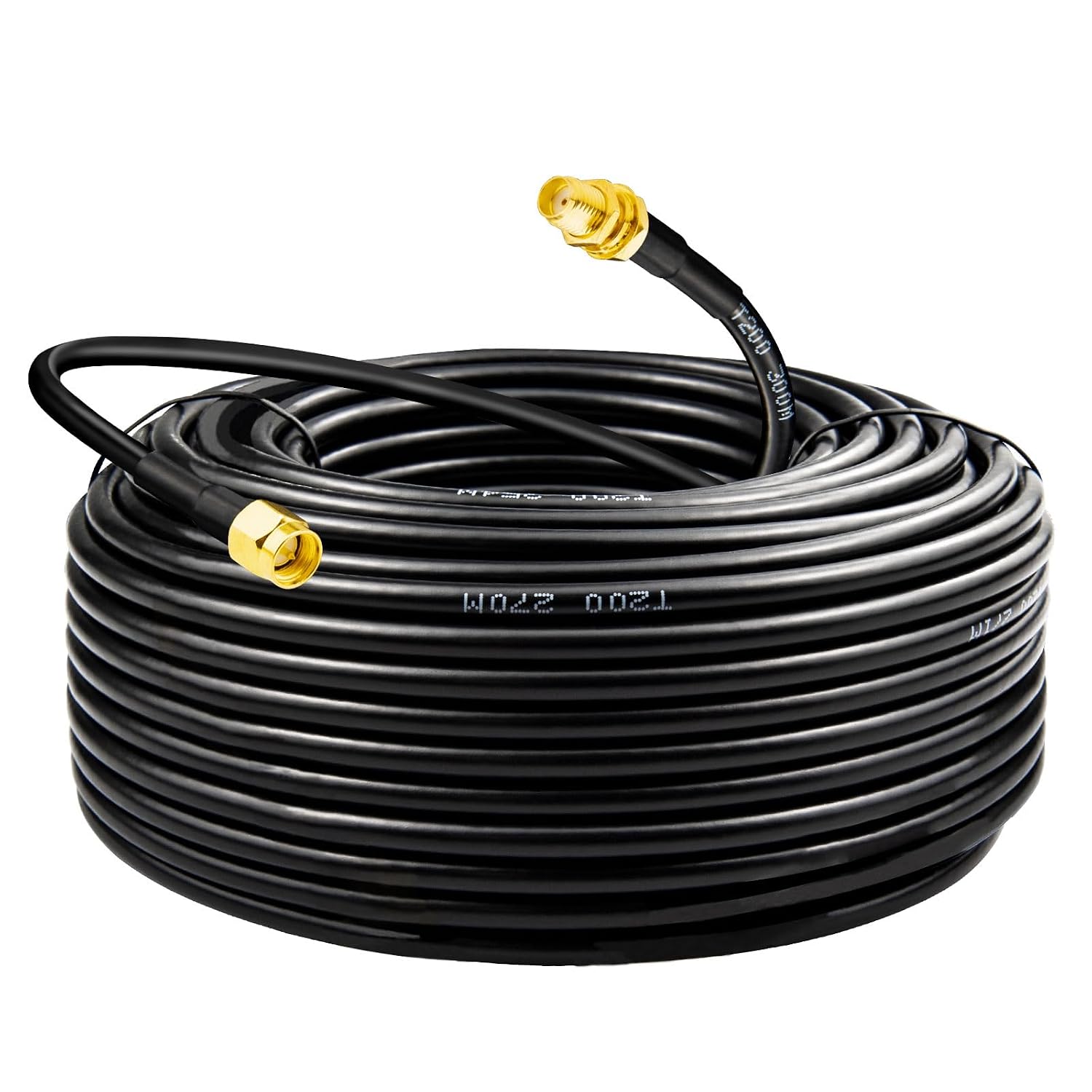
On paper, the key numbers point to a straightforward extension cable: 50 ohm impedance, copper core, high-density shielding, and a length of 30 metres. The claimed advantages over standard coax are lower loss at higher frequencies (up to around 6 GHz) and a form factor that suits SMA devices such as modems, routers or RF front-ends. It’s not a universal solution for every setup, particularly where thin, flexible routing or very short lead lengths are preferred, but for mid-length runs in RF links it should help keep signal integrity intact.
What stands out in practical use
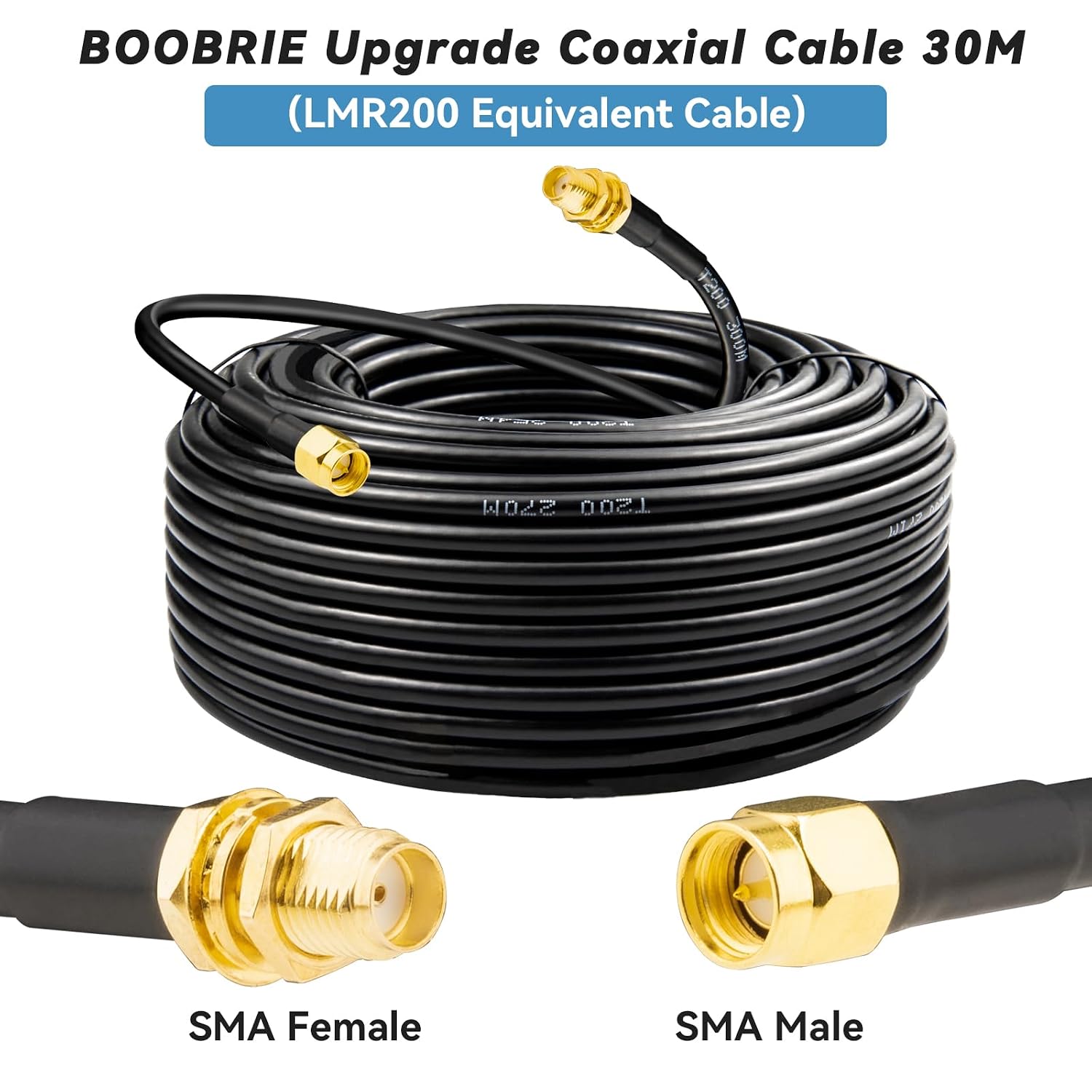
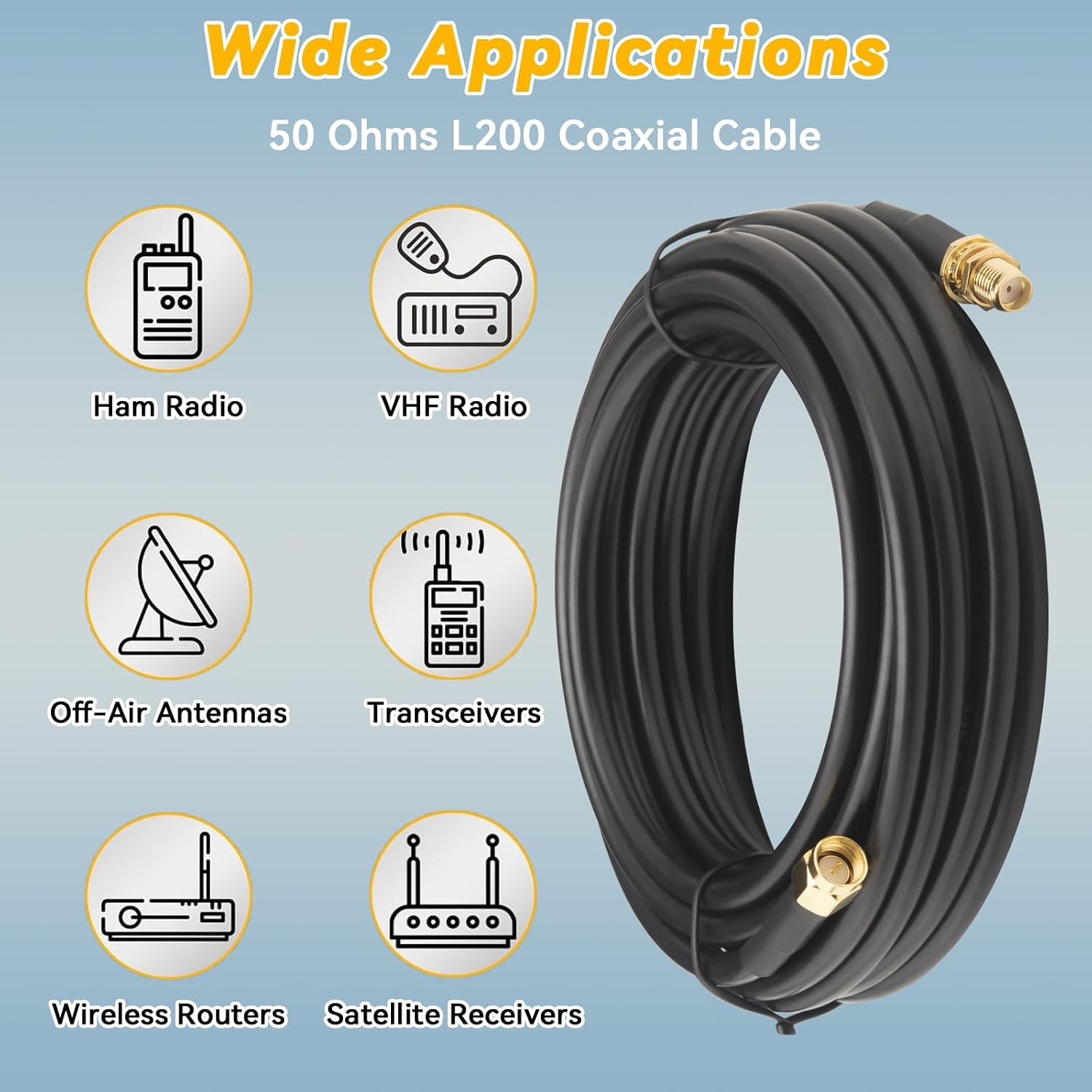
If your installation involves WiFi 6/6E access points, cellular boosters, GPS antennas, or SDR/Ham Radio experiments, the 30 m run can reduce signal drop across distance. The construction emphasises shielding, which matters when you’re in environments with interference from nearby electrical gear or dense signal traffic. It’s also useful in vehicle setups or fixed installations where you can’t position the equipment close to the antenna.
The pros and the not-so-good bits
What you’ll likely appreciate: the 50 ohm standard makes it compatible with a wide range of SMA devices and RF accessories, a longer lead means fewer repositionings of transmitters/receivers, and the shielded copper core helps preserve higher-frequency performance better than very generic, low-cost cables. What may hold you back: the long length invites more physical tension and mechanical wear, at extreme runs, even low-loss cable loses more signal than shorter links. It’s not advertised as suitable for TV, and the stated use is RF antenna extensions, which implies that for non-RF tasks or very delicate sensitive-detection links you’ll want to verify the actual attenuation in your exact frequency band.
Who this is best for
This cable makes sense if you’re building or upgrading an RF chain that benefits from a longer, robust extension without a heavy drop in signal quality. It suits hobbyists and professionals working with 5G/6G tests, GPS paths, ADS-B feeds or SDR setups where the antenna can be located remotely from the receiver.
Who should think twice
If your application relies on extremely short, compact cabling, or if you’re working in a scenario where every single dB of loss matters (for example high-frequency lab experiments or precision RF measurements), a more specialised, calibrated solution might be preferable. Also, if you need TV signals or non-RF communication paths, this particular cable isn’t designed for those uses.
Before you buy: quick checks
- Confirm SMA male to SMA female is the correct connector pairing for both ends of your setup.
- Ensure your enclosure routing can accommodate a 30 metre run without undue stress on the connectors.
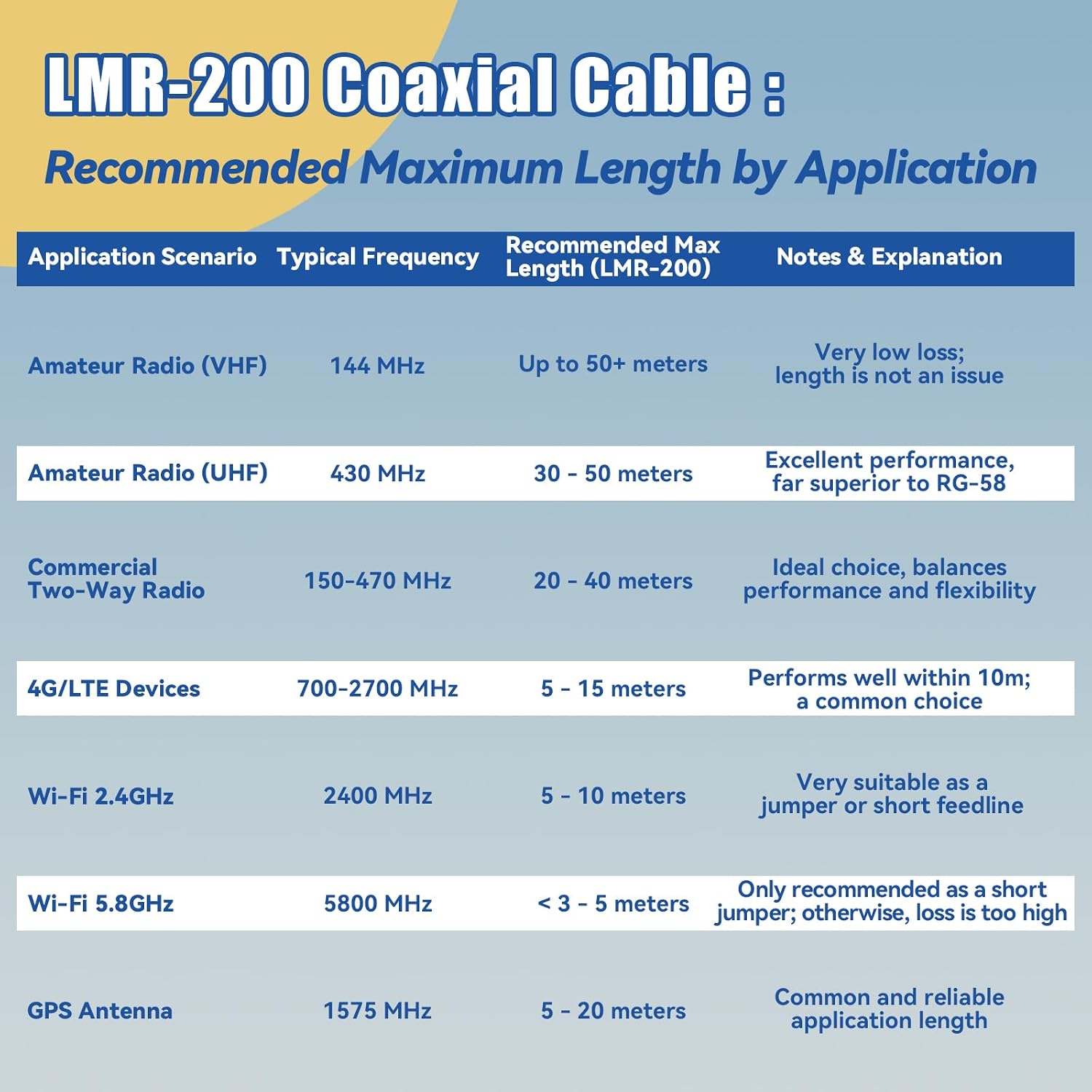
- Consider whether the frequency range you care about actually benefits from the claimed low-loss performance up to 6 GHz.
- Plan for protection at the terminations to reduce wear from bending or movement.
How it compares to other approaches
In practice, using a longer coax can be more economical than relocating equipment or purchasing an antenna with a shorter lead and multiple adapters. For short-range indoor deployments, a high-quality but shorter cable might deliver similar results with less loss and easier handling. If your priority is flexibility in lab or field tests, a longer, well-shielded extension can be a sensible compromise.
Practical usage example
Imagine you’re deploying a GPS antenna on a roof and the receiver is inside a nearby room. A 30 m extension lets you place the modem closer to the action with the antenna higher up, potentially improving reception without swapping to a more expensive, purpose-built mast-mounted option. If you’re experimenting with an RTL-SDR USB dongle and a distant antenna, this cable can help keep the signal reasonably clean across the link.
FAQ (top questions you may have)
- Is this suitable for TV reception? No, it’s not designed for TV signals.
- Will it work with all SMA devices? It’s compatible with most SMA devices, but verify the exact SMA gender and any platform-specific connector tolerances.
- How does length affect performance? Longer runs inherently introduce more potential loss and physical stress, expect better performance than very cheap cables but not as pristine as short, purpose-built runs in high-frequency setups.
Is it worth it?
Buying decision: Worth considering if you need a practical, longer extension for RF links that require a dependable 50 ohm path and you value shielding along the run. It’s a reasonable compromise for mid-to-long distance antenna connections where the alternative would be relocating hardware or adding multiple adapters. It may not be the best choice if you require the absolute lowest possible loss or if the installation demands extreme compactness.