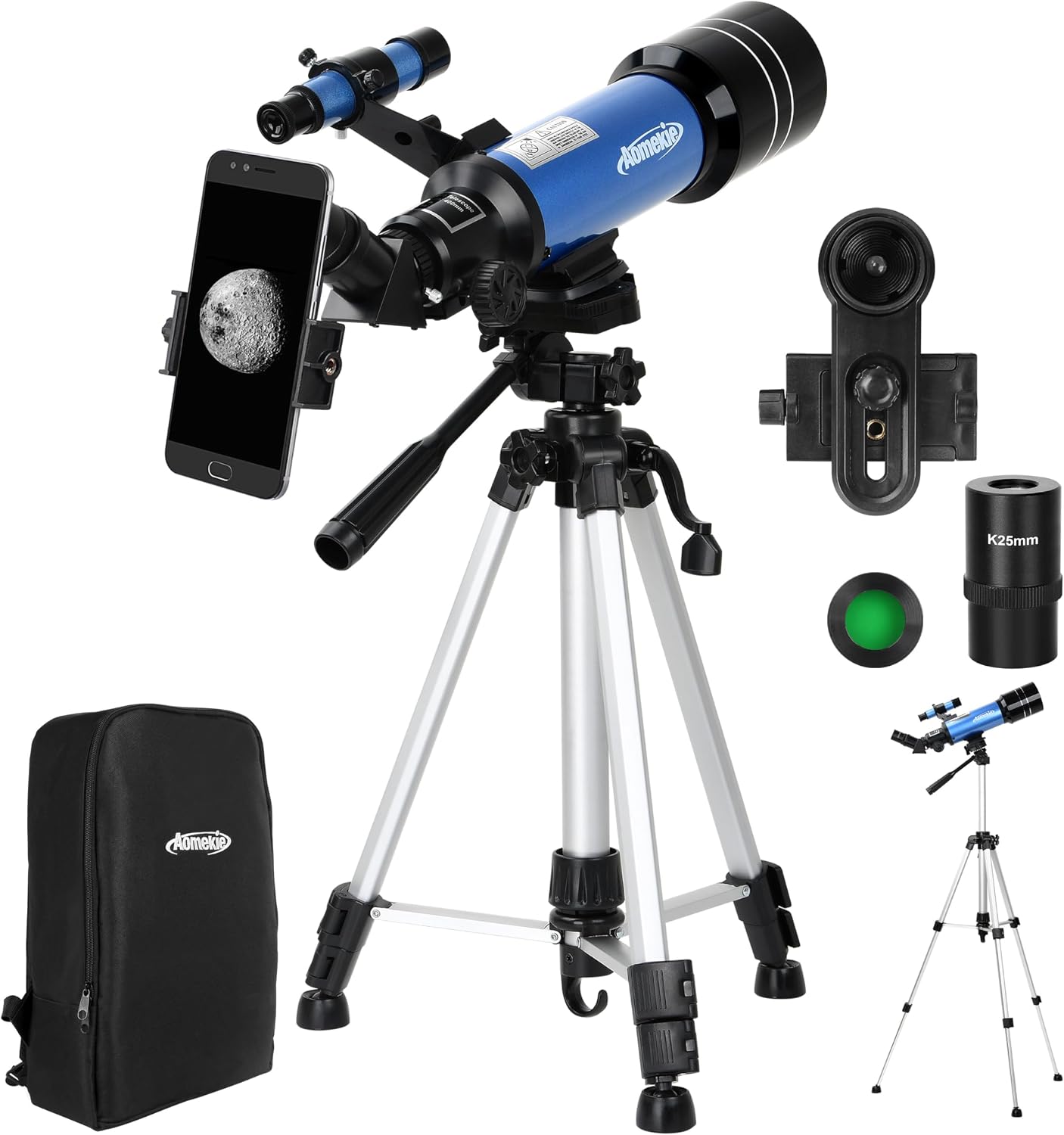
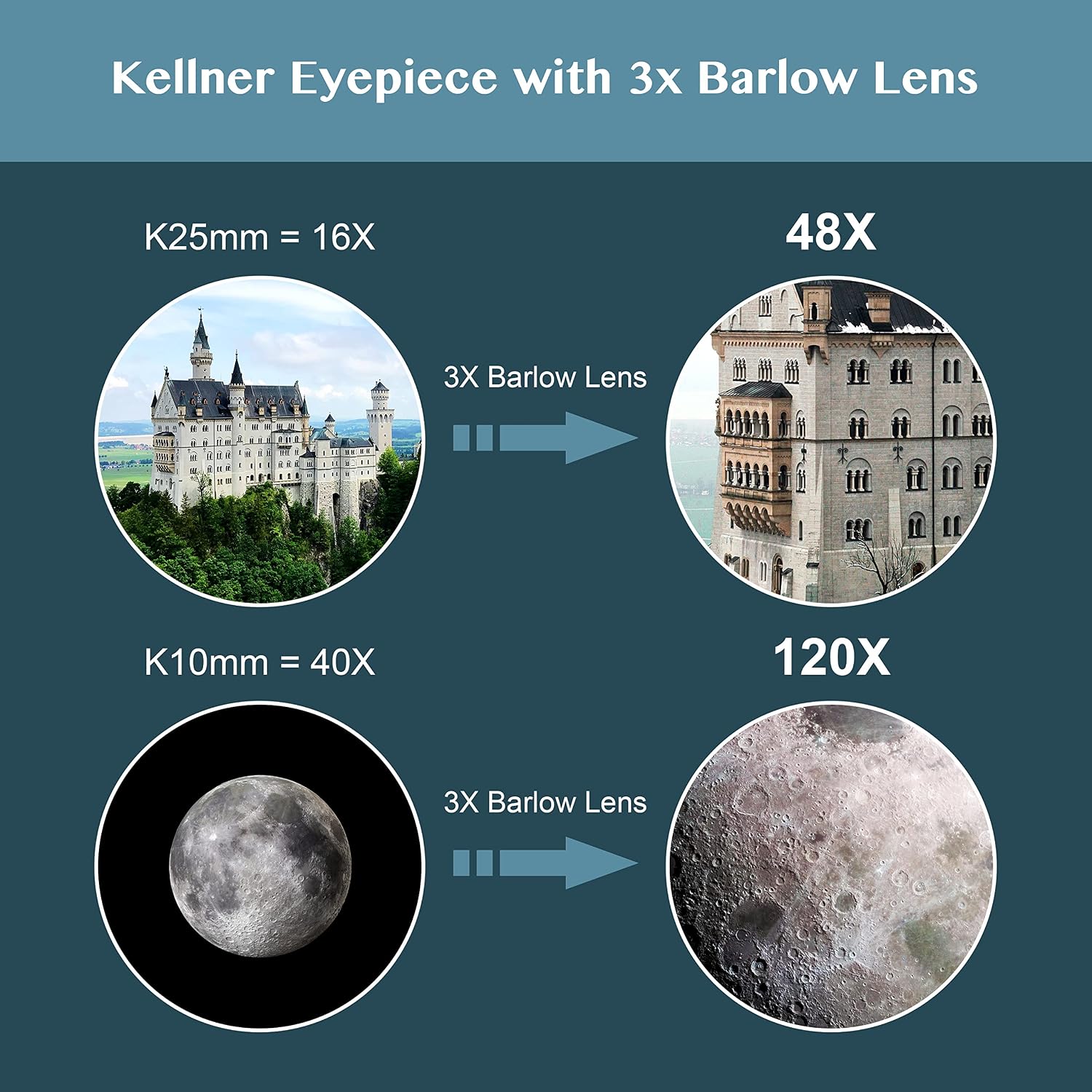
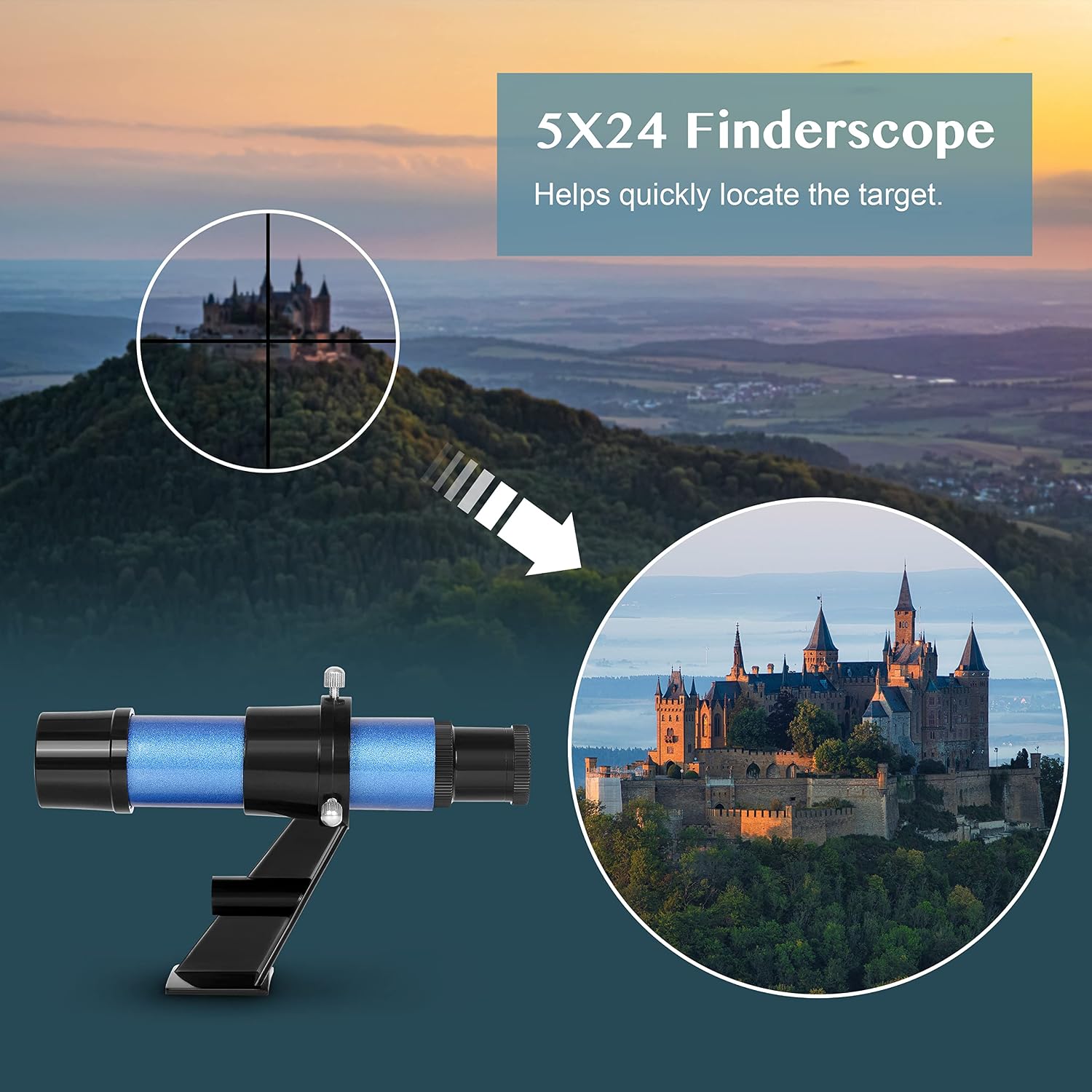
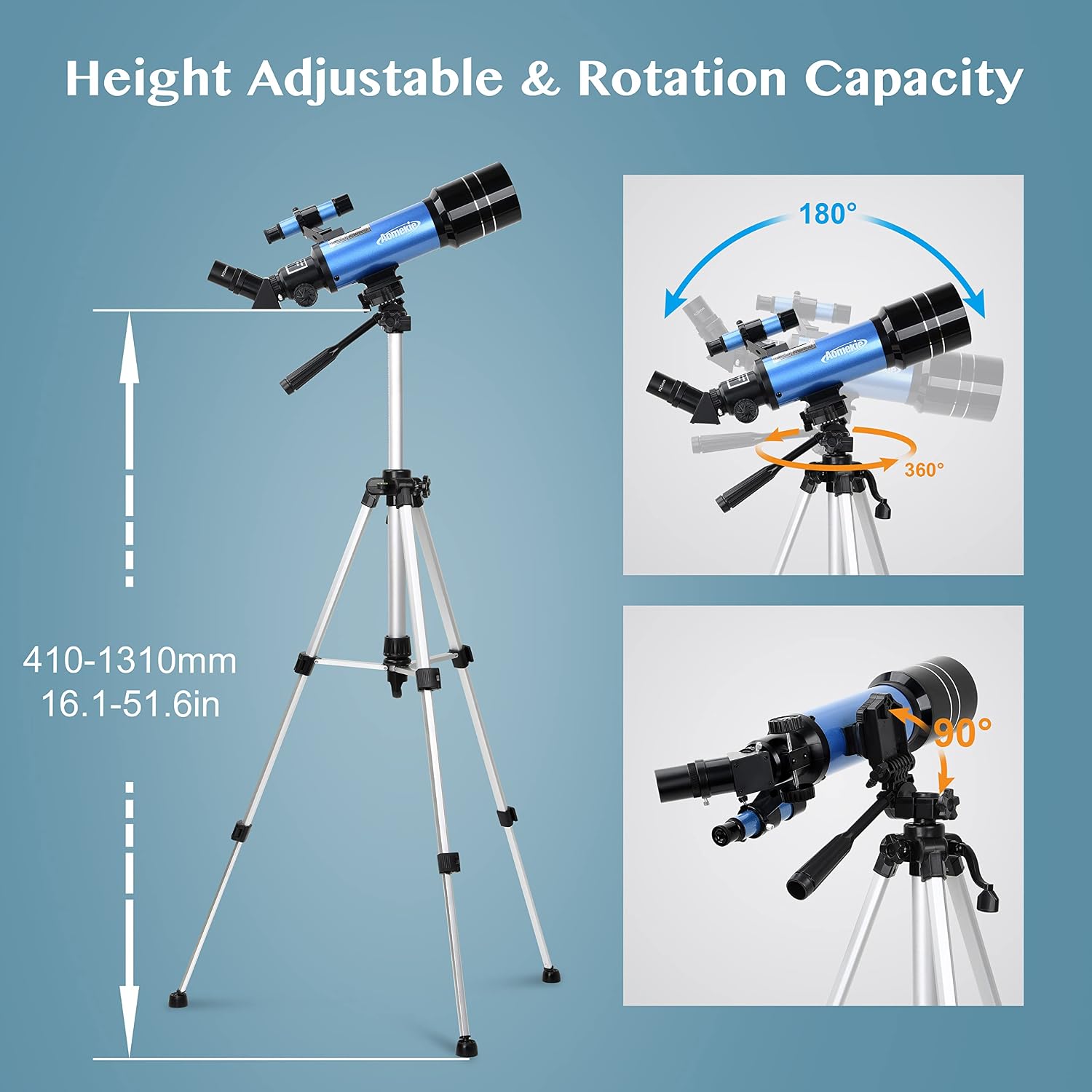
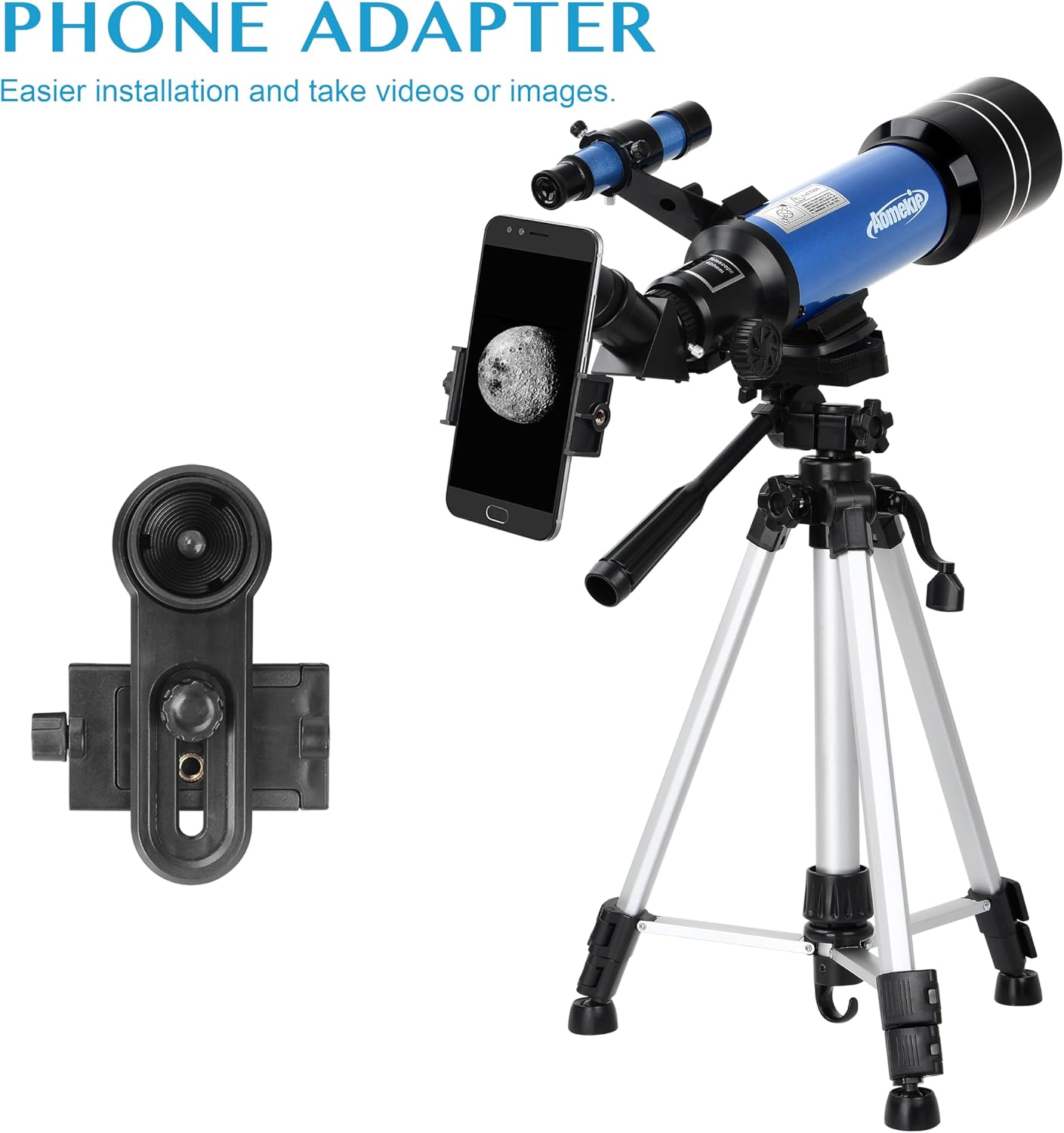
What it is and who it’s for\nThis Aomekie telescope is an entry‑level refractor designed for both adults and curious kids who want to dip into astronomy. With a 70 mm aperture and a 400 mm focal length, it promises a balance between ease of use and visible Moon and planetary detail. It comes with Kellner K10mm and K25mm eyepieces, offering starting magnifications around 16x and 120x when paired with the 3x Barlow lens. If you’re seeking a first telescope that travels well, this kit includes a backpack and a lightweight, adjustable tripod, plus a phone adapter to capture moments from your skywatching sessions.\n\n## How it’s laid out on paper (and what matters in practice)\nOn paper, the kit is positioned as a quick‑setup option for beginners: simple assembly, no tools required, and a travel‑ready package. The 70 mm aperture is enough to frame the Moon’s features and brighter planets under good conditions, while the 400 mm focal length helps keep everything manageable for learning eyepiece terminology and basic tracking. The 45° prism diagonal aims to make viewing more comfortable for people of different heights, which matters for longer sessions with kids. That said, deep‑sky viewing is not its strength, and the Moon can appear overly bright near full phase unless you use a Moon filter.\n\n## Highlights and how it translates to real use\nWhat stands out is the included travel setup: a backpack that houses the telescope, tripod, and phone adapter, with separate pockets for eyepieces and accessories. The rotating tripod positions widen your viewing angles, making it easier to align targets from different spots in the sky. The phone adapter and a 10X eyepiece included with it simplify quick photo capture, which can be appealing if you want to share a quick shot of a crescent or a brighter planet.\n\n## Limitations to consider\nIf you prioritise deep‑sky observing or detailed planetary science, this kit may feel limited. The highest magnification is achieved with the 3x Barlow and 120x equivalent, but the optical quality at that level is basic, and image brightness will fall as you push magnification. The recommendation to use a Moon filter is sensible, without it, bright phases can wash out details. Also, the phone adapter’s fixed eyepiece means you can’t use it with the K25mm eyepiece without removing the adapter’s own 10x eyepiece.\n\n## Who it’s for\nThis telescope suits families, beginners, and casual sky watchers who want a portable, value‑driven starter kit. It’s a practical gift for a budding enthusiast or a child taking first steps in astronomy, especially if the aim is to learn how to point and observe without getting overwhelmed by gear.\n\n## When it makes sense to buy\nIf you want a straightforward, travel‑friendly setup with a backpack and a phone‑filming option, and you’re okay with lower‑to‑mid range magnification for guided observation (Moon, some planets, bright DSOs under good skies), this kit holds real value.\n\n## When to pause or look elsewhere\nIf you expect sharp deep‑space views or plan high‑precision planetary observing, you may later upgrade to a telescope with a more substantial aperture, better optical quality, or a more modular eyepiece suite.\n\n## What to check before buying\n- Confirm you’re comfortable with basic manual alignment and focusing, as this kit is designed for quick setup.\n- Consider how you’ll use the phone adapter: it may not pair with all eyepieces, so plan for simple photography sessions with the included 10X eyepiece.\n- Think about storage and transport: the backpack is a convenient feature, but ensure you have space for your location and travel style.\n\n## Practical use example\nImagine an autumn evening with a clear sky: you set up the tripod, centre the Moon, and use the 10X eyepiece for a quick snapshot through the phone adapter. When a bright planet climbs higher, you switch to the K10mm to frame a crisp view, then slip on the Barlow for a wider field to catch a nearby star field during a short learning session.\n\n## FAQ (practical answers based on available data)\n- Can I use this telescope for deep‑sky objects? It’s more suited to the Moon and bright planets or star clusters under good skies.\n- Is assembly difficult for a beginner? The kit is described as quick to set up with no tools required.\n- Will the Moon look detailed near full Moon? A Moon filter is recommended to improve detail visibility.\n\n## Is it worth it?\nWorth considering if you want a portable, beginner‑friendly kit that includes a backpack, a phone adapter, and adjustable tripod for flexible viewing angles. If you expect high‑end optics or frequent deep‑sky observing, you might outgrow this sooner rather than later.