

Celestron AstroMaster 130EQ Motor Drive Newtonian Reflector Telescope (Dark Blue) – 31051
Reviews
Price
Product description
The essentials
If you’re looking for a Newtonian reflector telescope that’s aimed at helping you track sky objects rather than just “point and hope”, the Celestron AstroMaster 130EQ Motor Drive (31051) is a sensible idea on paper. It pairs a manually operated German equatorial mount with a motor drive that automatically follows objects as they appear to move across the night sky.
That mix matters: on a typical observing session, even small tracking errors can turn a once-sharp target into something you’re constantly nudging. Here, the motor does that continuous job once the telescope is aligned, while the EQ mount’s adjustment circles are there to help you locate targets with more precision than a basic alt-az approach.
What you’ll notice in use
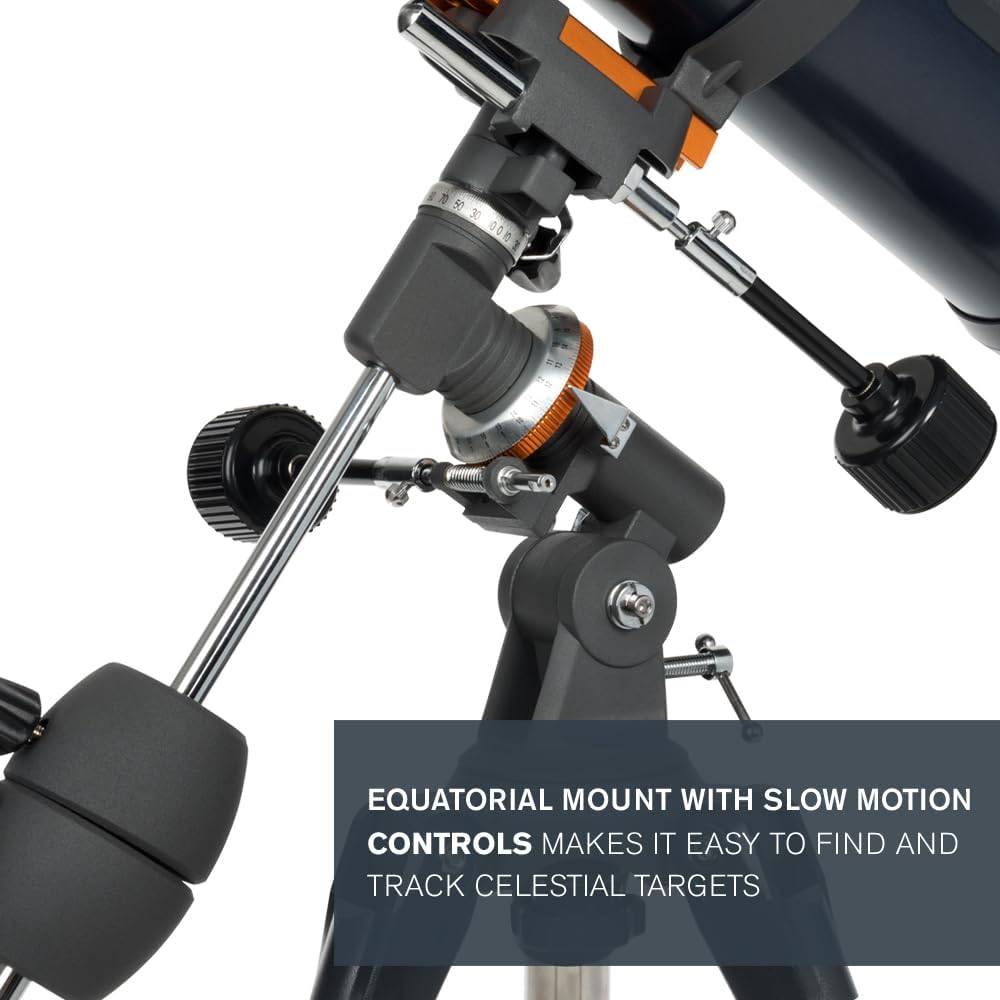
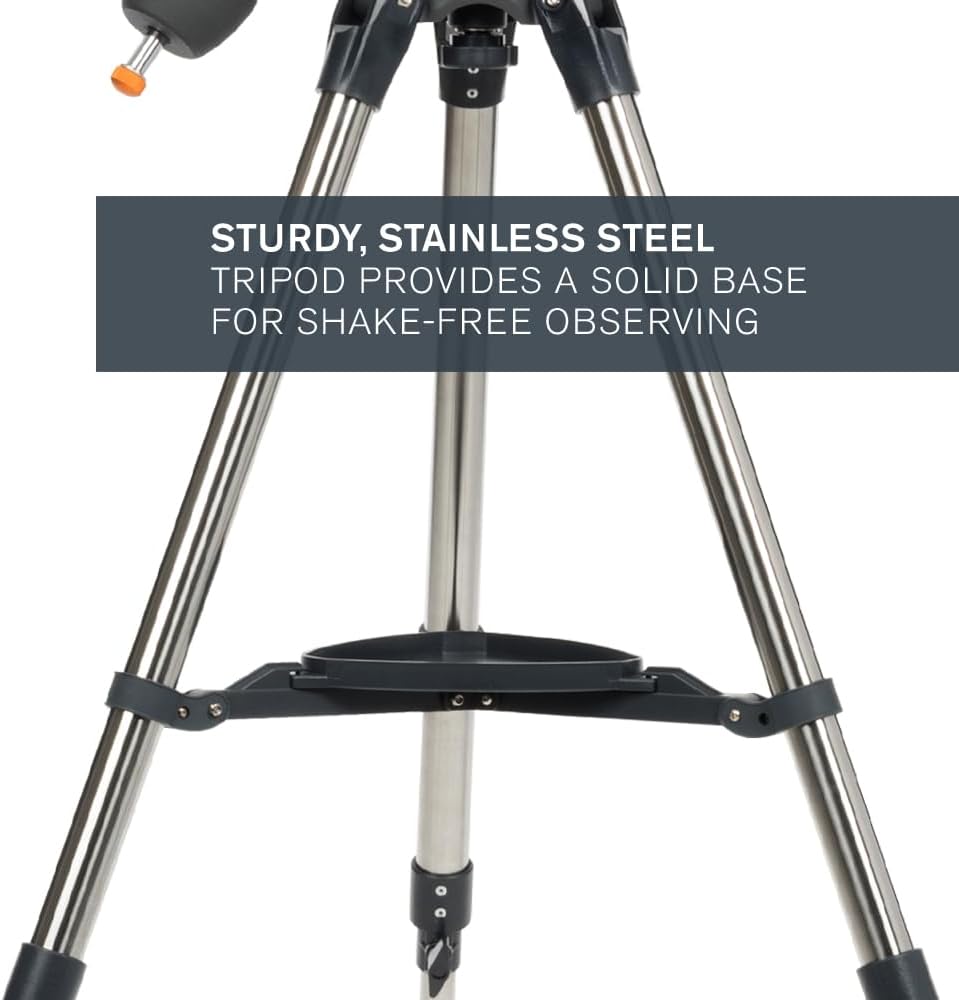
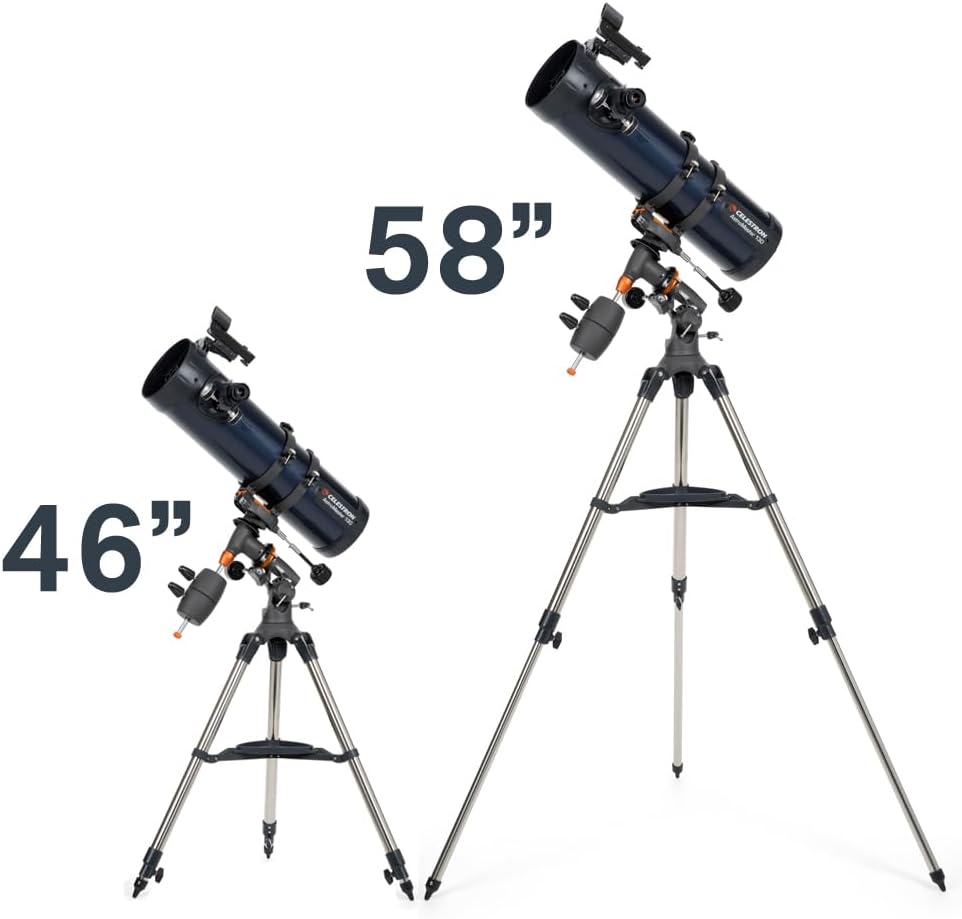
The headline “feel” of this kit is setup plus guided tracking. You get a full-height adjustable steel tripod with a accessory tray, and the mount is described as quick to assemble with no tools required. In other words, it’s designed for getting from indoors to first views without turning the evening into a maintenance project.
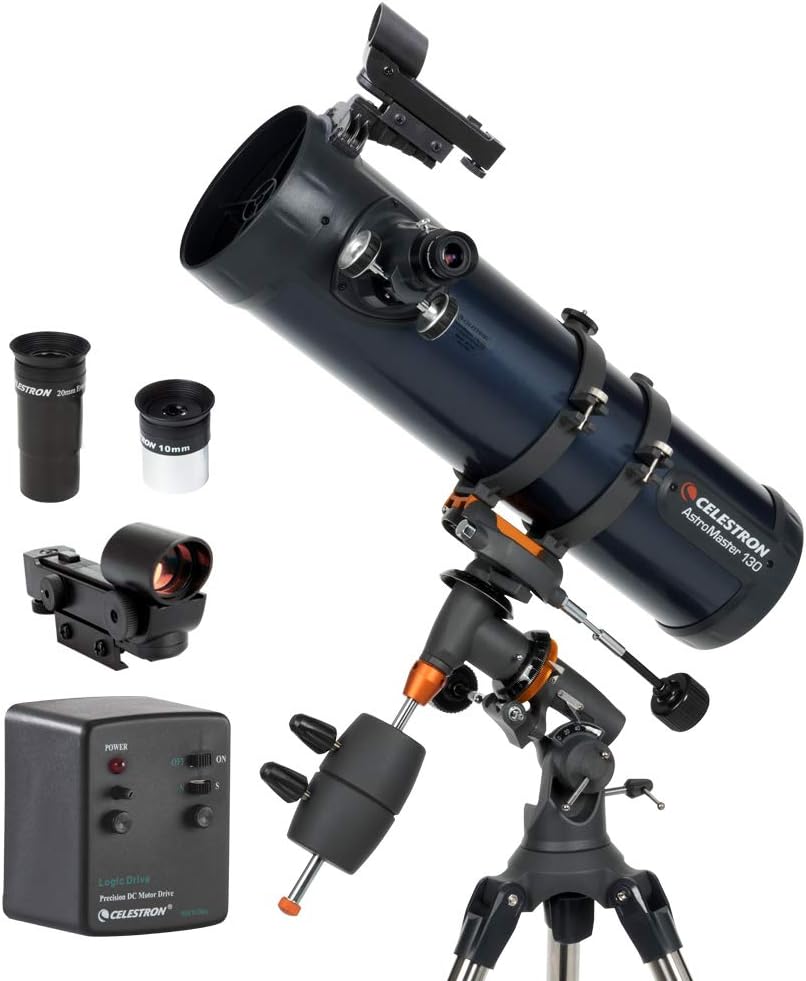
The included motor drive is also the practical upgrade. When the object is lined up and starts drifting due to Earth’s rotation, the motor is intended to track it automatically. Whether you’re observing the Moon one night or hopping between brighter deep-sky targets on another, that constant follow reduces how often you need to adjust.
Small limitation to keep in mind: it’s still a manually operated EQ mount, so if you want fully automated GoTo-style pointing, this isn’t that kind of system. It’s more “learn a bit, then observe more comfortably” than “press a button and forget it”.
Included accessories and software
This bundle isn’t bare-bones. You get:
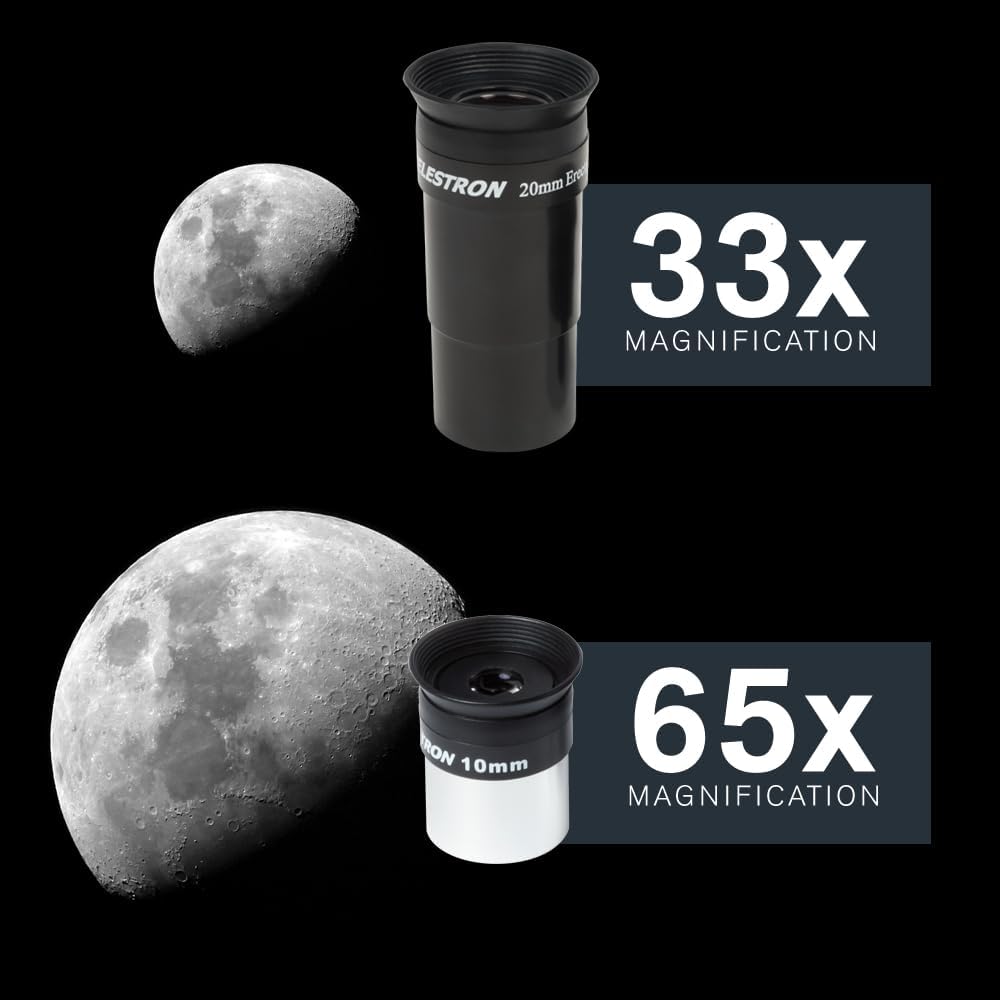
- An eyepiece set: 20 mm and 10 mm
- A finder
- The motor
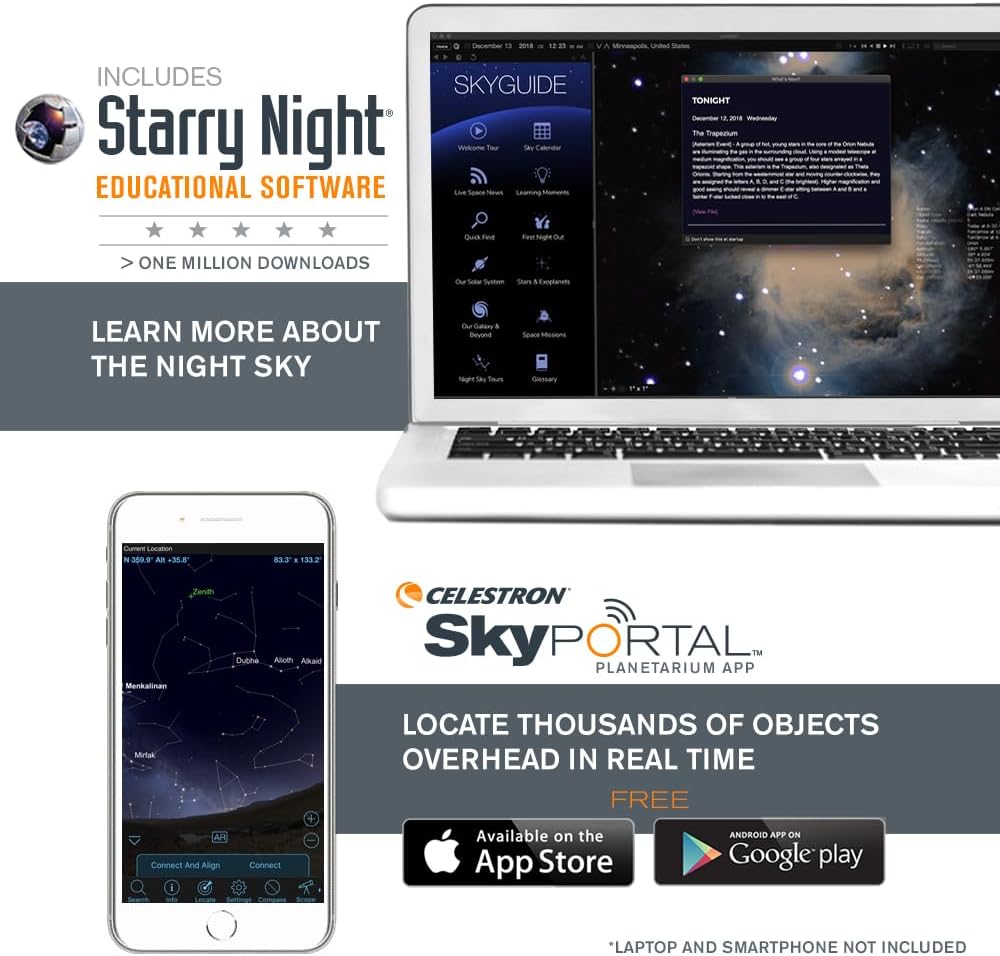
There’s also software available: Starry Night Basic. The description mentions a database of 36,000 objects, printable sky maps, and enhanced images, plus 3D representations of stars, exoplanets and galaxies. If you’re the type who likes planning before you go outside, having a decent on-computer reference can make sessions less random.
No software claims were provided beyond that, so it’s worth treating it as “helpful planning and visuals” rather than something that replaces your observing skills.
Key specs that shape expectations
A telescope’s numbers can sound abstract, but they influence what you can realistically expect.
- The optic is described as a Newtonian reflector
- The mount is equatorial (German) with manual locating and a motor for tracking
- A 20 mm and a 10 mm eyepiece are included in the box
The description also references an “optical zoom” multiplier figure (1300). It’s best to interpret that as a maximum/overall zoom-related capability rather than a promise that you’ll always want to use the highest magnification. In practice, most observing sessions are a mix: lower power for finding and framing, higher power when conditions support it.
Who it suits (and who should look elsewhere)
It’s a good fit if you want a first “proper” telescope experience with tracking support, and you don’t mind learning the basics of alignment and using a German equatorial mount. The motor drive is particularly attractive if you’ve noticed that longer looks become frustrating on non-tracking setups.
It may not suit you if you’re after a fully automated, no-effort pointing experience. Because the mount is manual for localisation (even with adjustment circles), you’ll still be doing the work of aiming and initial setup.
It’s also worth noting that the kit’s included eyepieces give you a starting range, but if you already know you want a specific eyepiece style for planets versus deep sky, you might eventually want to expand the eyepiece collection.
Quick buying checklist before you commit
Before purchasing, it helps to sanity-check what you’re really buying into:
- Are you happy with a manual EQ mount workflow (locate, align, then track)?
- Do you want motor tracking to reduce constant nudging?
- Are you comfortable with planning using printable sky maps/software, or do you prefer purely handheld discovery?
- Do the included eyepieces (20 mm and 10 mm) cover what you want to do first, or will you likely add more later?
Final verdict
Is it worth it?
For many newcomers moving beyond basic telescopes, the Celestron AstroMaster 130EQ with motor drive is the kind of kit that makes observing feel more “continuous” once alignment is done. It’s not an automated shortcut, but it is a practical step up thanks to the motor tracking, the EQ mount approach, and the included eyepieces and finder.
You should buy it if you want to enjoy longer looks with less hand-following, and you’re willing to learn a bit of equatorial mount usage. You may want to skip it if you’re specifically chasing effortless, fully automated pointing, or if you already know you want a very particular eyepiece and observing style from day one.
Mini FAQ
What’s the motor drive supposed to do?
The motor is intended to automatically track celestial objects when they appear to move across the night sky, reducing drift after you locate and align a target.
Is this telescope fully automated?
No. The mount is described as a manual German equatorial mount for locating and tracking, with motor tracking to help follow objects once aligned.
What’s included in the box?
An eyepiece set (20 mm and 10 mm), a finder, the motor, and the mount/tripod system (with adjustable-height steel tripod and accessory tray).
Is the Starry Night Basic software included?
The description says software is available for download, along with a stated database size and printable sky maps.
What magnification should I expect?
The listing references a 1300 multiplier figure, but it’s best treated as a capability rather than something you’ll necessarily use at all times—many sessions rely on lower magnification for finding and framing.