

SUNLU PETG Filament 1.75mm (High Strength), 1kg spool, White for FDM 3D Printers
Product description
What it is and why people buy PETG
SUNLU PETG Filament is a 1.75mm PETG reel aimed at FDM users who want something tougher than PLA, but still relatively straightforward to print. On paper, it sits in that “practical middle” where you’re chasing durability, decent heat resistance, and fewer of the common headaches associated with more rigid materials.
If you’ve been printing models that feel a bit too brittle, or prototypes that struggle when they’re handled a lot, PETG is often the first upgrade people try. This particular reel is also positioned as flexible and durable, with claims around better performance in warmer and harsher conditions, which is exactly the kind of problem PETG is typically chosen to solve.
Still, it’s worth tempering expectations: PETG is not automatically “easy mode” in every printer setup. Results can depend on your machine, your slicer settings, and whether you’re drying filament properly—especially if you’re sensitive to print-to-print consistency.
Key takeaways from the spec claims
What makes this SUNLU PETG stand out (based on the provided description) is the mix of durability and thermal stability, plus guidance that it should work without needing an enclosed printer.
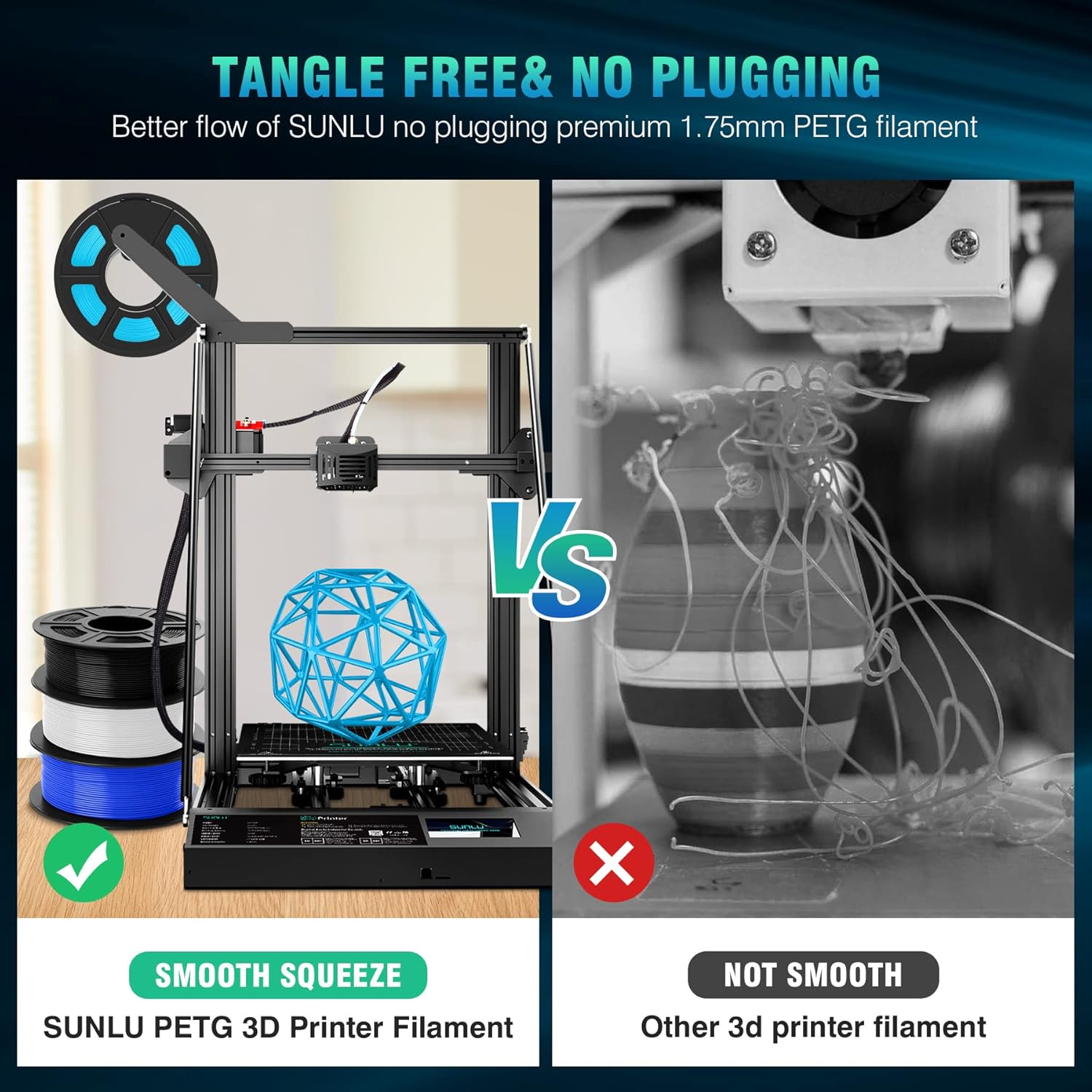
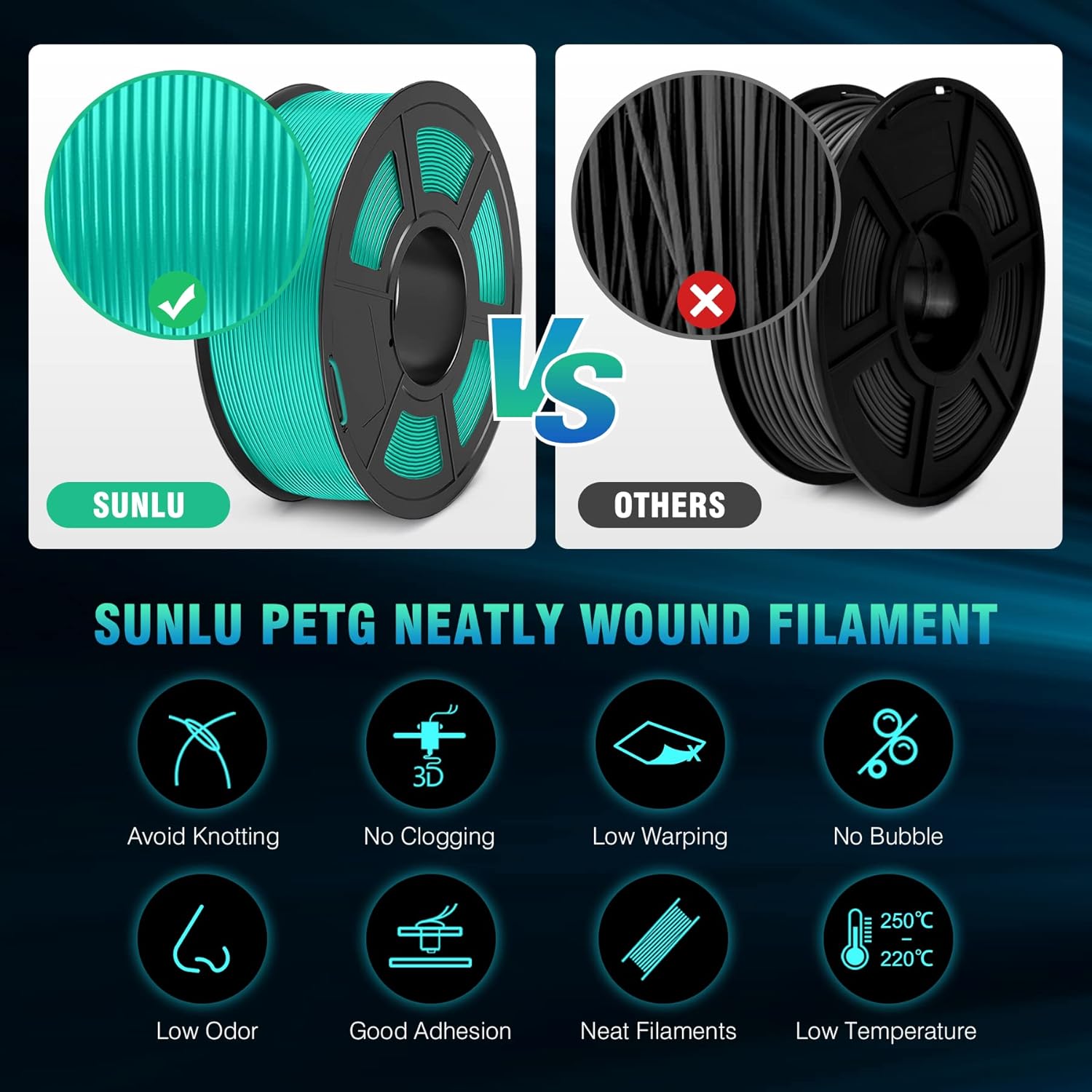
It’s described as: - combining PLA-style “worry-free printing” with higher toughness (rather than choosing between ease and strength) - withstanding heat better than regular PLA - helping reduce warping and shrinkage, which matters for larger parts and more detailed prints - printing smoothly with a consistent extrusion flow for detail-focused work - being designed to resist moisture absorption, helping reduce brittleness over time - resisting oil and solvents for harsher environments - offering crystal-clear translucency for decorative or display pieces
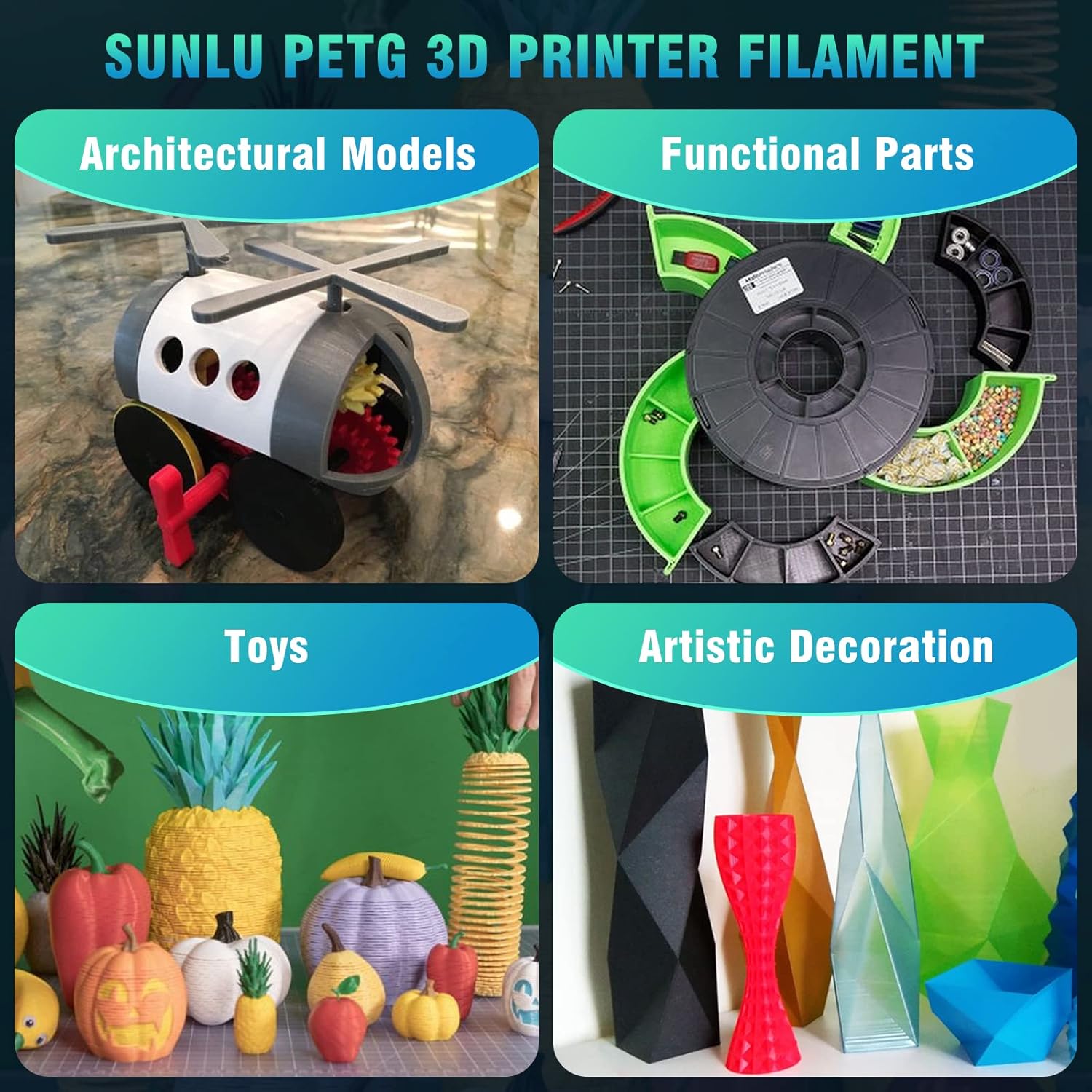
Where this can make a real difference is in everyday prototyping: clips that get handled, covers for electronics housings, or functional parts that see a bit of warmth.
Where it shines in real use cases
This filament is presented as a good match for prints where toughness and stability matter more than “showpiece perfect” surfaces alone. A few practical scenarios that the stated benefits line up with:
A garage or workshop print: things like brackets or simple covers that may face oil exposure or frequent handling. The mention of acid/alkali resistance and better performance than PLA in harsh conditions suggests it’s aimed at that sort of environment.
Electronics housing prototypes: if you’re making a straightforward enclosure for a component, the “better heat resistance” angle is relevant. Likewise, the “low warping” claim can be helpful if you’re producing parts that need to keep their shape.
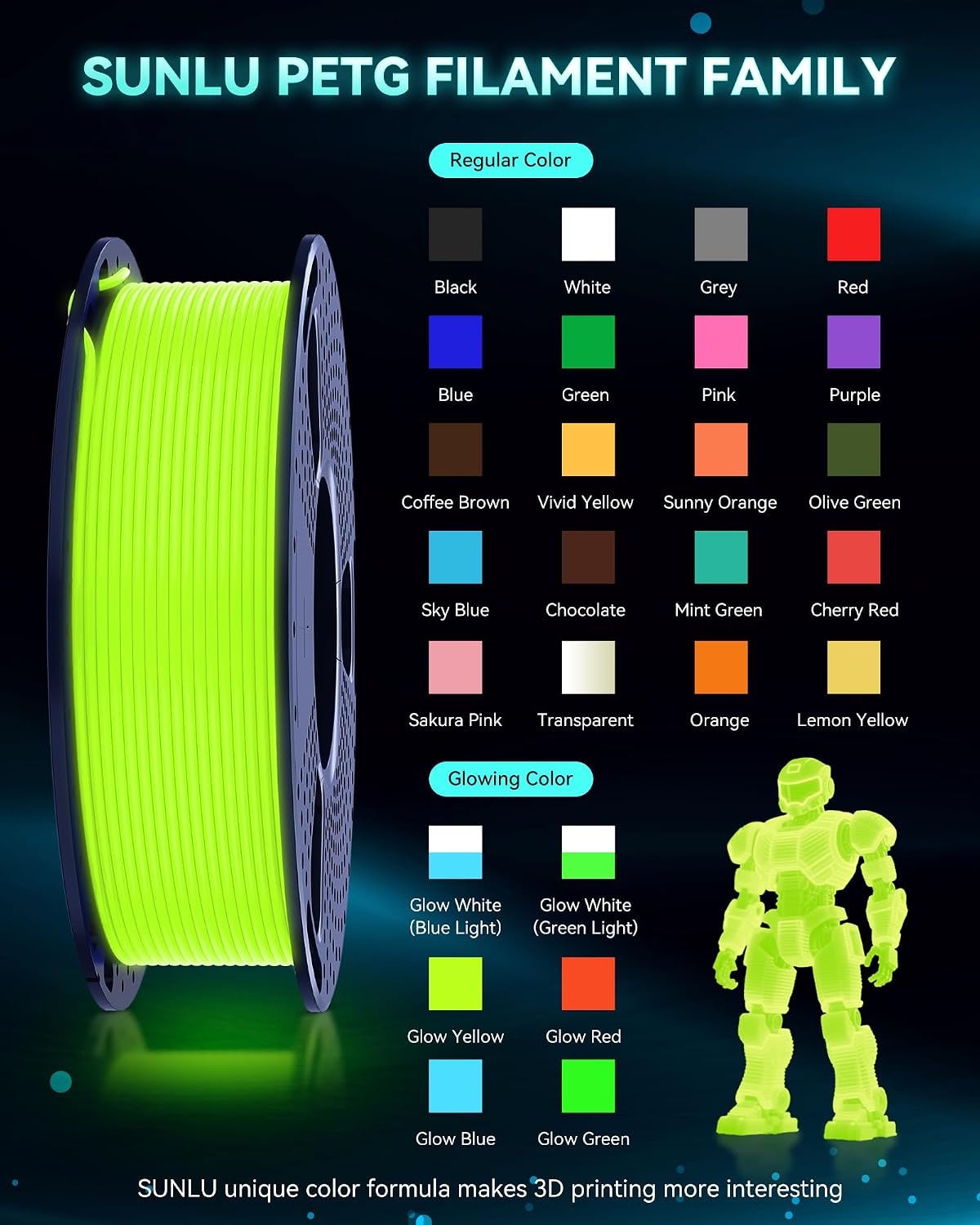
Transparent or translucent decor: the description specifically calls out high transparency, so if you’re after translucent lampshades, display cabinet panels, or art pieces where light transmission matters, PETG is a sensible direction to try.
That said, if you’re expecting it to behave exactly like your current PLA in every single setup, don’t assume. Even within PETG, different users report that print tuning can still be required.
What to know before you buy
A few points to consider so you don’t get caught out:
First, it’s PETG for FDM printers and comes in 1.75mm. If your printer is designed for a different filament diameter, this won’t be the right fit.
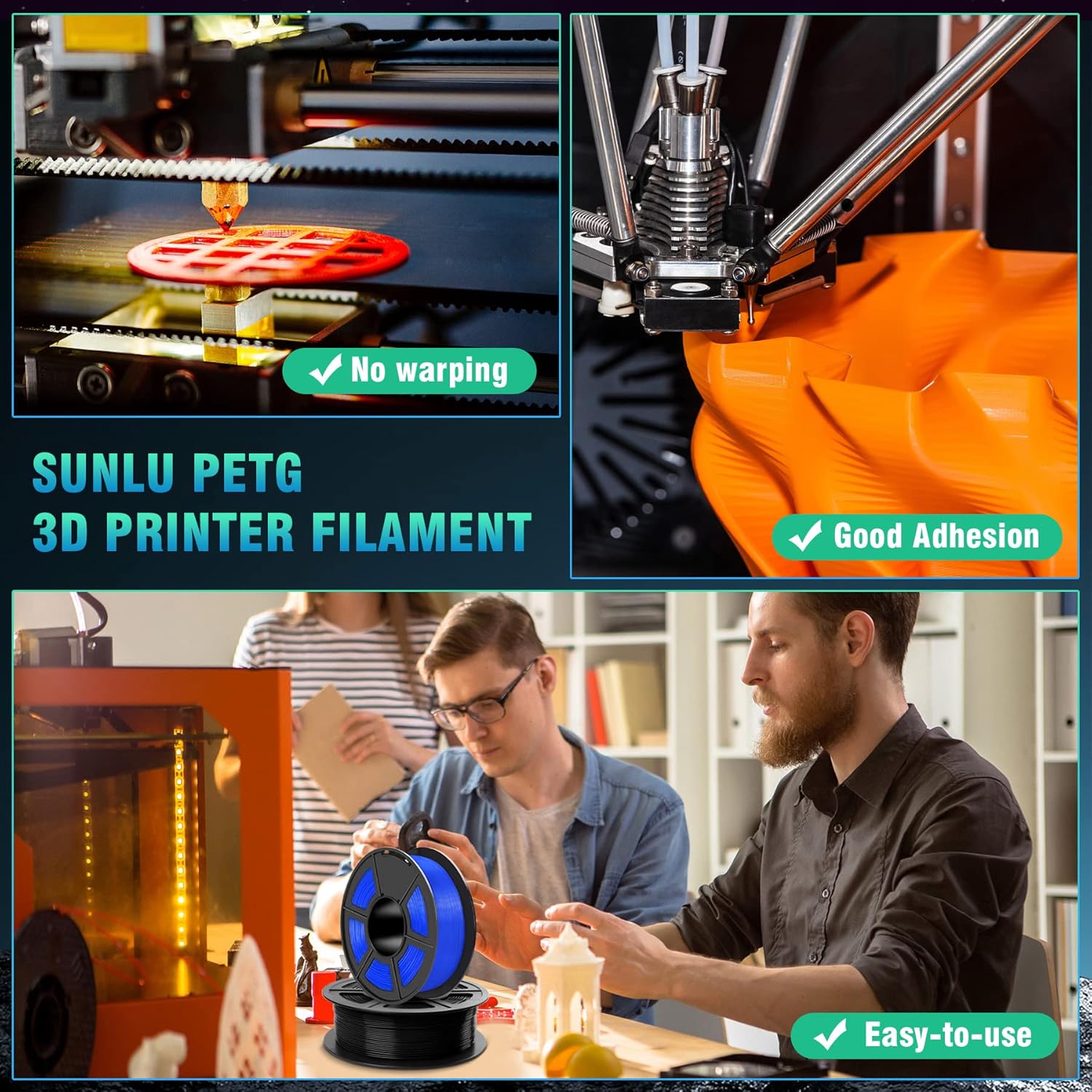
Second, the description claims low warping and minimal shrinkage “without a printer enclosure”. That’s a reassuring statement, but in practice, warping risk still depends heavily on build plate adhesion, ambient temperature, and geometry. If you print large flat parts or tall thin walls, you may still need to adjust your setup.
Third, there’s a moisture-resistant angle with hydrophobic properties. That helps with long-term consistency, but it doesn’t remove all the usual filament care considerations. If your prints have been inconsistent with other materials, you might still want to check your storage and whether your workflow includes drying when needed.
Finally, for “smooth printing” and “consistent extrusion flow”, that’s exactly the type of claim that tends to be true only when the slicer settings are aligned with the filament. If you’re new to PETG, expect some learning.
Pros and cons for decision-making
What you’ll likely like (based on the description): - Tougher prints than PLA, with an emphasis on durability - Better heat resistance than regular PLA, which suits functional prototypes - Thermal stability with a focus on lower warping and shrinkage - Moisture-resistant design aimed at reducing brittleness over time - Noted resistance to oil and solvents for harsher settings - High transparency for translucent or clear-looking builds
Where it may fall short for certain buyers: - If you prioritise the absolute easiest print experience above strength, PETG can still ask for tuning versus PLA - If your goal is highly precise, mirror-like transparency, you may need extra time dialling in settings, the “crystal-clear translucency” claim is promising, but outcomes depend on how you print - If you mainly print very small aesthetic parts with no handling or environmental stress, you may not get full value from the extra durability focus
Technical overview
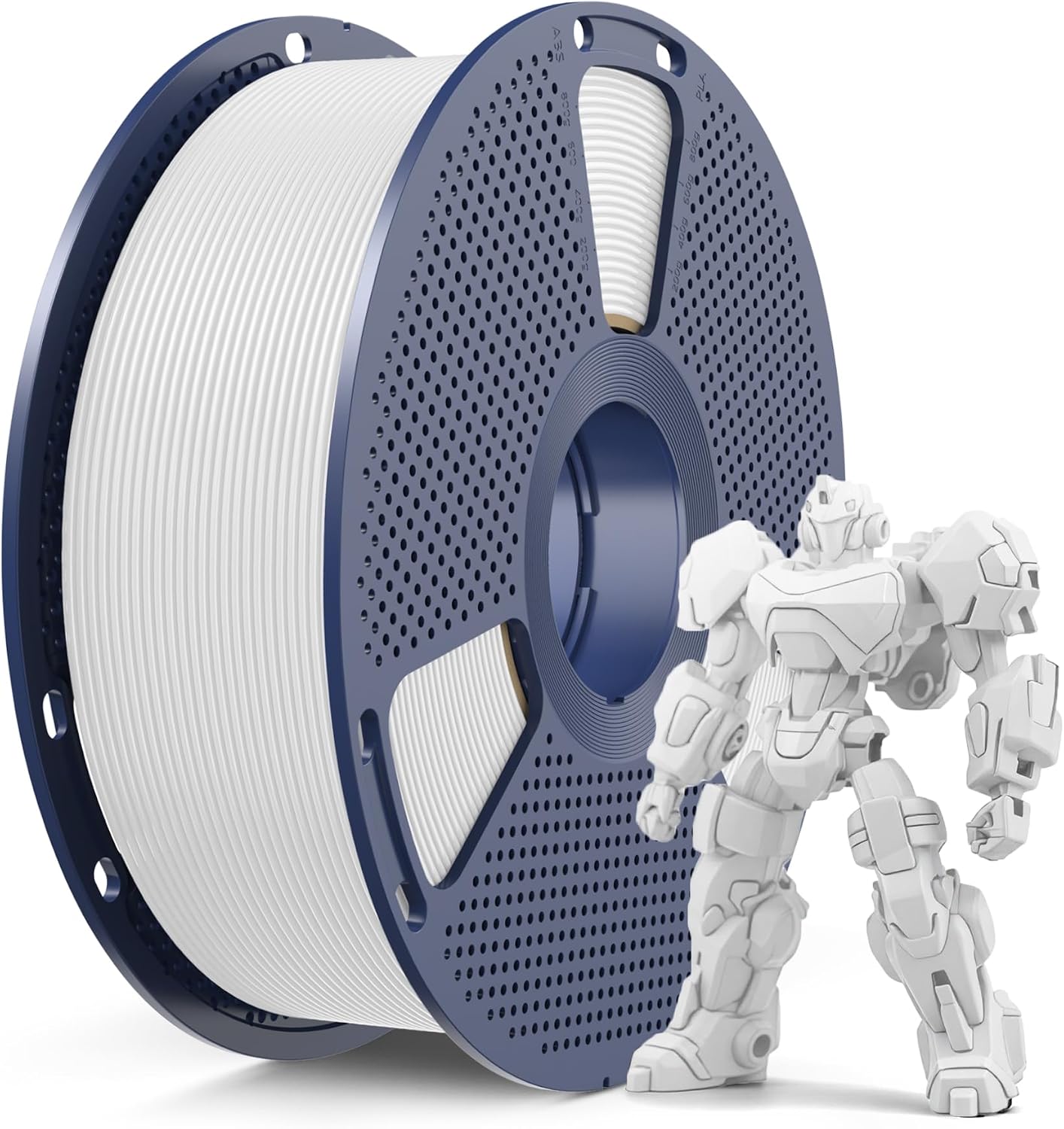
This is PETG filament in 1.75mm diameter for FDM 3D printing, supplied as a 1kg spool in white. The description also highlights characteristics such as thermal stability (to reduce warping/layer separation), smoother extrusion flow, moisture resistance, and improved performance in warmer and more demanding conditions compared with regular PLA.
Is it worth it?
It’s a good fit if you want a PETG upgrade aimed at stronger, more durable prints, especially when parts will be handled, face some warmth, or need to hold up better than PLA in less-than-ideal conditions. The low-warping and moisture-resistant positioning also makes it appealing if you prefer a more relaxed workflow and want dimensional accuracy without always relying on an enclosed printer.
You may want to skip it if your priority is purely effortless PLA-style printing, or if you’re chasing a specific level of optical clarity that usually requires careful calibration. It might not be a great match if your printer can’t use 1.75mm filament, or if you never print anything that benefits from toughness, heat resistance, or translucency.
Mini FAQ
How does SUNLU PETG compare with PLA?
The description positions it as combining PLA-like printing simplicity with higher toughness, plus improved heat resistance and better performance in harsher conditions than regular PLA.
Will it warp more than PLA?
The stated goal is low warping and shrinkage thanks to thermal stability, and it’s described as usable “without a printer enclosure”. That said, warping risk still depends on printer setup and print geometry.
Is it suitable for translucent prints?
Yes, the filament is described as having high transparency, with examples such as lampshades, display cabinets, and art design works.
Does moisture resistance mean I can ignore filament storage?
Not quite. The description says it’s designed with hydrophobic properties to minimise moisture absorption during printing, but normal care habits still help if you want consistent results over time.
What is it best for?
Based on the claims, it’s most compelling for strong, durable functional parts, electronics housings, and prints where heat resistance, oil/solvent resistance, or translucency matter.