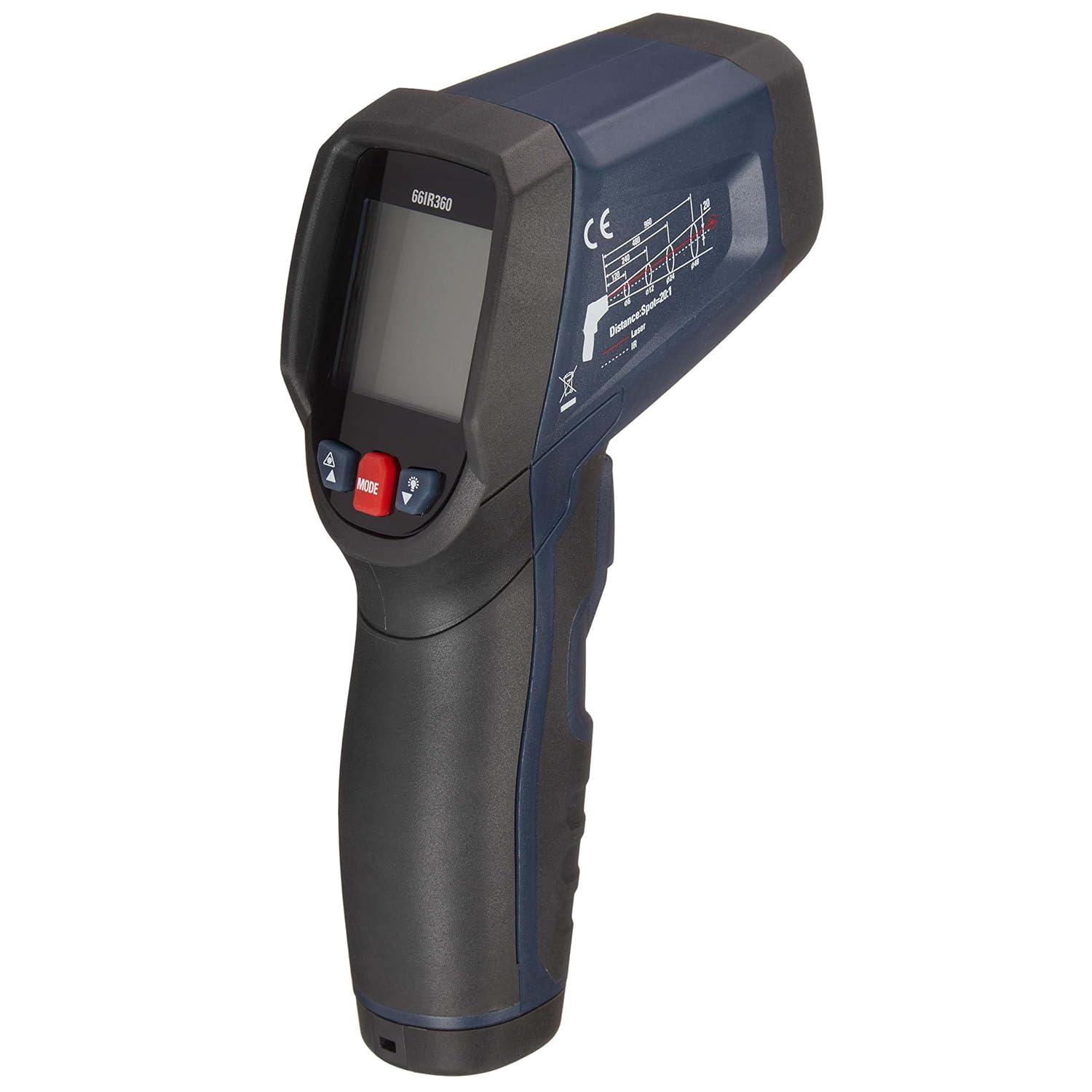
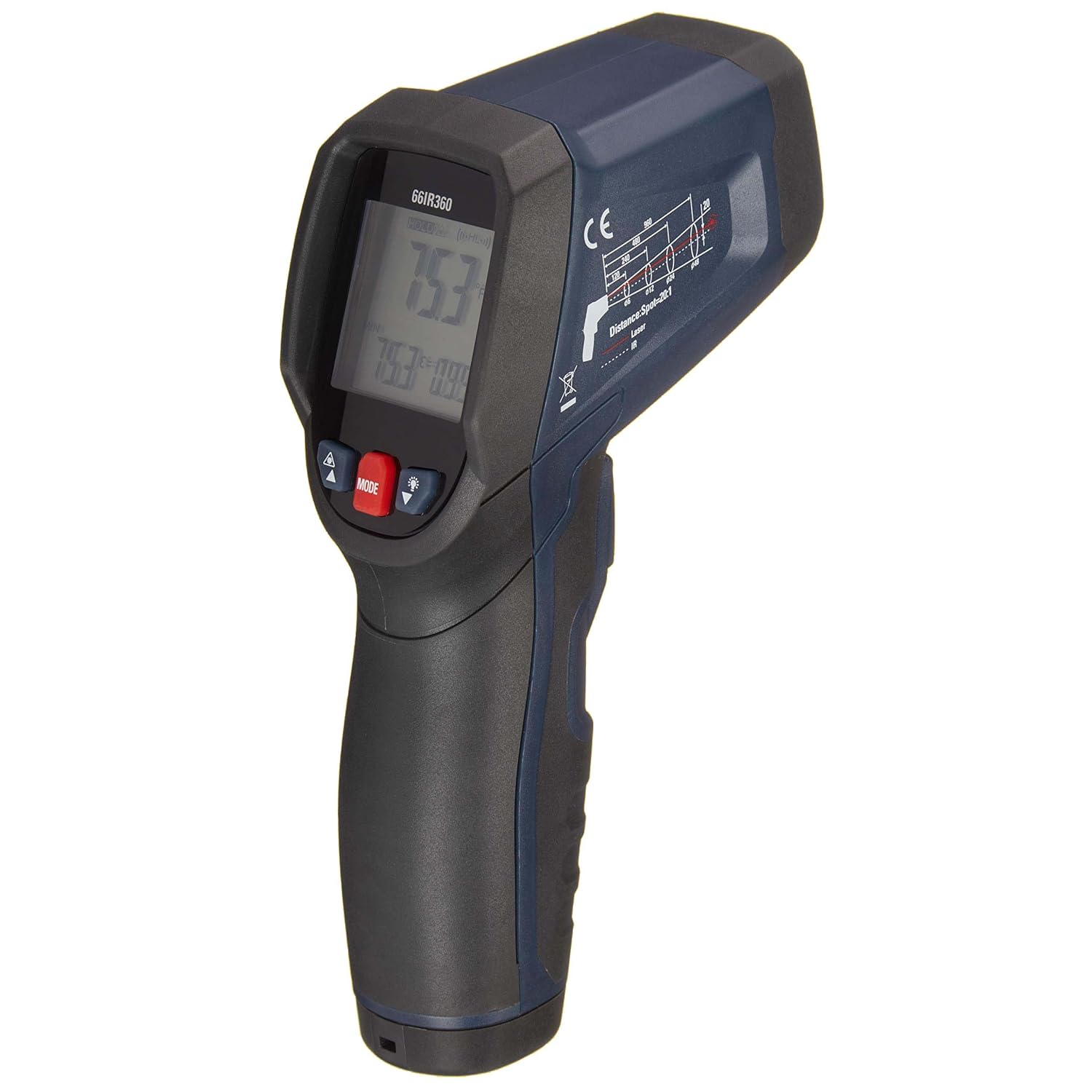
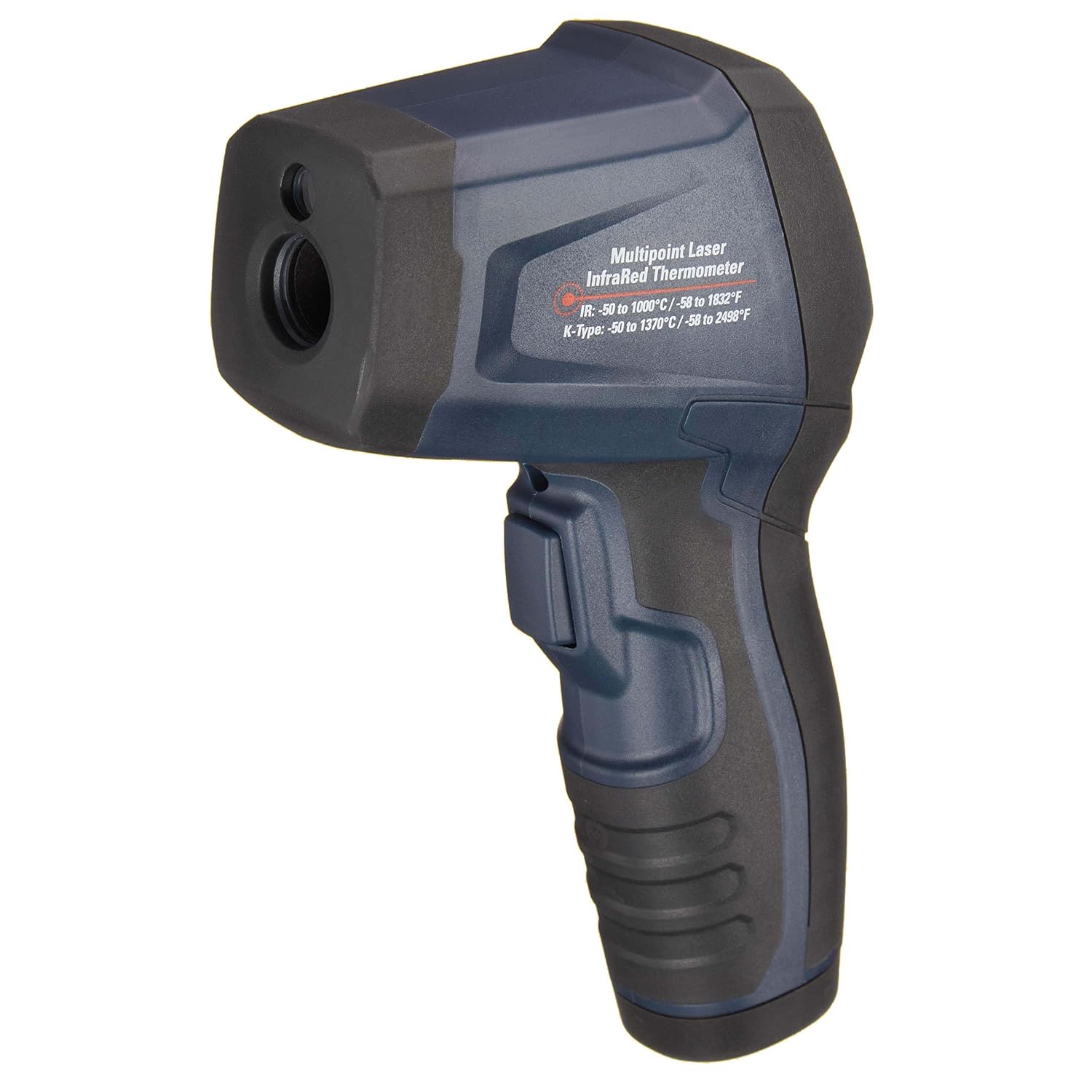
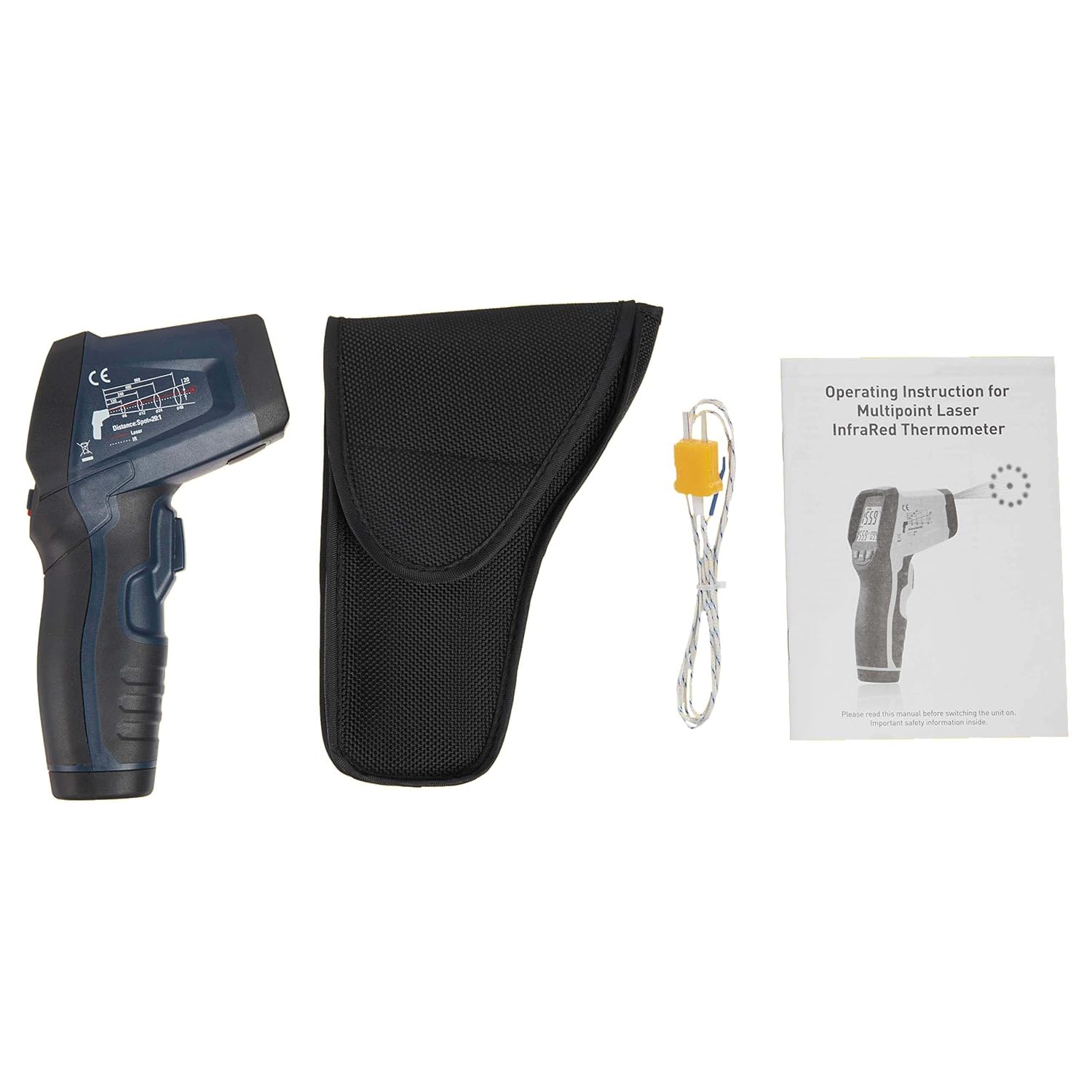
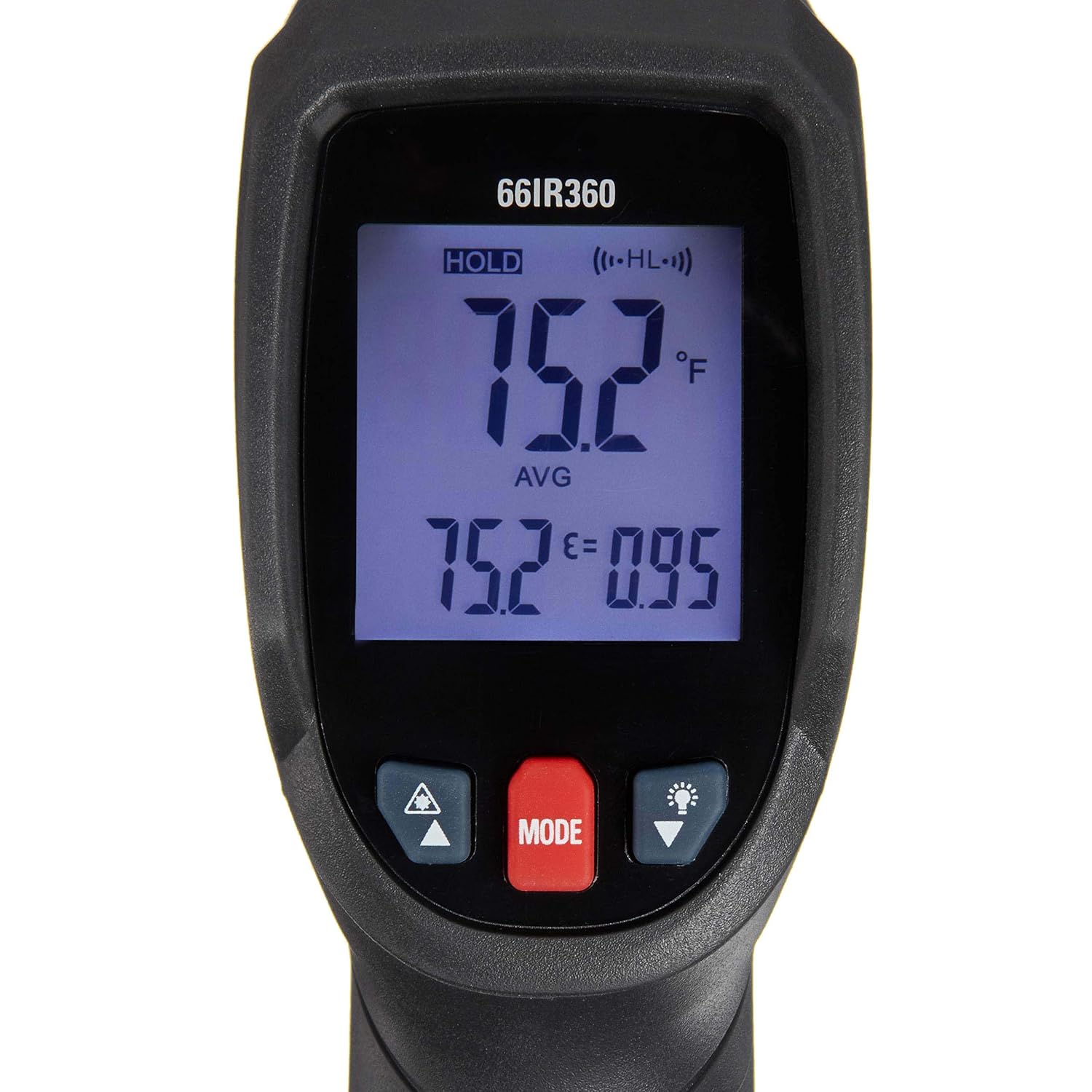
What it is and what it solves\nThis is a handheld infrared thermometer designed to capture temperature readings quickly across industrial, automotive and residential environments. It combines a circle laser for aiming with a backlit LCD display, so you can read results in varying light conditions. While the core aim is straightforward temperature measurement, the model also supports a Type K probe for contact measurements, along with features that help you manage safety and quality checks in real-world settings.\n\n## How it performs on paper\nOn the task of non‑contact temperature readings, it promises a 150 millisecond response time and a measurement format of either ºC or ºF. The device incorporates adjustable emissivity, which helps tailor readings to different materials. The D:S ratio of 20:1 indicates how the thermometer handles distance to target—helpful when you’re trying to avoid touching hot surfaces. It also includes high and low alarm thresholds, which can be a practical aid in fast-paced work areas.\n\n## What stands out in use\nIn everyday practice, the backlit screen is a real plus for dim workshops or automotive bays. The inclusion of a Type K probe broadens the range of tasks beyond pure infrared, enabling contact measurements for materials or scenarios where non-contact readings are less reliable. The kit covers practical needs: 9V battery, Type K probe, carrying case and a multilingual user manual. The device is a straightforward upgrade for anyone who previously used a more basic thermometer, offering a more versatile toolset without moving into specialist equipment.\n\n## Pros and cons to weigh\nPros: fast readings, adjustable emissivity for different materials, laser guidance, built-in alarm functions, and a dedicated Type K probe for contact measurements. The inclusion of a protective case and multilingual manual adds practical value. Cons: as a heavier‑duty unit, it may not be the lightest option for casual home use, and some users might not need the extra features if all they require is basic non‑contact measurement.\n\n## Who it’s for\nIt makes sense for technicians, mechanics and industrial staff who need reliable quick checks and sometimes contact measurements. Home users tackling HVAC, appliance servicing or DIY with a need for safer, non‑contact readings may also find it a useful addition. If you prioritise a compact, simple point‑and‑shoot thermometer with minimal setup, this model could feel like overkill.\n\n## Who it’s not ideal for\nIf you’re after a purely budget‑oriented, ultralight non‑contact thermometer or if you only rarely need a Type K probe, there are lighter or simpler options that may suit you better. It’s also not designed to replace specialised lab instrumentation where higher accuracy and calibration controls are mandatory.\n\n## Things to check before buying\nConsider the environments you’ll use it in: does the target require contact measurements as well as infrared? Do you need adjustable emissivity for varying materials? Confirm the probe compatibility and whether a protective case is included in your chosen bundle.\n\n## How it compares to the alternatives\nCompared with basic infrared only tools, this model adds flexibility with the Type K probe and adjustable emissivity, which can improve reliability across materials. It sits toward the pragmatic middle ground—more capable than ultra‑entry devices but not a full industrial calibration instrument. If you need the simplest possible gadget, it may feel heavier and feature‑rich, if you need dependable versatility, it stands up well.\n\n## Practical usage example\nImagine checking engine components in a workshop: aim at hot manifolds with the laser, read temperatures quickly on the backlit display, and switch to the Type K probe for contact checks on metal flanges when non‑contact readings aren’t precise enough. The high/low alarms help you notice outliers as you move between tasks.\n\n## FAQ\n- Can I switch between ºC and ºF easily? Yes, it supports selectable units.\n- Is the Type K probe mandatory for all measurements? No, it provides an option for contact measurements when needed.\n- How long does the battery last in typical use? The package includes a 9V battery, actual longevity depends on usage and alarm settings.\n\n## Decision time\nShould you buy it? It’s a solid pick if you want a versatile, durable infrared thermometer with both non‑contact and contact measurement capabilities, plus practical extras for real‑world work. If you mainly need a simple thermometer for occasional home use, you may prefer a lighter, less feature‑rich model. Overall, it suits users who value reliability and flexibility in a single tool.