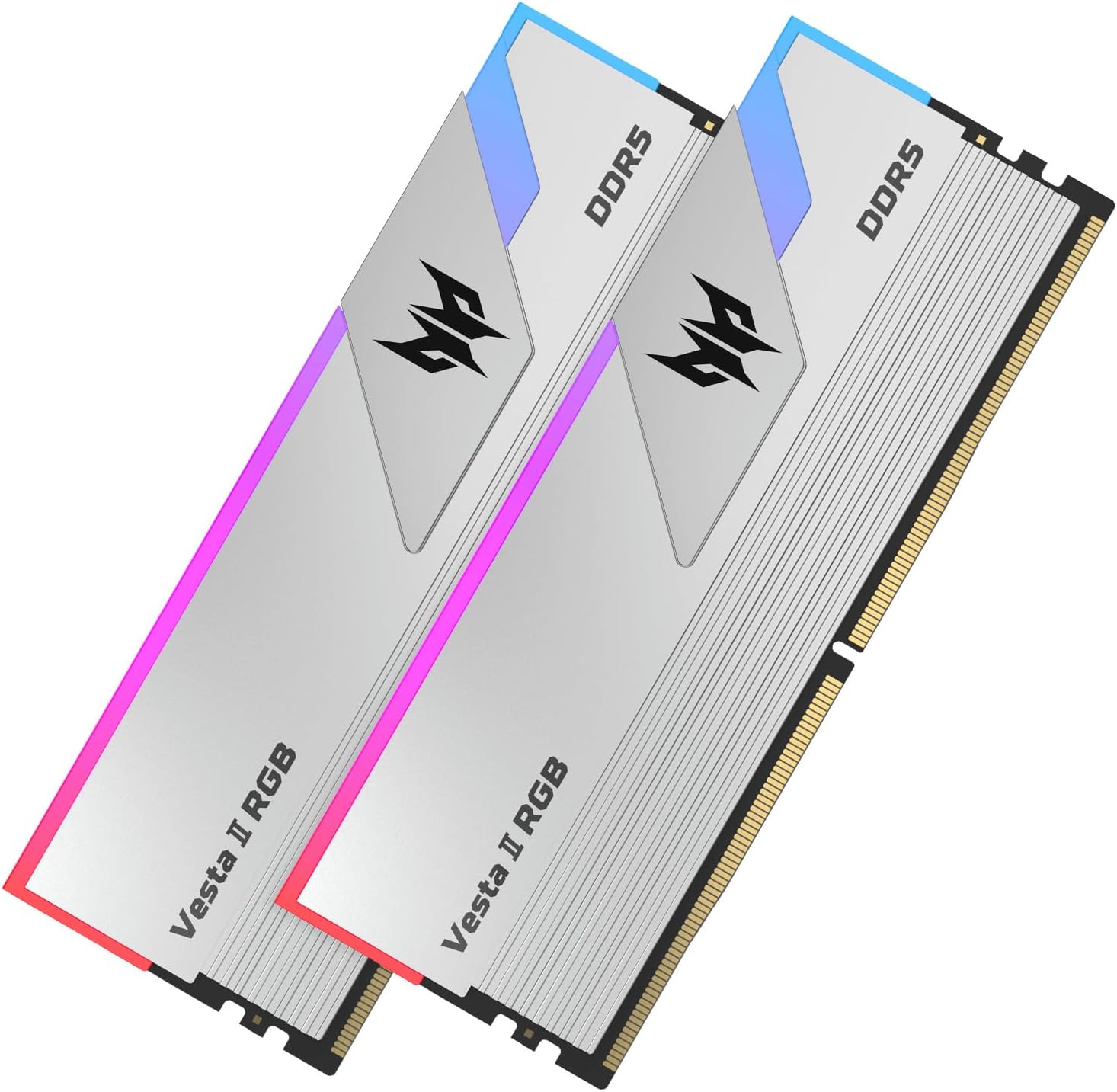
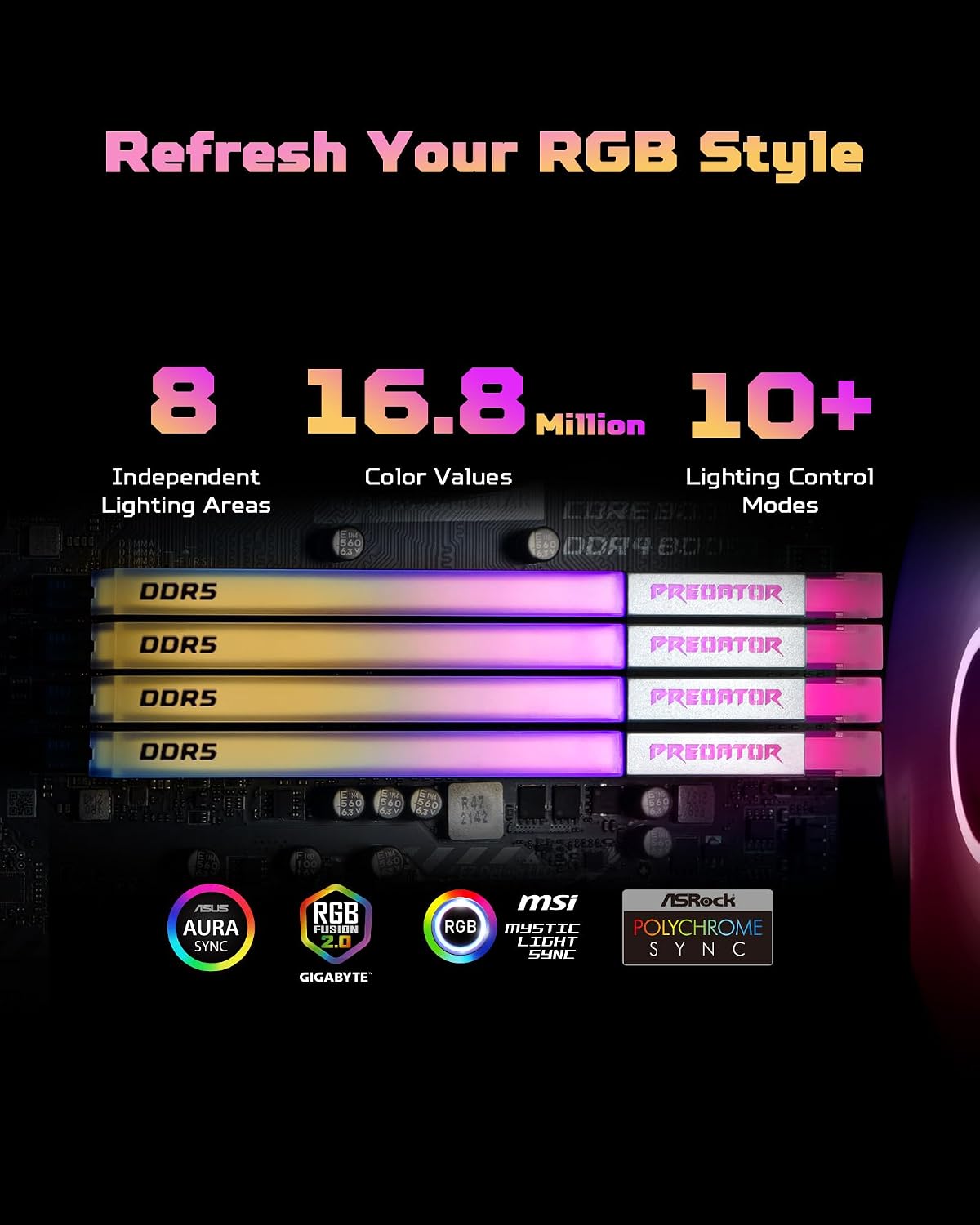
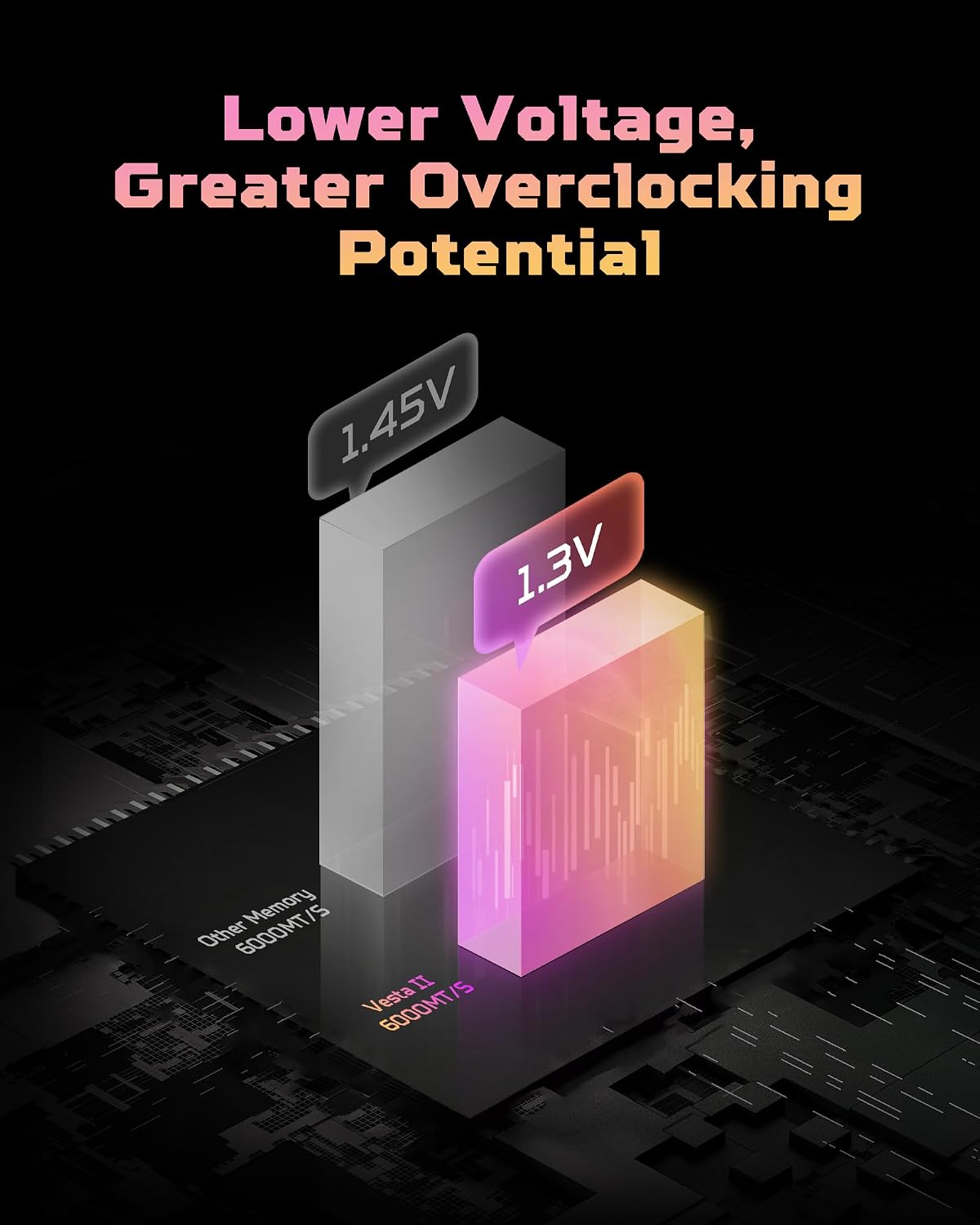
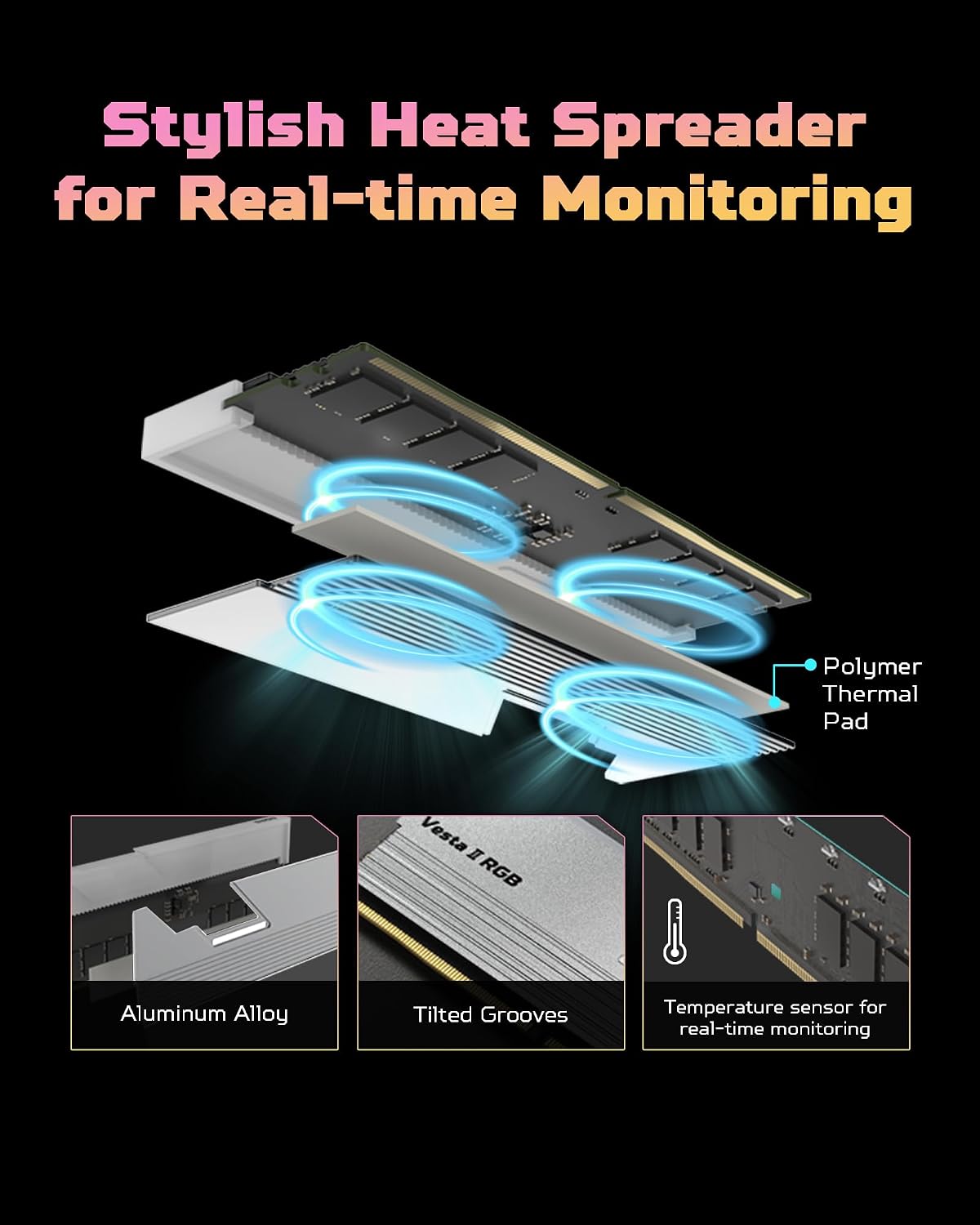
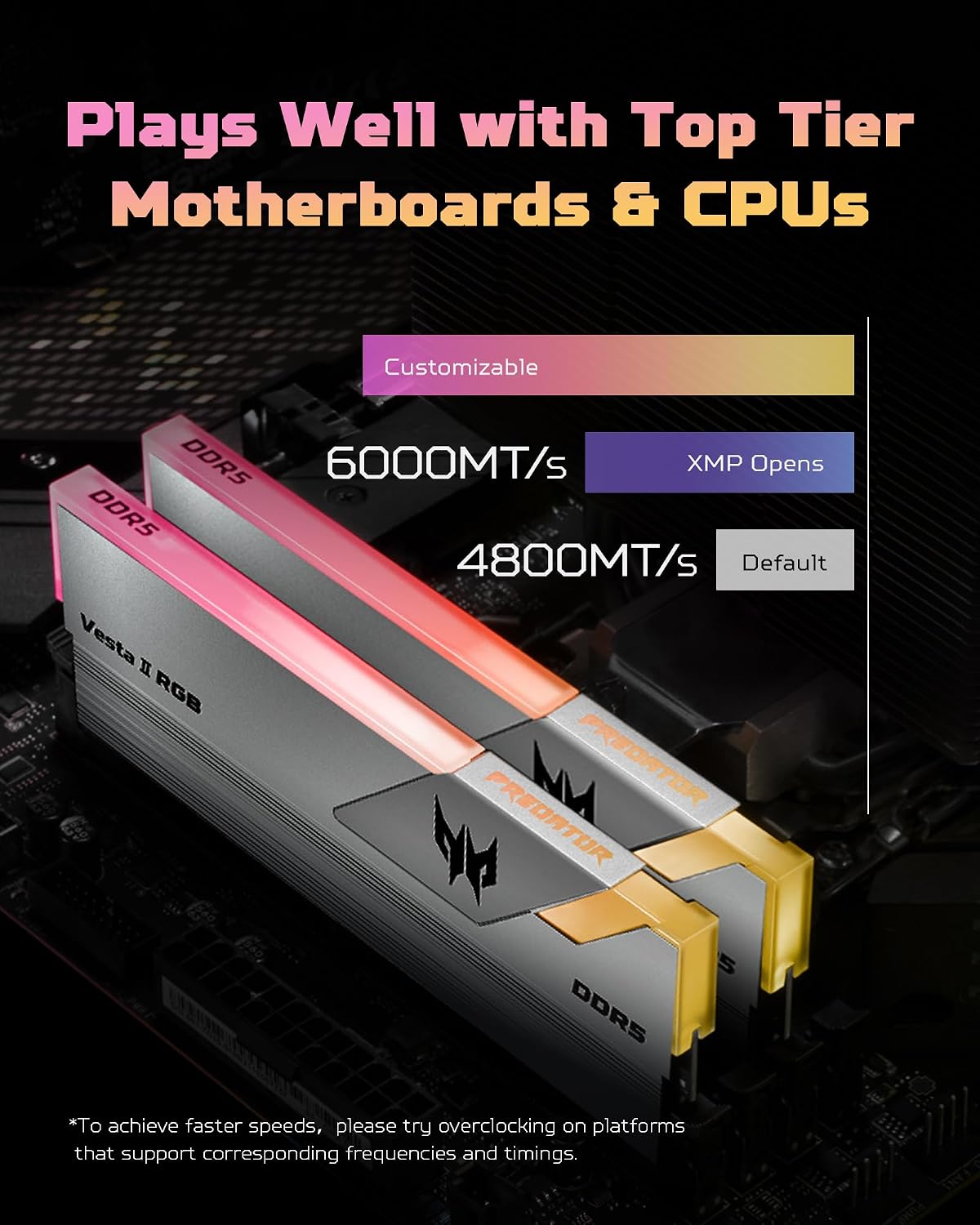
What it is and what it does\nThe Acer Predator Vesta II DDR5 memory kit is a 32GB dual-channel set (16GB x 2) designed for high-performance desktops. It aims to reduce latency and boost frame rates by running at speeds up to 6000 MHz, with compatibility for Intel XMP 3.0 and AMD EXPO. The kit includes an aluminium heat sink for improved thermal performance and a dedicated RGB light bar for customising the look of a gaming rig. On paper, this is positioned for enthusiasts who want faster memory for gaming, content creation or demanding multitasking.\n\n## Technical snapshot (what’s inside your build)\nThe module supports DDR5, dual independent 32‑bit subchannels, and a higher bank count that theoretically improves rendering and buffering tasks. It is advertised as factory preset overclocking capable, with BIOS options to save custom settings directly to the memory. The heat sink is finished in a metallic look (black or silver depending on the SKU), which helps dissipate heat under sustained loads. The RGB element is designed to integrate with popular motherboard utilities from ASUS, Gigabyte, ASRock and MSI.\n\n## Why it matters in practice\nIf you’re building or upgrading a modern gaming or creator PC, faster DDR5 can translate into smoother gameplay, quicker texture loading and more headroom for memory-intensive tasks. However, speed alone isn’t everything. The real-world benefit depends on your CPU, motherboard, and how you use the PC. For example, a system with a capable Ryzen or Intel processor and a motherboard that supports high memory frequencies will be more likely to notice tangible gains.\n\n## Strengths at a glance\n- Very high advertised speeds up to 6000 MHz and DDR5 benefits like improved burst length and multi-channel access.\n- AMD EXPO and Intel XMP 3.0 compatibility offer straightforward overclocking presets and easy BIOS-driven tuning.\n- Efficient thermal management courtesy of a robust aluminium heat sink supports stability during longer gaming sessions.\n- RGB lighting is customisable through major motherboard software ecosystems, allowing cohesive aesthetics with other components.\n\n## Limitations and considerations\n- The claimed performance gains depend heavily on the rest of the system. If your motherboard or CPU doesn’t support these frequencies, you may not reach the top speeds.\n- Overclocking requires a compatible platform, enabling XMP/EXPO and pushing memory beyond official specs can impact stability and warranty in some scenarios. It’s sensible to verify motherboard memory support and BIOS options before purchasing.\n- The product is a specialised part of a PC build, not a universal upgrade, if your needs are casual gaming or basic productivity, the premium for higher speed may not be justified.\n\n## Who it’s for\nThis kit suits gamers and content creators who prioritise peak memory performance and have a motherboard and CPU capable of supporting high frequency DDR5. It helps if you’re aiming for higher frame rates in fast-paced games or smoother workloads in video editing and 3D work that can leverage faster memory.\n\n## Who it isn’t ideal for\nIf you’re on a tight budget, or you don’t plan to run at high memory speeds due to other bottlenecks, a more modest DDR5 kit could deliver better value. It’s also not ideal if your system lacks PCIe 5.0/DDR5 compatibility or you don’t want to dive into manual tuning.\n\n## Before you buy: what to check\n- Ensure your motherboard supports DDR5 and has the capacity for 32GB (2x16GB).\n- Check CPU compatibility with high-frequency memory and whether XMP/EXPO profiles are officially supported.\n- Consider your cooling, even with a heat sink, sustained heavy use can push thermals in smaller cases.\n- Plan for RGB integration with your chosen motherboard software to avoid software conflicts.\n\n## Practical usage example\nImagine a mid-to-high‑end gaming PC running at 4K with a mix of RTS and shooter titles. If your CPU and motherboard cooperate, enabling XMP/EXPO could unlock quicker texture streaming and snappier loading, especially during rapid scene changes. While not a magic fix for every title, it helps keep data flowing to the GPU and CPU more efficiently during intense moments.\n\n## FAQ (based on available information)\n- Q: Do I need a specific motherboard to use this kit? A: It’s designed to be compatible with Intel XMP 3.0 and AMD EXPO platforms, but you should verify your motherboard’s memory support and the stated frequency.\n- Q: Can I run at 6000 MHz out of the box? A: The kit supports up to 6000 MHz, but achieving that speed depends on your motherboard, CPU and BIOS settings.\n- Q: Is the RGB feature required to enjoy the memory’s performance? A: No. RGB is a visual enhancement, performance is governed by the memory’s timings and frequency.\n\n## Final verdict\nFinal verdict: Worth considering if you’re building a high‑end DDR5 system and you’ve confirmed compatibility. It delivers substantial theoretical speed advantages and a solid cooling solution, plus customised RGB. If you prioritise value over peak frequency or lack a platform that truly supports 6000 MHz, you might prefer a more modest RAM kit.