

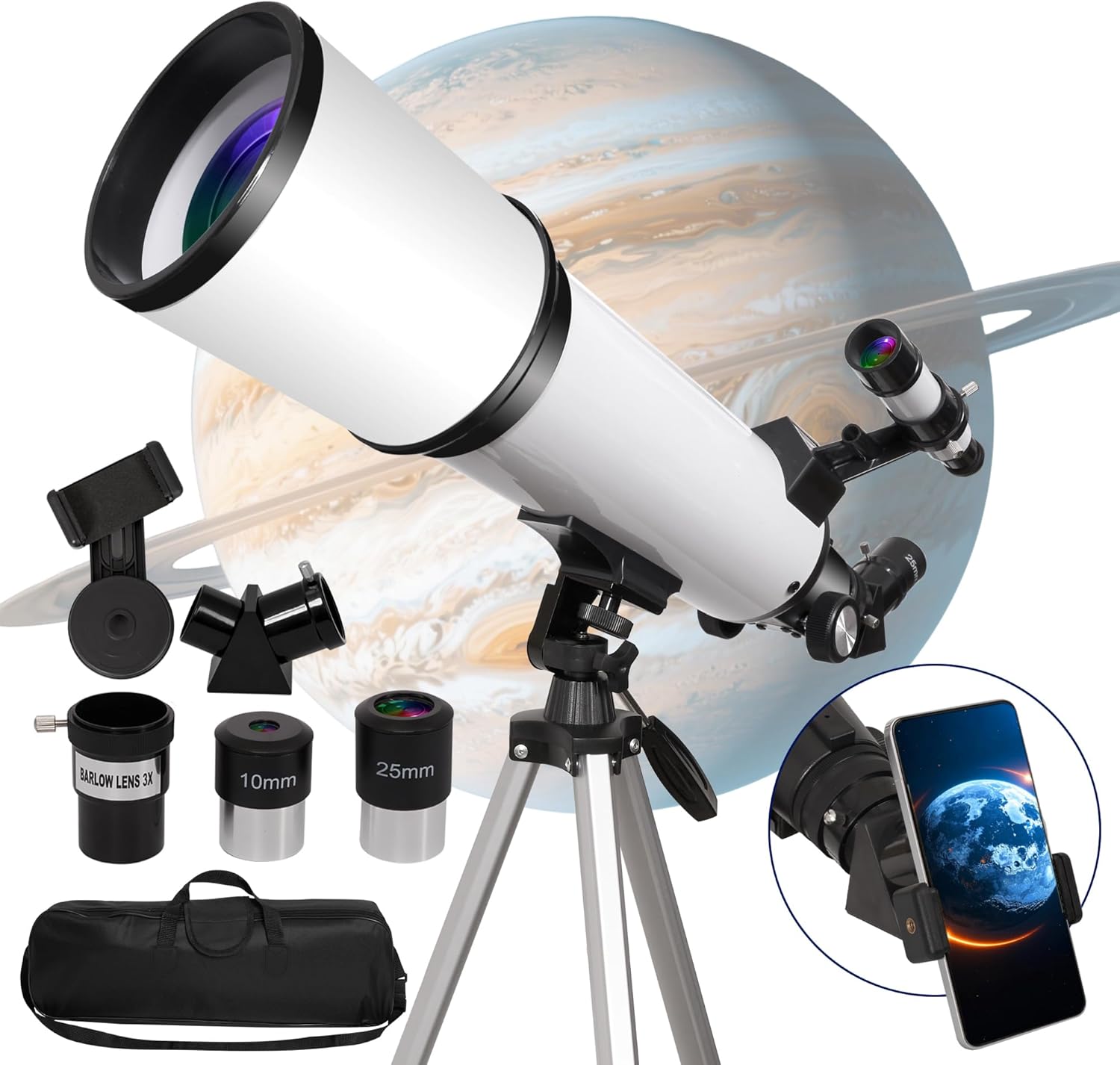
80mm Aperture Refractor Telescope for Adults: Portable, Bright, and Ready for Stargazing
Product description
What it is and what it’s for
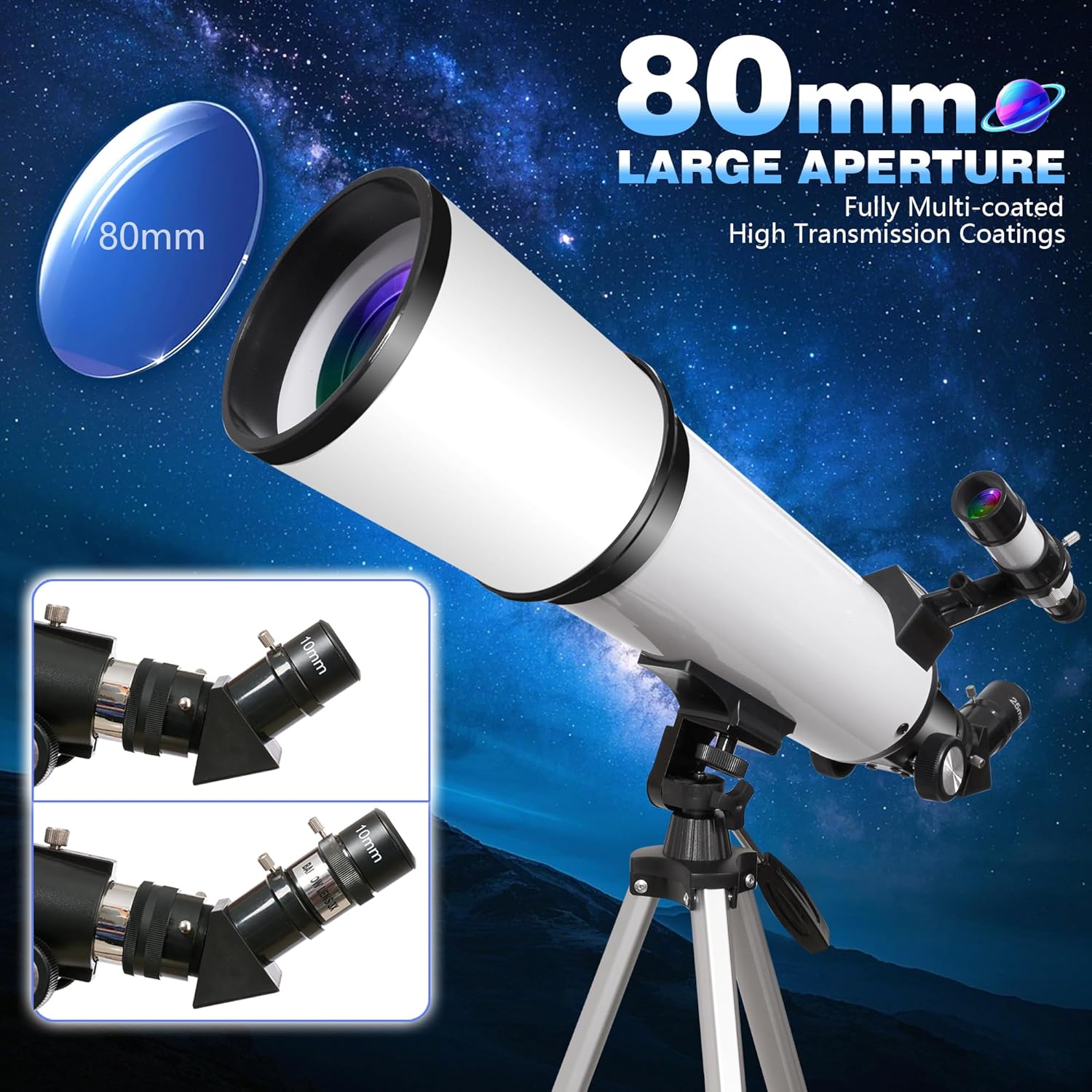
This is a practical entry-to-mid level refractor telescope designed for adults and absolute beginners who want to start exploring the night sky without a complicated setup. With an 80mm aperture, it aims to gather more light than smaller models, which can help you see the Moon’s features, star clusters, and some nebulae more clearly on clear evenings. The focal length of 600mm (f/7.5) is chosen to provide a stable balance between magnification, brightness and ease of use, which matters when you’re still learning how to frame and focus objects.
What stands out in use
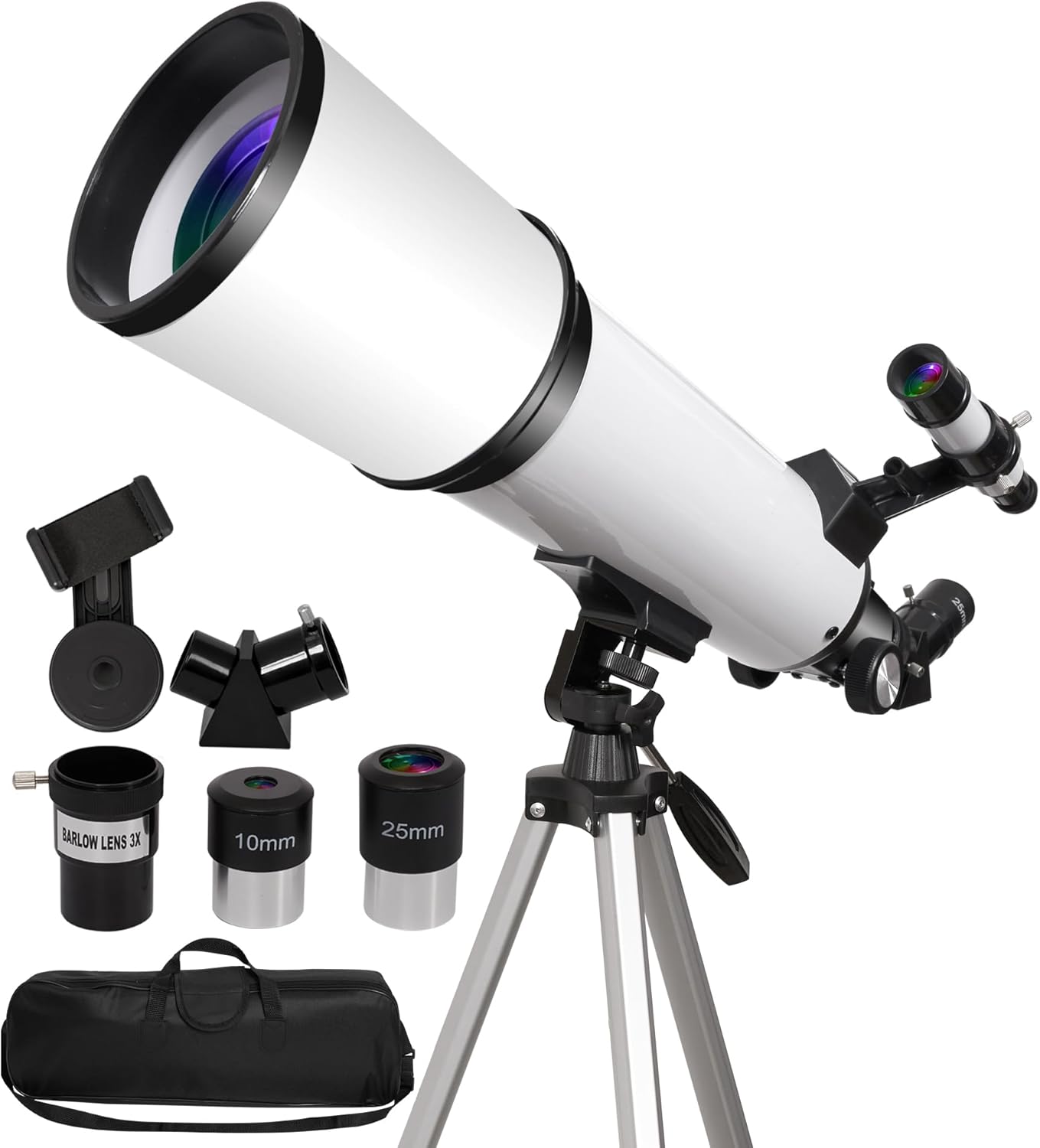
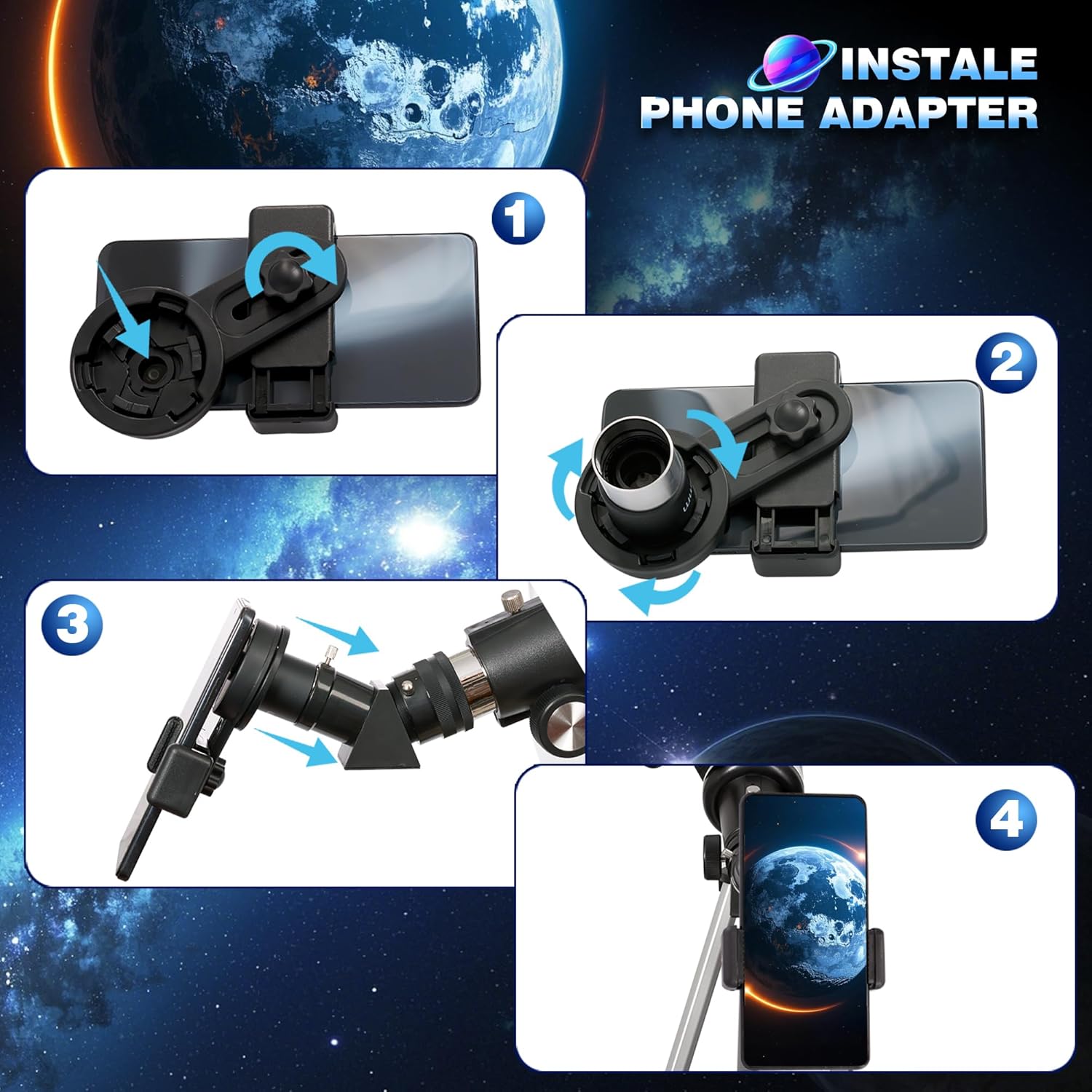
On paper, the kit offers a straightforward observing experience: two eyepieces (25mm and 10mm) plus a 3X Barlow lens open up a range of magnifications from wide-field scanning to high-detail views. This means you can start with broader sweeps of the sky and then zoom in on planets or lunar craters as you gain confidence. The optics are described as fully multi-coated, which should help reduce internal reflections and improve contrast. For those who want to capture moments, there’s a universal smartphone adapter to try taking a quick picture of what you see.
How it’s built and how it travels
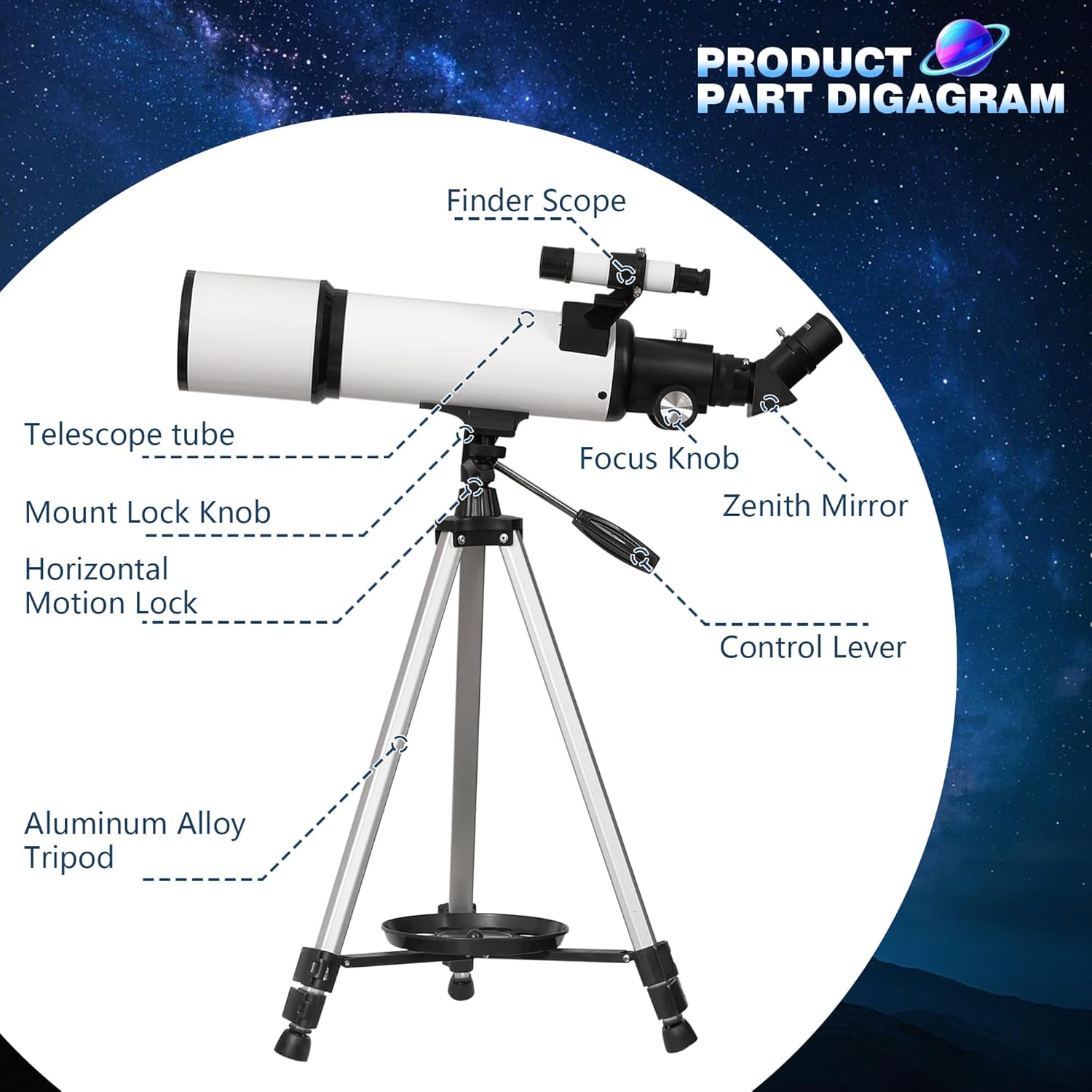
Stability is helped by a sturdy aluminium tripod that adjusts from 56cm up to 122cm, making it usable whether you’re sitting or standing. Everything fits into a customised carry bag, making it a reasonable option for camping trips, garden setup, or a quick dash to a darker observing site. The lack of reliance on tools for assembly is a practical plus if you’re new to astronomy or want to take it on the road.
Advantages worth noting
- The larger 80mm aperture generally provides brighter, clearer images than smaller entry models, particularly in non-ideal sky conditions.
- The 600mm focal length offers a clearer planetary view and better control of chromatic aberration compared with shorter-tube designs.
- The kit’s flexibility with two eyepieces and a Barlow lens gives a practical progression from broad exploration to detailed viewing.
- The tripod height range accommodates various viewing postures, potentially reducing neck strain during longer sessions.
- The phone adapter enables quick sharing or saving of observations, which can be handy for beginners who want to document progress.
Limitations and what to consider
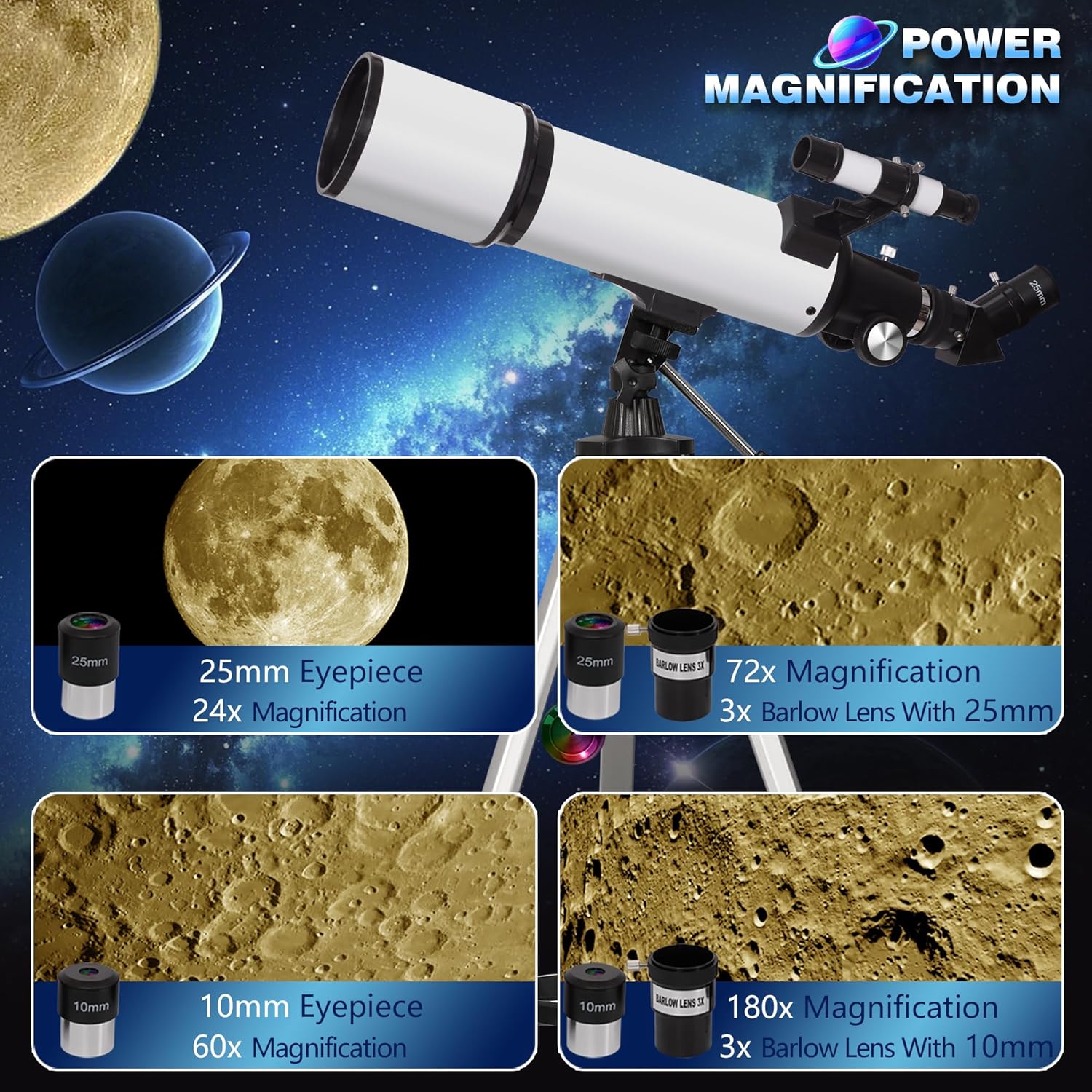
- While the setup is approachable, 180X magnification is high and depends on sky quality, telescope stability, and eyepiece choices, in practice, you may find higher magnifications challenging to hold steady or necessary to keep a high-quality image.
- For very planet-heavy viewing or deep-sky targets, expectations should be moderate, this is pitched as an entry-to-mid level instrument, not a specialist or premium telescope.
- The description mentions FMC optics, but without independent testing or reviews, you should treat perceived brightness and edge sharpness as dependent on your observing conditions and alignment.
Who it’s best for
If you’re starting out with astronomy or want a portable set you can easily carry to a dark site or garden, this telescope offers a balanced package: decent aperture, adjustable stand, and a simple path from beginner to more advanced viewing as you gain experience. It’s not the best option if you’re after eclipse-grade lunar details every night or specialised astrophotography from day one.
Who might want to skip it
If your priority is maximum possible brightness for deep-sky objects or you plan frequent long-term astrophotography, there are models with larger apertures or dedicated mounting options that may better match those ambitions. Also, if you expect reliable high-midelity high-mux viewing in the strongest of conditions, you may find this set limited by its entry-level optics and tube length.
When it makes sense to buy
- You want a practical, all‑in‑one kit that’s quick to assemble and easy to transport.
- You’re starting out and want visible improvement in planetary and lunar detail without a steep learning curve.
- You value a flexible setup with a phone adapter to capture early observations.
What to check before buying
- Confirm inclusion of all parts: optical tube, tripod, phone mount and carry bag, plus eyepieces and Barlow lens.
- Consider the weight and height range of the tripod to ensure comfortable use for you or other users in your household.
- Think about your typical observing sites: darker skies will maximise the benefit of the 80mm aperture.
- If you plan to photograph, manage expectations for basic phone astrophotography as a starting point rather than a broadcast-ready setup.
Practical usage example
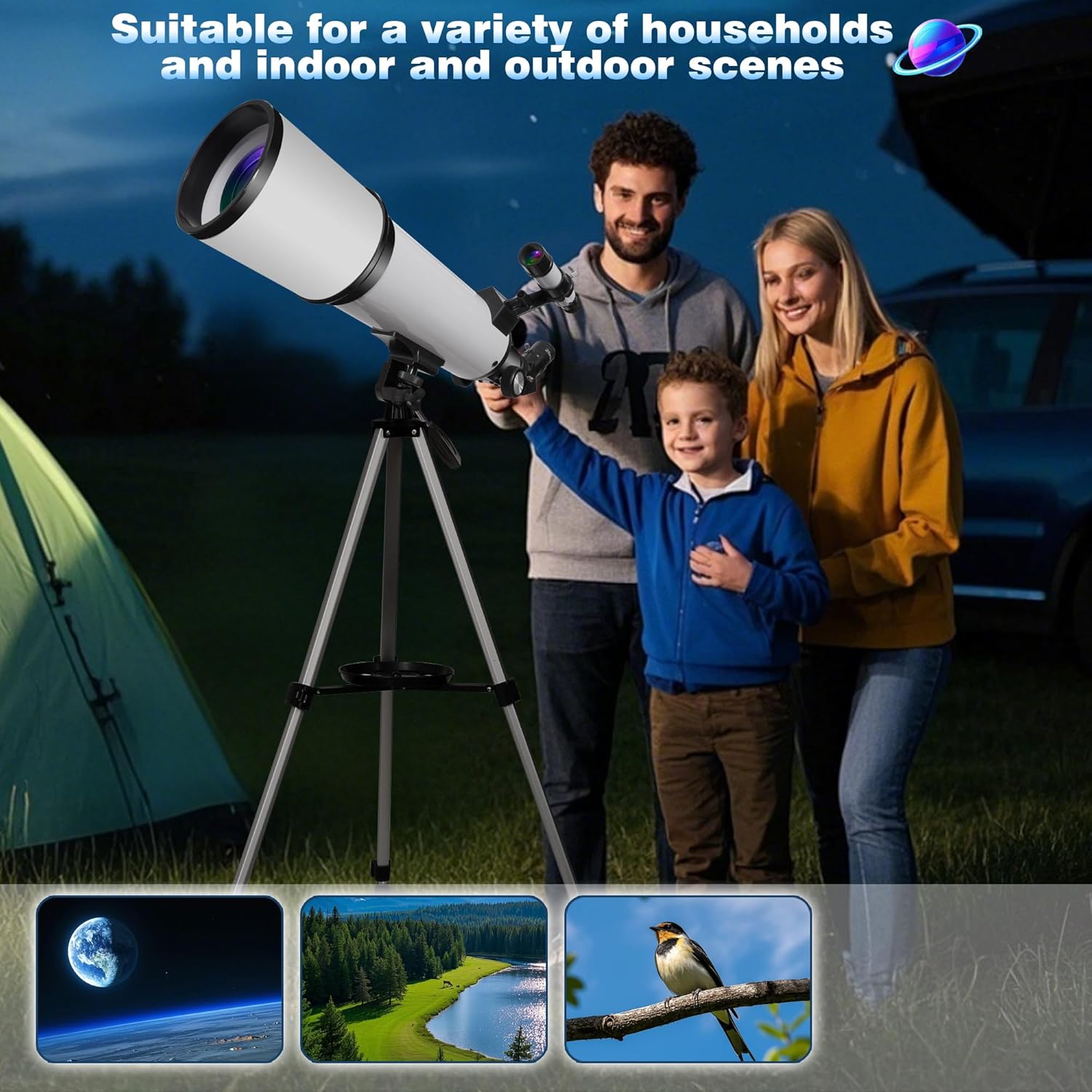
Imagine a calm evening in a garden with a clear horizon. You set up the tripod, align with a bright star as a starting point, and swap between 24X and 72X magnifications to scan a broad region and then zoom into Saturn’s rings or the Moon’s craters. A quick tap with your phone adapter captures a crisp lunar feature you can share with a friend, turning a casual hobby into a small achievement.
What alternatives or approaches make sense
If you want a similar experience with more flexibility or a larger aperture, you could consider models with bigger tubes or different mounting systems. For those prioritising travel friendliness, this kit’s carry bag and tool-free assembly are real advantages. If you prefer a fixed, stable mount for longer observations, a different tripod or mount system could improve steadiness.
FAQ (quick answers)
- Do I need tools to assemble it? No, the set is designed for quick assembly without tools.
- Will this show deep-sky objects clearly? It will show brighter deep-sky objects in good conditions, more detailed deep-sky viewing typically requires darker skies and more advanced equipment.
- Is it suitable for children? It’s marketed for adults and beginners, supervision and guidance are recommended for younger users.
Final buying decision
Is it worth it?
Worth considering if you want a pragmatic, ready-to-go telescope with a solid light-gathering capability for entry-level astronomy. It suits learners who value portability and an inclusive kit that can grow with them, rather than a kit aimed at serious astrophotography or hardcore deep-sky exploration.