

The UK Basket Test: a 7‑minute way to spot the real online deal
Stop overpaying at checkout. A practical UK ‘basket test’ to uncover delivery costs, returns hassle, VAT issues and better offers before you buy.
You’ve found a “bargain”, the product page looks great, and then checkout quietly ruins it: delivery fees, odd returns rules, longer dispatch times, or a discount that vanishes when you sign in. The fix isn’t chasing more deals — it’s pressure‑testing the one you’ve already found.
This is my go‑to UK Basket Test. It’s a quick checkout simulation (no payment needed) that helps you spot the real total cost and the hidden friction before you commit. It’s especially handy during busy sale periods like Black Friday/Cyber Monday, Boxing Day, and the Spring/Easter promos, when listings move fast and assumptions cost money.
What the “Basket Test” is (and when it’s worth doing)
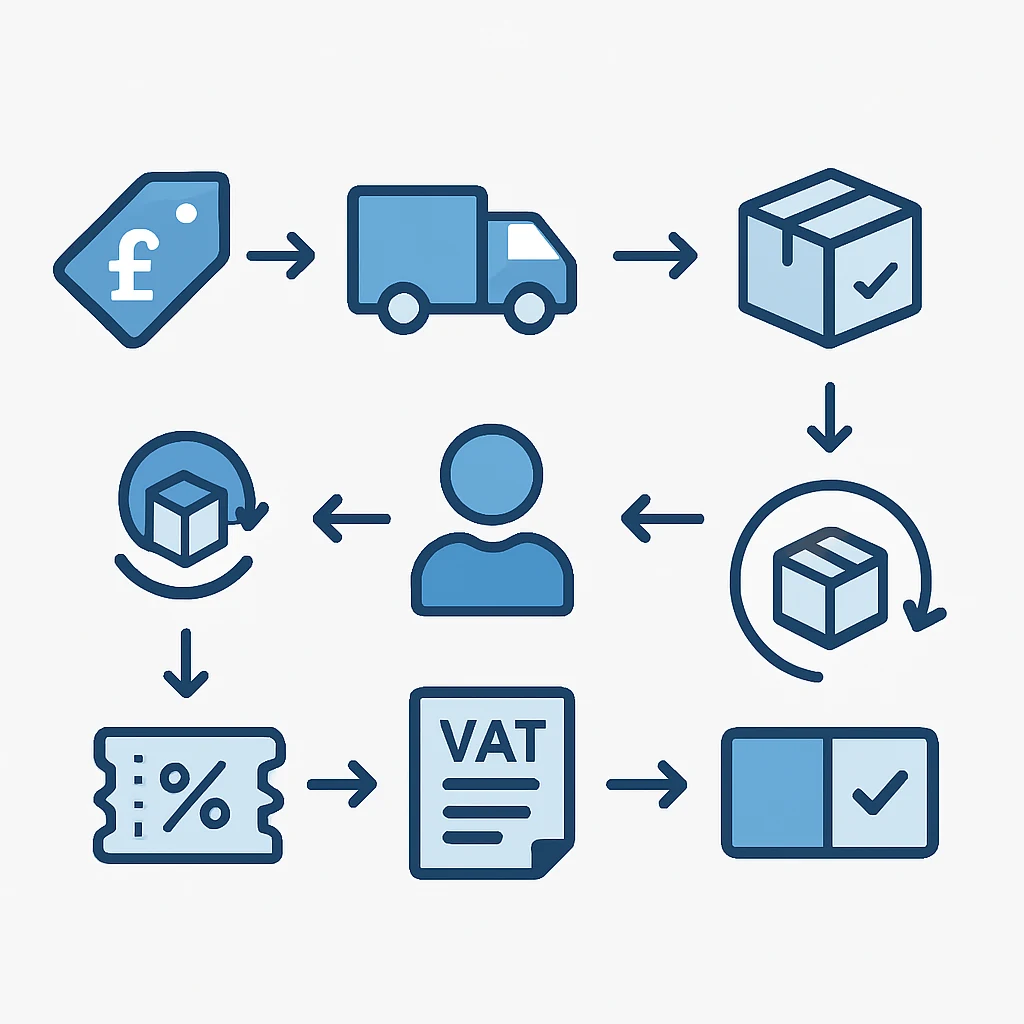
The Basket Test is simple: you add the item to your basket, go as far as you can towards placing the order, and stop right before paying. Along the way, you check the bits that change the deal: delivery, returns, VAT wording, seller details, and any discounts that only appear at the last second.
Do it every time? Probably not. Do it when the purchase is meaningful? Absolutely — think:
- Anything bulky or time‑sensitive (furniture, appliances, gifts).
- Higher‑value tech (phones, laptops, consoles, headphones).
- Beauty and clothing where returns are likely.
- Marketplace listings (third‑party sellers on big sites).
If you only do this once a week, it’ll still save you more than another hour of scrolling “deals” ever will.
The Basket Test, prioritised (start at 1 and stop when you’re confident)
1) Check the true delivered price (not just the product price)
The biggest UK checkout surprise is still the simplest: delivery changes the deal. “Free delivery” can be conditional (minimum spend, membership, slower service) and some retailers price low then add delivery later.
What to do in the Basket Test: go to the delivery step and look for the final total including delivery.
When this matters most: low‑margin items (phone cases, cables, small homeware) where delivery can be a large part of the total, and heavy items where standard delivery isn’t actually standard.
If you’ve got flexibility, try a quick sanity check: what happens if you switch between Standard and Next Day? Sometimes the “deal” only holds if you’re willing to wait.
2) Confirm dispatch time vs delivery time (two different promises)
UK listings often show delivery estimates, but the real question is: when does it dispatch? A retailer can quote “delivery by Friday” while quietly giving themselves several days to dispatch.
In the Basket Test, look for wording like “dispatches in X working days” and compare it to the delivery method you’ve selected.
When to apply: gifts, school stuff, last‑minute event outfits, anything you need before a specific date (or before you travel). It’s also crucial around Bank Holiday weekends, when “working days” isn’t what your brain thinks it is.
3) Read the returns line like a cynic (cost, window, and condition)
A deal isn’t a deal if you can’t return it without drama. UK shoppers often assume returns are “free and easy”, but policies vary by category and seller.
Do this during the Basket Test: open the returns policy and check three things — who pays, how long you have, and what condition is required.
When to apply: clothing, footwear, mattresses, and anything you might be buying in two sizes/colours “to decide later”. Also apply it to refurbished items or clearance stock where rules are often stricter.
If the policy is vague, that’s information. Vague policies usually translate into slower refunds, extra steps, or tighter conditions.
4) Verify who you’re buying from (retailer vs marketplace seller)
On big platforms, the product page can look “official” while the seller is actually a third party. That can affect delivery speeds, warranty handling, and returns.
In the Basket Test, look for “Sold by” and “Dispatched by”. If you’re on a marketplace, check whether you’re dealing with the platform itself, a brand store, or a third‑party seller.
When to apply: electronics, branded trainers, premium skincare, and anything that attracts counterfeits.
A practical rule: if you’re buying a brand‑sensitive item (where authenticity matters), treat unknown sellers as a risk you should be compensated for — either via a clearly better price, or stronger buyer protections.

5) Make sure VAT and region are clear (especially on “too good” prices)
Most UK consumer prices are shown with VAT included, but not every listing is equally clear — particularly if the seller is overseas or if the item is aimed at business buyers.
In the Basket Test, scan for wording that confirms what’s included in the price and whether there are any additional charges shown at checkout.
When to apply: unusually low prices, unfamiliar retailers, marketplace sellers, and anything that looks like it might be shipping from outside the UK.
You don’t need to become a tax expert — you just need to avoid the headache of buying something thinking you’ve got one total, and discovering the real total is different when it’s already in your basket.
6) Test the discount logic (because some offers only work in a specific order)
This is where many UK shoppers lose easy savings: some voucher codes only apply to certain variants, some discounts vanish when you sign in, and some offers only trigger with a minimum spend.
In the Basket Test, try the deal in the order you would naturally do it:
- Add item → go to checkout → then apply any code.
- If it fails, try removing/re‑adding the item or switching colour/size.
- Check whether the “discount” is actually cheaper than another bundle price already available.
When to apply: during major sales, when retailers stack multiple promos (sitewide discount, category discount, voucher, student/Blue Light style offers, app offers). One of them often cancels another.
If you want a simple principle: take the single best, most reliable discount rather than forcing five things to stack and risking the whole checkout.
7) Do a “second tab” price sense check (not a deep comparison)
This isn’t about spending an hour on comparison sites — it’s about not getting anchored to the first price you saw.
Open one extra tab: either a mainstream UK retailer you trust, or a straightforward price comparison view. You’re looking for obvious mismatches: is your “bargain” actually normal price elsewhere once delivery is included?
When to apply: anything you’re buying because it’s “on offer”, rather than because you already needed it.
If you want to go further, pair this habit with the tools and guides on the homepage at / — build a routine that saves money without making shopping feel like a second job.

A couple of UK‑specific deal scenarios where the Basket Test shines
If you buy gifts online in the UK, the Basket Test is your friend in November and December. The product price can be brilliant, but dispatch delays and return windows can turn into stress (and cost) if the item arrives late or isn’t right.
It’s also great around Boxing Day and January sales, when “final clearance” language pops up. Clearance can be genuine value — but it’s also where you’re most likely to find stricter returns conditions, fewer delivery options, or limited support if something’s missing.
And for everyday saving: the Basket Test stops you being nickelled‑and‑dimed by delivery. Plenty of “small buys” become expensive because you didn’t notice the delivery threshold until the last step.
FAQs
Does adding to basket affect the price?
Sometimes prices change because of stock levels, dynamic pricing, or variants — but the Basket Test doesn’t cause it so much as reveal it. The point is to see what the retailer is actually charging you today, for your delivery option, with your account.
Is it safe to go to checkout if I don’t want to buy?
Yes — as long as you stop before payment/placing the order. You’re effectively reviewing the final terms and total.
What if the deal is on an app only?
Run the Basket Test in the app. App‑exclusive promos are common in the UK, and the checkout view is often where the real conditions show up (minimum spend, excluded brands, delivery requirements).
Should I always prioritise free delivery?
Not automatically. A slightly higher item price with reliable delivery and easy returns can be better value than a rock‑bottom price with poor dispatch times or awkward returns.
One quick action to do today
Pick one thing you were about to buy online this week and run the Basket Test before you pay. If the delivered price, dispatch timing, and returns terms still look good, buy with confidence. If not, you’ve just saved yourself money — and a future customer service headache.
You may also be interested

The UK Wishlist Method: Plan Your Next Online Deal (No Panic Buying)
A practical UK step-by-step guide to saving online by setting target prices, tracking drops, and buying at the right moment—without falling for “was/now” hype.
Marketplace vs Retailer: How UK Shoppers Pick the Real Deal
A practical UK guide to choosing between marketplaces and direct retailers—price, delivery, returns, warranty and hidden costs—so the ‘deal’ stays a deal.
After You Buy: UK Tricks to Save with Price Drops & Returns
A practical UK guide to saving after checkout: price-drop checks, delivery refunds, returns timing and safe ways to re-order for less.