

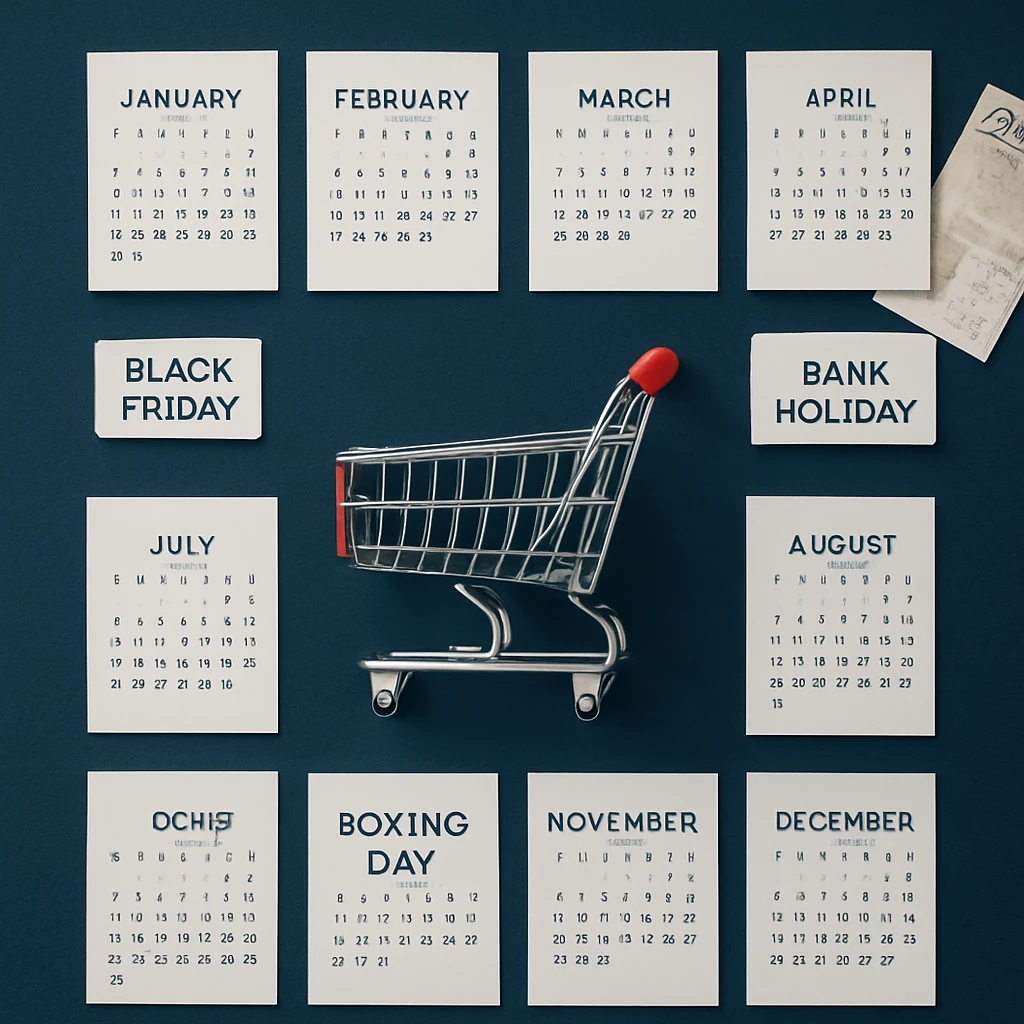
The UK Deal Calendar: When to Buy Online (and When to Wait)
A practical UK shopping calendar: the best times to buy, when to hold off, and how to plan online purchases around sales cycles in GBP.
Buying at the right moment often saves more than hunting for the “perfect” voucher code. In the UK, most online discounts follow predictable rhythms: retail seasons, bank holiday weekends, payday behaviour, and the way big chains clear stock.
This guide is a practical UK deal calendar you can actually use. It’s not about chasing every sale. It’s about knowing when waiting is likely to pay off, and when it’s smarter to buy now (especially if delivery dates, returns windows and stock levels matter).

1) Build around the big UK sale anchors (but don’t let them control you)
If you only shop during headline sales, you’ll miss plenty of good prices. But these anchors are still useful because they set the “reset points” for a lot of retailers.
Black Friday & Cyber Monday (late November)
Why it matters: it’s the biggest UK-wide online discount moment, and it shapes pricing for weeks. Many retailers start early and keep “event pricing” running into early December.
When to use it:
- Ideal for electronics, appliances, gaming, headphones, smart home, and big-ticket items where retailers compete aggressively.
- Good if you want fast delivery before Christmas and a straightforward returns process.
When to wait instead: if you’re buying for Christmas but you’re flexible, sometimes early December brings quieter, targeted price drops (especially if a retailer’s Black Friday stock didn’t move as planned). Keep an eye on delivery cut-offs.
Boxing Day & January Sales
Why it matters: this is when leftover seasonal stock gets shifted and retailers chase new-year momentum.
When to use it:
- Best for fashion, footwear, homewares, bedding, fitness kit, and anything that’s seasonal or trend-driven.
- Often strong for furniture and mattresses because big retailers use long sale periods and rotating promos.
When to avoid: if you need a specific size/colour and can’t compromise. The best deals can be on limited stock, and returns may be less convenient during the peak period.
Spring bank holidays and long weekends
Why it matters: UK retailers love a bank holiday “event” even when it’s not a true clearance moment. Think “extra money off” deals, free delivery thresholds, or bundle promotions.
When to use it:
- Handy for DIY, garden, outdoor gear as the weather turns.
- Good for home improvement and décor as shops try to kick-start seasonal demand.
Prime Day and other mid-year “members events”
Why it matters: big platforms and certain retailers run mid-year promo events that pull prices down across categories.
When to use it:
- Great for own-brand devices/accessories, household items, and things you reorder.
- Useful for topping up essentials if you already know your usual prices.
When to pause: don’t assume “event” equals “best”. If you’ve got time, compare across two or three retailers and consider delivery speed and returns.

2) Shop the UK retail “stock cycle”, not just the sales banners
A lot of online bargains happen because retailers need to clear space.
Why it works: retailers have to move old lines before new ones arrive. The price drops often happen quietly (clearance sections, outlet pages, end-of-line notes), not just via big homepage promos.
When to apply it:
- End of season is your friend: winter coats as spring approaches; summer clothing as autumn stock lands.
- After “peak gifting” moments (Christmas, Mother’s Day, Father’s Day) you often see tidy-up promos on gift sets and related categories.
The practical trick here is to shop with a “good enough” mindset. If you’re not picky about the newest colourway or the latest revision, you’ll catch the real clearance prices.
3) Use a “deadline vs discount” rule (delivery dates change everything)
Saving £10 isn’t a win if you pay for express delivery or risk the parcel arriving late.
Why it matters: in the UK, delivery options vary a lot by retailer (next-day cut-off times, weekend delivery, click and collect, delivery slots). Sale periods can also slow dispatch.
When to apply it:
- Any purchase tied to a real deadline: birthdays, travel, school start dates, or time off work.
- Anything bulky (furniture, large appliances) where delivery lead times can be longer and more variable.
A simple rule that helps: if you’re inside your “must arrive by” window, prioritise reliability and returns over chasing an extra small discount. Your time and stress are part of the cost.
4) Watch the UK price pattern around payday (and plan your own timing)
Retailers know when people are most likely to spend.
Why it matters: some promo activity clusters around end-of-month and early-month periods because that’s when many shoppers have fresh funds.
When to use it:
- If you can buy mid-month, you may find less “noise” and more targeted discounts.
- If you must buy around payday, you can still win by being strict: decide your max price in advance and don’t let “ends tonight” banners push you.
This isn’t about assuming every retailer does the same thing. It’s about recognising that your personal discipline is easiest when you pick a shopping window that suits you, not the adverts.

5) Treat vouchers as a timing tool (not the main strategy)
Voucher codes can be great, but in the UK they’re often category-limited, new-customer-only, or exclude sale items.
Why it matters: the best discount isn’t always the code that “works” — it’s the lowest all-in cost after delivery and any returns risk.
When to apply it:
- During quieter weeks when there’s no sitewide sale, a voucher can create your own mini-discount.
- When a retailer offers a code for free delivery or a small percentage off that stacks with existing reductions.
If a code changes your decision, do a quick sense-check: are you buying extra items just to hit a threshold? If yes, the code might be costing you money.
6) Compare the total in GBP (VAT included), not the headline price
UK online prices should be shown with VAT included for consumers, but totals can still swing because of delivery charges, minimum spend thresholds, and paid “premium delivery”.
Why it matters: the cheapest basket price isn’t the cheapest order once you add delivery — and it definitely isn’t the cheapest if you end up returning something and you’re out of pocket for postage.
When to apply it:
- Clothing and footwear where sizing can be uncertain.
- Multi-item orders where splitting across retailers might reduce delivery costs (or increase them). A two-minute check can save you from “false savings”.
If you want a simple habit: before you pay, open a new tab and compare final checkout totals across at least one alternative retailer.
7) Make peace with “good timing” rather than “perfect timing”
The biggest money-saver is avoiding endless browsing.
Why it matters: chasing the absolute bottom price can waste hours, and you risk missing stock, missing delivery windows, or buying something you don’t need because you’re deep in deal mode.
When to apply it:
- Any purchase under your personal “not worth the hassle” threshold.
- Anything you need soon.
A practical approach is to set two targets: a “buy now if under £X” price and a “buy later if it drops under £Y” price. Once your buy-now target is hit, stop hunting.
Quick tips (UK-friendly and genuinely useful)
If you only do a few things from this post, do these:
- Create a simple deal calendar note in your phone: Black Friday/Cyber, Boxing Day/January Sales, key bank holidays, and any personal deadlines.
- Check delivery and returns before getting excited. “Free returns” and “free delivery” aren’t the same thing, and policies can differ by retailer.
- Don’t let thresholds trick you. If you add items just to get free delivery, you’ve turned a saving into spend.
- Use internal site search with specific terms like “clearance”, “end of line”, “outlet” to find the real reductions faster.

How to turn this into a repeatable routine
The goal is to spend less mental energy each time you shop.
Start by deciding which type of buyer you are for that purchase:
If it’s urgent (gift, travel, time-sensitive): prioritise delivery reliability, clear returns, and a reputable retailer. Your “deal” is avoiding problems.
If it’s flexible (upgrade, nice-to-have): align it with the next sale anchor (Black Friday, Boxing Day/January, bank holiday promos) or end-of-season clearance. Waiting is your leverage.
If it’s a repeat buy (consumables, basics): shop during predictable promo windows and consider buying enough to avoid frequent delivery fees — but only if you’ll genuinely use it.
And if you want more UK-focused saving tactics, keep the hub handy at / — it’s where we collect the guides, tools and strategies that work best for everyday online shopping here.
FAQs
Is Black Friday always the cheapest time to buy in the UK?
Not always. It’s often excellent for big-ticket categories, but some items are just “promoted” rather than genuinely reduced. If you’re flexible, Boxing Day/January clearance can beat it for seasonal and fashion-heavy products.
Are Boxing Day deals only in-store?
No. Many UK retailers run Boxing Day and January Sales online with delivery and click and collect options. Just factor in dispatch delays and busier courier networks.
How do I avoid buying just because something is “on offer”?
Tie every purchase to either a deadline (you need it by a date) or a price target (you’ll buy if it hits £X). If it meets neither, it’s usually a skip.
Do bank holiday sales offer real bargains?
Sometimes. They can be great for seasonal categories (garden, DIY, outdoor), but they’re also used for broad “event” marketing. Treat them as a good moment to compare totals and delivery terms rather than assuming every price is exceptional.
You may also be interested

The UK Wishlist Method: Plan Your Next Online Deal (No Panic Buying)
A practical UK step-by-step guide to saving online by setting target prices, tracking drops, and buying at the right moment—without falling for “was/now” hype.
Marketplace vs Retailer: How UK Shoppers Pick the Real Deal
A practical UK guide to choosing between marketplaces and direct retailers—price, delivery, returns, warranty and hidden costs—so the ‘deal’ stays a deal.
After You Buy: UK Tricks to Save with Price Drops & Returns
A practical UK guide to saving after checkout: price-drop checks, delivery refunds, returns timing and safe ways to re-order for less.