

The Smart Basket Method: Save More at Checkout in UK Online Shops
A practical step-by-step guide for UK shoppers to lower totals at checkout: delivery thresholds, vouchers, bundles, timing and returns—without dodgy hacks.
Online bargains aren’t always about finding the lowest sticker price. In the UK, a lot of the real saving happens inside the basket: delivery thresholds, multibuy offers, “spend £X get £Y off”, and the moment you choose delivery, payment and returns.
This mini guide is a simple method you can use on almost any UK retailer. It’s designed to be quick, repeatable, and safe (no sketchy loopholes, no pretending you’re someone you’re not).
Step 1: Start with a “clean” price (so you know what you’re beating)
Before you chase vouchers, get a baseline. Open the product page and check the total you’d pay today with standard delivery to your postcode.
In the UK, prices shown to consumers should already include VAT, so the big swings usually come from delivery charges, basket-level discounts, or buying the “wrong” variation (size/colour, pack size, etc.).
A quick habit that helps: screenshot or note the baseline total. It stops you from “saving” money you were never going to spend.
If you’re comparing retailers, don’t compare headline prices—compare delivered totals.
Step 2: Decide your checkout goal (pick one)
The smart basket method works best when you choose the main target first. Most baskets are optimised for one of these:
- Free delivery threshold (often the easiest win)
- Basket discount trigger (e.g., spend £X, save £Y)
- Multibuy/bundle price (best for repeat buys)
- Cashback eligibility (when you’re buying something pricey)
Trying to hit all of them at once is how people end up adding random items they don’t need.
Step 3: Build the basket with “useful fillers”, not junk
If you’re a few quid short of free delivery, the temptation is to chuck in something cheap and forget it. That’s fine—if it’s something you’ll genuinely use.
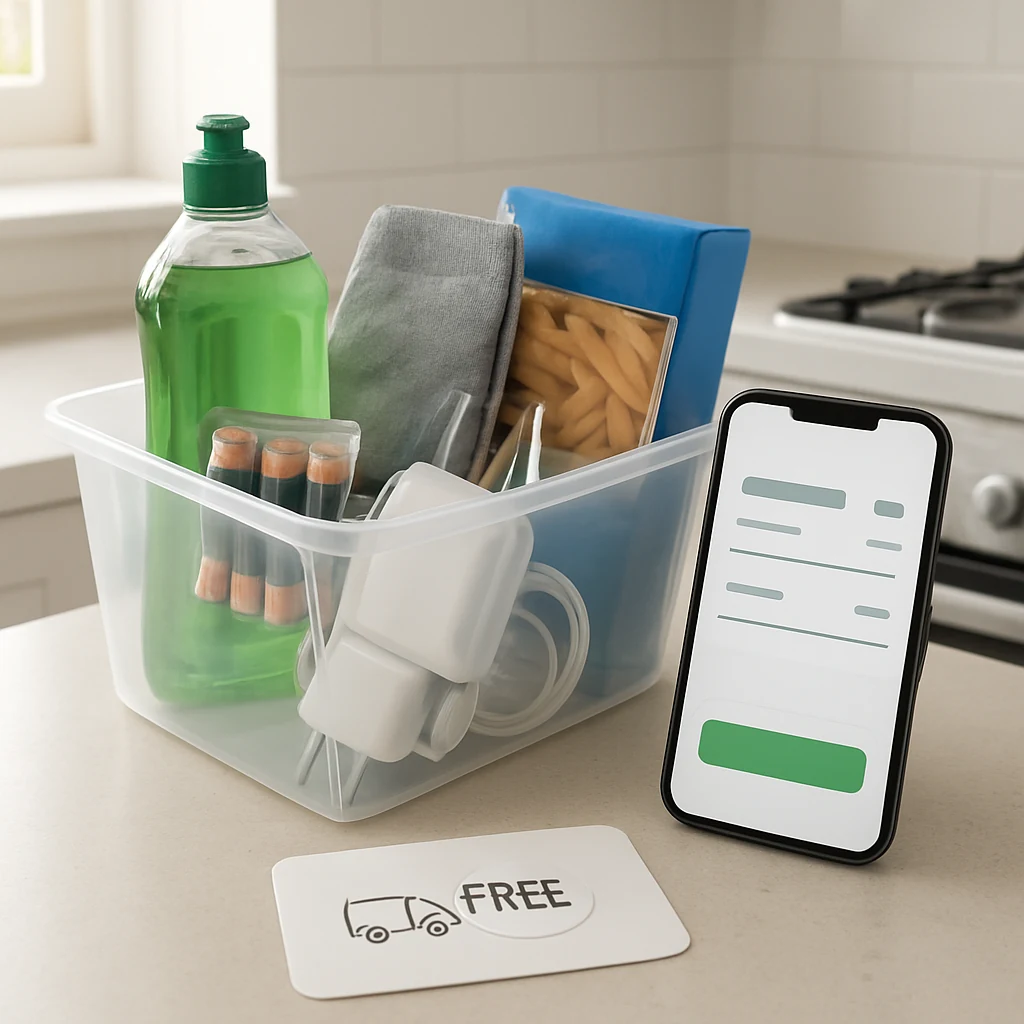
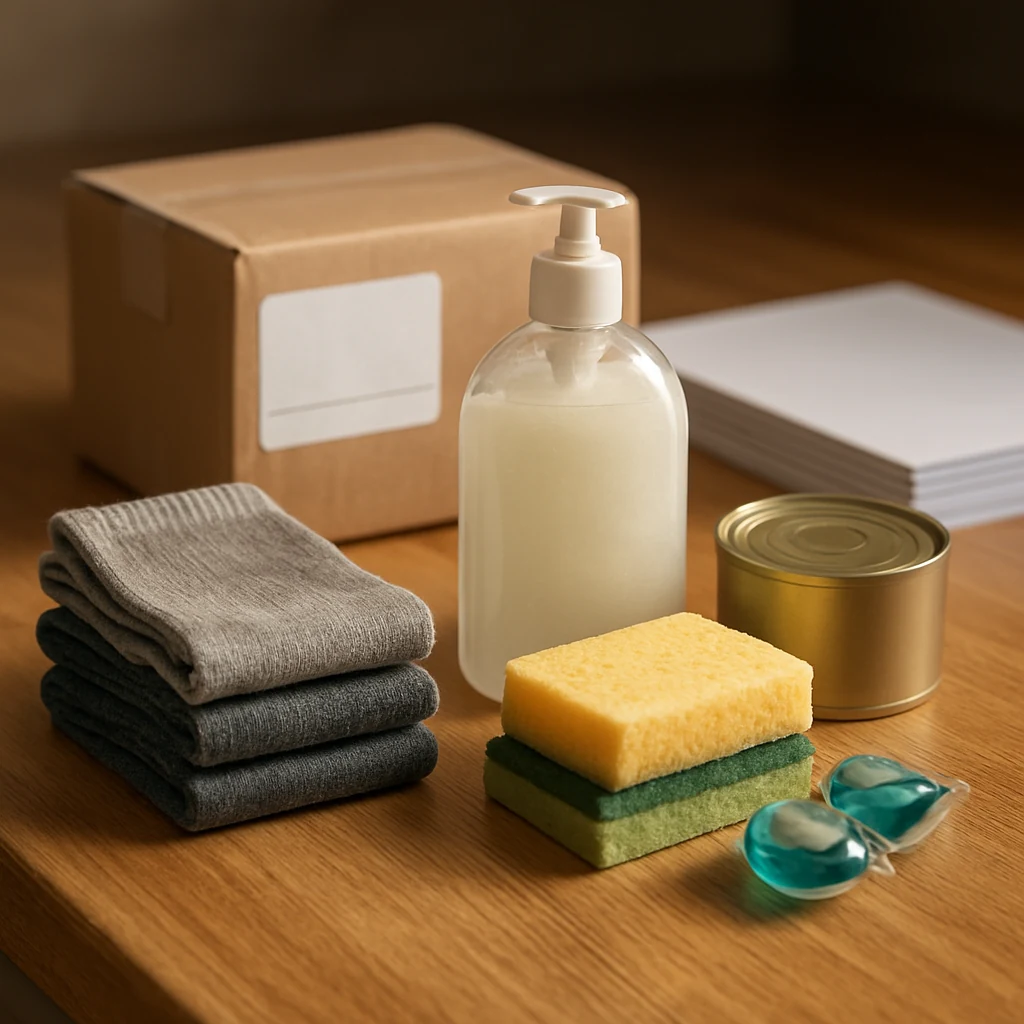
Think of fillers as planned household top-ups. Things like chargers, batteries, socks, skincare basics, dishwasher tablets, printer paper, or a small pantry item (depending on the shop) tend to be better than novelty bits that end up in a drawer.
One rule: if the filler is only there to unlock free delivery, it should cost less than the delivery charge you’re avoiding and be something you won’t regret owning.
If you can’t find a sensible filler, it can be cheaper to just pay delivery and keep the basket clean.
Step 4: Check the offer terms before you apply any codes
UK retailers vary wildly on what stacks. A common pattern is:
- a voucher code might exclude sale items or certain brands
- a student/NHS discount may not combine with other promotions
- a multibuy might be automatically applied but removed if you use a code
So do this in order:
- Put everything in the basket.
- Open the “offers/terms” link (usually under the promo banner).
- Decide whether your basket is better with the multibuy or with the code.
If you’re unsure, do two quick tests in separate tabs: one with the code, one without. Compare the delivered totals.
Step 5: Split the order when it’s genuinely cheaper
Splitting orders sounds counter‑intuitive, but it can save money when:
- one item is on a different delivery schedule (and triggers a charge)
- you want to avoid paying delivery on a bulky add‑on
- a discount works per order (e.g., “£10 off when you spend £50”) and your items naturally divide into two qualifying baskets
Be careful here: two smaller orders can also mean two delivery charges. Only split if the maths works out after delivery.
Also consider Click & Collect if it’s offered and convenient—sometimes it’s free even when home delivery isn’t.
Step 6: Use timing as a tool (without waiting forever)
You don’t need to hold out for Black Friday to save money. But timing does help—especially for predictable UK shopping seasons.
If your purchase isn’t urgent, it’s worth checking whether you’re close to a well-known sales window like:
- January sales (good for clearance, last-season lines)
- Spring bank holiday promos (often broad “up to” sales)
- Back to school (useful for tech accessories, stationery, kids’ bits)
- Prime Day-style events (even if you don’t buy from Amazon, competitors often respond)
- Black Friday Ofertas Cyber Monday (best when you already know your baseline price)
- Boxing Day (clearance-heavy; sizes/stock can be patchy)
The trick is not guessing. If you’re going to wait, set a price alert (many comparison sites and browser tools can do this) and decide your “buy price” in advance.
Step 7: Choose the right payment method for the basket you built
This is the quiet part of checkout where savings leak away.
- If you’re using cashback, click through from the cashback site before you add codes, and avoid switching tabs too much. Cashback is never guaranteed, but you can improve the odds by keeping the journey clean.
- If you’re using a gift card, check whether it can be combined with voucher codes (some shops treat gift cards as a payment method; others treat them like a promotion).
- If you’re using Buy Now Pay Later, be honest about whether it’s helping you manage cashflow or nudging you into a bigger basket.
And if delivery speed isn’t critical, choosing standard delivery over next-day can be the simplest saving of all.
Step 8: Treat returns as part of the price (especially for clothing)
A “cheap” item with awkward returns can end up expensive in time and postage.
Before you place the order, check:
- Is the return free, and is it a courier pickup, drop-off, or post?
- What’s the returns window (and does it change for sale items)?
- Are there hygiene exceptions (common with beauty, underwear, earrings)?
If you’re buying multiple sizes with the intention to return, you’re not doing anything unusual—but make sure the returns process is simple and not time‑consuming.
For higher-value orders, consider paying with a method that gives you straightforward dispute protection if something goes wrong (and keep your order confirmation and delivery proof).
Quick tips (useful when you’re mid-checkout)
- If a code doesn’t work, try removing sale items first—some vouchers only apply to full-price lines.
- Don’t let “Only X left” push you into a rushed basket. Compare delivered totals in another tab.
- If you’re just under a threshold, look for something you’d buy next month anyway, not something you’d never choose normally.
- If delivery is the only problem, check Click & Collect or a slower option before adding filler items.
A simple example: how the method looks in real life
Say you’re buying a household item and the shop shows a free delivery threshold. You build your basket with what you actually need, then you notice you’re a few pounds short. Instead of adding a random gadget, you add a practical top‑up you’ll use soon (and that you’d otherwise buy elsewhere). You then test one voucher code versus the shop’s automatic multibuy, choose whichever gives the best delivered total, and double‑check returns if the order includes clothing or anything likely to be sent back.
It’s not flashy. But it’s repeatable, and it’s how you stop “good deals” turning into bloated baskets.
FAQs
Is it ever worth paying for delivery in the UK?
Yes. If you’re adding items you don’t need just to hit free delivery, you can easily wipe out any saving. Pay delivery when it keeps your basket focused and your spending lower.
Do voucher sites always have working codes?
No. Many codes are expired, single-use, or restricted to certain products. Treat them as “nice if they work”, not as part of your core plan. Your core plan should be the delivered total and basket structure.
How do I avoid fake savings during Black Friday?
Know your baseline. If you’ve checked the normal delivered price in advance (even just once), you’re much less likely to be swayed by an inflated “was” price or a dramatic percentage off.
What’s better: cashback or a voucher code?
Whichever gives the lower delivered total. Sometimes cashback tracks only if you don’t use a code. Other times a code beats any potential cashback. Test both routes if the purchase is significant.
Where can I find more UK deal guides?
Browse the latest guides and money-saving tips on our homepage: /
You may also be interested
Marketplace vs Retailer: How UK Shoppers Pick the Real Deal
A practical UK guide to choosing between marketplaces and direct retailers—price, delivery, returns, warranty and hidden costs—so the ‘deal’ stays a deal.
The UK Savings Stack: How to Combine Online Discounts Properly
A practical UK guide to stacking vouchers, cashback, gift cards and delivery perks—without invalidating your discount or risking returns.
The UK Checkout Playbook: Stop Losing Discounts at the Last Click
Practical UK tips to keep vouchers, cashback and delivery savings from disappearing at checkout — and avoid common traps.