

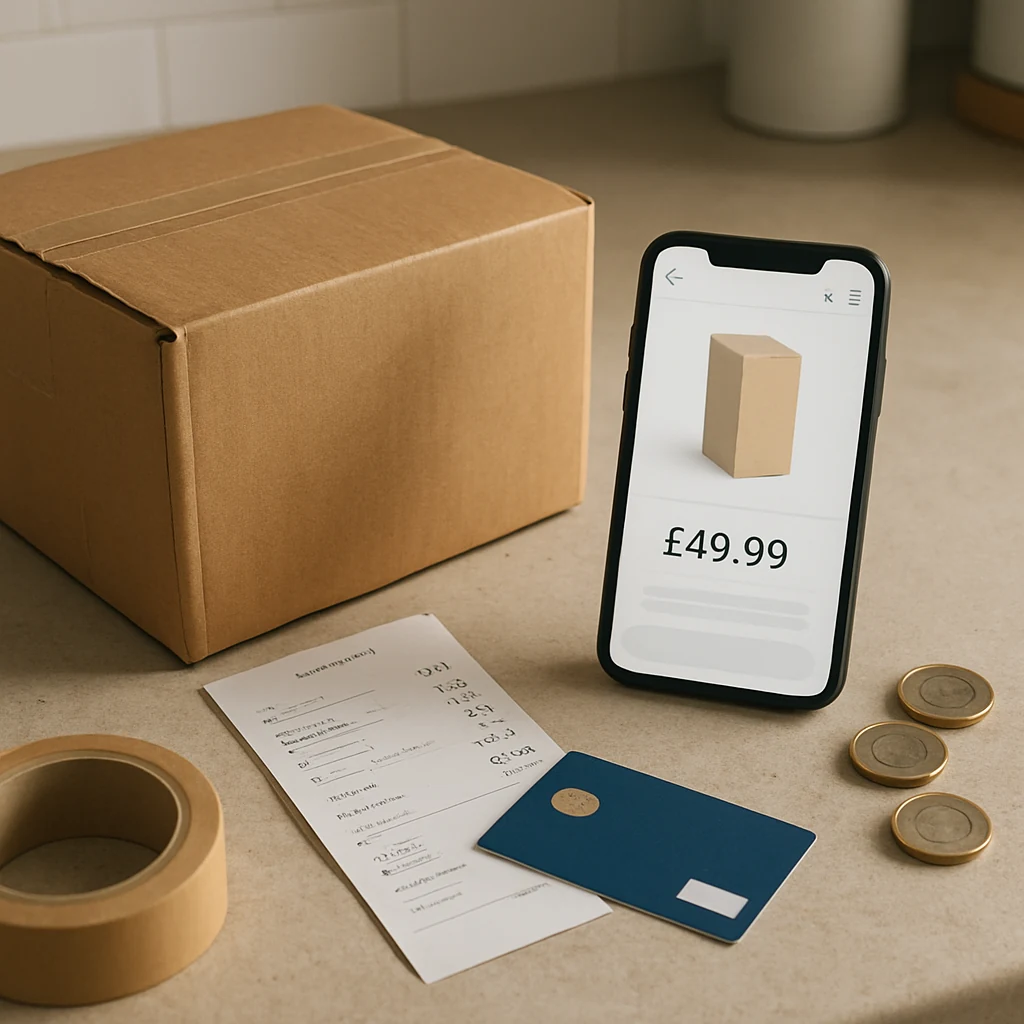
Post‑Purchase Savings: How UK Shoppers Can Get Money Back After Buying
Bought online and spotted a better price? Practical UK tactics to claim refunds, use price drops, and save on delivery and returns—without the hassle.
Most money‑saving guides focus on the before (codes, comparisons, waiting for sales). But in the UK, a surprising amount of savings can happen after you’ve clicked “Place order”.
This is a practical playbook for post‑purchase savings: what to check, why it works, and when it’s worth doing. No gimmicks, just habits that can put a bit of GBP back in your pocket.
1) Check for a price drop (and ask for the difference)
A lot of retailers quietly refund the difference if an item drops in price soon after purchase. Some call it a “price promise”, others handle it as a goodwill refund. Even when it’s not advertised, asking politely can work.
Why it’s worth it: you keep the item and still benefit from the lower price, without the faff of returning and reordering.
When to apply:
- When you bought at full price and spot a drop during big UK promo periods (Black Friday/Cyber Weekend, Boxing Day, January sales, spring bank holidays).
- When you bought something seasonal (garden kit in early spring, back‑to‑school tech in late summer) and prices wobble week to week.
What to do: screenshot the current price, your order confirmation, and contact customer services via live chat if possible (it’s usually quicker than email). Keep it simple: “I bought this on [date], it’s now £X — can you refund the difference?”
If they say no, move to the next tactic.
2) Reorder at the lower price, then cancel or return the original (the clean way)
If a retailer won’t honour a price drop, the workaround is often straightforward: place a new order at the cheaper price, then cancel the original if it hasn’t dispatched. If it has dispatched, return the original unopened.
Why it’s worth it: it’s the most reliable way to capture the new price when support won’t help.
When to apply:
- The item hasn’t shipped yet (best‑case scenario).
- You’ve got free returns (or returns are cheap and tracked).
- The savings comfortably cover any return postage.
A practical tip: check your account order status first. Many UK retailers let you cancel only up to dispatch. If dispatch is imminent, it may be safer to wait for delivery and return rather than trying to intercept it.
Also, keep packaging tidy. “Returned in resaleable condition” is still a common expectation, and it reduces the chance of a partial refund debate.
3) Use your delivery choices as a discount lever (not an afterthought)
Delivery is where “small” costs pile up — and where you can often claw savings back.
Why it’s worth it: delivery charges can undo a good deal, especially on lower‑priced items.
When to apply:
- When you’re close to a free delivery threshold.
- When you’re ordering bulky items (delivery policies vary wildly).
- When you can use Click & Collect.
Instead of auto‑selecting standard delivery, try this sequence:
- Check Click & Collect (or collection points) first. It’s often cheaper than home delivery, and sometimes faster.
- Split orders only if it reduces delivery costs. Some baskets trigger higher charges due to one bulky item.
- Watch for “free delivery with account/sign‑in” perks. Some shops quietly make delivery cheaper once you’re logged in.
If you’ve already paid for delivery and notice a free option you could have used (or the item arrives late), it can still be worth contacting support. You’re not guaranteed a refund, but a polite “Can you review the delivery charge given the delay?” sometimes gets goodwill credit.
4) Stack post‑purchase perks: cashback, rewards, and card protections
Cashback is usually a pre‑purchase click, but don’t assume you’ve missed the boat. If you forgot to activate it, you may still have options.
Why it’s worth it: it’s a “silent discount” that doesn’t change your order, delivery, or returns.
When to apply:
- You shopped on mobile and forgot to click through your cashback app/website.
- You used a discount code and the cashback didn’t track.
Try these steps:
- Submit a missing cashback claim (where supported). You’ll need your order number, date, and basket value.
- Check retailer loyalty points. Some shops let you add the purchase after the fact if you forgot to log in.
- Know your payment protections. In the UK, credit cards can offer extra protection under Section 75 for qualifying purchases (commonly for items costing over £100 and under £30,000). Debit cards may offer chargeback. This isn’t a “discount”, but it can save you money when things go wrong.
The habit to build: keep your order confirmation email and any tracking emails in one folder. It makes claims and disputes far less painful.
5) Return smarter: reduce costs, avoid delays, and protect your refund
Returns are where shoppers leak money: missed deadlines, untracked parcels, or assuming “free returns” means “no rules”.
Why it’s worth it: a smooth return prevents you getting stuck with an item you don’t want — or paying to fix a retailer’s mistake.
When to apply:
- The item is wrong, faulty, or not as described.
- You bought multiple sizes/colours to try at home.
- You’re shopping around for the best price and may send one back.
Three practical rules (that save the most hassle):
- Use tracked returns for anything you can’t afford to lose. If a parcel goes missing, tracking is your proof.
- Photograph the item and packaging before sending. Especially for higher‑value items.
- Don’t wait until the last day. Returns can take time to process, particularly around Christmas, January sales, and bank holiday weeks.
If the retailer sent the wrong item or it arrived damaged, contact customer services before returning when possible. You’re usually in a stronger position, and they may arrange collection or cover postage.

6) Time your “ask”: price adjustments and goodwill credits work best at specific moments
This is the soft skill most people skip. Retailers are far more likely to help when you frame the request in a way that’s easy to resolve.
Why it’s worth it: a two‑minute chat can beat a full return cycle.
When to apply:
- You’re still within the early days of delivery.
- The item is unopened and you can credibly return it.
- You can show the cheaper price on the retailer’s own site (or a major UK competitor if they run a price promise).
What to say (keep it calm and specific): “I’m happy with the product, but it’s now cheaper. I’d rather not return and reorder if you can refund the difference.”
You’re not demanding. You’re offering the retailer a cheaper resolution.
7) Don’t let subscriptions and add‑ons quietly undo your savings
Some “great deals” come with extras that start charging later: delivery upgrades, trial subscriptions, extended warranties, or add‑on services.
Why it’s worth it: removing a single unnecessary add‑on can beat any voucher code.
When to apply:
- After buying electronics, appliances, or mobile accessories.
- When you took a “free trial” to get a discount.
A quick check: open your order confirmation and scan for add‑ons. If you didn’t mean to buy it, contact support quickly. It’s easier to remove before dispatch or before a service activates.
FAQs (UK shopper edition)
Is it cheeky to ask for a price adjustment?
Not really. In the UK it’s a normal customer service request, especially during sale season. You might get a no, but if you ask politely and can show the current price, it’s a reasonable try.
If an item drops in price, should I always reorder?
Only if the savings clearly outweigh the hassle and any return costs. If returns aren’t free, do the maths first. Also consider stock risk: if it’s likely to sell out, reordering might backfire.
What if my delivery is late — can I get money back?
Sometimes. It depends on the retailer and what you paid for (standard vs nominated day). If you paid extra for a specific delivery window and it wasn’t met, you’ve got a stronger case when you contact them.
Do I need to keep the box for returns?
Often yes (or at least it helps). Many retailers expect items to be returned with original packaging, accessories, and manuals where possible. If you’re unsure you’ll keep something, open carefully and keep everything together.
Where do I find more UK deal tactics without getting overwhelmed?
If you want a broader set of money‑saving guides (before and after checkout), start at the hub and build a couple of habits at a time: /
One simple action to do today
Pick your last online order, spend five minutes checking whether the price has dropped on the same retailer’s site, and if it has, open live chat and ask for the difference. It’s the fastest post‑purchase win — and once you’ve done it once, it becomes an easy routine.
You may also be interested
Marketplace vs Retailer: How UK Shoppers Pick the Real Deal
A practical UK guide to choosing between marketplaces and direct retailers—price, delivery, returns, warranty and hidden costs—so the ‘deal’ stays a deal.
After You Buy: UK Tricks to Save with Price Drops & Returns
A practical UK guide to saving after checkout: price-drop checks, delivery refunds, returns timing and safe ways to re-order for less.

The UK Savings Stack: How to Combine Online Discounts Properly
A practical UK guide to stacking vouchers, cashback, gift cards and delivery perks—without invalidating your discount or risking returns.