

OBD2 Diagnostic Breakout Box 16-Pin
Product description
The full 16-pin pass-through layout is the defining feature here: it lets a scanner remain connected while you inspect the vehicle’s OBD-II signals. That can make tracing a power, ground or communication issue more direct than relying on a scanner’s fault codes alone.
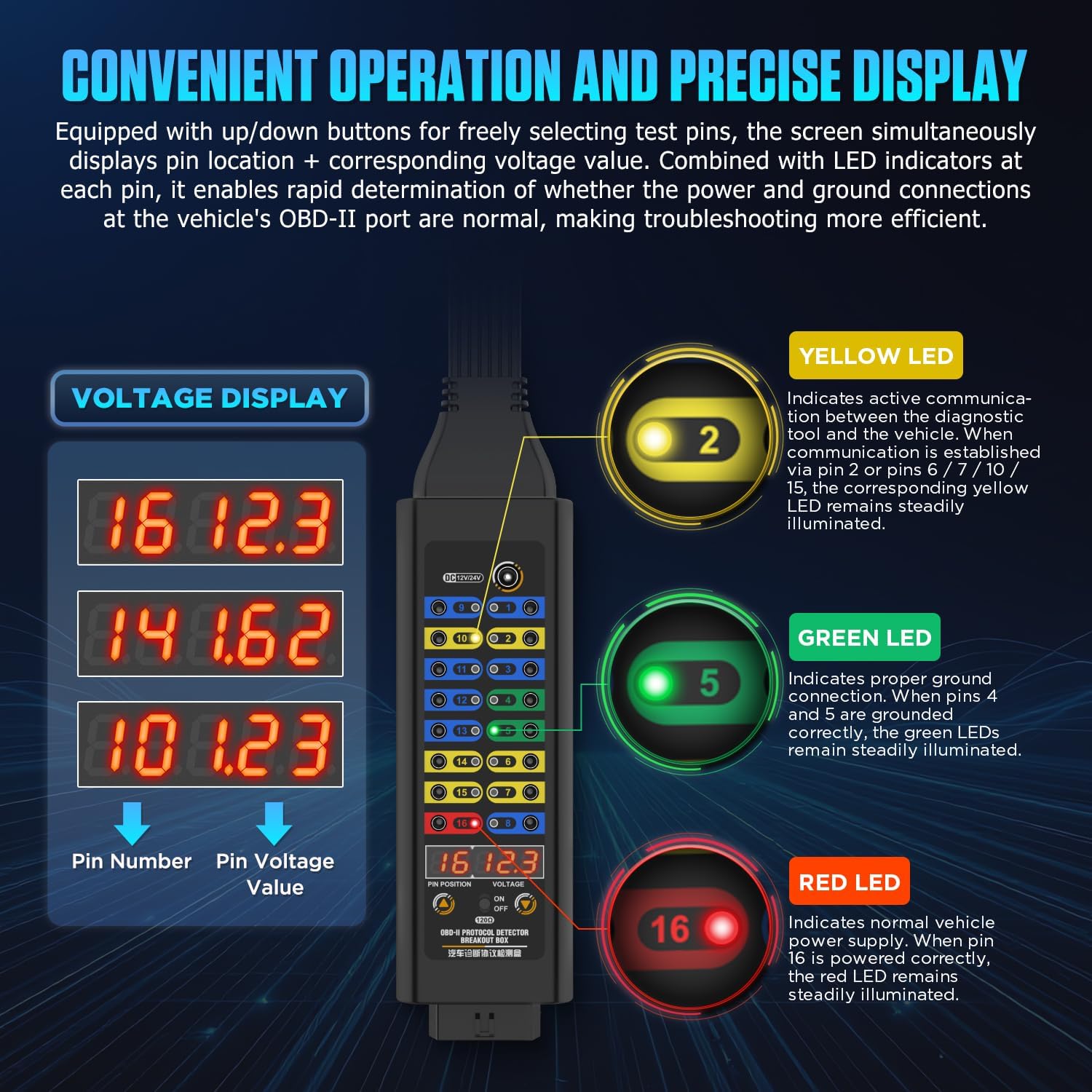
A display shows the selected pin and its voltage, while LEDs provide a quick visual indication of power and ground status. The box is aimed at electrical checks, not just routine code reading.
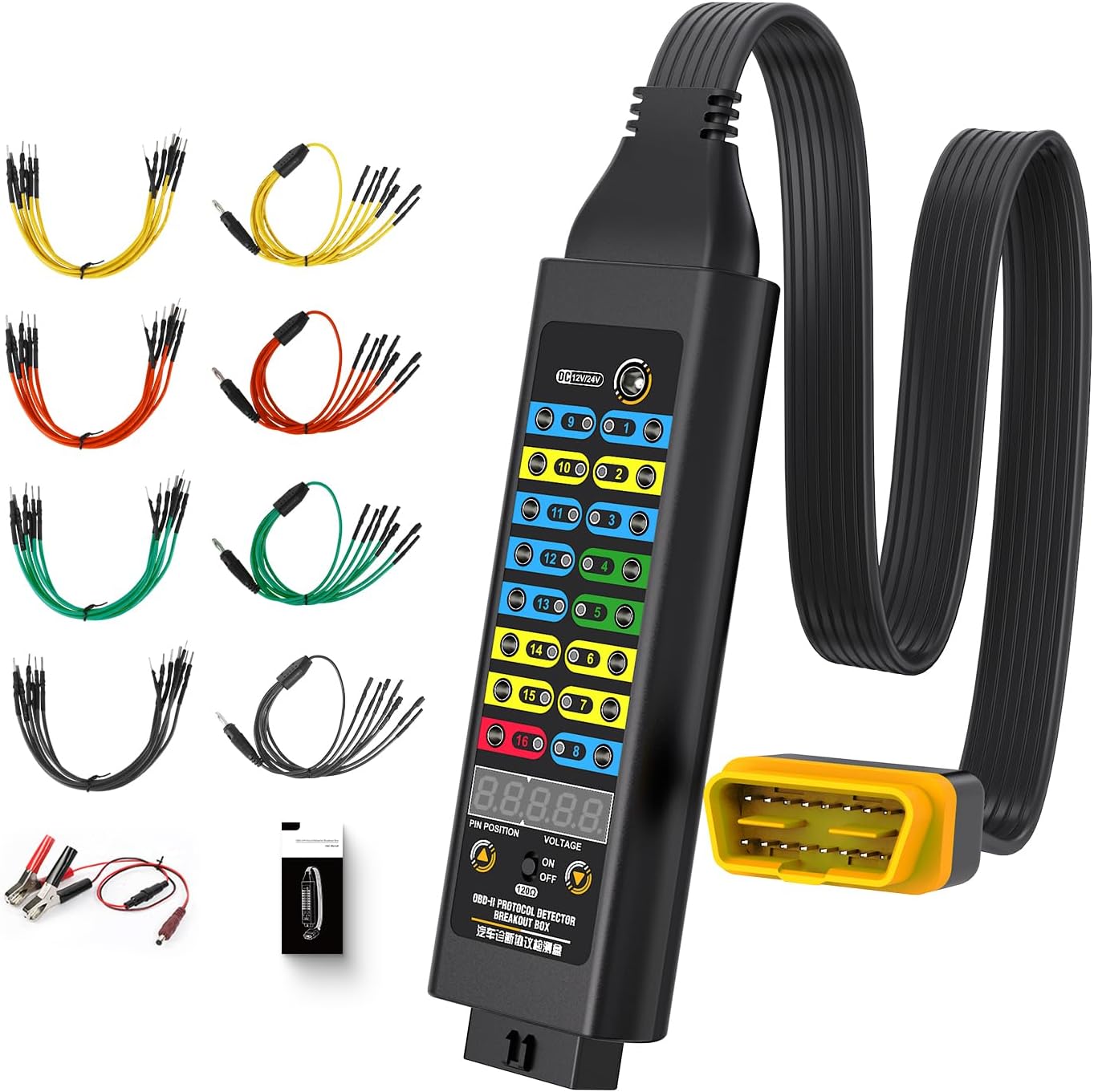
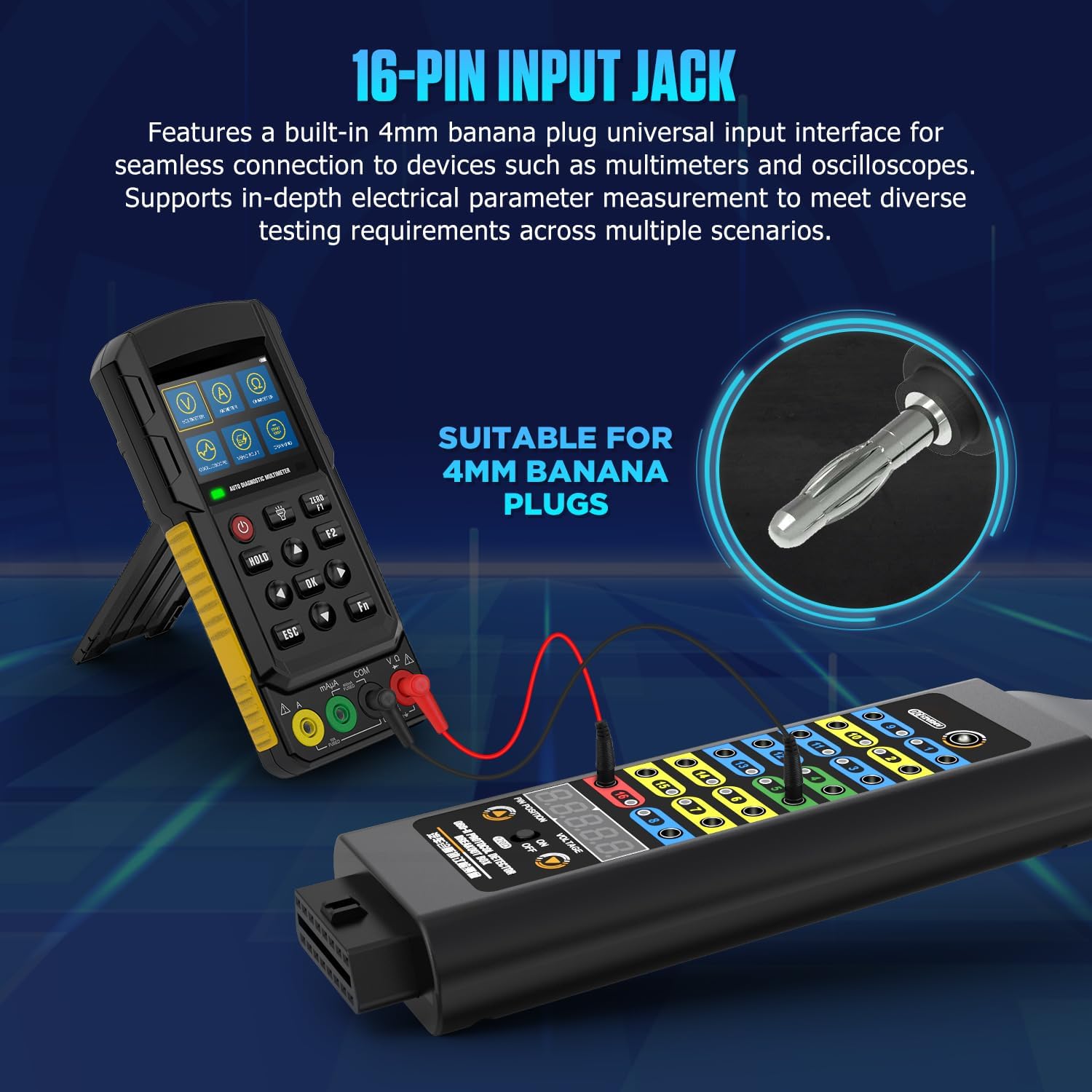
There are also 4 mm banana jacks for connecting test equipment, plus a 120Ω CAN resistor mode intended for collecting data from a removed ECU. The product description does not identify a specific list of supported protocols, so check that point if your work depends on a particular one.
Key specifications
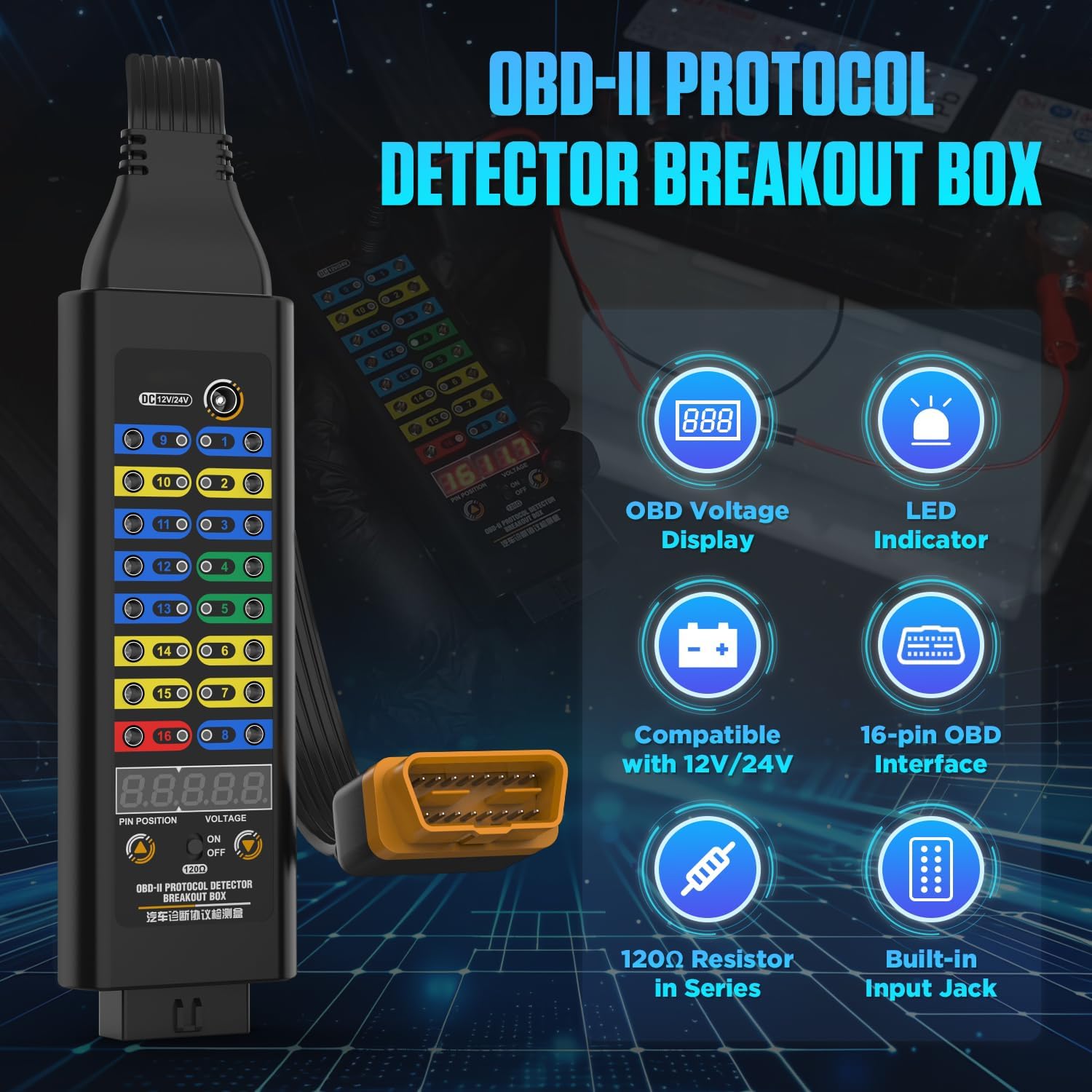
This is an OBD2 breakout box with a full 16-pin connection and a 1:1 input-jack layout. Its pass-through design is intended to keep the diagnostic scanner connected to the vehicle while you monitor communication, power and ground lines. The selected pin and its voltage appear on the screen, LEDs on the pins help flag power or ground status.
The universal 4 mm banana jacks are designed for instruments such as multimeters and oscilloscopes. A 120Ω resistor can be used in series mode for CAN-bus data collection from a removed ECU. The stated operating voltage range is DC 6V–30V, and there is a separate DC power-supply interface intended to support the ECU during testing. The cable is described as TPU, with a sheet-metal housing.

Who it’s for
This makes most sense for automotive technicians or experienced DIY users who need to check the electrical side of an OBD-II connection, rather than simply read and clear codes. It’s a good fit if you already use a multimeter or oscilloscope and want access to individual pins without repeatedly probing the vehicle connector directly.
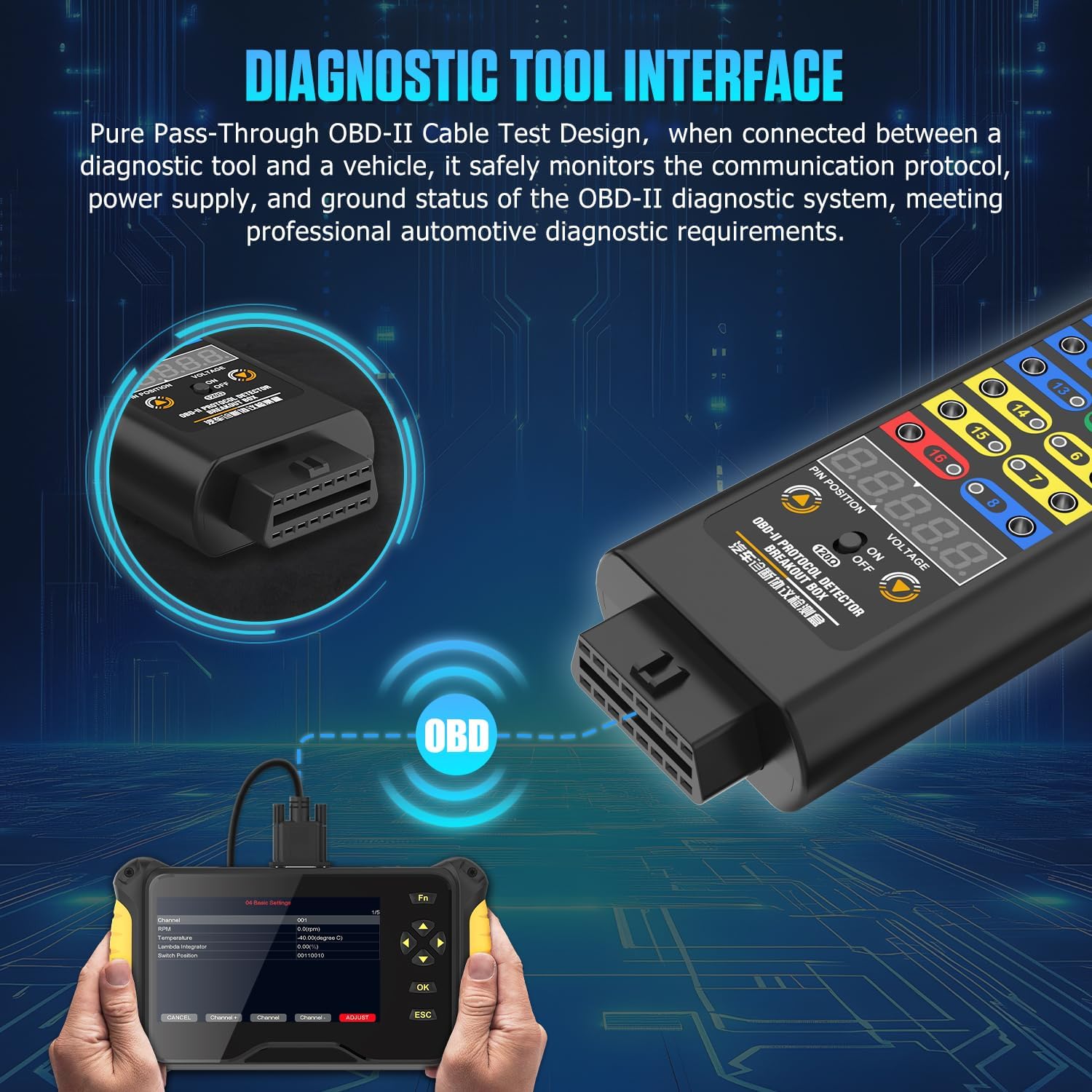
For example, with a scanner plugged into the pass-through connection, you could select a pin, read its displayed voltage and use a banana jack to connect a meter for a closer electrical check. That is a more hands-on approach than using a basic code reader on its own. It may not suit you if you only want a simple tool for occasional warning-light checks, or if you need a confirmed protocol list that is not provided here.
Everyday use
In a workshop, the box is intended to sit between the vehicle’s OBD-II port and the scanner, giving you access to the pins while diagnostic communication continues. The pin selection buttons and display provide a quick way to move between checks, the LEDs add a visual cue, but they do not replace measurements when you need to diagnose a fault precisely.
The separate power interface may be useful when ECU testing needs additional power support, including situations where vehicle battery loss could affect test results. The 120Ω mode points to a more specialised use: collecting CAN data from an ECU that has been removed. This is not the same as a plug-in code reader, and the description does not establish which instruments, cables or other accessories are included. The product information alone also does not confirm vehicle-specific coverage. Without having tested it, those details are worth weighing against the work you plan to do.

Purchase questions
Can a scanner stay connected while using the box? The stated pass-through design is intended to connect the scanner to the vehicle while allowing real-time monitoring.
Can it be used with a multimeter? Yes. The 4 mm banana jacks are described as connections for multimeters, oscilloscopes and similar test instruments.
Does it support testing a removed ECU? The description specifies a 120Ω CAN resistor series mode for collecting data from a removed ECU. It does not provide further setup instructions or a list of compatible ECU types.
Final verdict
Choose this OBD2 breakout box if your work involves pin-level checks, live scanner access or the stated offline ECU testing mode. Its display, LEDs and banana-jack connections offer more access than a basic code reader, but that extra capability is useful mainly when you already have diagnostic instruments and know what you need to measure. For routine fault-code checks, the additional test interfaces may go unused.