

Black Friday 2026: How to Check Whether a Deal Is Real
Prepare for Black Friday 2026 in Australia by checking price claims, promotion conditions and your options after buying.
Black Friday 2026: How to Check Whether a Deal Is Real
A crossed-out price can make a bargain look irresistible, but it doesn’t tell you everything you need to know. For Black Friday 2026, a little preparation can help you judge the offer itself rather than the size of the saving advertised.
Black Friday falls on Friday 27 November, with Cyber Monday following on Monday 30 November. As of 10 November, there’s time to research the things you’re considering and learn how to read promotion terms before the main shopping weekend. Here are the common mistakes to avoid.
Mistake 1: Treating the crossed-out price as the usual price
A large saving means less if the reference price doesn’t reflect what you would normally have paid. A retailer might compare its offer with a recommended retail price, a previous selling price or another reference point. Look for an explanation close to the claim, and don’t assume those figures are interchangeable.
In Australia, businesses must not make misleading price or savings claims. That doesn’t mean every unclear-looking offer is unlawful, but it’s a good reason to ask what the comparison actually represents. If you can’t tell, consider the advertised sale price on its own merits.
Start watching a few items now. Note the date, retailer and price you can see, then check again during the sale period. One observation isn’t a complete price history, but several dated observations can give you useful context. An independent price-tracking service may help too. Check which retailers it covers and whether its data is current.
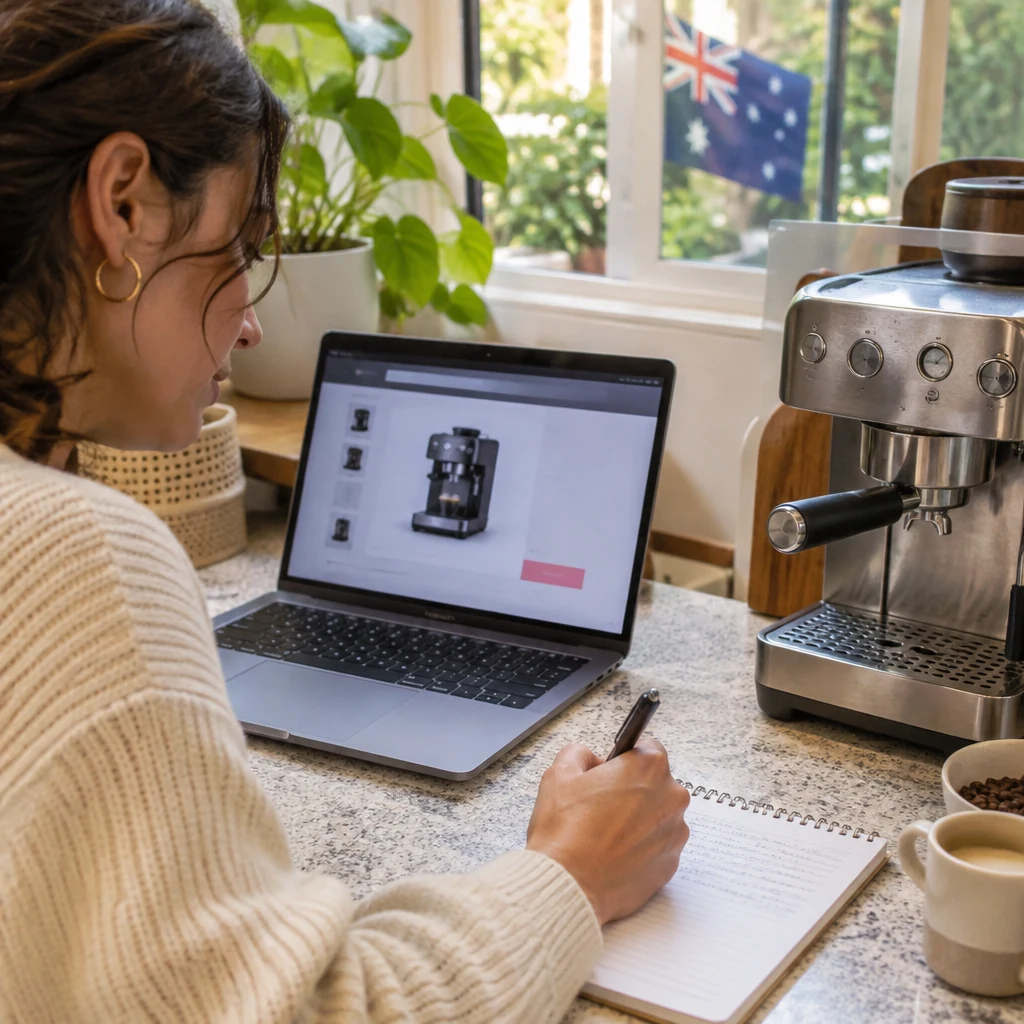
For a hypothetical example, suppose you note a coffee machine at A$240 on 10 November. Later, a retailer advertises it at A$220 against a crossed-out A$300 reference price. The advertised comparison may have an explanation, but your own observation gives you another useful reference: the difference from the price you saw earlier is A$20. Neither figure guarantees what the product cost at other times.
Mistake 2: Assuming the headline offer applies to your purchase
A banner might advertise a promotion across a category, while the details exclude certain items or require a code. Before deciding that an offer is worthwhile, open the product page and read the relevant conditions. Check whether the offer requires a minimum spend, a membership, a particular payment method or a bundle.
Also look at the promotion’s stated start and end times, including the time zone if one is given. Don’t assume an overseas site’s countdown follows Australian time, or that a promotion will run throughout the entire Black Friday weekend. Retailers may set different conditions, and these should be checked when their offers are published.
If a site says an offer is limited, take that as a reason to verify its terms, not as a reason to skip your checks. A countdown or a low-stock message is not proof that the price suits your needs.
Mistake 3: Comparing prices without checking the seller
Shopping around is useful only if you know who is making each offer. On a marketplace, the platform may host listings from different sellers. Open the seller information and check where the item will be sent from, who handles problems and whether the listing includes any seller-specific conditions.
For Australian shoppers, prices displayed to consumers generally need to include GST where it applies. Delivery or postage can still affect the final cost, particularly for regional and remote addresses. Check the charge and any location restrictions for your address rather than assuming a metropolitan delivery offer applies to you.
A lower advertised price from an overseas seller may also come with different delivery arrangements and practical difficulties if something goes wrong. Read the seller’s details and available support options before treating the listings as equivalent.

Mistake 4: Expecting a later price drop to be refunded
Some shoppers buy when they see an acceptable price and then keep watching for a better one. That can be sensible, but don’t assume the retailer will refund the difference if the price drops later. Price-adjustment policies vary, and some retailers may not offer one at all.
If a price match or adjustment matters to you, read the policy before buying. Check whether it applies to online offers, marketplace sellers, promotional codes or limited-time sales, and whether you need to request it within a particular period. Keep a copy of the relevant terms in case the page changes.
Quick tips for keeping useful records
- Save the product page or take a screenshot showing the price, seller and date.
- Keep the promotion conditions and any code you used.
- Save your order confirmation, receipt and delivery information.
- Record any price-match promise in writing and note how to make a claim.
Mistake 5: Confusing change-of-mind policies with consumer rights
A generous return policy can be valuable when you’re buying Christmas presents, but change-of-mind returns aren’t automatically guaranteed. Check whether the seller offers them, how long you have, what condition the item must be in and who pays return postage. Sale items may have conditions worth reading closely.
That is separate from your rights under the Australian Consumer Law. Consumer guarantees can apply when a product is faulty, unsafe or not as described, including when it was bought on sale. The remedy depends on the circumstances and whether the problem is major or minor. A sign saying “no refunds on sale items” cannot take away those rights.
Keep proof of purchase, especially for gifts. If a problem arises, contact the seller, explain what’s wrong and ask about a remedy. The Australian Competition and Consumer Commission (ACCC) has guidance on consumer guarantees if you need to check your options.
Common questions
Is a price tracker enough to prove a Black Friday offer is good?
Not by itself. A tracker can provide useful history, but it may not cover every seller, promotion or delivery charge. Use it alongside your own dated observations and the retailer’s current terms.
Can I ask a retailer to match a competitor’s Black Friday price?
You can ask, but a retailer’s policy determines whether it offers a match and which conditions apply. Check for exclusions before relying on a match, particularly for marketplace listings and limited-time offers.
Should I buy a Christmas gift as soon as I see a suitable price?
That depends on your priorities. Check the estimated delivery options for your address and the change-of-mind policy before deciding. Estimates and availability can change, so confirm them when you’re ready to order rather than relying on an earlier date.
Before 27 November, pick a few purchases you’re genuinely considering and record their current prices and relevant terms. Then, when offers appear, you’ll have a clearer basis for deciding whether to buy. You can also visit our Australian shopping page as part of your research.
You may also be interested
Black Friday 2026: Get Your Online Checkout Ready
Prepare your accounts, payment methods and delivery plans for Black Friday 2026 in Australia, with practical checks for safer online shopping.

Black Friday 2026: Avoid Lookalike Deals and Wrong-Model Buys
Prepare for Black Friday 2026 in Australia: spot model differences, check sellers and avoid buying the wrong version of an apparent bargain.
Black Friday 2026: Set Your Delivered-Price Limit Before You Buy
Prepare for Black Friday 2026 with a delivered-price limit, fair comparisons and practical checks for GST, regional postage and returns in Australia.