

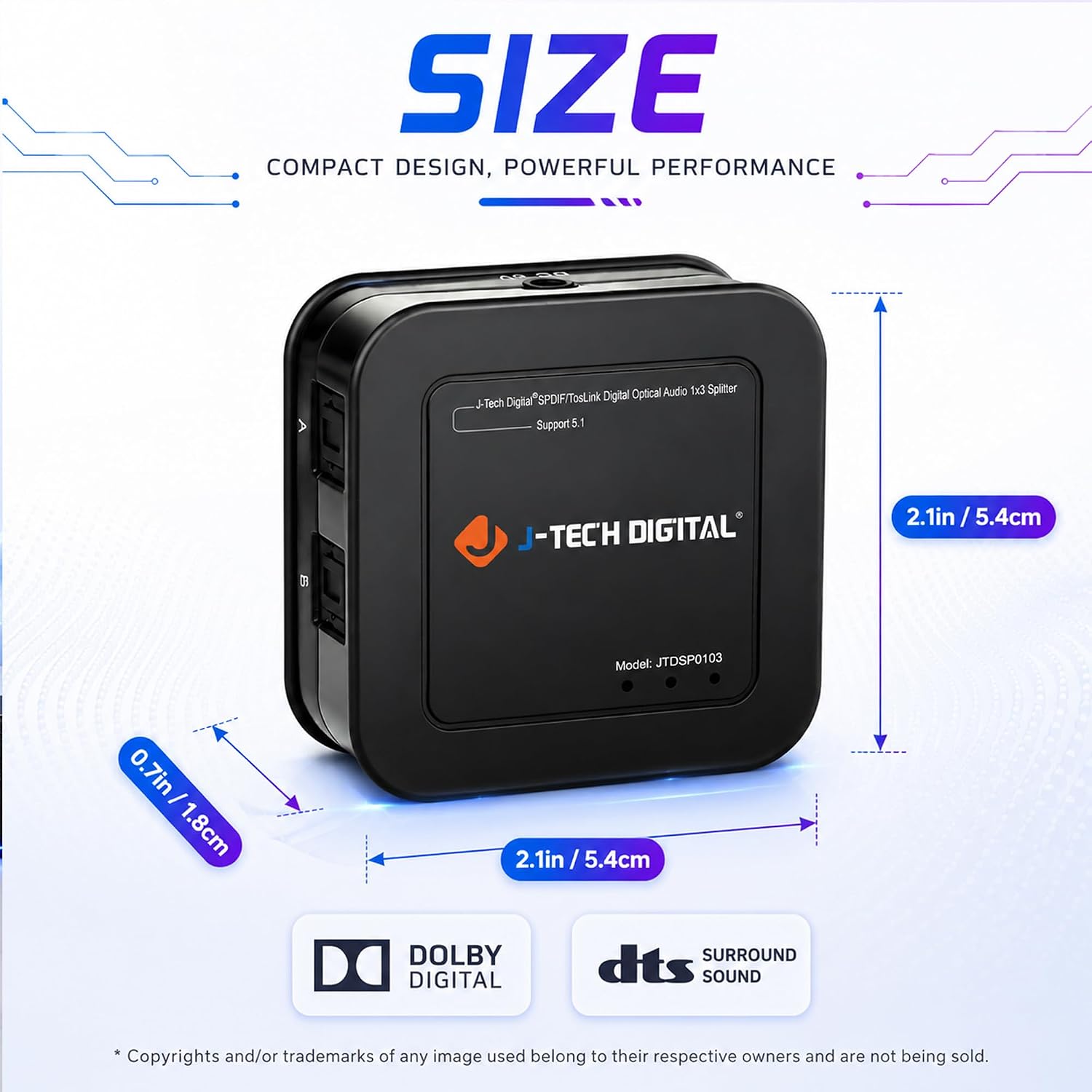
J-Tech Digital Toslink Optical Splitter 1x3 (JTD-SP0103)
Product description
What it is
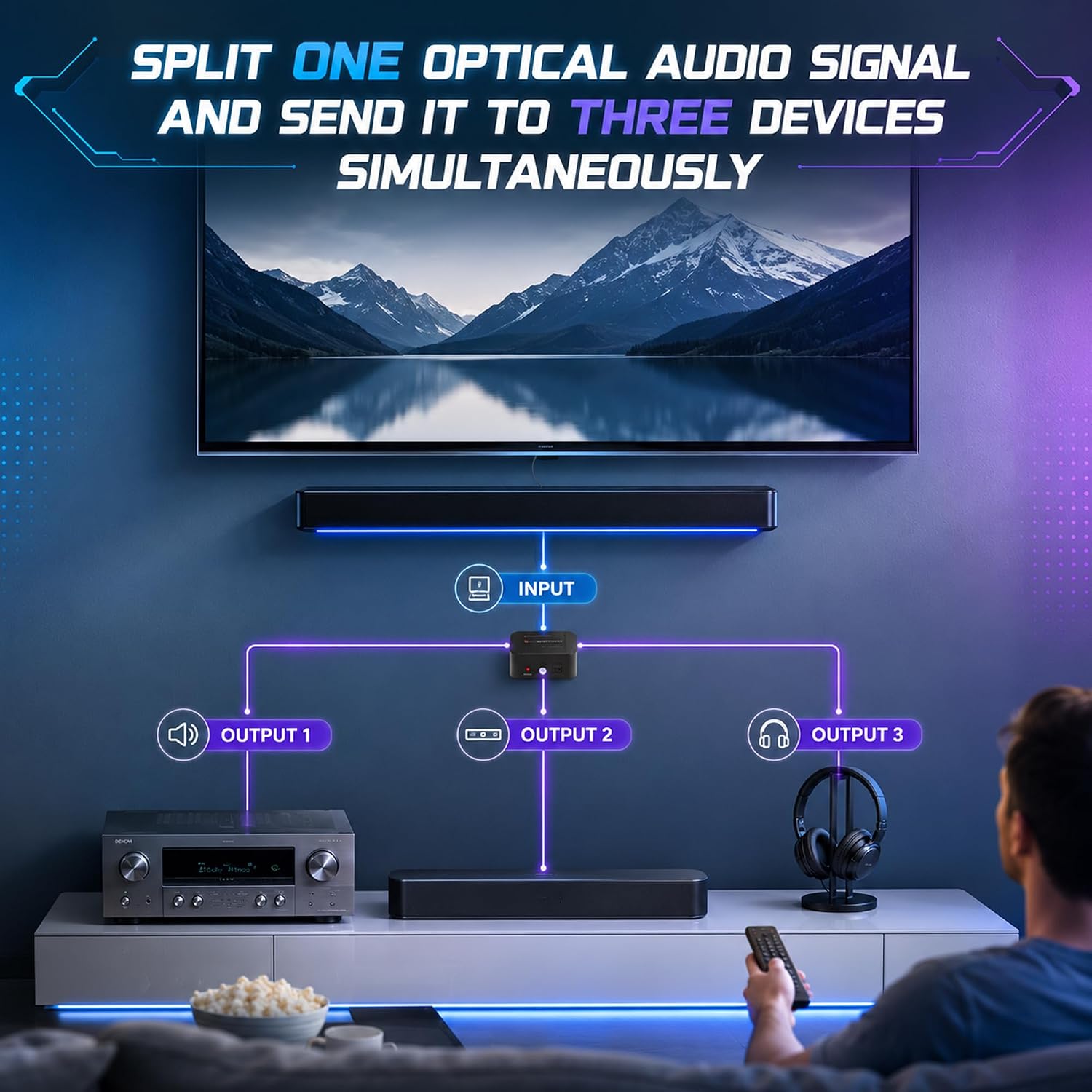
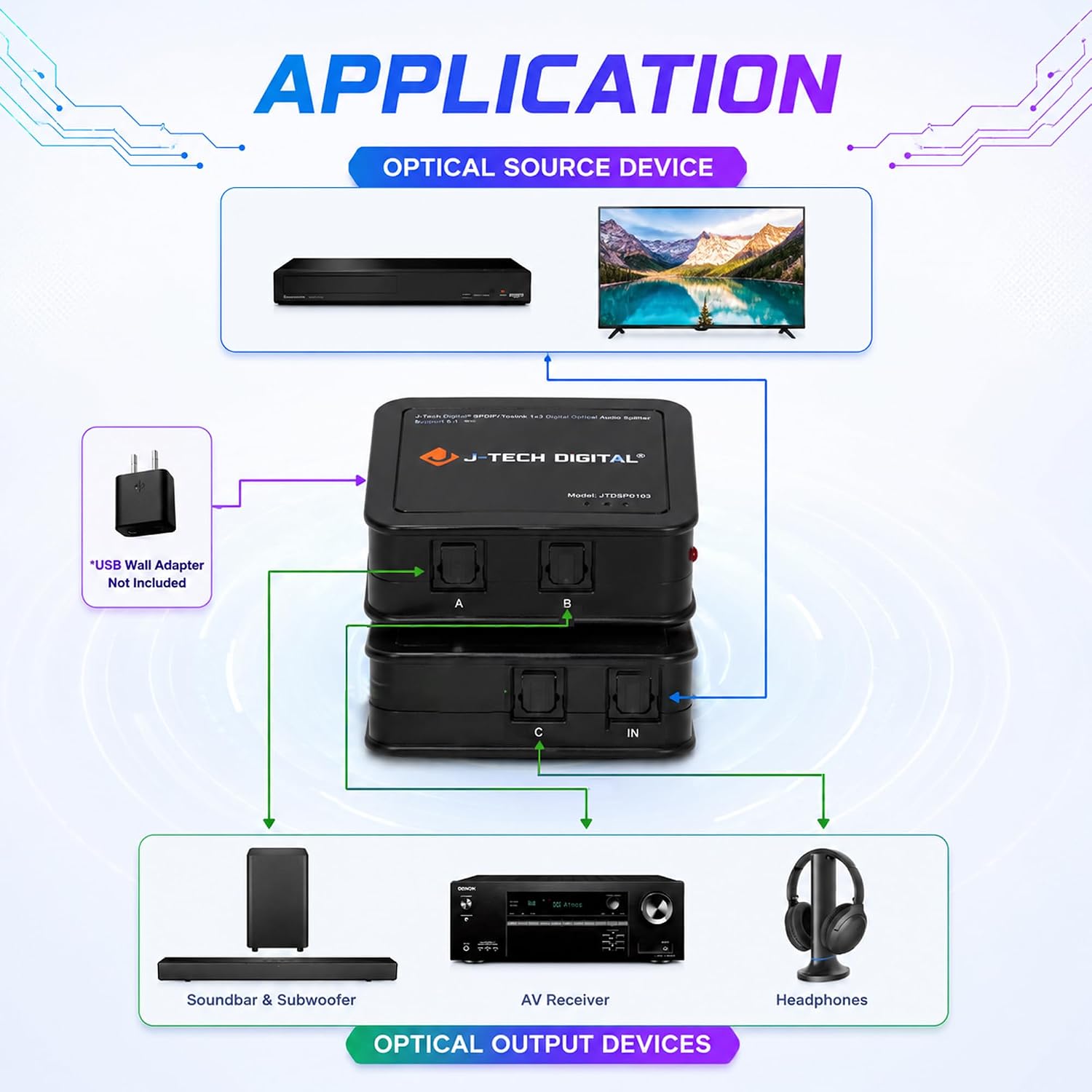
The J-Tech Digital Toslink Optical Splitter 1 In 3 Out is a passive splitter designed to share a single optical audio source with up to three devices simultaneously. It supports Toslink/SPDIF connections and is compatible with common home theater setups like TVs, soundbars, AV receivers, gaming consoles, and streaming devices.
What it solves
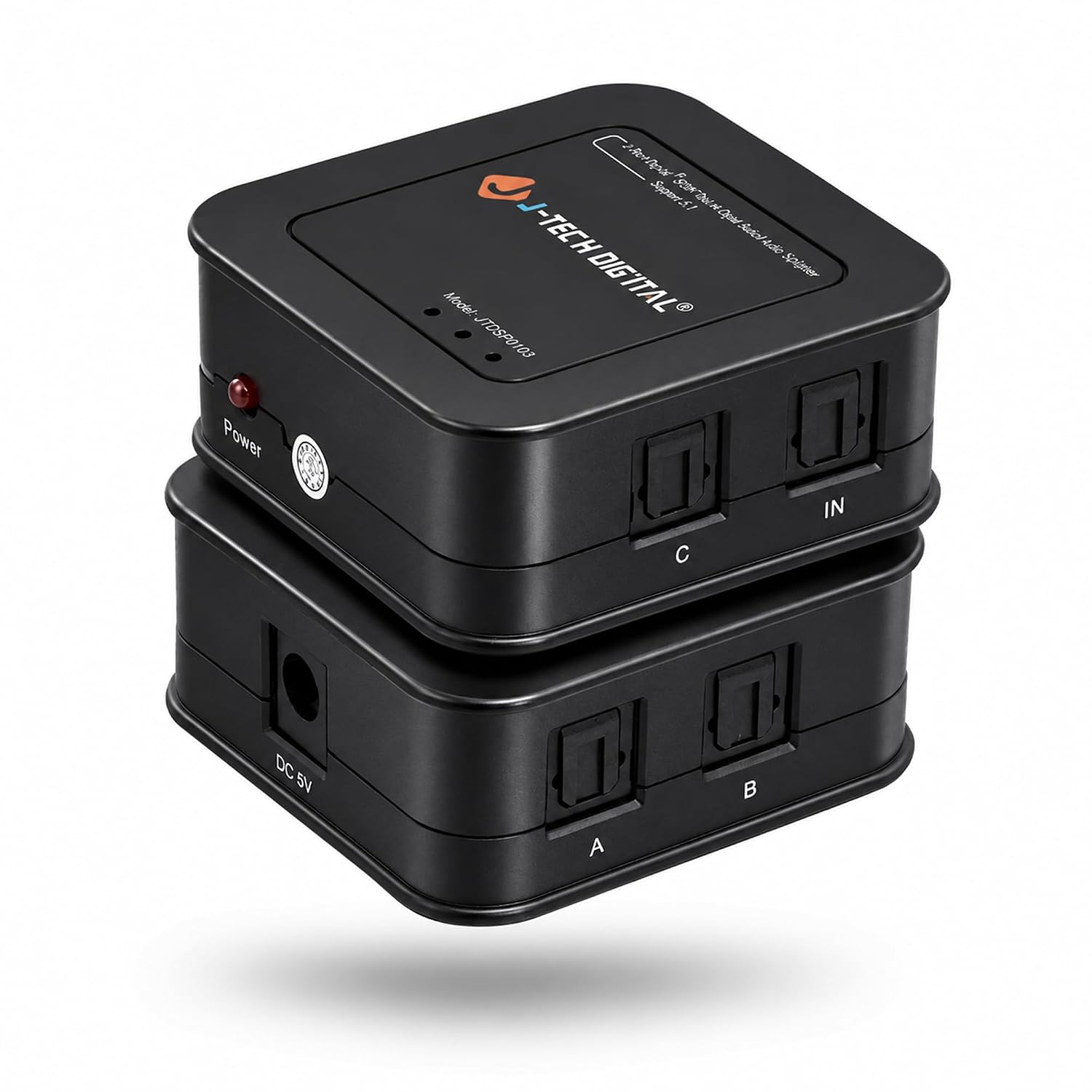
If your space has multiple audio playback options but only one optical output, this splitter can route that signal to multiple speakers or receivers without extra software, drivers, or complex setup. It’s intended to keep audio quality intact while enabling multi-room or multi-device listening from a single source.
How it performs (on paper)
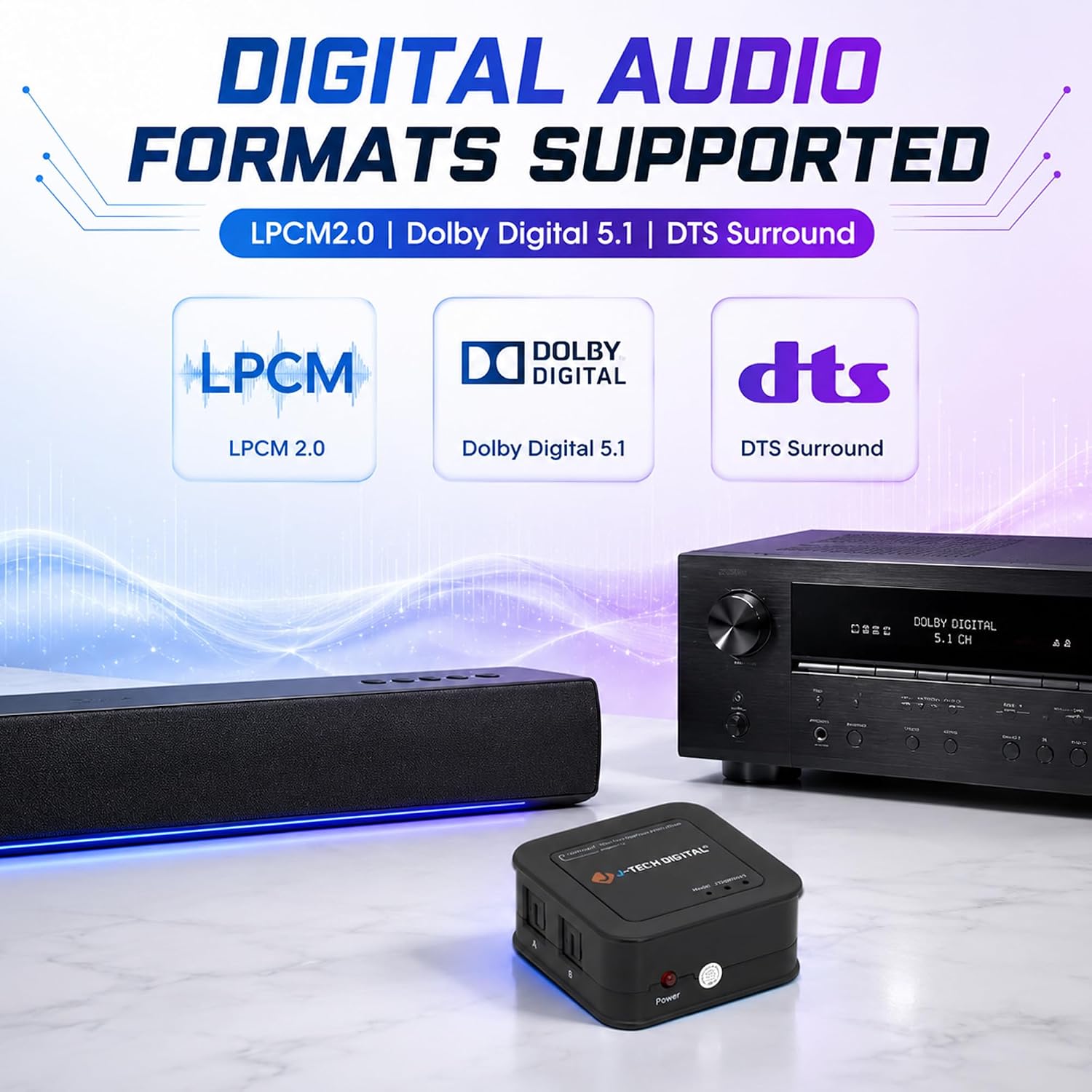
The unit advertises lossless, high-fidelity digital audio with support for Dolby Digital, DTS 5.1, and PCM/LPCM 2.0 (32kHz–96kHz). It highlights stable transmission aided by built-in re-timing technology and a premium optical path with low loss (≤0.2dB/m). A LED status indicator and over-voltage protection add basic usability and safety.
What stands out day to day
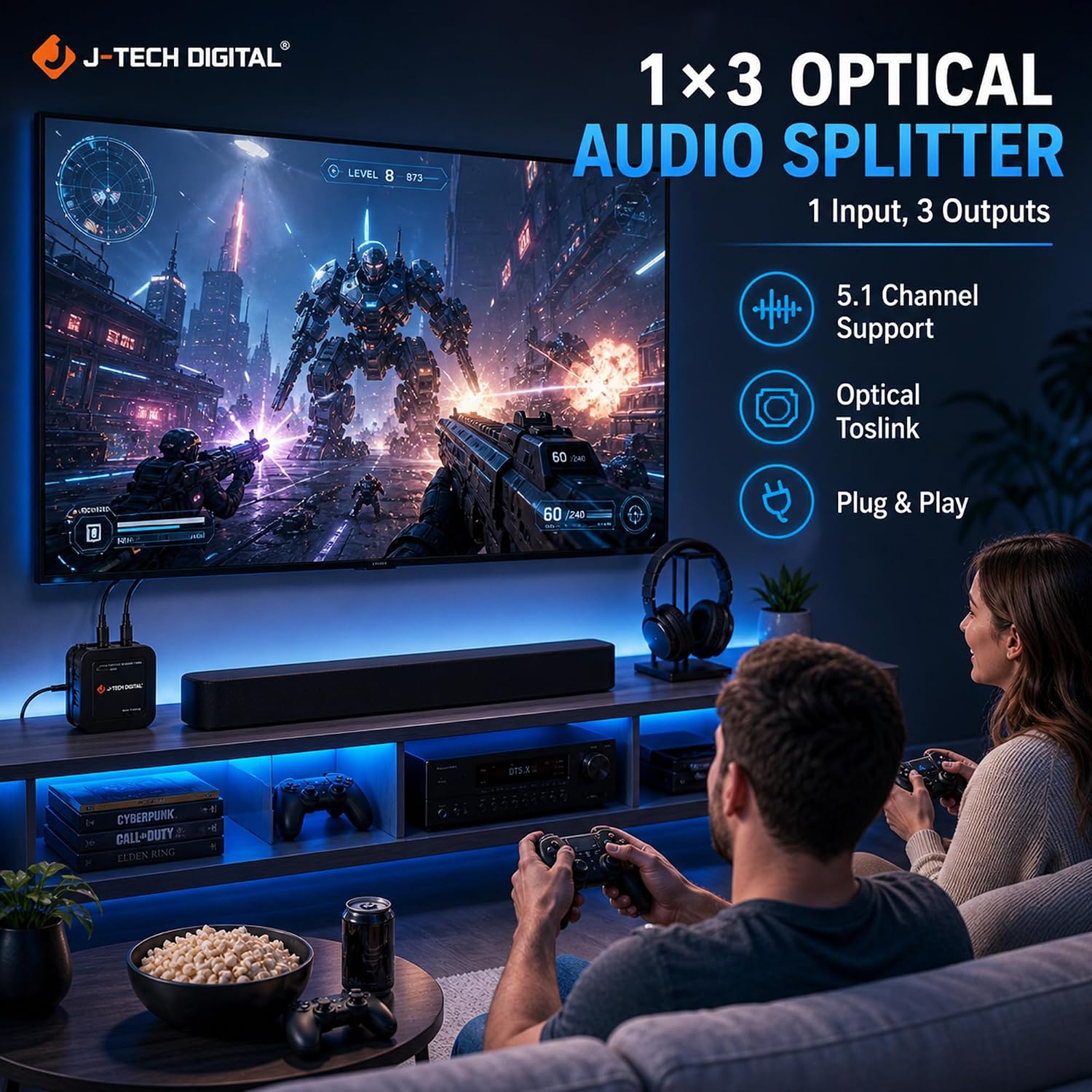
On the practical side, it’s a plug-and-play solution that doesn’t require configuration. For users with a single optical source feeding multiple devices, it can simplify setup and reduce clutter compared to juggling multiple cables back to a single source.
Limitations and caveats
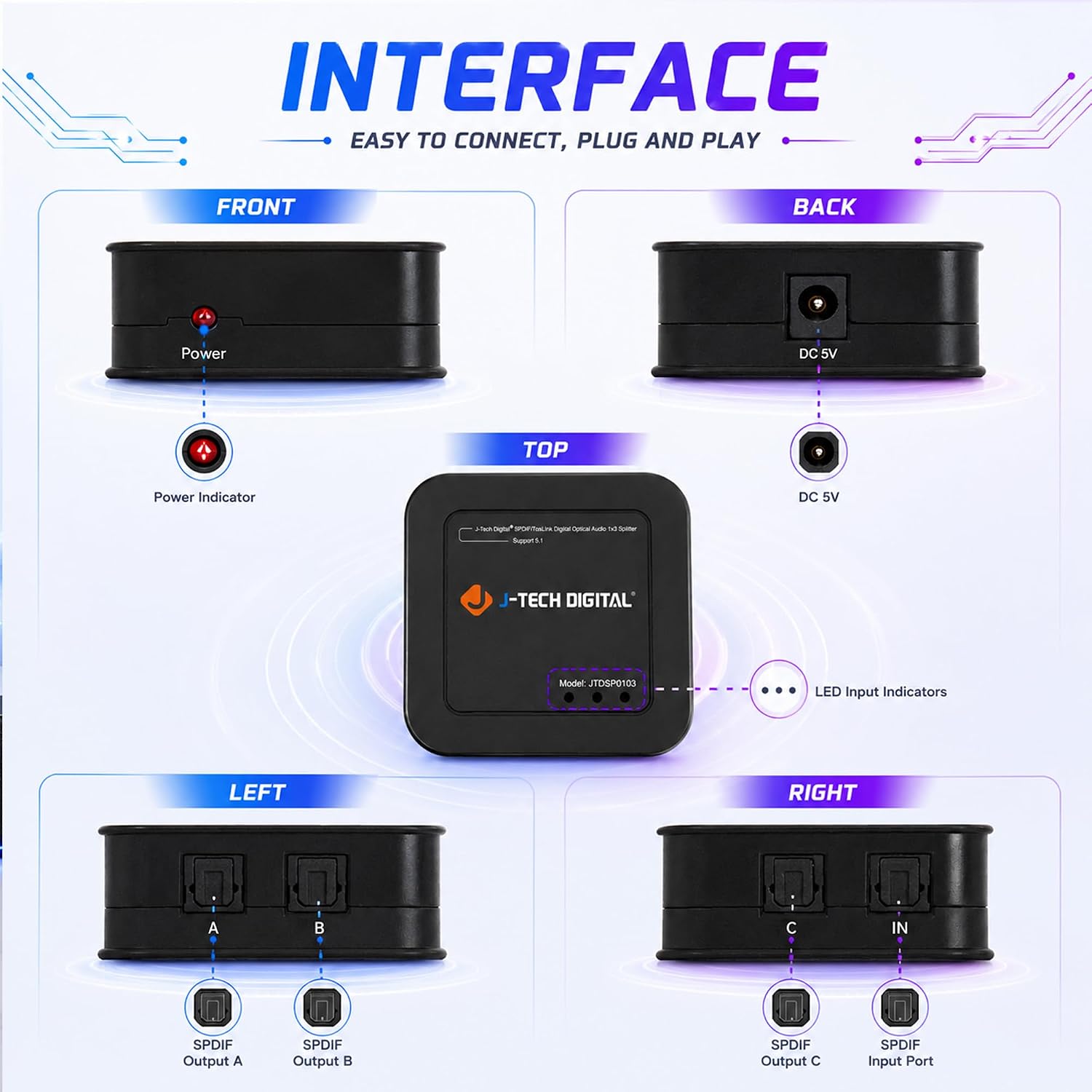
While the feature set is straightforward, the product description doesn’t specify supported optical formats beyond Dolby Digital, DTS 5.1, and PCM/LPCM 2.0. If your setup relies on newer or less common formats, this could be a limitation. Also, as a passive splitter, there’s no explicit mention of amplification, depending on the length of cables and sensitivity of equipment, signal quality could vary with very long runs.
Who it’s for
This splitter is a reasonable option for households where one optical output must feed multiple devices like a TV, soundbar, and an AV receiver or gaming console. It’s especially relevant if you want to share a single source among several rooms or components without adding extra boxes or complex wiring.
Who should think twice
If your setup requires active signal boosting, wider format support, or you need independent volume control on each device, this splitter may fall short. It’s also wise to verify compatibility with all connected gear and confirm that your playback formats align with what the splitter advertises.
When it makes sense to buy
Consider purchasing if you have a single Toslink output and multiple destinations that you frequently use, and you value a simple, cable-sparing approach over fine-tuned signal management. It’s a straightforward path to expand audio-sharing without additional power adapters or configuration.
What to check before buying
- Confirm your devices use Toslink/SPDIF and that your intended formats (Dolby Digital, DTS 5.1, PCM/LPCM 2.0) align with supported specs.
- Consider cable lengths since the claimed low loss is noted, but longer runs can still experience degradation depending on equipment.
- Look for any notes on compatibility with your specific TV or sound system model, and check if you need any adapters for your setup.
Practical usage example
Imagine you’re watching a movie on a smart TV and also want audio through a soundbar and a separate AV receiver without swapping cables. This splitter can route the TV’s optical output to both the soundbar and the receiver at once, so you get synchronized sound across both devices as you switch between listening modes.
FAQ
- Does it require power? The description does not mention an external power source, suggesting it’s a passive splitter.
- Will it improve bass or surround effects? Not inherently, it mirrors the source’s audio formats to multiple outputs.
- Can I use it with gaming consoles? Yes, it’s listed as compatible with gaming consoles using Toslink connections.
Is it worth it?
Worth considering if you prioritize a simple, multi-destination optical setup from a single source and don’t need independent control on each output. If you expect to push higher-end formats beyond Dolby Digital, DTS 5.1, or PCM/LPCM 2.0, or require active signal boosting for long cable runs, you might want to explore alternatives with amplification or broader format support.