

Renogy Wanderer 10A PWM Solar Charge Controller
Product description
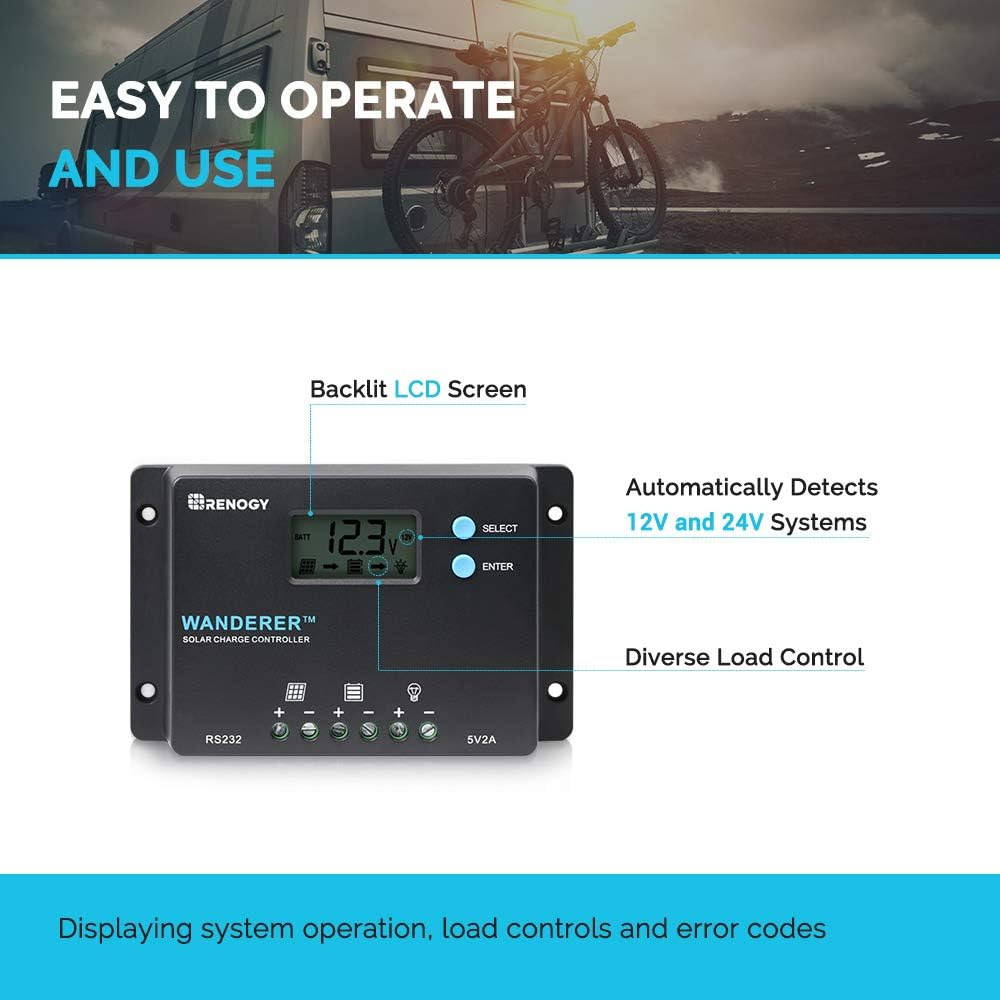
This compact PWM solar charge controller from Renogy manages 12V and 24V systems and is aimed at small off-grid setups, RVs and boat battery banks where space is limited and simple monitoring is needed. It combines a four-stage charging algorithm with a backlit LCD and LED indicators to help maintain battery health and show charging status during daily use.
Key Points
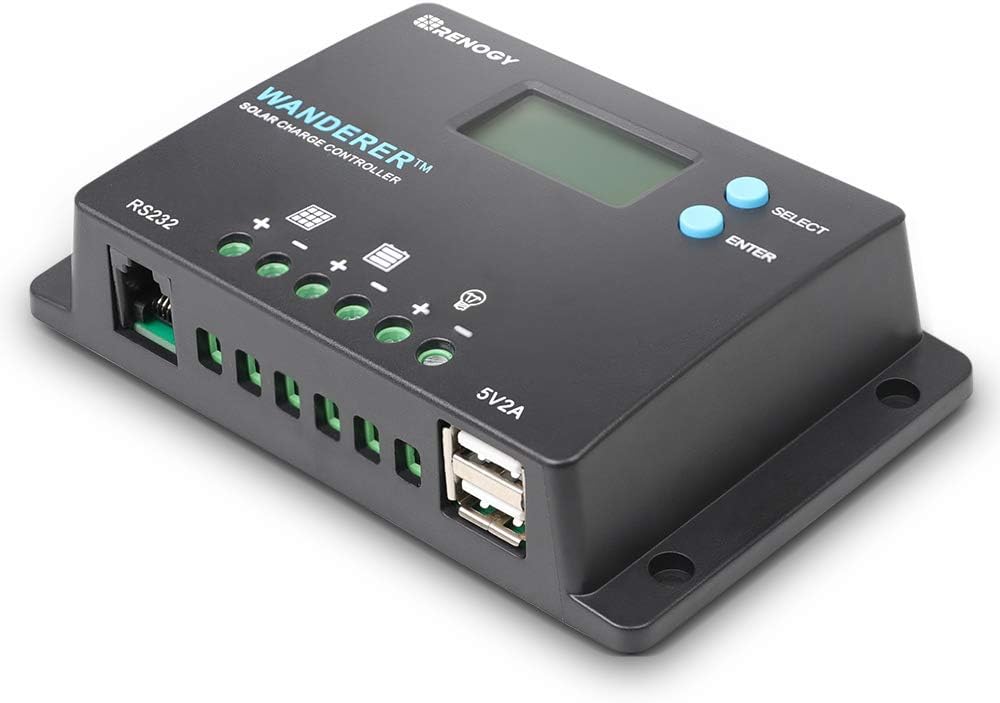
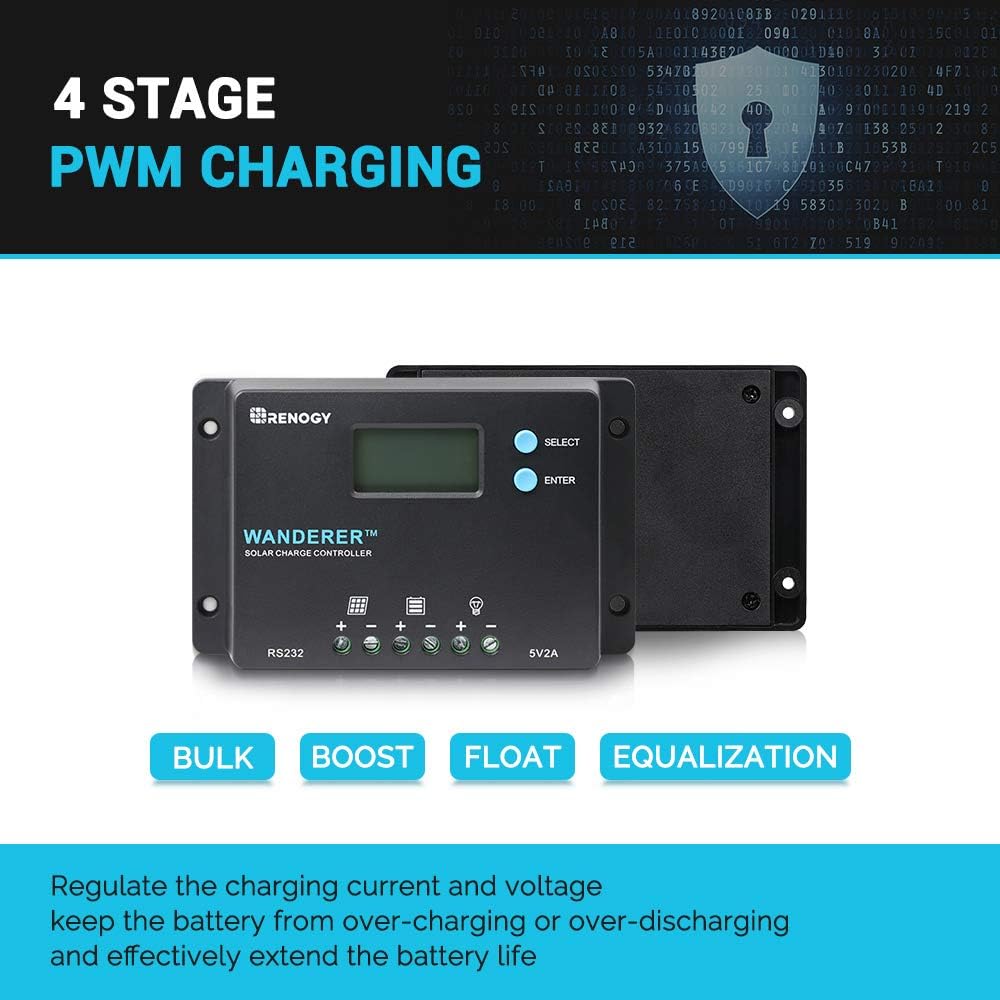
The controller uses automatic 12 V/24 V detection for most lead-acid battery types and offers a lithium battery option. It implements a four-stage PWM charge profile — bulk, boost, float and equalization — to extend battery life according to the manufacturer. The unit includes protections against reverse polarity, overload, short circuit and reverse current. Its small footprint makes installation flexible in tight cabinets or trailers. Note that automatic voltage detection applies only to non-lithium batteries, and the lithium setting must be chosen when applicable.
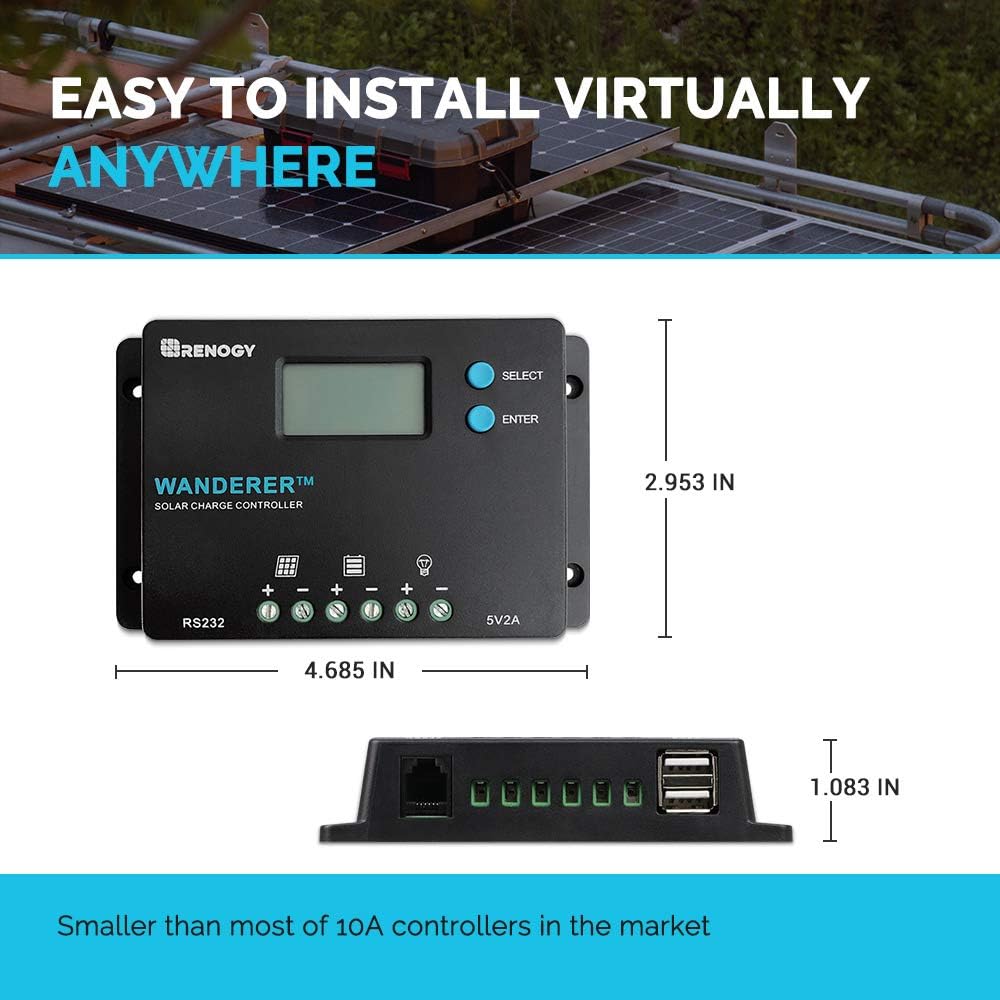
Technical Specifications
- Name: Renogy Wanderer 10A
- Rated current: - 10 A
- System voltage: - 12 V / 24 V auto-detection (non-lithium batteries)
- Display: - LCD display with multiple LED indicators
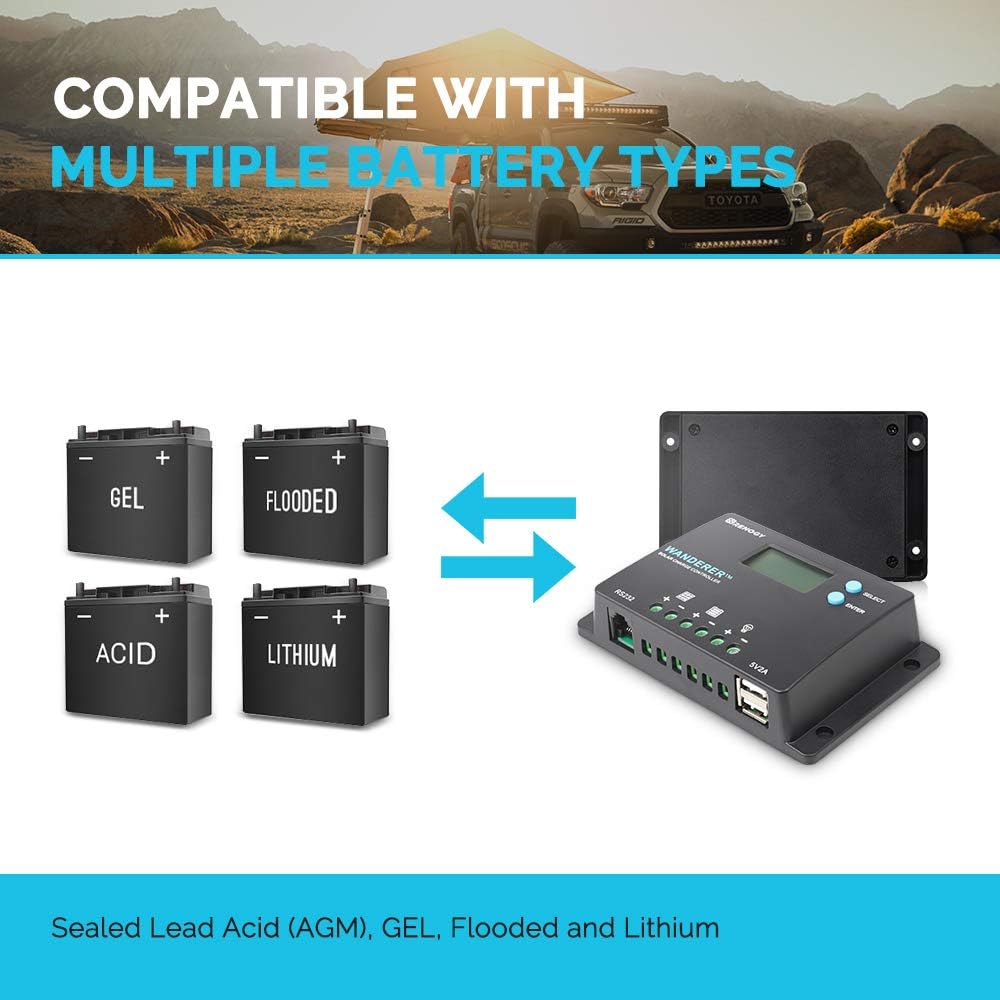
- Battery compatibility: - AGM, Gel, Flooded, Lithium option
Usage Recommendations
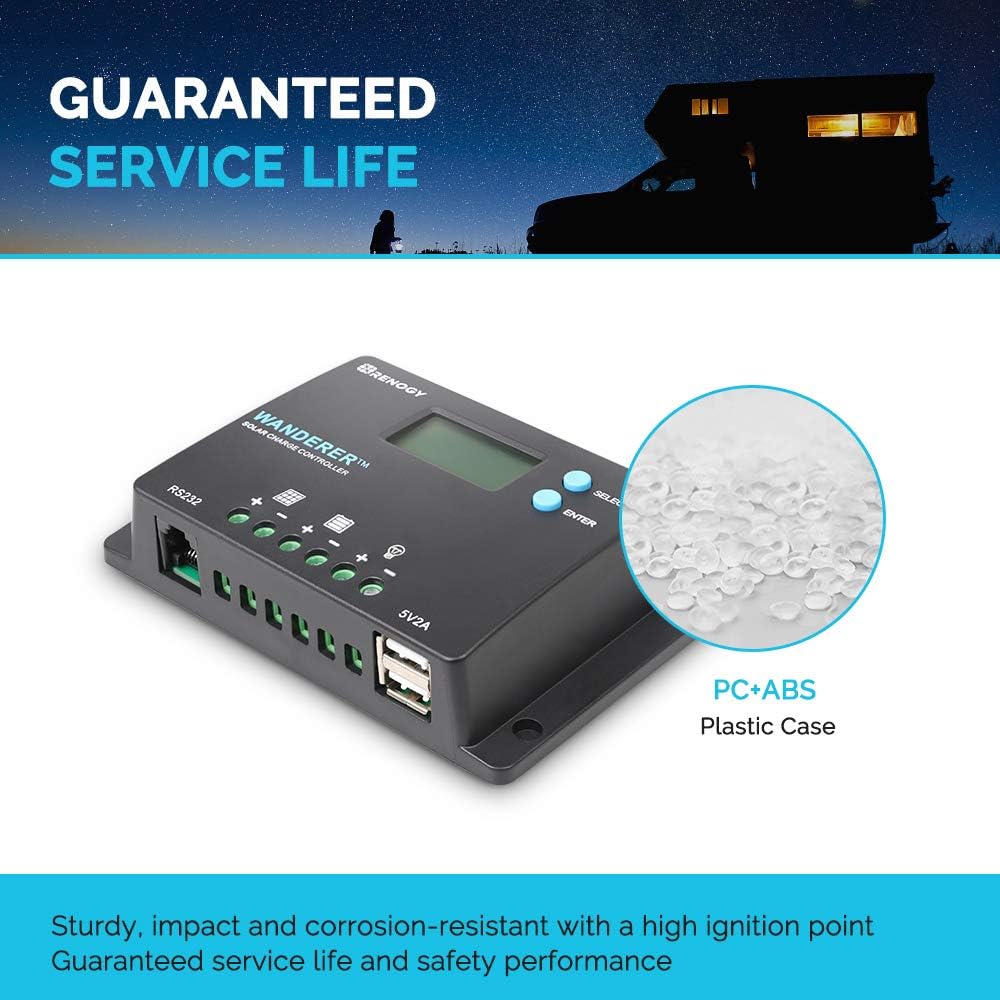
Install the controller close to the battery to minimize voltage drop, and follow the terminal hatch instructions carefully during wiring. For the Wanderer models, lower each terminal hatch by turning screws counterclockwise to expose the wire opening, then secure cables by turning screws clockwise to close. If you plan to monitor data remotely, pair the RS232 port with the optional BT-1 Bluetooth module and use the Renogy DC Home or Renogy ONE M1 app for real-time power information. Consider that this model is best suited for small PV arrays and light loads, and may not be appropriate for larger systems that require MPPT efficiency.
Advantages
The unit’s compact design simplifies mounting in cramped locations and reduces installation clutter. The visible LCD and LEDs let you confirm charge state and battery condition at a glance, which is convenient during camping or short-term installations. According to the manufacturer, the intelligent protections reduce risks during wiring mistakes and abnormal conditions. Two minor limitations to keep in mind are the PWM architecture, which is less efficient than MPPT for larger arrays, and the need to manually select the lithium battery profile when using lithium technologies.