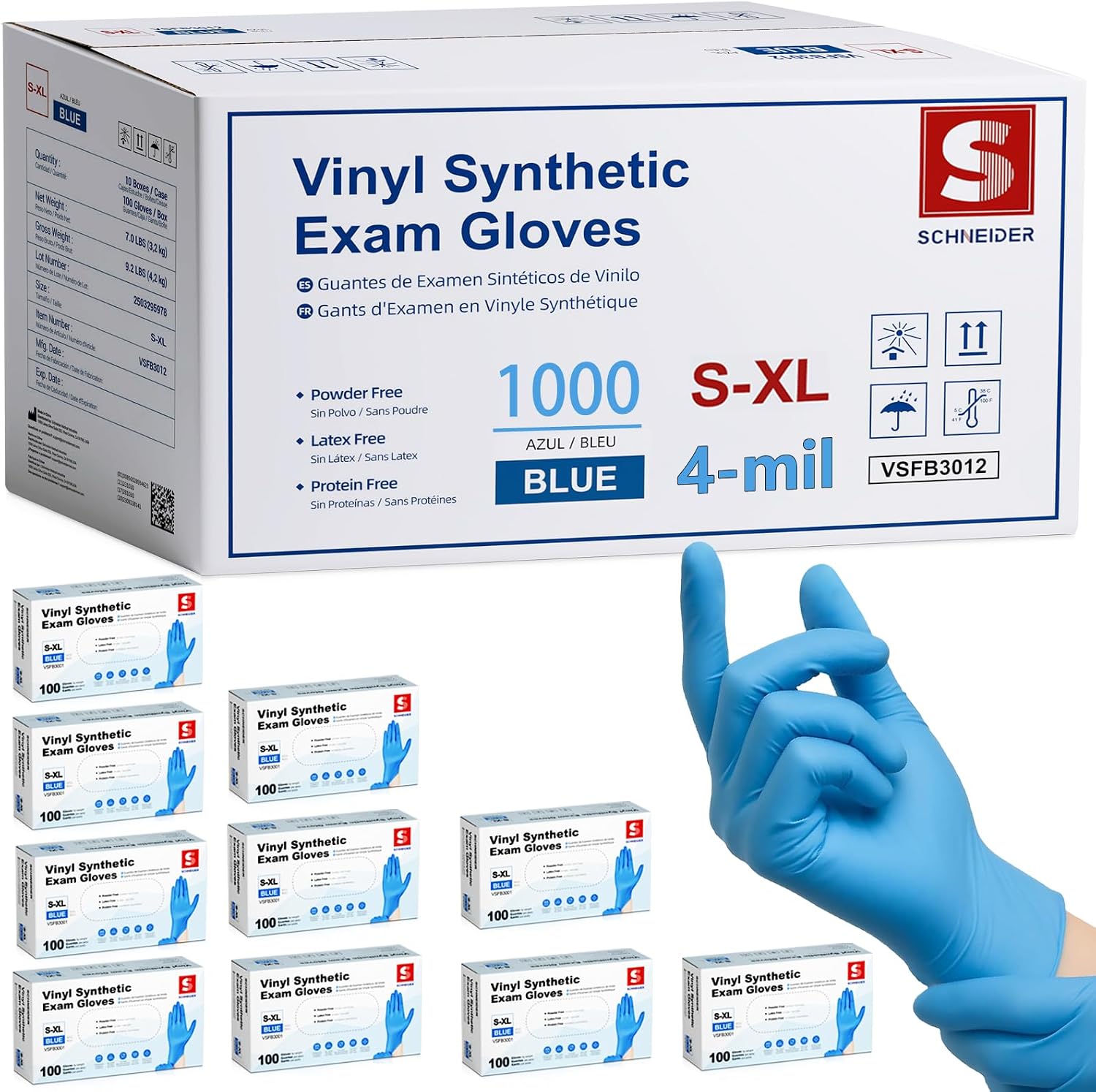
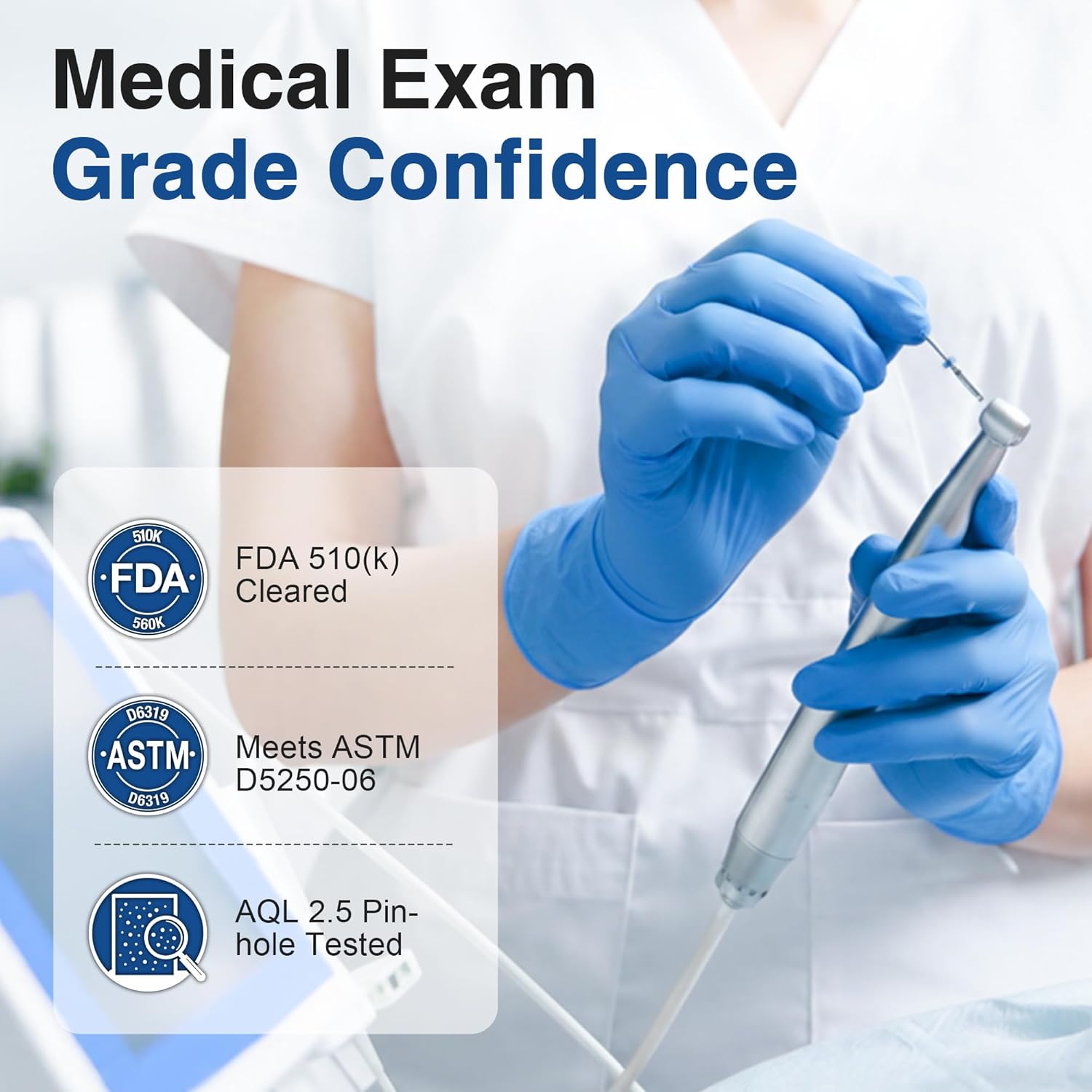
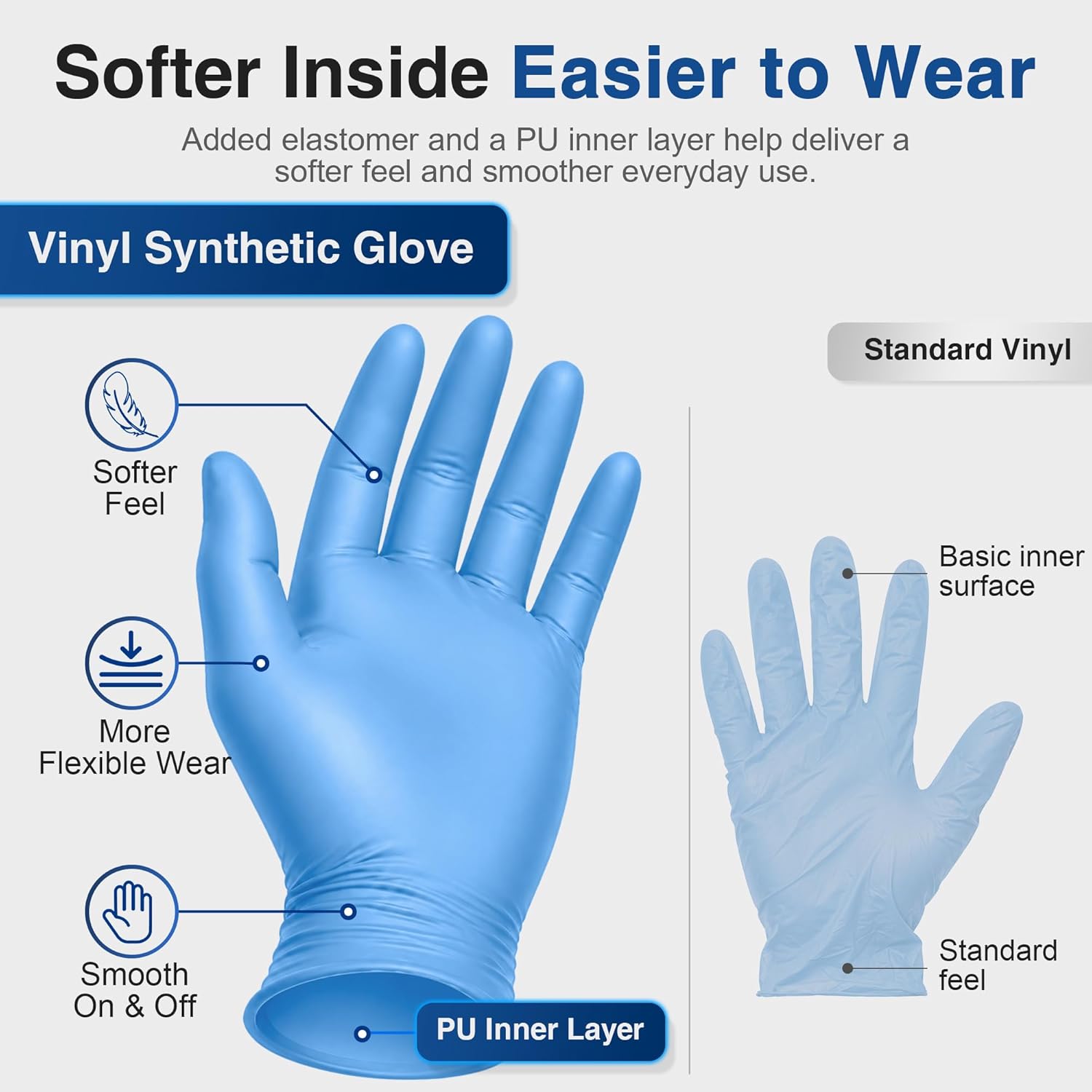
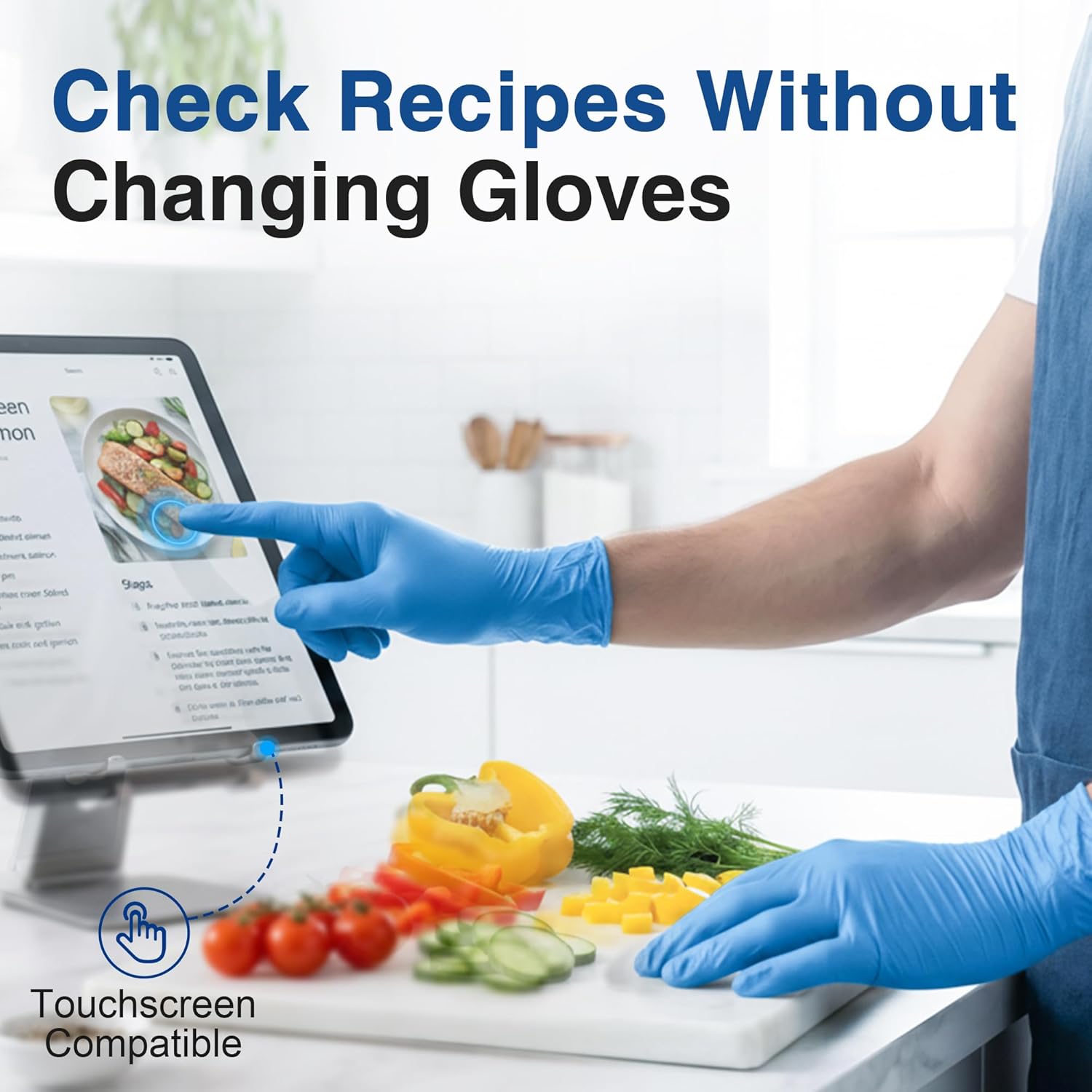
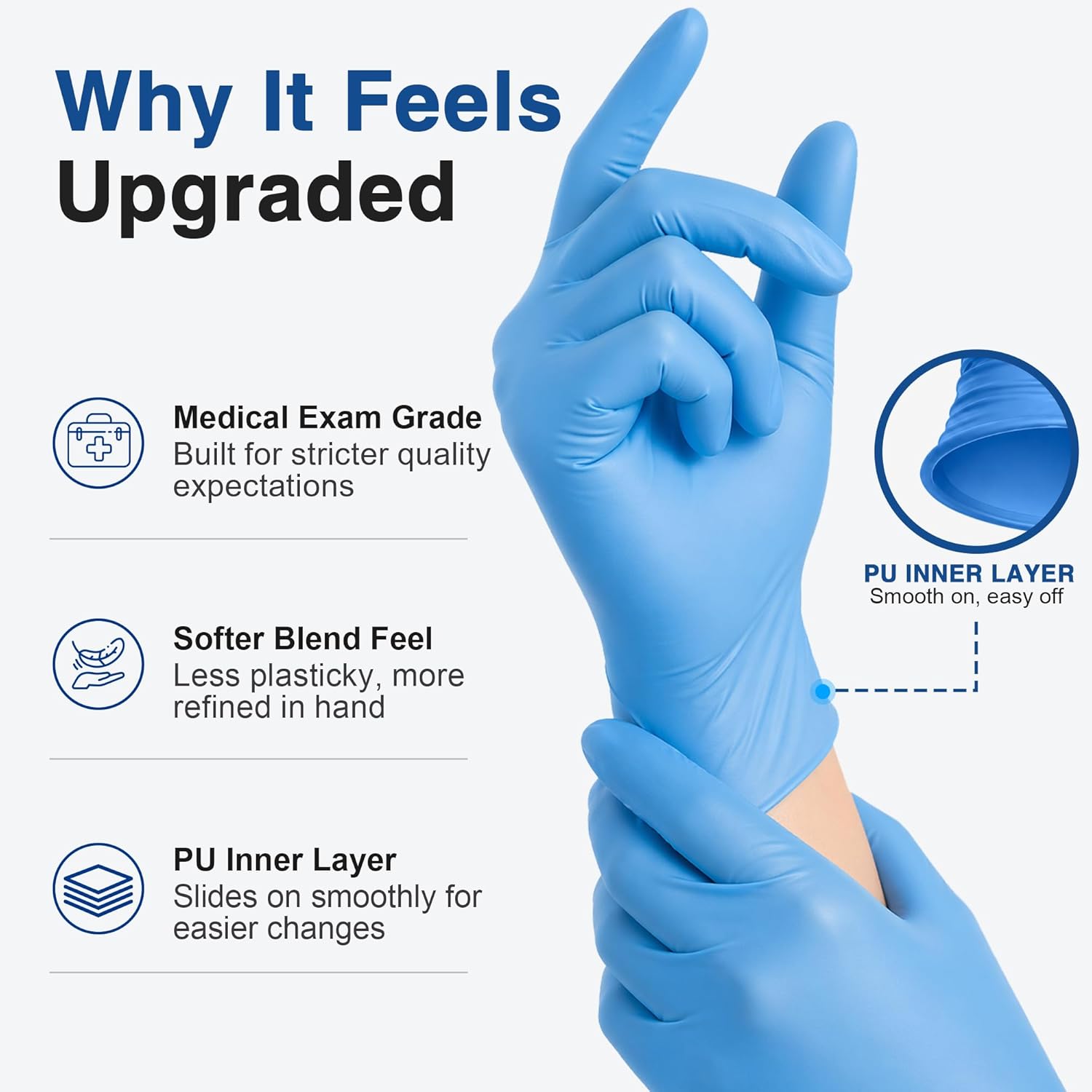
What it is and what it solves\nSchneider Blue Vinyl Synthetic Exam Gloves are disposable, non-sterile gloves made from a PVC elastomer blend. They’re designed to offer affordable hand protection for frequent glove changes without latex, making them a practical option for environments where you want reliable barrier protection and easy compliance with food handling or medical tasks. On paper, they combine strength typical of vinyl with the convenience of a powder-free, latex-free profile, addressing common latex allergies and reducing residue cleanup in busy workflows.\n\n## Key features and why it matters\nThese gloves are 4 mil thick, ambidextrous, and powder-free, which helps minimize powder cleanup and potential skin irritation. They’re described as food safe and tested to medical-grade standards, suitable for food prep, cooking, and general handling where a non-sterile glove is acceptable. The color-coded packaging by size (S, M, L, XL) can streamline inventory and reduce sizing mistakes in busy settings. The case packs 1000 gloves (10 boxes of 100 each), making it a solid option for workplaces with steady glove usage.\n\n## Pros and Cons\n- Pros: latex-free to help reduce allergy risk, powder-free for cleaner hands and surfaces, cost-conscious given the disposable, non-sterile nature, and versatile for medical exams, food service, and light janitorial tasks.\n- Cons: not suitable for sterile procedures or extreme high-risk environments, and performance is defined by vinyl chemistry rather than premium nitrile or latex alternatives. If your work demands higher chemical resistance or puncture protection, this may not be the best fit.\n\n## Best for whom\nIf you prioritize a budget-friendly, latex-free glove for routine tasks like patient exams, food prep, or general cleaning, these gloves align with that need. They’re likely a good fit for teams that change gloves frequently and want predictable sizing with easy inventory management.\n\n## When it makes sense to buy\nConsider this option when your operation requires steady glove turnover, you have latex allergy considerations, and you don’t require a sterile or high-chemical-resistance glove. The food-safe claim adds a layer of confidence for kitchen or food-handling tasks.\n\n## What to review before purchasing\nConfirm the available sizes in your facility and whether the color-coding matches your inventory system. Check that the case quantity (1000) matches your typical usage rate and storage capacity. Since these are non-sterile and vinyl-based, evaluate whether your tasks demand higher puncture or chemical resistance than vinyl can offer.\n\n## Practical usage notes\nAmbidextrous design helps with quick glove changes in fast-paced environments. For food service, use the gloves for handling ready-to-eat or minimally processed foods as part of a broader hygiene protocol. In medical or exam contexts, pair with appropriate hand hygiene and other PPE. A practical field test could be a shift with moderate activity to gauge durability and fit across sizes.\n\n## The essentials in context\nCompared to premium gloves like nitrile or latex variants, vinyl options tend to trade some performance for price and availability. If your priority is cost-per-use and you don’t require high chemical resistance or puncture protection, this product provides a sensible balance for many routine tasks.\n\n## Buyer's decision: Final verdict\nFinal verdict: a solid pick if you need a cost-efficient, latex-free option for non-sterile tasks with frequent glove changes and some food-handling use. It may not be the best choice if your work involves high-risk procedures, strong solvents, or need for maximum glove durability.\n\n## FAQ\n- Q: Are these gloves suitable for sterile procedures? A: No, they are non-sterile.\n- Q: Do they contain natural rubber latex? A: They are latex-free.\n- Q: Can they be used for food preparation? A: Yes, they are labeled as food safe and powder-free, suitable for food handling under typical safety guidelines.\n- Q: Do they come in other thicknesses or colors? A: The data specifies 4 mil thickness and blue color, other variants aren’t listed here.\n