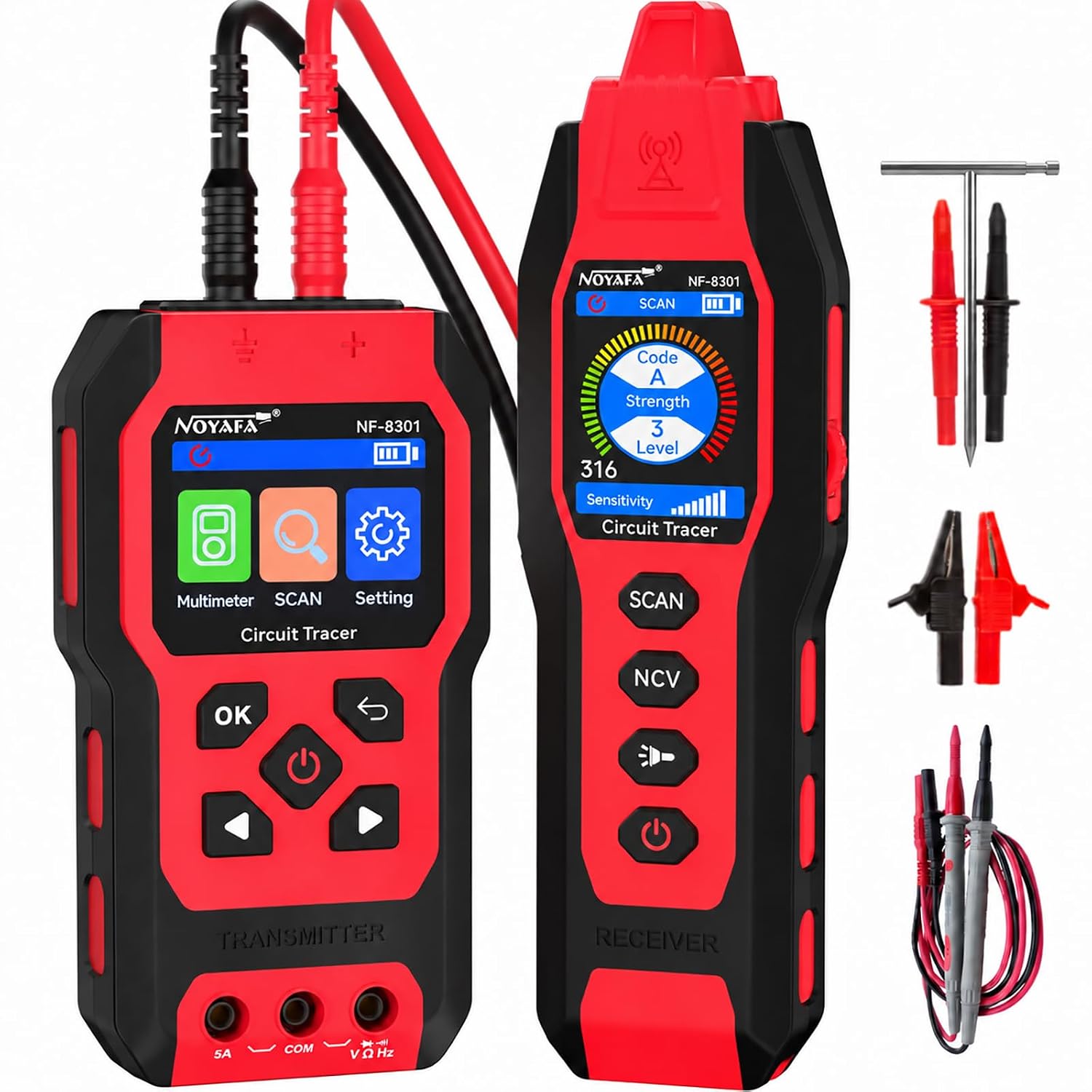
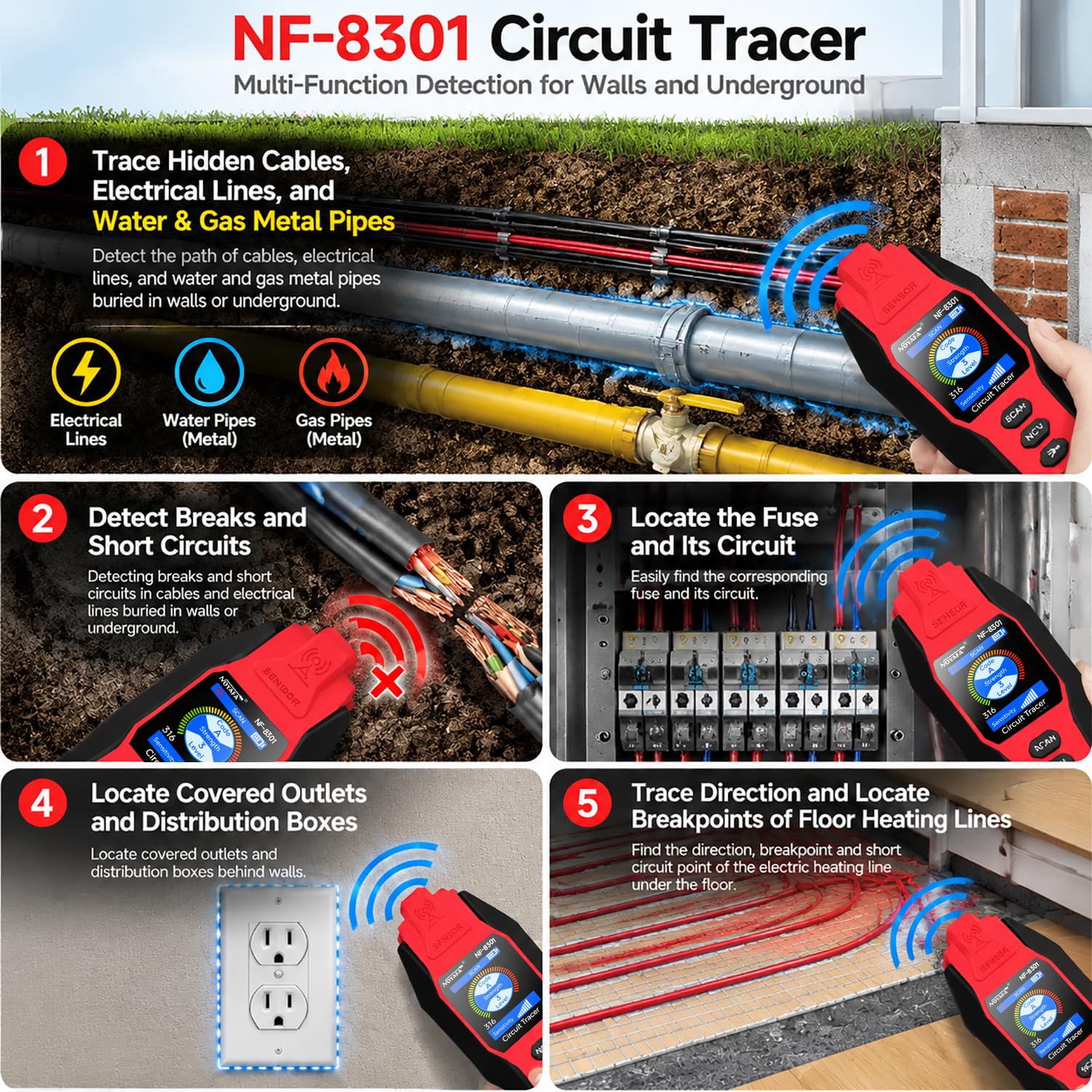
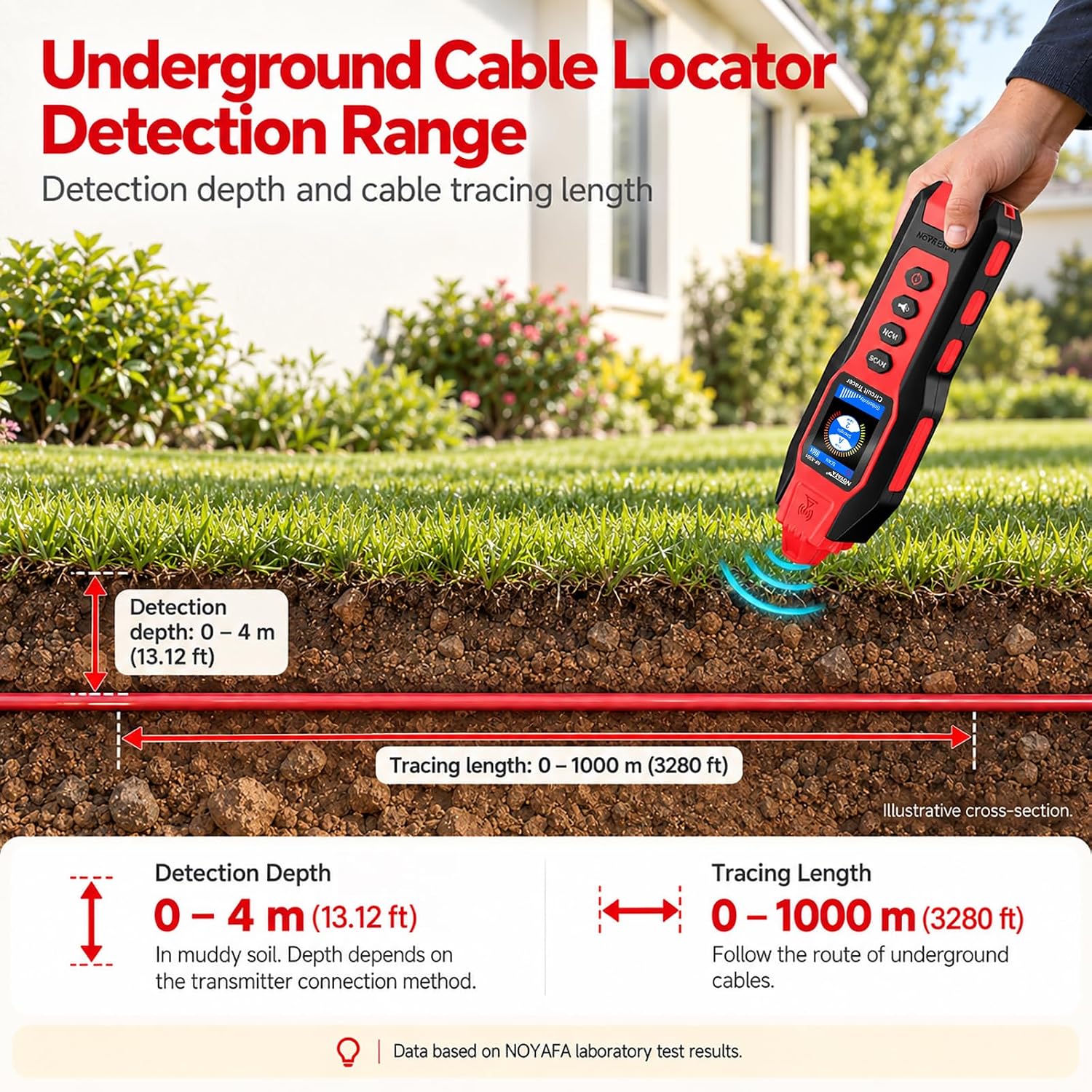
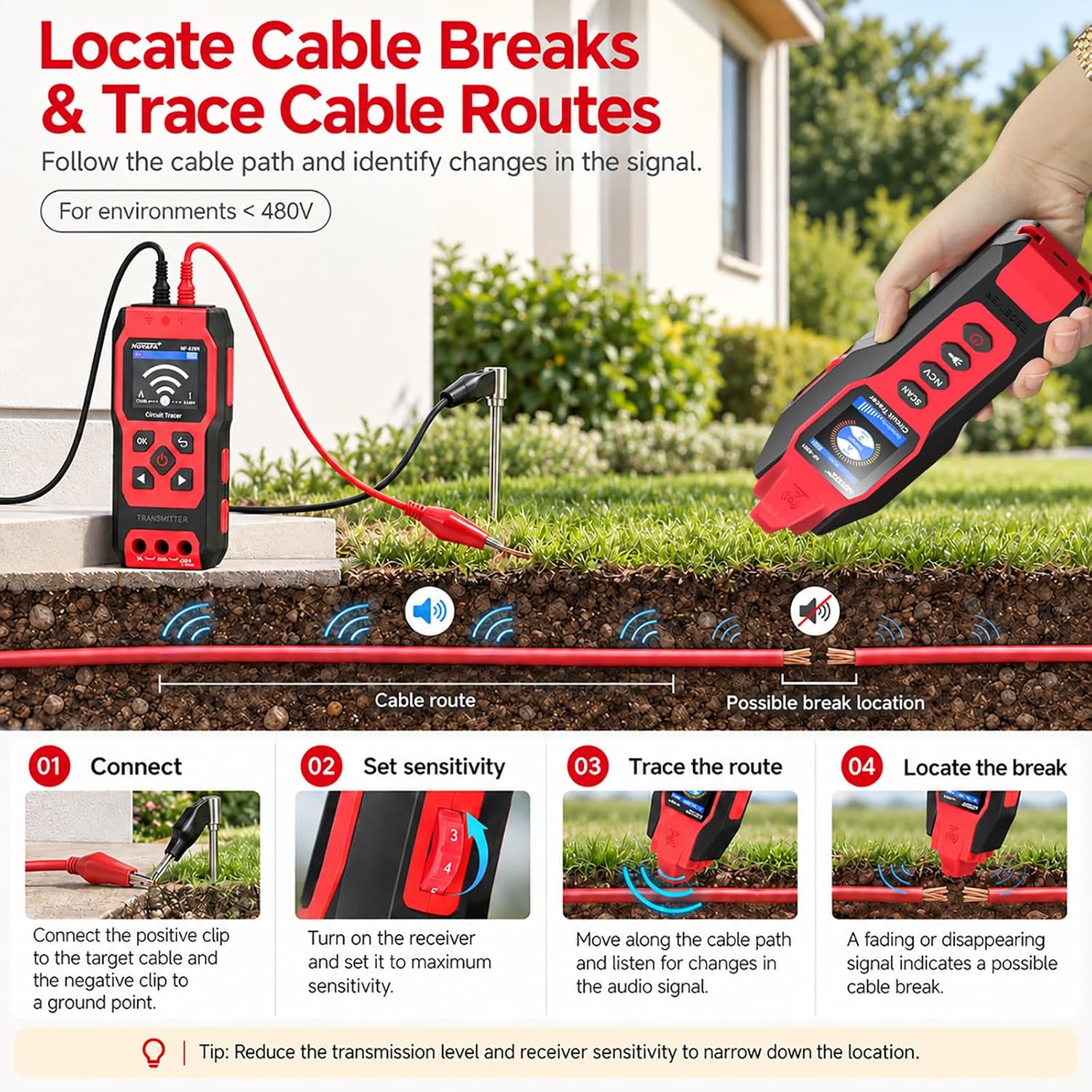
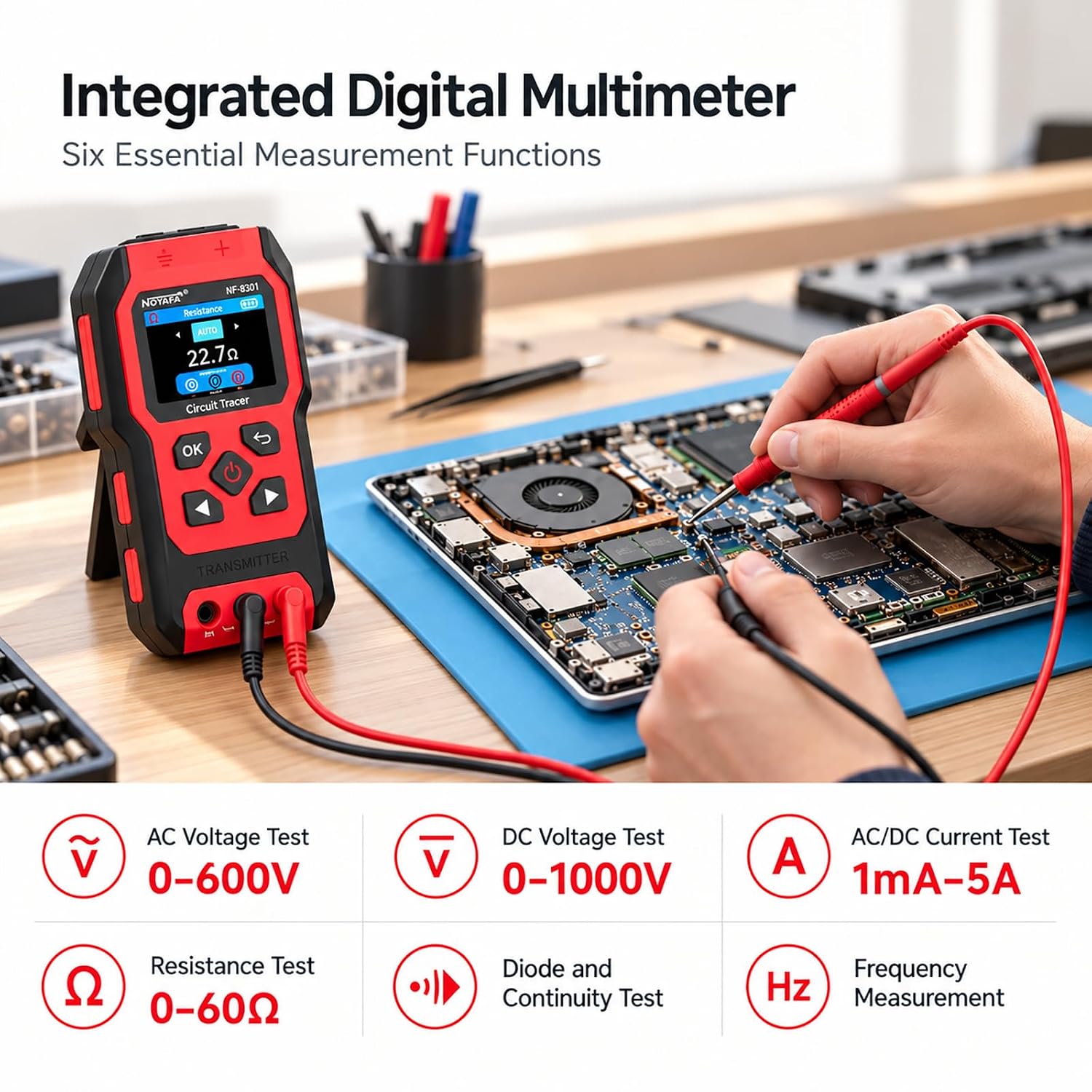
What it is and what it does\nThe NOYAFA NF-8301 combines a circuit tracer with a digital multimeter, designed to locate wire paths, detect breaks, and identify live vs. dead circuits. It’s built for underground tracing, in-wall wiring, metal conduits, and heating lines, offering a practical all-in-one tool for electricians, technicians, and DIY users.\n\n## How it helps your workflow\nWith 8 levels of adjustable sensitivity, you can start broad for a quick scan and then dial in the precision to position wires or cables accurately through drywall, concrete, brick, or soil. The receiver provides a signal strength indicator and audible beeps, helping you keep track of direction and target without second-guessing-—reducing misreads in cluttered or noisy environments. The built-in flashlight is handy for dark workspaces, and NCV testing adds a basic safety check to see if conductors are live before you start probing.\n\n## What stands out\nThe NF-8301’s integration of a transmitter and receiver with a dedicated NCV tester and a built-in flashlight is convenient for现场 troubleshooting. The device can measure AC/DC voltage, continuity, resistance, current, and frequency from the transmitter, creating a compact, multi-use tool—especially valuable when you’re tracing circuits in hard-to-reach areas.\n\n## Limitations and who should consider alternatives\nIf you primarily need a simple, dedicated wire tracer without a multimeter mix, or if you rarely work with underground or in-wall wiring, you might find a lighter option sufficient. The 8-level sensitivity is helpful, but in extremely dense concrete or long underground runs, performance will still depend on the material and installation specifics.\n\n## Ideal use cases\n- Tracing underground cables and pipes before digging\n- Locating circuit paths behind walls or in conduits during renovations\n- Quick safety checks with NCV before probing live circuits\n- On-the-spot measurements with the integrated multimeter when a separate meter isn’t convenient\n\n## What to check before buying\nConfirm you’ll need a combined tracer and multimeter, and that the included accessories cover basic testing tasks (transmitter, receiver, test leads, grounding rod, charging cable, manual, and pouch). Consider your typical work environments—dusty or cramped spaces benefit from the built-in flashlight and ergonomic receiver design.\n\n## Practical usage example\nWhile locating a buried feed, start with high sensitivity to detect the general path, then switch to mid or low sensitivity to refine the route under a concrete slab. Use the signal strength indicator to confirm the direction of the target cable, and switch on NCV to verify the line isn’t live before surface probing.\n\n## FAQ (practical answers based on available data)\n- Q: Can I use this for both live and dead wires? A: Yes, it’s designed to track energized and de-energized circuits.\n- Q: Does it come with everything I need to start tracing? A: The package includes transmitter, receiver, test leads, grounding rod, charging cable, user manual, tool kit, and pouch.\n- Q: Is the flashlight useful in dim spaces? A: Yes, the built-in LED flashlight helps in dark working environments.\n\n## Is it worth it?\nIf your tasks routinely involve underground tracing, in-wall wiring, or conduit work and you value having a multifunction tool (tracing plus measurement) in one unit, the NF-8301 offers a practical balance between capability and portability. It may be a solid pick if you want a ready-to-use kit out of the box, without needing separate meters for basic measurements. However, if you already own a dedicated multimeter and rarely perform underground or in-wall tracing, you might prefer a lighter, single-purpose tracer.