


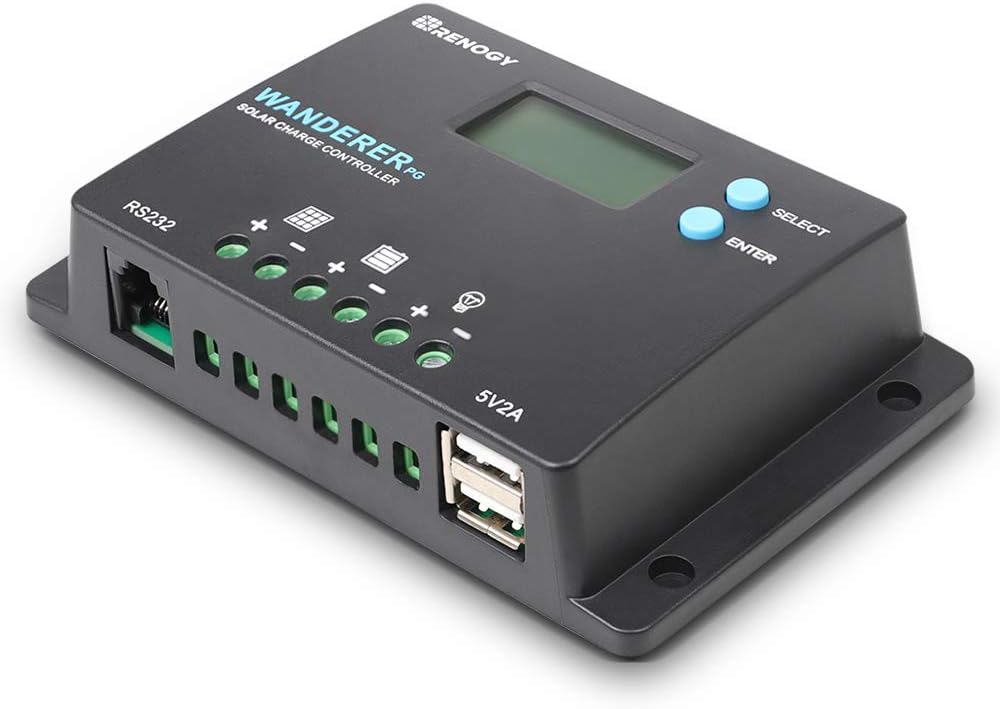
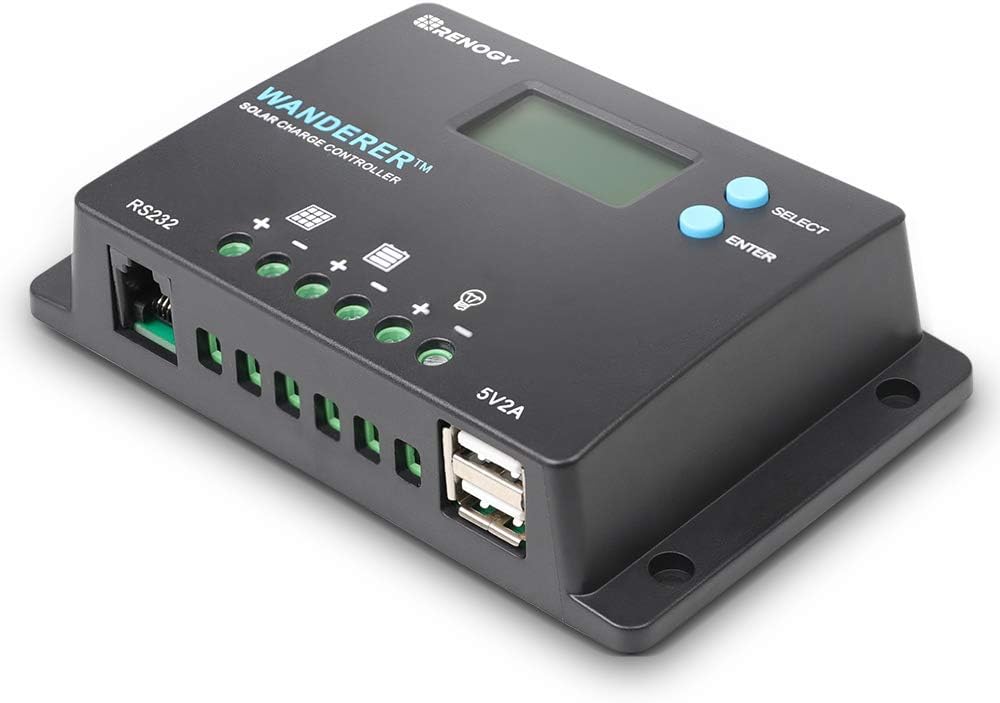
Renogy 30A PWM Solar Charge Controller ⚡
Reviews
Price
Product description
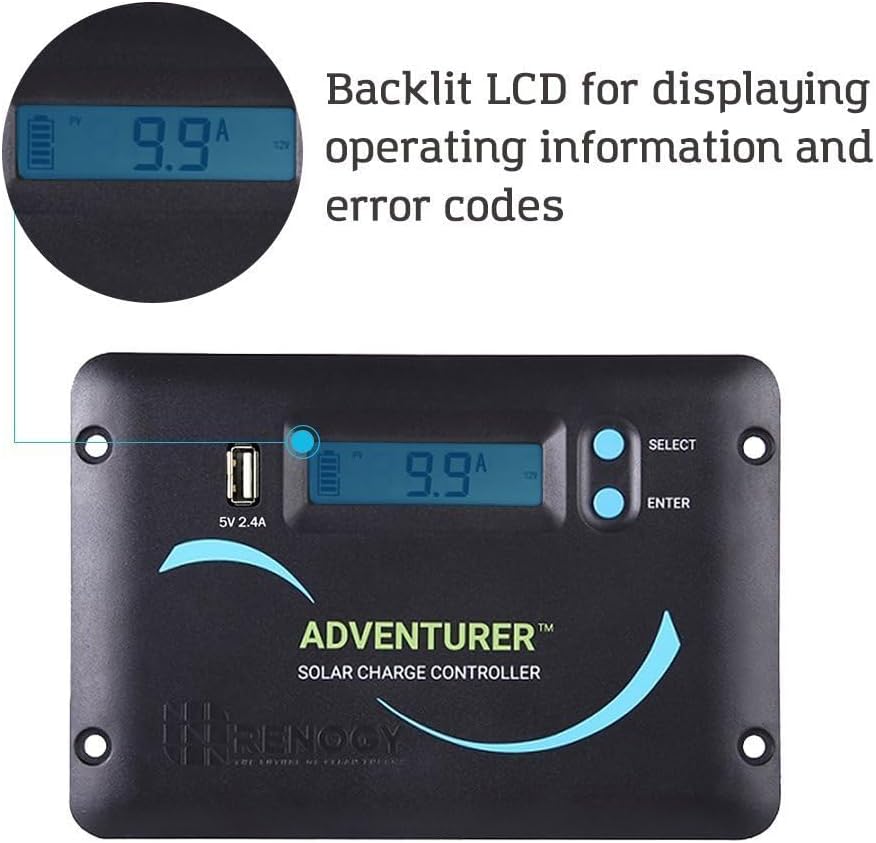
This Renogy 30A PWM Solar Charge Controller ⚡ is designed for off-grid solar systems that require reliable battery charging with precise voltage management. It automatically detects 12 V or 24 V DC systems and offers real-time monitoring through a clear LCD display and LED indicators, making it ideal for users managing solar-powered setups in homes, cabins, or remote locations.
Key Points
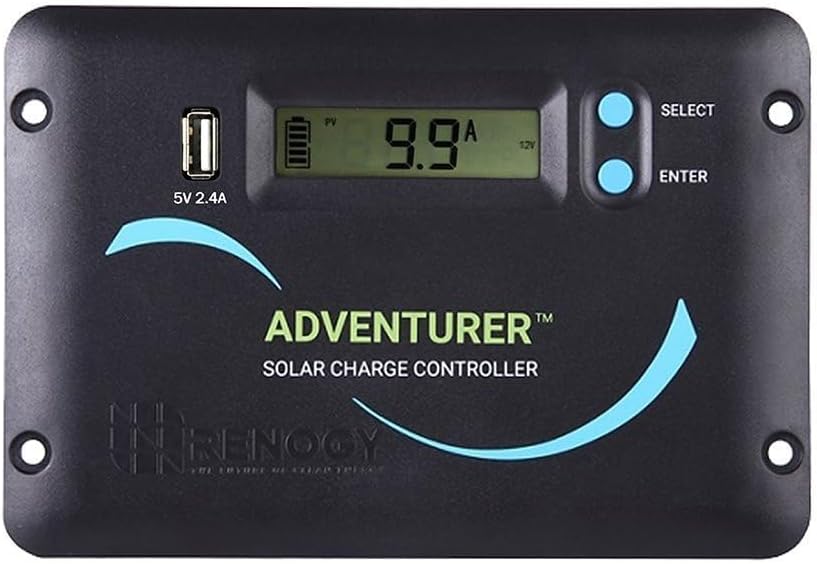
The controller features intelligent PWM charging with four distinct stages—bulk, impulse, float, and equalization—each optimized to extend battery life and maintain performance. It supports a range of battery types including AGM, gel, flooded, and lithium, ensuring compatibility across different storage solutions. A built-in negative terminal grounding design ensures safe and consistent operation in standard negative-ground systems. The unit includes a surface-mount bracket for flexible installation on walls or panels, allowing users to place it in convenient locations.
Technical Specifications
Brand + Model: Renogy 30A PWM Solar Charge Controller ⚡
Input Voltage: 12 V or 24 V DC
Output Voltage: Automatically adjusts based on battery type and system configuration
Battery Type Support: AGM, gel, flooded, lithium (lithium option available)
Charging Stages: Bulk, impulse, float, equalization
Overvoltage Protection: Yes
Reverse Polarity Protection: Yes
Short-Circuit and Overload Protection: Yes
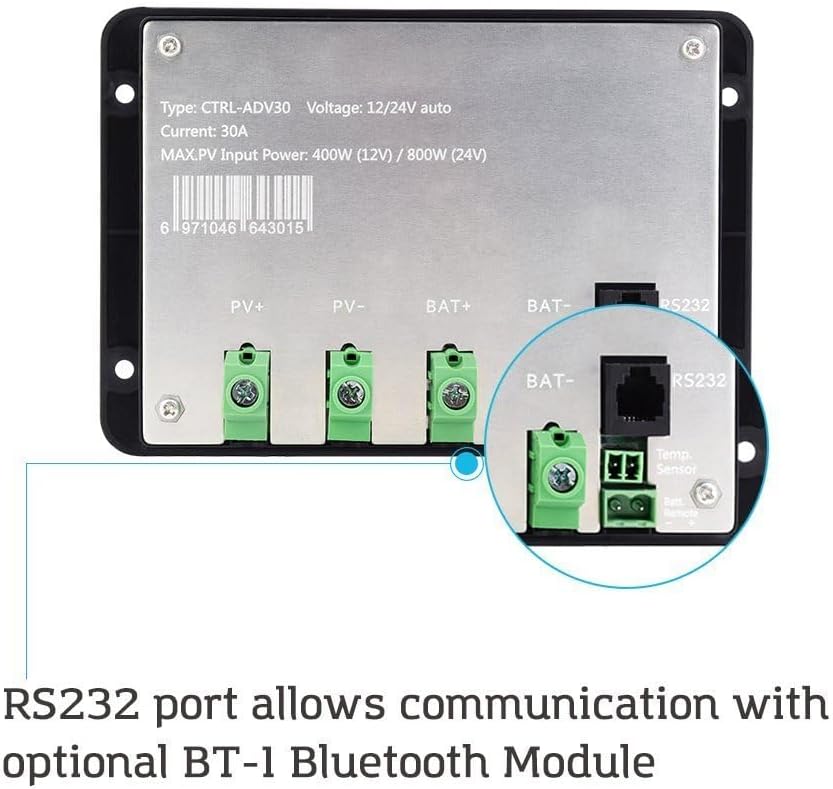
Communication Interface: RS232 (supports Bluetooth BT-1 for integration with DC Home and Renogy ONE M1 apps)
Benefits
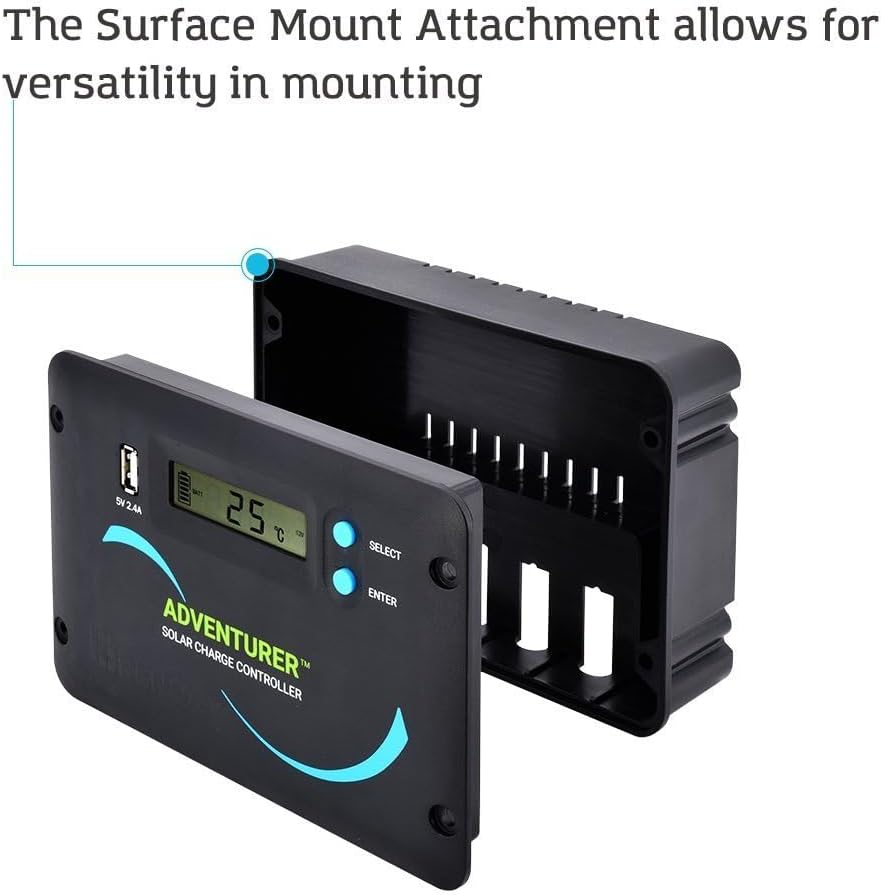
It provides stable charging performance by adjusting voltage dynamically during each stage of the charging cycle. The real-time monitoring function allows users to track solar input and battery status without needing to physically inspect components. The automatic detection of system voltage reduces setup time and minimizes the risk of misconfiguration. With its compact, wall-mountable design, it blends seamlessly into existing installations.
Usage Recommendations
For optimal performance, connect the negative terminal of the solar panel, battery, and controller to the same grounding point. Ensure the battery type is correctly selected in the controller settings to match the charging profile. Use the RS232 port with a Bluetooth module to view energy data on a smartphone app for ongoing system oversight. Avoid prolonged exposure to extreme temperatures, as this may affect internal components.