

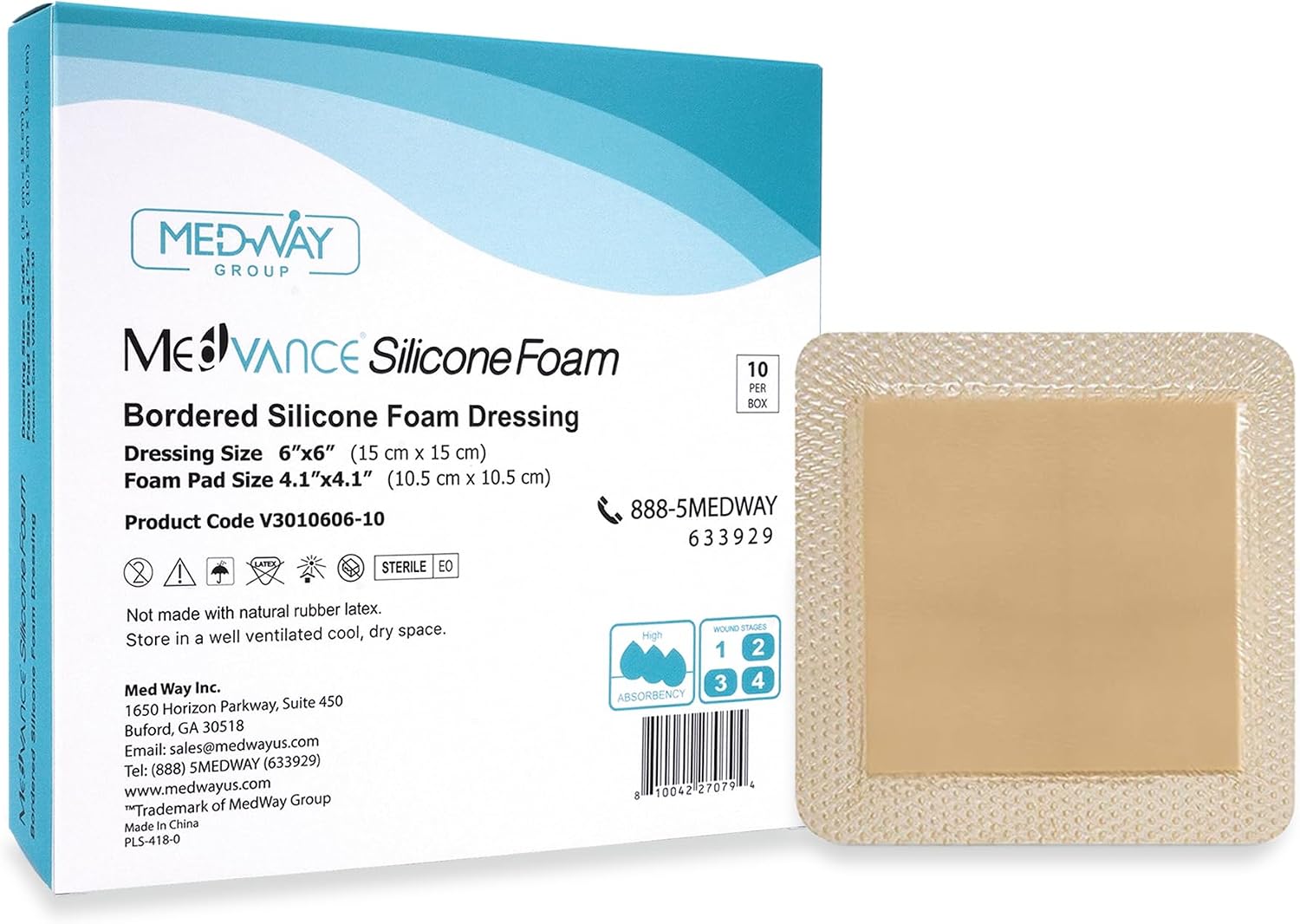
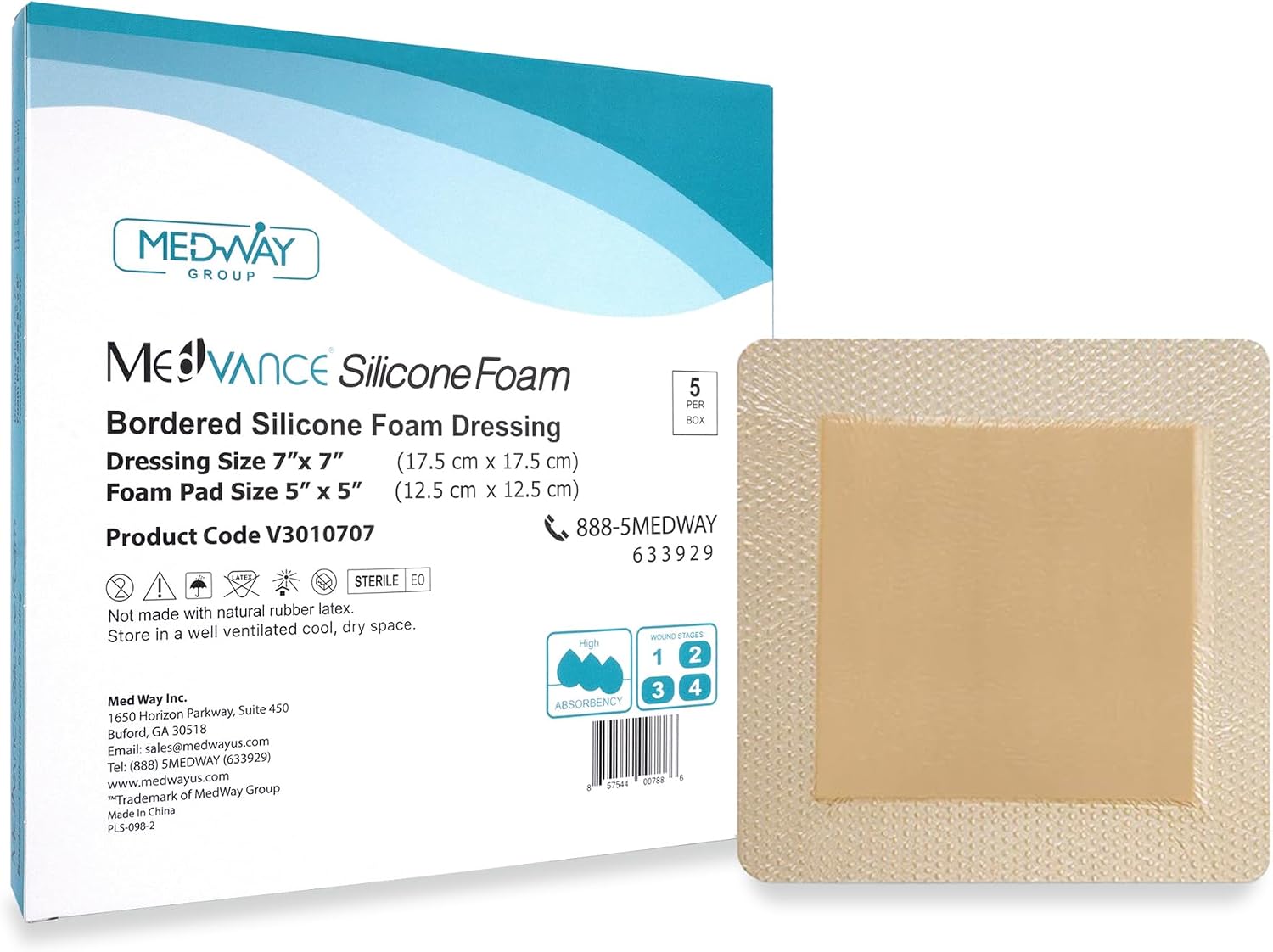
MedVance TM Silicone Bordered Silicone Adhesive Foam Dressing, 7"x7" (5"x5" pad), Box of 5
Product description
If you’re managing wounds that need a moist, protected healing environment, bordered silicone foam dressings are one of those “it makes sense on paper” choices. MedVance TM Silicone uses a silicone adhesive approach designed to be gentle on the wound area while still staying put on skin—so dressing changes are less of a battle.
That said, it’s not a miracle cure and it won’t replace clinical judgment. It’s a dressing format with an absorbent, semi-permeable structure, and it’s most appropriate when the wound care plan calls for that kind of balance: absorption without sealing the wound completely.
The essentials
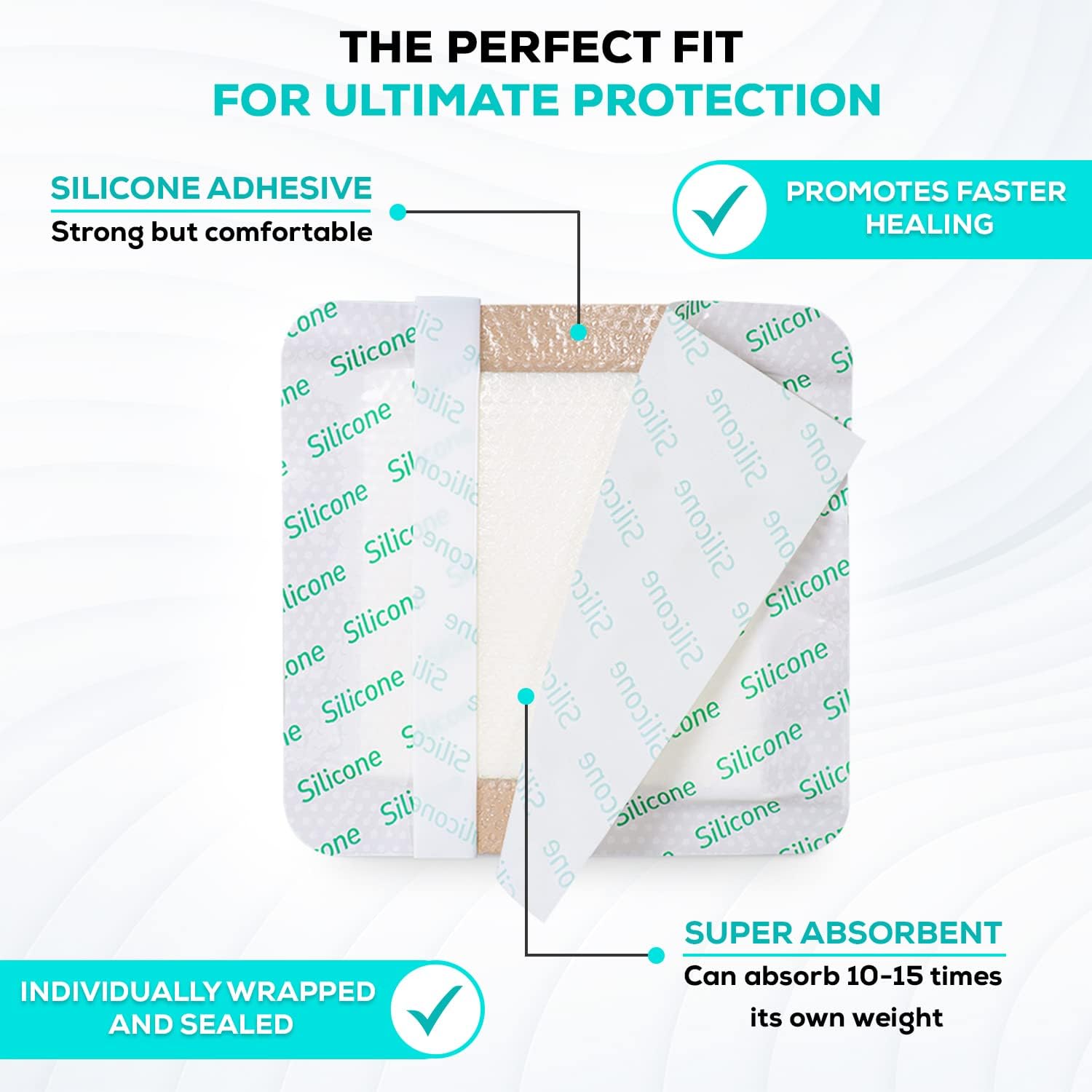
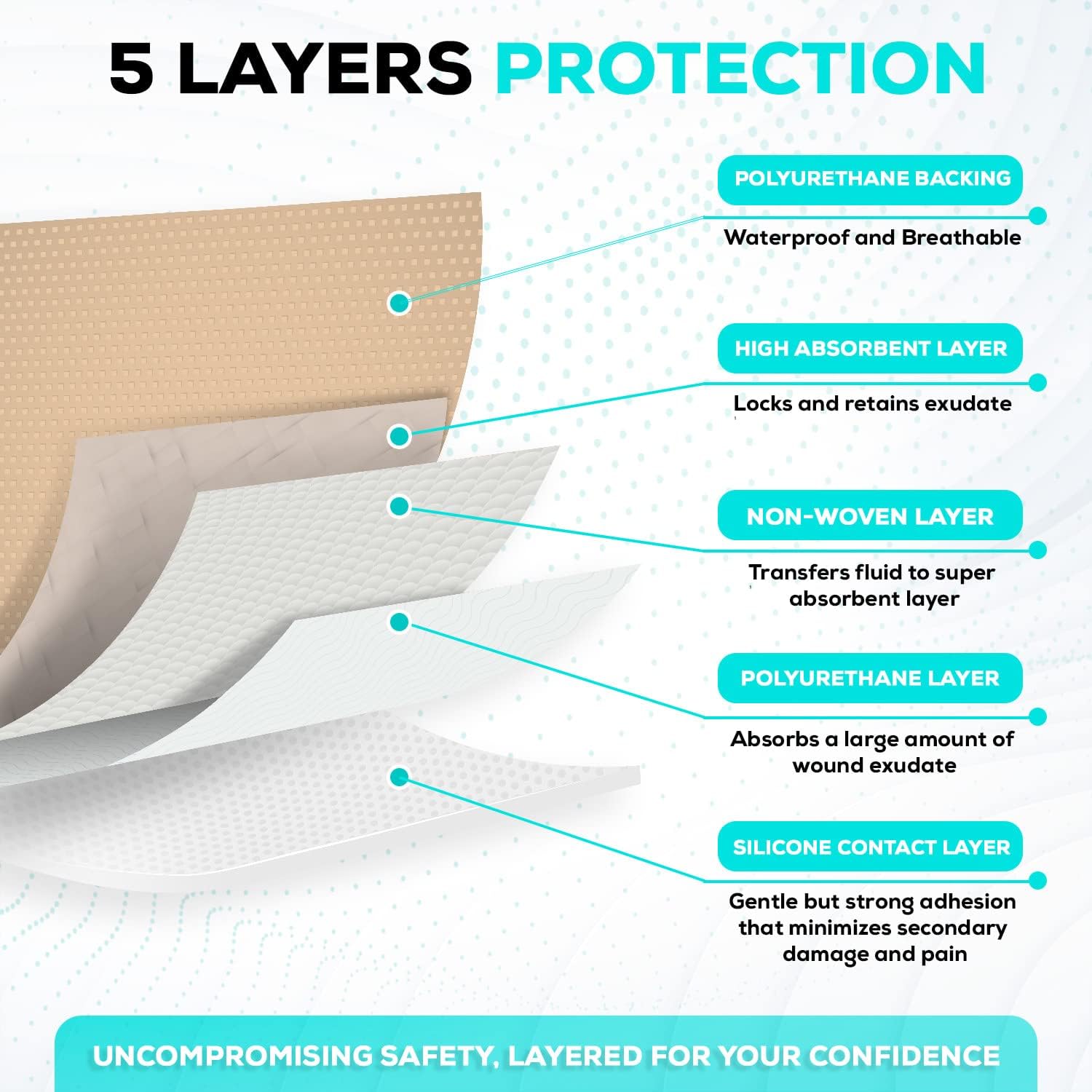
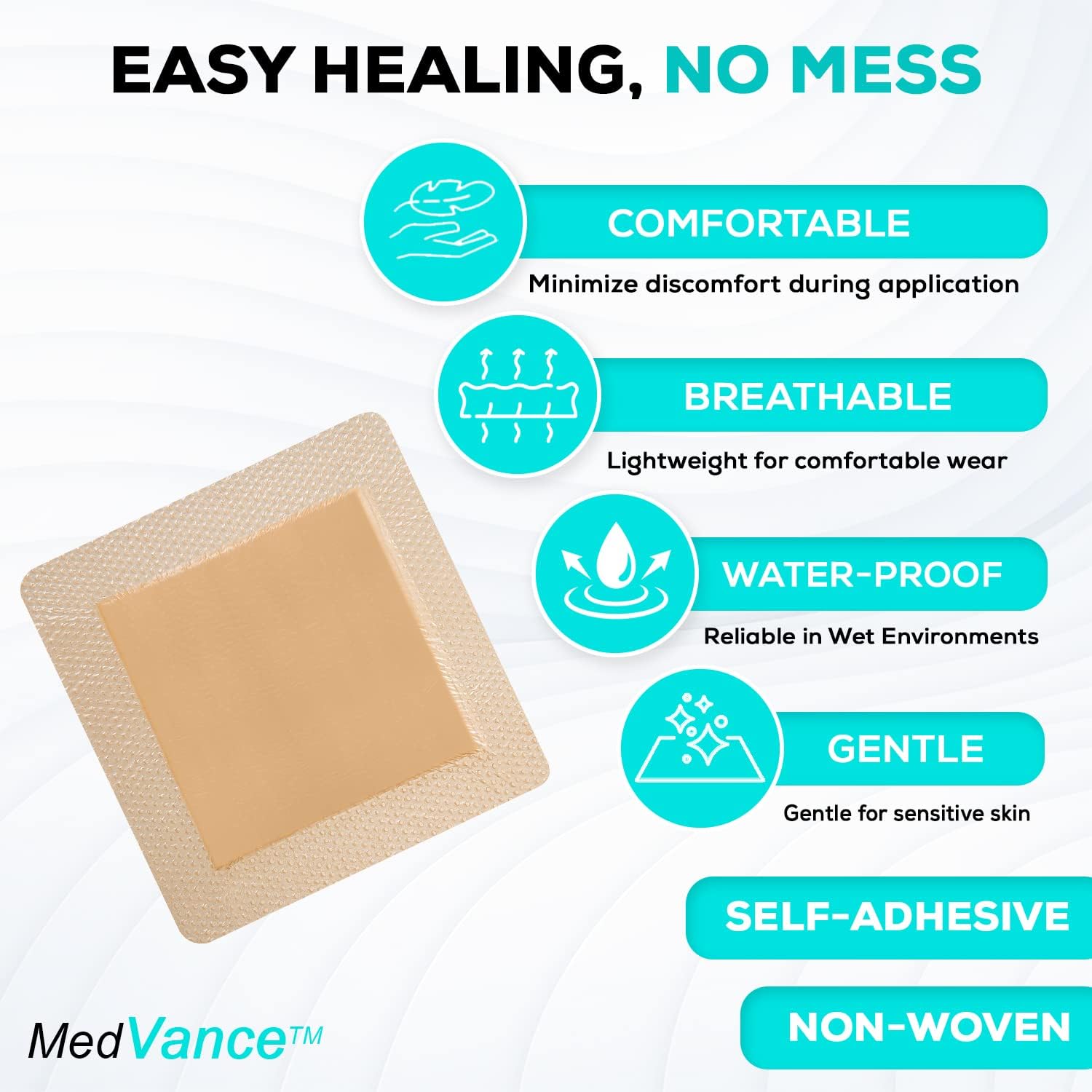
MedVance bordered silicone adhesive foam dressings are meant to support healing by helping keep the wound moist while acting as a barrier against contamination. The multilayer design includes an absorbent foam layer and a semi-permeable PU film that’s designed to allow oxygen and water vapor to pass through. In practice, that’s the core idea behind many modern foam dressings: maintain a healing-friendly moisture level without turning the dressing into an airtight cover.
The border matters too. The hypoallergenic silicone adhesive is described as a wound contact layer that does not stick to the wound bed, while it stays intact on the skin. If you’ve ever removed a dressing that tore at the wound area, you already know why that detail is important—this one is positioned to help minimize secondary damage and reduce pain during changes.
Key features that affect real-world comfort
The biggest day-to-day difference is how dressings behave during application and removal. On paper, MedVance is built to be easy to apply because the silicone adhesive is intended to stay on the skin, not cling to the wound bed. That means fewer “moments of regret” during dressing changes.
You also get a semi-permeable barrier layer. The product description frames the PU film as a liquid barrier that still allows oxygen and water vapor transmission. For many wound types, that’s the practical sweet spot: it can help manage fluid while not trapping everything inside.
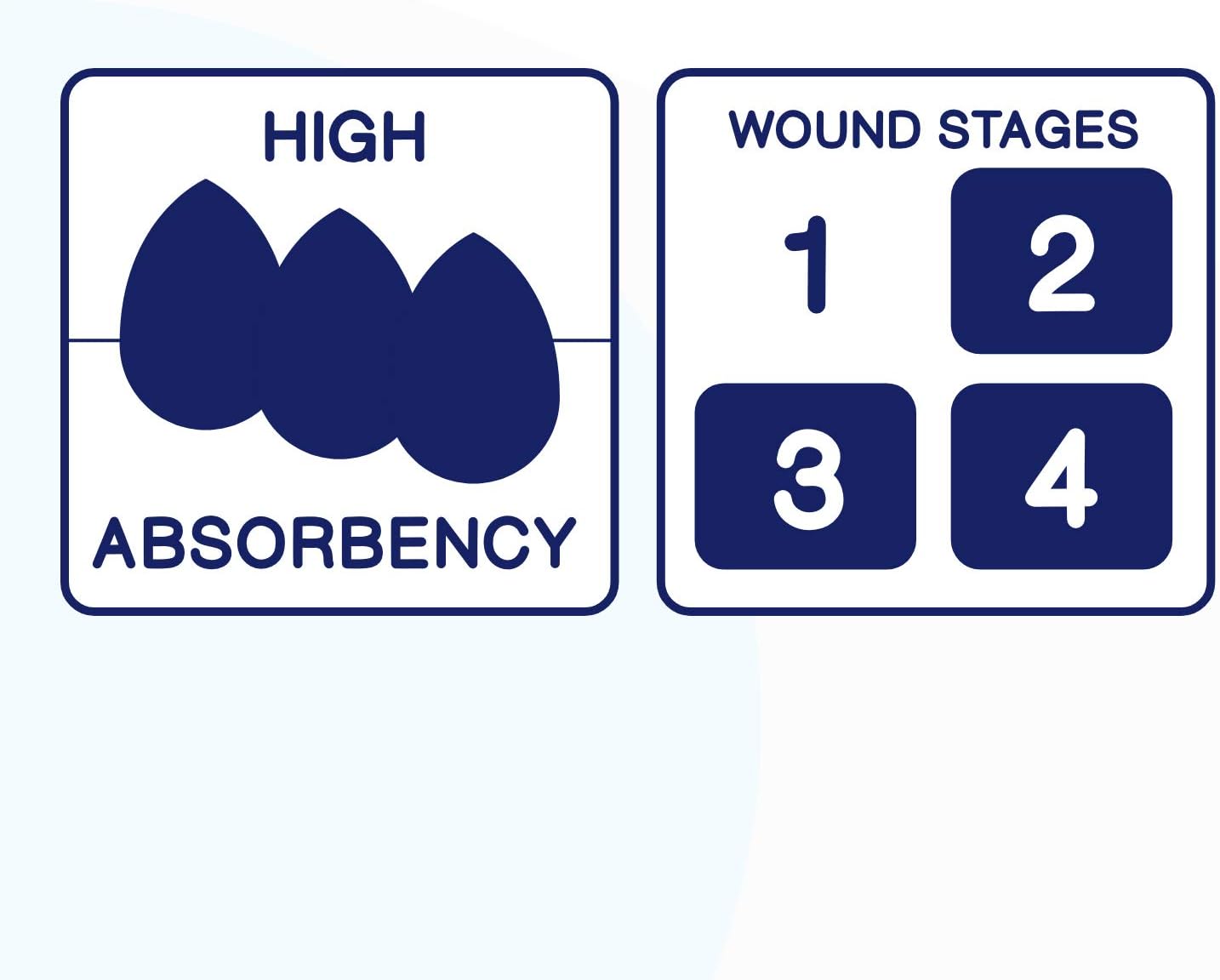
One limitation to keep in mind: the dressing is designed for a range of use cases (post-operative wounds, bed sores, cysts, pressure ulcers, burns, and minor traumas), but the right choice still depends on wound characteristics and the treatment plan. A foam dressing won’t be the best fit for every scenario, especially if the clinician is specifically targeting a different dressing mechanism.
Where it shines (and where it may fall short)
This is a solid match if your goal is a protective, breathable dressing that supports a moist healing environment and is meant to feel gentler on removal. It’s also described as sterile and individually wrapped, which is the kind of baseline you generally want when you’re applying to an open wound.
It may not be the best match if you need a dressing with a very different structure or function than “absorbent foam + semi-permeable barrier + silicone border.” If your wound care plan calls for a different adhesive behavior, fluid handling level, or a non-foam approach, you’ll want to follow that guidance rather than rely on this category alone.
Also, keep expectations realistic: it can help create the conditions for healing, but it can’t guarantee outcomes on its own. Healing is influenced by wound severity, infection control, circulation, and overall care.
Size and coverage to pay attention to
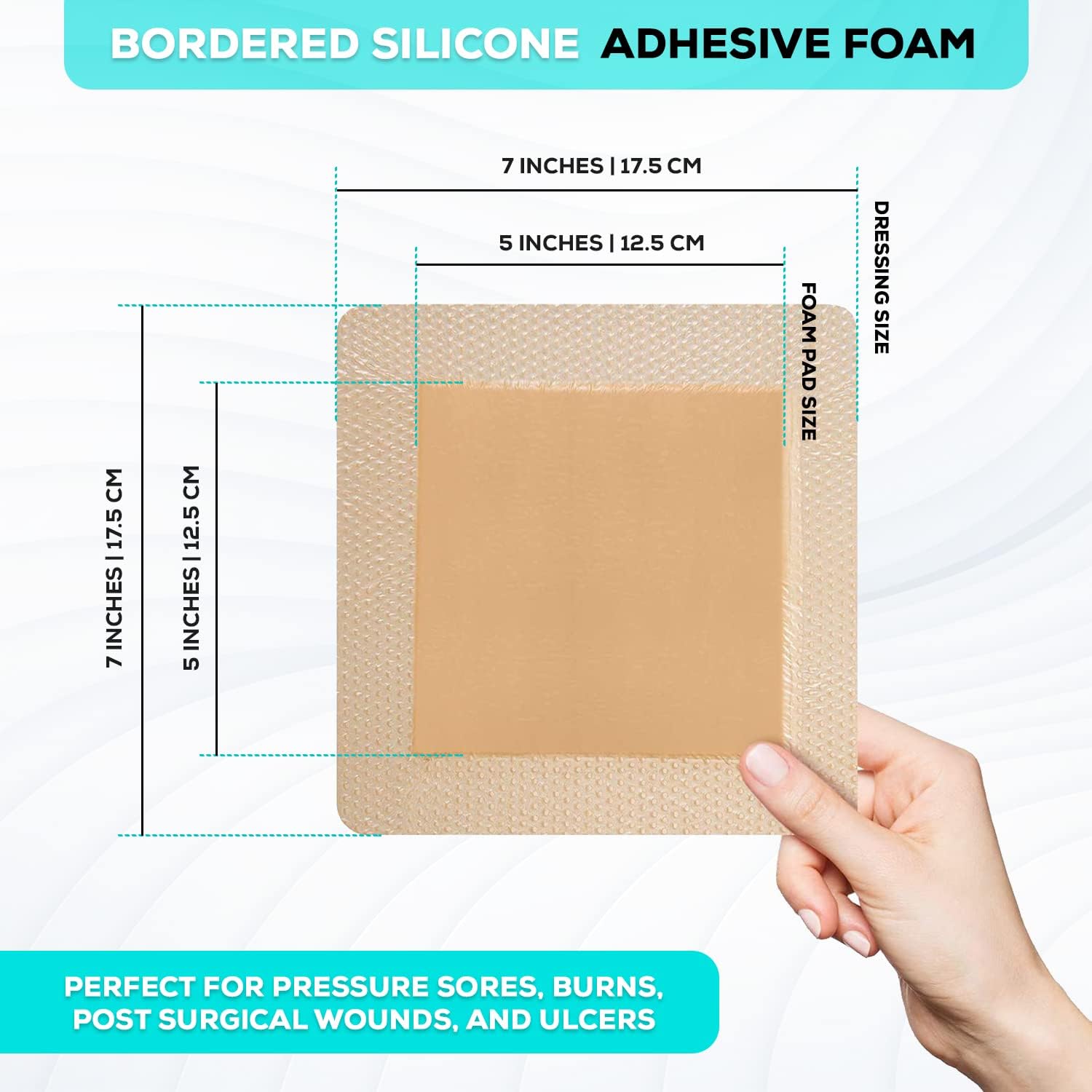
The package specifies a 7"x7" dressing with a 5"x5" pad area. That means the absorbent/wound-contact portion is the 5"x5" section, while the border extends beyond it. Before buying, double-check that the 5"x5" pad aligns with the wound area you’re covering. If you’re consistently using a tight pad size and your wounds run larger, you may need a different format.
Quick buying check: who it’s for
MedVance is positioned for hospital, senior care homes, hospice, and other medical facilities, and it’s also indicated as approved for Level II HCPCS—use code A6213 for billing/claims.
So, who tends to benefit most? People following wound care protocols where a silicone bordered foam dressing is appropriate, including those dealing with pressure-related wounds or post-operative sites. If you’re looking for a dressing change experience that’s less likely to stick to the wound bed, the silicone approach is the main reason to consider it.
If you’re shopping casually for general first-aid purposes, you might find it feels like overkill. This type of dressing is more about structured wound care than casual covering.
Is it worth it?
Buy it if you’re specifically looking for a bordered silicone adhesive foam dressing designed to promote a moist healing environment, manage fluid with absorbency, and provide a semi-permeable liquid barrier. It’s also a reasonable pick when your care plan values gentle removal—because the description emphasizes minimizing secondary damage and pain by not adhering to the wound bed.
Skip it if your wound care plan requires a different dressing type or if the pad sizing (5"x5" within a 7"x7" dressing) doesn’t match the area you need to cover. It’s not the best choice to “try something random” without matching the wound’s needs to the dressing’s mechanism.
Mini FAQ
What size pad area is included?
The dressing is labeled 7"x7" with a 5"x5" pad area.
Is it meant to stick to the wound bed?
The product description indicates it should not stick to the wound bed, while the silicone adhesive remains on the skin.
Is it breathable or fully sealed?
It’s described as semi-permeable, with a PU film designed to act as a liquid barrier while allowing oxygen and water vapor passage.
Is it sterile and individually packaged?
Yes. Each dressing is manufactured in a sterile facility and is individually wrapped to help prevent contamination.
Where is it typically used?
The description mentions hospitals, senior care homes, hospice, and other medical facilities.