

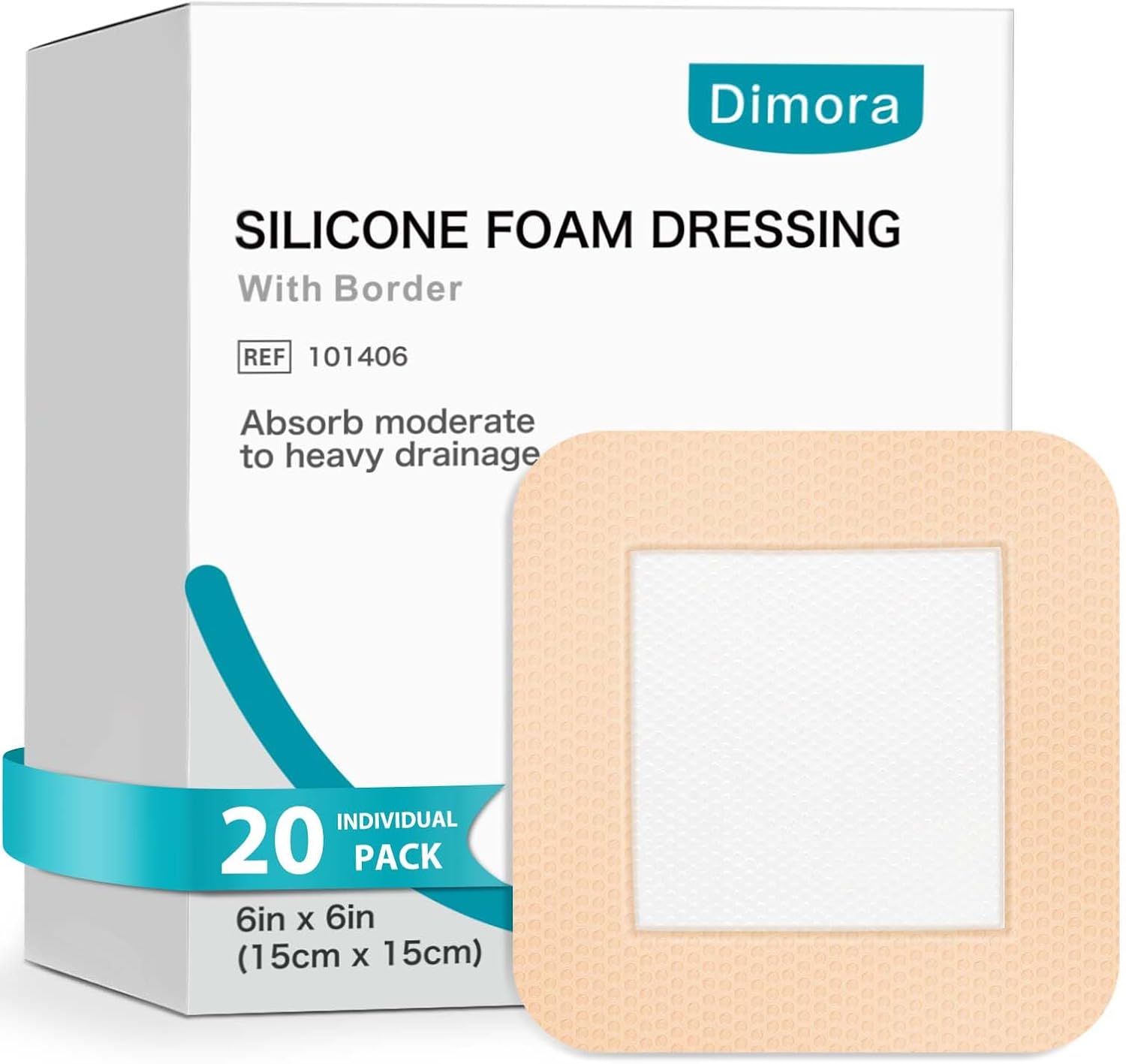
Dimora Silicone Foam Dressing with Border Adhesive 6"x6" Waterproof Wound Care Bandage, 20 Pack
Product description
The essentials
If you’re shopping for a waterproof wound dressing that can handle moderate to heavy drainage, a silicone foam dressing like this Dimora option is built around one job: absorb exudate while staying gentle enough for frequent dressing changes. On paper, it combines a multi-layer foam pad, a silicone contact layer designed not to grab moist tissue, and a border meant to adhere securely.
It’s not meant to be a one-size-fits-all “miracle patch.” The key is whether your wound size and drainage level match what the pad can support. If you’re dealing with lighter drainage or you need a very thin dressing for tight dressing sites, a foam border dressing may feel like overkill.
Where it shines for wound care
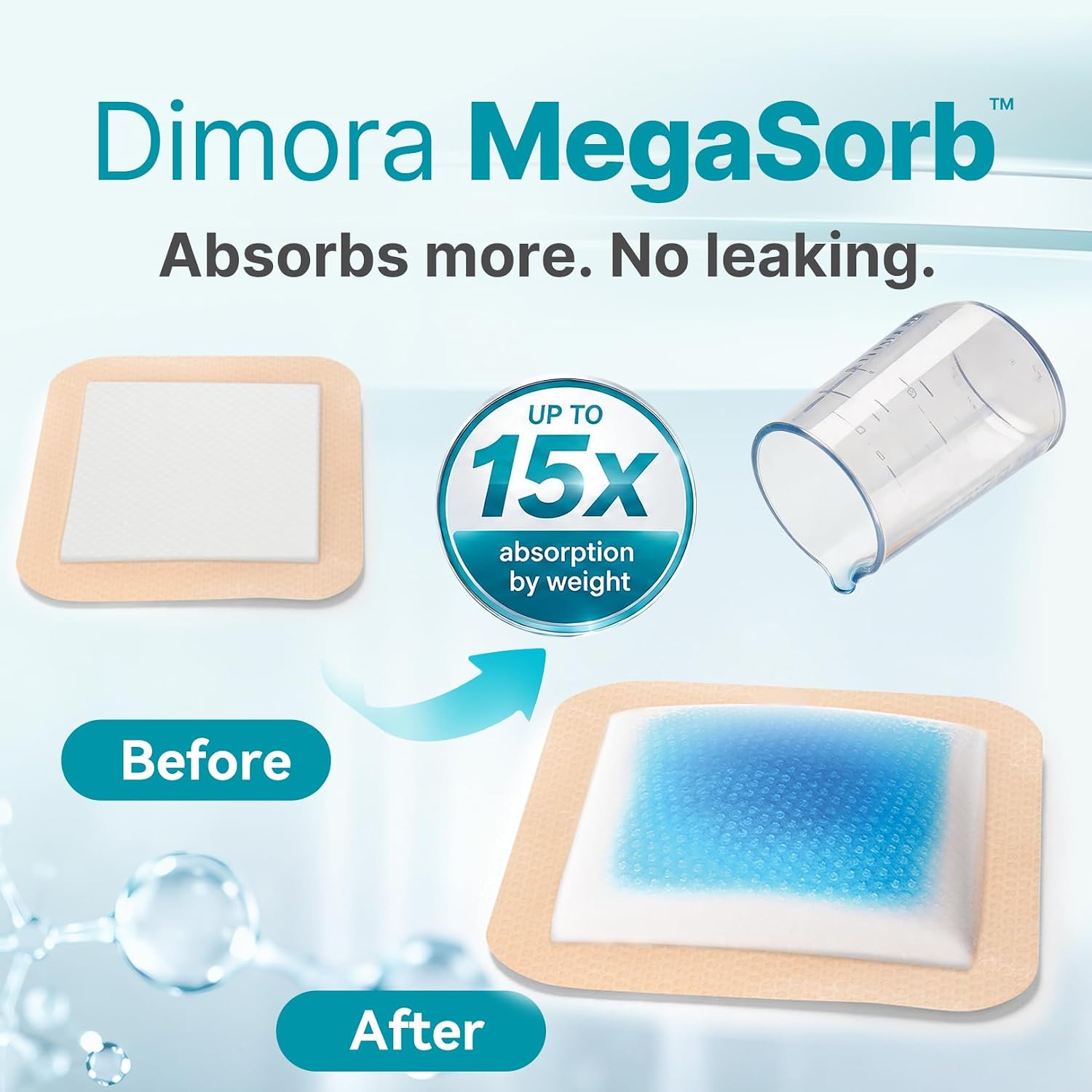
This dressing is designed to absorb wound fluid (the brand claims up to 15 times its fluid capacity using a 5-layer material approach). That matters because heavy drainage can lead to maceration—skin breakdown from being too wet for too long. Here, the foam core and layered construction aim to lock fluids away from the wound bed and distribute exudate so the dressing can keep working longer before you need to change it.
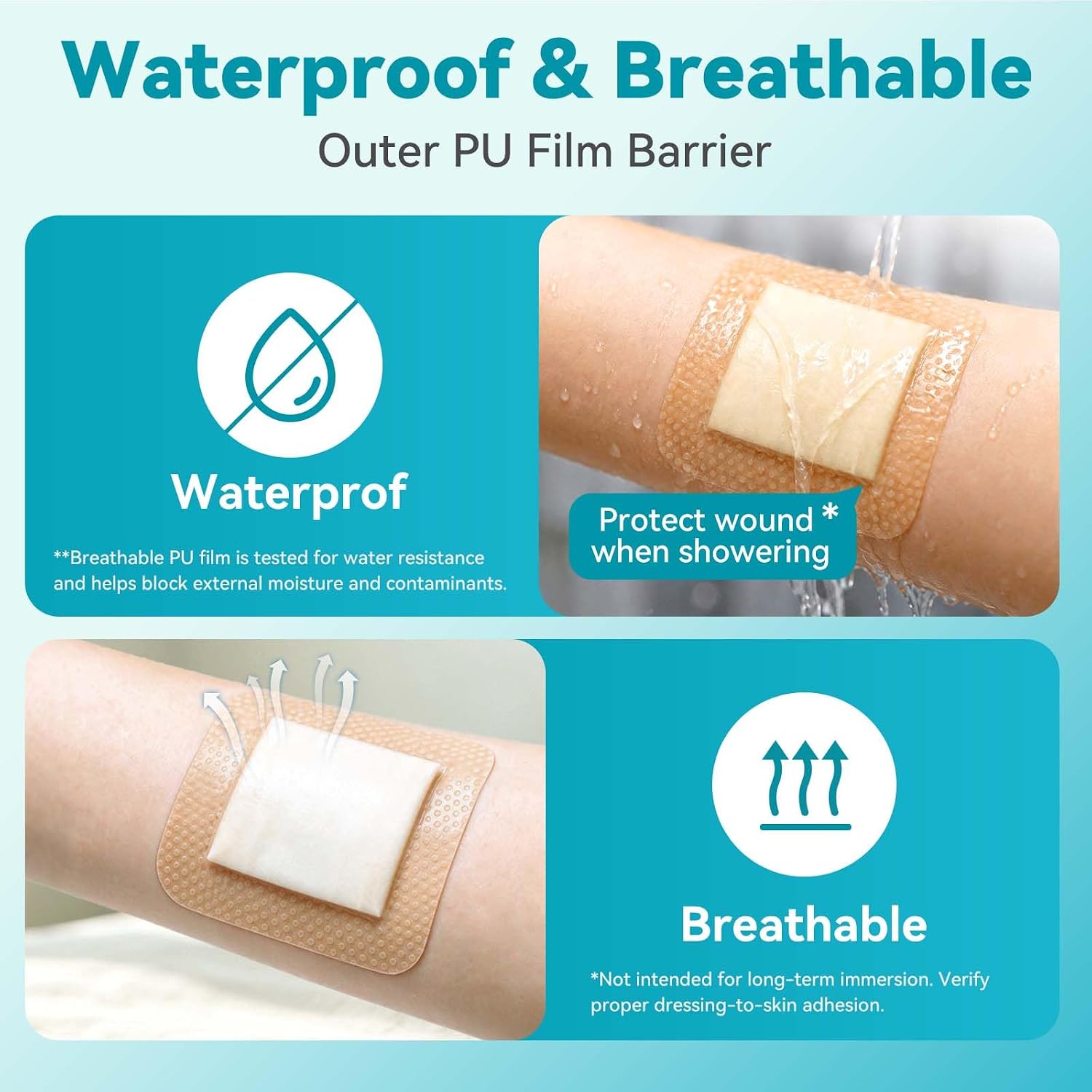
Another practical angle: the waterproof and breathable top layer (semi-permeable PU film) is intended to act as a barrier from the outside while still allowing oxygen and water vapor to pass. In everyday use, that can translate to less worry about minor external moisture exposure, and a dressing that feels more comfortable than fully occlusive options.
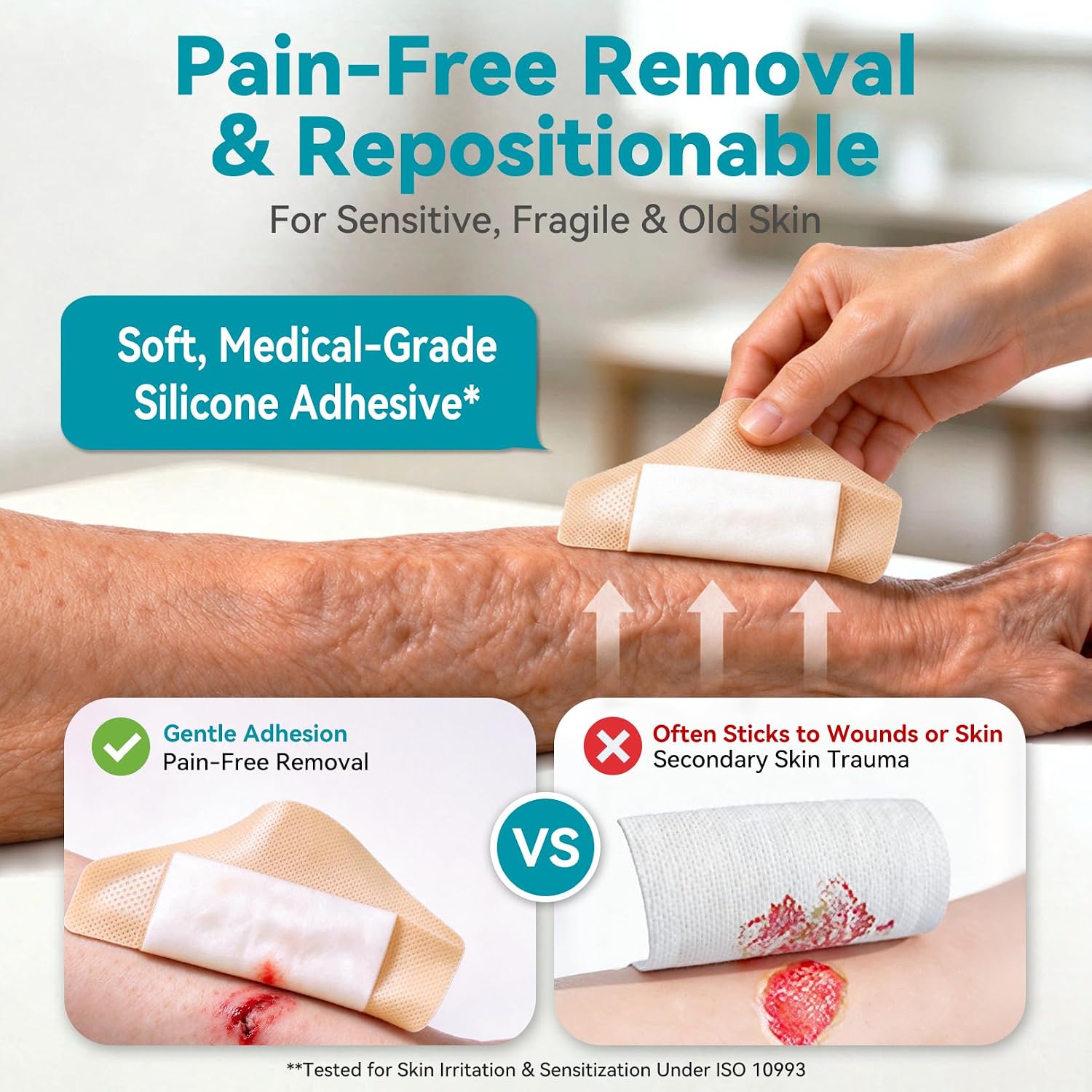
And the silicone contact layer is the part people usually care about most when it’s time for removal. The description says it uses medical-grade hypoallergenic silicone as the wound contact layer, with the intent that it won’t stick to moist wound tissue. If you’ve ever had to remove a dressing that “tugs” on sensitive tissue, you’ll understand why this design choice can make changes less painful.
Key takeaways before you buy
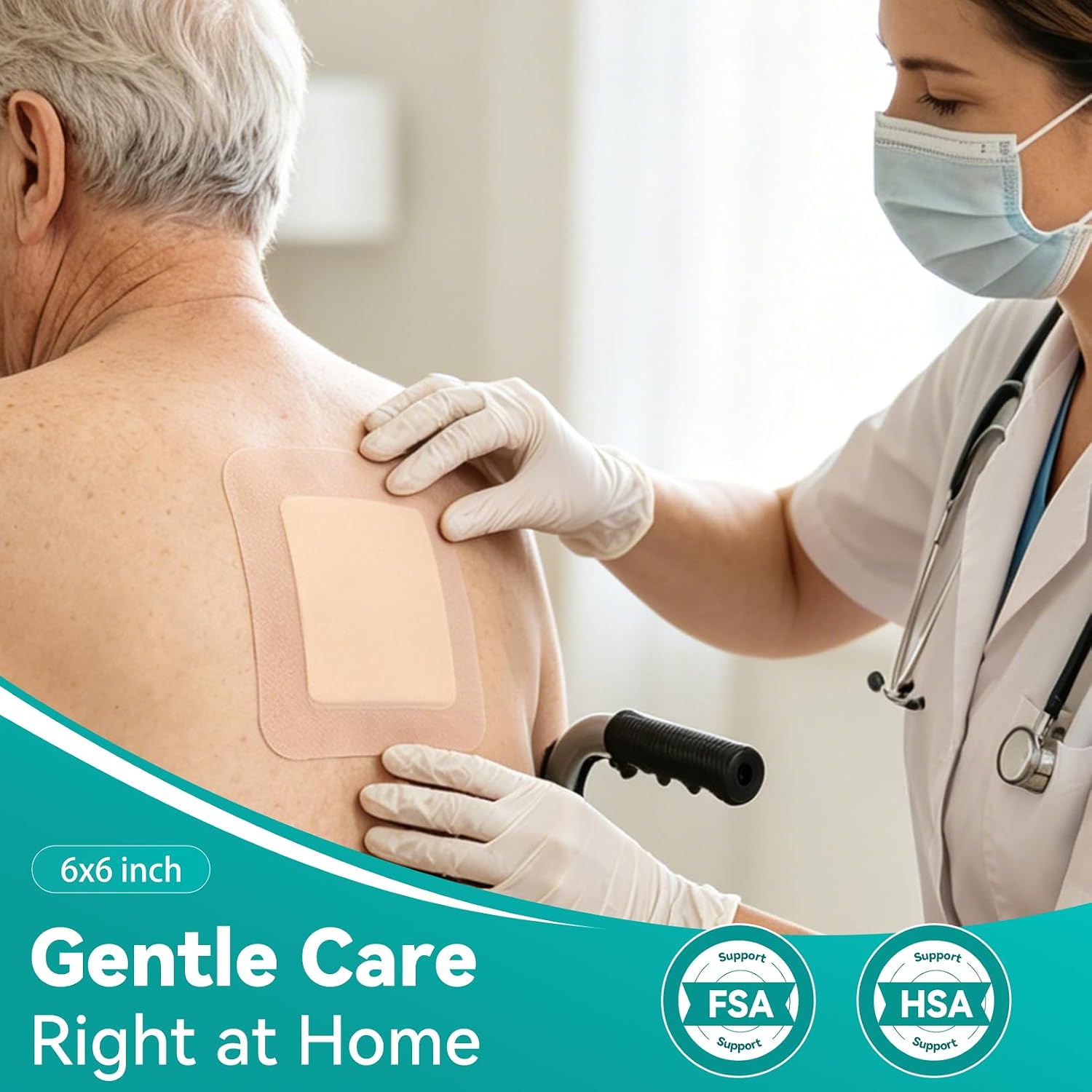
First, pay attention to size. This is a 6"x6" border adhesive dressing, and the brand notes it fits wounds within about 4.3"x4.3" (based on the foam pad size). If your wound bed is larger than that, you may need to look for a different size or plan—because trying to cover more than the pad is designed for can leave exposed areas.
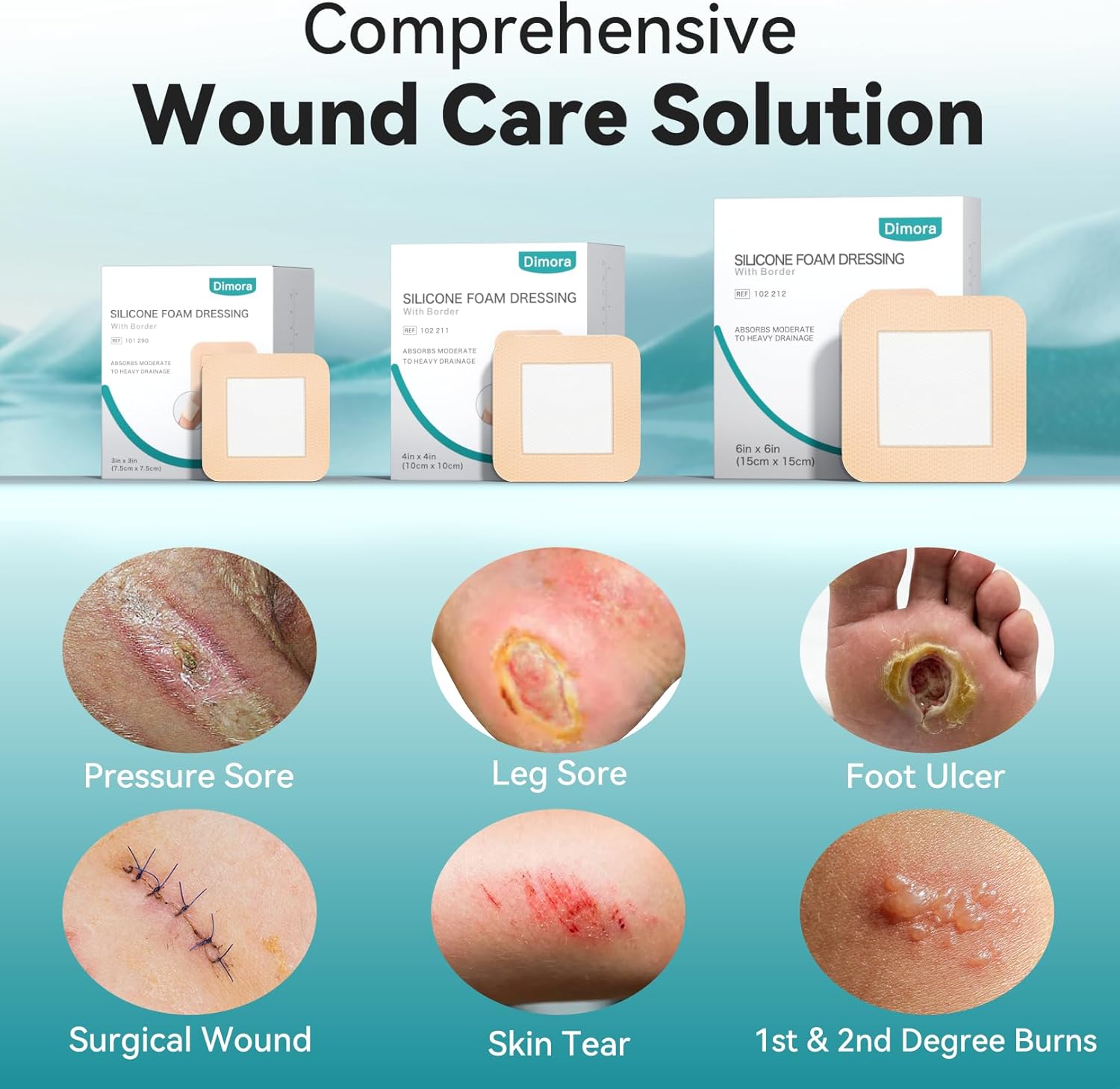
Second, consider drainage level. The product is positioned for moderately to high exudating wounds, including surgical incisions, pressure ulcers/bedsores, venous leg ulcers, neuropathic ulcers, arterial ulcers, post-operative wounds, and even 1st–2nd degree burns (per the listed indications). If your wound is low-drainage, you might prefer something less absorbent.
Finally, the border adhesion is described as “secure but gentle”: it should stick to dry skin while minimizing trauma during changes. Still, adhesion can vary depending on skin condition, moisture, and how much surrounding skin you have for the border to grip.
What you’ll notice in daily use
Imagine you’re caring for a pressure injury and exudate is soaking through typical gauze faster than you’d like. With a silicone foam dressing, the goal is to move from constant worry about leakage to something more predictable: the foam core is meant to maximize absorbency, and the layered design is intended to reduce maceration.
On the change day, the silicone contact layer concept is meant to reduce pain and tissue trauma. It’s not perfect—if the dressing is too dry, if it’s not placed correctly, or if the wound bed is heavily adherent, removal can still be uncomfortable for some people. But compared with non-silicone gauze-style approaches, silicone contact layers are generally the direction you’d want to go when comfort during removal matters.
Mini FAQ
Is this dressing waterproof?
The product description states the PU film layer is waterproof and breathable, meant to act as a liquid barrier while still allowing oxygen and water vapor to pass.
How much drainage is it meant to handle?
The brand claims the foam dressing absorbs up to 15 times the wound fluid using a 5-layer self-adherent design. It’s positioned for moderately to high exudating wounds.
Will it stick to the wound itself?
The contact layer is described as medical-grade hypoallergenic silicone, intended not to stick to moist wound tissue, while still adhering to dry skin via the border.
What wound sizes does it cover?
The 6"x6" border dressing is noted as fitting wounds within approximately 4.3"x4.3" (foam pad size).
Who should be cautious?
If your wound is larger than the foam pad size it’s designed for, or if you need a very low-profile dressing for low-drainage wounds, you may want to reconsider—this product is geared toward absorption and border adhesion for exudating wounds.
Final verdict
This Dimora silicone foam dressing is worth considering if you’re dealing with a wound that needs stronger absorption and you also want a gentler approach to removal thanks to the silicone contact layer. The waterproof yet breathable barrier concept is a plus if you’re trying to protect from outside moisture exposure without sealing the wound area completely.
You may want to skip it if your wound exceeds the listed foam pad coverage area, or if your situation involves very low drainage where a foam dressing could be more than you need. As always, dressing choice depends heavily on wound condition and clinician guidance—so if you’re unsure about the right size or frequency of changes, it’s smart to confirm before committing.