

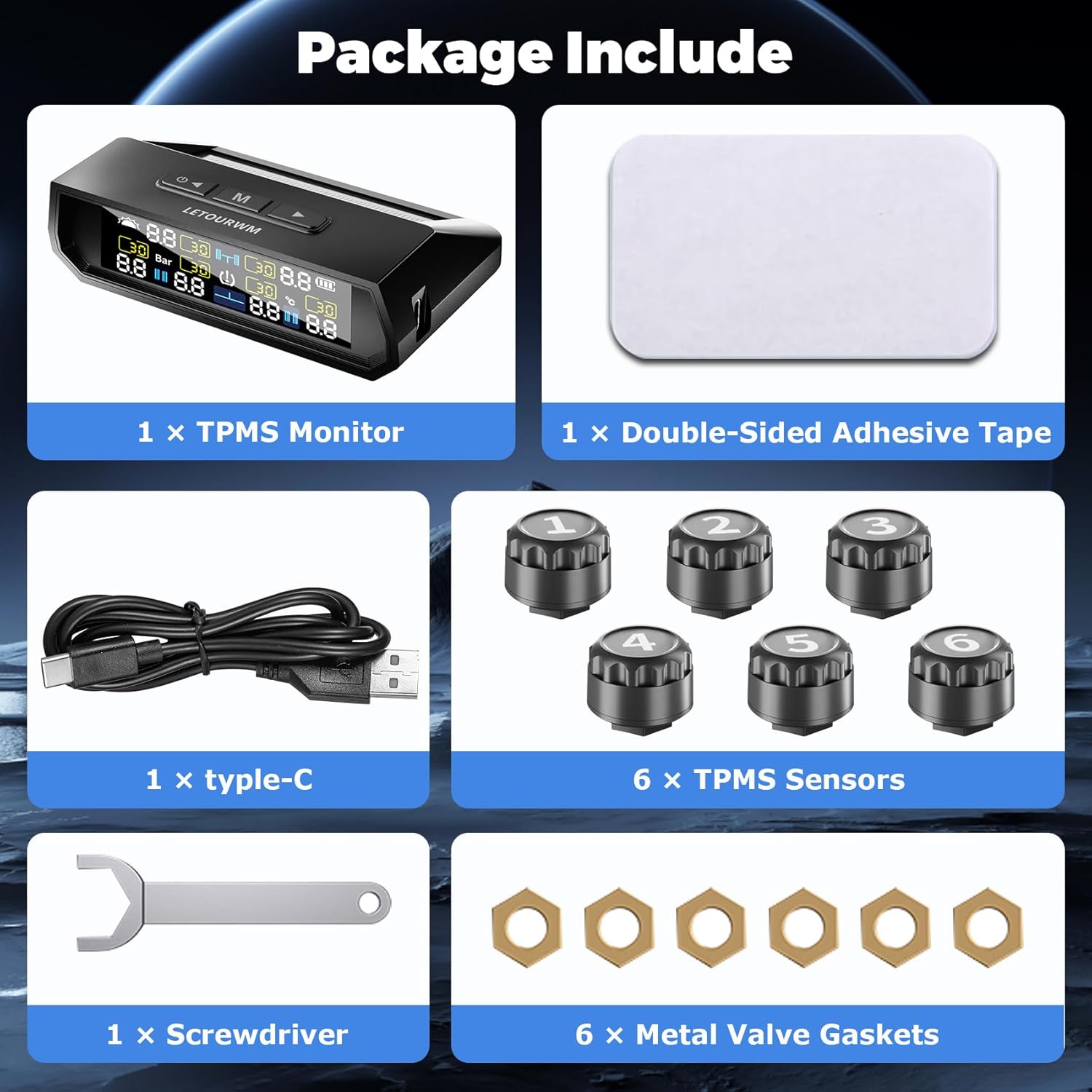
LET0URWM RV Tire Pressure Monitoring System (TPMS) 2025 Upgrade with 6 Sensors, Solar + USB-C, LCD Display, 0-9.9 BAR / 144 PSI
Product description
If you drive an RV or tow regularly, tire issues rarely show up politely. This RV Tire Pressure Monitoring System from LETOURWM is designed to watch pressure and temperature in real time, then make sure you’re alerted fast—so you can respond before a small problem becomes a roadside headache.
The essentials
This is a TPMS setup built around 6 external sensors and a color LCD display. The system monitors tire pressure and temperature continuously, and it’s meant to support multiple alert situations (not just “low pressure”). On paper, that matters because different tire problems can start in different ways—pressure drifting, heat building, or a leak developing.
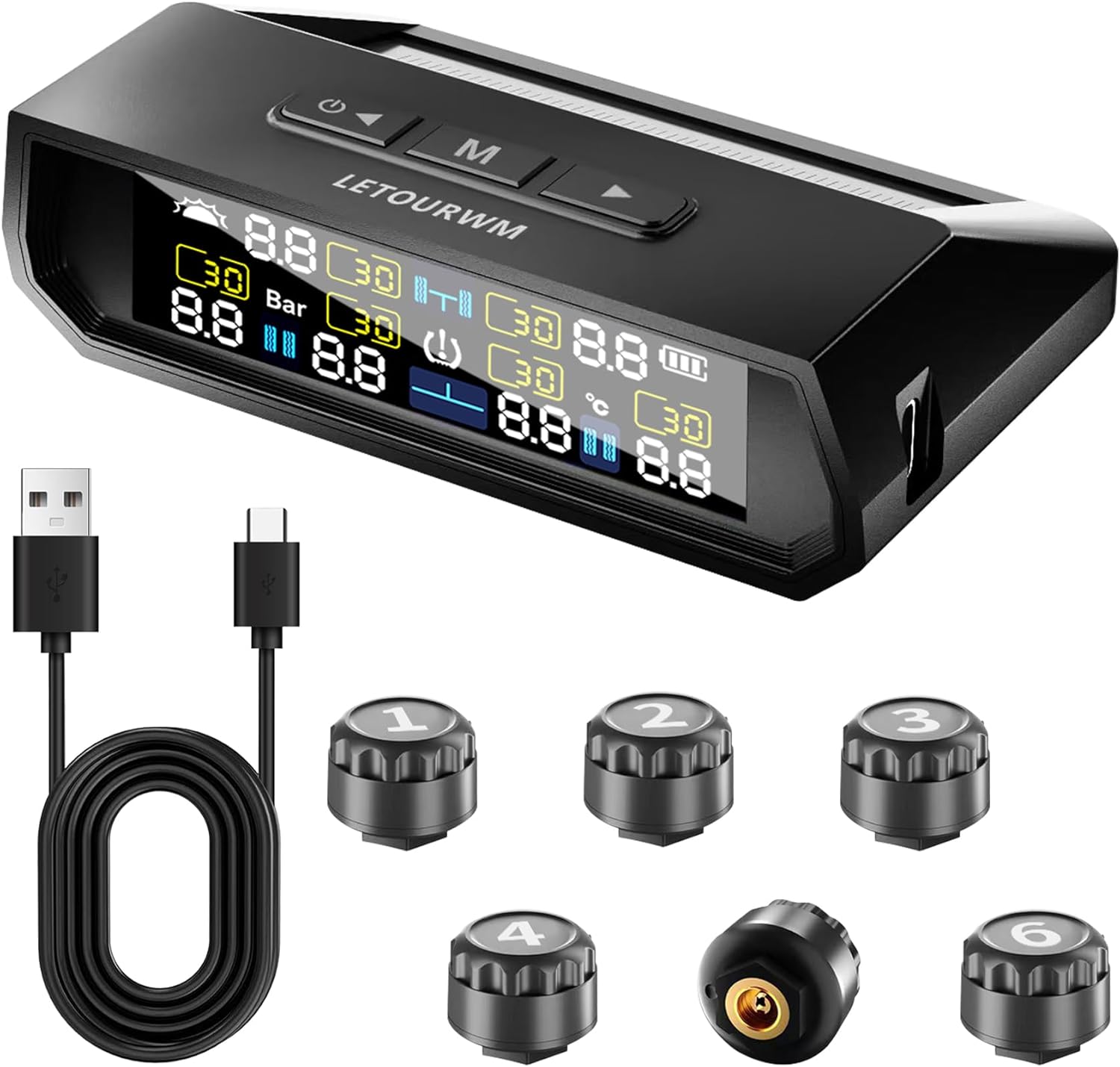
It also leans into power convenience: you get both solar charging and USB Type-C charging. The idea is simple—solar helps keep the sensor set topped up on sunny days, while USB charging acts as a backup when conditions aren’t great. The display is built to be easy to read, with auto brightness and voice alerts so you don’t have to keep taking your eyes off the road.
Key takeaways: what you’ll notice day to day
The biggest practical benefit is the combination of monitoring + fast notification. Instead of checking tires manually each time you stop, the system aims to keep an eye on your tires as you drive.
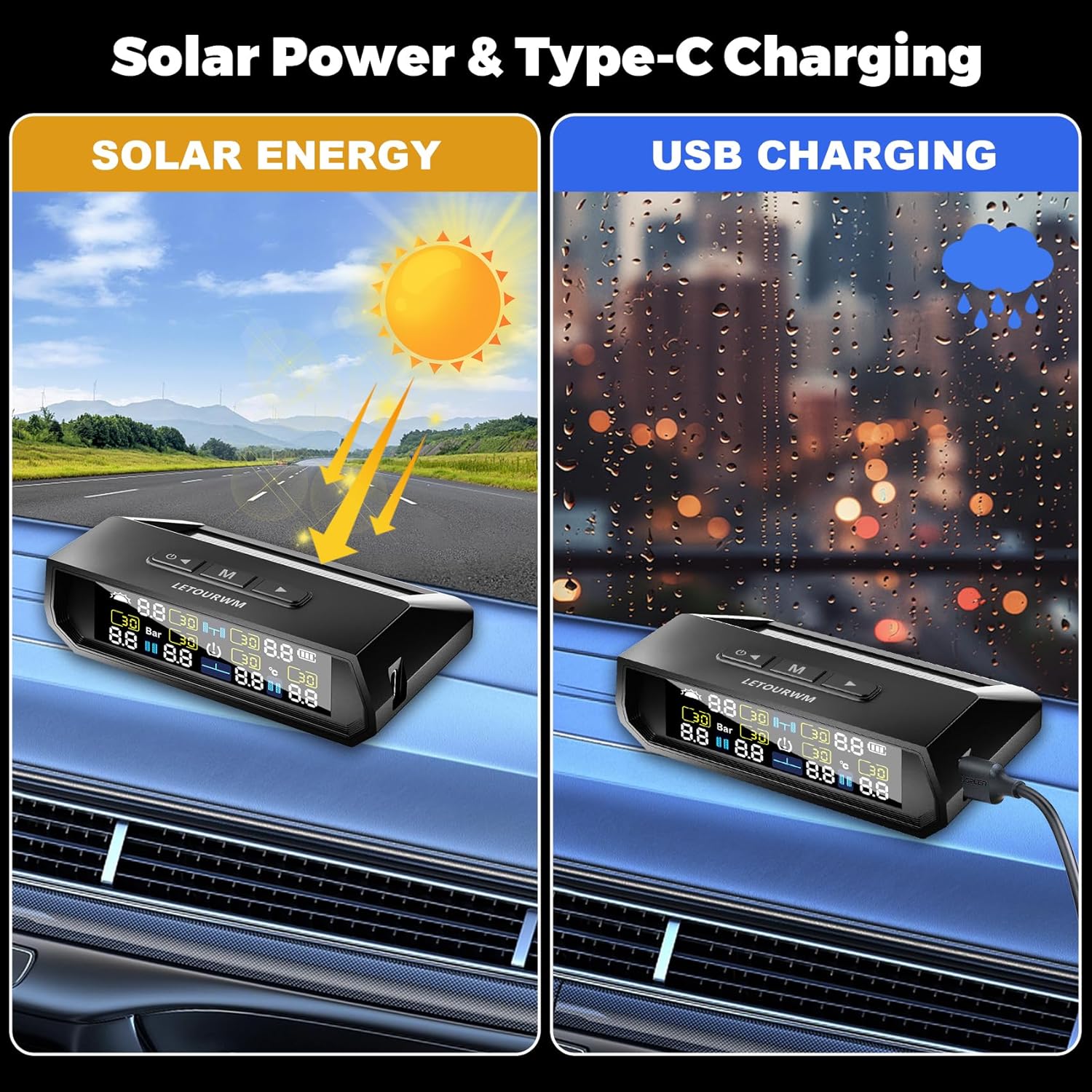
Voice alerts are a particularly “real-world” feature. If you’ve ever stared at a screen while deciding whether something is serious, you already know how distracting it can be. With voice broadcasting, you get a clearer signal immediately. And since the unit supports multiple alarm modes, it’s not limited to a single kind of warning.
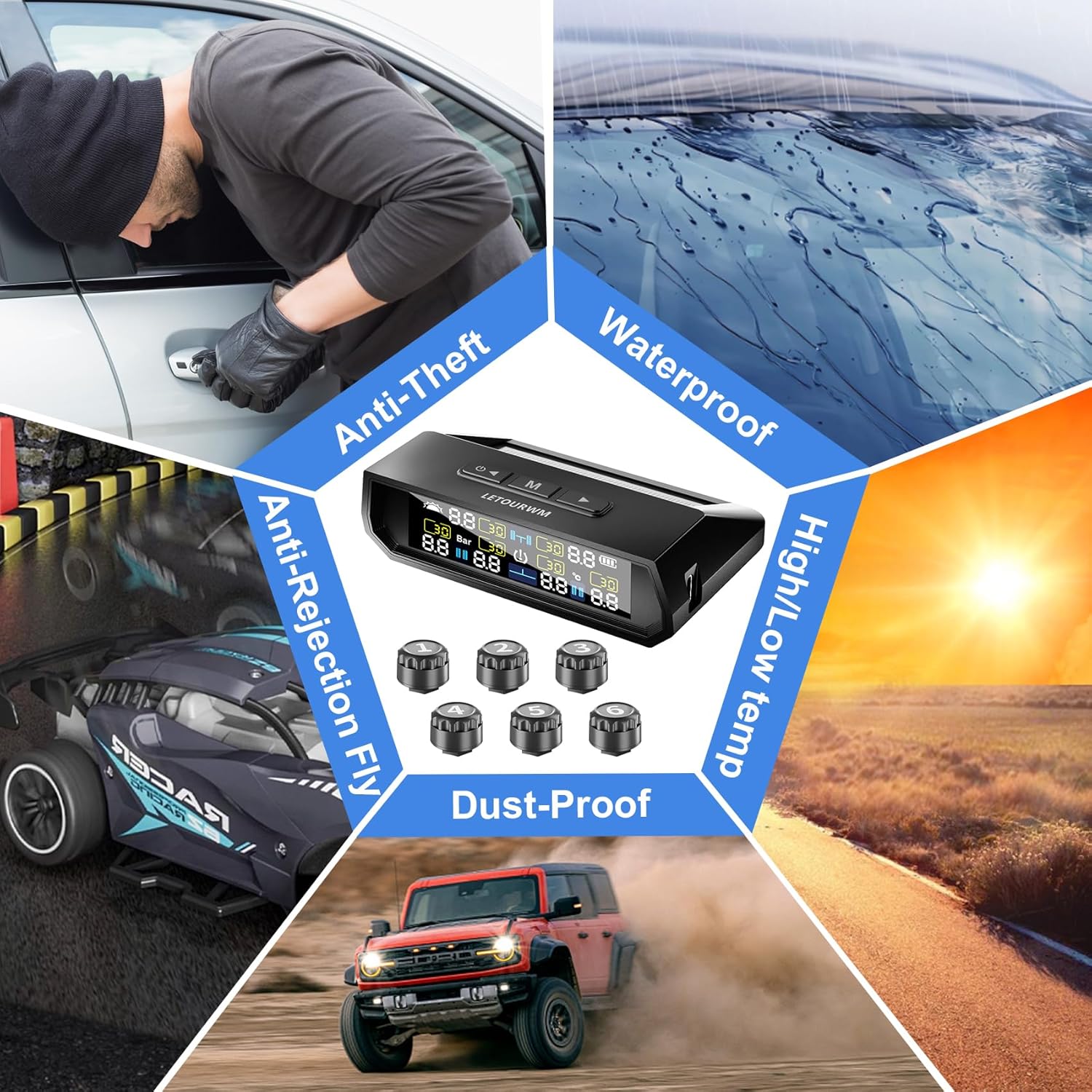
One detail worth noting: it uses an IP68 weather rating “for RV/Trailer/Truck” class use, so it’s positioned for dust and water exposure. Still, any sensor system is only as reliable as proper installation—if a sensor isn’t seated correctly on the valve area, you may not get the behavior you expect.
What matters most for buying: range, alerts, and installation
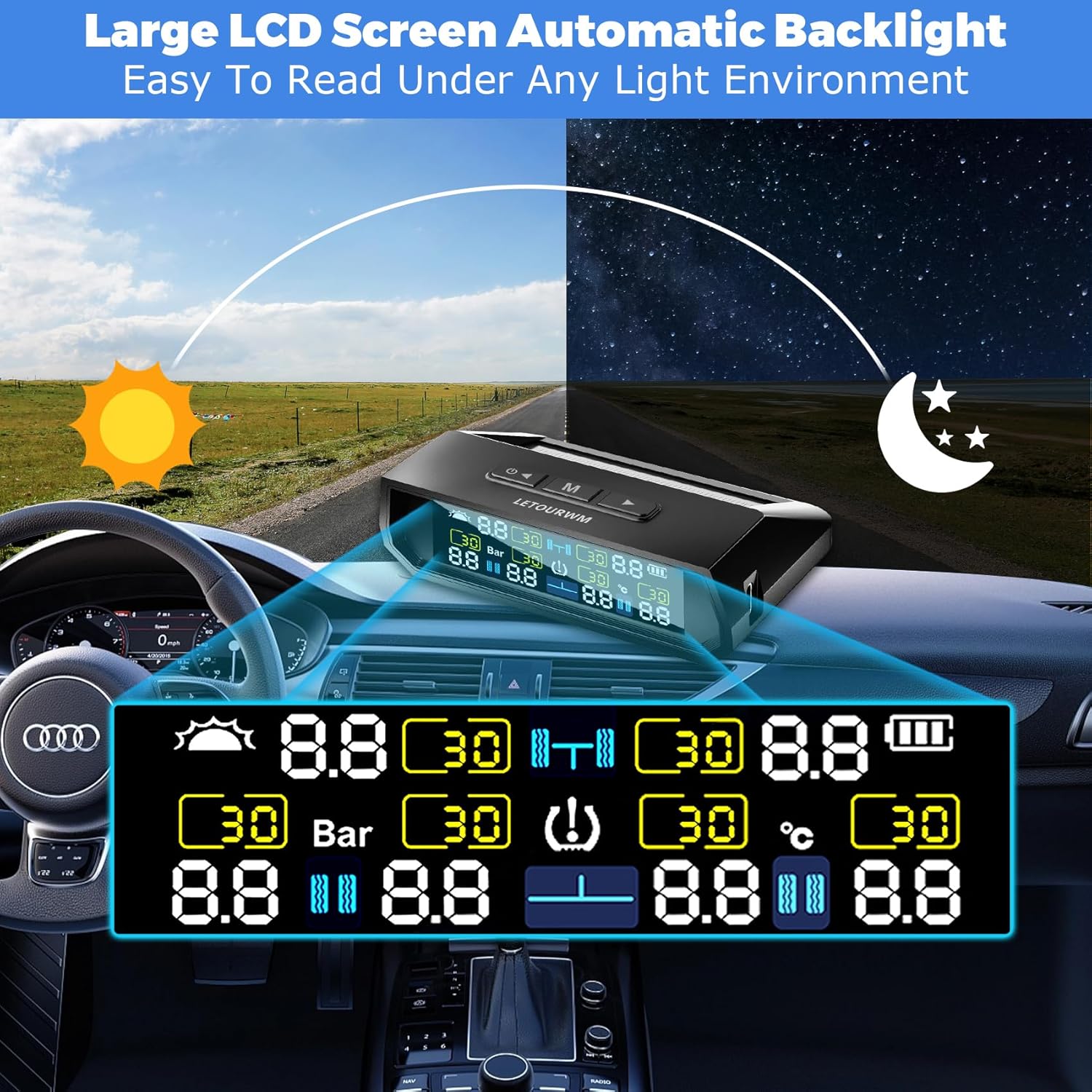
This system is designed around an “external sensors screw onto the tire valve” approach, with the manufacturer claiming installation in about 2 minutes and no wiring or tire removal needed. For many RV owners, that’s a big selling point because it reduces downtime.
It’s also marketed with an 80-foot range for the display to receive data from the sensors. That’s relevant if your RV setup places the monitor somewhere not right next to the wheels.
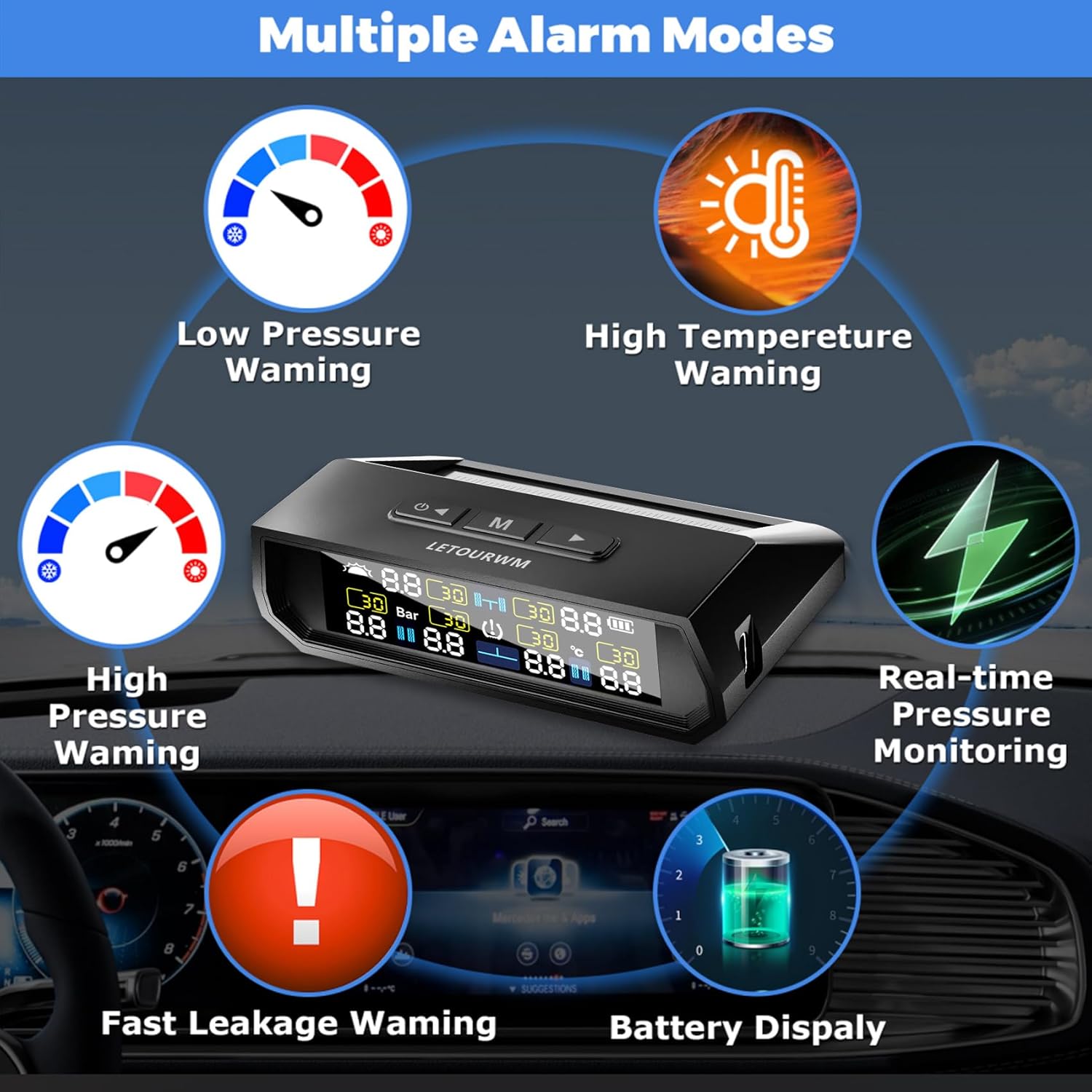
On alert coverage, the base description lists multiple alarm types: high/low pressure, high temperature, rapid/slow leaks, sensor failure, and low battery. If you want a TPMS that covers more than basic low-pressure warnings, these modes are the core reason it exists.
Tech specs (quick overview)
- Type: Tire pressure monitoring system (TPMS) for RV/trailer/truck use
- Sensors: 6 external sensors
- Detection/monitoring range: 0–144 PSI (also shown as 0–9.9 BAR)
- Charging: Solar charging + USB Type-C backup charging
- Display: Color LCD with auto brightness and voice alerts
- Alarm coverage: high/low pressure, high temperature, rapid/slow leaks, sensor failure, low battery (6 alarm modes)
- Weather resistance: IP68
- Claimed installation time: about 2 minutes (sensors screw onto tire valve)
- Claimed communication range: 80-foot range
Who it suits best (and who should pause)

It’s a solid pick if you routinely drive an RV, trailer, pickup, or similar vehicles where tire monitoring helps you stay ahead—especially when you’d rather not rely only on visual checks.
It may not be the best match if you’re looking for a truly “set and forget” system with zero installation effort. Even with the simple valve-sensor approach, you still need to mount the sensors correctly and keep an eye on the battery/charging behavior.
And if you’re only concerned about one basic issue (like just low pressure), you might feel this setup is more features than you need. On the other hand, if your goal is broader protection, the multiple alarm modes are where it earns its keep.
Practical use example (what this looks like on a trip)
Imagine you’re loading up for a weekend trip and you’re about to hit the highway. Instead of doing a manual tire check right before departure and then hoping everything stays stable, you can monitor pressure and temperature continuously. If something shifts—say, a pressure drop pattern or a temperature rise—the system is intended to alert you with voice notifications so you can pull over safely and check the tire without guessing.
When it makes sense
Buy it if you want multi-situation TPMS monitoring (pressure, temperature, leak patterns, and sensor/battery alerts) plus solar + USB-C charging, all wrapped in a display meant to be readable day or night.
Skip it or think twice if you don’t plan to use it on vehicles where sensors are relevant, or if you’re the type of buyer who only wants the simplest low-pressure warning and nothing more.
Is it worth it?
Worth considering if you drive RVs, trailers, or similar vehicles and want a TPMS that covers more than one kind of tire problem—plus a display with voice alerts and auto brightness to make warnings easier to catch while driving. The solar + USB Type-C charging also reduces the “where’s the charger?” stress on long stretches.
It may not be a great match if you’re expecting zero-effort ownership or you only need one narrow warning type. Like any sensor-based monitoring system, installation quality and proper sensor seating will matter for getting consistent behavior.