

HDMI to RCA Converter 1080p AV Adapter
Product description
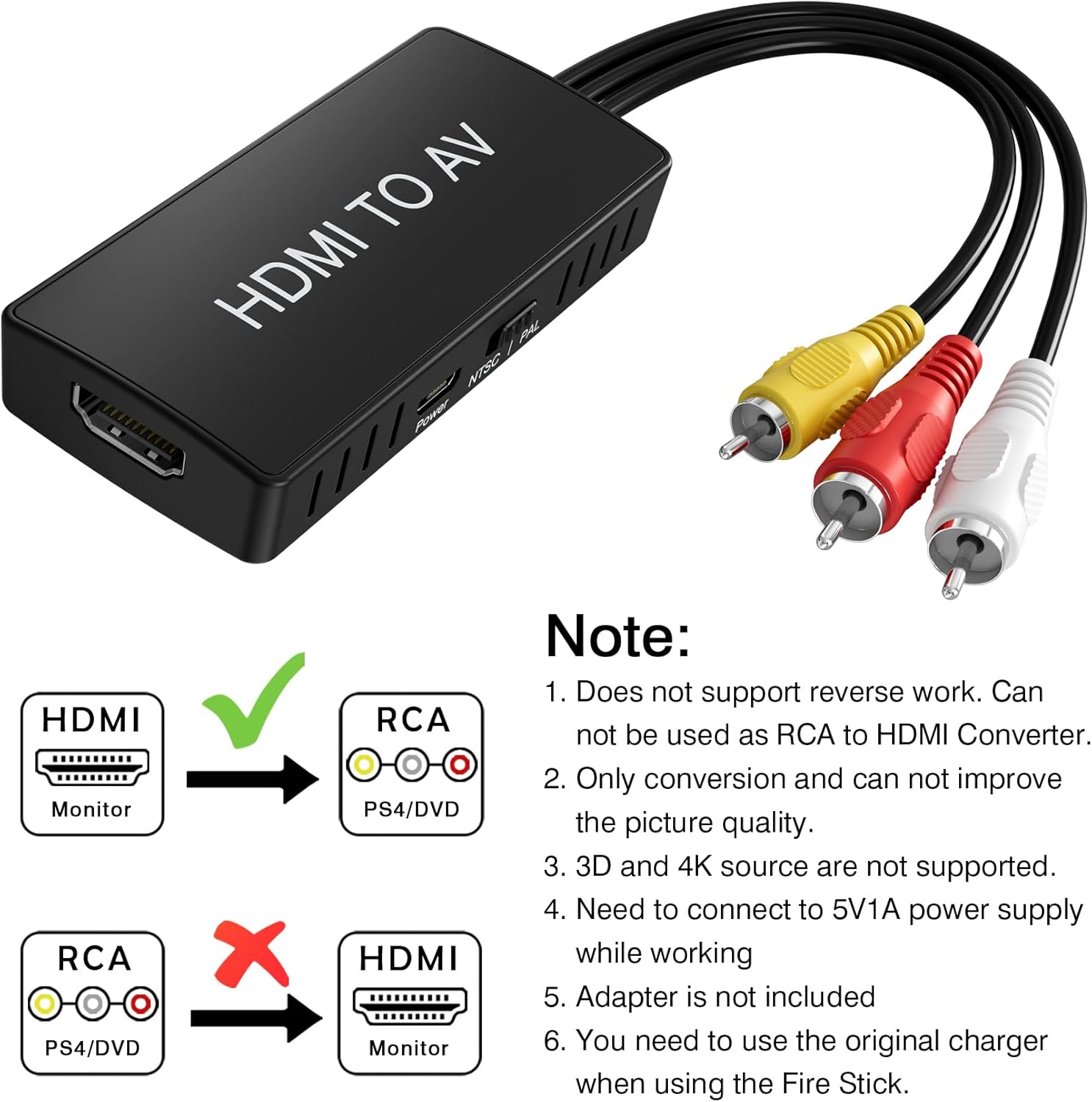
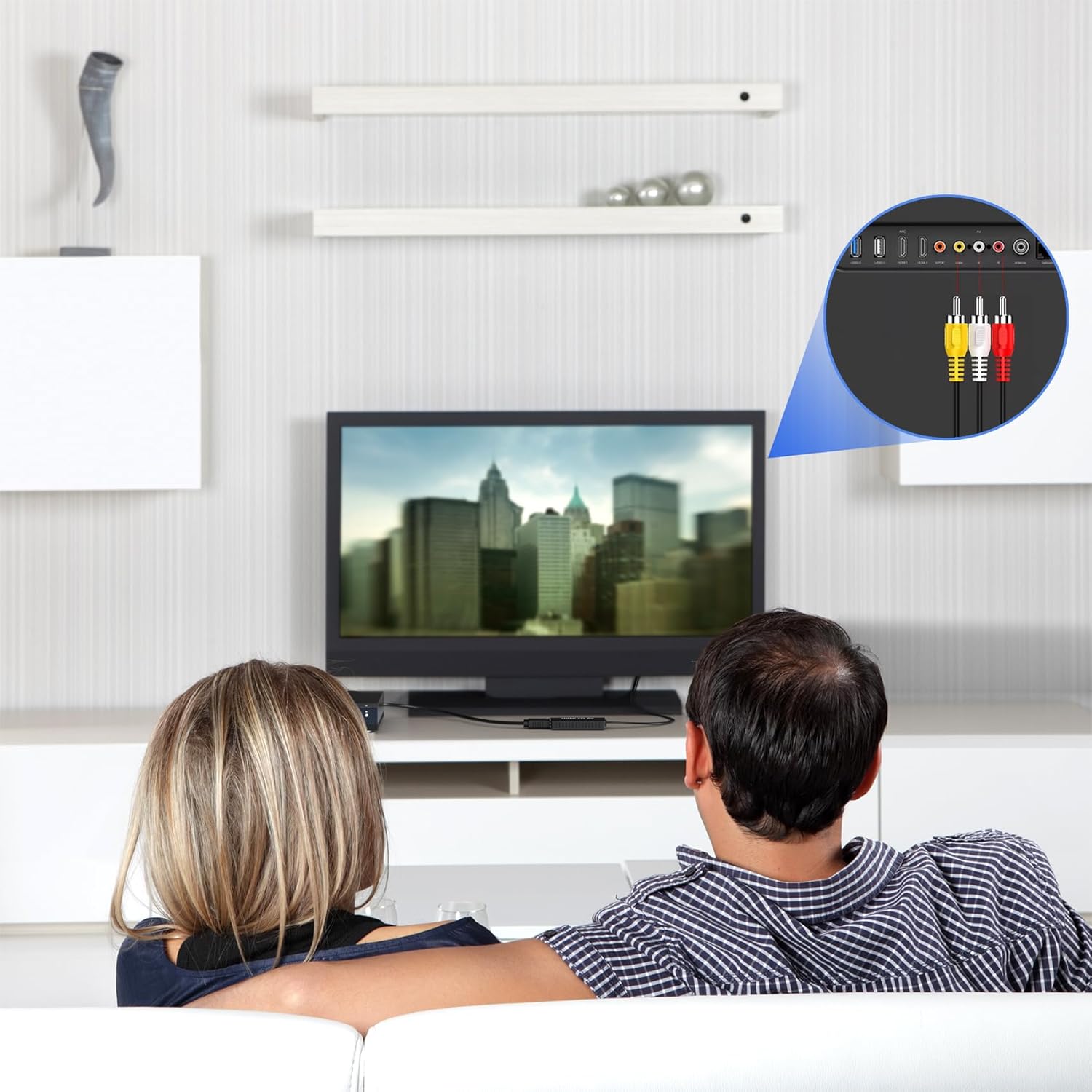
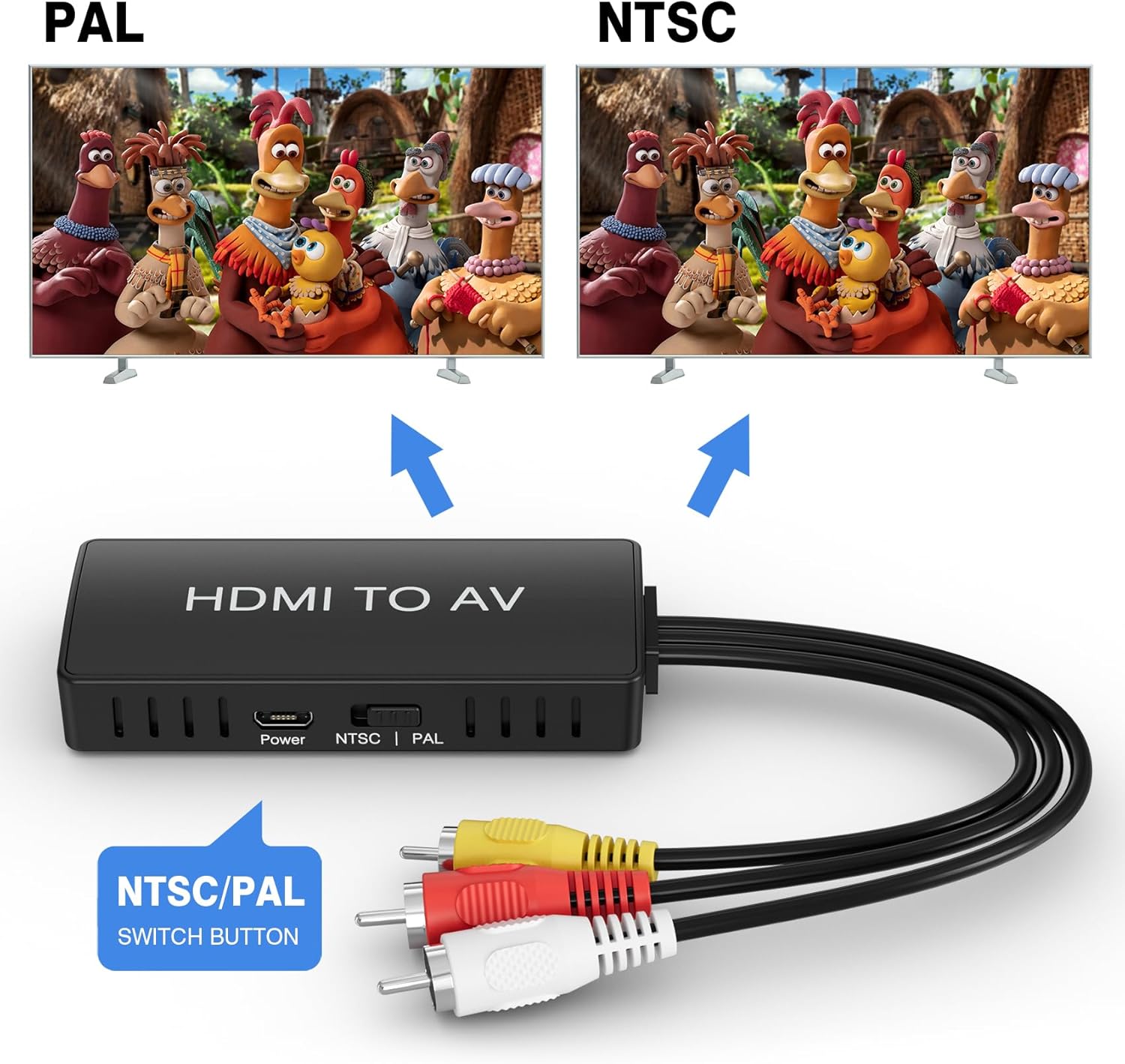
This compact HDMI to RCA converter lets modern HDMI devices connect to older TVs and projectors that only accept composite video and stereo audio. It converts digital HDMI output into analog AV (3RCA) signals and includes a switchable PAL/NTSC output so you can match regional standards when needed, making it useful for streaming sticks, set-top boxes, and legacy displays.
Key Points
The adapter converts HDMI to composite video plus left and right audio, so you can use a Roku or Android TV box with an old CRT or projector. It includes a manual PAL/NTSC selector to fix black-and-white or incompatible images by switching formats quickly. Note that the unit requires external 5V USB power and does not support mobile phones, tablets, or 3D video sources. ⚡️
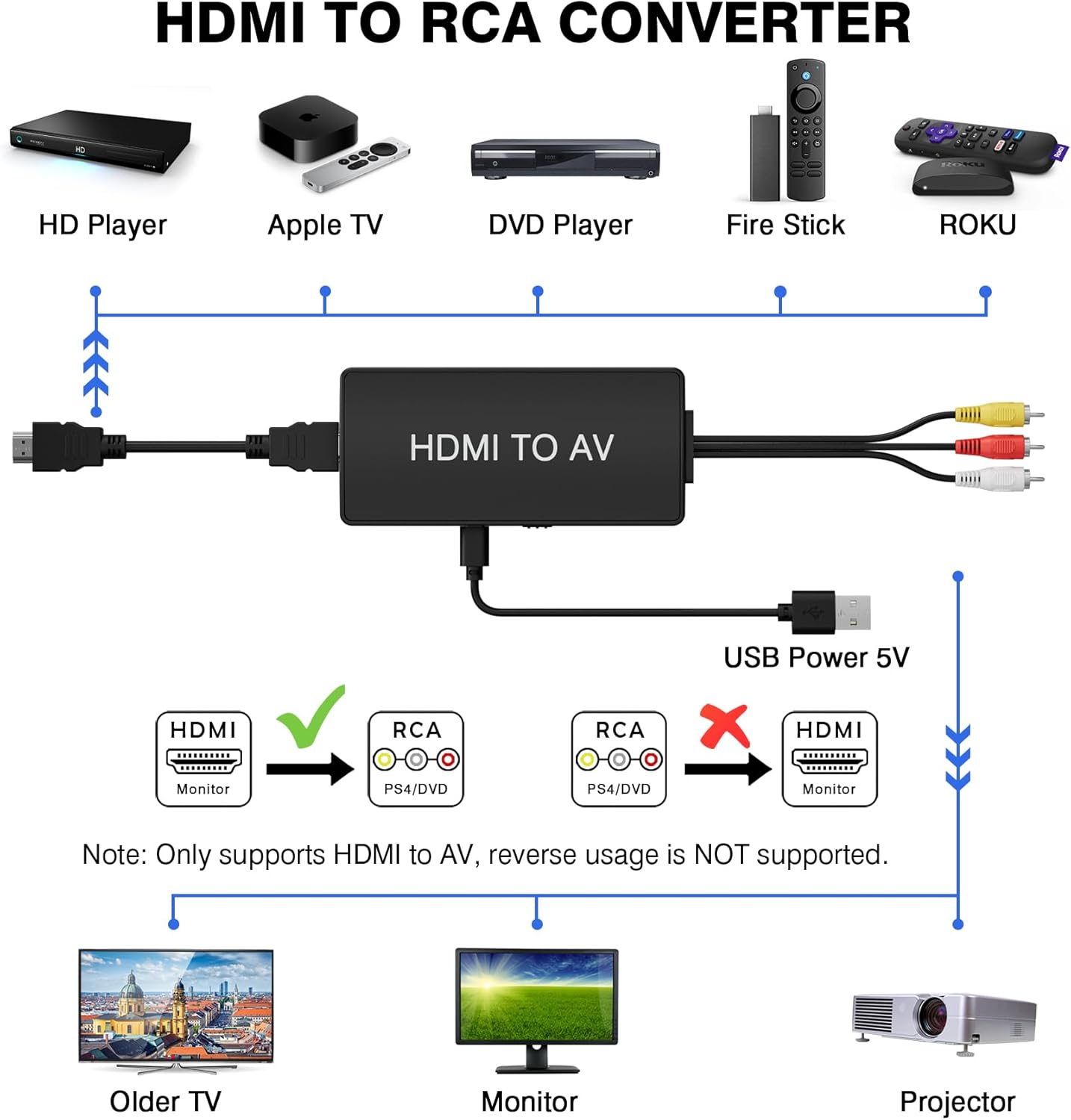
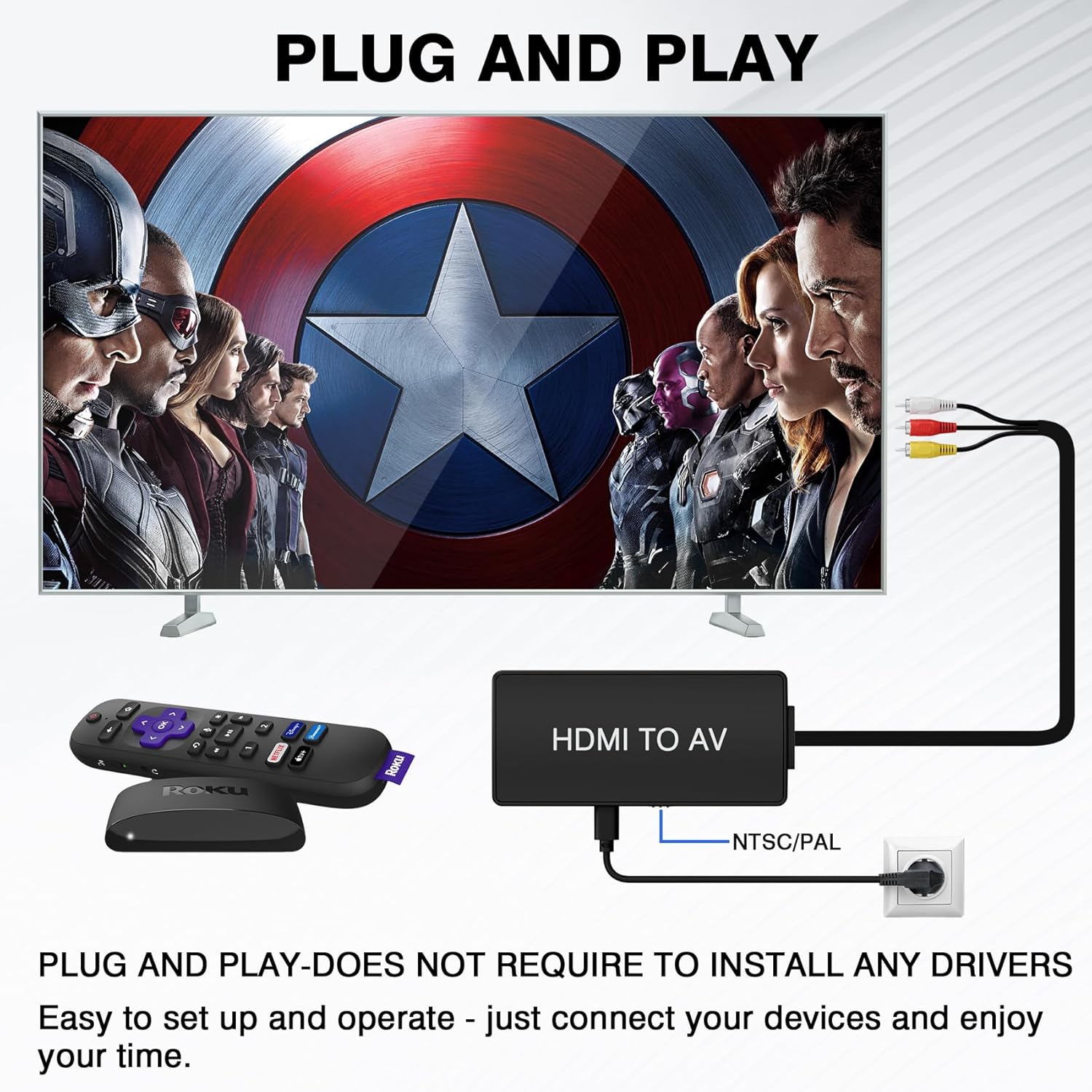
Compatibility covers a broad range of HDMI sources including streaming sticks, DVD and Blu-ray players, consoles like Xbox and PlayStation, and PCs. The device performs one-way conversion from HDMI to AV only, so it will not pass signals in the reverse direction. This converter is plug and play, requiring no drivers for operation. 🔌
Technical Specifications
- Name: HDMI to RCA Converter (HDMI to AV 3RCA Composite)
- Input: HDMI (digital)
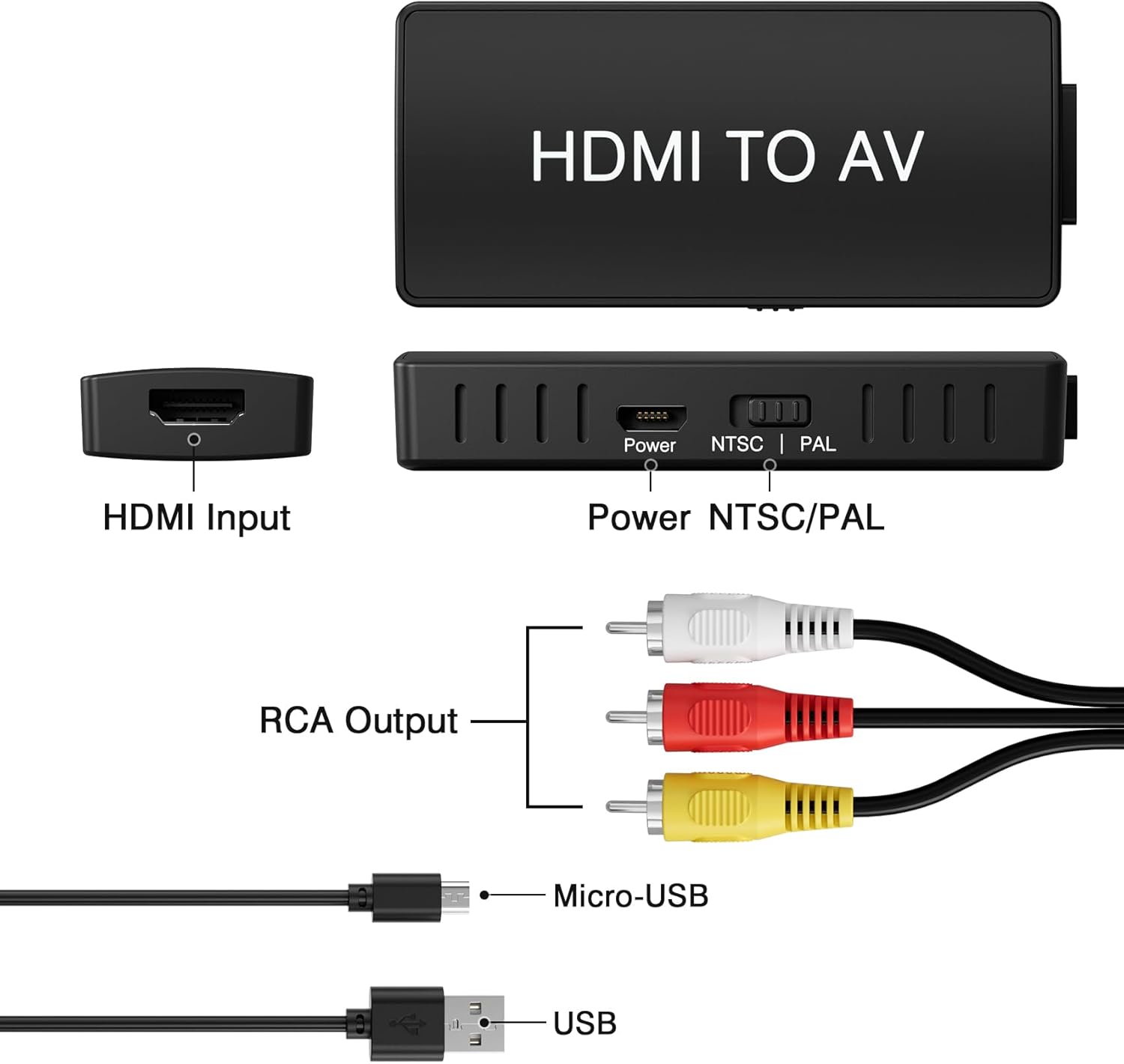
- Output: RCA composite video and L/R stereo audio (analog)
- Video formats supported: PAL, NTSC (switch selectable)
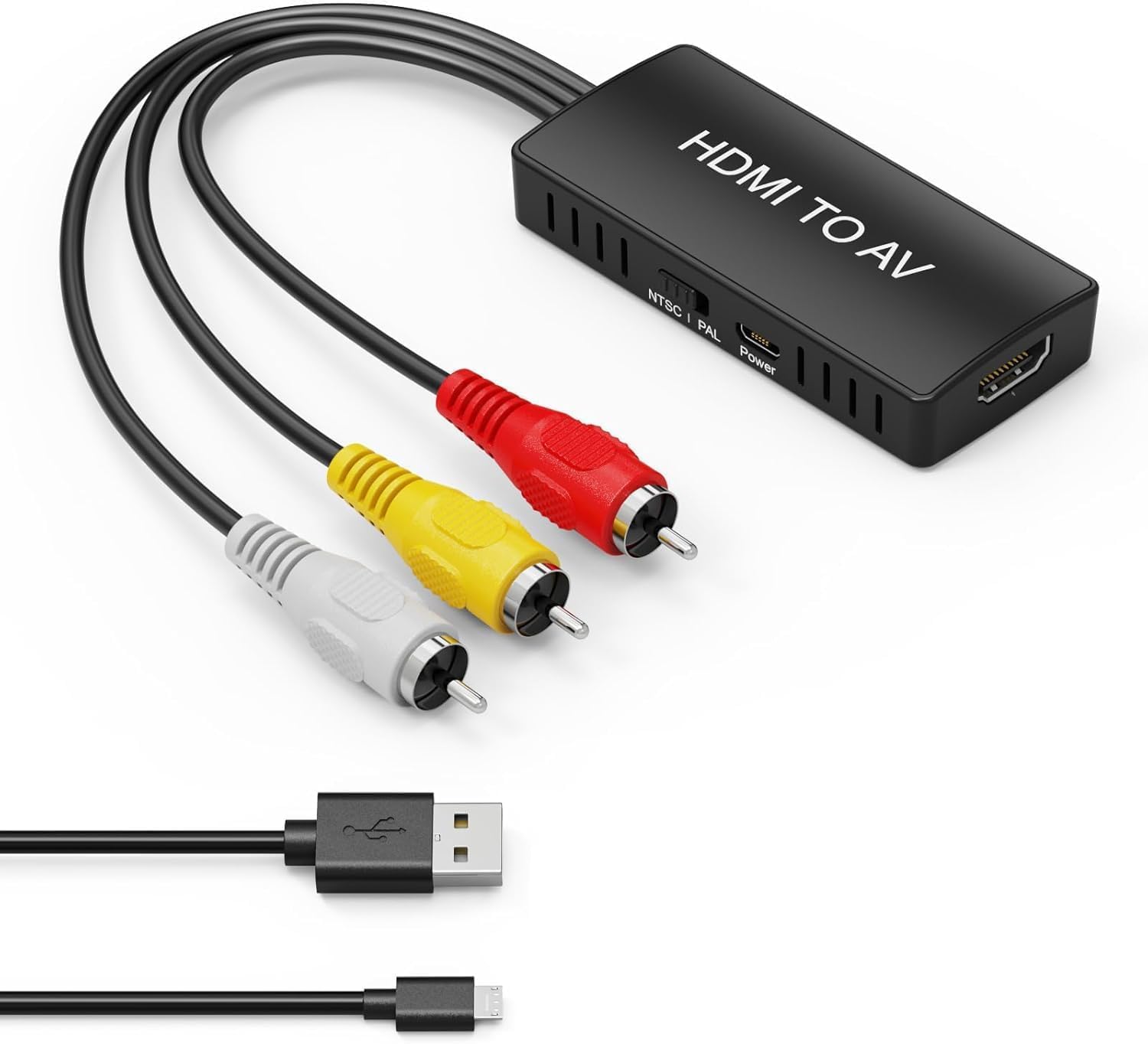
- Power: 5V via Micro USB (power adapter not included)
- Package contents: 1x converter, 1x Micro USB cable, 1x user manual
Usage Recommendations
When you see monochrome output on an older display, toggle the PAL/NTSC switch to match the television standard in your region, for example set to NTSC for the United States. For sources that draw more power from the HDMI port, connect the included Micro USB cable to a 5V USB power supply to ensure stable operation and avoid signal dropouts. 🎛️
Place the converter close to the display to keep RCA cable runs short, which helps reduce interference and maintains better picture quality. Keep in mind that composite output is standard-definition analog video, so image detail will be limited compared with HDMI and may show compression or color differences when converted from high-definition sources.