


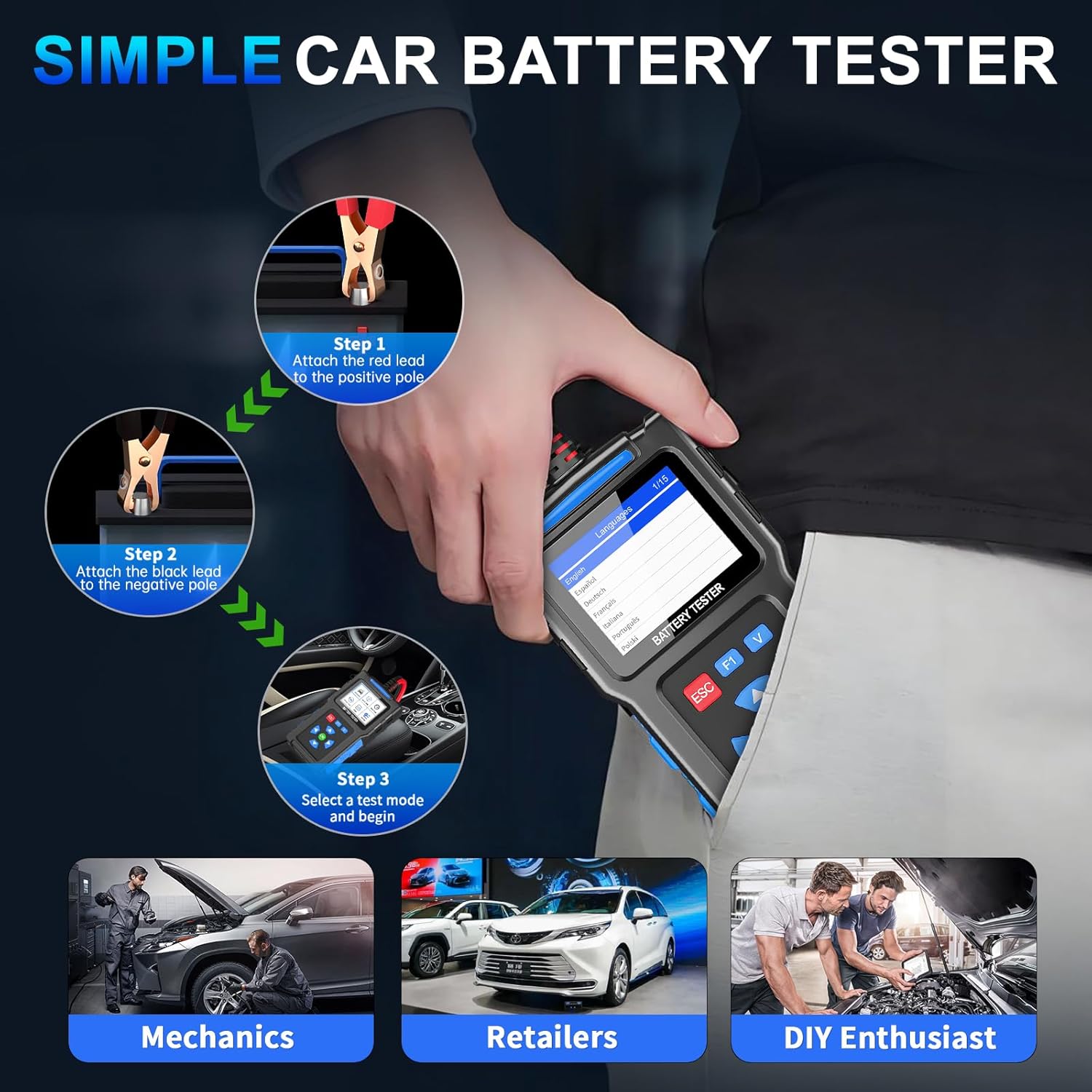
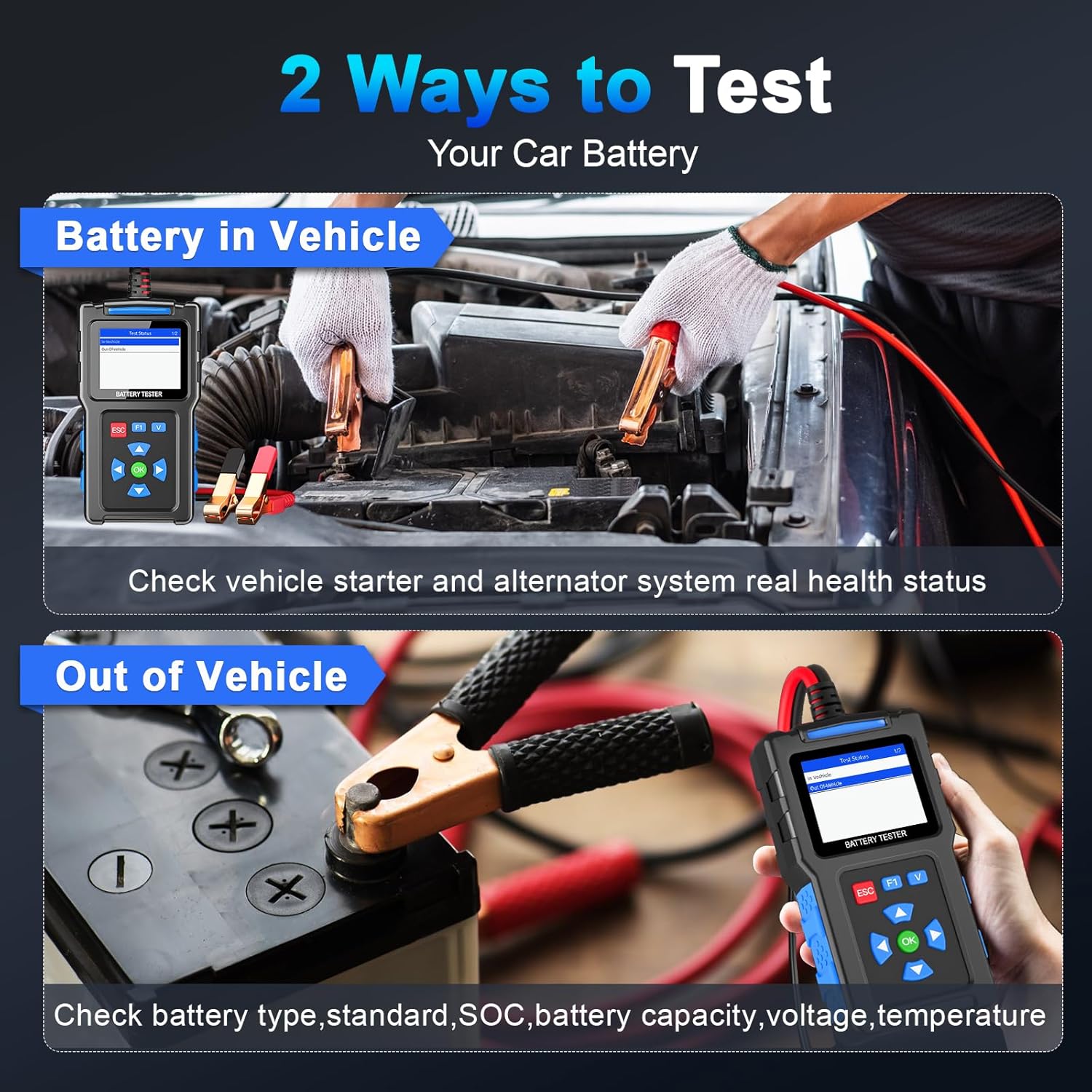
BT300 Battery Load Tester 12V, 20–2000 CCA car tester
Product description
This compact automotive load tester checks battery condition and the charging and cranking systems so you can diagnose starting issues quickly. The BT300 model works with 12V and 24V lead-acid systems and gives a clear readout of state of health, state of charge and CCA in about 10 seconds according to the manufacturer. Ideal for troubleshooting cars, trucks, motorcycles, boats and RVs when you need fast, actionable information.
Key Points
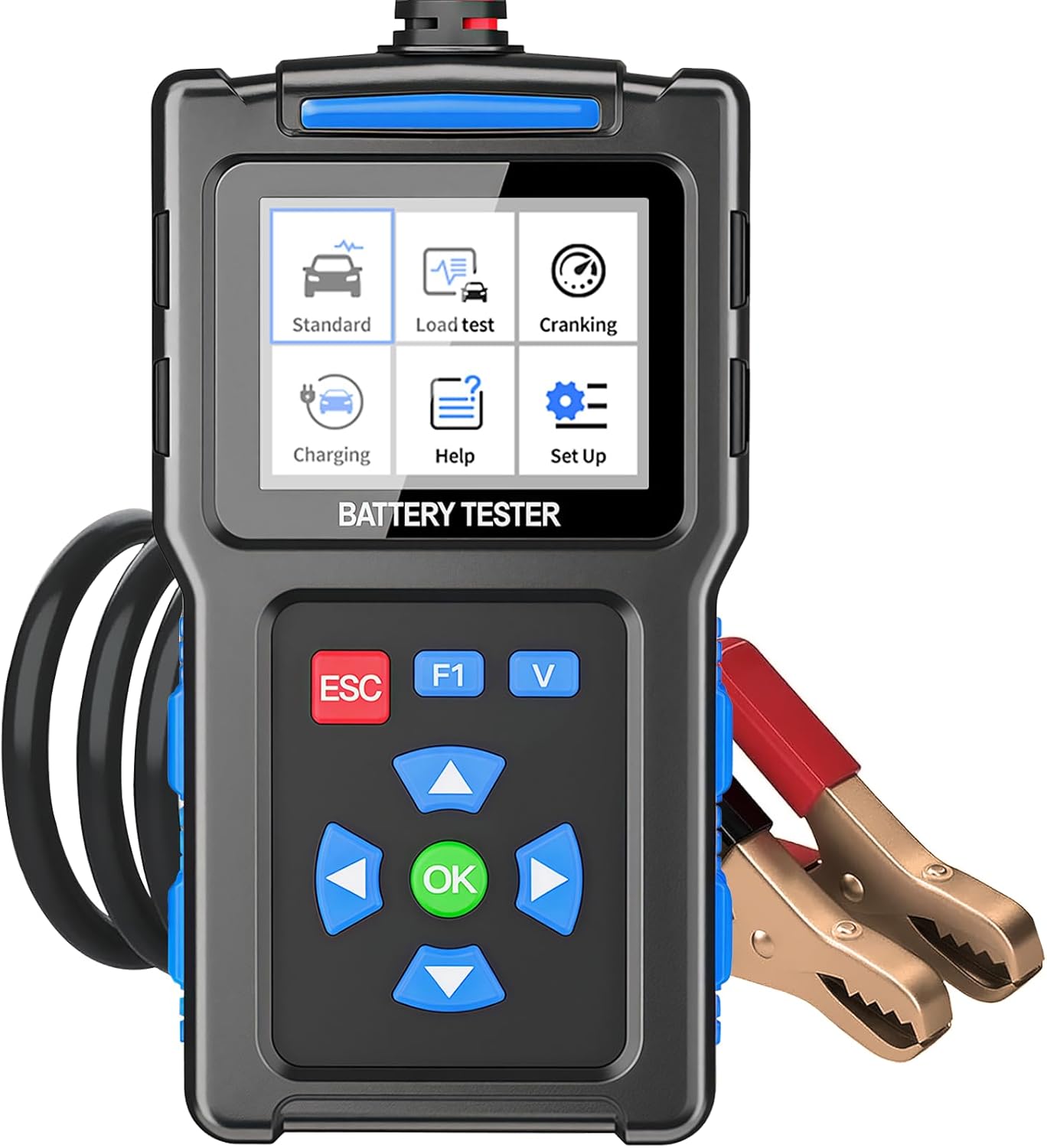
The tester performs both quick and standard tests, offering an option to input battery AH for faster results or to run a standard test with no manual values. It supports multiple battery formats including conventional lead-acid, AGM flat, AGM spiral and gel types. Note that it is not compatible with 6V batteries and is not suitable for lithium battery chemistries. The unit features a backlit LCD and one-button operation to simplify use for mechanics and DIY users alike.

Technical Specifications
- Name: TopDiag BT300 Battery Load Tester
- Voltage support: 12V and 24V
- Battery standards: CCA, JIS, GB, SAE, MCA, CA, DIN, IEC, EN, BCI
- Battery types: Lead-acid, AGM flat, AGM spiral, gel
- Display: Backlit LCD
Usage Recommendations
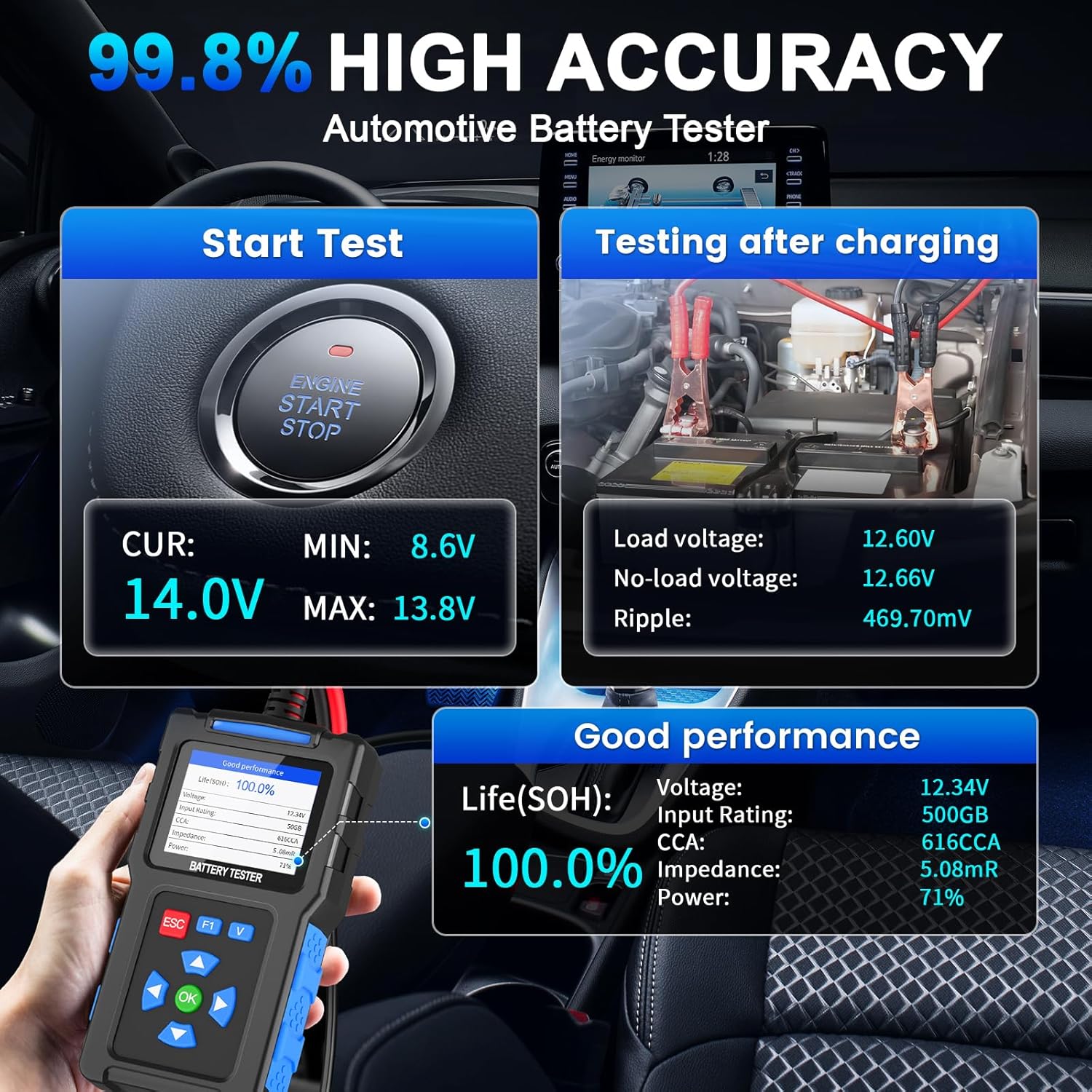

Connect the tester directly to the vehicle battery terminals to power the device, because it is not rechargeable and draws power from the battery during testing. Run a quick test when you want a fast health snapshot, or choose the standard test for a more thorough measurement without entering AH values. For alternator and cranking evaluation, use the charging and cranking test modes to see whether the starting and charging systems are delivering expected performance.
Advantages
The BT300 includes intelligent chip processing to provide reliable diagnostics, which can reduce guesswork when pinpointing battery or charging faults. Firmware updates are available via USB to keep compatibility current. The multilingual interface supports several languages according to the manufacturer, making it convenient for users in different regions.
Practical Tips
When testing, ensure good clamp contact and a stable battery connection to avoid false readings. Consider that very old or heavily sulfated batteries may give inconsistent results and could require repeated testing or professional assessment. Firmware updates require a PC and the provided USB cable, which is for updates only and not for charging the device.