


BOSS R1100M Car Amplifier 1100W 🔊
Product description
This monoblock car amplifier brings powerful low end to any subwoofer setup, balancing compact size with notable output for a trunk or hatch install. The unit suits drivers who want stronger bass without a bulky amp, and it supports both speaker and RCA level inputs for flexible integration. The first paragraph includes the long-tail keyword monoblock car amplifier to match search intent and highlight its core use cases.
Key features
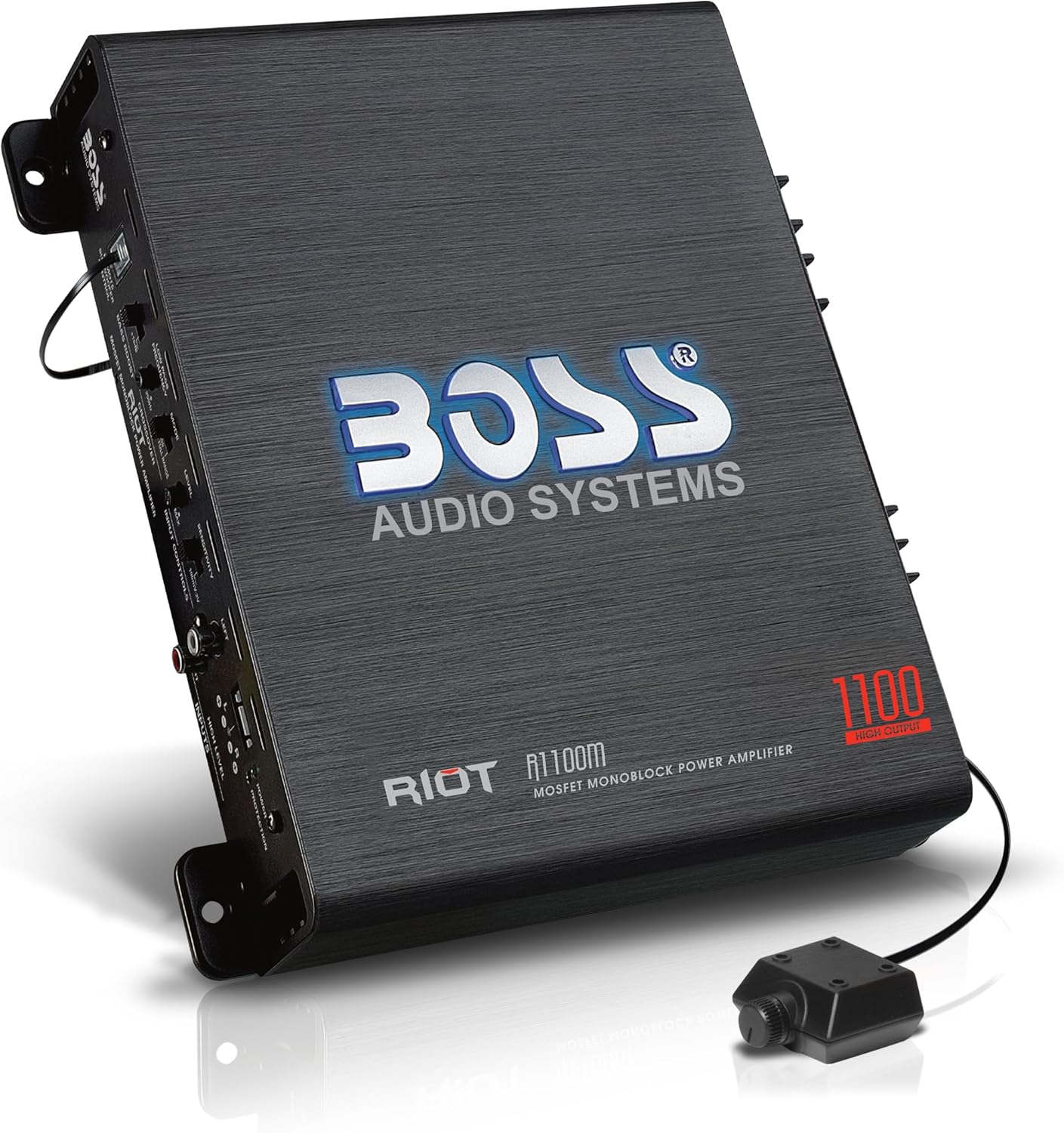
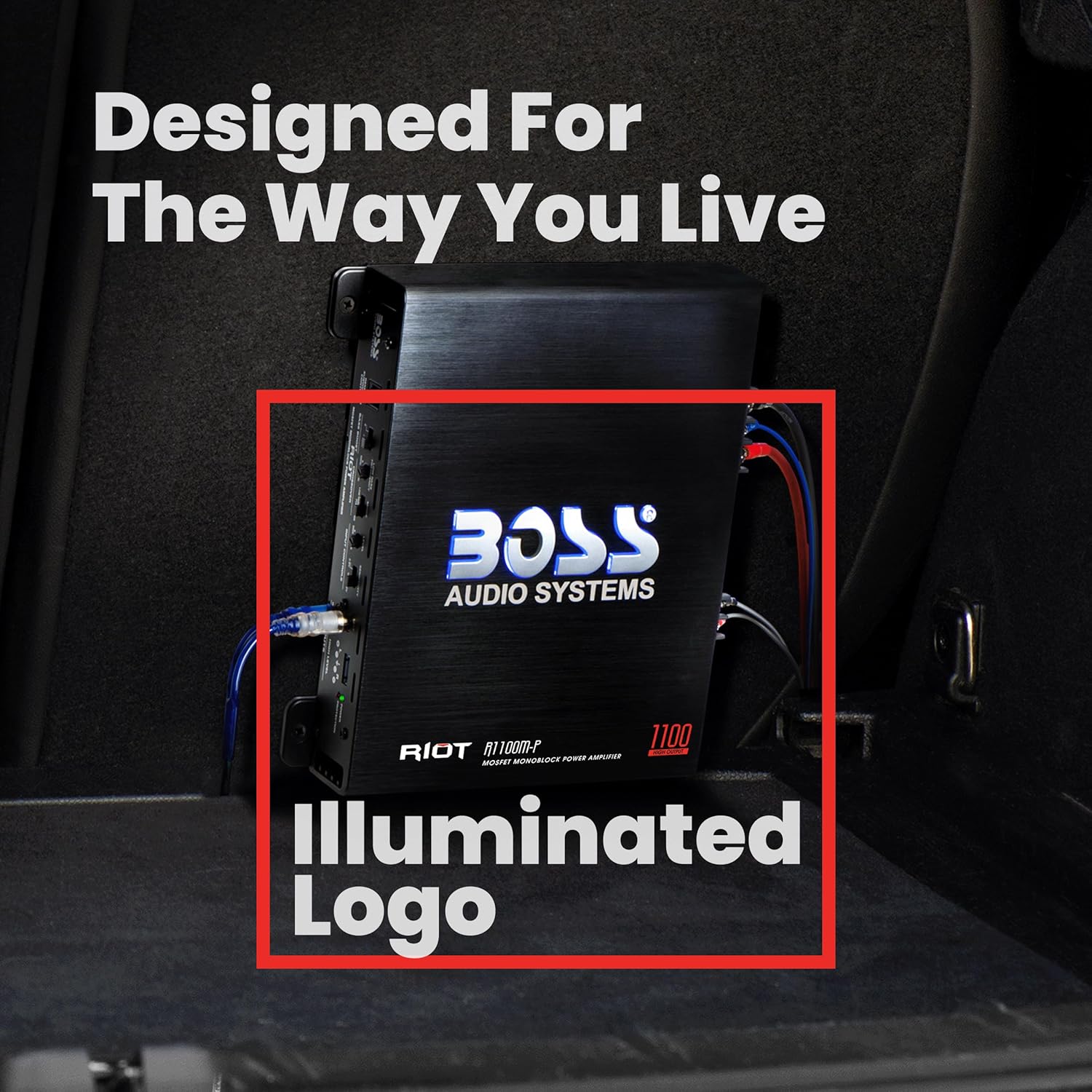
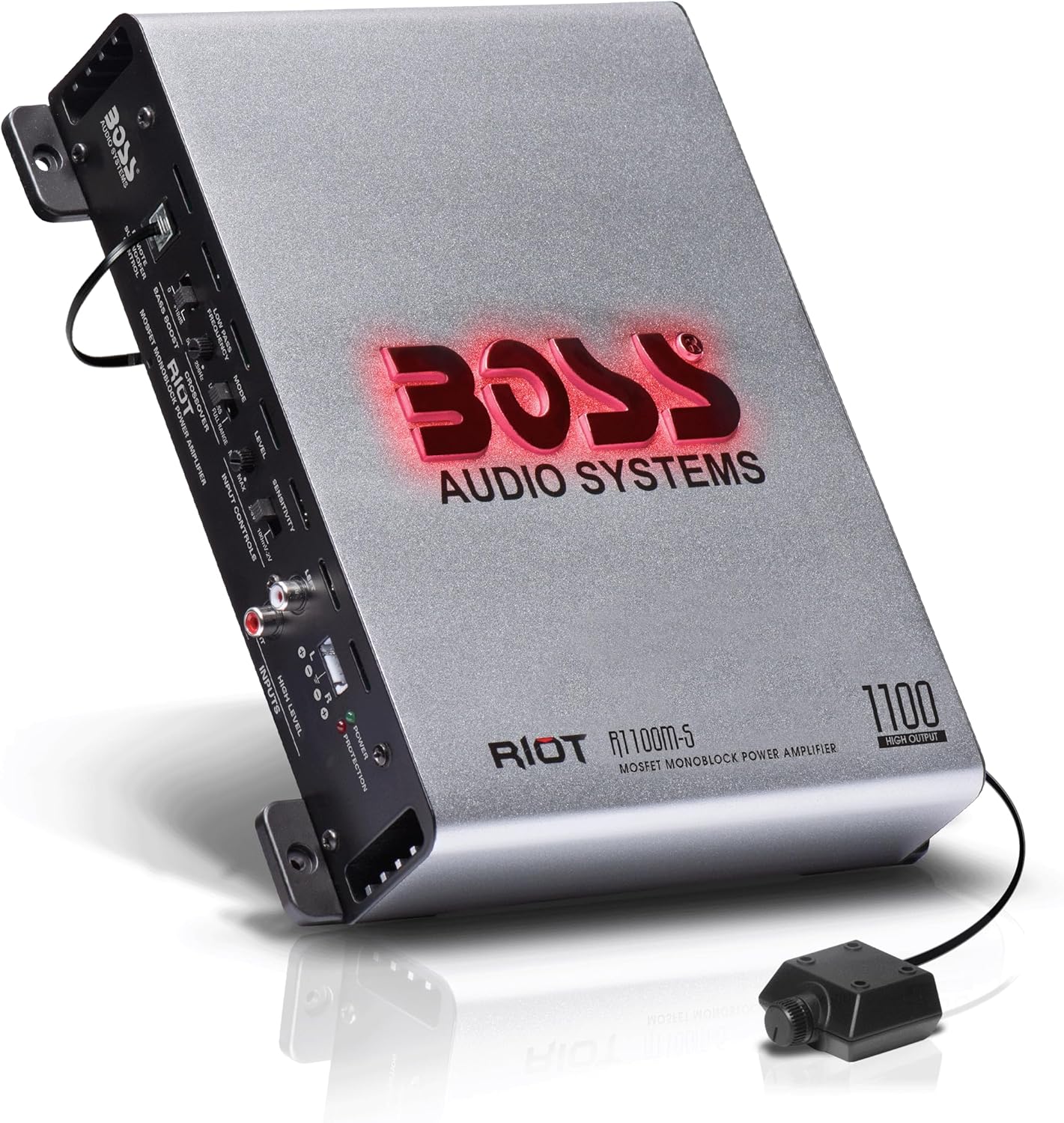
The amplifier delivers a focused bass performance thanks to its low pass filter and dedicated bass boost, which help shape sub frequencies without muddying the rest of the system. Installation is straightforward for a professional, and the illuminated logo offers a clean look under the hood or behind a panel. Thermal and overload protection circuits add reliability during extended listening sessions. The MOSFET power architecture supports stable current delivery and helps the amp keep consistent output as demand rises. This section mentions the product by type and use while keeping the tone practical and neutral.

Technical details
-
Name: BOSS R1100M Monoblock Car Amplifier
-
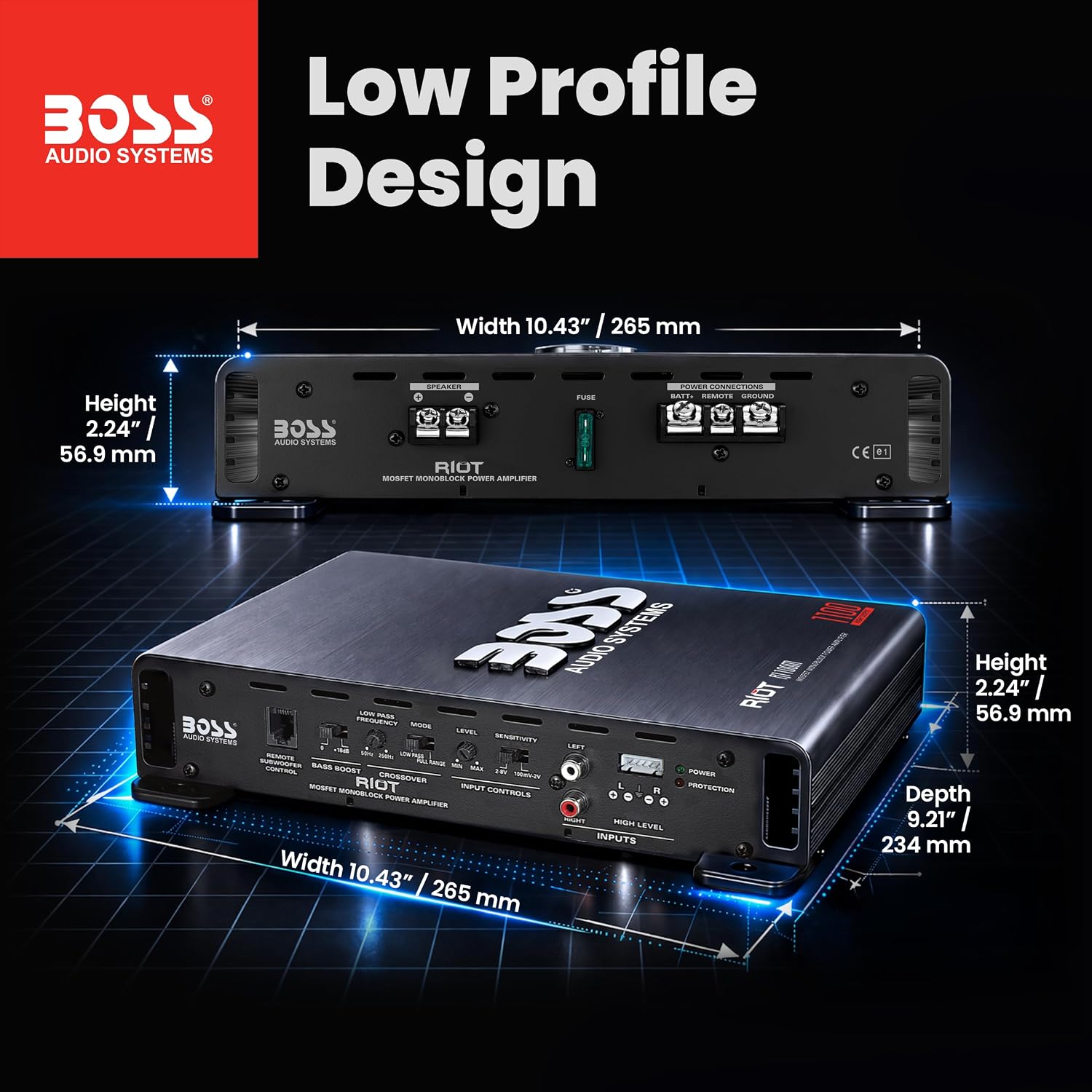
Dimensions: 10.43 x 9.21 x 2.25 inches
-
Weight: 4.37 lbs
-
Class: Class A/B
-
Power: 1100 Max x 1 at 2 Ohms, 550 Max x 1 at 4 Ohms
-
Stability: 2 to 8 Ohm stable
-
Inputs: RCA and speaker level inputs
Getting the most from it
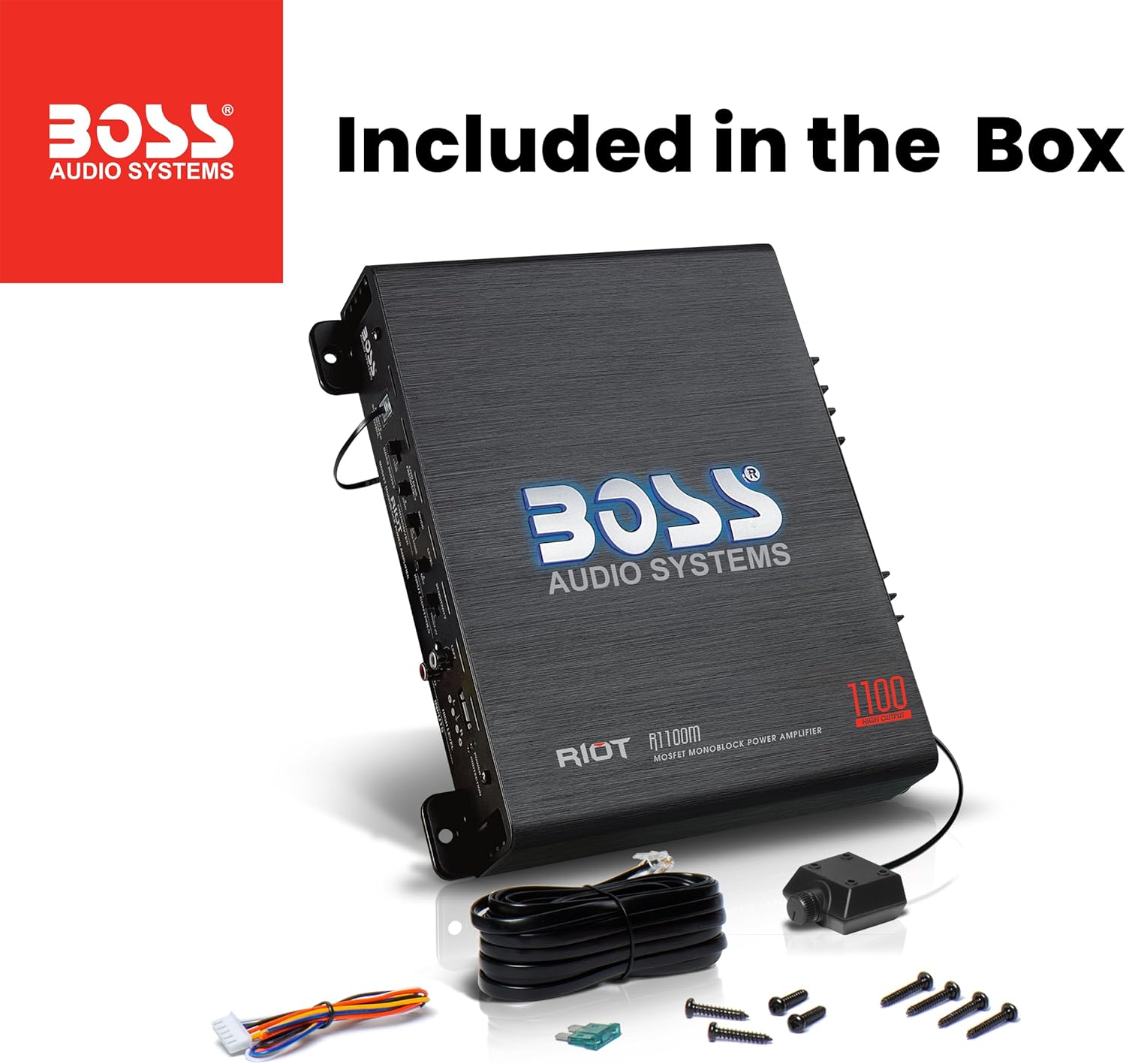
Use the remote subwoofer control to dial in bass level from the cabin and pair the amp with an appropriate sub and enclosure for best results. For tight, punchy bass keep gain and filter settings conservative at first and then increase gradually, testing with familiar tracks. Note that according to the manufacturer this amp includes both short circuit protection and thermal safeguards, so it can handle heavy use but professional installation is recommended to ensure wiring and grounding are correct. Bolded references include BOSS R1100M Monoblock Car Amplifier and MOSFET power supply as key callouts, while Illuminated logo highlights a visual detail. Emojis are used sparingly to aid scannability and never at the end of the text. The description avoids promotional claims that cannot be verified and keeps technical notes where installers will expect them.