

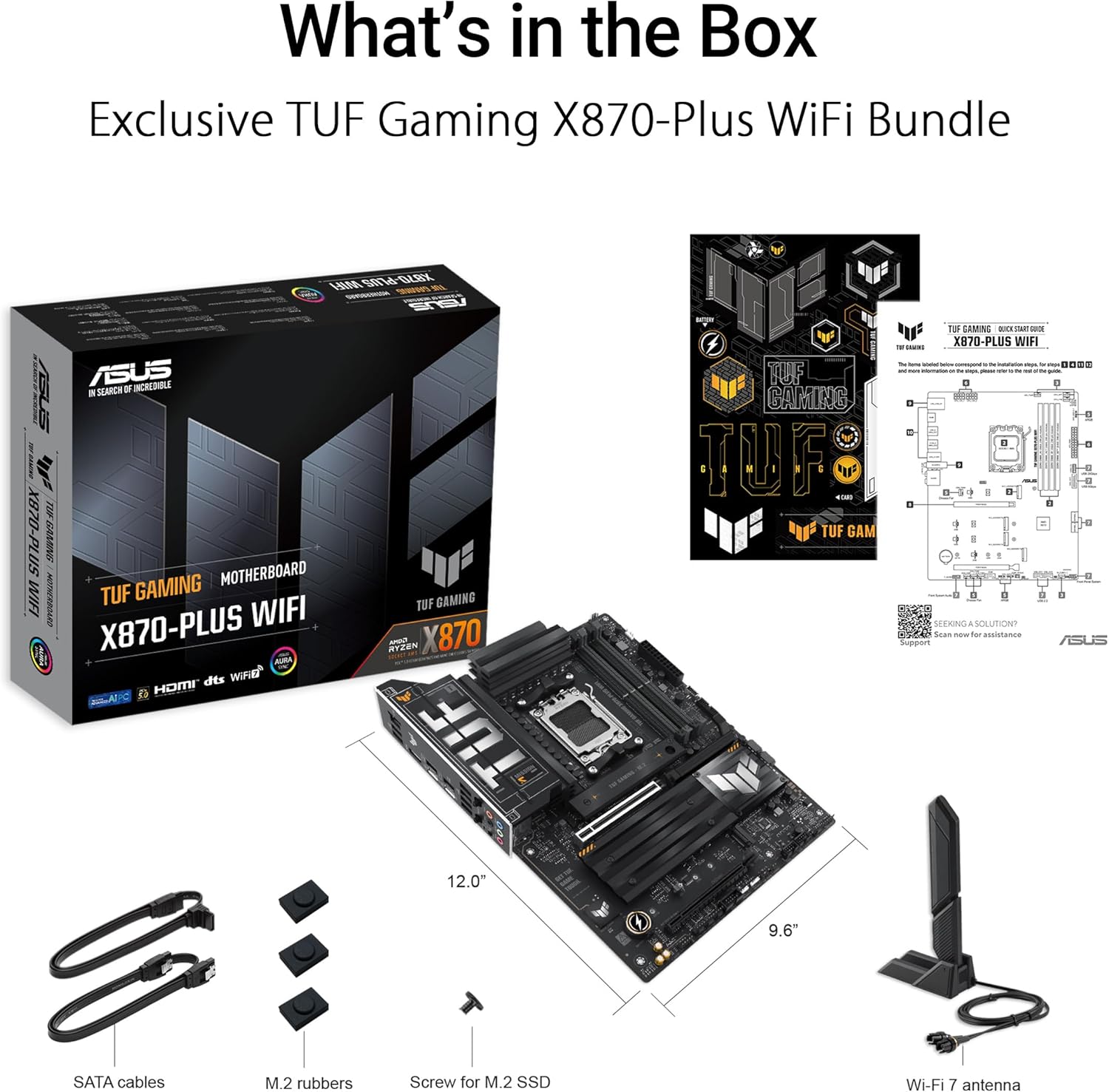
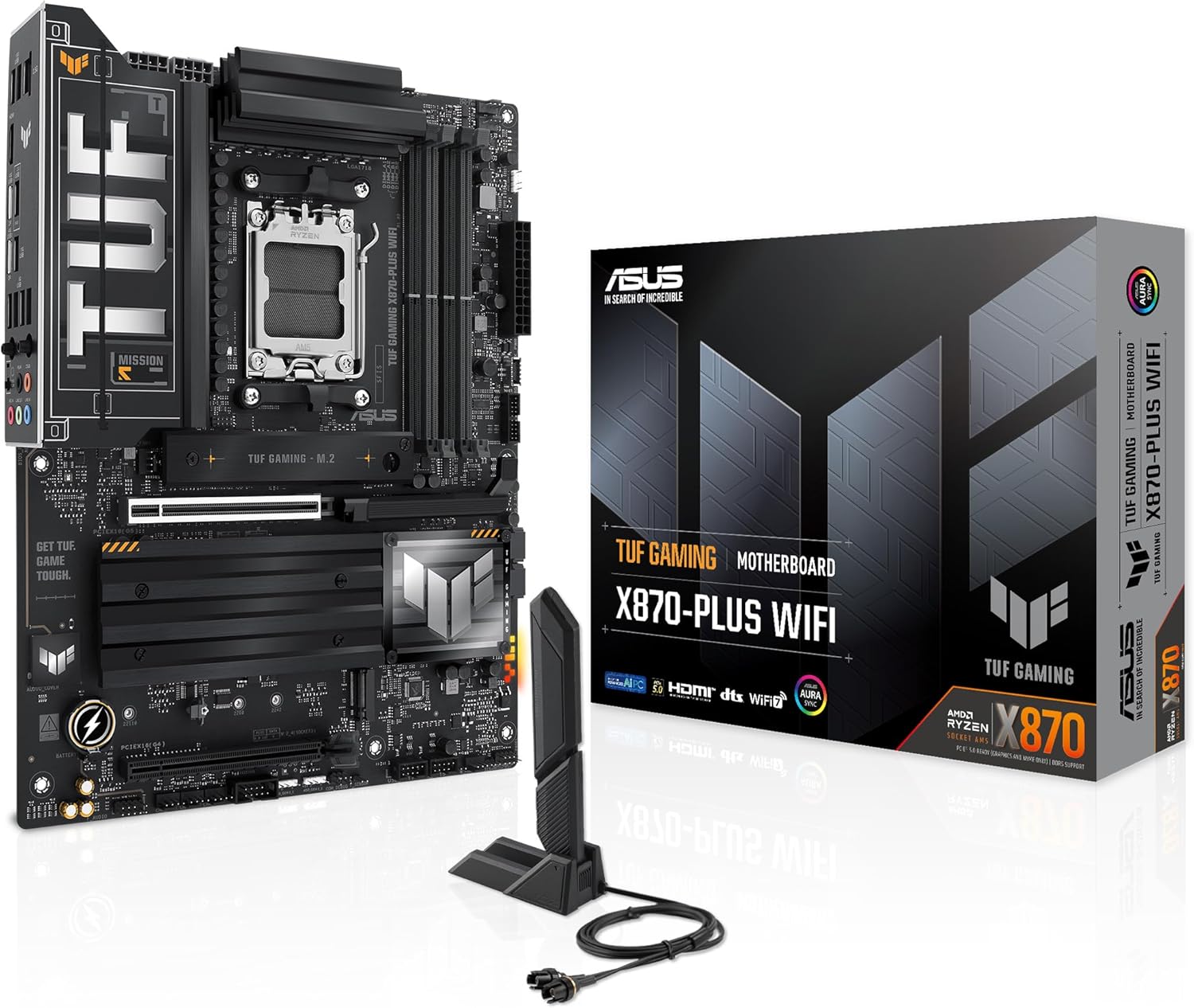
ASUS TUF Gaming X870-PLUS WiFi motherboard with Wi‑Fi 7
Reviews
Product description
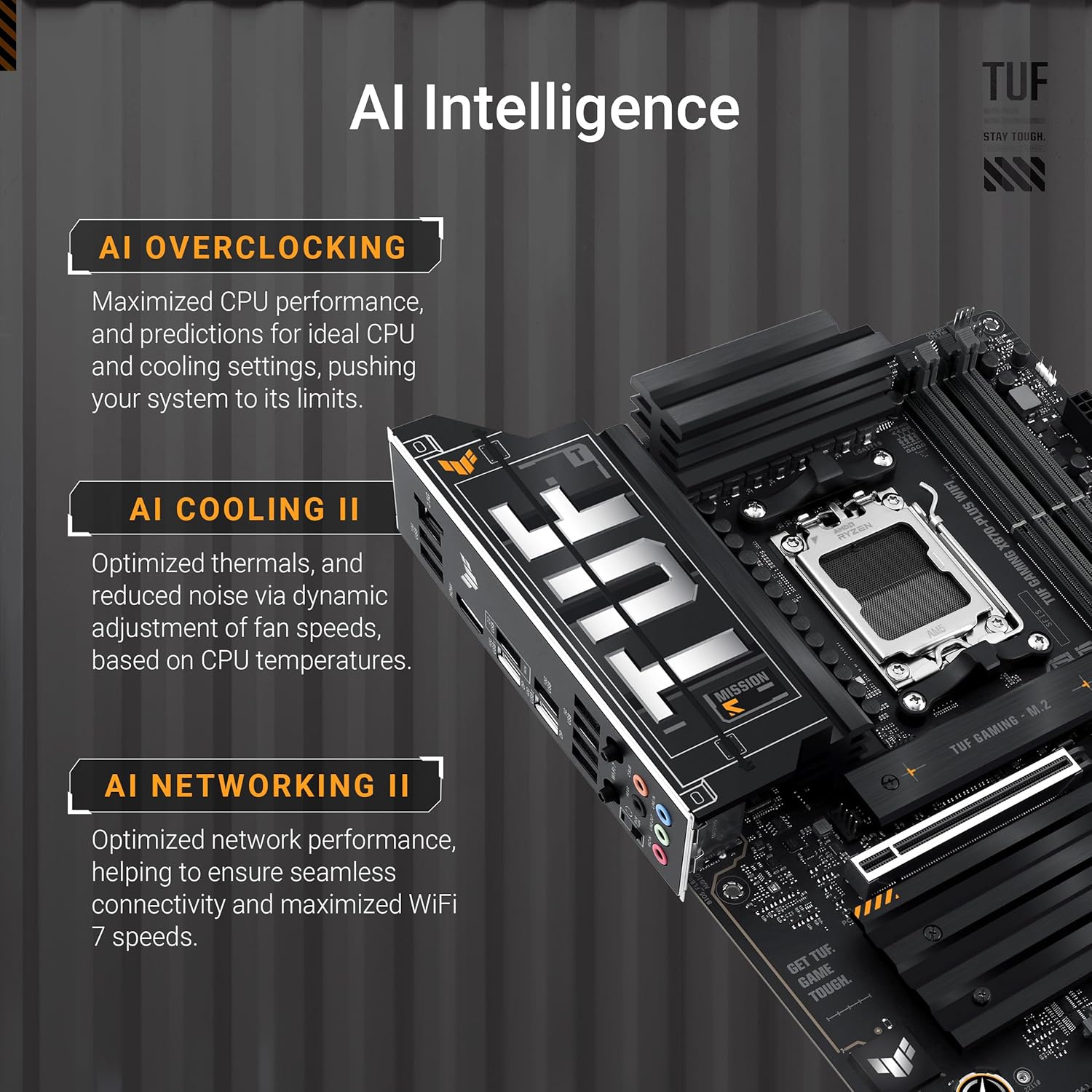
This ATX motherboard from ASUS brings desktop AMD AM5 compatibility and a power delivery system aimed at demanding gaming and AI workloads, offering strong connectivity for high-bandwidth storage and networking. It suits builders who need PCIe 5.0 readiness, multiple M.2 bays and modern I/O for fast transfers and low-latency online play.
Key Points
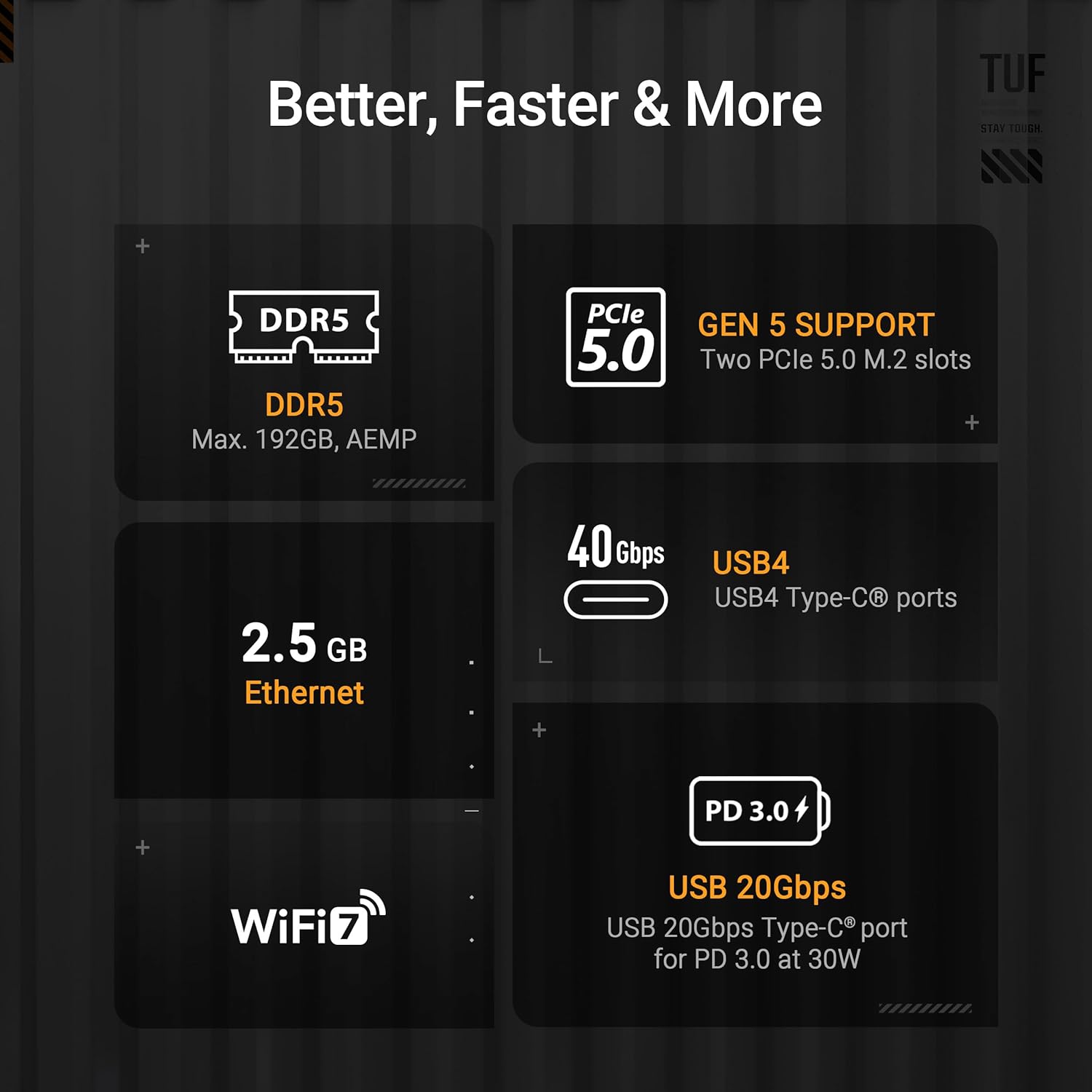
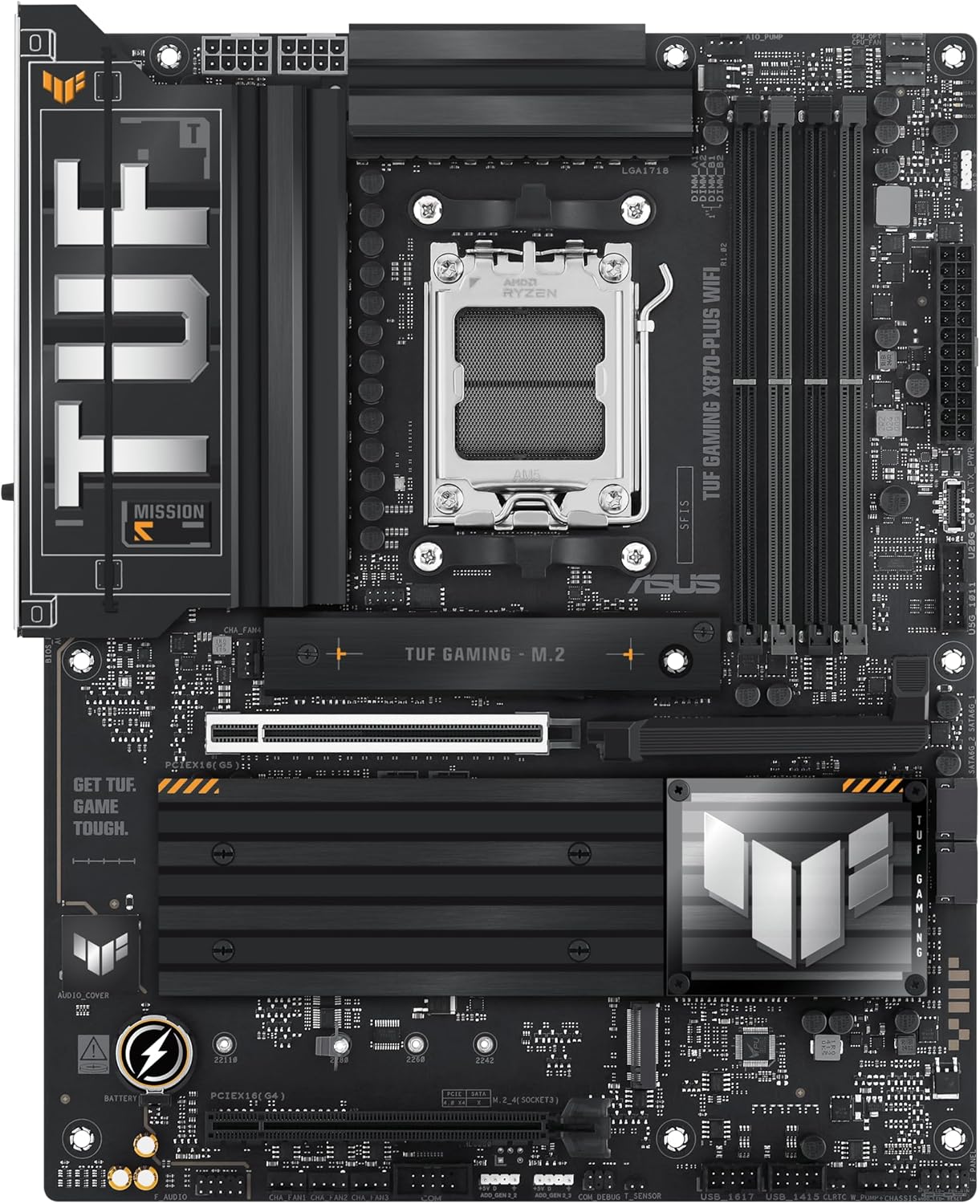
The board supports AMD Socket AM5 processors including Ryzen 7000, 8000 and 9000 series and features a robust 16+2+1 power stage design with 80A SPS components and an 8-layer PCB for sustained power delivery. It includes two integrated PCIe 5.0 M.2 slots plus two PCIe 4.0 M.2 slots for flexible NVMe storage setups and larger M.2 heatsinks to help control thermals. Connectivity highlights include Wi-Fi 7, 2.5 Gb Ethernet, USB4 40 Gbps Type-C ports and a front-panel 20 Gbps Type-C header with PD charging support, which enable fast external device transfers and modern peripheral support.
Technical Specifications
- Name: ASUS TUF Gaming X870-PLUS WiFi
- Socket: AM5
- Power stages: - 16+2+1, 80A SPS
- Memory: - DDR5 support
- M.2: - Four M.2 slots (two PCIe 5.0, two PCIe 4.0)
- LAN / Wireless: - 2.5 Gb LAN and Wi-Fi 7
Benefits
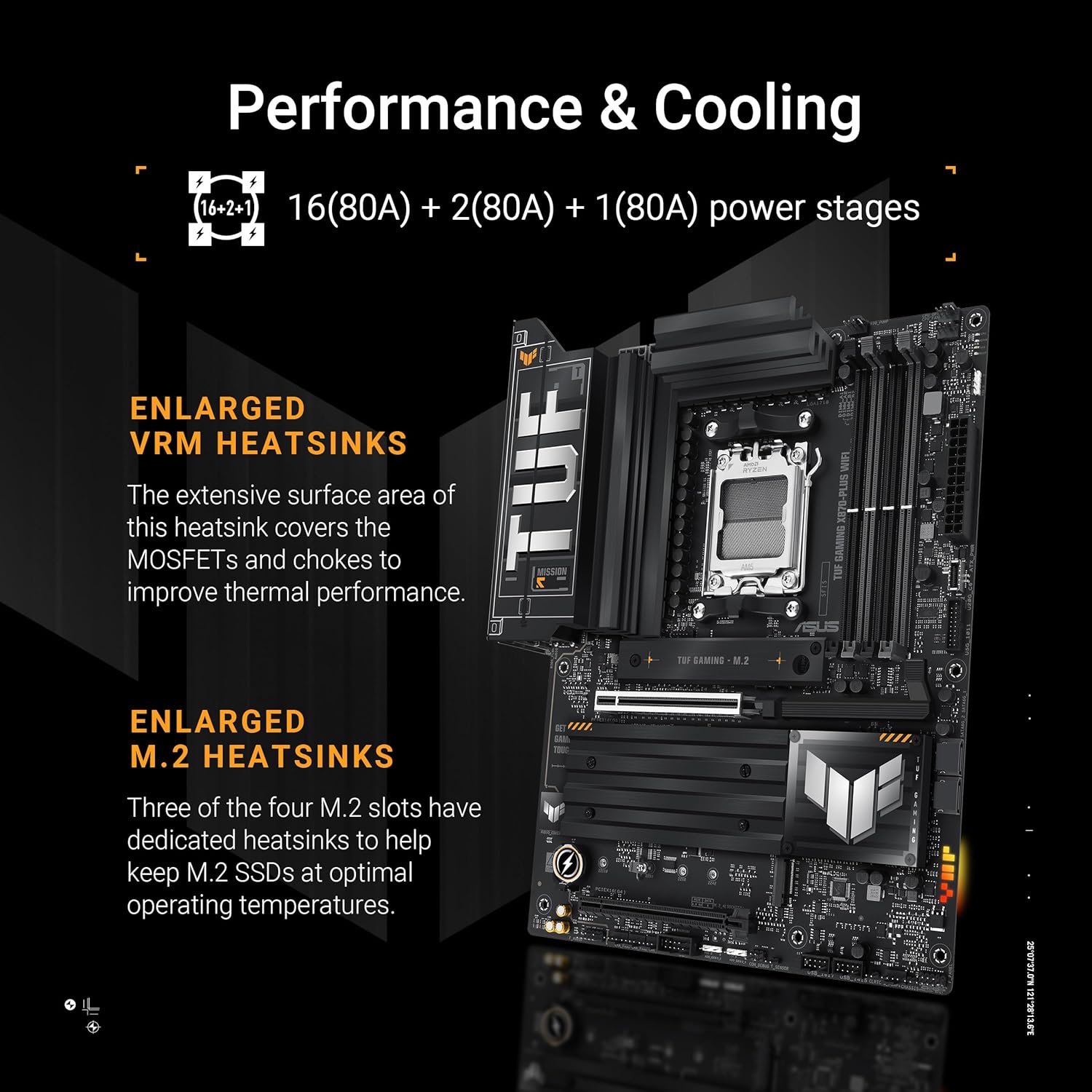
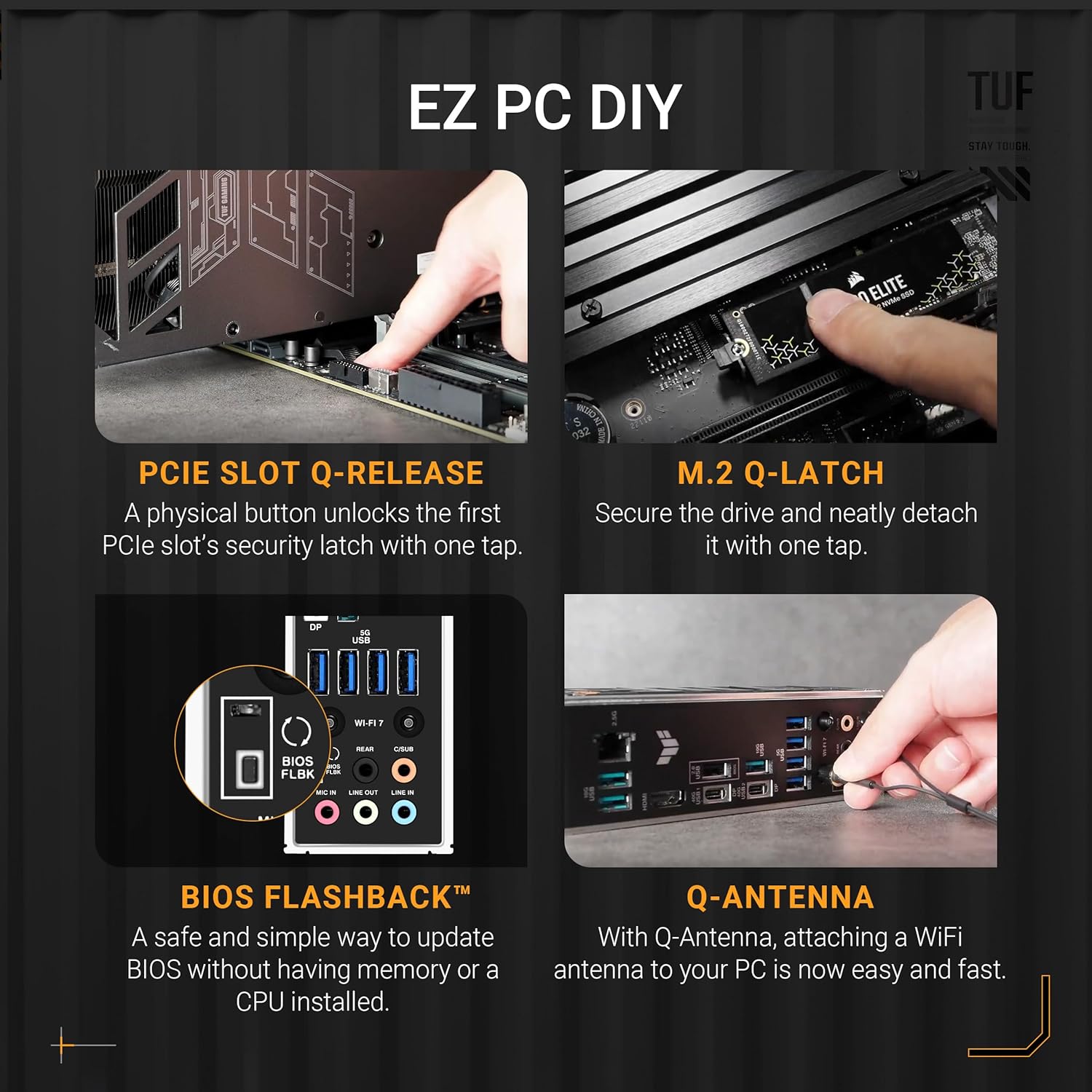
The enhanced power solution and expanded cooling elements such as enlarged VRM and M.2 heatsinks help maintain stability under long gaming sessions and heavy computation. AI-assisted controls like ASUS overclocking AI and AI Cooling II simplify performance tuning and thermal management according to the manufacturer. High-speed I/O options reduce bottlenecks when using external storage and professional peripherals, making content creation and large file transfers more fluid.
Usage Recommendations
For systems focused on next-generation GPUs and fast storage, populate one of the PCIe 5.0 M.2 slots with a compatible NVMe drive to take advantage of higher sequential throughput, and use the robust VRM area if planning higher-core count Ryzen CPUs. Consider case airflow that complements the motherboard’s hybrid fan headers and Fan Xpert controls to keep M.2 and VRM temperatures in check. Note that advanced features such as USB4 40 Gbps and Wi-Fi 7 require compatible devices to reach peak performance, according to the manufacturer.