

0AWG x 30Ft Heavy Duty Jumper Cables 1000A
Product description
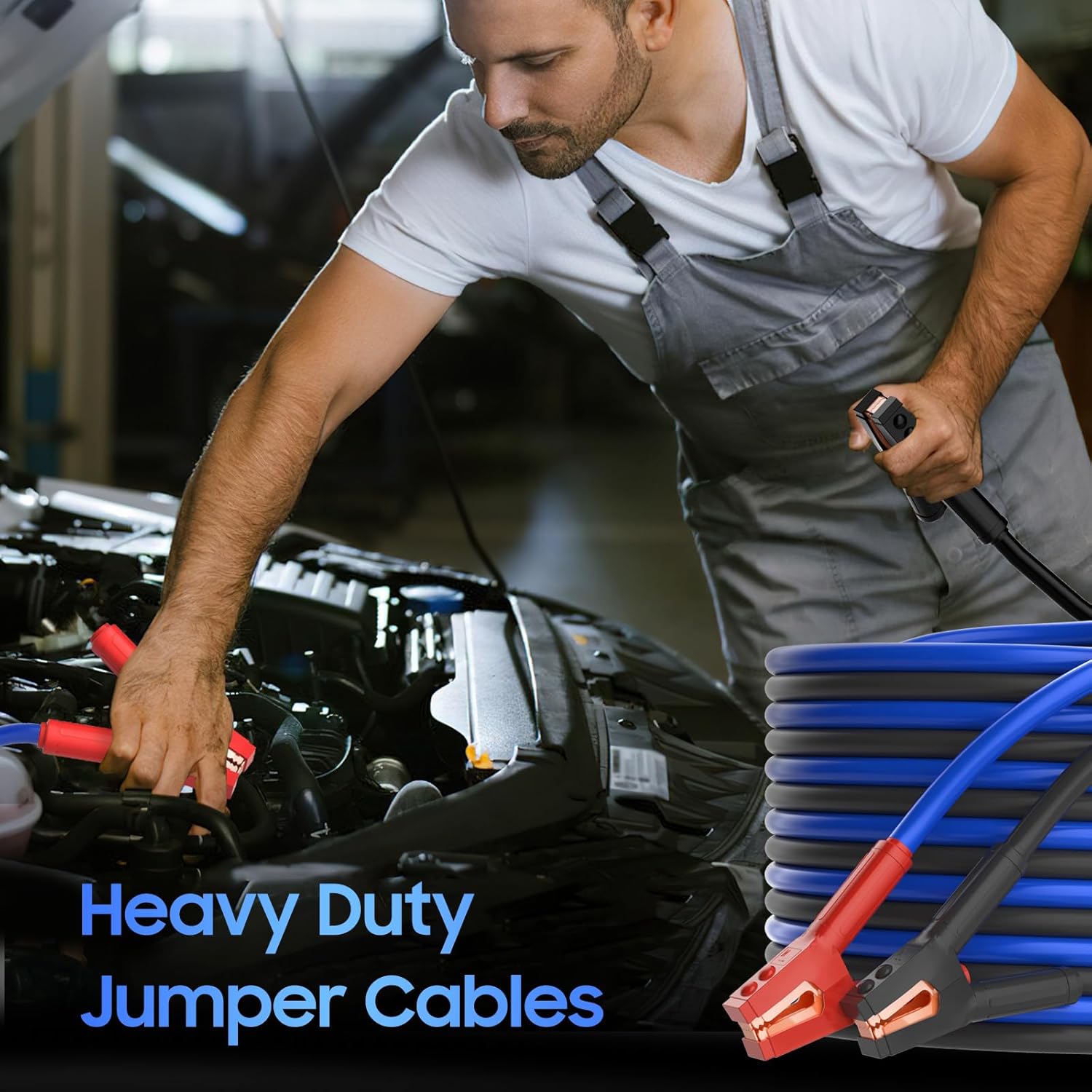
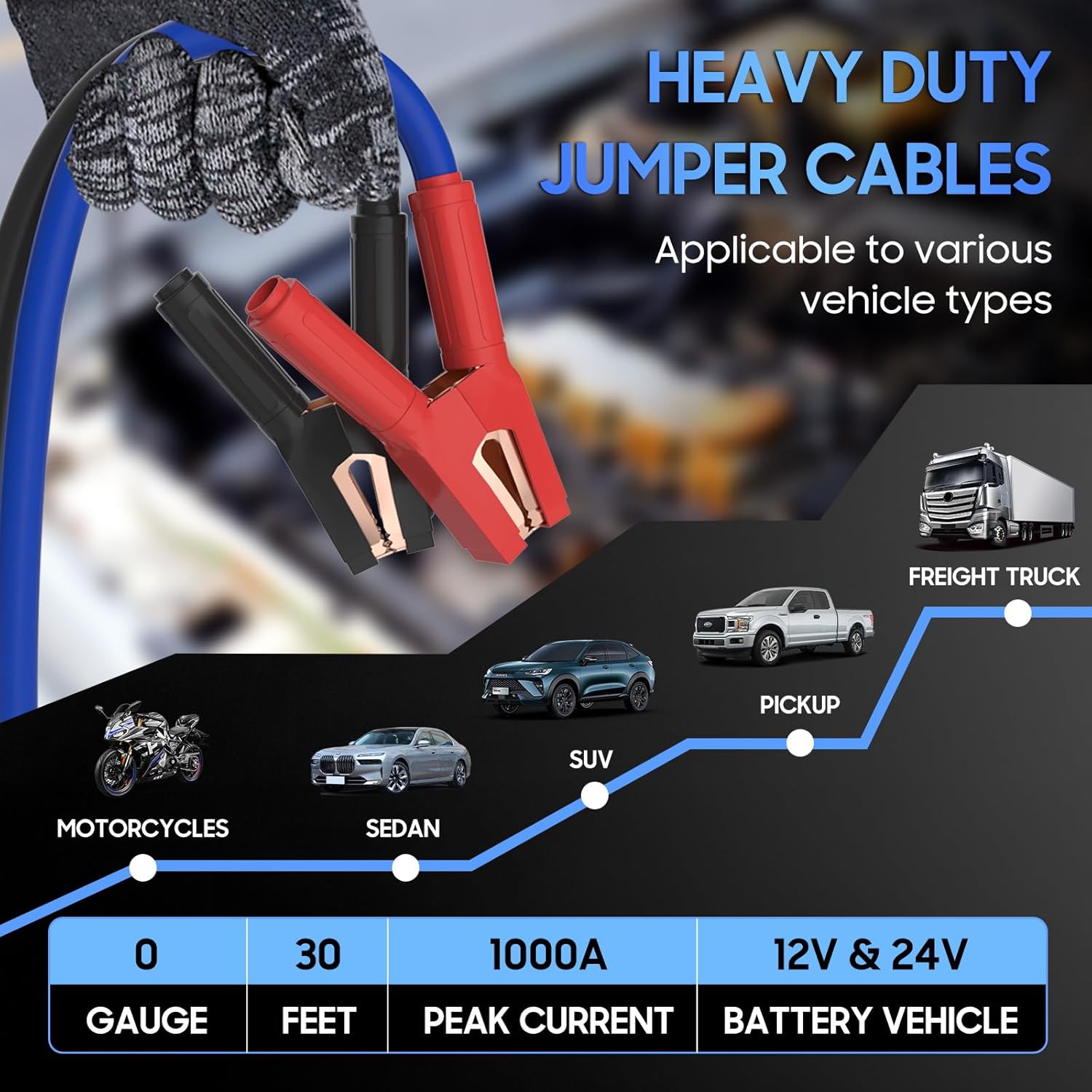
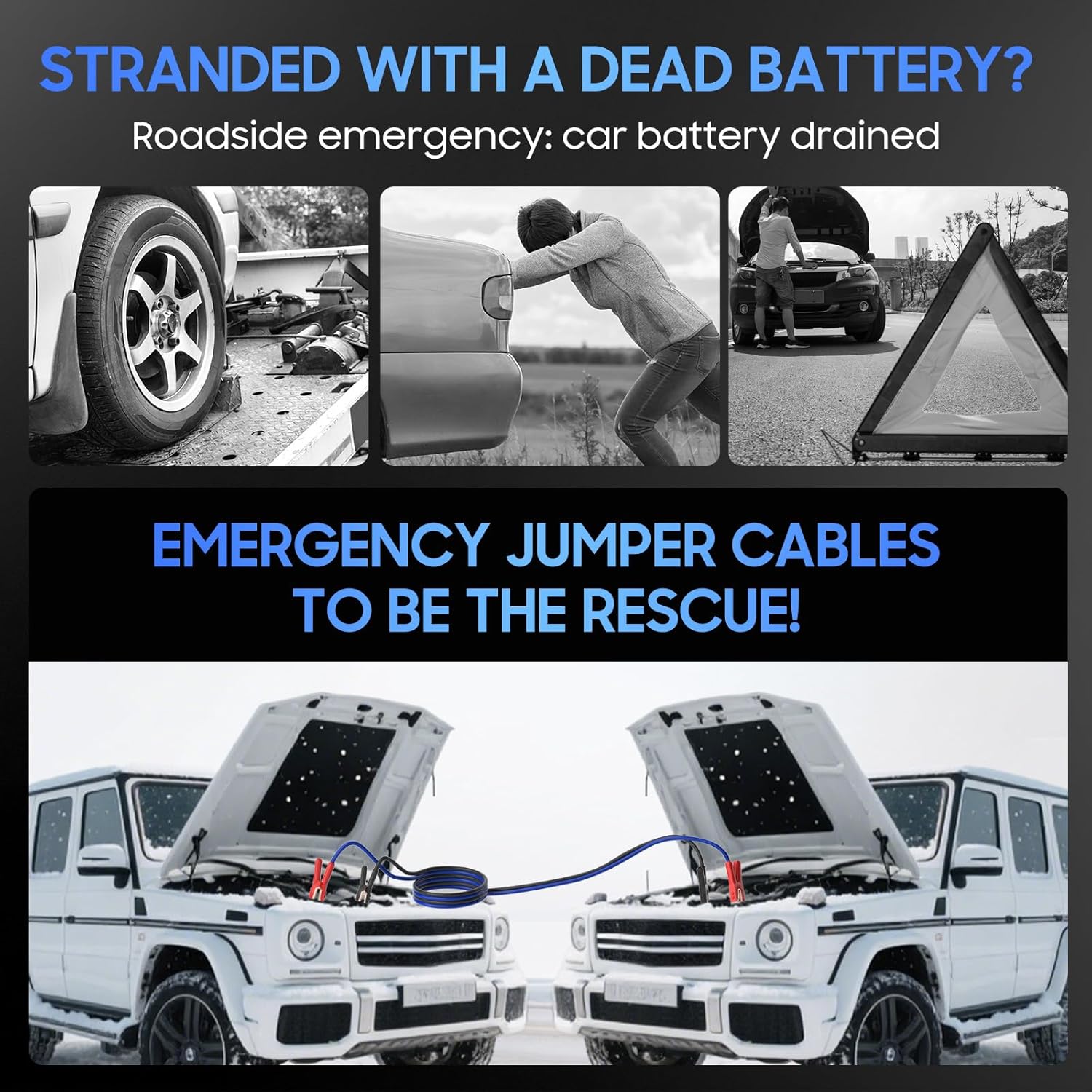
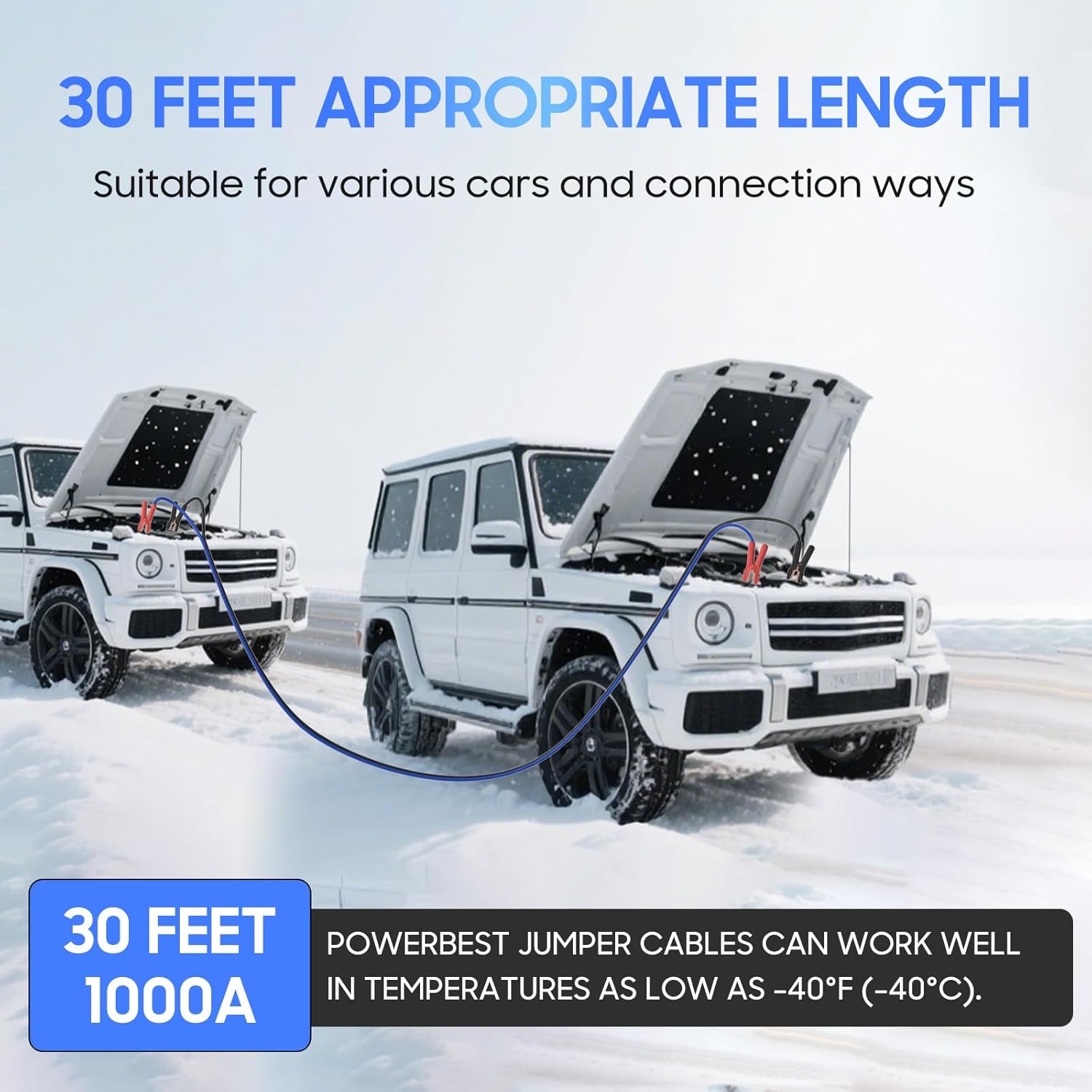
This heavy duty jumper cable set is built for starting dead batteries in cars, SUVs and trucks, offering long reach and strong current for roadside use and workshop tasks. With thick 0 AWG conductors and a 30 foot length, it helps connect vehicles that are parked apart while delivering up to 1000 amps according to the manufacturer.
Key Points
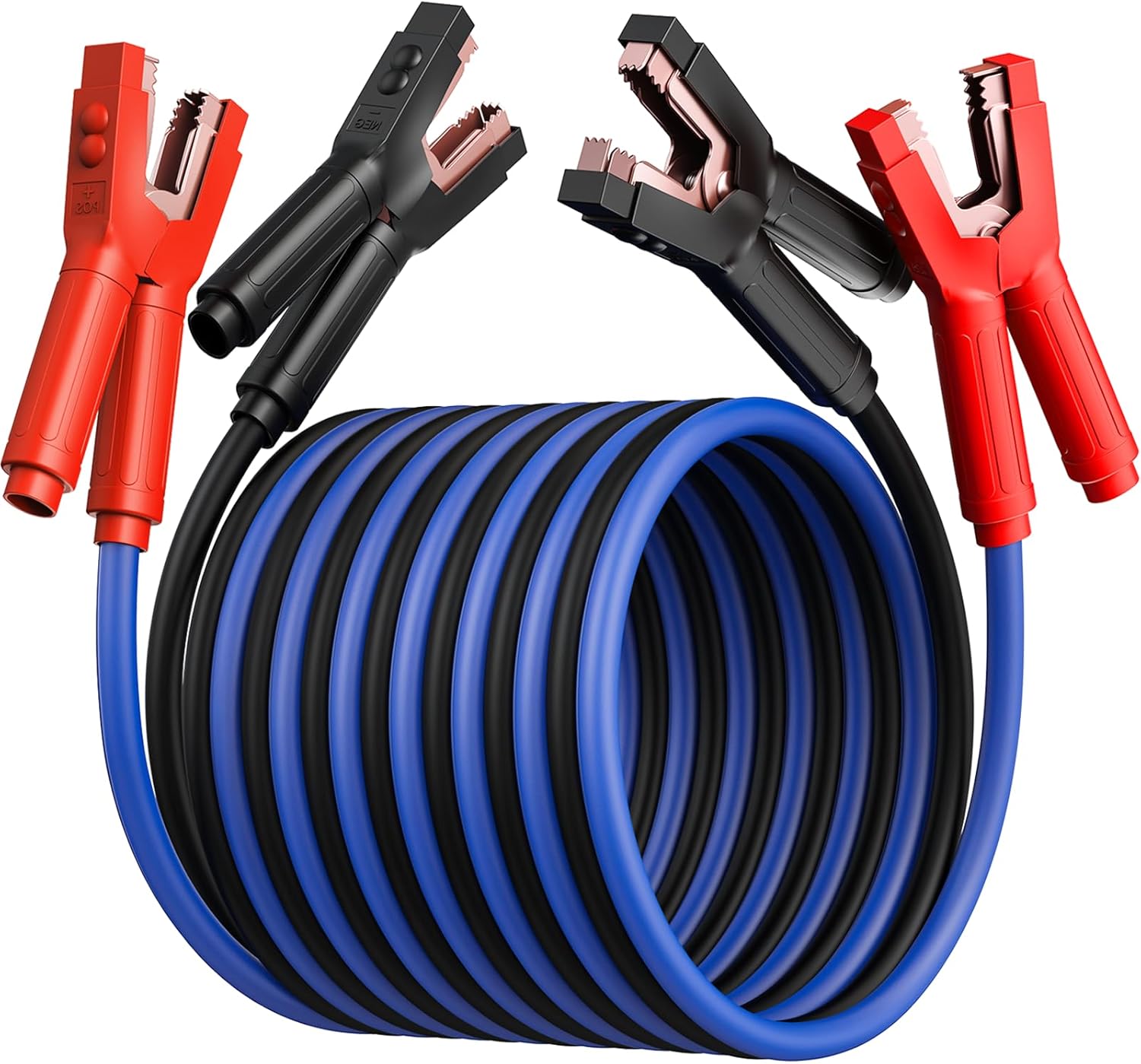
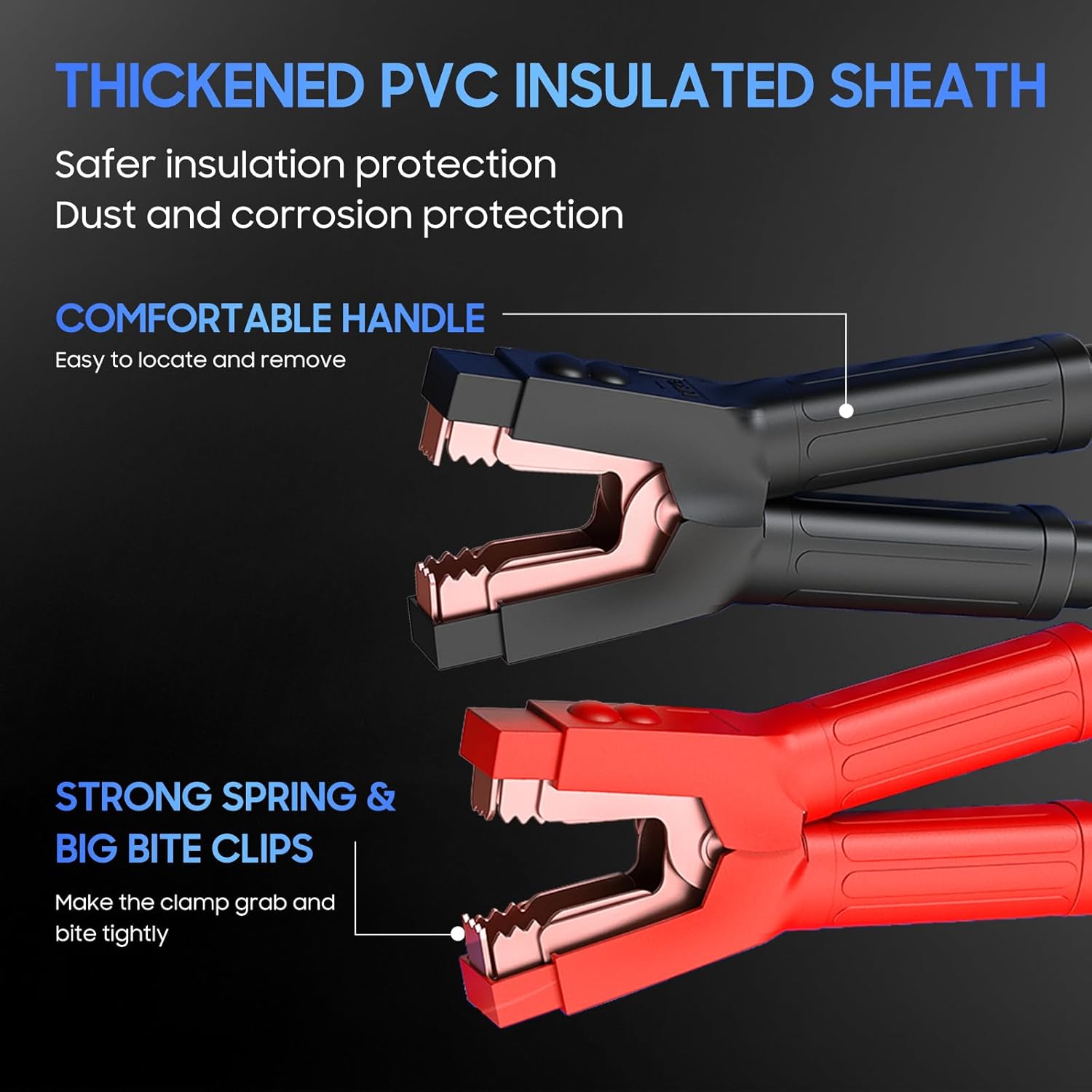
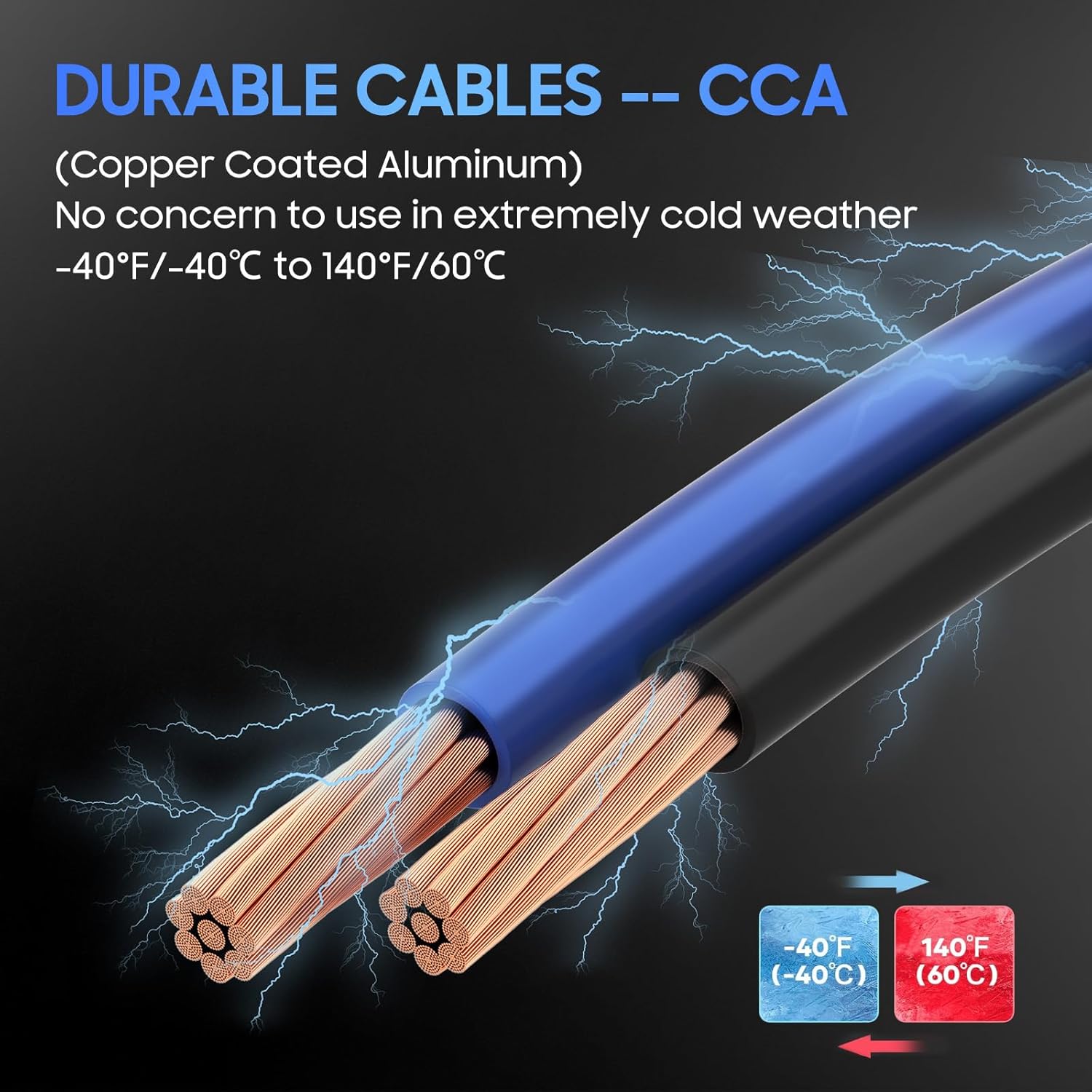
These booster cables use high-density aluminum-coated copper cores to increase conductivity while keeping weight down. The cables are wrapped in a double thick rubber jacket to resist wear and to keep handling safer in wet or dirty conditions. The clamp jaws feature strong teeth and return springs for a secure grip, and the clamp handles have non-conductive rubber covers to reduce spark risk. The 30 foot length reduces the need to reposition vehicles when jump-starting, which can be useful in tight parking situations or roadside environments. 🔋⚙️
Technical Specifications
- Name: POWERBEST Heavy Duty Jumper Cables 0AWG x 30Ft
- Gauge: 0 AWG
- Length: 30 ft
- Maximum rated current: 1000 A
- Compatible systems: 12 V and 24 V vehicles
Usage Recommendations
Connect the cables following standard safe jump-start procedures and keep the clamps clear of moving engine parts. Because the clamps have rubber-coated handles and the cables are designed for heavy use, they are suited for repeated roadside starts and emergency kits in larger vehicles. Consider that the manufacturer indicates suitable engine sizes up to gas 8.0 L and diesel 6.0 L for effective starts, and performance can vary with battery condition and temperature. For storage, use the included carry bag to prevent tangles and to protect the insulation.
Benefits
The thick 0 AWG conductors help reduce voltage drop during high current transfer, which can make starts more reliable when batteries are weak. The extended 30 foot reach allows flexibility when positioning donor and recipient vehicles, especially larger trucks and vans. The cables are rated to operate in a wide temperature range by the manufacturer, covering cold starts down to -40 degrees Celsius and up to 140 degrees Fahrenheit, which supports use in a variety of climates. One nuance to note is that while these cables are robust, extremely corroded battery terminals or severely sulfated batteries may still fail to accept a charge, and repeated attempts will not restore a battery with internal failure.