

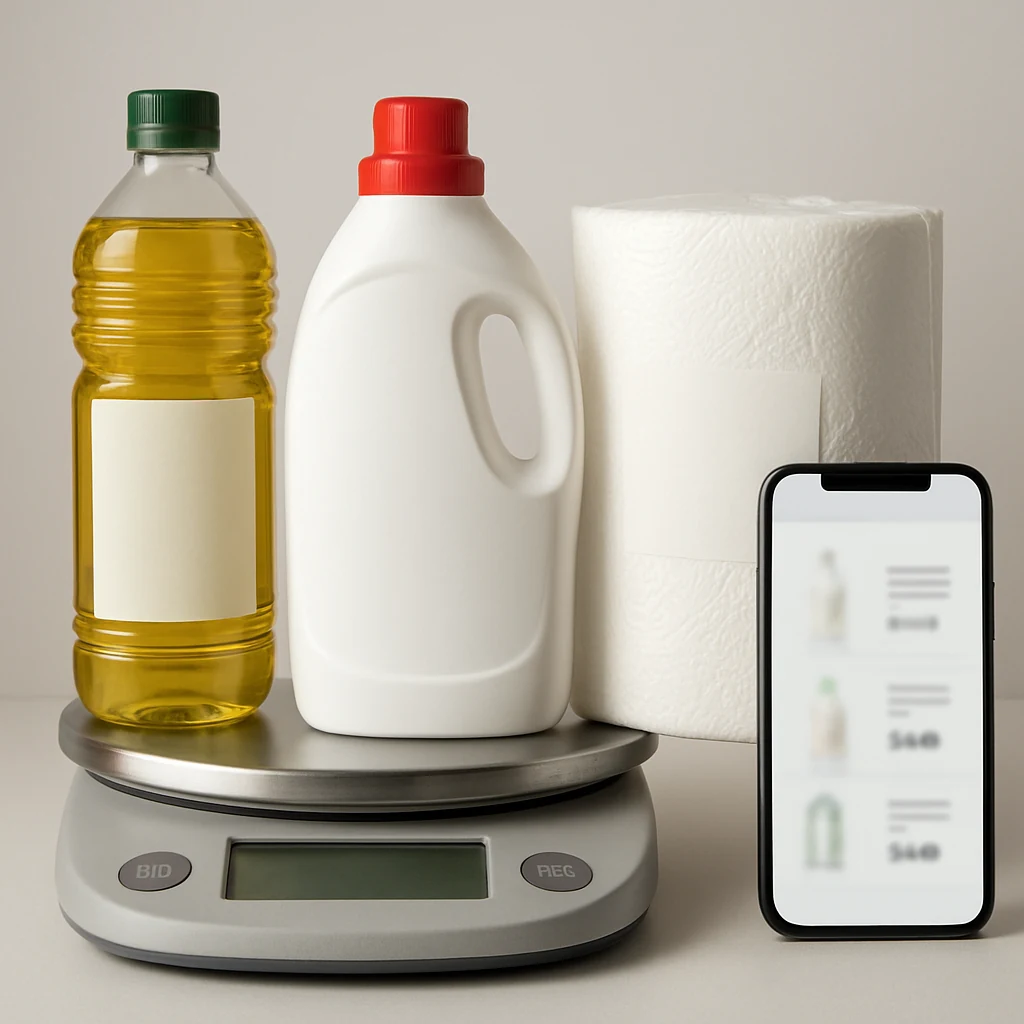
Unit Price Online: How to Spot Real Deals (and Avoid Bundle Traps)
A practical US guide to comparing unit price, bundles, and multipacks online—so you can tell real savings from “deal-looking” listings.
Most “deals” online aren’t scams—they’re just hard to compare. A 3-pack looks cheaper, a jumbo size looks smarter, and a bundle feels like instant savings… until you do the math.
This guide is about one thing: unit price (price per ounce, per count, per load, per sheet) and how to use it to find real savings in the US—especially during big sale seasons like Prime Day, Back-to-School, Black Friday, and Cyber Monday.
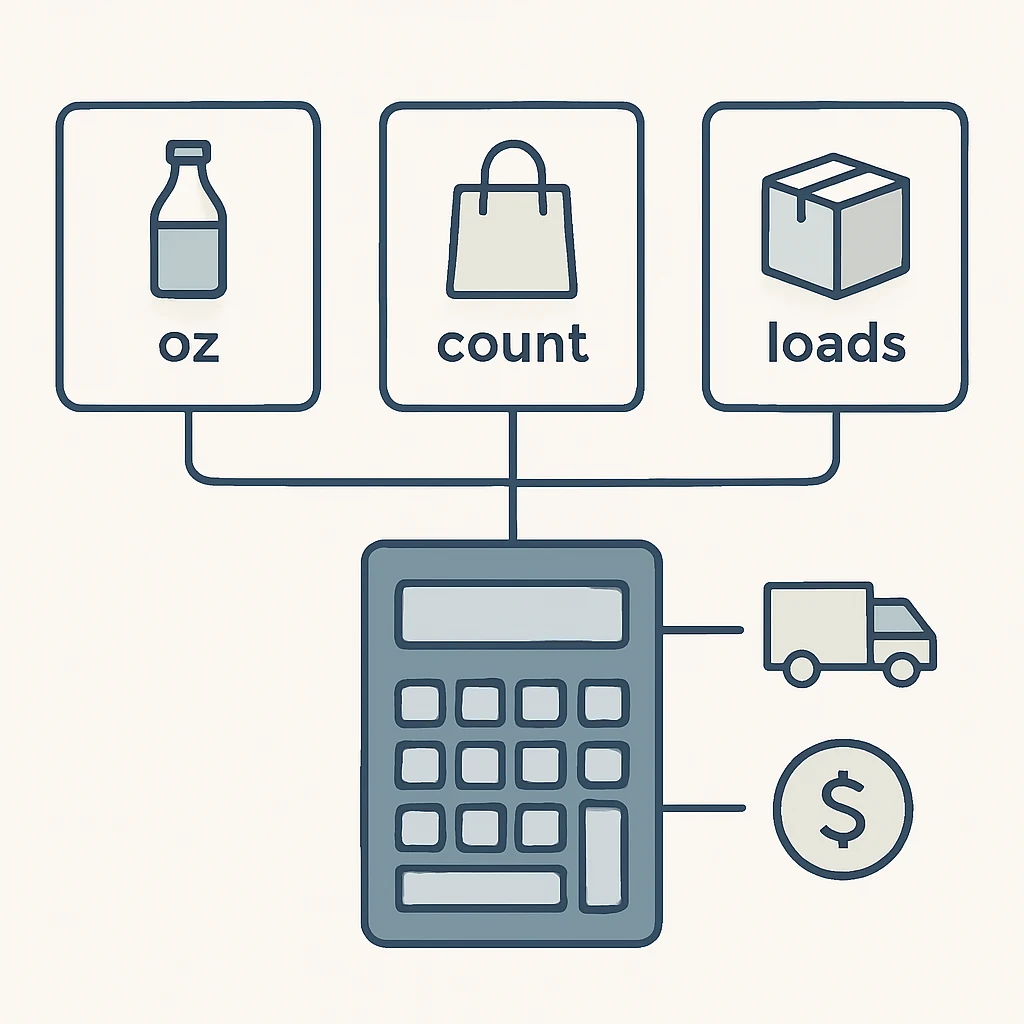
The unit price habit that beats flashy discounts
Unit price is the quiet superpower of deal-hunting. It cuts through:
- “25% off” claims
- multipack pricing tricks
- bundles that include filler items
- sizes that don’t match (ounces vs. pounds vs. counts)
On many US retailers, you’ll sometimes see a unit price on the product page (like “$0.18/oz”). When it’s there, great—but don’t trust it blindly. Third-party marketplace listings can be messy, and sometimes the unit label doesn’t match the current size.
When it’s not there, you can still do it fast:
Unit price = total price (including any unavoidable fees) ÷ usable quantity
“Usable quantity” matters. A 120-count of something you won’t use before it expires is not the same value as a 60-count you’ll finish.
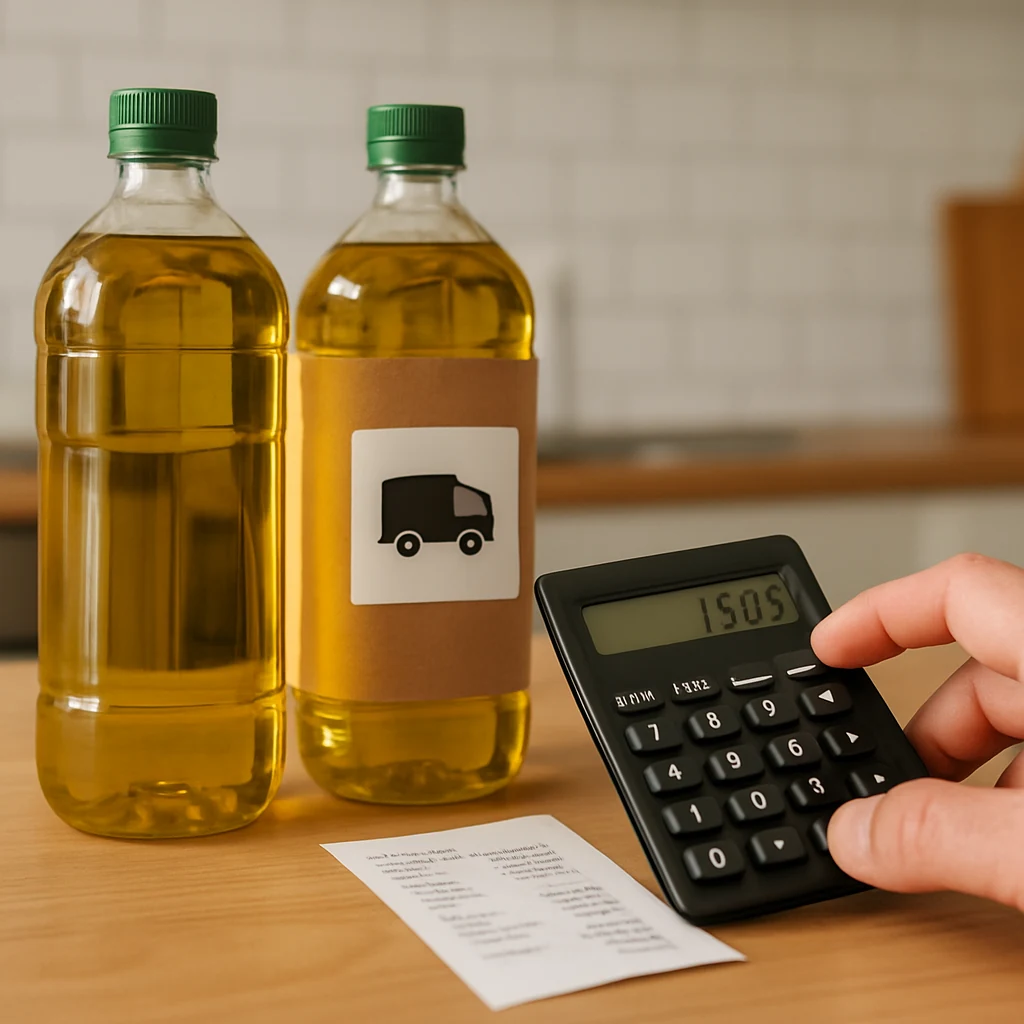
Case 1: Pantry staples (where shipping and sales tax can hide the “deal”)
You’re buying olive oil online.
- Option A: 16.9 oz bottle for $X
- Option B: 2-pack (same bottle) for $Y
The 2-pack looks like a deal—until you notice two things:
-
Shipping isn’t always equal. If the single bottle qualifies for free shipping but the 2-pack ships from a marketplace seller with a shipping fee, your unit price jumps.
-
Sales tax is real money. In the US, sales tax rates vary by state and sometimes by product category. If you’re comparing carts across retailers, you can’t ignore the tax line at checkout.
Decision trade-off:
If you’re already placing a bigger order and both options ship free, the multipack might win. But if the “deal” only exists before shipping and tax, it’s not really a deal.
A practical move: add both to your cart (even if you don’t plan to buy both) and go all the way to the final review step. Then compare the real totals and divide by ounces.
Case 2: Household basics (where “bigger” isn’t always cheaper)
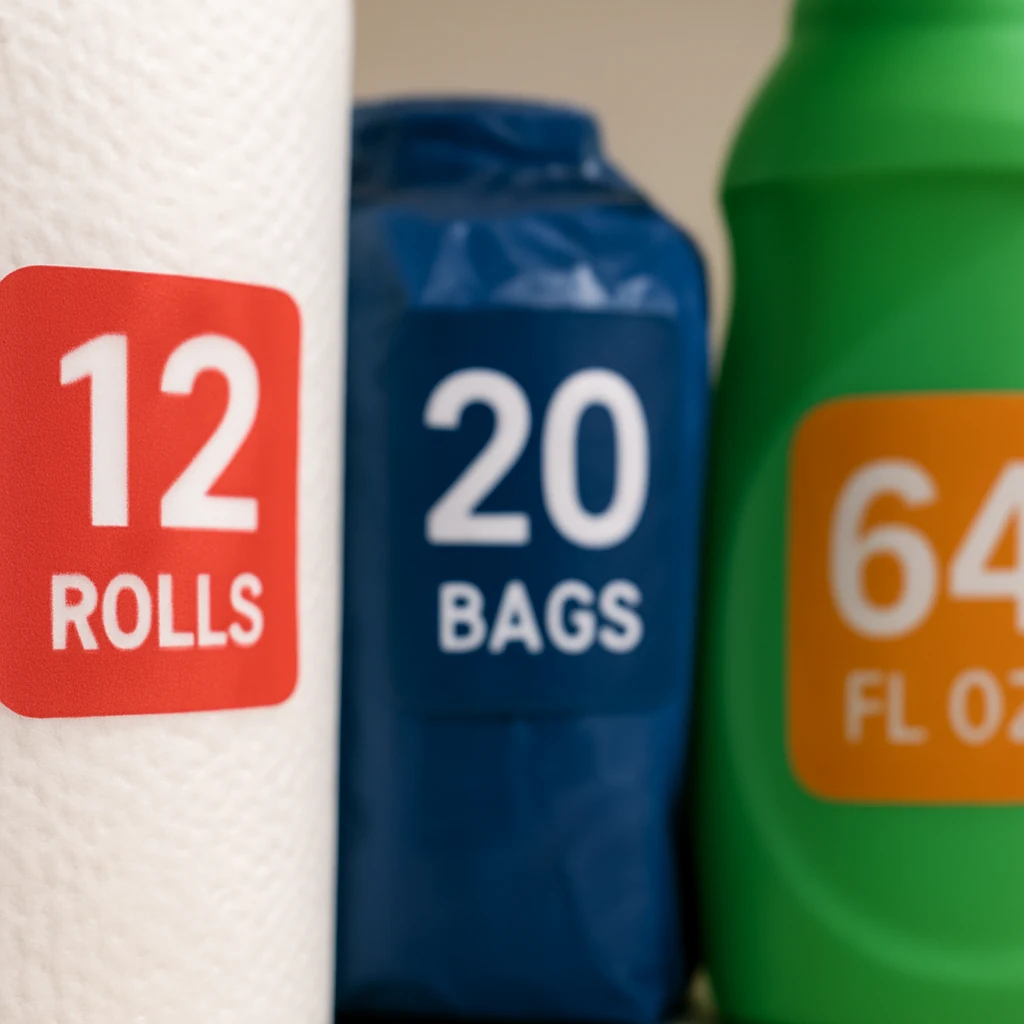
This happens constantly with paper towels, trash bags, and laundry detergent.
A “mega” size might have a lower sticker price per item, but it can lose on value if:
- the “mega” version is a different sheet size or different number of loads
- the smaller version is on a better promo (like a digital coupon or a limited-time markdown)
- you’ll store it awkwardly and end up buying a second brand anyway
Example mindset (not exact numbers):
A detergent might claim “64 loads,” but those load counts are based on an ideal dose. If your household tends to use more per load (hard water, heavily soiled clothes, athletic wear), your real “price per load” is higher.
Decision trade-off:
If you want the cheapest theoretical unit price, you’ll chase the largest size. If you want the cheapest real-world unit price, buy the size you’ll use efficiently.
When you’re comparing, look for the label that matters:
- detergent: price per load (your load, not the bottle’s best-case)
- trash bags: price per bag (and check capacity)
- paper goods: price per sheet or per square foot (if shown)
Case 3: Beauty and skincare (where bundles can be “nice,” not “cheaper”)
Beauty bundles are a classic bundle trap because they’re emotionally appealing. You’ll see something like:
- cleanser + toner + moisturizer set
- “free gift with purchase” items that pad the perceived value
Here’s the honest truth: bundles can be great if you already know you’ll use everything. But they’re often priced so you feel like you’re getting a deal while you’re actually pre-paying for an item you wouldn’t have bought.
Decision trade-off:
- If you’re restocking a routine you already use, bundles can be efficient.
- If you’re experimenting, bundles can lock you into a higher total spend and make returns harder (especially if the set must be returned complete).
Before you click “Buy,” check the return policy and look for phrases like “final sale,” “hygiene item,” or “must return all items included.” In the US, retailers vary widely here.
Case 4: Baby, pet, and “subscribe” pricing (where the deal depends on your follow-through)
Auto-delivery and subscription options (like “subscribe & save” style programs) can drop the per-unit cost. But the real deal depends on whether you manage it.
Decision trade-off:
- If you’re buying diapers, wipes, pet food, or litter on a predictable schedule, subscriptions can be painless savings.
- If your needs fluctuate, you can end up with overstock—or a surprise charge when you forget to skip.
Two ways to make subscription pricing work for you:
-
Treat it as a price lock, not a lifestyle. Set the first delivery, then immediately check the account settings for how to skip, pause, or change frequency.
-
Compare the subscription unit price to the best non-subscription unit price you can get today. If the subscription savings are tiny, it may not be worth the ongoing management.
Also: watch for the difference between “ships from” and “sold by” on marketplace platforms. Subscription savings aren’t helpful if the seller changes and the listing quality drops.
The sneakiest online bundle traps (and how to sanity-check fast)
Not every multipack is bad. The problem is when the bundle changes the comparison.
Here’s a quick sanity check you can do in under a minute:
- Normalize the unit (oz vs lb vs count) and compare apples to apples.
- Scan the variant details (scent, size, “new look” packaging) to make sure you’re not comparing different products.
- Check the seller + return window if it’s a marketplace listing.
- Do the cart test (final total with shipping + estimated sales tax) before deciding.
That’s it. If you do nothing else, do the cart test.
Timing: when unit-price wins matter most
Unit price matters year-round, but it’s especially useful during peak sale noise—when everything is labeled like a bargain.
- Back-to-School: stock-up categories (snacks, paper goods, basic tech accessories) get loud promos; unit price helps you avoid “bulk you don’t need.”
- Prime Day-style events: lots of lightning deals and limited-time pricing; unit price helps you compare across brands quickly.
- Black Friday/Cyber Monday: bundles explode (especially electronics accessories and gift sets). Unit price plus return-policy checks save you from “cheap extras.”
If you want more saving strategies beyond unit price, keep an eye on the guides hub at / as new seasonal tactics drop.
Tips you’ll actually use next time you’re shopping
The goal isn’t perfect math. It’s fewer “why did I buy this?” moments.
- If the listing doesn’t clearly show quantity (oz/count), skip it—unclear listings are rarely the best deal.
- Prefer comparables: same brand + same size + same seller type beats a messy cross-listing comparison.
- If a bundle includes one “bonus” item you don’t want, price it as $0 and see if the deal still holds.
- When in doubt, buy the smallest size that still qualifies for your preferred shipping/returns—then stock up later when you’ve confirmed you like it.
FAQs
Do I need a unit-price calculator app?
Not really. Most of the time, your phone calculator is enough. The bigger win is remembering to include shipping and sales tax when they’re not avoidable.
Why do some unit prices on product pages look wrong?
Marketplace listings can have mismatched data (wrong size, old packaging, or variations rolled into one page). Always verify the actual ounces/count shown in the title and product details.
Are multipacks usually cheaper online than in-store?
Sometimes, but it depends on shipping, sales tax, and whether you’re comparing the same exact item. Online multipacks can also be priced higher when they’re aimed at convenience shoppers.
How do I compare “count” items when quality differs?
Start with unit price, then adjust for quality factors that matter: durability (trash bags), absorbency (paper towels), or effectiveness per use (detergent). If a cheaper unit price makes you use more per use, it’s not a real savings.
What’s the safest way to try a new product without wasting money?
Buy a smaller size with a clear return policy, avoid “final sale” bundles, and only scale up when you’re confident you’ll use it. That’s how you turn unit price into savings instead of clutter.
You may also be interested

Cash Back or Coupon? Keep Your Online Savings From Disappearing
Learn when to use coupons, cash-back portals, or card offers—and how to avoid tracking mistakes before Black Friday and Cyber Monday.

Open-Box and Refurbished Deals: A Smarter Way to Shop Holiday Sales
Learn how to vet open-box and refurbished deals before Black Friday, from condition and warranties to battery health, seller quality, and gift readiness.

Discounted Gift Cards: 6 Mistakes That Can Erase Your Savings
Buying discounted gift cards for holiday shopping? Avoid balance problems, refund traps, and bonus-card restrictions before locking up your money.