

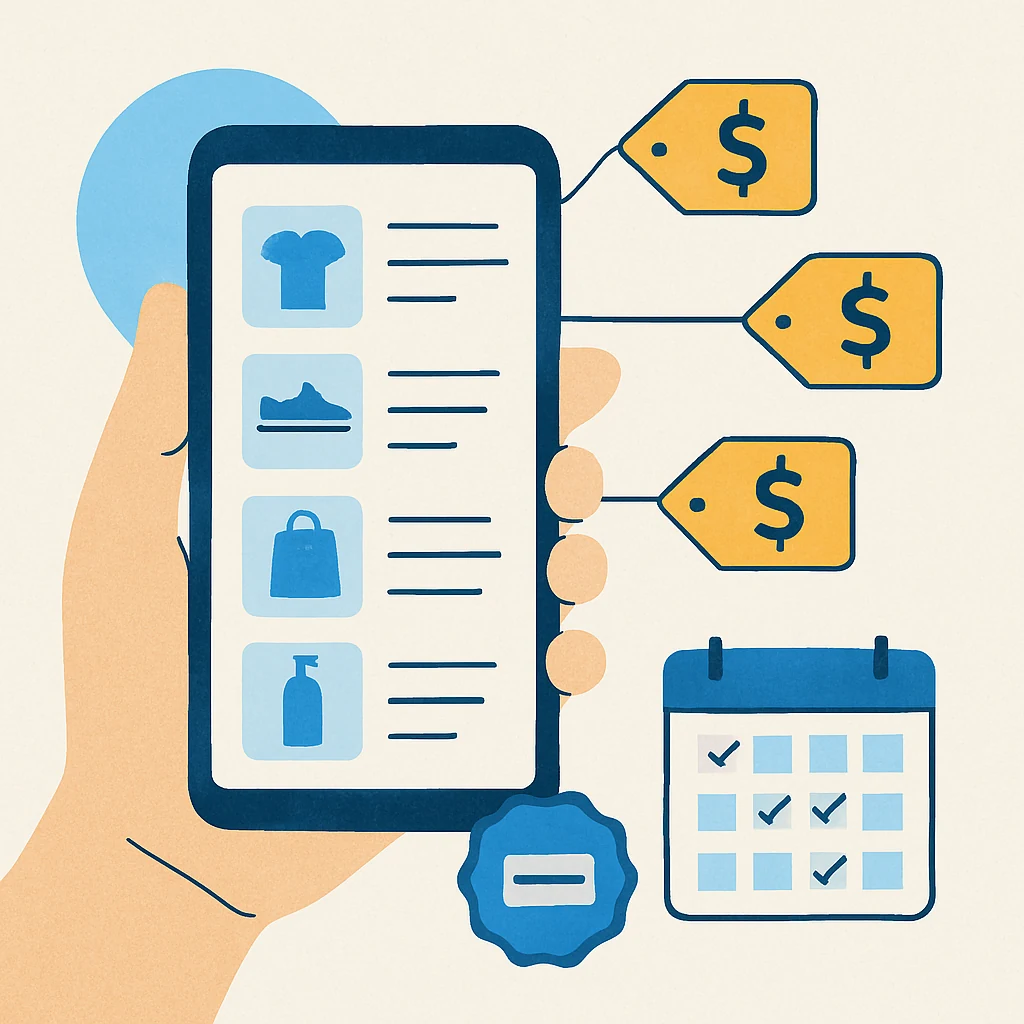
The Wish-List Method: Track Prices and Buy at the Real Low
A practical way to save online in the US: wish lists, price alerts, sale timing, and smart coupon stacking—without impulse buys.
Most online “deals” feel urgent on purpose. The easiest way to beat that pressure is to flip the script: decide what you want first, then wait for the price to come to you.
That’s the wish-list method. You build a short, intentional list, set price alerts, and buy only when the total (item + shipping + sales tax) hits your target. It’s simple, repeatable, and it works year-round—especially in the US where pricing changes constantly.

What is the wish-list method, exactly?
It’s a two-part system:
-
A “buy list” (things you actually intend to purchase in the next 30–90 days).
-
A tracking routine (alerts + quick checks) so you catch price drops and promo windows without living in your inbox.
You’re not hunting random bargains. You’re waiting for your items to become bargains.
Q: Why not just shop during big sales like Black Friday?
Black Friday and Cyber Monday can be great, but they’re noisy. You’ll see “discounts” on things you didn’t plan to buy, and it’s easy to miss the best moment for the item you actually want.
A wish list gives you focus. Then the big sale weekends become checkpoints rather than shopping marathons.
How do I set it up without becoming a spreadsheet person?
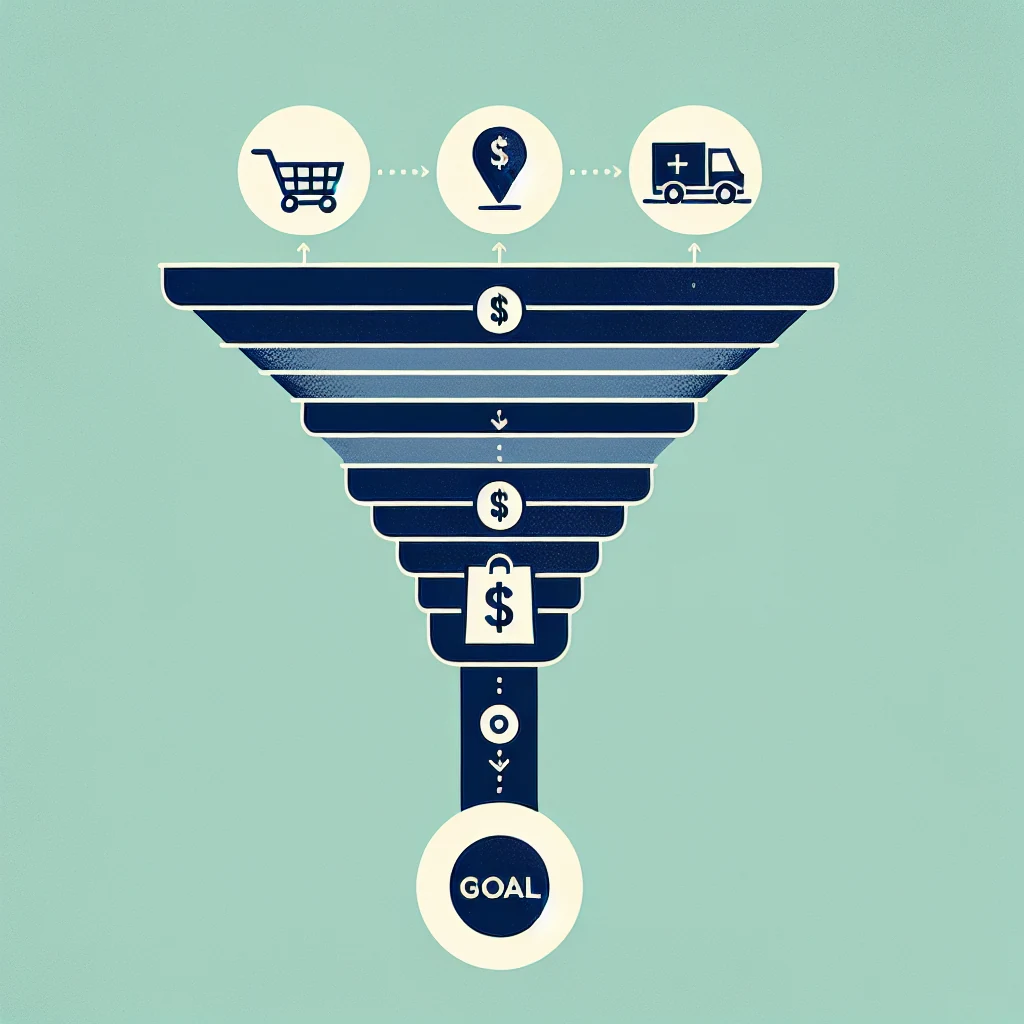
You can keep this low-effort. Start with 10 items max. Fewer is better because you’ll actually track them.
Add each item to:
- A retailer wish list (where available)
- A bookmarks folder (if wish lists are clunky)
- A price tracker or alert tool (many browsers, apps, and shopping tools can do this)
Then write one line next to each item: your “buy price” in USD.
Q: What should my “buy price” be if I don’t know the history?
Use a common-sense anchor:
If it’s an everyday item (chargers, basics, pantry staples), your buy price can be “the lowest price I’ve seen in the last month.” If it’s a bigger purchase (headphones, small appliances), set a buy price that makes you feel genuinely good about pulling the trigger.
If you’re unsure, start with: “I’ll buy when it drops enough that I’d stop thinking about it.” It’s not scientific—but it’s effective.
Where do the best price drops show up in the US calendar?
Sales are seasonal in the US, but the trick is matching the season to the category.
You’ll often see major promo noise around:
- Presidents’ Day (winter promo push)
- Memorial Day (late spring sales)
- Fourth of July (summer promos)
- Back-to-school (electronics, supplies, dorm basics)
- Labor Day (end-of-summer sales)
- Black Friday Ofertas Cyber Monday (everything, but not everything is truly “best price”)
- Holiday shipping season (promos can spike, but shipping cutoffs matter)
Q: Is it worth waiting for Black Friday for everything?
Not always. Some categories get meaningful price drops earlier (back-to-school), some get cleared out later (post-holiday), and some are volatile all year. The wish-list method keeps you flexible: if your buy price hits in October, you don’t need to “hold out” just because Black Friday is coming.

How do I keep “shipping + sales tax” from wrecking the deal?
In the US, sales tax varies by state (and sometimes city/county), and shipping can swing from free to surprisingly expensive depending on minimums, memberships, or delivery speed.
When you set a buy price, decide if it’s:
- Pre-tax (item price only), or
- All-in (item + shipping + estimated tax)
For most shoppers, all-in is safer. A “$49 deal” that becomes $62 at checkout isn’t a deal.
Q: Should I chase free shipping even if it makes me add extra items?
Only if the add-ons were already on your wish list.
A common trap is spending $15 to “save” $6 on shipping. If you need to hit a minimum, use planned basics (trash bags, detergent, paper goods) rather than impulse items.
What about coupons—how do I use them without wasting time?
Coupons are helpful when they’re targeted and fast. The wish-list method keeps couponing from turning into a hobby.
Here’s how to make coupons work with your tracking:
- Save one reliable coupon source (newsletter, retailer account, or a trusted extension)
- Keep a “coupon test” step in your process: try the code, then compare the total to your buy price
- Watch for category exclusions (often the reason a code “doesn’t work”)
Q: Is stacking coupons, rewards, and sales worth it?
Sometimes, but don’t force it.
A practical stacking approach is: sale price first, then one coupon, then rewards or cash back—if it doesn’t add friction. If it turns into 20 minutes of tabs and logins, you’re “paying” with your time.
Quick tips (use these on your next order)
If you only change a few habits, make it these:
- Screenshot your buy price and date it. It helps you stay disciplined when a “limited-time” banner pops up.
- Set alerts on the exact model/color/size you want. Close enough often means “not actually what you meant to buy.”
- Check return windows before you buy—especially during the holidays when policies can change.
- Don’t upgrade shipping by default. If you don’t need it fast, keep the savings.
How do returns and warranties fit into “saving money”?
A low price isn’t a win if you can’t return it, or if the hassle cancels out the savings.
Before you buy, do a 20-second scan for:
- Return deadline (calendar days, not “end of month” assumptions)
- Return shipping cost (free return labels vs. you pay)
- Restocking fees (common in some categories)
- Warranty coverage (manufacturer vs. retailer protection plans)
Q: When is paying for a protection plan actually smart?
If it’s a high-failure, high-replacement-cost item and the plan is clear about claims, it can be worth considering. But many plans are vague or overlap with credit card benefits or manufacturer warranties.
If the terms aren’t easy to understand in two minutes, that’s a signal to skip it.

How do I stop “deal fatigue” when prices change constantly?
Deal fatigue is real. Constant checking leads to rushed purchases—or quitting altogether.
A simple routine keeps you sane:
- Pick one day a week to review your wish list (10 minutes)
- Let alerts do the daily work
- Buy when it hits your number, not when you feel bored
Q: What if the price drops right after I buy?
This is exactly why the wish-list method helps: you already decided your buy price. If you bought at your target, you didn’t “lose.”
Still, it’s worth checking the retailer’s policies on price adjustments and returns. If you want more deal strategies like this, you can also browse our latest guides at /.
A simple example you can copy (no math gymnastics)
Let’s say you want a kitchen appliance and you’re willing to pay $120 all-in.
You set an alert. A week later it’s listed at $109, but shipping is $9 and your estimated sales tax brings it above $120. You wait.
Two weeks later it’s $114 with free shipping, and the all-in total lands under $120. You buy. You didn’t chase a “% off” headline—you bought the moment the deal became real.
That’s the point: your buy price is the finish line.
FAQs (the real questions people ask)
Q: Do I need a paid deal membership to save online?
Not necessarily. Memberships can help with shipping speed or exclusive promos, but the wish-list method works with or without them. If a membership fee only pays off when you buy extra stuff, it may push you in the wrong direction.
Q: Is it safe to use coupon browser extensions?
Some are fine, some are noisy. Use tools you trust, keep permissions minimal, and don’t hand out payment info to random sites. If an extension feels spammy or changes your checkout behavior, delete it.
Q: Should I buy now because “inventory is low”?
Treat urgency messages as marketing unless you’re buying something genuinely limited. If it’s a common product, it will usually come back—often with a better promo later.
Q: What’s the best way to avoid buying the wrong version?
On your wish list, write the one detail you always forget (size, compatibility, model year, color). Then only track that exact match. This prevents the classic “deal” that becomes a return.
Q: How many items should be on my wish list?
Start with 10. If you’re consistently tracking and buying intentionally, expand to 20. If you feel overwhelmed, cut it to 5 and focus on the biggest wins.
The bottom line
Online savings gets easier when you stop shopping “what’s on sale” and start shopping “what’s on my list.” Build a small wish list, set alerts, decide your buy prices in USD, and let the calendar work for you—not against you.
You may also be interested

Cash Back or Coupon? Keep Your Online Savings From Disappearing
Learn when to use coupons, cash-back portals, or card offers—and how to avoid tracking mistakes before Black Friday and Cyber Monday.

Your 30-Minute Online Deal System (That Works All Year)
A practical, step-by-step system to catch real online deals in the US—using wishlists, alerts, total-cost checks, and smart timing.

Coupon Stacking Online: 7 Mistakes That Kill Your “Deal”
Learn how to stack coupons, cashback, and promos the smart way—without losing returns, paying more at checkout, or falling for sketchy codes.