


How to Buy Refurbished Online (and Save) Without Getting Burned
A practical US guide to scoring safe refurbished deals online: where to shop, what to check, returns, warranties, and seasonal timing.
Buying refurbished online is one of the easiest ways to cut real dollars off a purchase—without hunting for a coupon or waiting for the next big sale. The catch is that “refurbished” can mean very different things depending on who’s selling it, what condition it’s in, and what happens if something goes wrong.
This guide is the safe way to shop refurbished in the US: what to prioritize, what to avoid, and when refurbished beats “new.” For more deal strategies year-round, you can always start at our homepage: [/].
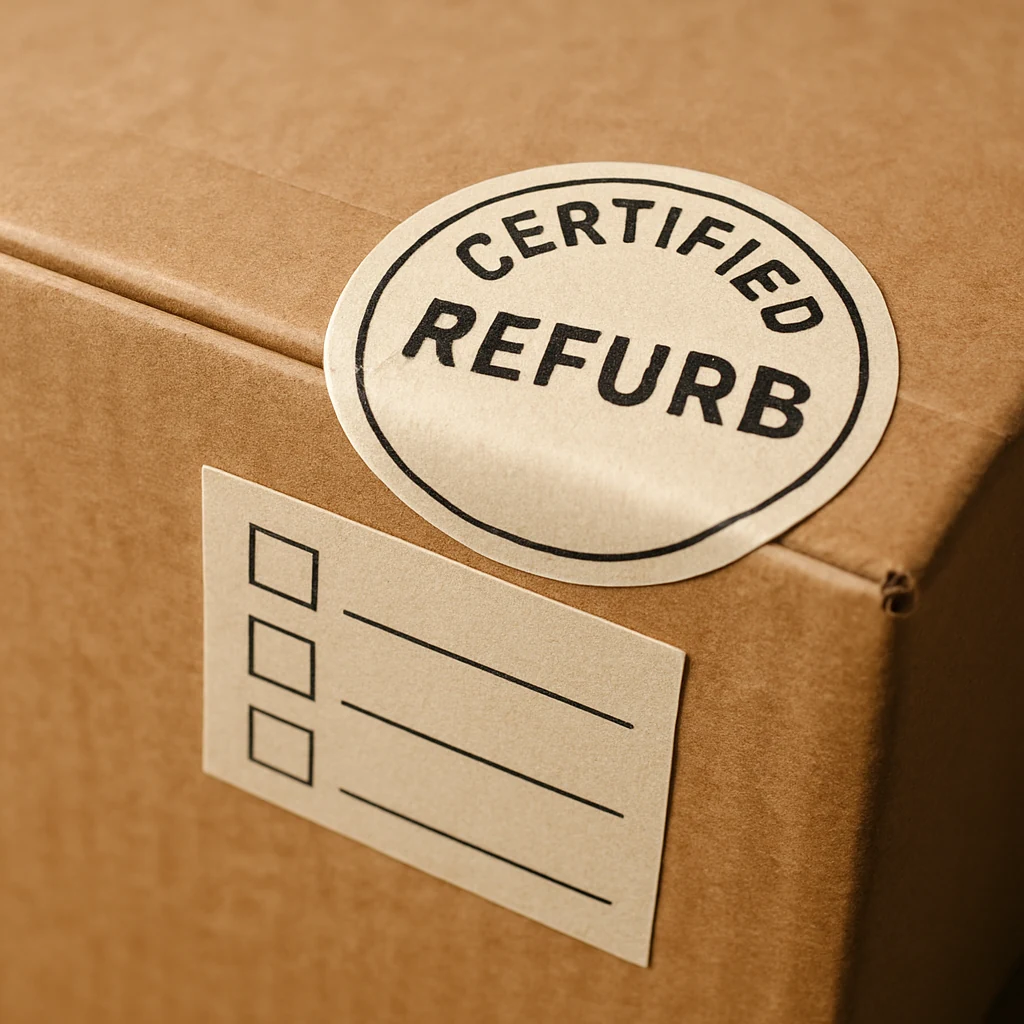
1) Start with who refurbished it (not the discount)
If you take only one rule: prioritize the refurbisher over the price tag.
Why it saves you money: A legit refurb process usually means testing, replacing worn parts, wiping data properly, and packaging that won’t arrive looking like it survived a cross-country move. That reduces the chance you’ll pay return shipping, lose time, or end up re-buying the item new.
When to apply it: Anytime you’re buying electronics, small appliances, power tools, networking gear, or anything with firmware/batteries.
In practical terms, “manufacturer refurbished” (or a well-known authorized refurbisher) is typically the lowest-risk category. “Seller refurbished” on a marketplace can be fine, but it’s more of a case-by-case decision—especially if the seller is basically flipping returns.
2) Do the checkout math: price + sales tax + shipping + return shipping risk
A refurbished listing can look like a deal until you hit checkout.
Why it saves you money: Your real price is what you pay after sales tax, shipping, and any fees. And if the item is risky, the expected cost includes the hassle (and possible cost) of returning it.
When to apply it: Always—especially with heavy items (like vacuums), fragile items (like monitors), or anything with unclear return terms.
A simple way to think about it: a “cheaper” refurbished item with paid return shipping can end up costing more than a slightly higher priced option that’s easy to return.
3) Treat the return policy like insurance (because it is)
Returns are the difference between “smart savings” and “stress purchase.”
Why it saves you money: Refurbs have a higher chance of cosmetic wear, missing accessories, or early failure. A clean return path means you can try it at home without gambling.
When to apply it: Any time the product’s condition matters (screens, lenses, headphones) or compatibility matters (routers, laptop docks, smart home devices).
Look for clarity on:
- How many days you have to return
- Whether returns are free or require you to pay shipping
- Whether there’s a restocking fee
- Whether you must keep the original packaging
If any of that is vague, assume it’ll be annoying later.
4) Read the condition grade like a contract (and verify what’s included)
“Excellent,” “very good,” “good,” and “acceptable” are not standardized across the internet.
Why it saves you money: Missing accessories are the silent budget killer. A refurbished laptop that ships without the right charger can erase the savings fast. Same with phones missing a SIM tool, watches missing a band size you can actually wear, or cameras missing a battery/charger.
When to apply it: Before you click buy, especially on marketplace listings and “open-box” deals.
If the listing doesn’t clearly say what’s included, assume it includes only the core item. When you’re comparing options, compare “all-in readiness,” not just the item price.
Here’s a quick, practical checklist you can use before ordering (keep it short and strict):
- Power/charging accessories included and correct for US outlets
- Battery condition disclosed (if it matters)
- Screen/ports/buttons tested (not just “turns on”)
- Factory reset Ofertas data wiped confirmed for phones, tablets, laptops
- Original warranty status stated (or replaced by a refurb warranty)
5) Prefer refurbished for categories where “used” barely matters
Not every product is a good refurbished candidate.
Why it saves you money: Some items are easy to test and unlikely to have hidden wear. Others are risky because wear is the whole product.
When to apply it: Use refurbished confidently for products that are easy to validate quickly after delivery.
In general, refurbished tends to be a solid bet for things like routers/modems, monitors (if return-friendly), laptops (if the refurbisher is reputable), smart speakers, kitchen appliances, and power tools.
Be more cautious with items where hygiene, fit, or micro-wear matters a lot (like earbuds, razors/grooming gear, mattresses), or where authenticity is a common issue (high-demand branded accessories). In those cases, the best “deal” may be buying new during a major US sale window.
6) Use seasonal timing that favors refurbished (not just Black Friday)
Yes, Black Friday and Cyber Monday can be great, but refurbished has its own rhythm.
Why it saves you money: Refurb supply often grows after waves of returns and upgrades. That can mean better availability and more competition among sellers.
When to apply it: When you’re not in a rush and can time the purchase to common retail cycles.
A few US-timing patterns that often create opportunity (without relying on specific numbers):
- Post-holiday season (January): Lots of returns and “didn’t fit my setup” items.
- Back-to-school (late summer): New model launches and upgrades can push older models into refurb channels.
- After major product launches: When a new generation drops, the previous generation can show up in certified refurb programs.
- Prime Day Ofertas mid-summer sale periods: Even if you buy elsewhere, those events can trigger competitive pricing across retailers.
If you need it by a specific date (a trip, a move, a gift), build in time for a possible exchange. Refurb savings are best when you can afford a backup plan.

7) Choose the right payment method for extra protection
This isn’t about “gaming the system”—it’s about not paying twice if something goes sideways.
Why it saves you money: Strong dispute resolution and purchase protections can matter more with refurbished items, especially if the seller drags their feet.
When to apply it: Marketplace purchases, third-party sellers, or any listing where the warranty is limited.
In the US, paying with a credit card can give you an extra layer of protection compared to debit in many situations. Also consider keeping order confirmations, condition photos on arrival, and the packaging until you’re sure you’re keeping the item.
8) Inspect fast, test hard, and decide early
The best refurbished strategy isn’t “hope it’s fine.” It’s “verify it quickly.”
Why it saves you money: The longer you wait, the more likely you miss the easiest return window—and the more time you burn troubleshooting.
When to apply it: Immediately after delivery, ideally the same day.
A good approach is to run a short “first-hour test” based on the product:
- For a laptop: check battery health basics, keyboard/trackpad, ports, Wi‑Fi, speakers, camera, and display issues.
- For a phone/tablet: test charging, speakers, microphones, cameras, biometric unlock, and cellular/Wi‑Fi.
- For appliances: run a real cycle/test, not just “it powers on.”
If something feels off, don’t talk yourself into keeping it. Refurb is supposed to save money, not create a side project.
Common refurbished pitfalls (and how to avoid them)
The biggest mistakes aren’t complicated—they’re usually “I assumed.”
A few examples:
- Assuming “refurbished” equals “like new.” Sometimes it’s closer to “fully functional, cosmetic wear.”
- Assuming accessories are included. Always confirm.
- Ignoring the seller type on marketplaces. Great ratings and clear policies matter.
- Forgetting sales tax and shipping. The deal is the final checkout total in USD.
FAQs
Is refurbished worth it for gifts?
It can be, but only if you can test it early and the return window won’t create pressure. For gifts, prioritize listings with straightforward returns and clean packaging expectations. If presentation matters, refurbished may not be the right fit.
What’s the difference between refurbished and open-box?
“Open-box” usually implies the item was returned quickly and may not have undergone a full refurbishment process. “Refurbished” suggests some level of inspection/testing/repair, but the quality depends on who did it. In both cases, the return policy and included accessories matter a lot.
Will I still pay sales tax on refurbished items?
Often, yes—many online retailers and marketplaces collect sales tax based on your shipping address. Treat tax as part of the real price when comparing options.
Should I buy an extended warranty on a refurbished item?
Sometimes it makes sense, but don’t default to it. First, see what warranty already comes with the item (manufacturer or refurb warranty), then weigh the cost against how hard/expensive the item would be to replace.
How do I avoid counterfeit or misrepresented items?
Stick to reputable refurbishers, avoid listings with vague descriptions, and be cautious with deals that look too good to be true—especially on high-demand branded accessories. When in doubt, choose a seller with a clear return process and strong buyer protections.

The bottom line
Refurbished shopping is one of the few online deal tactics that can save you money even when there’s no coupon and no big sale. The key is to shop it like a pro: trust the refurbisher, price the full checkout, treat returns as insurance, and test fast.
Do that, and “refurbished” stops feeling like a gamble—and starts feeling like a repeatable savings strategy.
You may also be interested

Cash Back or Coupon? Keep Your Online Savings From Disappearing
Learn when to use coupons, cash-back portals, or card offers—and how to avoid tracking mistakes before Black Friday and Cyber Monday.

Open-Box and Refurbished Deals: A Smarter Way to Shop Holiday Sales
Learn how to vet open-box and refurbished deals before Black Friday, from condition and warranties to battery health, seller quality, and gift readiness.

Discounted Gift Cards: 6 Mistakes That Can Erase Your Savings
Buying discounted gift cards for holiday shopping? Avoid balance problems, refund traps, and bonus-card restrictions before locking up your money.