

Yuasa YTZ10S 12V 190 CCA maintenance-free VRLA AGM motorbike battery
Reviews
Price
Product description
The essentials
If your motorbike starts a bit slower than it used to, or you’re simply due a dependable replacement, the Yuasa YTZ10S is aimed at the “fit it and forget it” end of the battery market. It’s a 12V, VRLA AGM battery designed for motorbikes, and the “maintenance-free” angle matters if you don’t want to be checking or topping up anything.
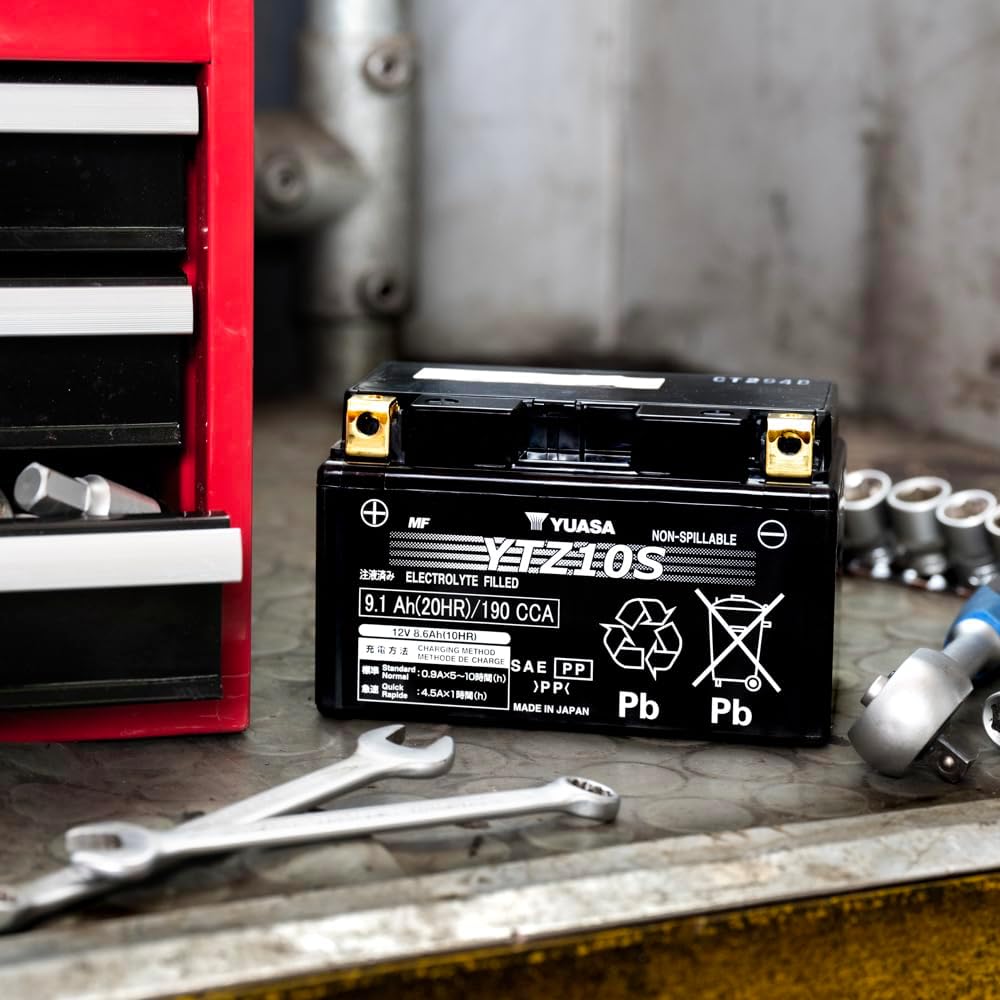
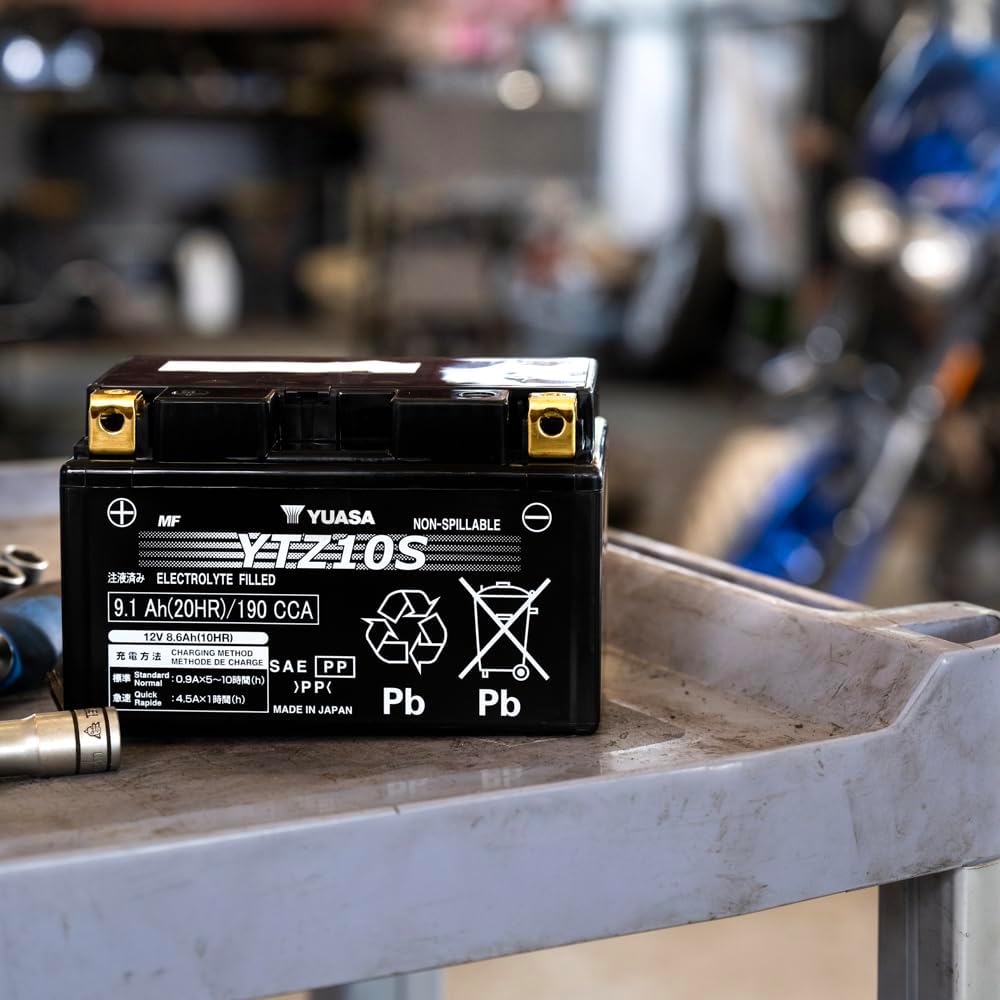
On paper, this one looks like a compact, everyday workhorse: Yuasa lists 8.6Ah (10-hour rate) and 9.1Ah (20-hour rate), plus a quoted 190 CCA. Weight is given as 3.2kg with acid, and the battery uses an 11 terminal type. It’s the sort of spec set you’d expect for a lot of standard-size bikes where you want solid cranking performance without going down the rabbit hole of frequent maintenance.
It’s not a “universal fit” by default though—motorbike batteries are all about the right terminal type and dimensions for your machine—so it’s worth checking your current battery details before you assume it’s a drop-in.
Key takeaways (what stands out)
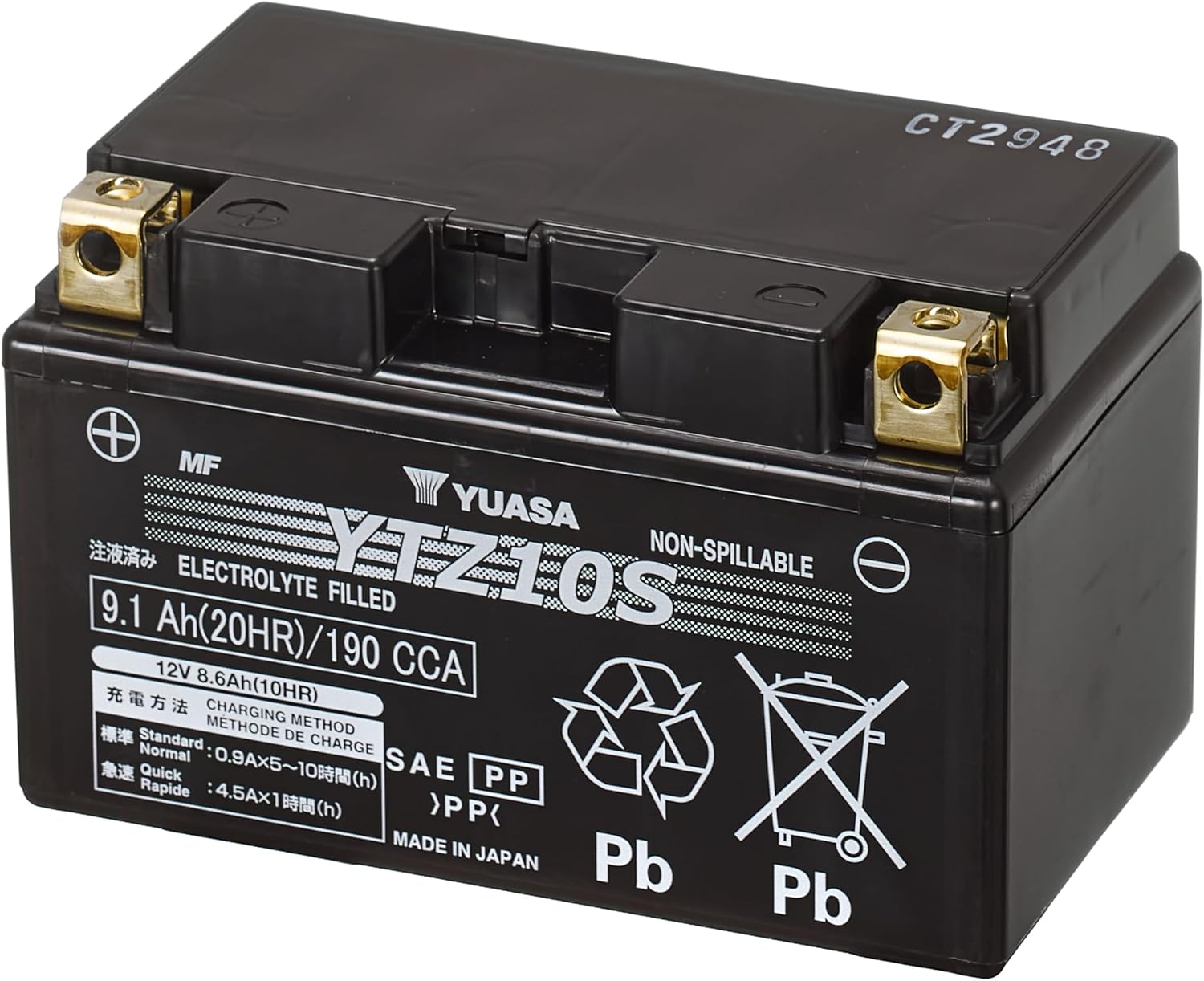
The big selling point here is the combination of VRLA AGM construction and maintenance-free operation. AGM batteries typically suit riders who want stable performance and a sealed design, and the maintenance-free claim suggests you can focus on riding rather than servicing.
The second thing to notice is the CCA figure: 190 CCA gives you a reference for cold cranking ability. If your bike spends time in a garage that gets chilly, or you ride early mornings, CCA is one of the more practical numbers to look at alongside the amp-hour capacity.
That said, it’s still a mid-spec size battery by capacity, not something built for high-drain setups with lots of extra electronics. If your bike has been modified heavily (extra lights, heated gear, auxiliary electrics) you may find you need to think beyond a straightforward replacement.
Tech specs (the numbers you should care about)
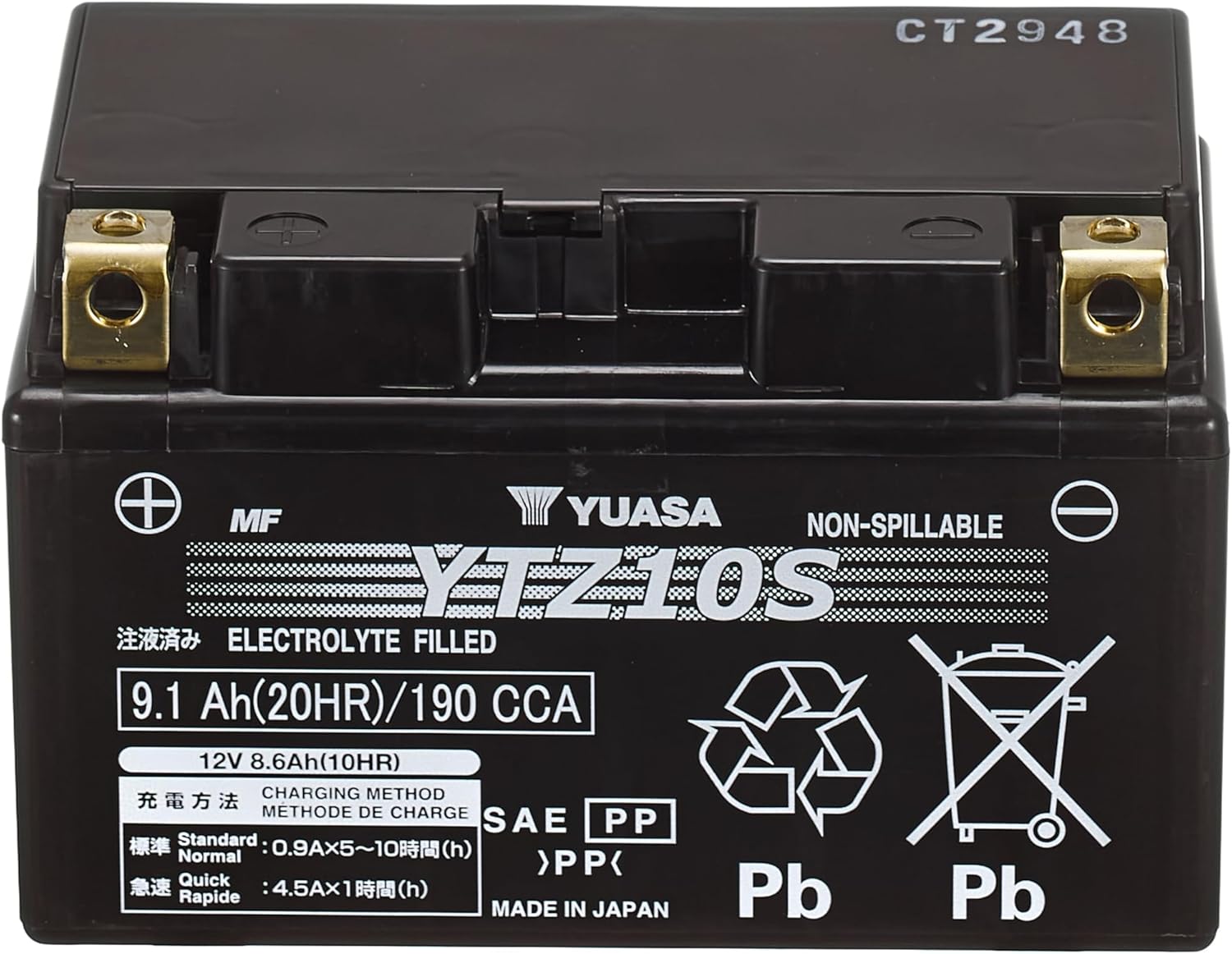
- Type: VRLA AGM (maintenance-free)
- Name: Yuasa YTZ10S
- Voltage: 12V
- Capacity (10-HR): 8.6Ah
- Capacity (20-HR): 9.1Ah
- Weight (with acid): 3.2kg
- Terminal type: 11
- Charging current (amperios): 0.9
- Cold Cranking Amps (CCA): 190
If you’re comparing options, don’t just look at CCA in isolation. For day-to-day use, the Ah rating and your bike’s normal draw (and charging behaviour) usually matter too—especially if the bike is left unused for stretches.
Getting the most from it (practical considerations)
Where this battery fits best is the simple “replace the old one with something of similar spec and seal type” approach. A good micro-example: imagine you park the bike for a couple of weeks, then go to start it on a cold morning. With the right battery, the aim is quick, confident cranking rather than a slow struggle. The stated 190 CCA and AGM/VRLA sealed design are there to support that kind of real-world expectation.
A few things to keep in mind before you buy: - Confirm the terminal type matches your current battery and the way your leads connect. - Make sure the replacement matches your bike’s required battery size/fitment (the listing data you have here doesn’t include dimensions, so you’ll need to check your current battery or the bike’s manual). - Consider how you charge your bike in storage. The charging current is listed as 0.9A, which implies a gentle approach rather than fast charging.
Pros and limitations (honest view)
Why it makes sense: - Maintenance-free VRLA AGM format for less hassle. - Practical cold cranking reference (190 CCA) and reasonable capacity (8.6Ah/9.1Ah). - A straightforward replacement path if your current battery is similar in type and spec.
Where it may fall short: - If you need a longer reserve capacity for heavy auxiliary loads, the listed amp-hour figures suggest it’s not a “big battery” solution. - It may not be a straightforward swap if your current setup uses a different terminal type or requires different physical dimensions.
Who it’s for (and who should look elsewhere)
It’s a sensible choice if you: It makes sense if you’re after a sealed, maintenance-free AGM replacement and you want a battery that’s built for everyday starts rather than constant monitoring.
You may want to skip it if you: It might not be a great match if you’re running a bike with significant extra electrical demand, or if you can’t confirm terminal type and fitment details from your current battery.
Also worth noting: cold-cranking ability can be affected by temperature and the overall health of the charging system. This listing tells you the battery’s CCA and capacity, but it doesn’t confirm your bike’s charging performance—so if you’ve had repeated battery failures, you may need to check the regulator/rectifier and charging output as well.
Is it worth it?
Buy the Yuasa YTZ10S if you want a maintenance-free 12V VRLA AGM motorbike battery with the stated 190 CCA and capacity figures, and you’ve checked that the terminal type and physical fit will suit your bike.
Avoid it (or at least pause and verify) if you can’t confirm compatibility beyond the voltage—terminal type matters, and battery dimensions are often the real deal-breaker. If you’re chasing maximum reserve for heavy accessories or you suspect your bike isn’t charging correctly, this is less about “the right battery for everything” and more about a normal replacement job done properly.
Quick FAQ
How do I check compatibility before buying?
Start with voltage (12V is a must), then match the terminal type (listed as 11) and confirm dimensions/fit against your current battery or your bike’s manual.
What do CCA and Ah mean in practice?
CCA (190) gives a guide to cold cranking strength, while Ah (8.6Ah at 10-HR and 9.1Ah at 20-HR) is more about stored energy and how long the battery can sustain a load.
Is it really maintenance-free?
The product name specifies maintenance-free VRLA AGM, which typically means you shouldn’t need topping up like with older non-sealed designs. Still, follow any charging guidance you use with your bike.
What charging rate should I use?
The listing states a charging current of 0.9A, suggesting a gentle charge approach.
Does this suit long periods of inactivity?
Sealed AGM batteries can be a practical choice for riders who don’t want maintenance, but the storage outcome still depends on your bike’s charging system and how long it sits unused. If you leave it for weeks often, it’s worth being disciplined with charging/conditioning.