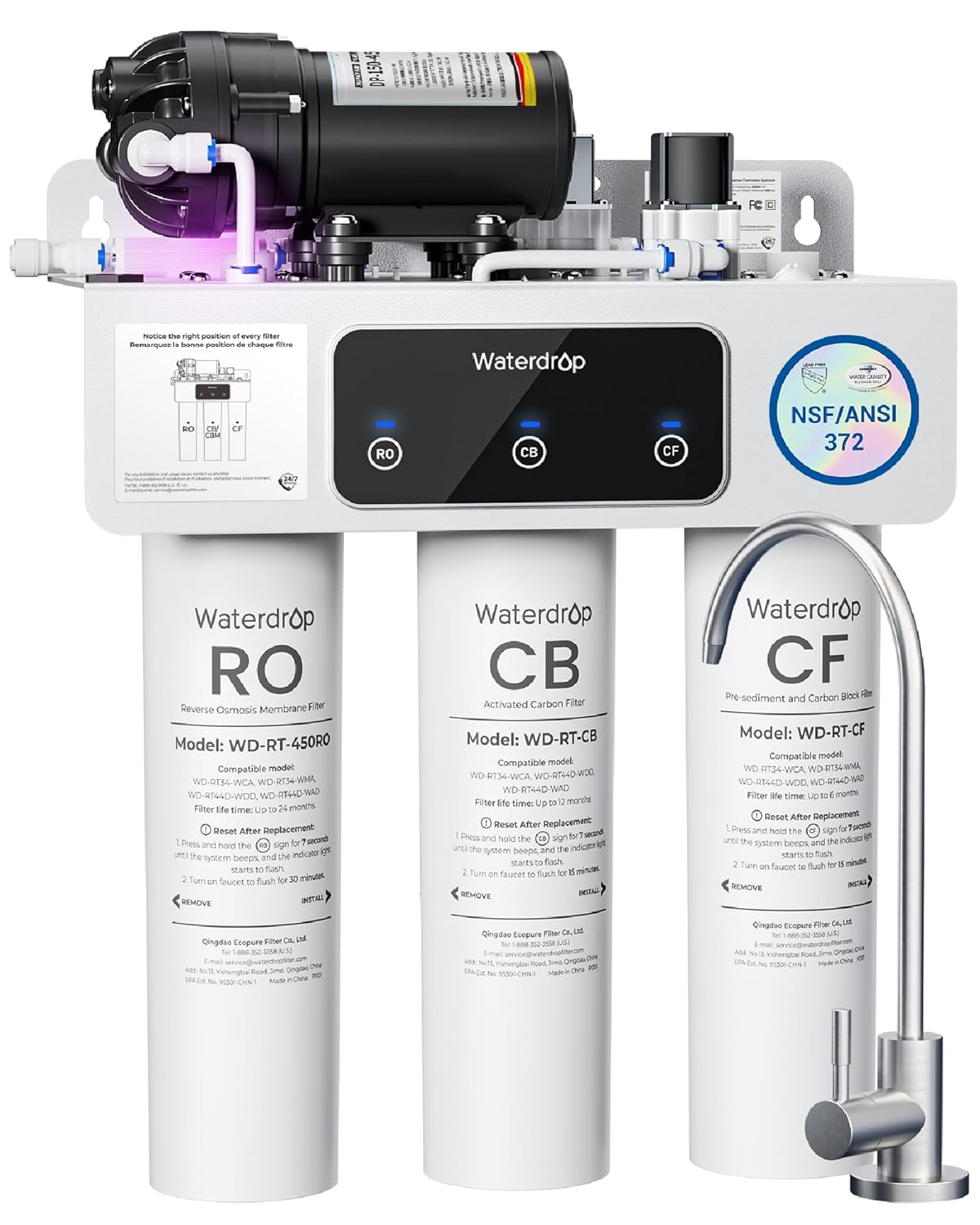
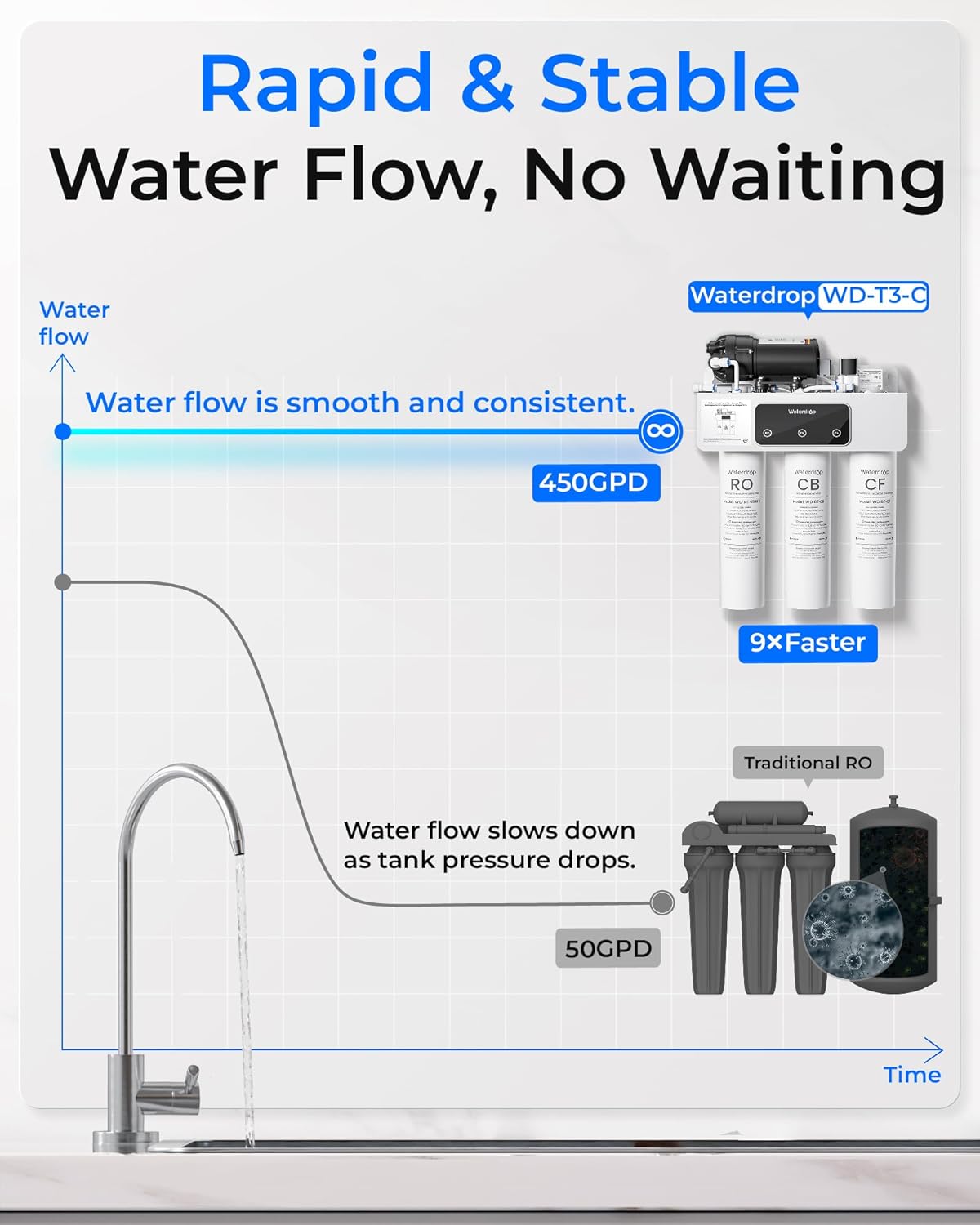
What it is and the problem it solves\nThe Waterdrop T3-C is a tankless under-sink reverse osmosis system designed to deliver pure, great-tasting water without the bulk of a traditional storage tank. It targets the common concerns around heavy metals, chlorine, PFOA & PFOS, and other contaminants, offering a compact solution that fits tighter spaces. If you value a calm, everyday approach to clean water with fewer maintenance headaches, this unit aims to address that need.\n\n## How it performs on paper\nOn paper, the WD-T3-C features an advanced 8-stage filtration train and a 0.0001μm RO membrane, which supports the claim of markedly reduced contaminants. It is certified to NSF/ANSI 372, which may reassure buyers prioritising certified materials. The system supports a fast 450GPD flow and includes smart alerts so you know when to replace filters. A single all-in-one cartridge allows quicker changes, which reduces downtime and upkeep. The design emphasises eco-efficiency with a 2:1 pure-to-drain ratio, potentially saving water compared with older tank-based RO setups.\n\n## Practical use and installation realities\nSetup is described as flexible: under-sink or wall-mounted, and it omits a bulky storage tank, which can free up valuable cabinet space—Waterdrop suggests up to 70% space savings versus traditional RO systems. Note that faucet installation requires drilling a hole in the countertop, and the unit needs an electrical connection to operate, so plan the nearby accessibility accordingly. The LED indicator provides a quick visual cue of operation, and auto-flush helps keep the membrane cleaner between uses.\n\n## What stands out in day-to-day use\nIn everyday scenarios, you can expect stable water flow with the promise of lower maintenance due to the 6-month CF filter, 12-month CB filter, and 24-month RO filter cycle schedule. The absence of a storage tank means fewer mechanical components that can wear, but it also means you rely on continuous supply rather than a stored reserve. This setup suits homes prioritising compactness and long-term filtration costs over tank-based immediacy.\n\n## Pros and cons in simple terms\n- Pros: compact footprint, no tank, clear filter-change cadence, notable filtration stages, and a defined pure-to-drain ratio.\n- Cons: requires a power connection and countertop drilling for faucet, which isn’t ideal if you’re renting or cannot alter the surface. It’s not the best option if you need a rapid, reservoir-based supply for high-volume use or if you prefer a fully battle-tested tanked system for peak daily demand.\n\n## Who it’s for and who it isn’t\nIt’s well-suited for households seeking better-tasting water without the bulk of a storage tank, and for those who can accommodate under-sink electrical access and countertop drilling. If you prioritise immediate high-volume draws from a stored tank or you want a plug-and-play, garage-sale‑style retrofit with minimal installation, this might feel less straightforward.\n\n## Buying considerations before you commit\n- Check that your countertop can accommodate the faucet hole and that there’s a nearby power outlet.\n- Consider cabinet depth and available under-sink space given the tankless form factor.\n- Confirm that you’re comfortable with a continuous supply model rather than a reservoir that stores water.\n- Think about your water quality goals against the 8-stage filtration profile and whether the 0.0001μm membrane aligns with your expectations for contaminant reduction.\n\n## How it compares to other approaches\nCompared with traditional RO systems with tanks, this unit trades a bulk storage tank for space efficiency and potentially steadier flow. If you live in a larger household with high daily demand, you might appreciate the 450GPD capability, but you’ll want to ensure the power and installation requirements are feasible in your kitchen. If you’d rather not drill or wire, a non-tank system with simpler installation could be more appropriate, though it may not match the filtration depth here.\n\n## Practical use example\nImagine filling a tall glass of water in the morning: you switch the tap, and within moments you have crisp, clean water, with auto-flush helping keep the membrane active. The LED shows the unit is live, and you can rely on the smart reminders to swap filters on schedule rather than guessing.\n\n## FAQ (practical answers)\n- How often do I need to replace filters? The system features a practical 6/12/24-month cycle for different filters, but actual replacement timing depends on usage and water quality.\n- Is an electrician required? Yes, the unit needs an electrical connection to operate.\n- Do I need a storage tank? No, the T3-C is tankless, which helps save space but changes the way you experience peak water demand.\n\n## Final decision: Is it worth it?\nWorth considering if you want a compact, tankless RO solution with certified components, clear maintenance cycles, and a strong emphasis on space efficiency. It may not be the best pick if you need reservoir-style capacity for very high daily consumption or if countertop modification is inconvenient. If you prioritise verified filtration depth and a lower footprint, this model is a credible option to weigh against other under-sink RO setups.