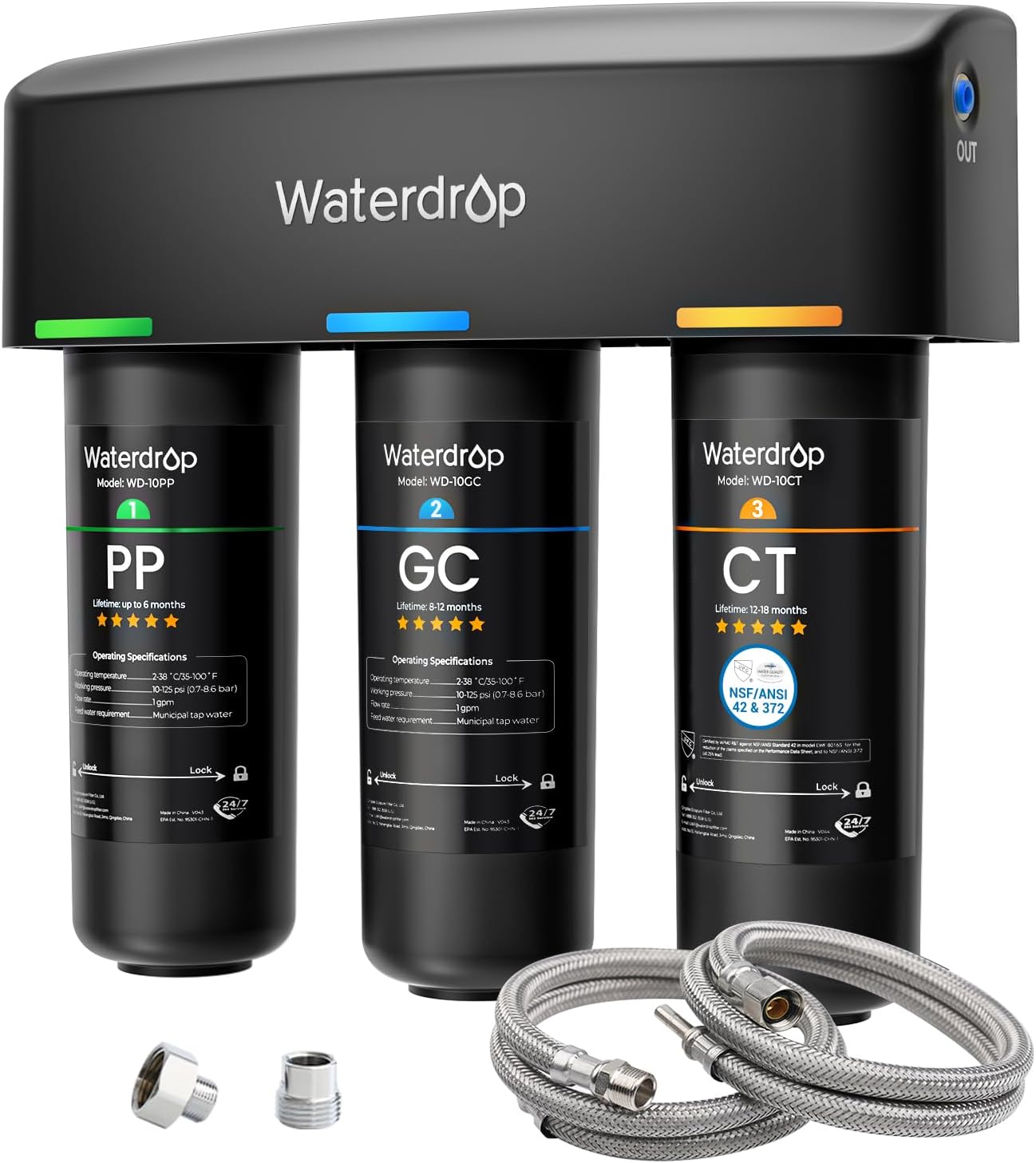
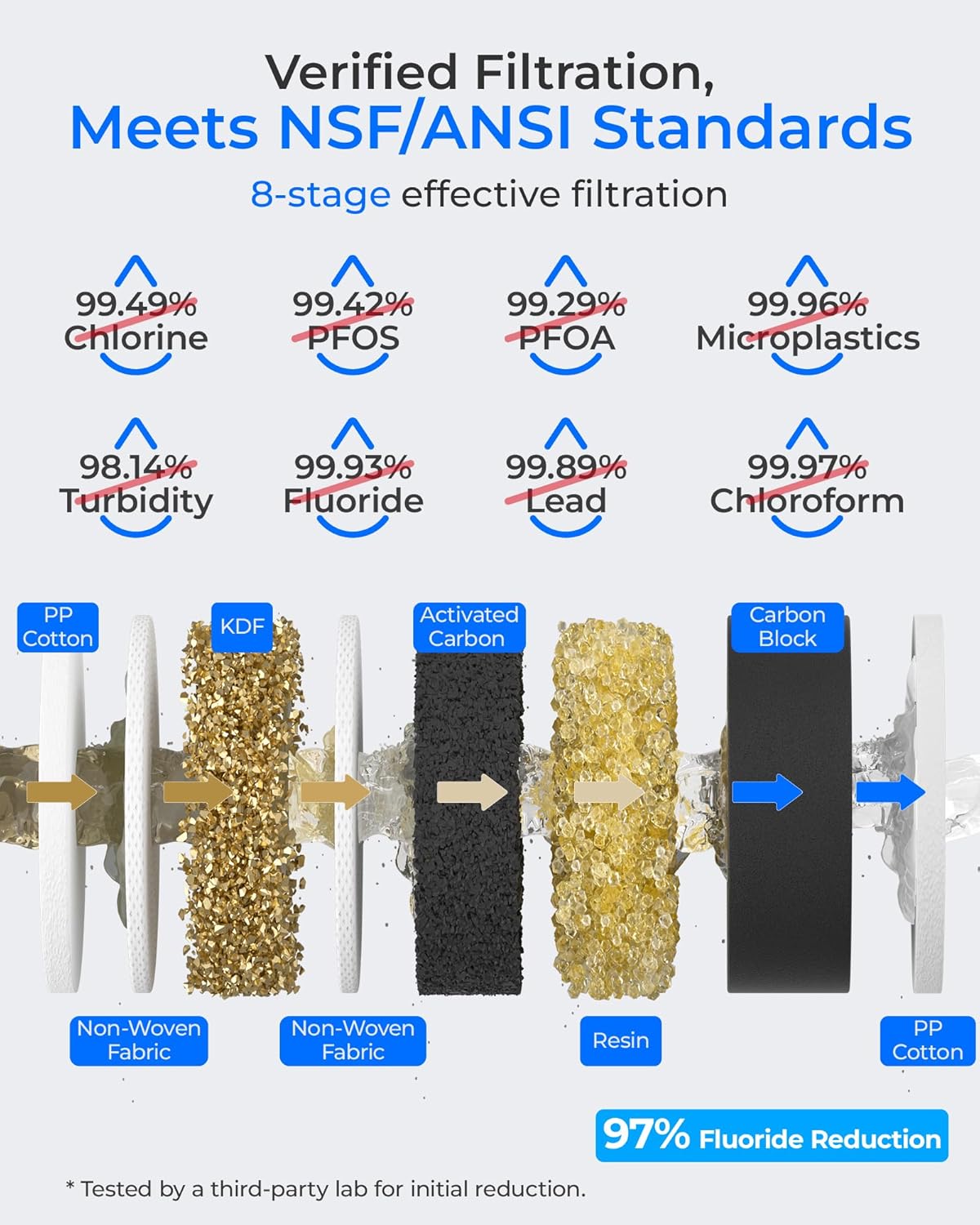
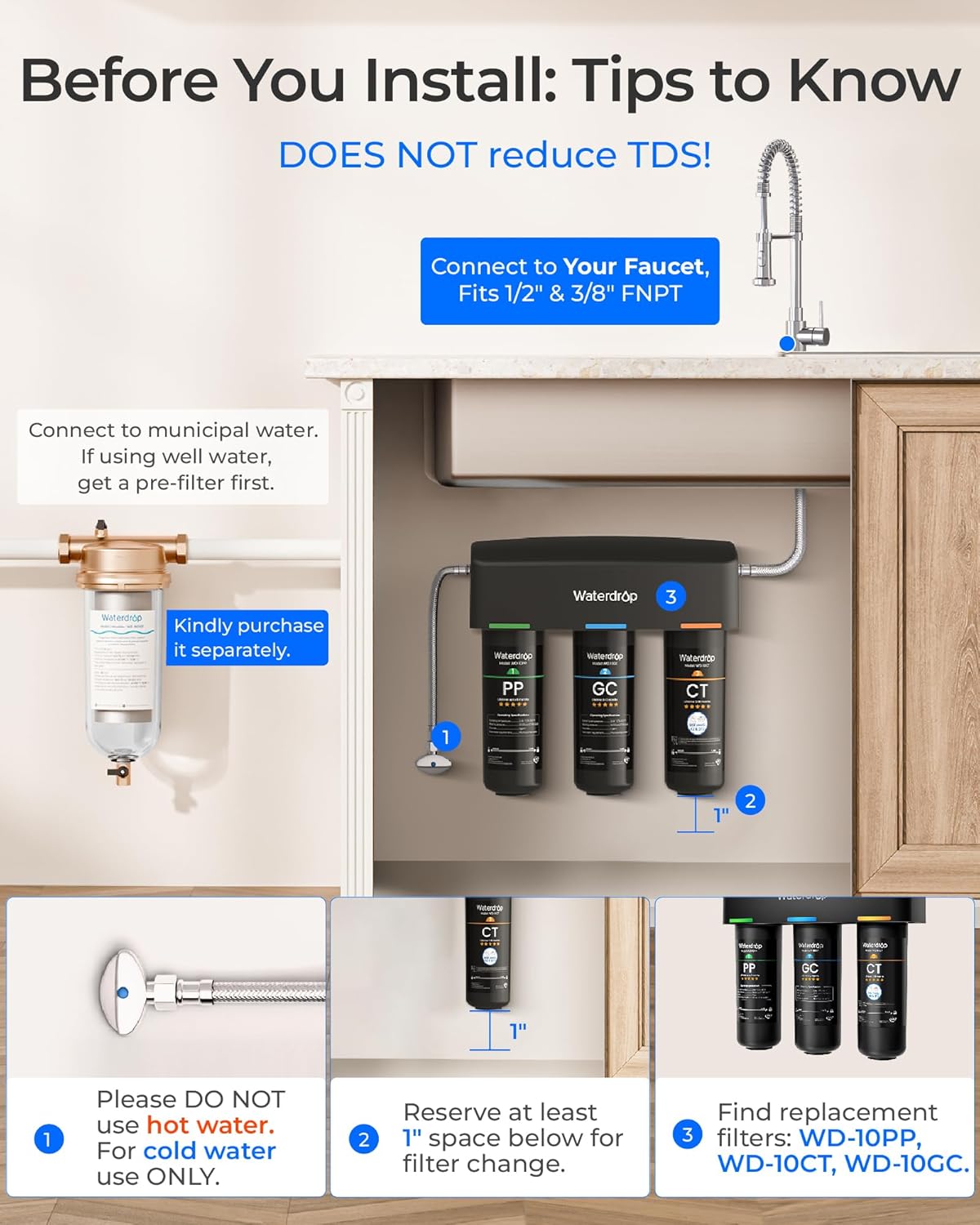
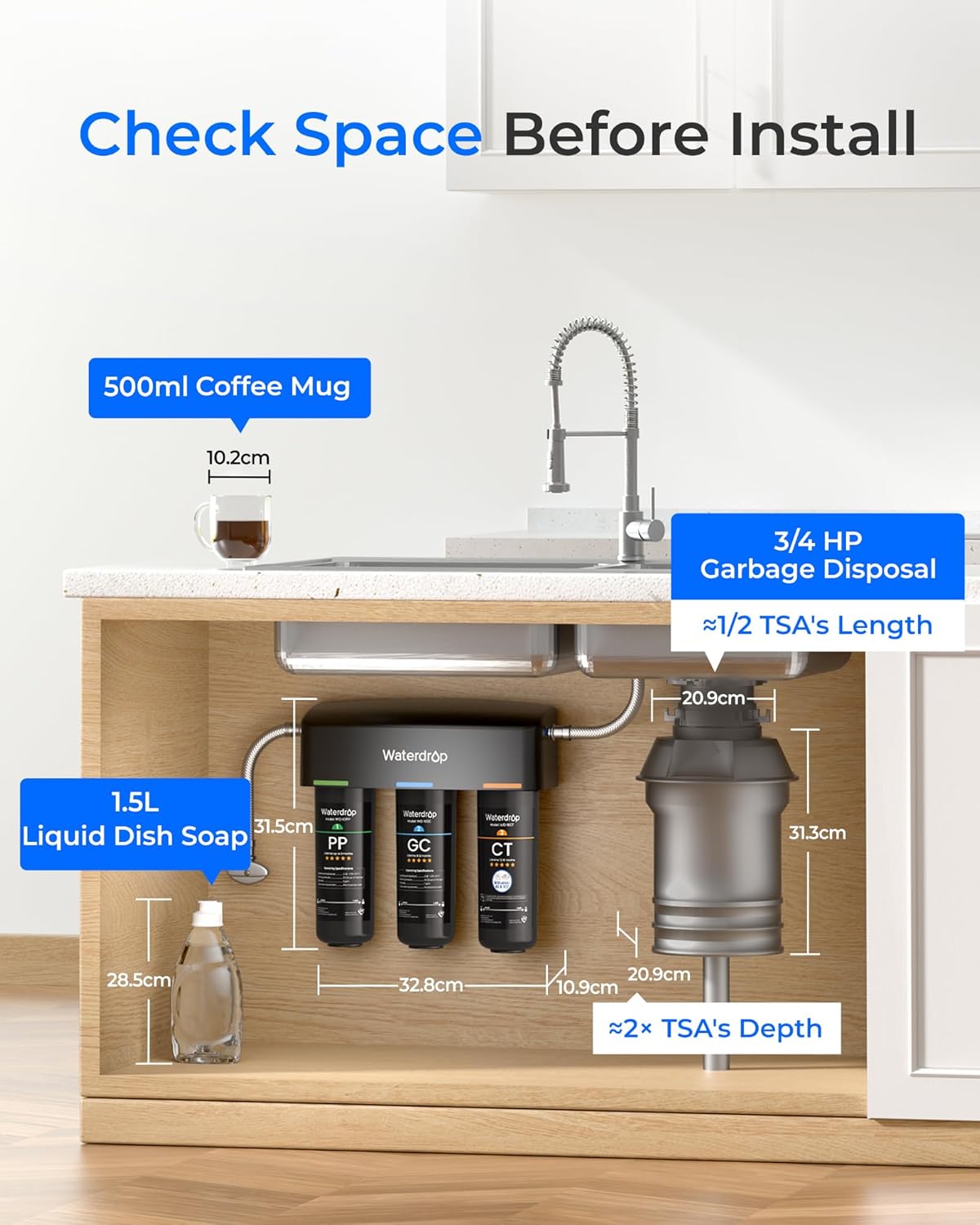
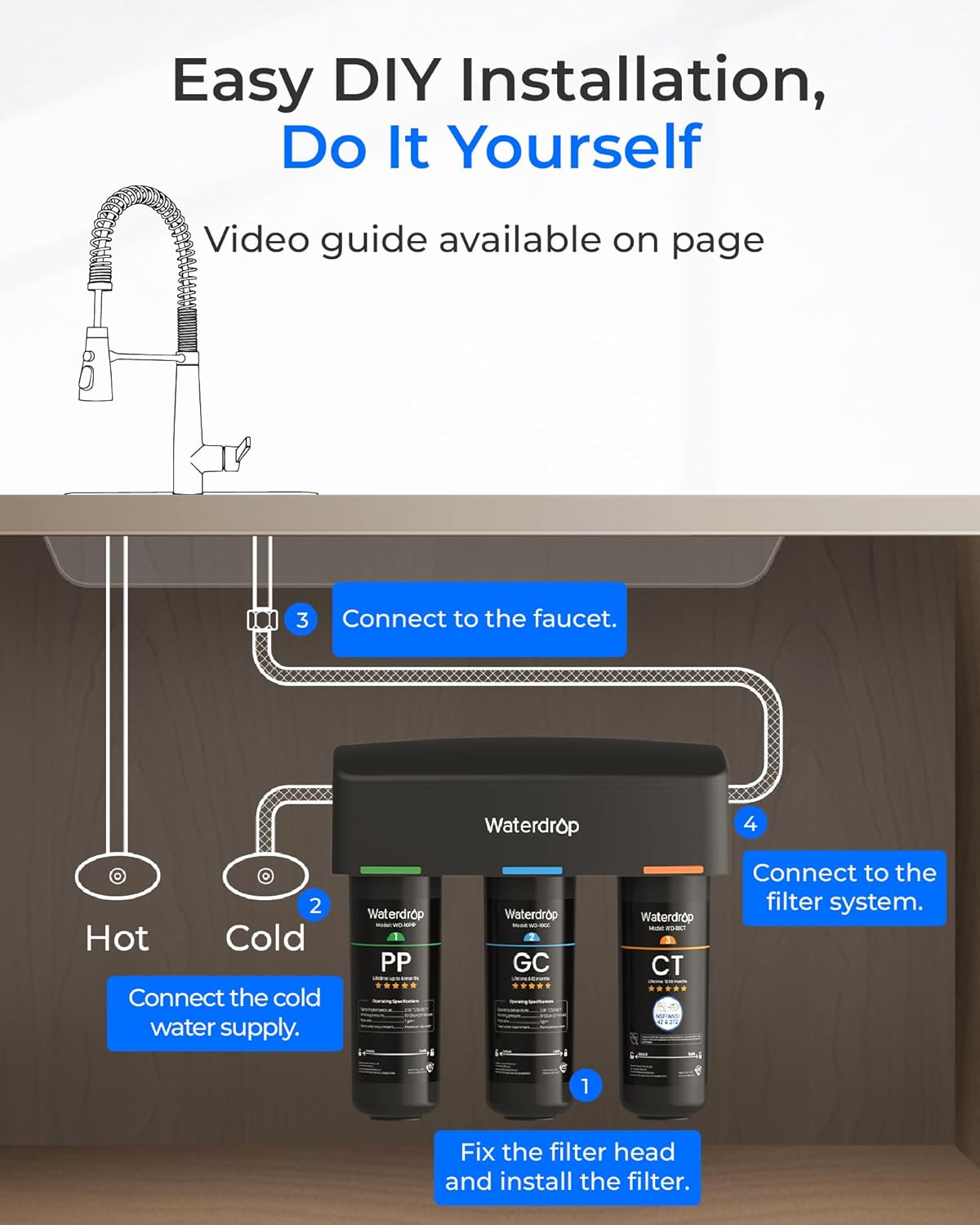
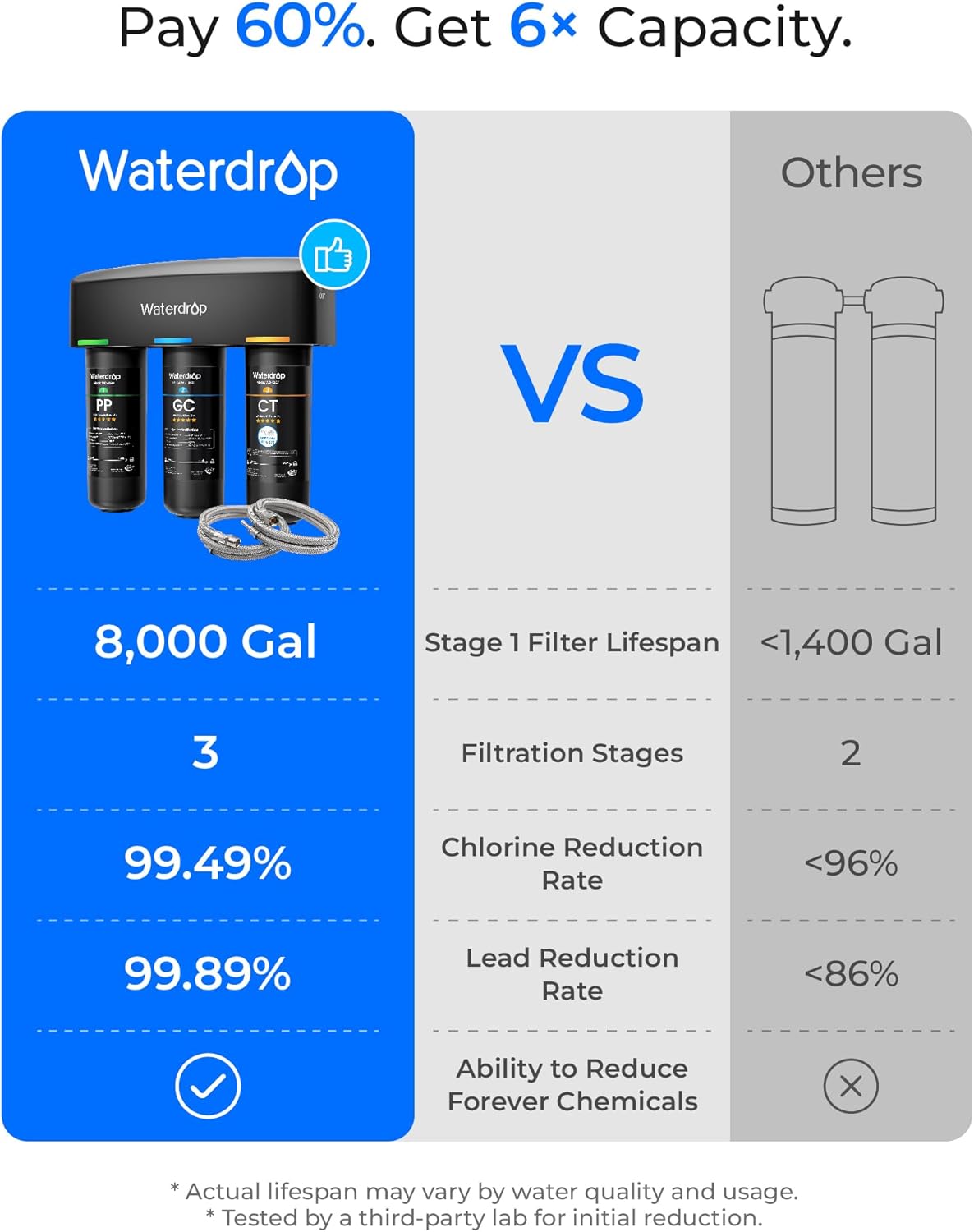
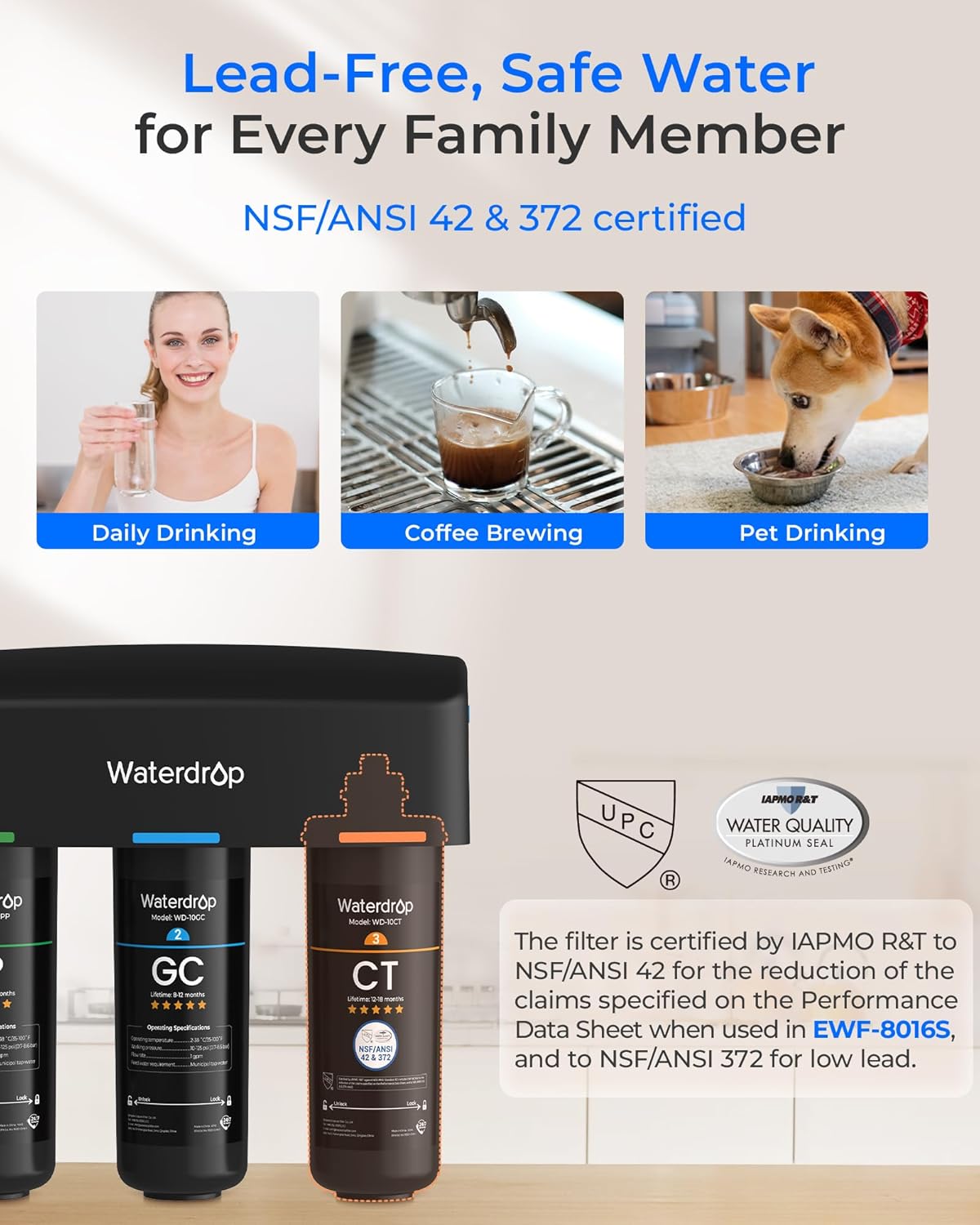
What it is and what it aims to fix\nThe Waterdrop TSA Under Sink Water Filter System is a 3-stage, high-capacity filtration setup designed to sit beneath the kitchen sink. It targets common water quality concerns by offering an 8-stage filtration approach that reduces PFAS, PFOA/PFOS, residual chlorine, fluorides and various contaminants such as heavy metals, silt and rust. The CT filter has IAPMO certification for residual chlorine reduction and taste improvement, while the system uses KDF materials and a resin to help address heavy metals and fluorides respectively. On paper, this aims to deliver purer-tasting water straight from the tap, with the promise of healthier daily use.\n\n## How it’s built for real-life use\nDurability is a clear focus: the design uses age-resistant and freeze-resistant materials and is built to withstand up to 400 psi burst pressure, plus thousands of pulse and static tests to verify reliability. The idea is to minimise cracking or leaking in everyday kitchen scenarios. The three cartridges have different lifespans (6 months, 8–12 months, 12–18 months), which gives a practical sense of maintenance over time. Installation is pitched as a DIY job with push-to-connect fittings and a twist-and-lock filter replacement that can be done in seconds.\n\n## What to know before buying\nIf you value mineral retention, you’ll be reassured that this system is designed to keep minerals while reducing certain contaminants. The carbon block is sourced from natural coconut shells, though you should check for any specific allergies. A caveat is noted: it won’t remove Total Dissolved Solids (TDS), so if you expect absolute mineral elimination, this setup may not meet that requirement. The system uses 3/8” and 1/2” cold water tubes, which is common in many UK kitchens, but it’s worth confirming compatibility with your under-sink plumbing.\n\n## What stands out on a day-to-day basis\nOn the positive side, the three-stage design promises comprehensive filtration for daily drinking and cooking water, with rapid cartridge changes and a compact under-sink footprint. The mixture of KDF and resin materials targets a balance between taste improvement and contaminant reduction, which can translate to noticeably better water quality for regular use.\n\n## Potential limitations and who it’s for\nThis system is positioned for households seeking practical improvements in taste and certain contaminant reductions without moving to more extensive or pricier filtration solutions. It may not be the best option if your priority is complete TDS removal or if your water supply has contaminants not specifically addressed by these filters. If you’re not keen on DIY installation, or if your under-sink space is unusually tight, you might want to verify space and compatibility ahead of buying.\n\n## What to check before buying\nEnsure your pipes and existing fittings align with 3/8” or 1/2” cold water tubes. Confirm you’re comfortable with quarterly to annual cartridge maintenance, depending on water usage and water quality in your area. Remember the note about mineral retention and that the system won’t reduce TDS. If you’re comparing to alternatives, consider how the 3-stage approach aligns with your expectations for taste, chlorine reduction and heavy metal control.\n\n## Practical use example\nImagine filling a kettle or pitcher directly from the filtered line: you may notice a cleaner, fresher taste due to reduced chlorine and other substances, which makes everyday recipes and drinks more pleasant. The ease of installation and quick cartridge changes mean less downtime and more consistent access to filtered water.\n\n## Tech snapshot (brief)\n- 3-stage system with CT, KDF and resin components.\n- Tested beyond basic daily use: 400 psi burst pressure, 100,000+ pulses at 150 psi, static tests at 300 psi.\n- Lifespans: 6 months, 8–12 months, 12–18 months for the three filters.\n- Clear compatibility: 3/8” and 1/2” cold water tubes.\n\n## Is it worth it?\nIt makes sense if you’re after practical improvements in taste and certain contaminant reductions without stepping up to a more expensive, multi-stage system. It’s a solid middle-ground for households wanting straightforward DIY installation and a respectable maintenance cadence. It may not meet expectations if you’re aiming for complete TDS removal or if your water requires filtration beyond PFAS/PFOA/PFOS and lead. If your priority is a compact, reliably engineered under-sink unit with simple filter changes and credible certifications, this setup offers a reasonable balance.\n\n## FAQ (brief)\nQ: Does it remove lead and chlorine? A: The system is designed to reduce residual chlorine and general contaminants, and the CT filter supports chlorine reduction, lead reduction is implied through the overall filtration approach.\nQ: How long do the filters last? A: Each of the three filters has a different lifespan (6 months, 8–12 months, 12–18 months) depending on use and water quality.\nQ: Can I install it myself? A: The vendor promotes a DIY installation with push-to-connect fittings and a twist-and-lock cartridge change, stated to take minutes.\nQ: Is it suitable for all UK homes? A: It uses common 3/8” and 1/2” cold water tubes, but you should verify under-sink space and pipe compatibility in your kitchen.