

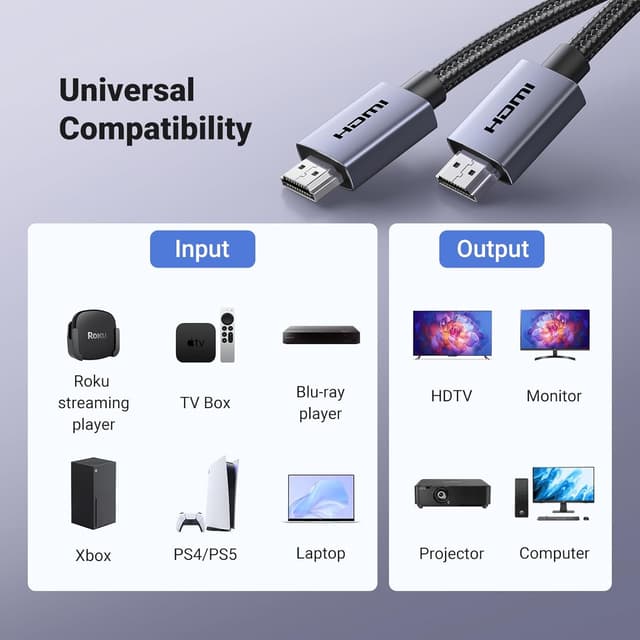
UGREEN HDMI 2.0 Cable (2m) for 4K@60Hz, ARC, HDR and Dolby Atmos support
Product description
The essentials
This UGREEN HDMI 2.0 cable is aimed at people who want one lead that can handle modern TV and gaming signals without overthinking it. On paper, it covers up to 4K UHD at 60Hz, plus higher refresh-rate modes listed in the description (including 1440P up to 144Hz and several 1080P/2K refresh options). It also leans into the “home cinema” angle with HDR support, ARC readiness, and audio features such as Dolby Atmos or DTS:X.
It’s the kind of HDMI lead that makes practical sense if you’re connecting a soundbar to a TV (ARC), or you’re trying to keep picture and sound in sync from a console, streaming box, or gaming monitor. The braided jacket, aluminium shell and multi-layer shielding are there for the daily abuse most cables get—tangles, bending and moving around behind a TV stand.
That said, it’s not a universal “magic cable” for everything. HDMI performance depends heavily on the devices at both ends, and if you’re chasing very specific bandwidth demands for cutting-edge setups, you’ll want to double-check your source and display settings.

What it’s for (and what to expect)
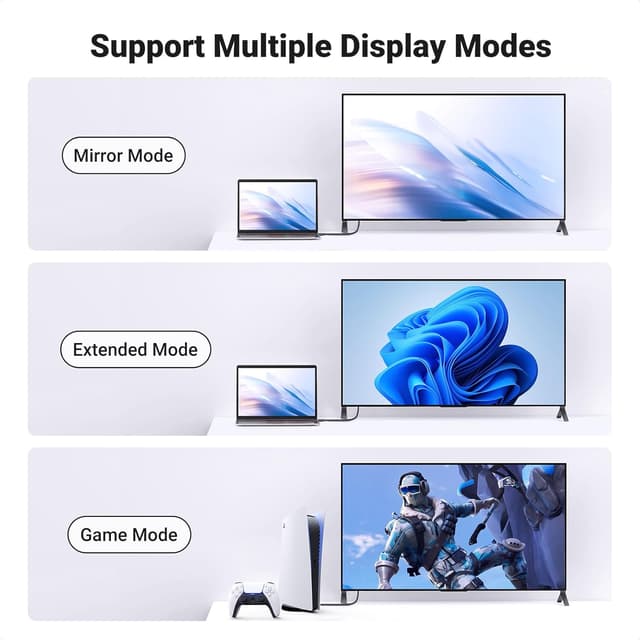
Where this cable feels most useful is in everyday setups: TV to soundbar, console to TV, or a laptop/PC to a gaming monitor. The description also mentions support for mirror/extend/game mode, which matters if you’re switching between work (desktop extended) and play (game mode) without wanting to change leads.
A concrete example: you plug your games console into the TV using this HDMI cable, then connect your soundbar over ARC (again, described as ARC-ready). The aim is that you get video and the correct audio path without having to juggle extra cables or set-up steps. If your TV and soundbar both support ARC, this is the sort of lead that can keep the connection straightforward.

Where it stands out
- High-speed spec for modern refresh rates: the description references an 18Gbps transfer rate and multiple resolution/refresh combinations, up to 4K UHD@60Hz. For many households, that’s the sweet spot between “good enough for TV” and “proper for gaming too”.
- ARC and audio features: it’s designed to be ARC-ready and also references Dolby Atmos or DTS:X support. If you care about getting audio to a soundbar or AV receiver through HDMI, this is the right direction.
- Ethernet-enabled over HDMI: the cable is described as Ethernet-enabled, which can simplify sharing an internet connection across HDMI devices that support that approach.
- Durability and signal protection: braided cable, aluminium shell, nickel-plated plug, plus 4-layer solid shielding are all included in the listing details—useful if your cable is likely to be moved or sits in a busy space.
Limits worth knowing
Even with strong specs listed, there are a couple of “be realistic” points. First, the cable supports HDR and ARC readiness, but you’ll only benefit if your TV, soundbar/AV receiver and source device actually support the relevant standards. Second, HDMI mode switching (mirror/extend/game mode) depends on device settings—so if you mainly use one screen and never change modes, it may not feel like a major advantage.
Also, the listing is broad in compatible device examples, but compatibility is still something you should confirm based on your exact hardware ports and settings.

Tech summary (from the listing)
Tech specs: - Type: HDMI 2.0 High Speed cable with ARC and Ethernet support - Length: 2m - Transfer rate: 18Gbps (as stated) - Video support (as listed): 4K UHD@60Hz, 1440P@144Hz, 2K@120Hz, and multiple 1080P refresh options - Audio features (as listed): ARC-ready, mentions Dolby Atmos or DTS:X support, 32-channel audio transmission - HDR: HDR support (as stated) - HDCP: HDCP 2.2 - Build: braided jacket, aluminium shell, nickel-plated plug - Shielding: 4-layer solid shielding

What to check before you buy
This is the kind of cable you buy once and then you hope it “just works”. To avoid disappointment, check three things:
1) ARC support on your TV and soundbar/AV receiver: if ARC isn’t supported on either end, you won’t get the ARC benefit. 2) Your target resolution and refresh rate: the listing includes multiple modes, but your console/PC and display must be set up correctly to actually output those speeds. 3) HDCP and HDR needs: if you’re using streaming or protected content, HDCP 2.2 is mentioned—still, content and apps will decide what you can watch in HDR.
If you’re only running basic TV viewing at standard settings, you may find you don’t need to spend as much attention on the cable specs. But if you want one lead that’s properly equipped for gaming and modern audio/video features, this does fit the brief.
Who it suits best—and who should skip it
It’s a solid pick if you want a single HDMI lead for a mixed setup: gaming console or PC to a TV/monitor, plus an ARC soundbar connection. It suits people who care about picture clarity (HDR as mentioned), decent gaming refresh rates, and keeping audio routing simple.
It may not suit you if you’re using very basic, low-spec equipment where ARC, HDR and higher refresh-rate output aren’t relevant. In that situation, spending time and money on higher-end HDMI capability could be more than you need.

Mini FAQ
Does this HDMI cable support ARC? The listing states it is ARC-ready, designed for audio routing via HDMI ARC-enabled TVs to a soundbar or AV receiver.
Will it handle 4K at 60Hz? The description mentions 4K UHD@60Hz (with the stated 18Gbps transfer rate).
Is Ethernet included over HDMI? Yes, it’s described as Ethernet-enabled and intended to let multiple HDMI devices share an internet connection where supported.
What audio formats does it mention? The listing references Dolby Atmos or DTS:X support and mentions 32-channel audio transmission.
Final verdict
If you want an HDMI 2.0 cable that’s geared towards modern TV/gaming use—specifically 4K@60Hz class performance, HDR support, and ARC audio routing—this UGREEN lead makes practical sense. It’s also reasonably compelling on the “daily life” side thanks to the braided jacket, aluminium shell and shielding described in the listing.
However, don’t buy it assuming it will automatically deliver every feature: ARC, HDR and the audio formats depend on your TV, soundbar/AV receiver and source devices, plus correct settings. If your setup is simple and you’re not using higher refresh rates or ARC, you may want to consider a more basic approach instead.