

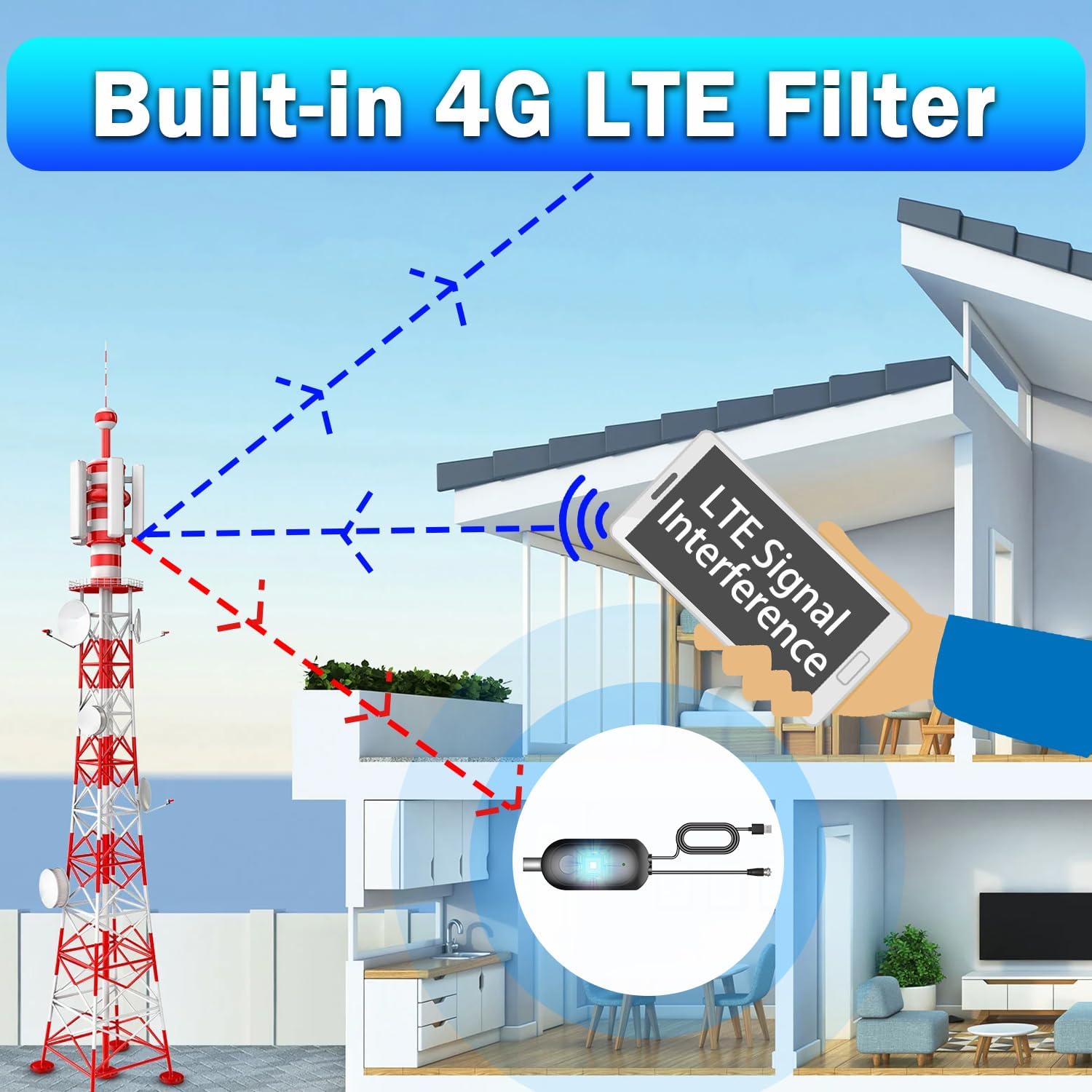
TV Aerial Booster Amplifier for Freeview HD – High Gain USB-Powered Indoor Signal Booster
Product description
What it is and what it’s for
This TV aerial booster amplifies signals for Freeview HD and other digital TV broadcasts, aiming to stabilise picture and sound when reception is inconsistent. It’s designed for indoor use with compatible TV aerials, offering a higher gain to help reduce pixelation and dropouts in everyday viewing.
How it works in practice
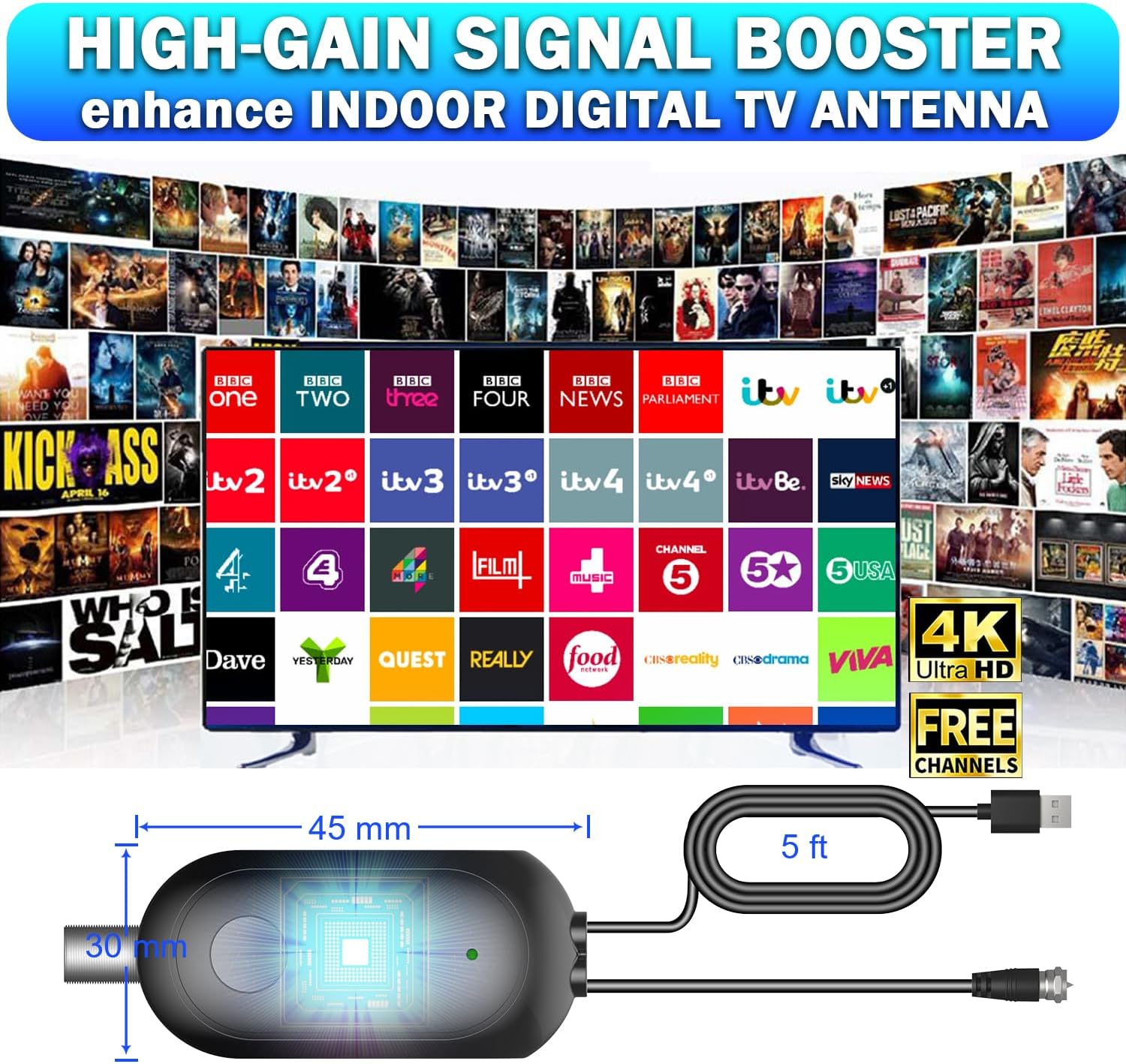
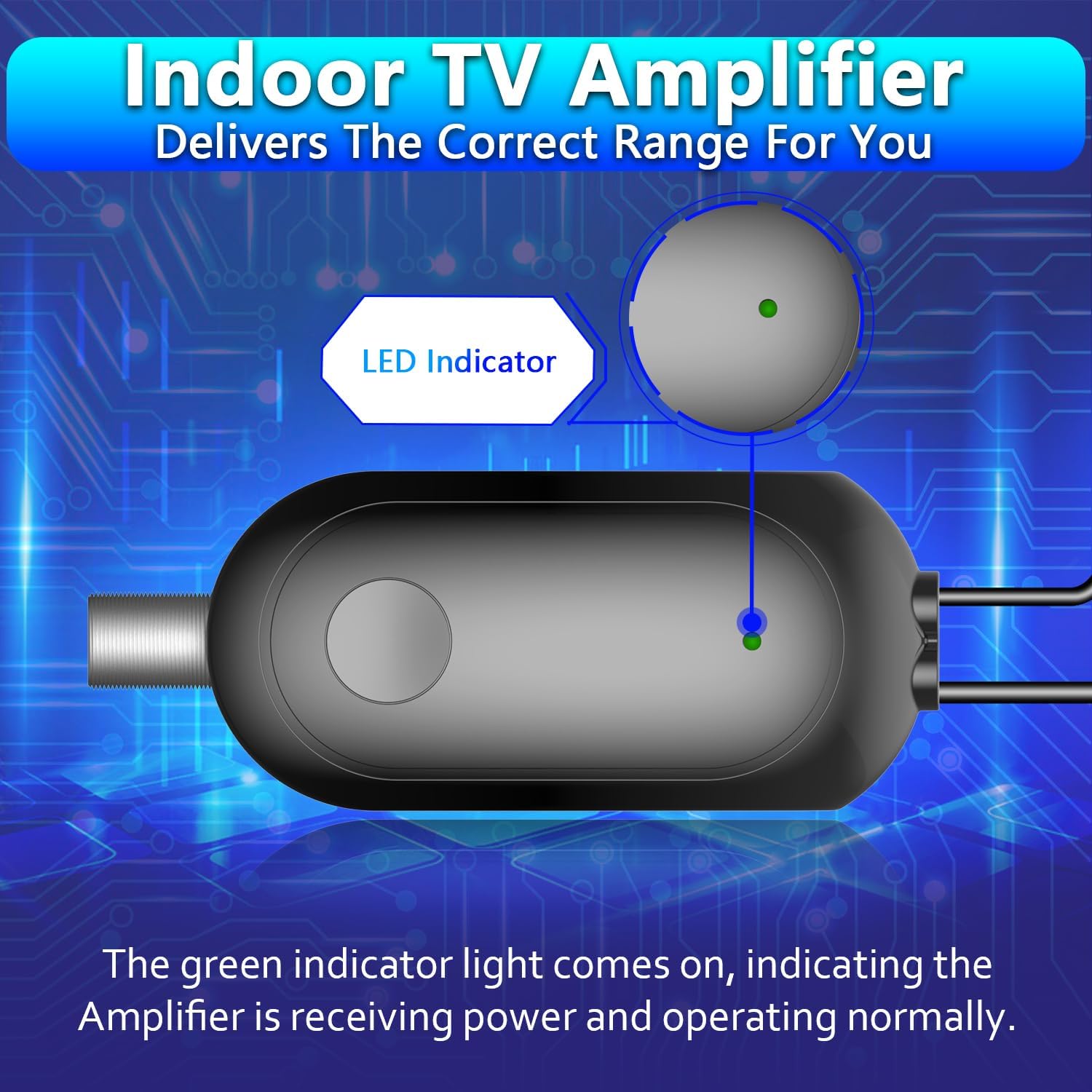
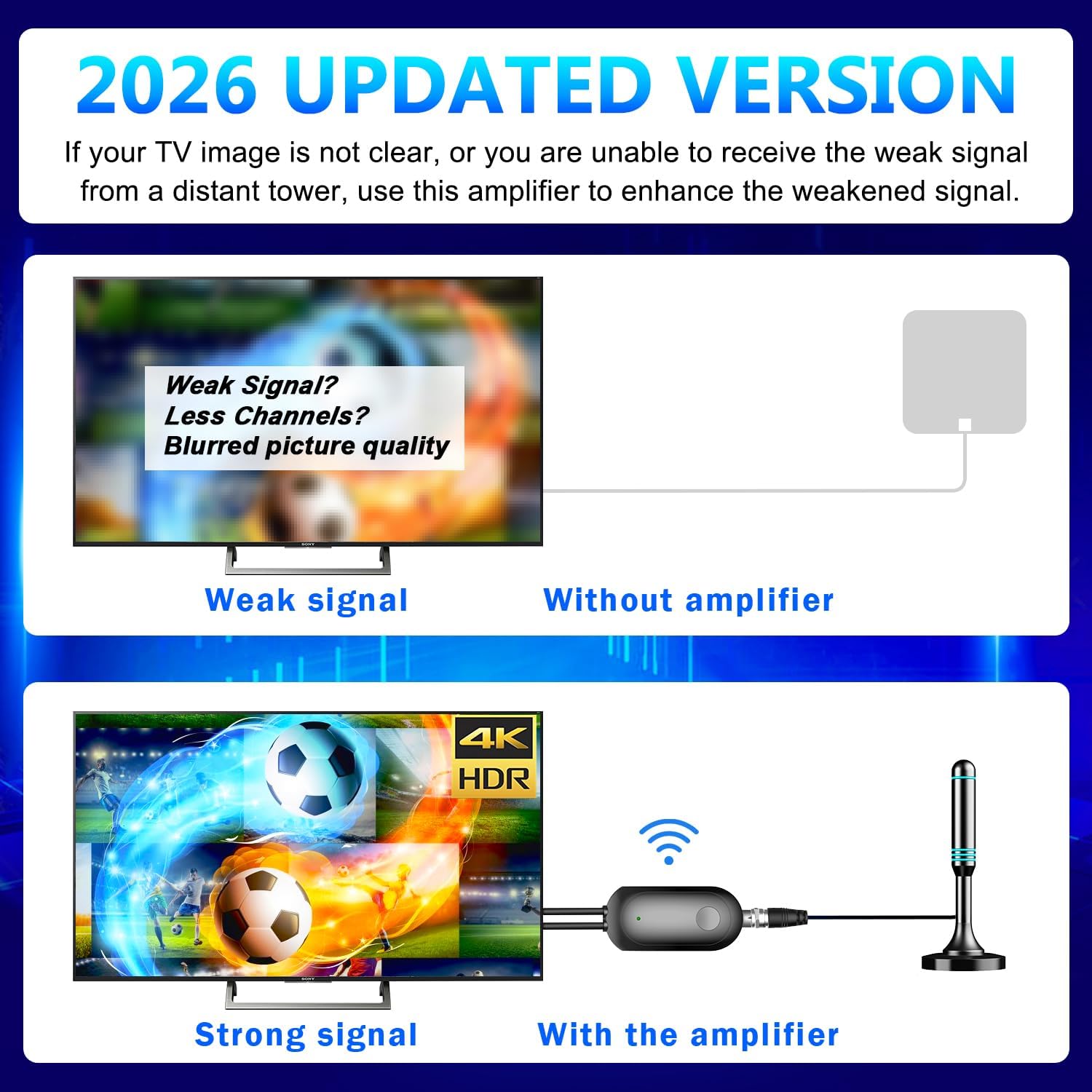
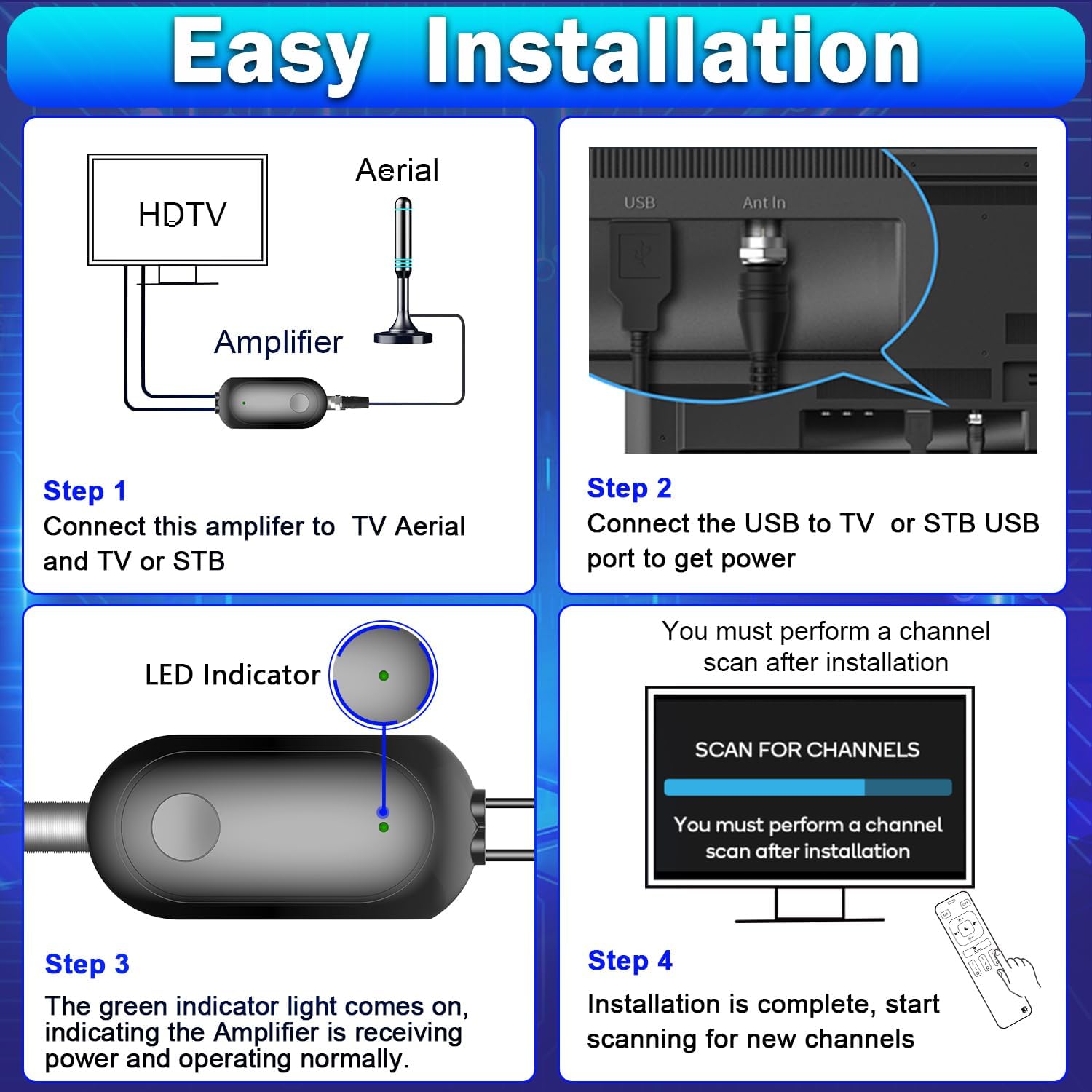
The device plugs into a USB power source and sits between your aerial and TV. With a simple plug-and-play setup, it can be used with most indoor aerials to boost both VHF and UHF signals. The intention is to deliver clearer HD signals by minimising the impact of weak or variable reception, rather than to transform a severely poor system into perfect reception.
What stands out (and where it may fall short)
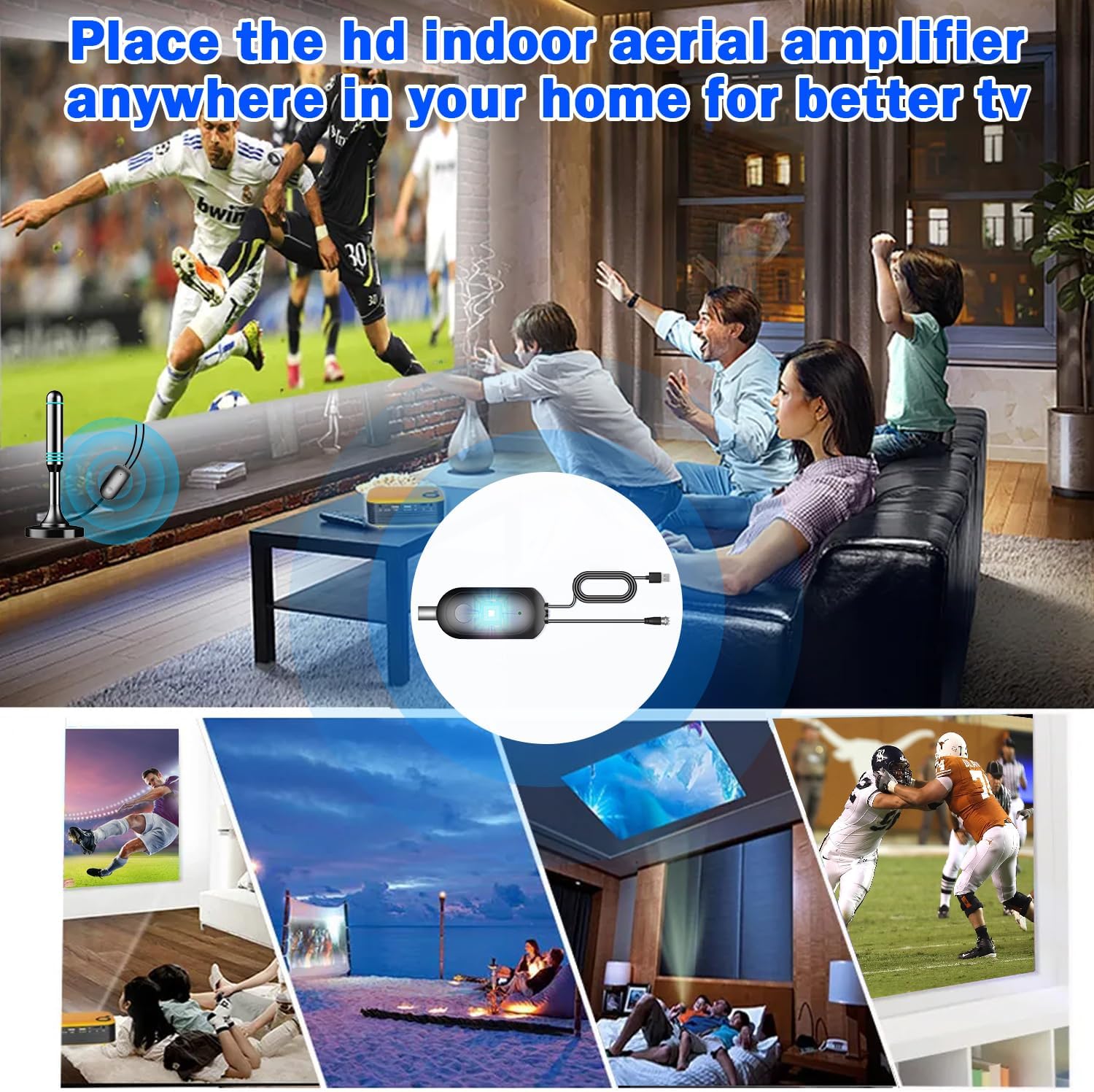
On the plus side, its USB powered design keeps installation tidy and straightforward, with no dedicated mains outlet required near the TV. It’s compact and unobtrusive, making it suitable for living rooms, bedrooms, or study setups where space is at a premium.
However, it’s important to temper expectations: the improvement depends on your location and existing aerial setup. If your signal is extensively blocked by terrain or distance from transmitters, a booster can help, but it won’t compensate for fundamental reception issues. In some cases, boosting a marginal signal can also amplify noise or interference if the system isn’t well matched.
Who it’s for
This product suits households with Freeview HD that experience occasional signal dropouts or pixelation, and who have a modest indoor aerial arrangement. If you already have a robust aerial setup or are in an area with strong local signals, the gains may feel incremental.
When it makes sense to buy (and when to hold off)
Consider purchasing if you notice unstable picture or sound on HD channels, especially during peak viewing times or when other devices nearby introduce interference. If signals are consistently strong, you might not notice a dramatic difference. In marginal reception areas, a careful combination of indoor aerial position and a booster can yield a steadier performance, but be prepared for varying results.
What to review before buying
- Compatibility: intended for use with indoor TV aerials and Freeview HD. Check that your existing setup is compatible and that the power source is readily accessible.
- Positioning: the booster’s effectiveness depends on where the aerial is placed, experiments with height and direction can impact results more than the booster alone.
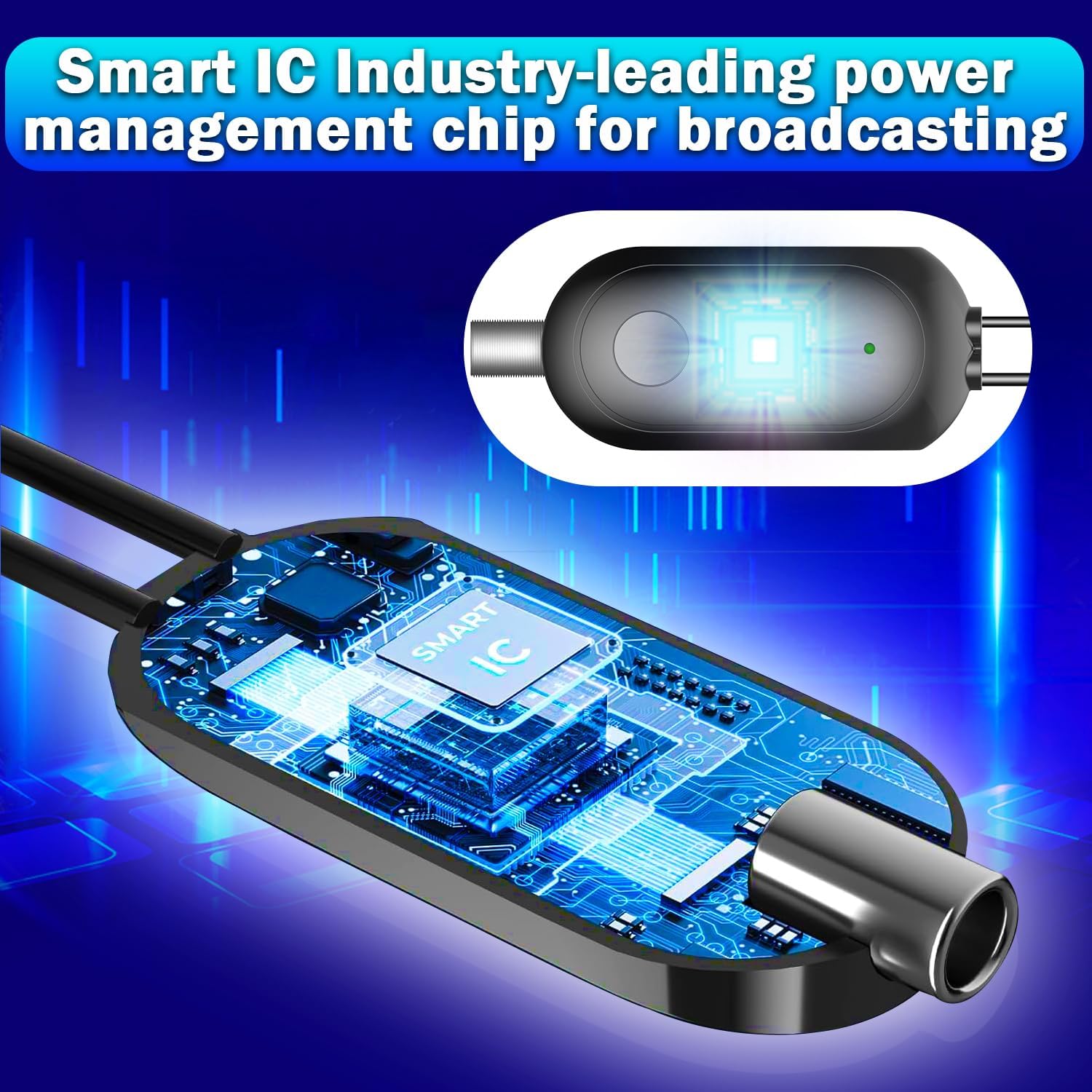
- Noise considerations: while marketed as low-noise, any amplification can also amplify unwanted signals if the environment has a lot of RF interference. A quiet baseline signal helps maximise the benefit.
- Cabling and connectors: ensure the connection path from aerial to TV is clean and secure to avoid introducing additional loss.
Practical usage example
Imagine a small living room where the TV sits in a corner and the aerial is a short, indoor setup near a window. After installing the booster between the aerial and the TV and powering it via USB, you might notice fewer brief breaks in HD channels during storms or busy broadcasting periods, with a marginally crisper picture and steadier sound during dialogue scenes.
How it compares to other approaches
If the reception is unreliable due to indoor positioning, moving the aerial or using a more robust external antenna could be more effective than relying on a booster alone. This gadget is a pragmatic option for improving what you already have rather than a panacea for poor infrastructure. It’s typically more suitable for light to moderate use cases where a compact solution is preferred over a full antenna upgrade.
FAQ (straight answers from typical scenarios)
- Do I need any tools to install it? No, it’s designed for plug-and-play use—connect between the aerial and the TV and power via USB.
- Will it fix every channel’s signal? It can help with weak reception and pixelation, but results depend on location, aerial quality, and existing signal strength.
- Can it cause more interference? In theory, amplification can boost noise if the environment is full of interference, a clean setup and good aerial alignment mitigate this risk.
Is it worth it? Buying verdict
Is it worth it? Worth considering if you need a simple, unobtrusive upgrade to improve intermittent Freeview HD reception in a typical living space with an indoor aerial. It’s a practical option when you want a low-friction enhancement rather than a full aerial overhaul. Not the best option if you already enjoy strong signals or if you rely on a high-end, bulky antenna system for demanding viewing.