

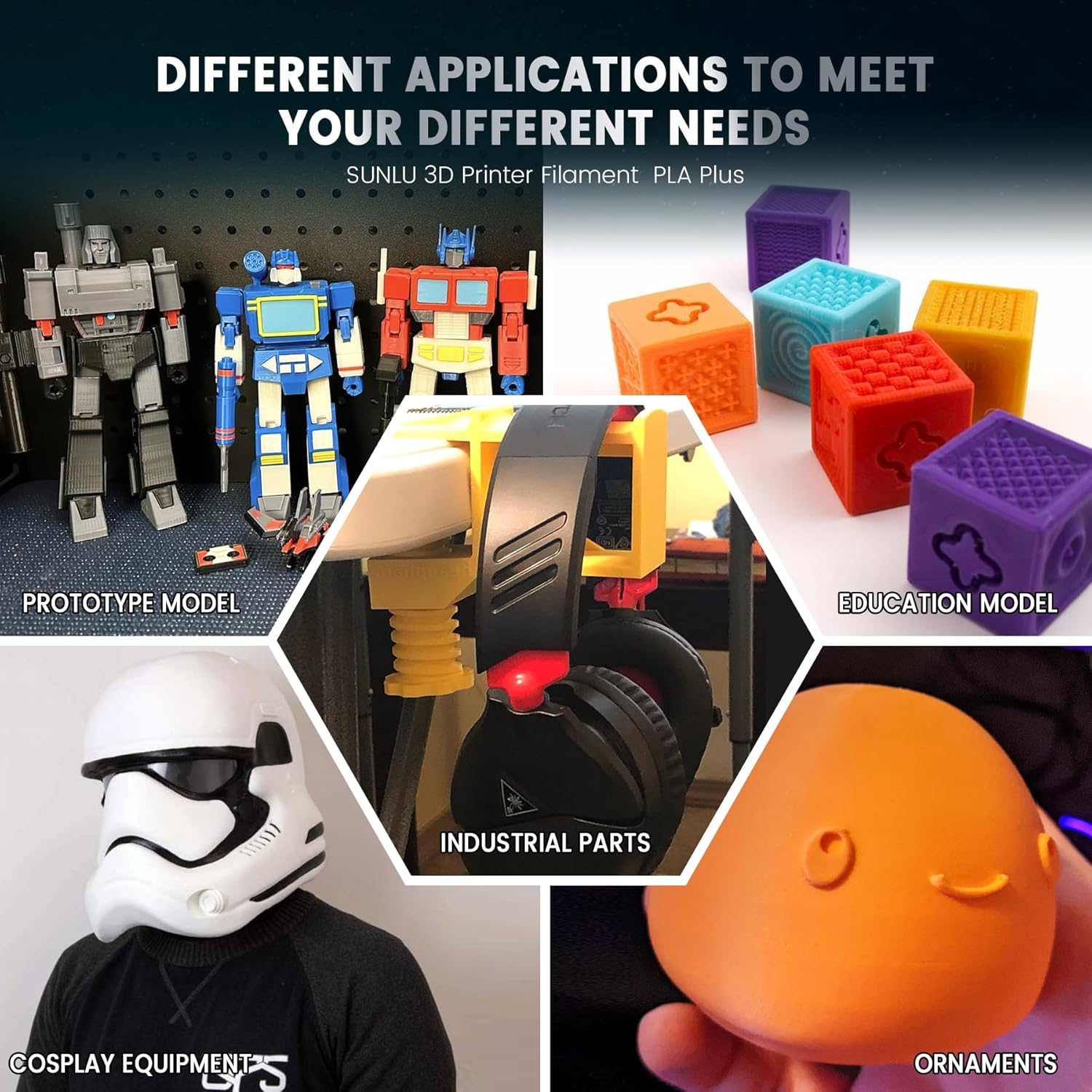
SUNLU PLA+ Filament 1.75mm (PLA Plus) in White, 1kg spool for FDM printers
Reviews
Price
Product description
The essentials
If you’re looking for a PLA+ filament that leans a bit more towards strength than basic PLA, SUNLU PLA+ is worth putting on your shortlist. On paper, it’s built around better layer adhesion, improved robustness and a more reliable extrusion so your prints come out with cleaner surfaces and fewer common annoyances like stringing or irregular flow.
What matters most for many buyers is how the filament behaves in day-to-day printing: will it lay down consistently, hold together when the part is handled, and still give decent detail? SUNLU positions this PLA+ as a step up from standard PLA, so it suits people who are moving beyond “display-only” models and want prints that can survive normal use.
What it’s for (and where it fits best)
This is an FDM filament, so it’s aimed at anyone printing with a 3D printer that uses a nozzle and feeds filament through an extruder. The recommended nozzle temperature range given here is 205–220°C, with a recommended print speed range of 100–300 mm/s. That’s a broad enough window to work for lots of typical projects, from faster prototyping to more careful detailing.
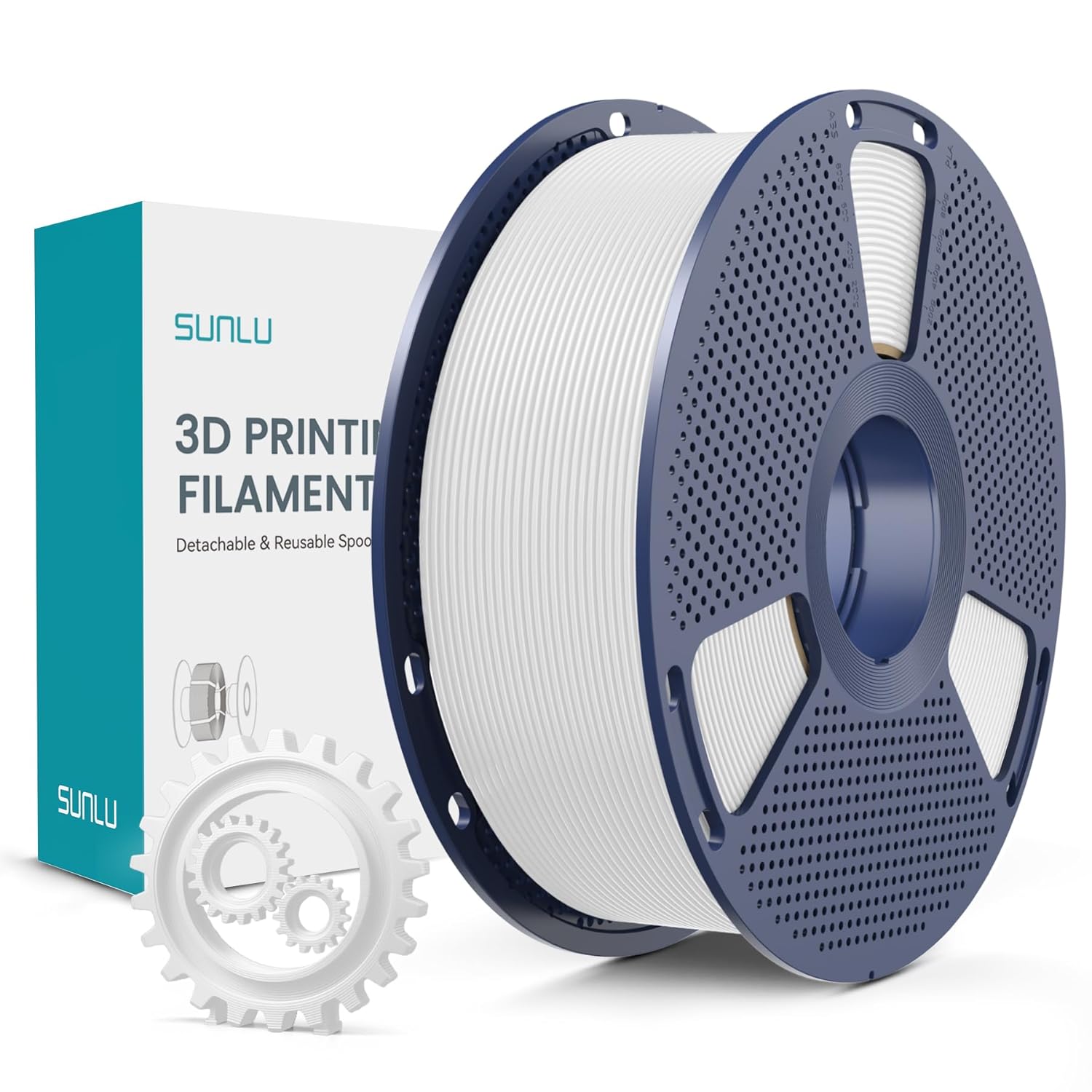
A practical example: if you’re printing small mechanical-style parts (gears, fixtures, or functional prototypes), PLA+ tends to be picked because you care about structural integrity more than you do about extreme toughness. It’s also a sensible choice if you want shiny, well-finished surfaces compared with what some “no-frills” PLA can produce.
That said, it’s not perfect for every scenario. PLA+ is still a plastic and there will always be limits with heat resistance and long-term durability depending on your environment. If your part will sit in warm conditions or take heavy impacts, you may find you need a different materials approach.
Key benefits you’ll likely notice in print
The strongest claims in the provided details are about durability, adhesion and print consistency.
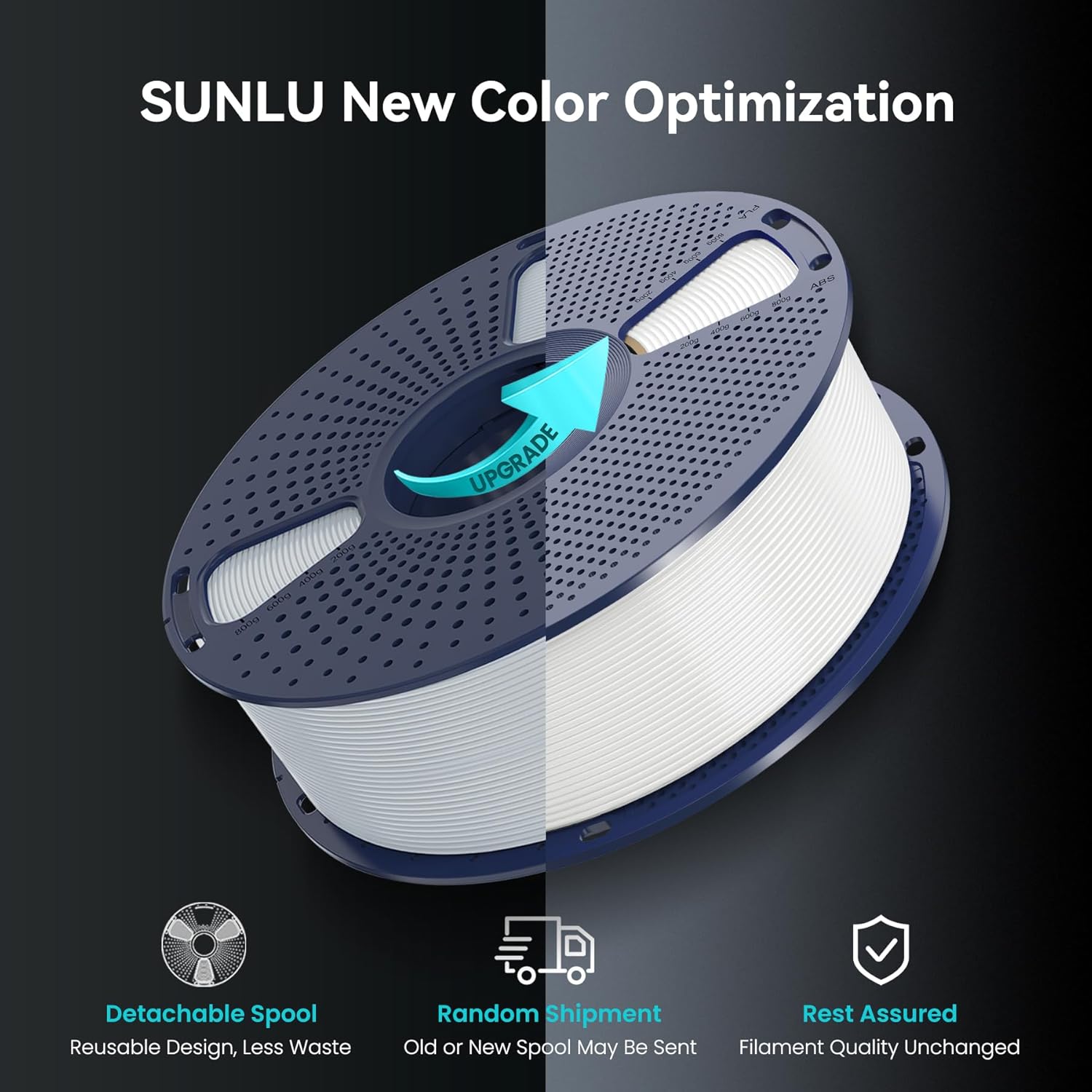
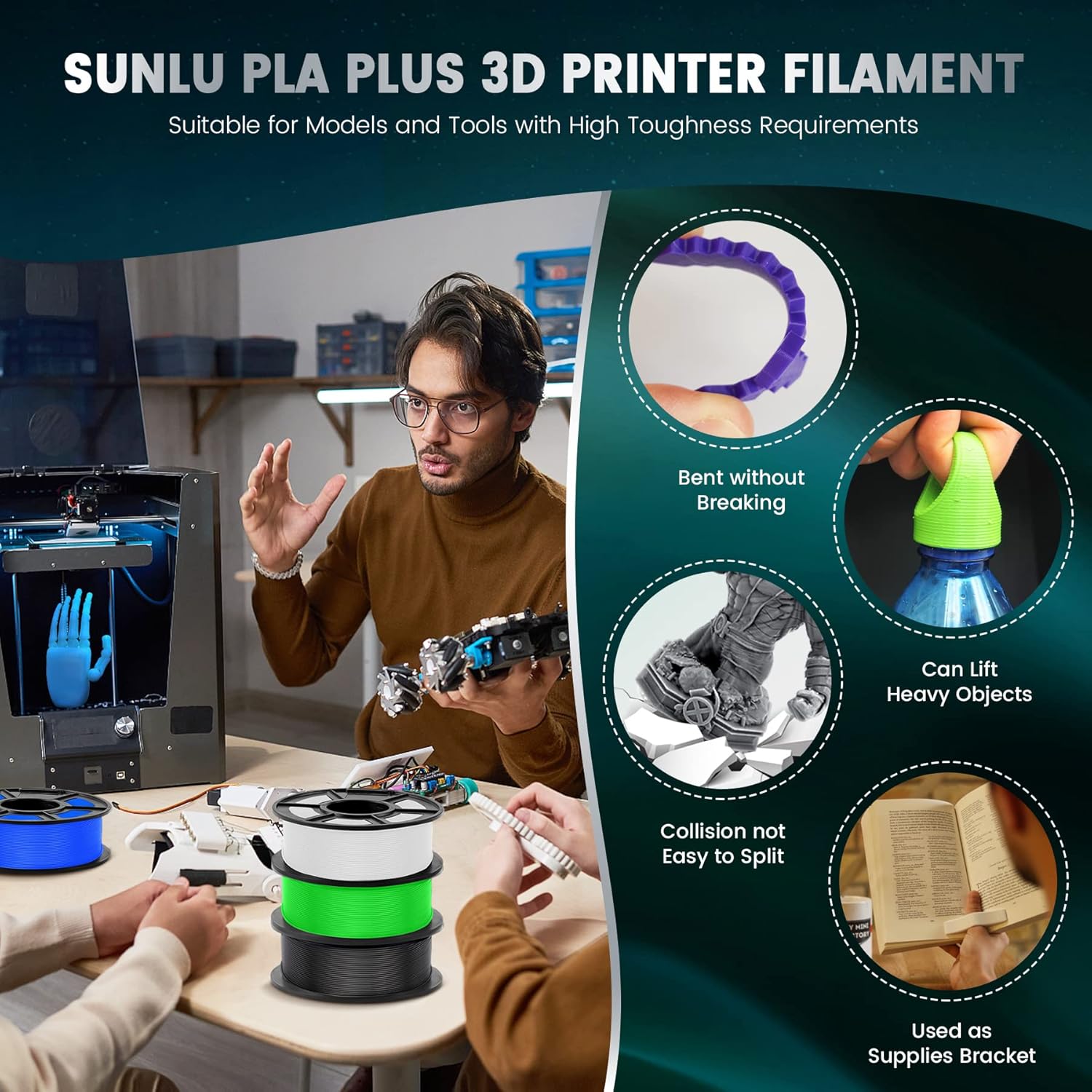
- Enhanced durability over standard PLA: the filament is described as more robust and better able to resist drops.
- Better structural integrity: framed as stronger than plain PLA, which is relevant when your part has to cope with handling.
- Good layer adhesion and shiny finishes: useful if you want parts that look better as well as feel sturdier.
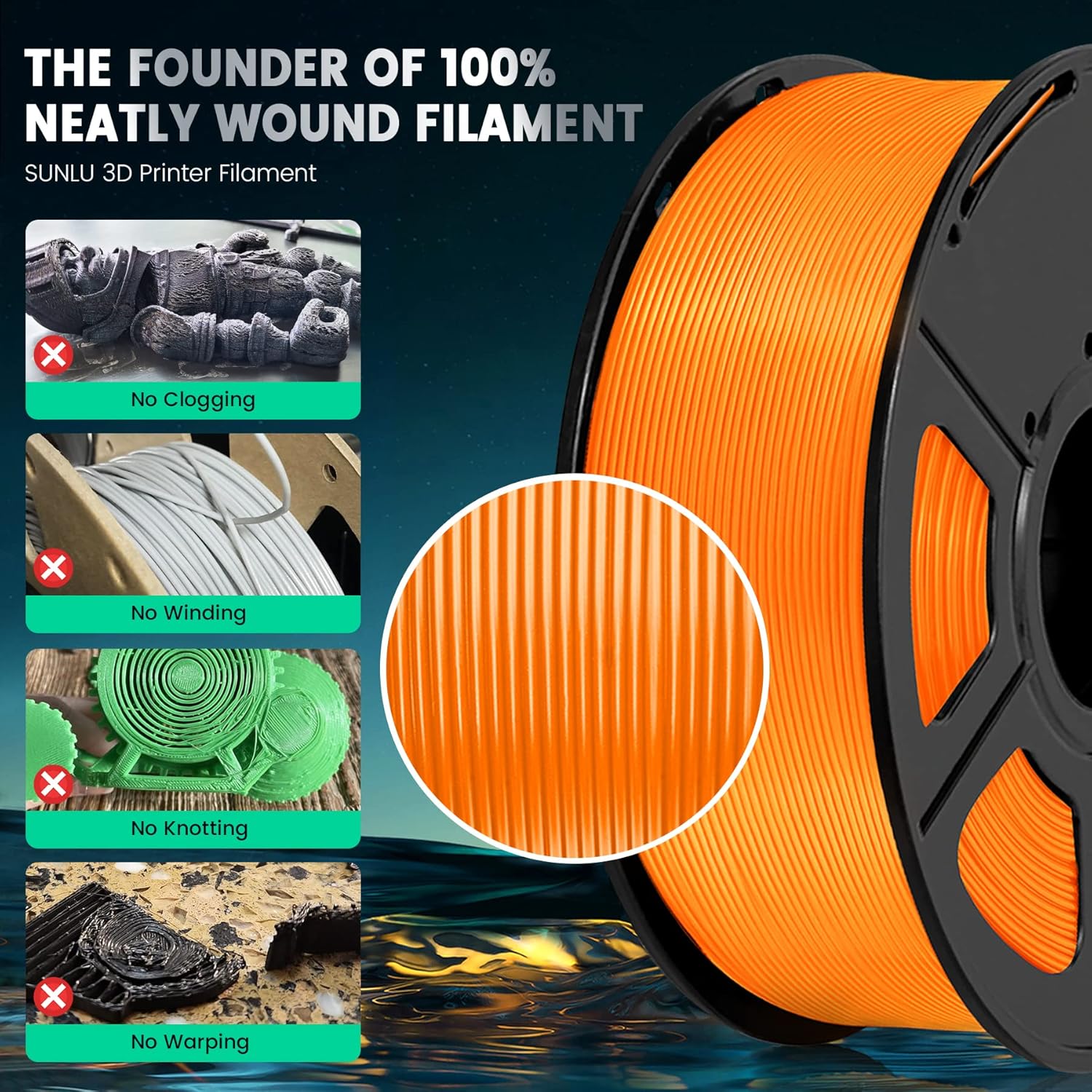
- More precise extrusion and fewer artefacts: the description specifically calls out reducing stringing, bleeding and extrusion irregularities.
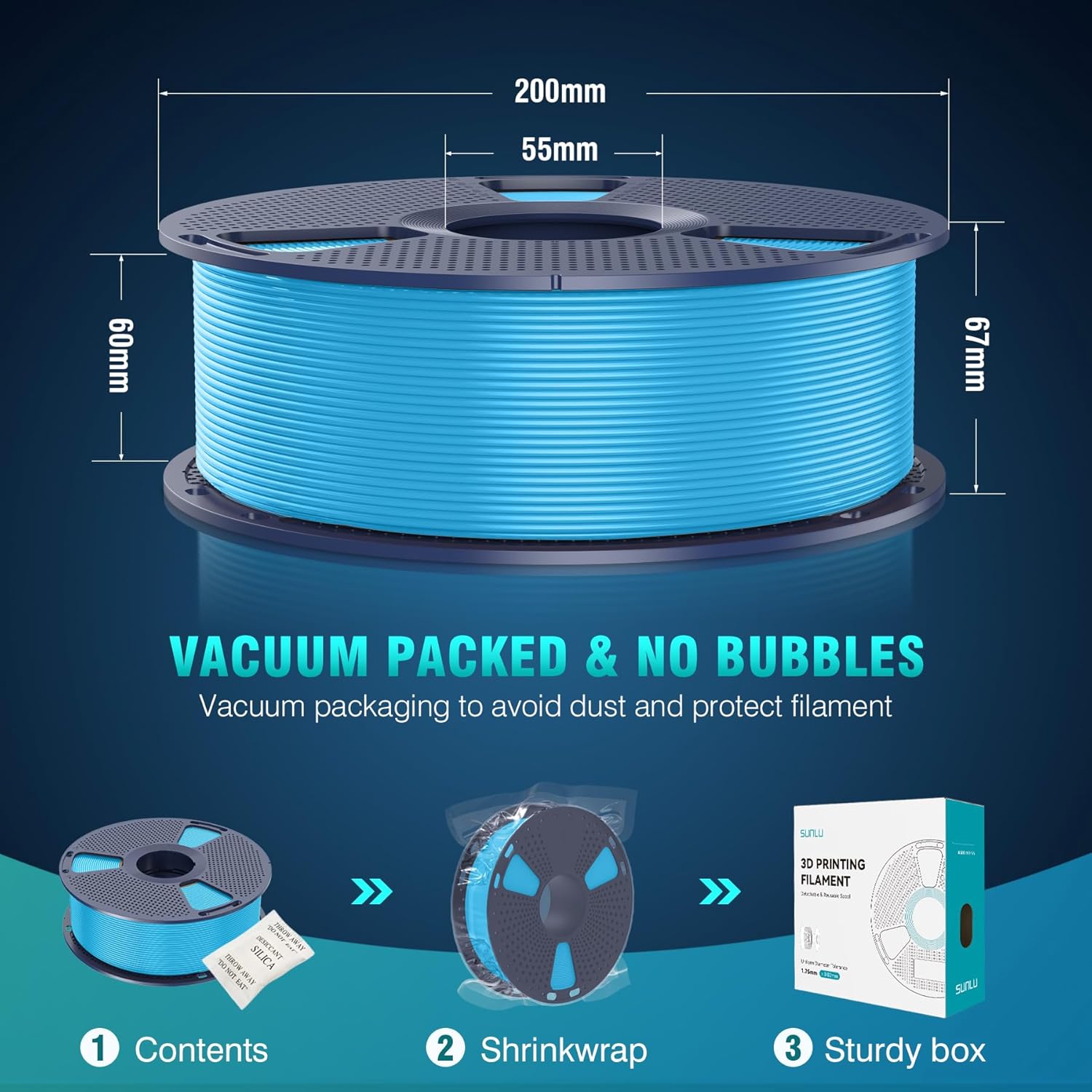
There’s also the “unsexy but important” factor: vacuum-sealed packaging. Moisture can be a problem for filaments, and being sealed from factory to printer is the kind of reassurance that makes storage and first-use less stressful.
Tech summary (spec sheet style)
- Name: SUNLU PLA+ Filament 1.75mm
- Type: PLA Plus filament for 3D FDM printing
- Format: 1kg spool
- Colour: White
- Recommended nozzle temperature: 205–220°C
- Recommended print speed: 100–300 mm/s
- Packaging: vacuum-sealed to help protect from moisture
One thing to keep in mind is that the temperature and speed ranges are guidance, not a guarantee. Your printer, nozzle type and cooling setup can shift the “sweet spot”, so it’s wise to tune your settings rather than assume the first benchy will be perfect.
The potential trade-offs (so you don’t get caught out)
PLA+ sits in a useful middle ground, but that middle ground has limits.
If you’re expecting engineering-grade performance (for high heat, heavy loads, or extreme outdoor exposure), this won’t be the most convincing choice based on the information provided. It’s positioned as stronger than PLA, not as a replacement for specialised high-performance materials.
Also, while the listing says it helps with issues like stringing and irregular extrusion, results depend heavily on your setup. If your printer is out of calibration or your bed adhesion isn’t dialled in, you can still end up fighting print quality even with a good filament.
Compatibility & requirements
SUNLU states broad compatibility with most FDM printers. Practically, that means it should suit standard 1.75mm filament workflows where you can tune nozzle temperature within the listed 205–220°C window.
Before buying, it’s worth checking two simple things: that your printer is designed for 1.75mm filament, and that you can run temperatures safely in that range.
Should you buy it?
A solid pick if you want a PLA+ that focuses on improved strength versus standard PLA, smoother extrusion and shinier finishes, especially for functional prototypes, small mechanical-style parts and multi-piece projects.
You may want to skip it if your end-use is very demanding on heat resistance or impact durability, or if you’re chasing a filament category that’s designed for harsh environments rather than everyday robustness.
You’ll get the most from this if you’re willing to match your temperature and speed to your printer and aim for consistent settings from print to print.
Mini FAQ
Is it meant to be stronger than standard PLA?
Yes, the provided description explicitly frames PLA+ as offering greater structural integrity compared with plain PLA.
What temperature and speed should I start with?
The listed guidance is 205–220°C for the nozzle and 100–300 mm/s for printing speed.
Is it suitable for most FDM printers?
The listing says it’s compatible with most FDM printers, and it’s designed for 1.75mm filament setups.
How does the packaging help?
It’s vacuum-sealed to help protect the filament from moisture before it reaches your printer.
What kind of prints does it suit best?
Based on the durability and adhesion focus, it fits well for prototypes and parts where you care about strength more than you do purely decorative prints.