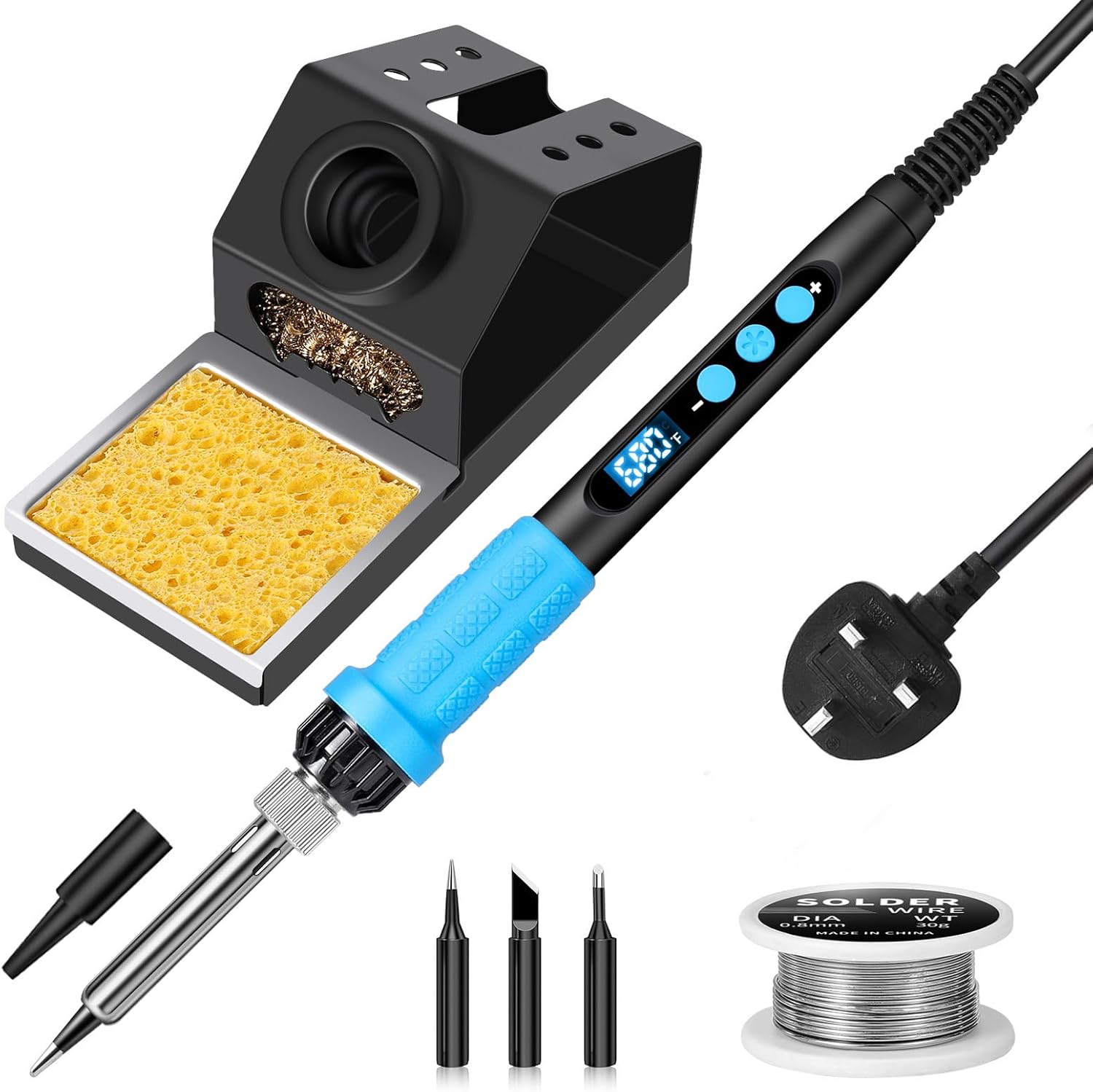
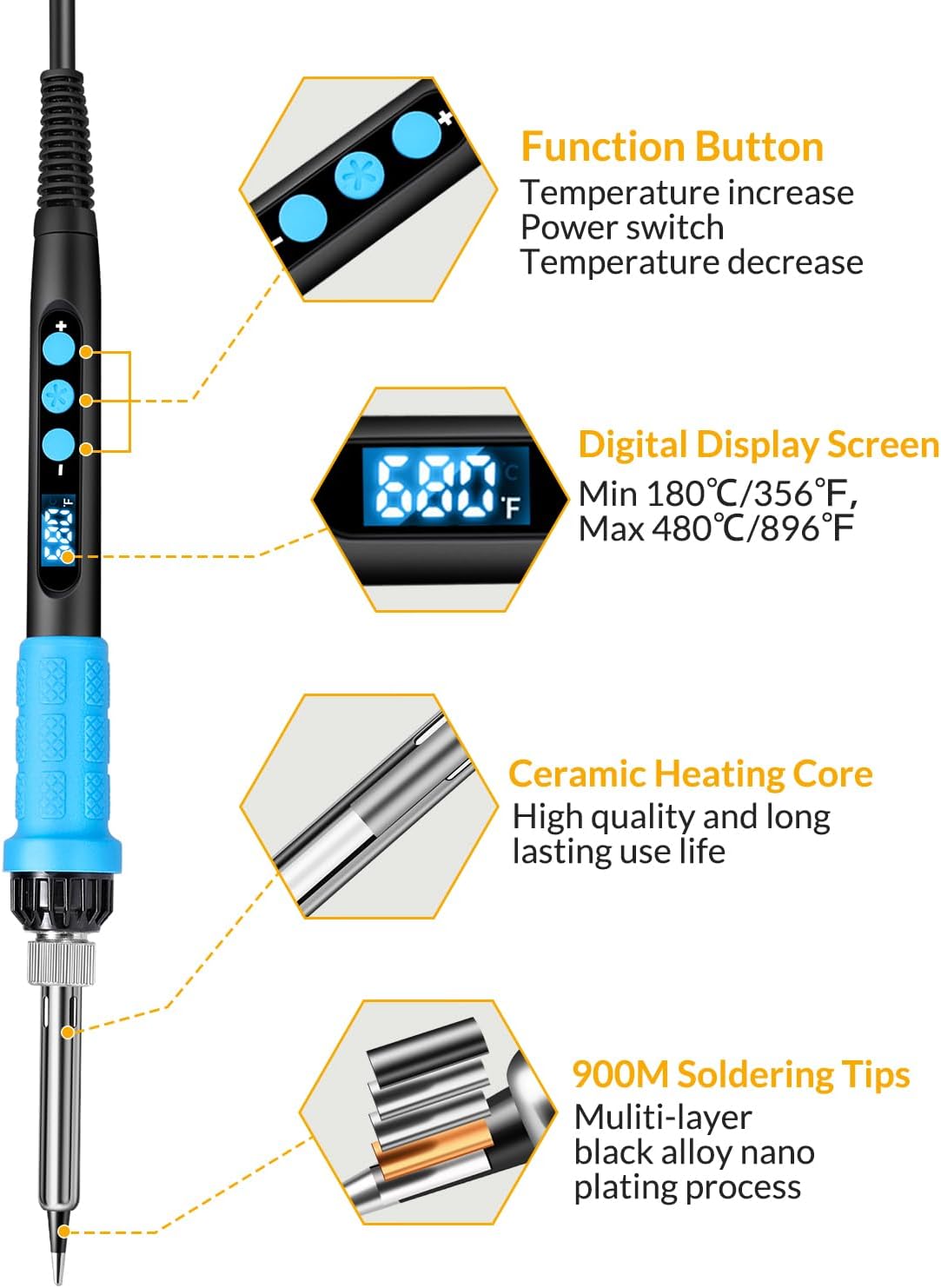
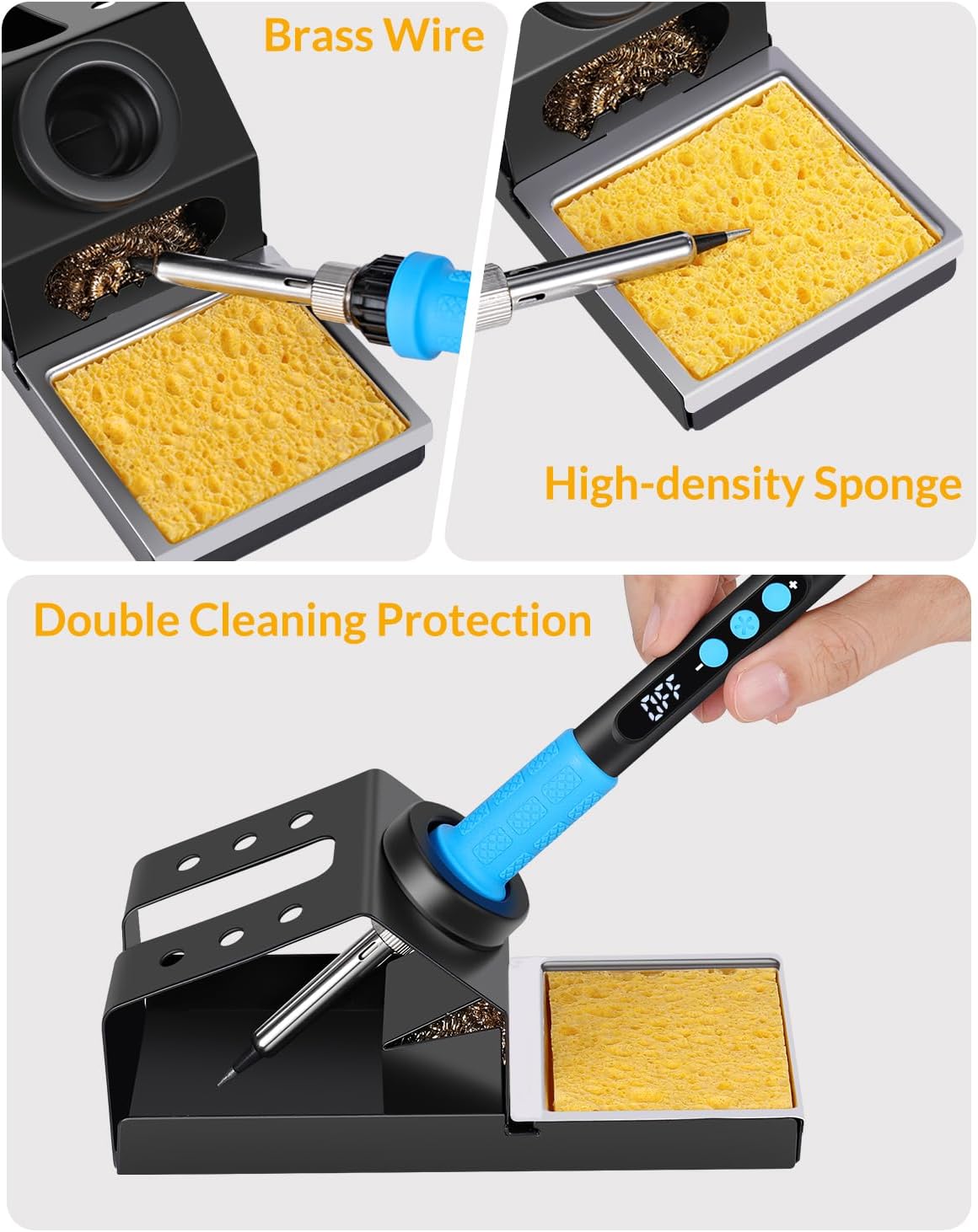
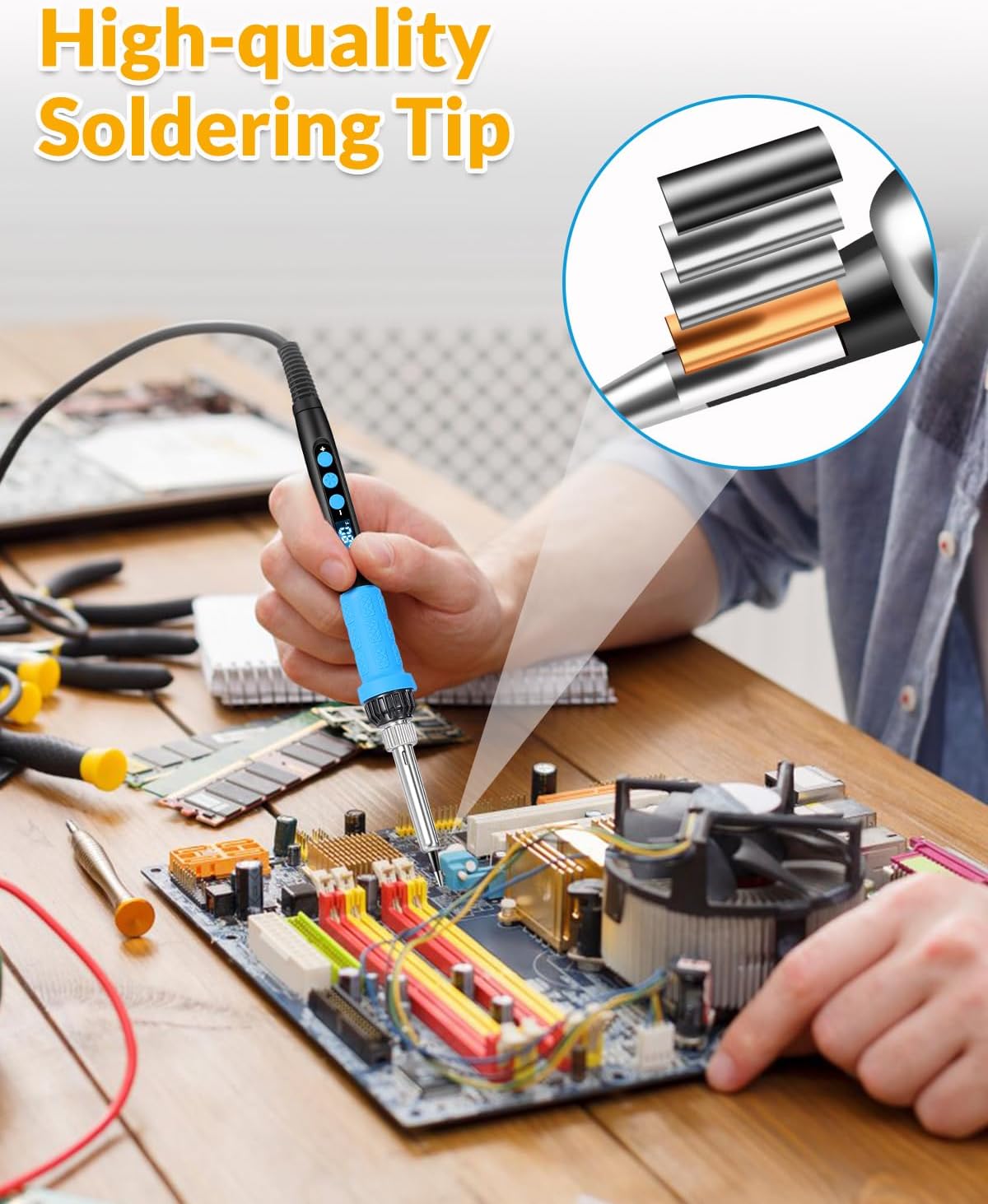
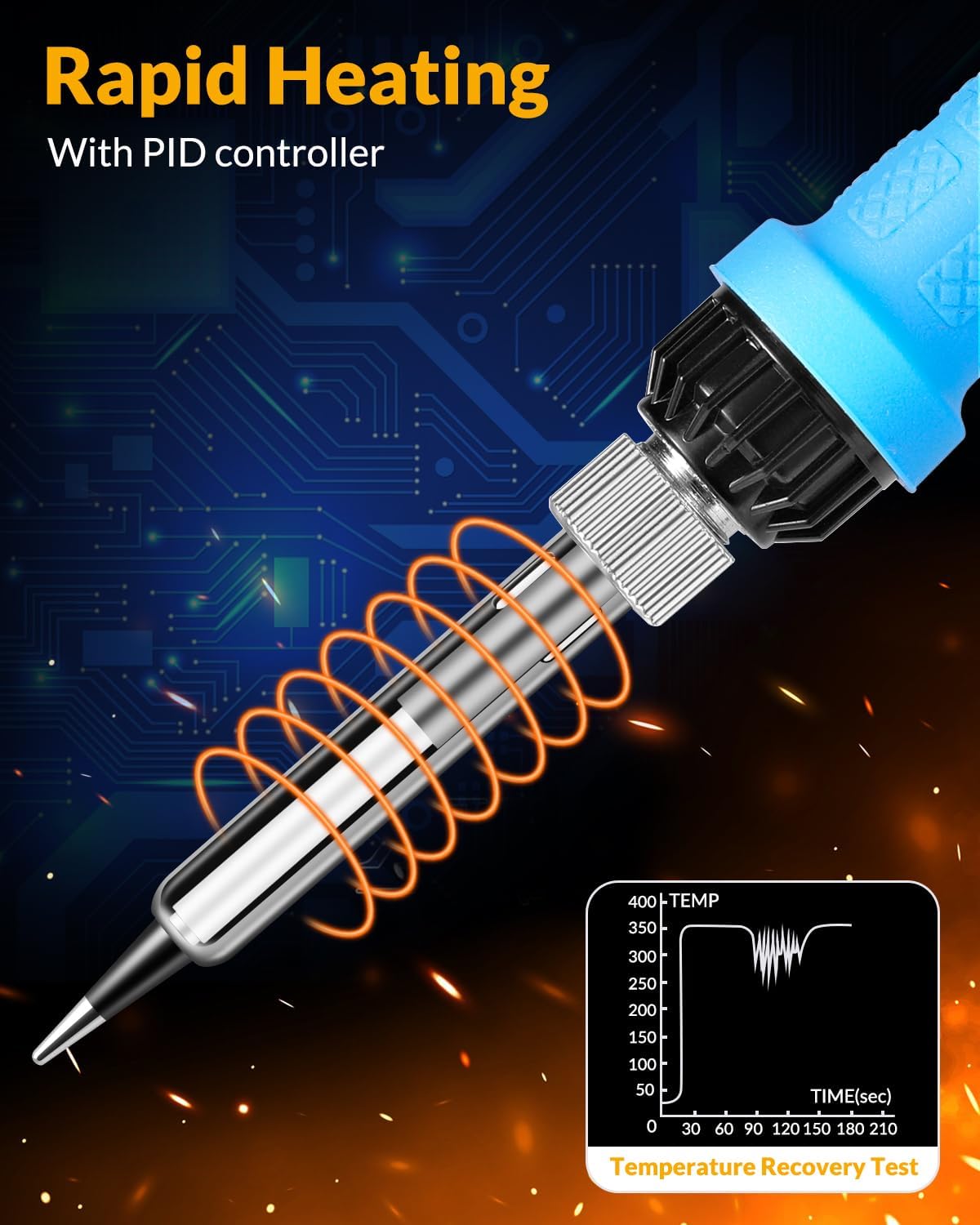
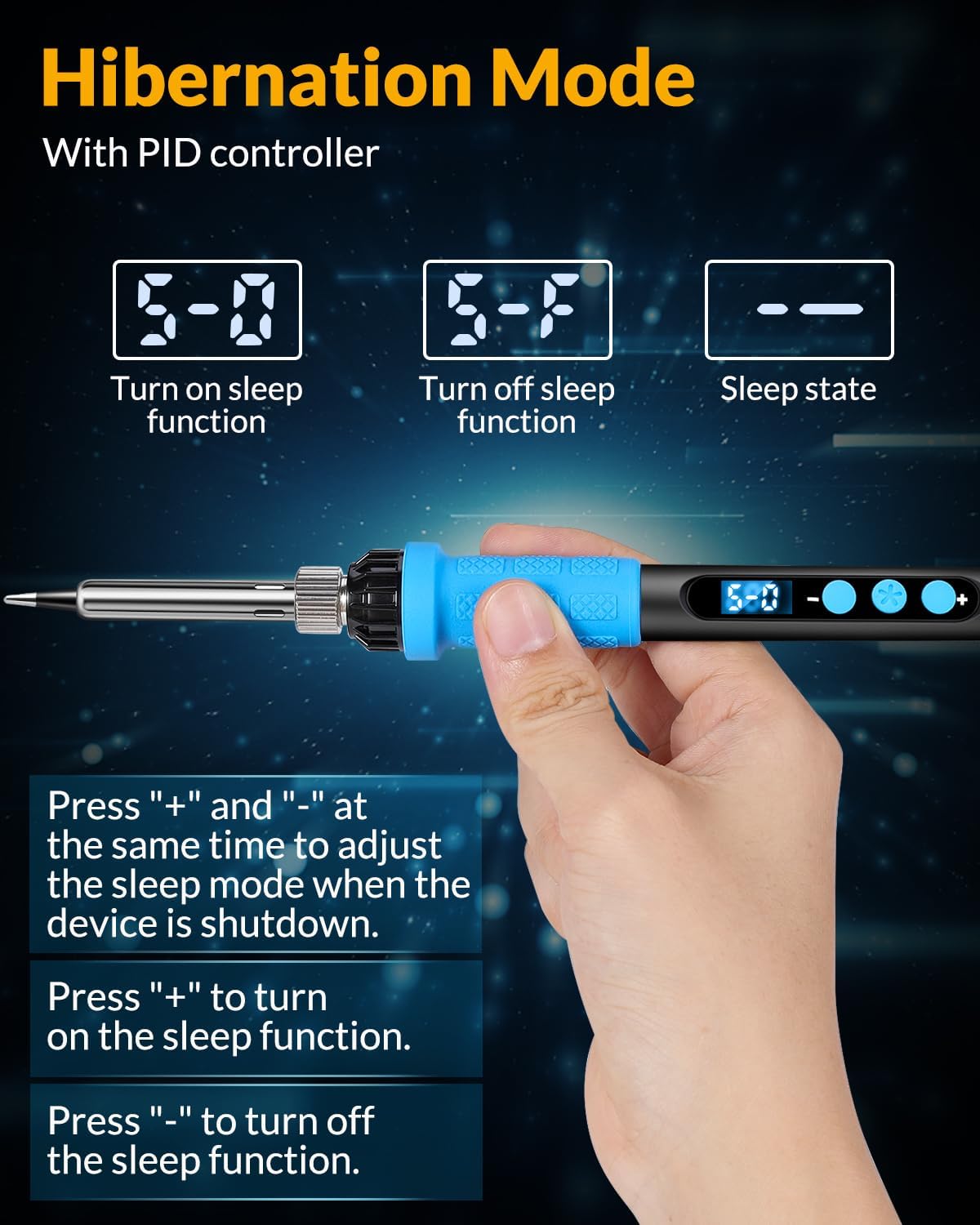
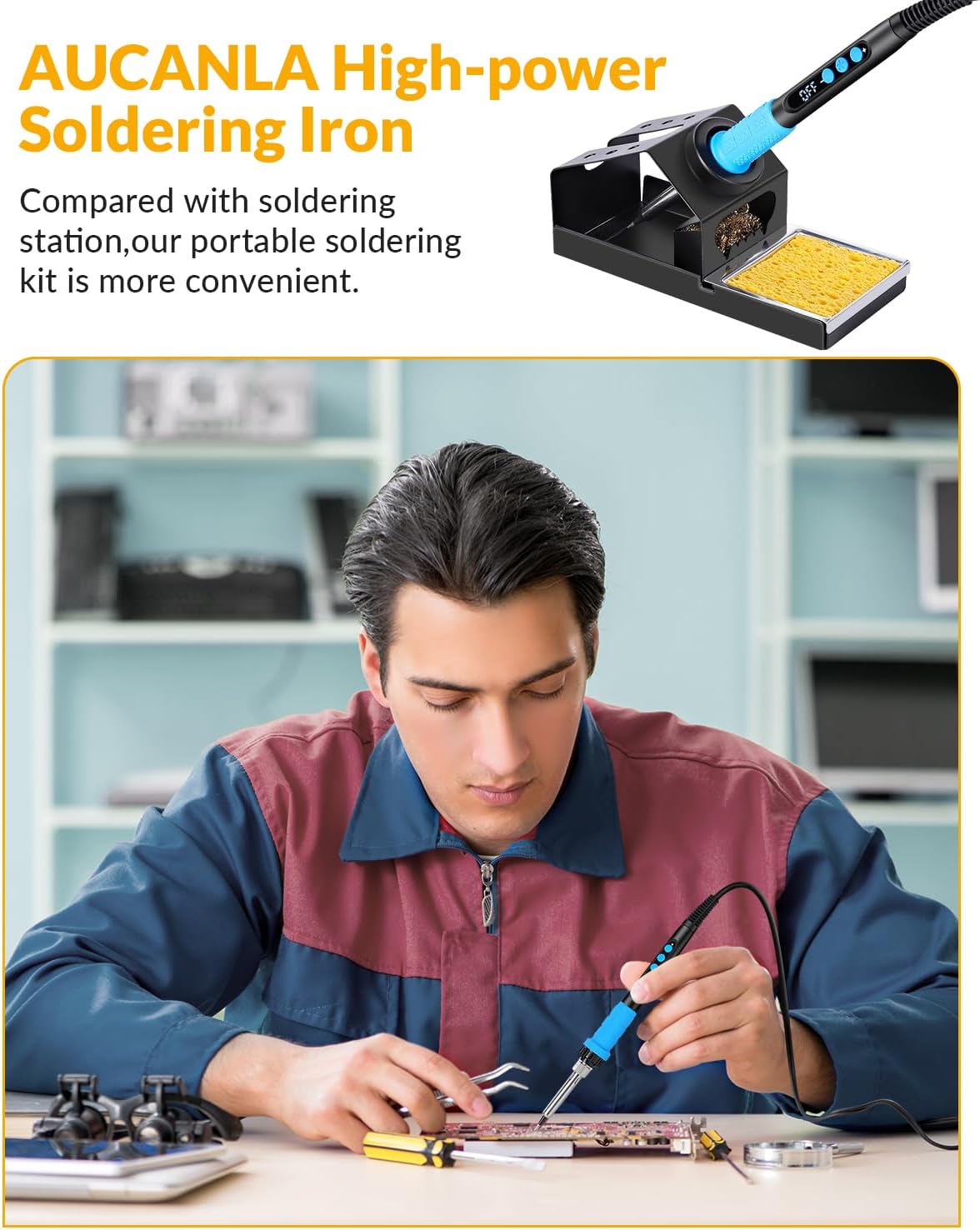
What it is and what it’s for\nThis Soldering Iron Kit is a compact, high‑power tool designed for hobbyists and beginners tackling soldering tasks from stained glass projects to basic wire welding. With up to 100W of heating power and a temperature range advertised around 180–500°C, it aims to deliver fast heat-up and steady control for steady, accurate joints. The clear LED display and large touch buttons offer straightforward adjustments, while a ℃/℉ switch keeps things intuitive across different tasks.\n\n## How it performs on paper\nOn the surface, the kit ticks several useful boxes: a dedicated heat‑resistant stand, a cleaning sponge, flux and solder wire are included, plus three exchangeable tips (K‑type, 1.2D, 2.4D). The auto sleep function (10 minutes) is a sensible safety and energy feature, and the ability to keep the iron in standby reduces the risk of accidental burns or heat waste between uses.\n\n## The positives worth noting\nThe bright, larger LED screen and the improved external controls should help users avoid misadjustments, which can be common with smaller models. The kit’s inclusion of multiple tips and a sturdy stand offers an immediate start for a range of jobs without hunting for add‑ons later. The automatic unit conversion between ℃ and ℉ can simplify cross‑discipline use, which is helpful if you’re following tutorials written for different markets.\n\n## Where it may fall short\nTwo nuances to keep in mind: the temperature range is stated differently in the product title and description (180°C–500°C vs. 200°C–500°C). If you require precise, high‑end control at very specific low temperatures, the discrepancy could be a heads‑up to double‑check the range before buying. Also, while the kit includes a handful of accessories, you’ll still need to assess whether the included tips cover your typical joint types and wire gauges.\n\n## Who it’s for\nIf you’re a hobbyist or beginner who wants a complete starter kit with built‑in temperature control and a simple workflow, this kit offers a practical entry point. It’s particularly suitable for small electronics, craft projects, and light welding tasks where quick heat and predictable temperature matter more than industrial‑grade durability.\n\n## Who might want to think again\nIf you’re after professional‑level precision at very tight tolerances, or you routinely work with delicate, ultra‑fine components, you may prefer a unit with more refined temperature stability and a broader range of specialised tips. Also, if UK warranties and local service are important, verify warranty terms relevant to your region since the supplied notes reference service in the USA.\n\n## What to check before you buy\n- Confirm the temperature range you expect for your typical tasks and ensure the range aligns with your needs (180–500°C vs 200–500°C).\n- Review the included accessories: number and type of tips, stand stability, and whether you’ll need extra flux or wires for future projects.\n- Consider the responsiveness of the display and the ease of switching between ℃ and ℉.\n- Look at the safety features such as auto sleep and tip‑cooling when the unit is idle.\n\n## Practical use case\nImagine you’re wiring a small lamp or making a stained glass element: you heat the joint just enough to flow the solder, then pause to let it set. The automatic sleep helps avoid leaving the iron on when you step away for a moment, and the stand keeps the hot tip upright and safe.\n\n## What alternatives look like in practice\nCompared with a basic iron, this model offers temperature control and a ready‑to‑go kit, which is a tangible time‑saver for newcomers. If you already have a well‑equipped workshop and know you’ll need lower temperatures or more specialised tips, you might favour a more modular or higher‑end option.\n\n## Decision section\n### Is it worth it?\nWorth considering if you’re starting out or want a complete, compact kit with adjustable heat and a sensible safety feature set for everyday soldering tasks.\n\n## Frequently asked questions\nQ: Can I rely on the temperature display for precise work?\nA: The digital display helps with monitoring temperature, but for highly sensitive electronics you may still want to verify with calibrated tools and follow task‑specific guidelines.\nQ: Will the included tips cover most common joints?\nA: The kit includes three tips, which are a good starting point for a range of joints, though you might need additional tip styles for unusual components.\nQ: Is the warranty relevant to the UK market?\nA: The listing mentions a 12‑month warranty in the USA, check the UK retailer’s terms for regional coverage before purchase.\n