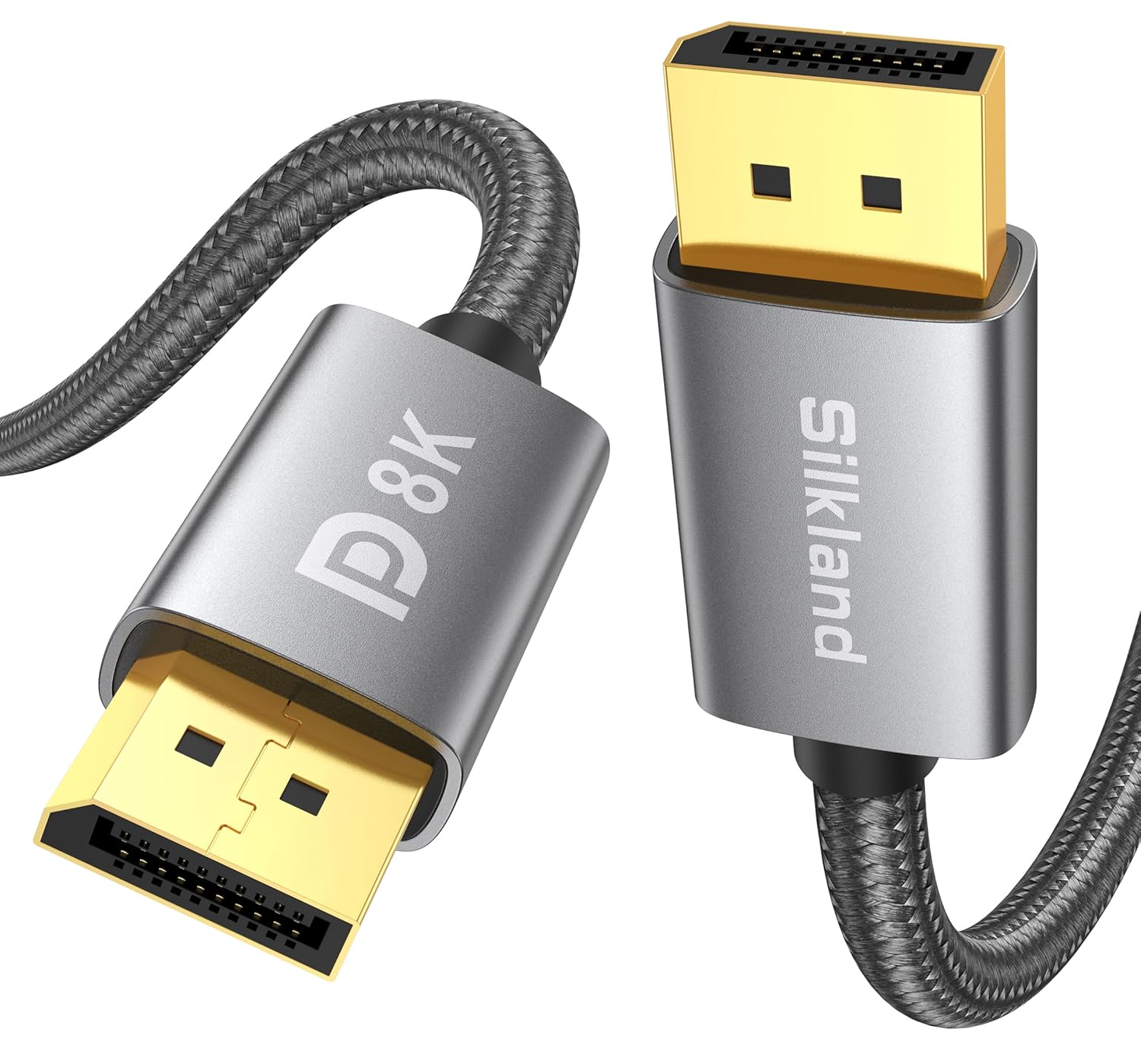
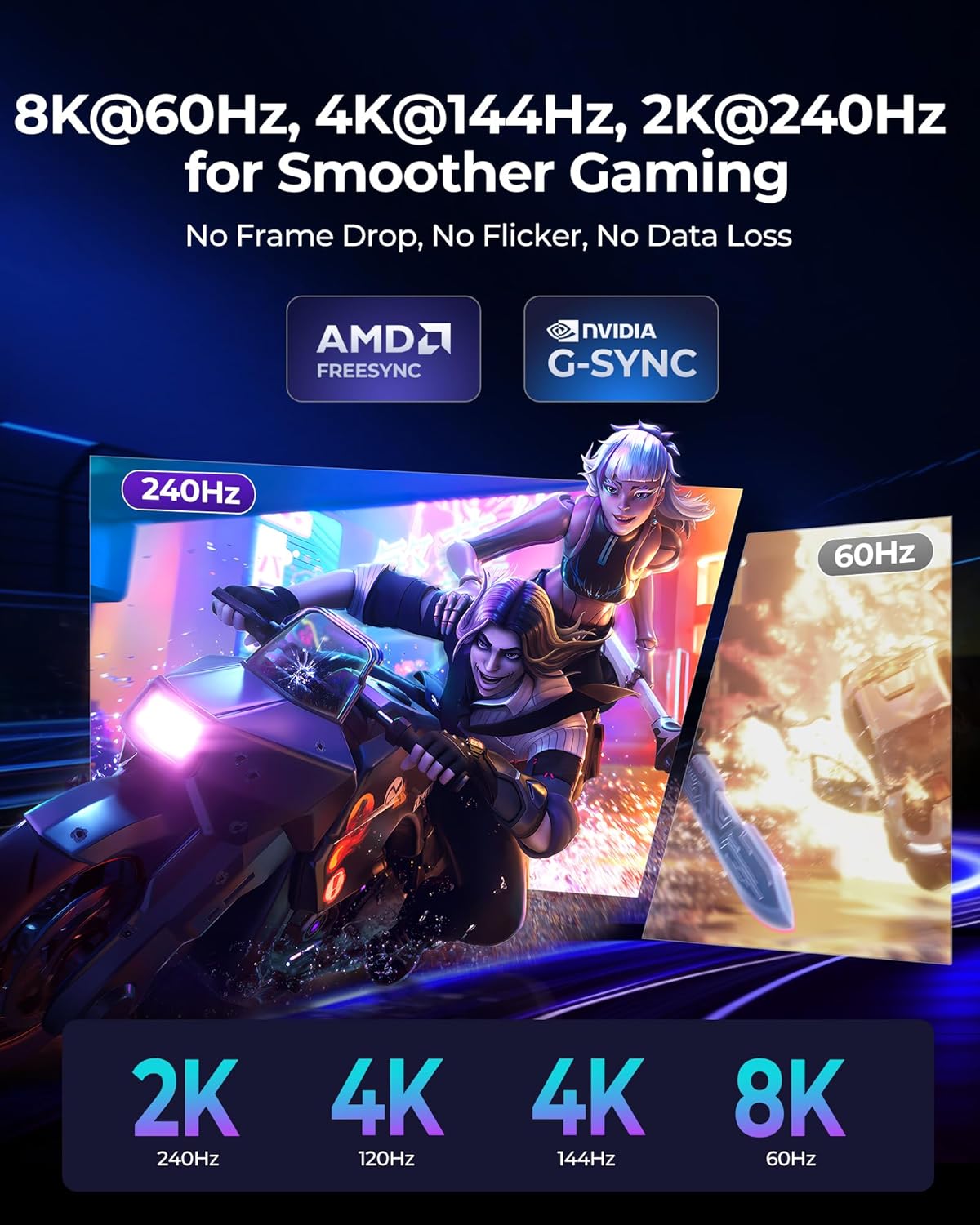
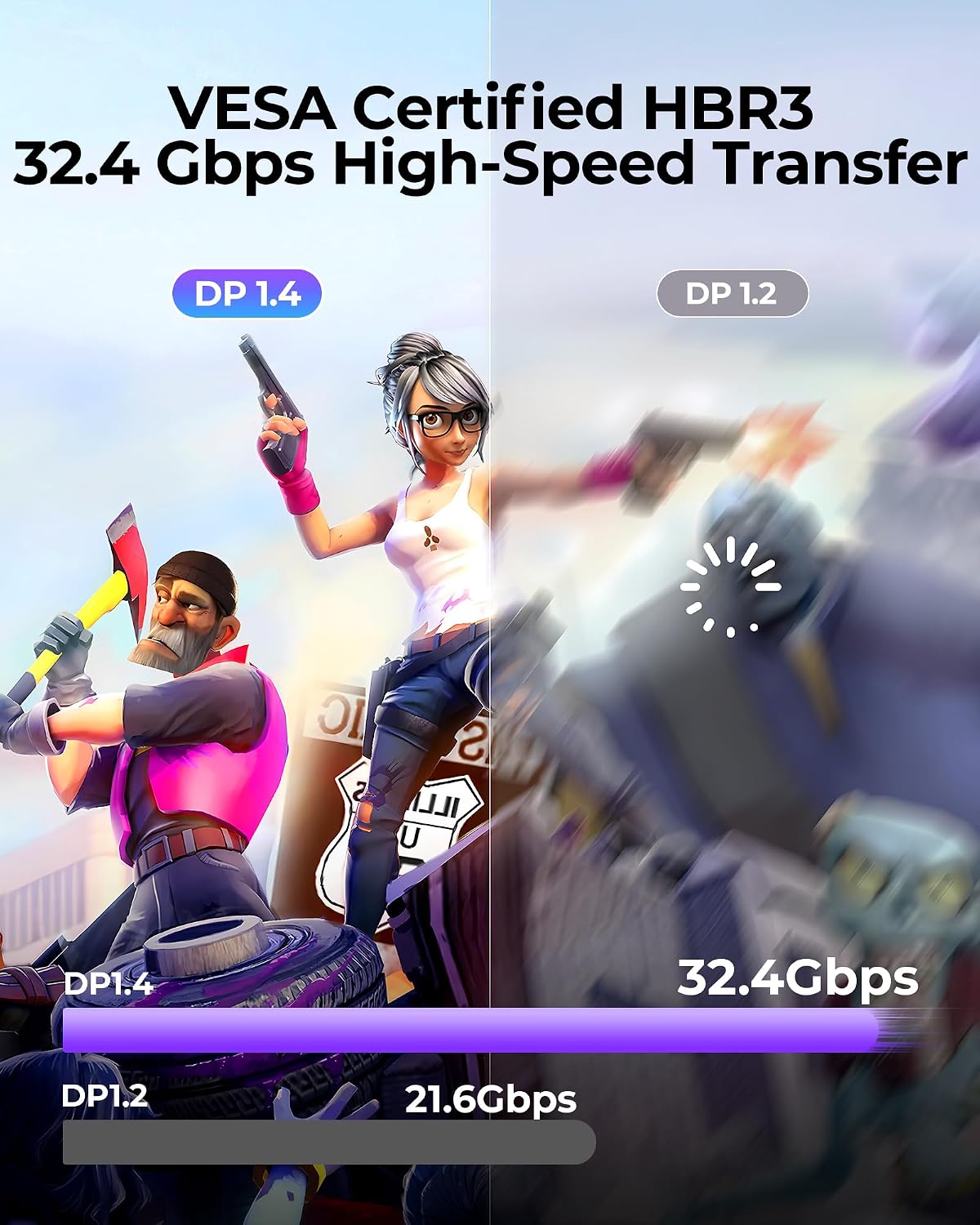
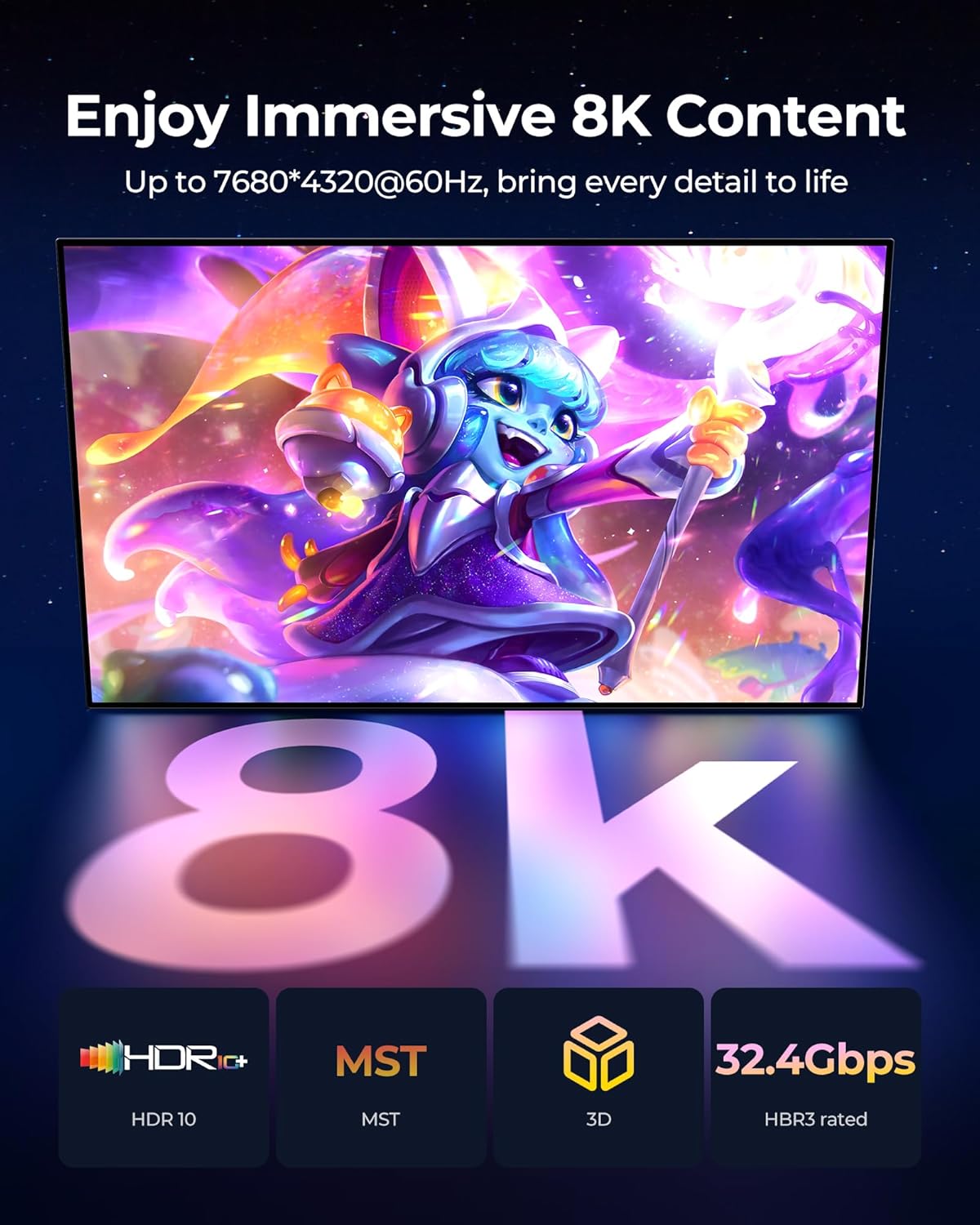
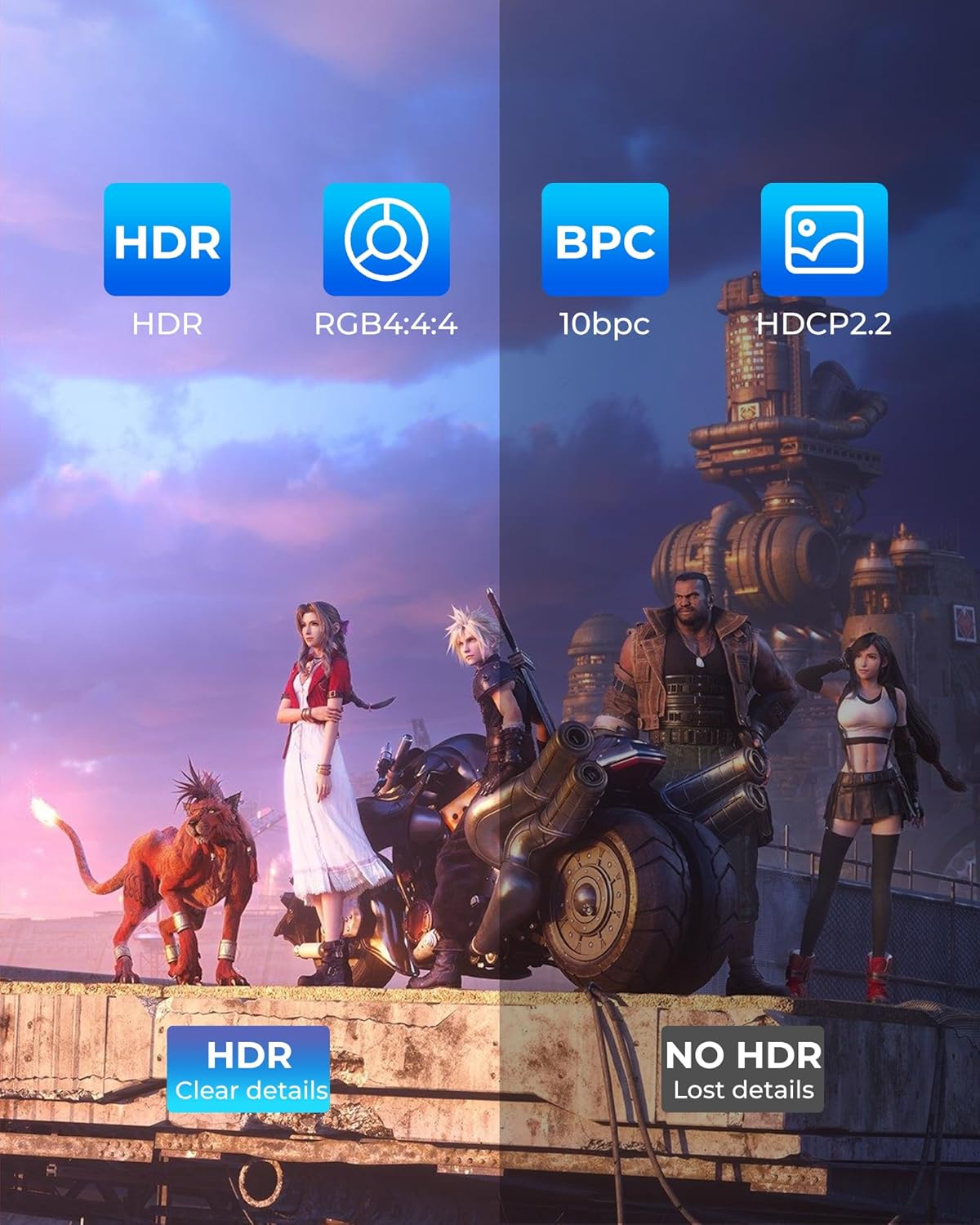
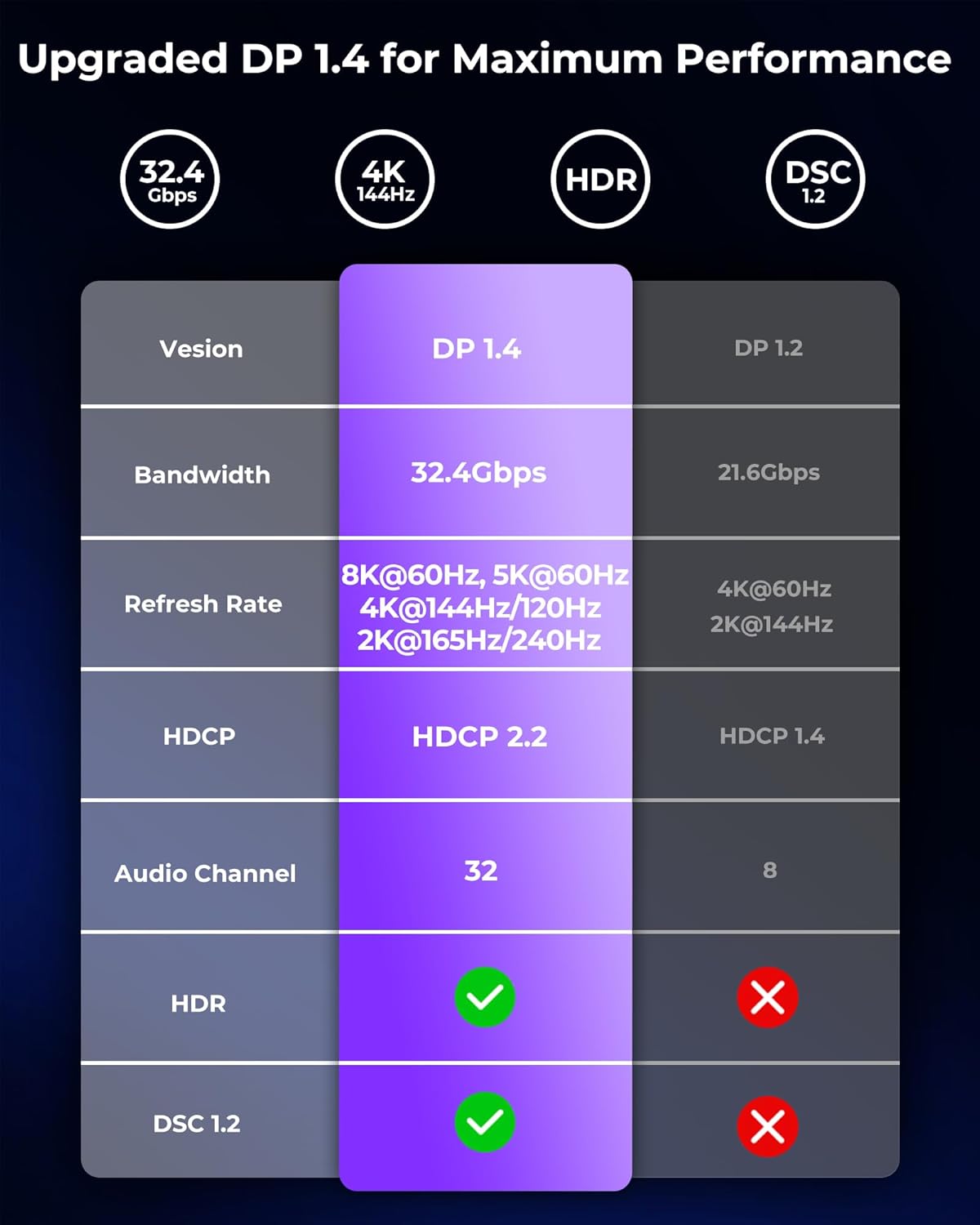
What it is and what it’s for\nSilkland’s VESA certified DisplayPort 1.4 cable is designed for high‑bandwidth PC video and gaming setups. With support for HBR3 at 32.4 Gbps, Display Stream Compression 1.2, HDR10 and forward error correction, it aims to deliver smooth, high‑fidelity video and audio over a single lead. The 3 m length offers practicality for mid‑to‑large desks, letting you connect a graphics card to a gaming monitor without excessive slack.\n\n## Key strengths at a glance\nOn paper, this cable supports extremely high refresh rates and ultra‑high resolutions: 8K@60Hz, 4K@144Hz and 2K@240Hz. The combination of a rugged nylon braided jacket, a tinplate shield and 28 AWG OFC copper aims to reduce interference and maintain signal integrity. Gold‑plated connectors are intended to resist tarnish and preserve conductivity over time. The claimed bend lifespan (15,000+ cycles) speaks to durability in busy setups.\n\n## Who it’s for\nGamers running modern GPUs and high‑end monitors that can push 4K/8K visuals benefit from the higher bandwidth, especially if aiming for high frame rates. It’s compatible with a wide range of displays and graphics cards that support DisplayPort 1.4 and DP++/DisplayPort++. If you’re setting up a dedicated gaming rig or a content‑creation workstation, it’s positioned as a cable that can handle demanding video tasks.\n\n## What stands out in day‑to‑day use\nThe 3 m length is convenient for desk layouts where the PC sits out of sight but needs a clean, short run. The cable’s shielding and copper build are designed to keep signals stable in environments with multiple peripherals. In practice, you may notice the benefit most when pushing high refresh rates at 4K or when enabling HDR on capable monitors. It’s also worth noting that real‑world performance depends on the rest of the chain—GPU capability, monitor spec and the quality of the source content.\n\n## Limitations and things to consider\nWhile the spec reads impressively on paper, not every monitor or GPU will consistently push 8K/60Hz or 4K/144Hz in every scenario, and some ecosystems might prefer alternative cables for specific setups. The cable is designed to be backward compatible with DisplayPort 1.3/1.2/1.1, but to realise that 8K/60Hz or 4K/144Hz, you’ll need a system and a display that actually support those modes. If your current rig sits in mid‑range performance, you may not notice a dramatic difference versus a DP 1.2/1.3 lead unless you upgrade other components.\n\n## Technical snapshot (brief)\nThe lead is built with 28AWG OFC copper, a tinplate shield, and a nylon braided jacket. It mentions 24K gold‑plated connectors and a stated 15,000+ bend lifespan. It supports HDR10 and DSC 1.2, plus audio channels up to 32. If you need detailed specs (exact dimensions, weight or connector tolerances), those aren’t listed here.\n\n## Should you buy it? Who it suits and who should rethink\nWorth considering if you’re assembling a high‑performance gaming or professional display setup and you want a single cable capable of very high resolutions and refresh rates. It makes sense if your monitor and graphics card support DP 1.4 features and you value durability and shielding. You may want to skip or reassess if your current setup is far from 8K/60Hz or 4K/144Hz and you don’t expect to upgrade soon, or if your real needs lie in affordability over top‑end bandwidth.\n\n## What to check before buying\nConfirm that your monitor and GPU actually support DP 1.4 at the desired mode (8K@60Hz or 4K@144Hz). Ensure your chosen desk layout allows a 3 m run without tension. Look for how the cable’s real‑world performance aligns with your expected frame‑rates and HDR usage.\n\n## Practical usage example\nImagine gaming at 4K on a high‑end RTX or Radeon card with a capable 144 Hz panel. With a DP 1.4 lead like this, you’re in a position to explore high‑refresh scenarios and HDR workflows without swapping multiple cables. The effect is most noticeable when you’ve got a system that can actually sustain those modes rather than just in spec sheets.\n\n## FAQ (quick answers)\n- Does it support 8K@60Hz? Yes, according to the listed specs, along with 4K@144Hz and 2K@240Hz.\n- Is it easy to install or test for stability? It’s a passive cable, stability will depend on system compatibility and source content.\n- Is it backward compatible with older DisplayPort versions? Yes, it lists backward compatibility with DP 1.3/1.2/1.1.\n\n## Final note\nIf you prioritise maximum bandwidth, future‑proofing and a robust physical build for a gaming or content‑creation rig, this Silkland DP 1.4 lead is a reasonable candidate. If your setup is already capped at lower refresh rates or you’re budget‑conscious, you might prefer alternative options that align with current needs more tightly.