

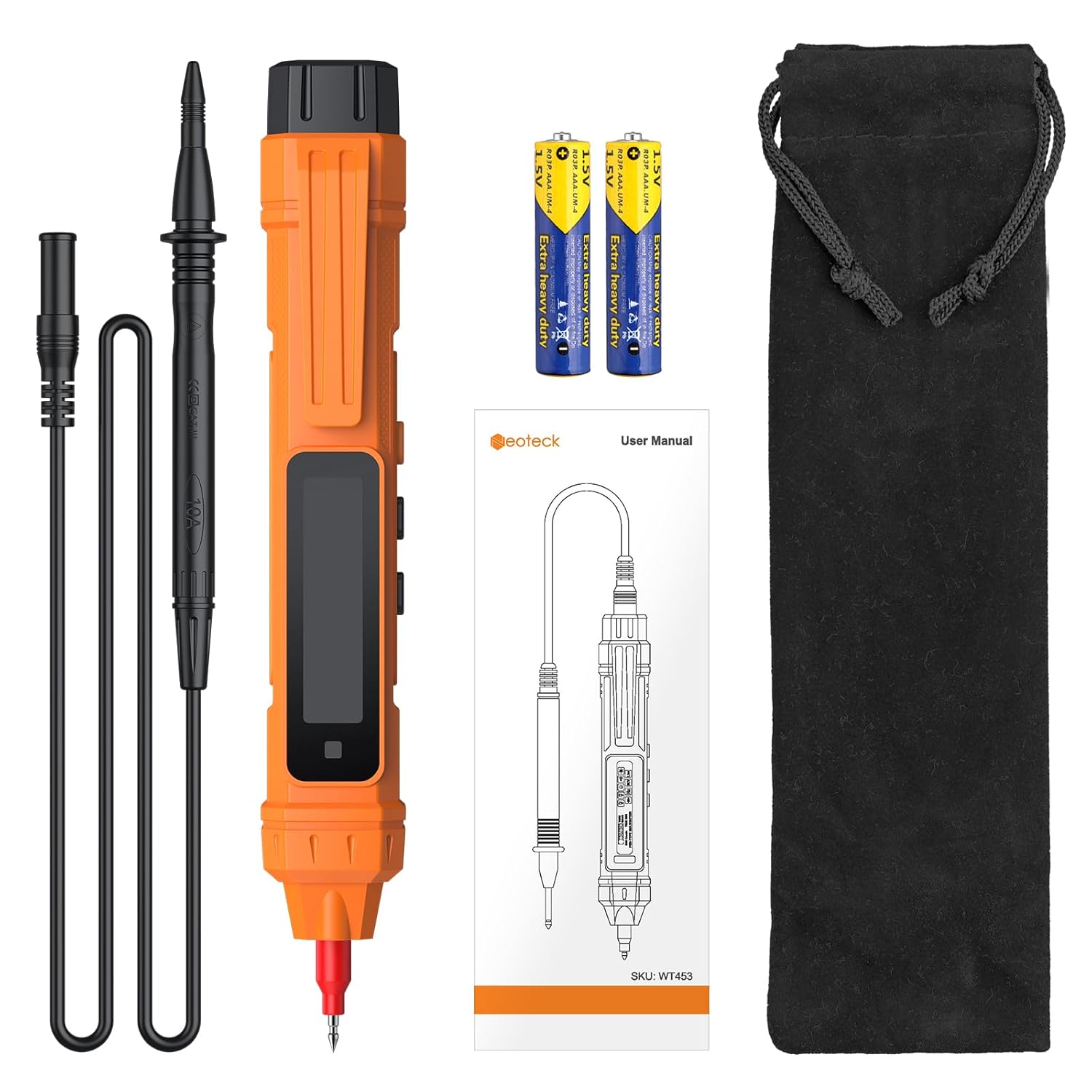
Neoteck 2 in 1 Pen Type Digital Multimeter & Non-Contact Voltage Tester (Orange)
Product description
If you need one hand-held tool that can do quick voltage checks and also act as a proper digital multimeter, this Neoteck 2 in 1 pen-style tester is aimed squarely at that everyday job. It combines a voltage tester pen approach with multimeter functions, plus NCV (non-contact) detection.
That said, it’s not a full “laboratory” instrument. It’s more of a practical, portable workhorse for basic electrical checks, hobby use, and routine troubleshooting—so the worth-it question comes down to whether you value convenience and coverage over more advanced measuring needs.
What it is and what it’s for
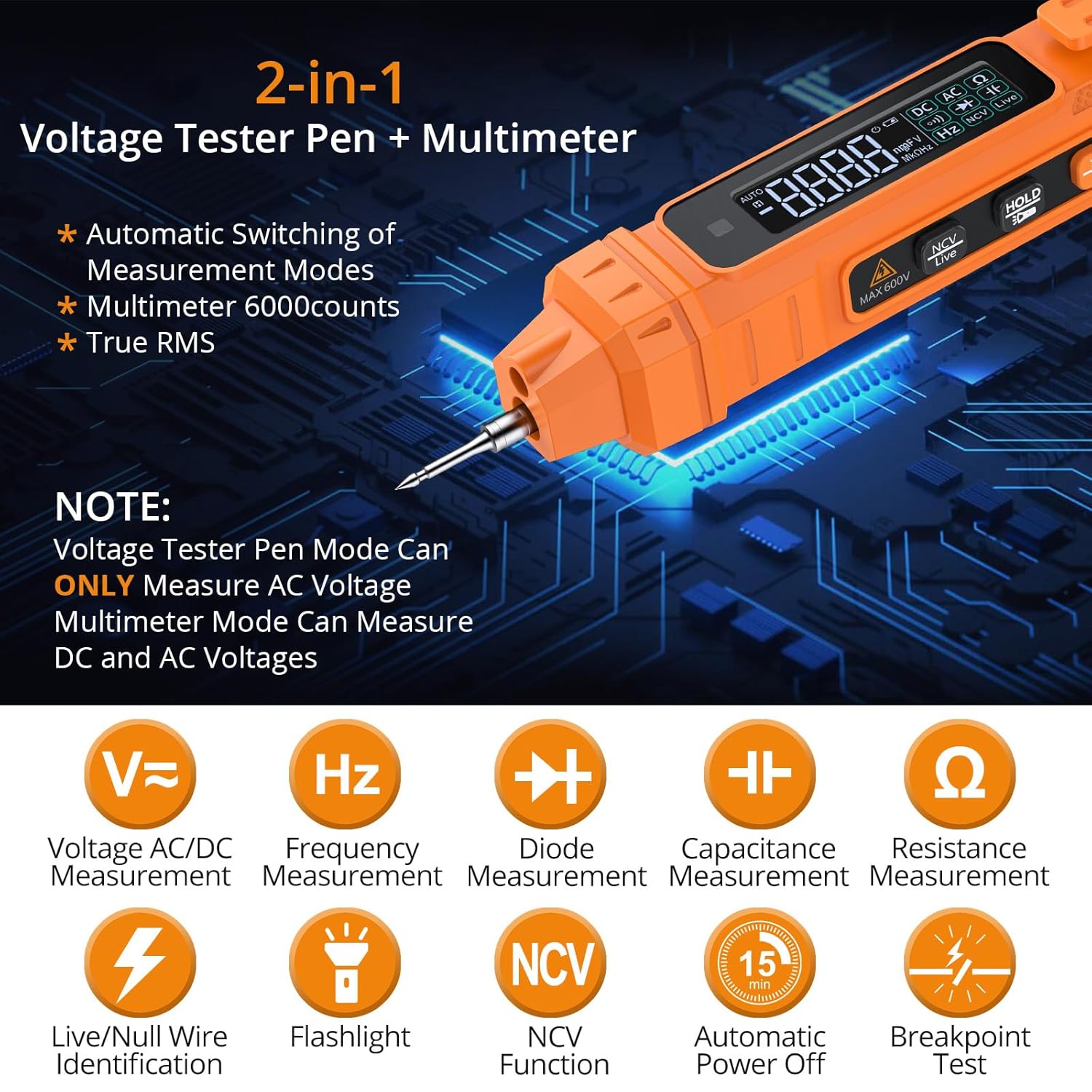
This Neoteck tool is designed as a 2 in 1 device: it functions as a voltage tester pen and as a digital multimeter.
In the voltage tester pen mode, the focus is on AC voltage checks. In multimeter mode, it can measure AC and DC voltage, along with additional test types like resistance, diode, continuity, capacitance and frequency (as stated in the description).
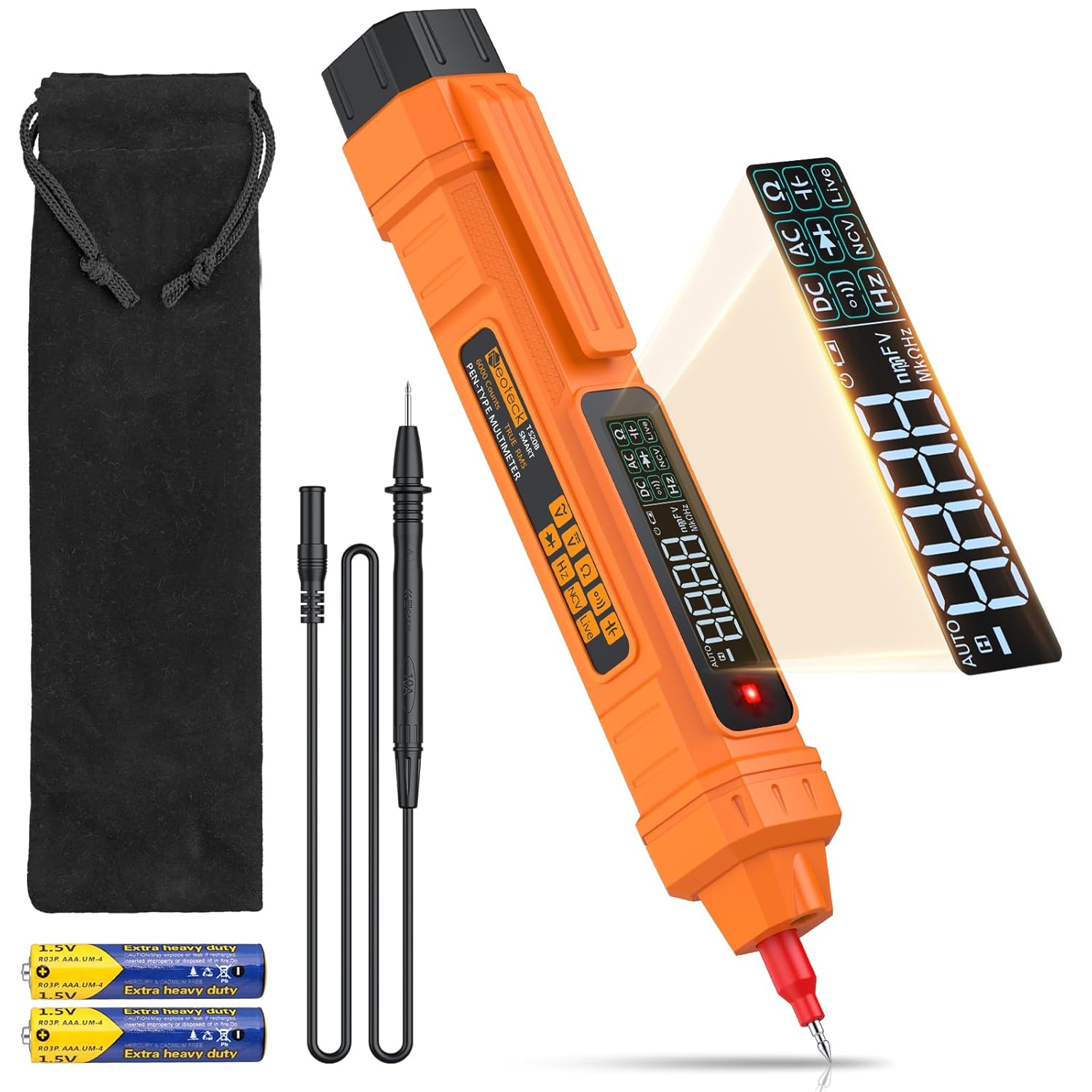
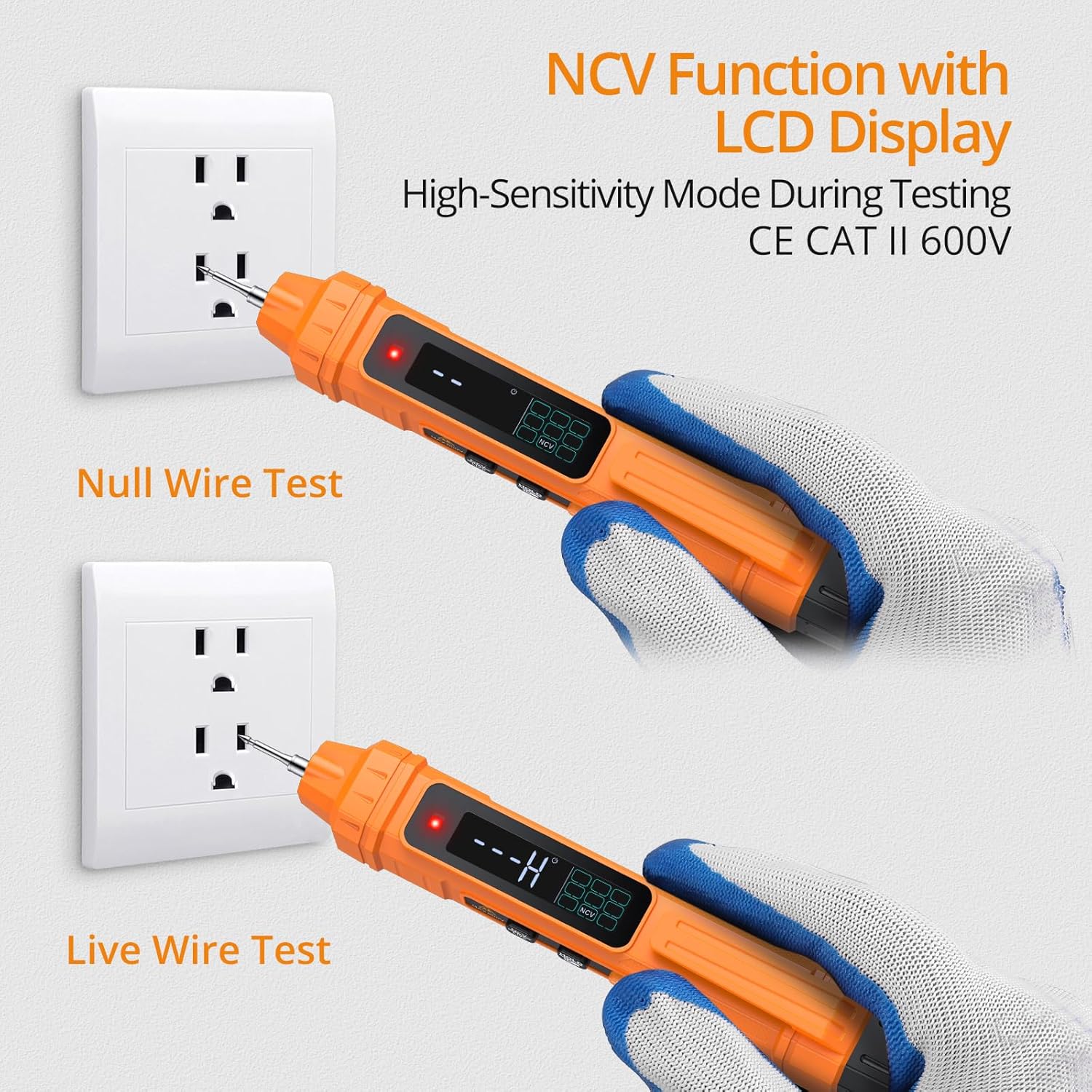
There’s also NCV, which is meant to detect dangerous electrical voltages without direct contact. In practical terms, that means you can do a safer first look around a cable run or socket area before you decide whether you need to get more hands-on.
Key takeaways (what you’ll notice in use)
One of the more user-friendly ideas here is the “intelligent operation” angle: the meter is said to automatically identify measurement targets such as AC/DC voltage, resistance, and continuity without requiring you to change modes. For day-to-day use, that can reduce the “am I on the wrong setting?” moment.
The NCV and live/null detection are also geared towards quick decision-making. The description notes that it distinguishes null wire and live wire using different alarm frequencies, which is useful when you’re trying to confirm wiring basics quickly.
On top of that, the build is meant to stay practical: it includes a built-in flashlight, a pen clip, and comes with a velvet pouch. For a tool you might grab for quick checks around the garage, school lab, or workplace, those small extras actually matter more than people expect.
Safety and limitations to keep in mind
The tool is described as complying with CE CAT II 600V standards, and the voltage tester pen mode is noted as CAT II 600V safety standard. That positioning matters because it suggests it’s intended for typical, non-mains-infrastructure style usage rather than anything outside the CAT II framework.
Still, a clear limitation is baked into the mode behaviour: the voltage tester pen mode exclusively measures AC voltage. So if your work often involves checking DC sources (or you routinely need both AC and DC readings), you’ll want to use the multimeter mode rather than relying on the pen mode alone.
Also worth considering: while it’s described as offering precise readings, the stated capability is “6000 counts” with specific measurement ranges. If you’re working to tighter tolerances or need more specialised measurement features, this may stay firmly in the general-purpose bracket.
Tech summary you can shop around with
This Neoteck multimeter is described as a 6000 counts instrument with a True RMS function.
In broad terms, it supports: - DC voltage measurements (stated range: 0.1mV to 600V) - AC voltage measurements (stated range: 10mV to 600V) - Resistance, diode, continuity, capacitance, and frequency (all mentioned in the description)
You also get auto shut-off after 15 minutes of inactivity to conserve energy, and it’s stated that 2 x 1.5V AAA batteries are included.
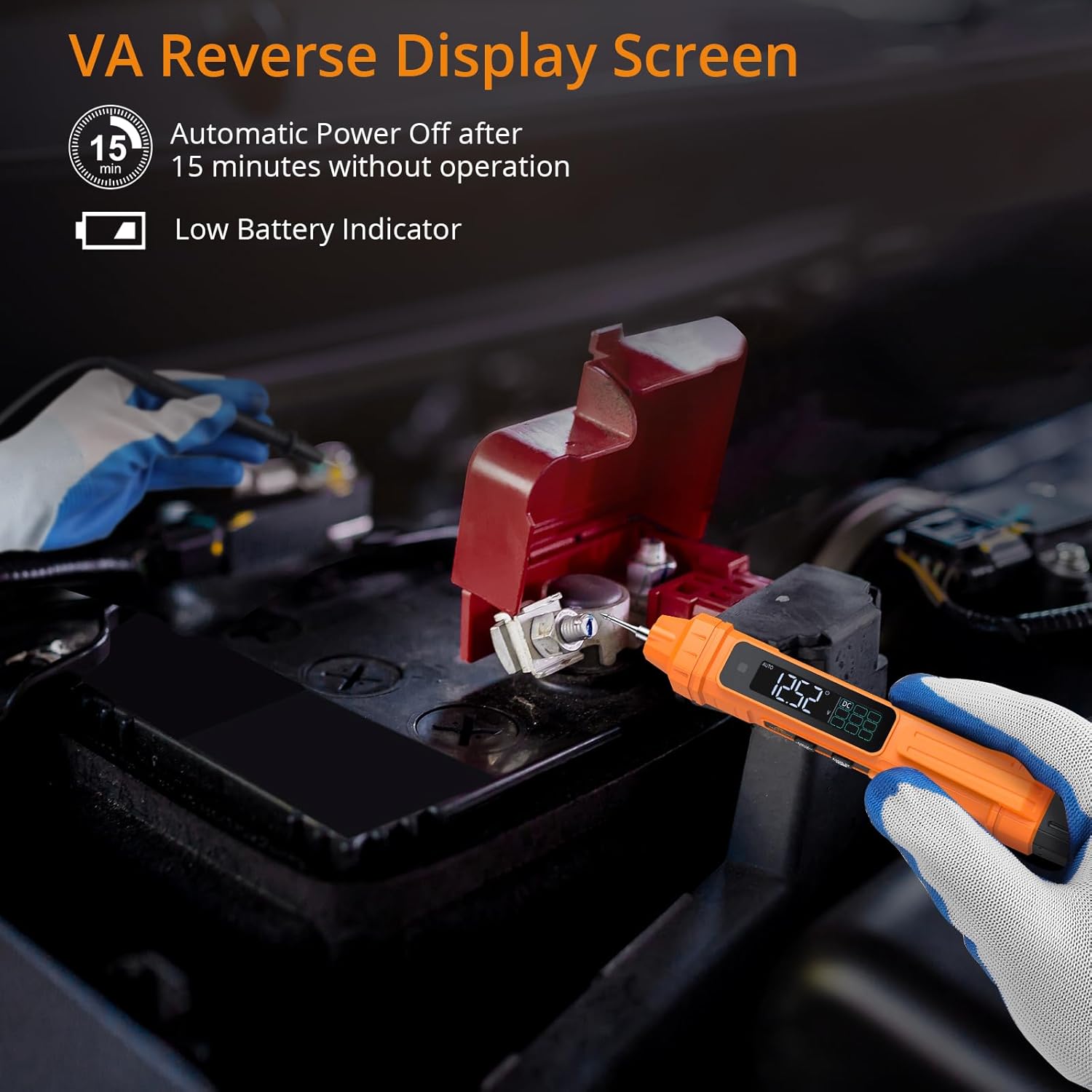
Finally, the front-end is an LCD display, and it includes a flashlight, so readings are easier in dim conditions.
Who it suits (and who should look elsewhere)
It suits you if you want one compact tool that can cover common electrical checks without needing lots of separate testers. That includes students, research institute users, factory and company environments, and general DIY or routine troubleshooting—especially where you’d like NCV non-contact detection as an extra safety step.
It may not suit you if: - You mainly need highly precise or highly specialised measurements beyond the listed functions and ranges. - You expect the pen mode to handle DC voltage, because the description says it’s AC-only in pen mode. - You’re after a “set and forget” instrument that never needs you to verify mode/approach—intelligent identification helps, but it doesn’t replace good test habits.
A solid way to think about it: if your priority is speed and convenience for everyday checks, this looks built for that. If your priority is advanced diagnostics or demanding metrology, you may find yourself wanting something more dedicated.
Getting the most from it (practical example)
Imagine you’re checking a wall socket or cable run and you’re not sure what’s live and what isn’t. You can use the NCV function first for a non-contact scan to decide whether it’s worth switching to direct measurement. Once you’ve got a safer indication, you can move to the multimeter mode to measure AC/DC voltage and confirm with resistance or continuity tests when relevant.

That “scan first, measure second” workflow is exactly where a 2 in 1 pen-and-multimeter style tool tends to feel handy.
Mini FAQ

Does the pen mode measure both AC and DC?
No. The description states that the voltage tester pen mode exclusively measures AC voltage.
What extra safety features does it include?
It includes NCV non-contact voltage detection, plus null/live wire detection via alarm frequencies.
Is it suitable for schools or workplace use?
The description says it’s used in schools, research institutes, factories and companies, which points to a broad everyday-institution use case.
What powers it?
It uses 2 x 1.5V AAA batteries, and they’re stated as included.
Final verdict
This Neoteck 2 in 1 pen-style digital multimeter is worth considering if you want a portable tool that covers both quick voltage checking (including NCV) and standard multimeter tests, with True RMS and a 6000-count LCD display.
You may want to skip it if you need DC voltage checks specifically via the pen mode, or if your work demands more advanced measuring capability than the stated functions and ranges suggest.