

NEEWER BASICS 77mm Variable ND Filter (ND2-400), rotatable 1–9 stops light reduction
Product description
If you shoot in bright conditions and want more creative control over shutter speed, a variable ND filter is one of those “works every time” accessories. This NEEWER BASICS 77mm Variable ND Filter is designed for practical light reduction without adding a load of extra features—at least on paper.
Where it gets interesting is the combination of a 1–9 stops light reduction range and a rotatable adjustment for exposure control. There’s also an anti-fingerprint coating angle and a slim frame meant to help with wide-angle lens vignetting. Still, variable ND filters can be a bit fussy at the extremes, so it’s worth knowing what to watch for before buying.
The essentials
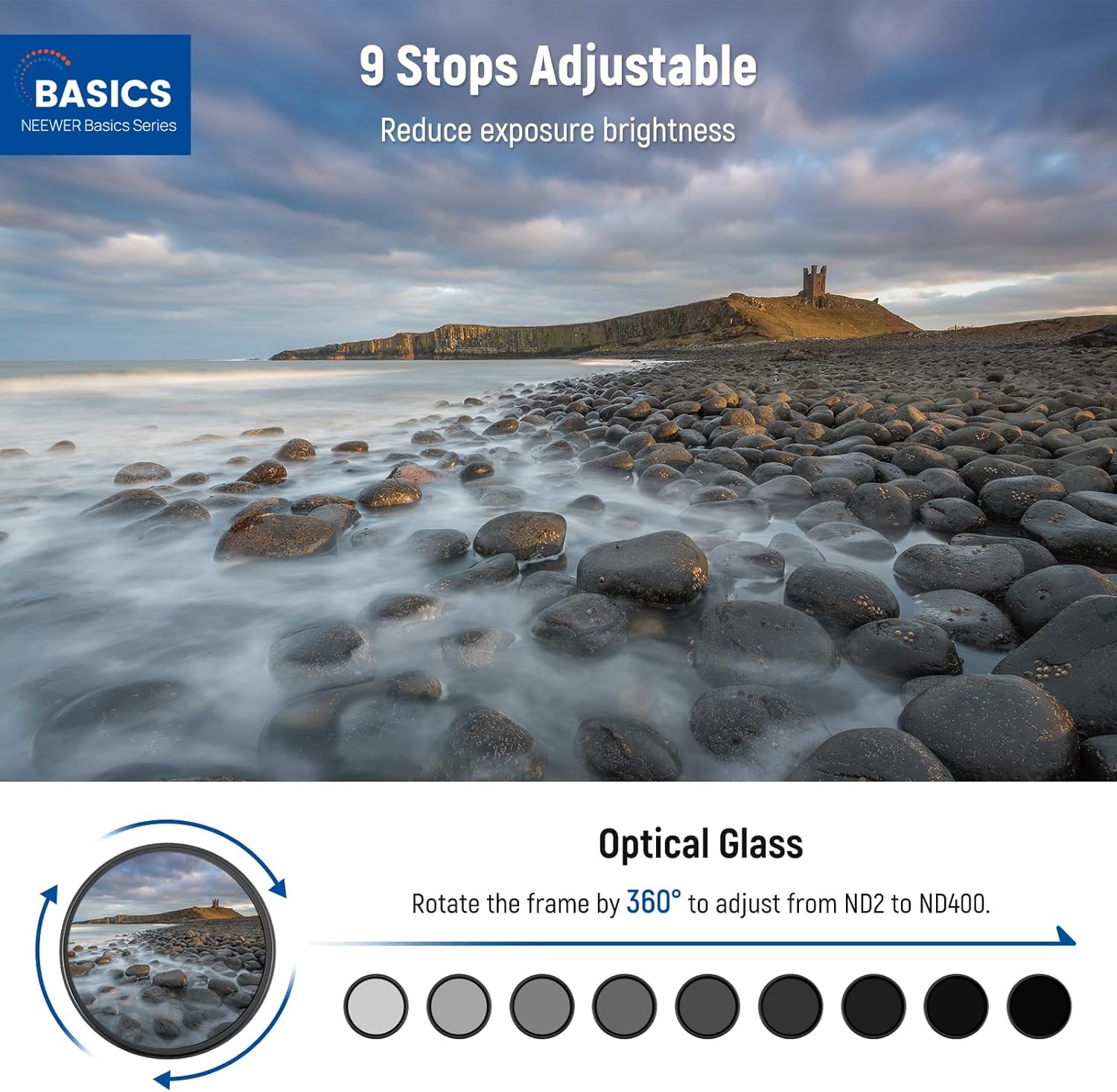
This is a 77mm variable neutral density (ND) filter that reduces light by 1–9 stops. In practical terms, it’s aimed at situations where you want to slow your shutter down (for motion blur) and/or use wider apertures without overexposing—whether you’re shooting on a bright day or trying to smooth water and soften moving subjects.
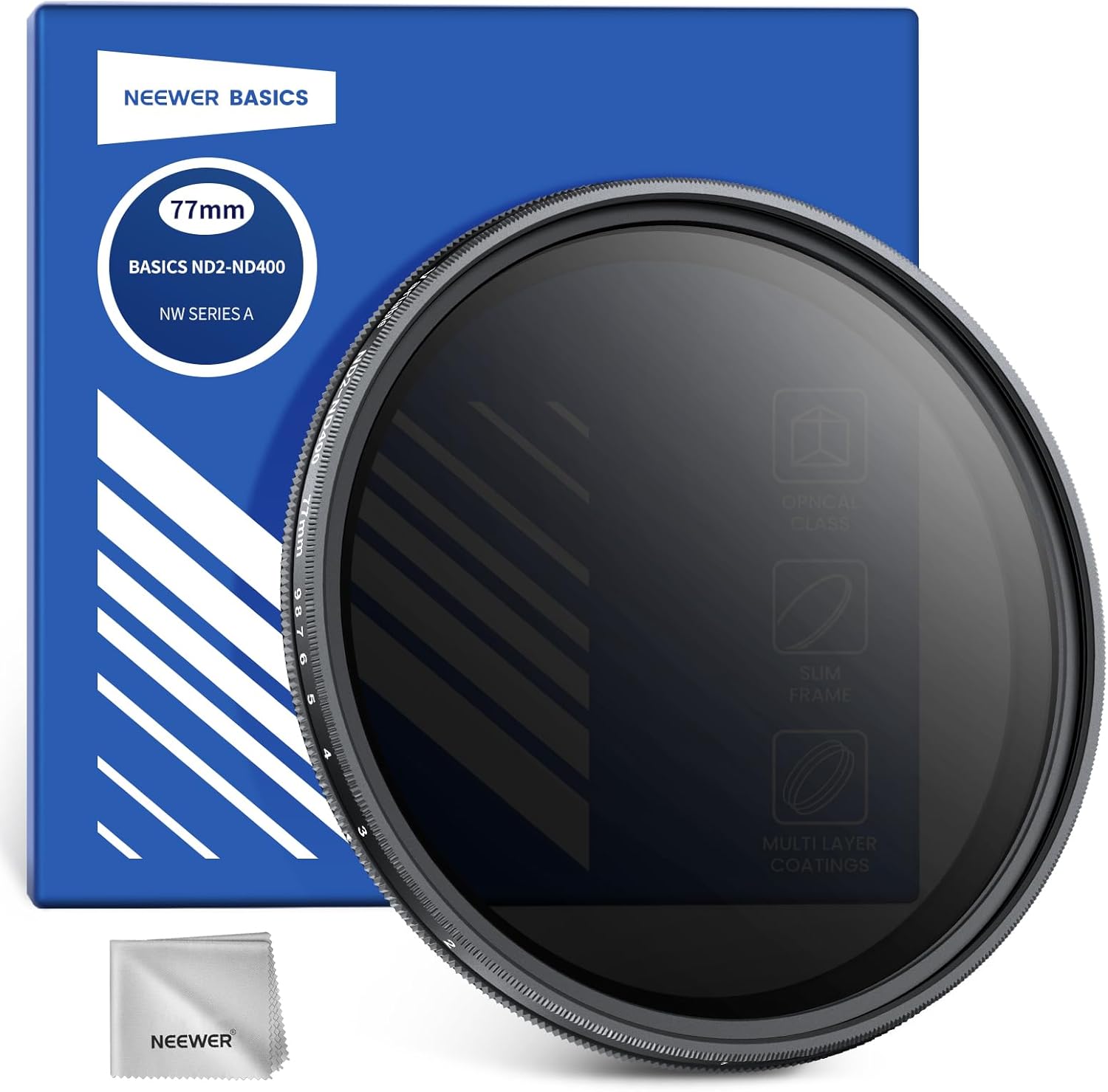
The filter is adjustable by rotating the frame to match the markings, which should make exposure changes quicker than guessing. If you’re filming or photographing outdoors, the scope is fairly broad: it’s positioned as an “everyday creator” type of accessory rather than something built purely for studio precision.
Key takeaways
The best thing about this filter is the usefulness of that ND2–400 range. A 1–9 stop spread gives you room to respond to changing light, and the rotatable frame is meant to get you to the right setting without too much hassle.
It also includes coatings described as resistant to water, dust, fingerprints, and smudges—plus a cleaning cloth for daily maintenance. That’s the kind of detail that matters when you’re out and about and don’t want to spend your time wiping streaks off your lens.
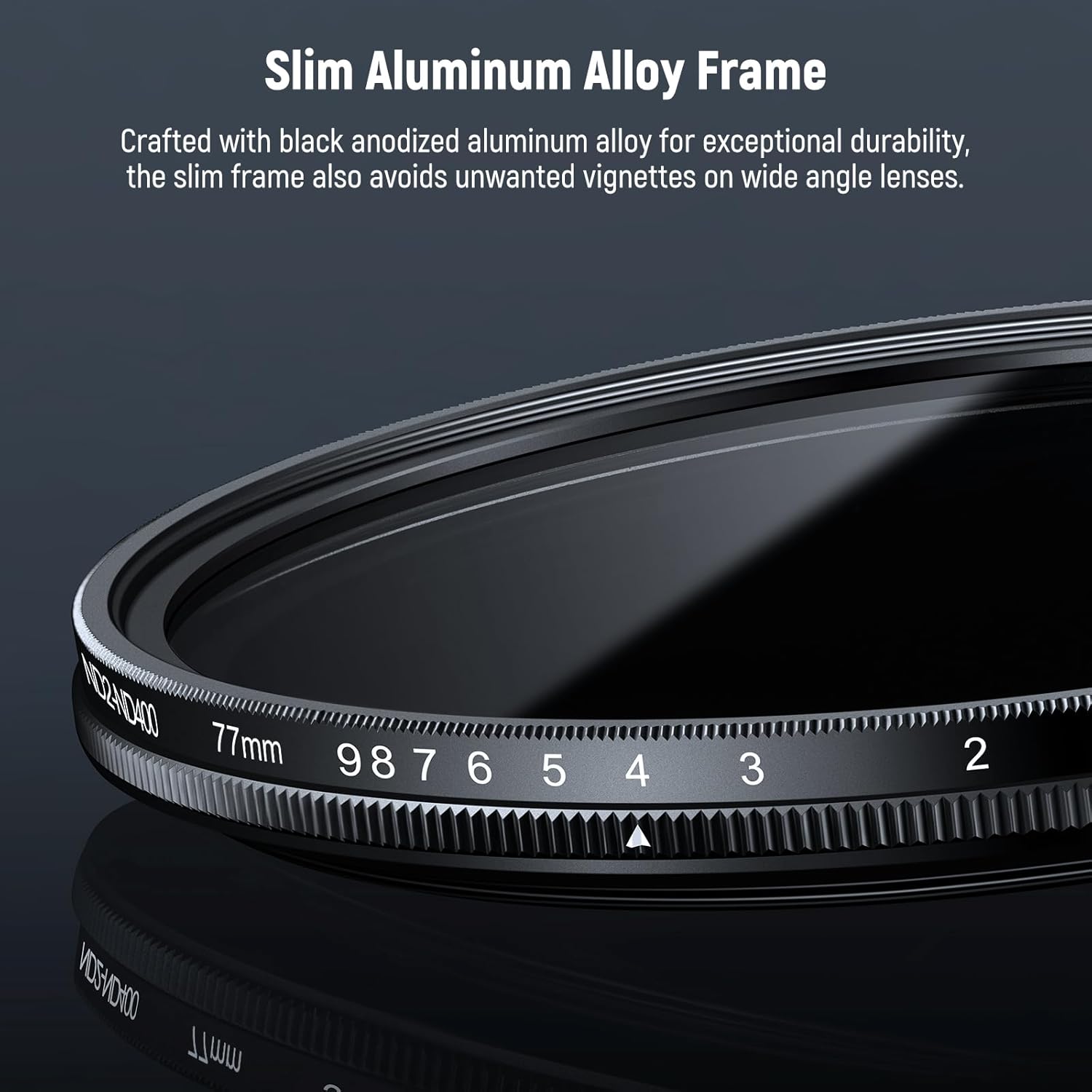
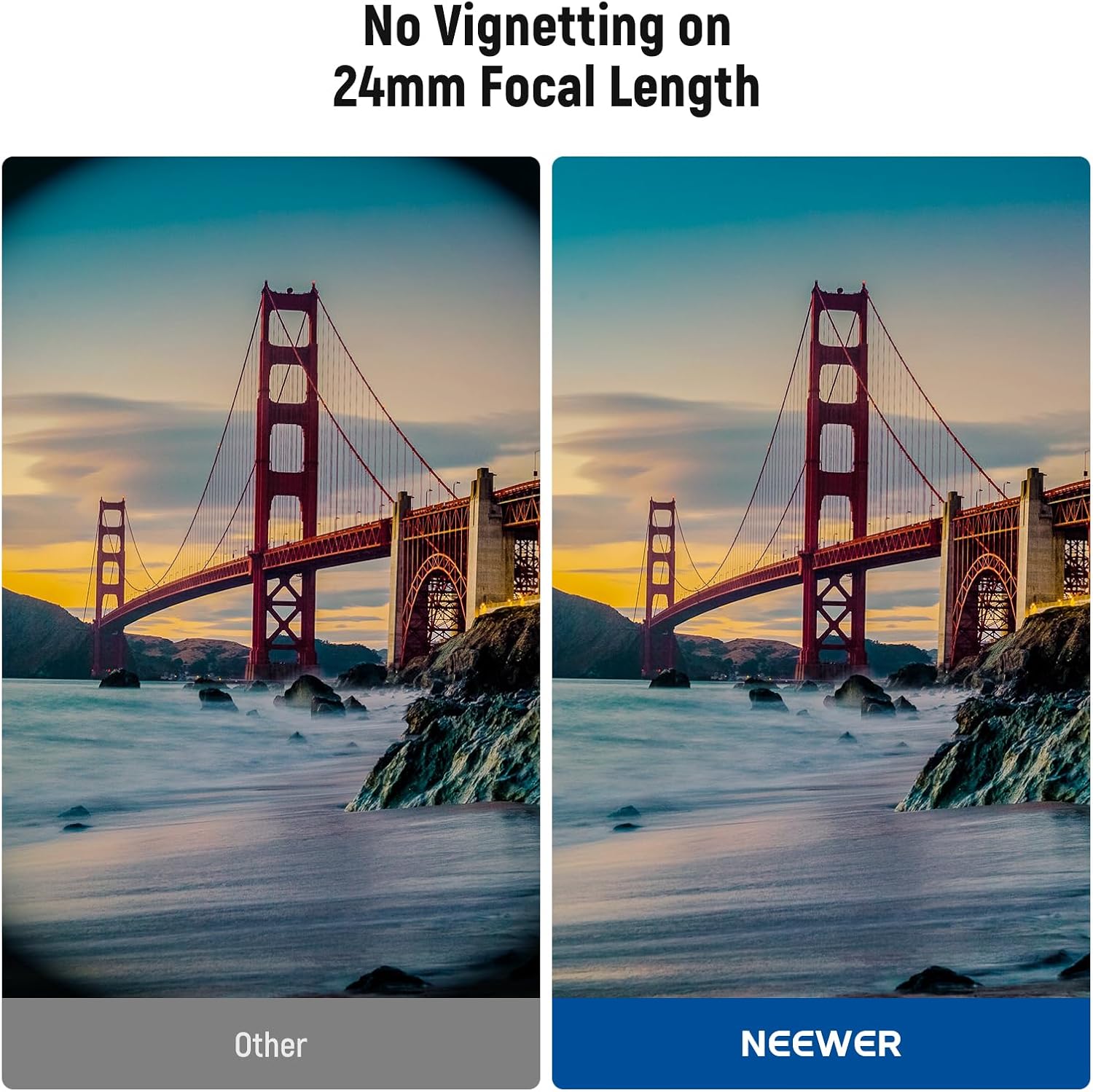
Worth noting too: the frame is described as a slim aluminum alloy construction, with CNC-machined knurling for smooth installation and removal. The intent is to reduce the chance of vignetting on wider lenses.
What you’ll notice in use
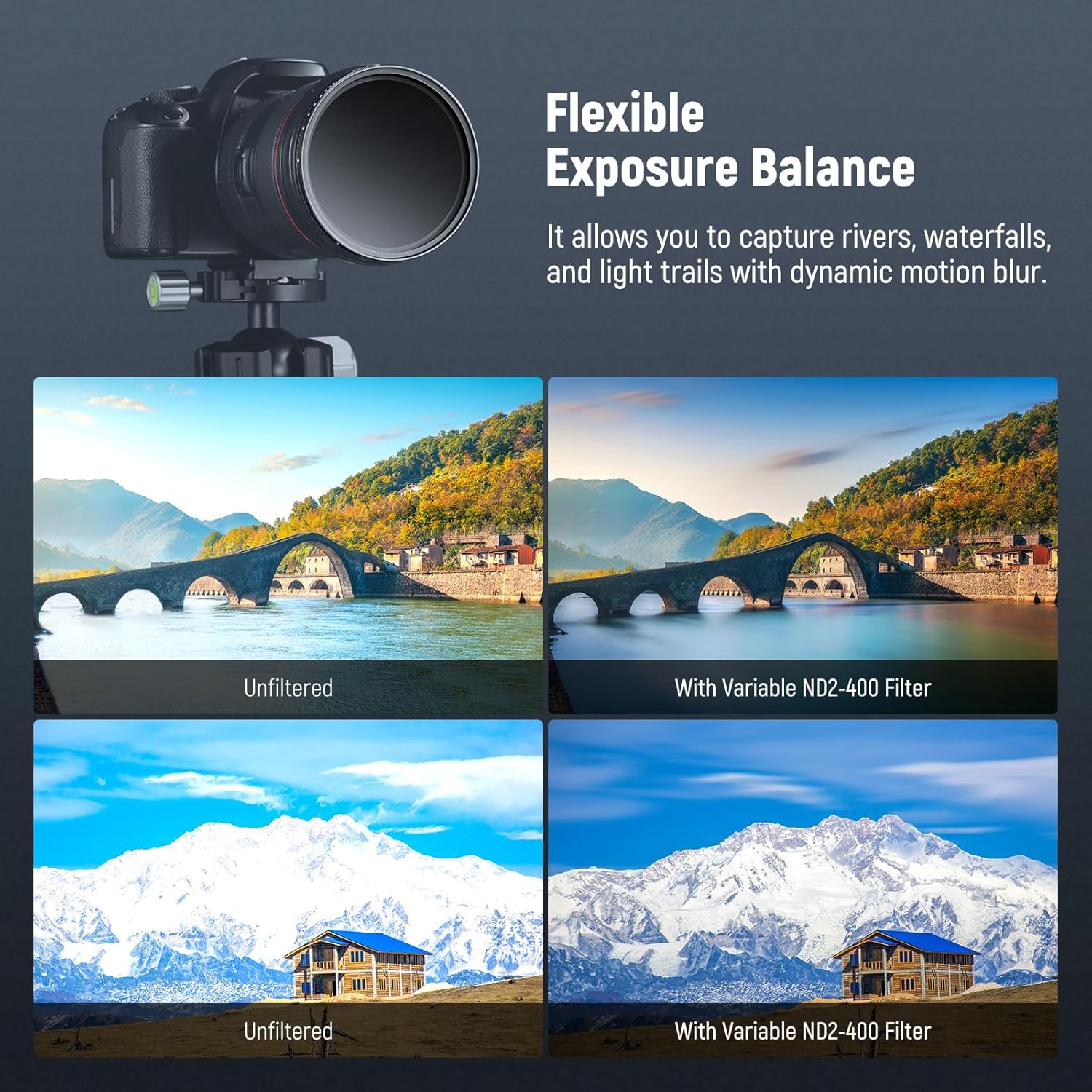
Here’s a concrete example of where this kind of filter earns its keep: imagine you’re shooting a stream or waves in daylight. Without an ND filter, you may be forced into a fast shutter to avoid overexposure. With this variable ND, you can rotate to reduce incoming light and drop your shutter speed, creating the longer-exposure look—often while keeping your aperture where you want it.
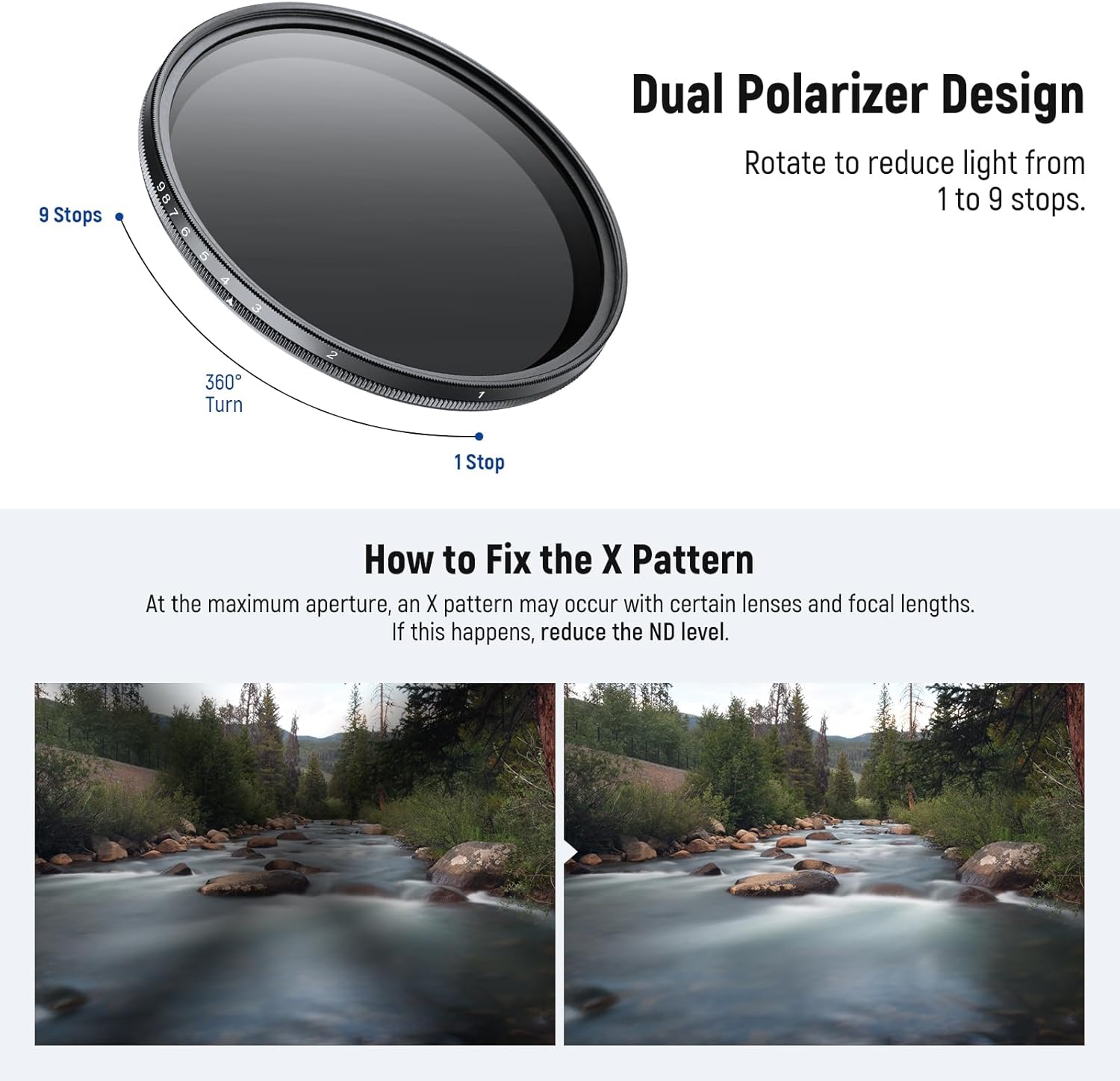
That said, there’s a known limitation to understand. The description flags a dark “X pattern” (also referred to as X vignetting) that may appear at the maximum ND value. It’s described as something that can happen depending on how the two polarising filters align, interacting with certain lenses and focal lengths. The suggested workaround is straightforward: reduce the ND value.
If your workflow regularly pushes variable ND to the very darkest settings, you may find yourself backing off slightly to avoid that pattern.
Tech specs
- Type: Variable neutral density (ND) filter with rotatable adjustment
- Name: NEEWER BASICS 77mm Variable ND Filter
- Light reduction range: ND2-400 (1–9 stops)
- Frame: Slim aluminium alloy frame with CNC machined knurling
- Coatings: Anti fingerprint coatings, resistant to water, dust, fingerprints and smudges
- Included accessory: Cleaning cloth
- Lens compatibility note: It only suits lenses with a 77mm filter thread and 82mm lens caps/hoods
Where it shines (and where it doesn’t)
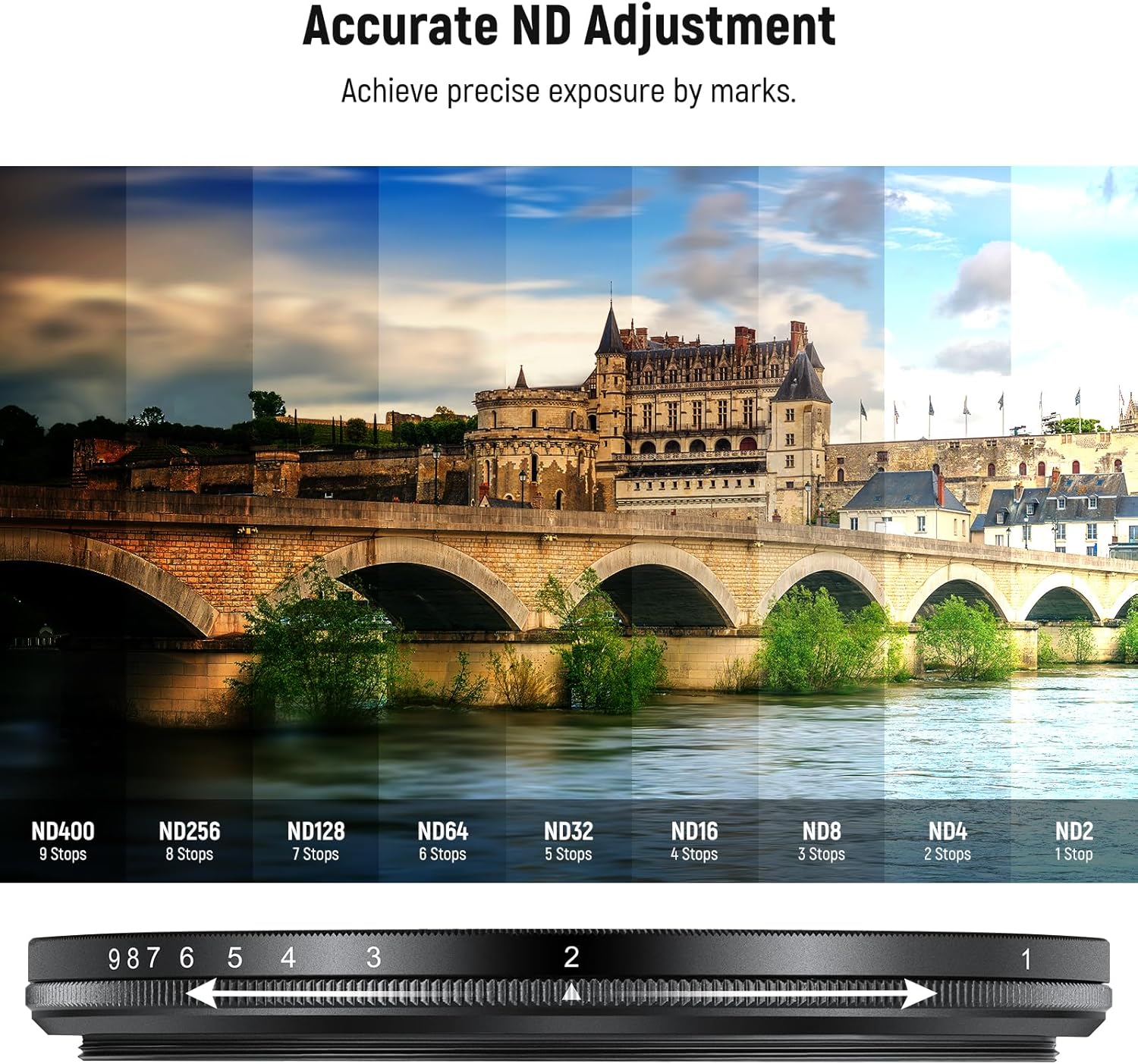
It makes sense if you want a single filter to cover a wide range of brightness levels, and you’re comfortable adjusting by rotating the ring to the marks. This is also a decent fit if you value a slim frame designed to help avoid vignetting on wide-angle lenses, and you want coatings that cope better with the real messiness of outdoor shooting.
It may not suit you if your camera/lens setup can’t use a 77mm filter thread, or if you routinely need the filter at its very maximum setting. The X pattern issue is described as common enough to be explicitly called out, so if you’re the type of shooter who expects “set it and forget it” at the extremes, it’s better to be cautious.
It’s also an economical line by positioning, so depending on what you consider “enough” performance, you may find higher-end filters feel more consistent in demanding scenarios. This one focuses on essential functions and practical design.
Is it worth it?
Buy it if you’re a content creator, enthusiast, or hobbyist who needs a practical variable ND filter for outdoor motion blur and exposure control, and you have the correct 77mm filter thread. The 1–9 stops range plus rotatable adjustment is the main reason this stands out on paper, and the anti-fingerprint approach should reduce day-to-day hassle.
Skip it if you don’t match the filter-thread requirement, if your lens setup is known to be sensitive to X-pattern/vignetting at maximum ND values, or if you want to avoid any need to adjust settings just to keep the image clean.
For most people using variable ND as a daylight creativity tool, this looks like a reasonable “workhorse” pick—just don’t assume the darkest setting will always behave perfectly on every lens.
FAQ
What is the light reduction range on this filter?
The filter is described as reducing light by 1–9 stops (ND2-400).
How do you adjust the ND strength?
The frame is rotatable, and you align it with the marks for exposure control.
Can a dark X pattern appear?
Yes. The description says a dark X pattern may appear at the maximum ND value, depending on lens/focal length. Reducing the ND value is the suggested fix.
Does it fit any lens?
No. It’s stated to suit lenses with a 77mm filter thread and 82mm lens caps/hoods.
Is a cleaning cloth included?
Yes, a cleaning cloth is included for daily maintenance.