

Neewer 82mm Variable ND Filter (ND8–2000) with hard stop for DSLR and mirrorless
Reviews
Price
Product description
If you shoot video or stills and you’ve ever wished you could slow shutter speeds or open up the aperture in bright conditions, a variable ND filter is a simple way to do it. The Neewer 82mm Variable ND Filter (ND8–2000) is designed for exactly that kind of flexible exposure control: rotate the filter to dial in a neutral density range for different lighting.
That said, variable NDs are a bit of a “depends” product. On paper it’s a lot of capability for one filter, but there are also some well-known side effects—most notably the dark X pattern at certain settings and how results can vary with lens and focal length. If you’re clear on what you want to use it for, it can be a practical addition rather than a headache.
The essentials
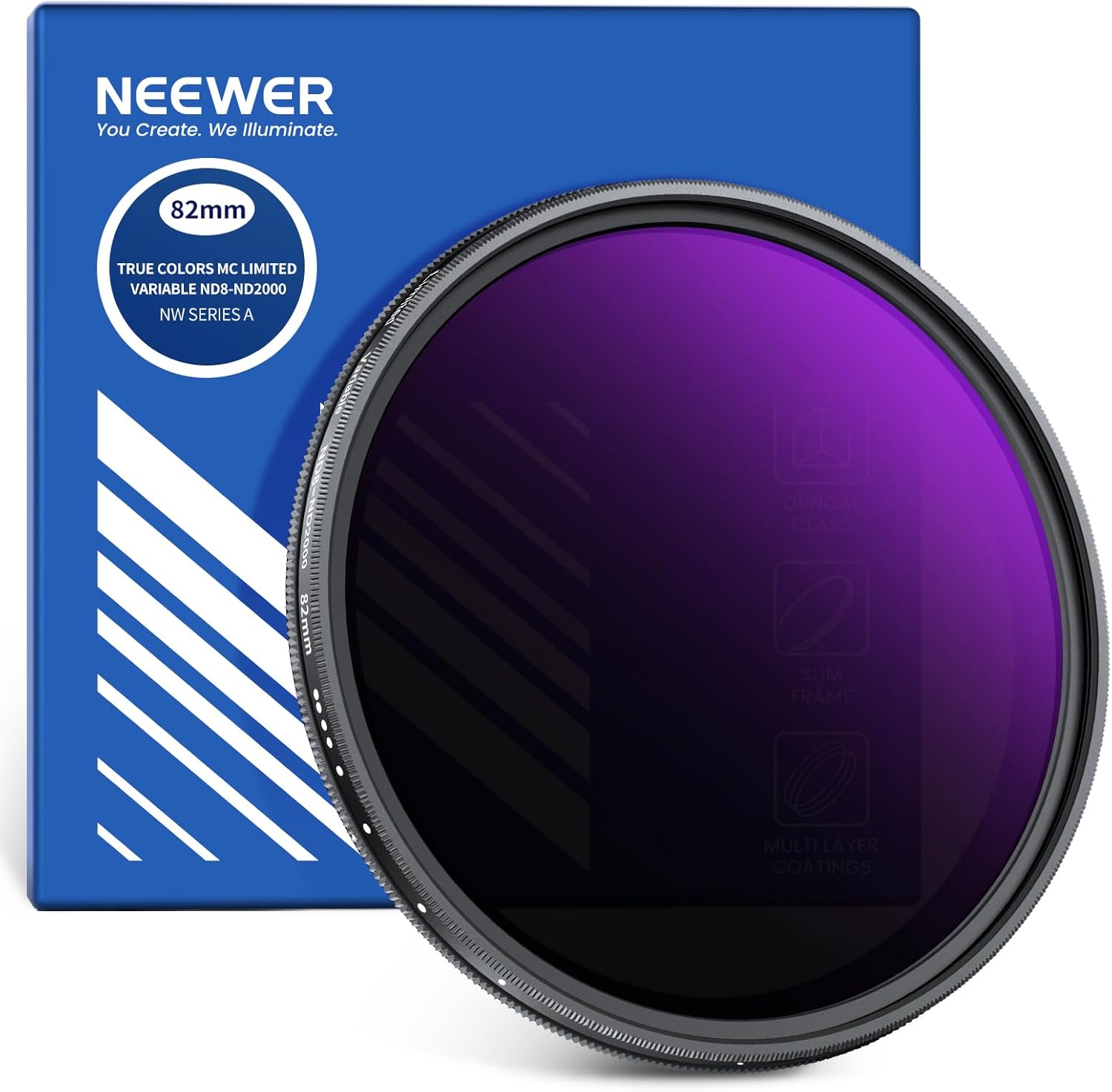
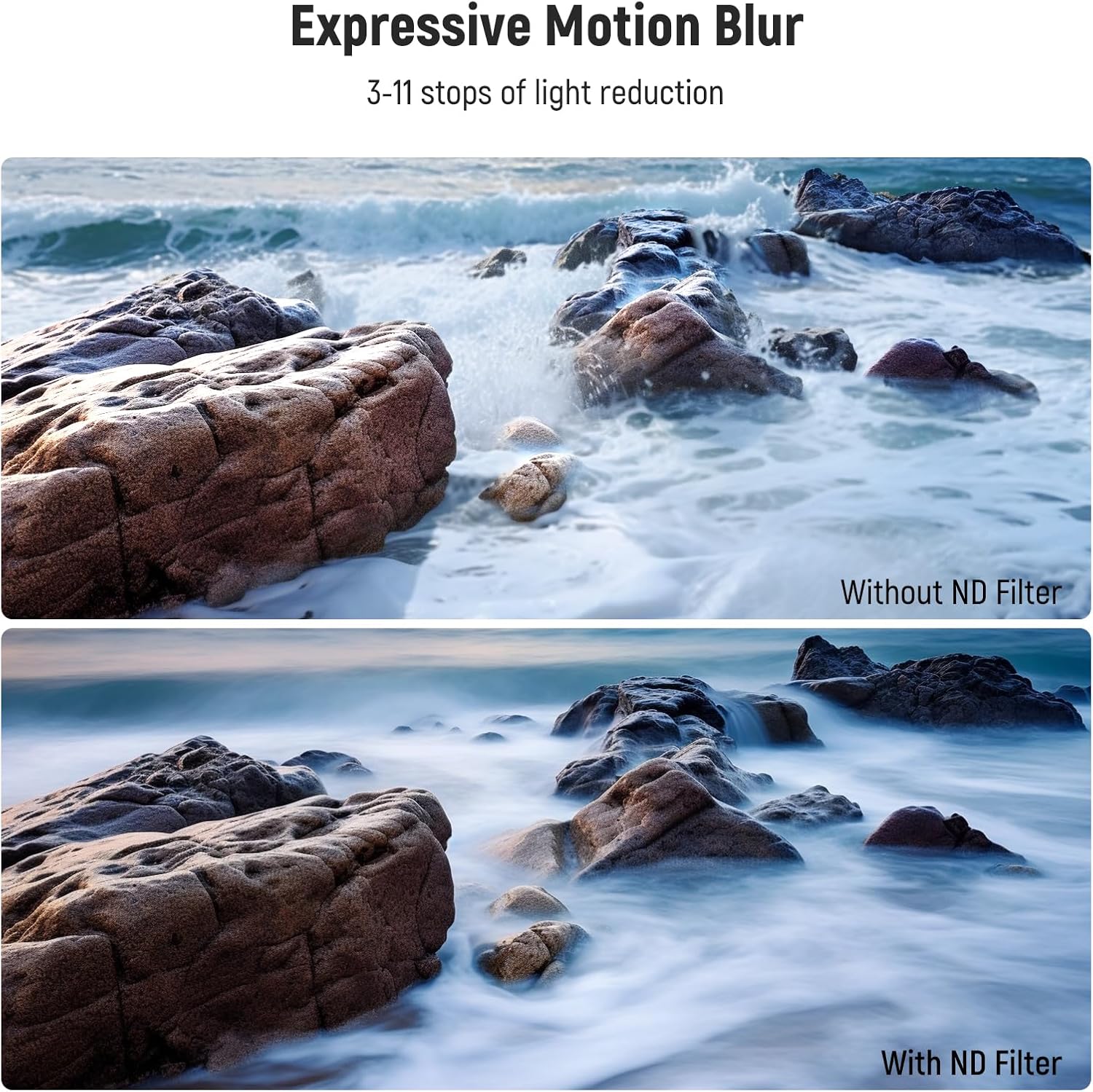
This is an 82mm variable ND lens filter aimed at DSLR and mirrorless users who want adjustable light reduction without swapping multiple fixed ND filters. The ND range is stated as ND8–2000 with 3–11 stops of reduction, and the filter is built around rotation-based adjustment.
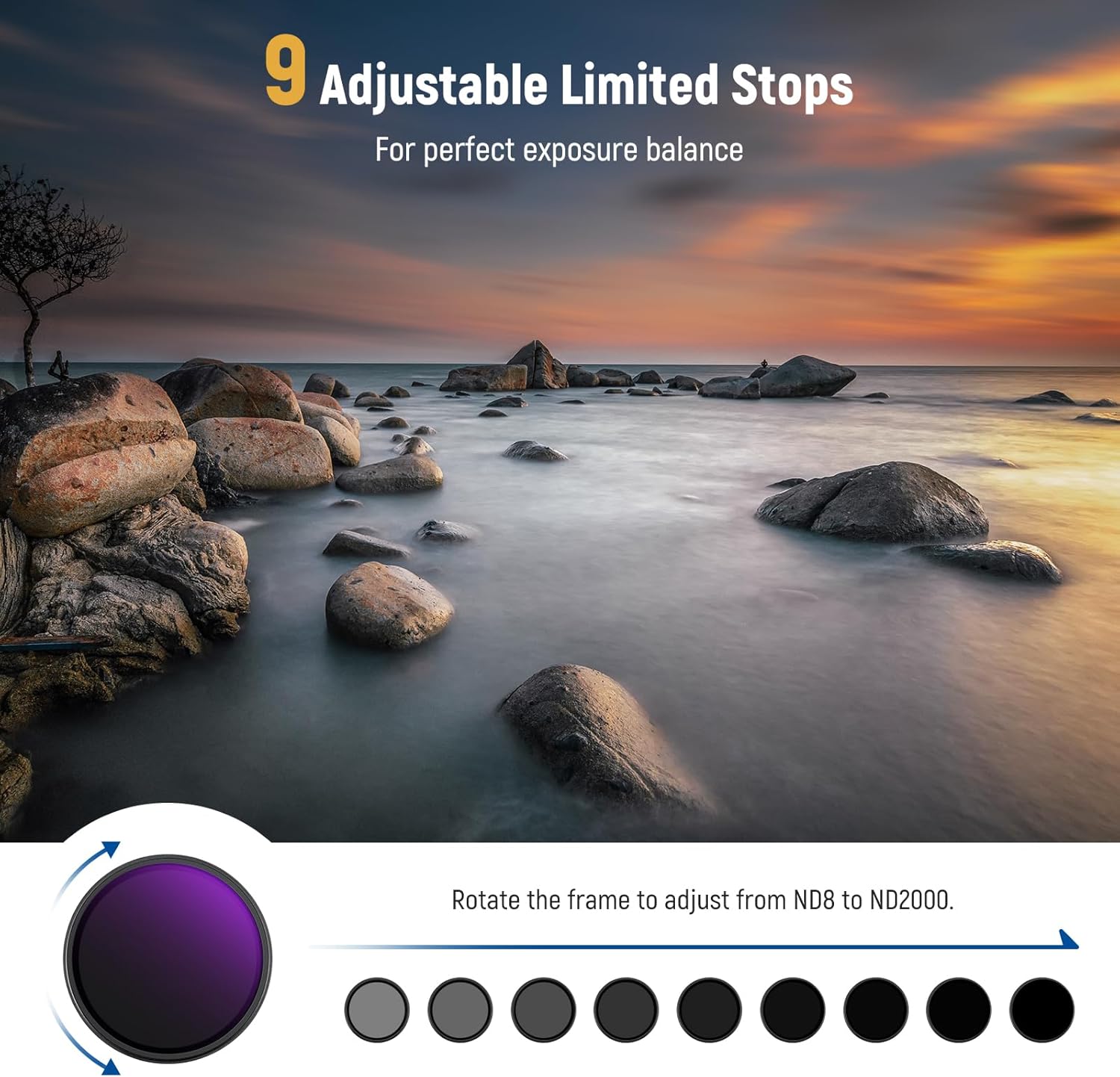
The filter includes limited hard stops. In practical terms, that helps you land at marked ND values more consistently, instead of guessing between positions.
What matters in everyday use
On bright days, the value is straightforward: you can control how much light reaches the sensor while keeping exposure balanced. For example, filming a smooth, more cinematic look in daylight often means you want to reduce light so you can use a slower shutter speed and/or keep your aperture where you want it.
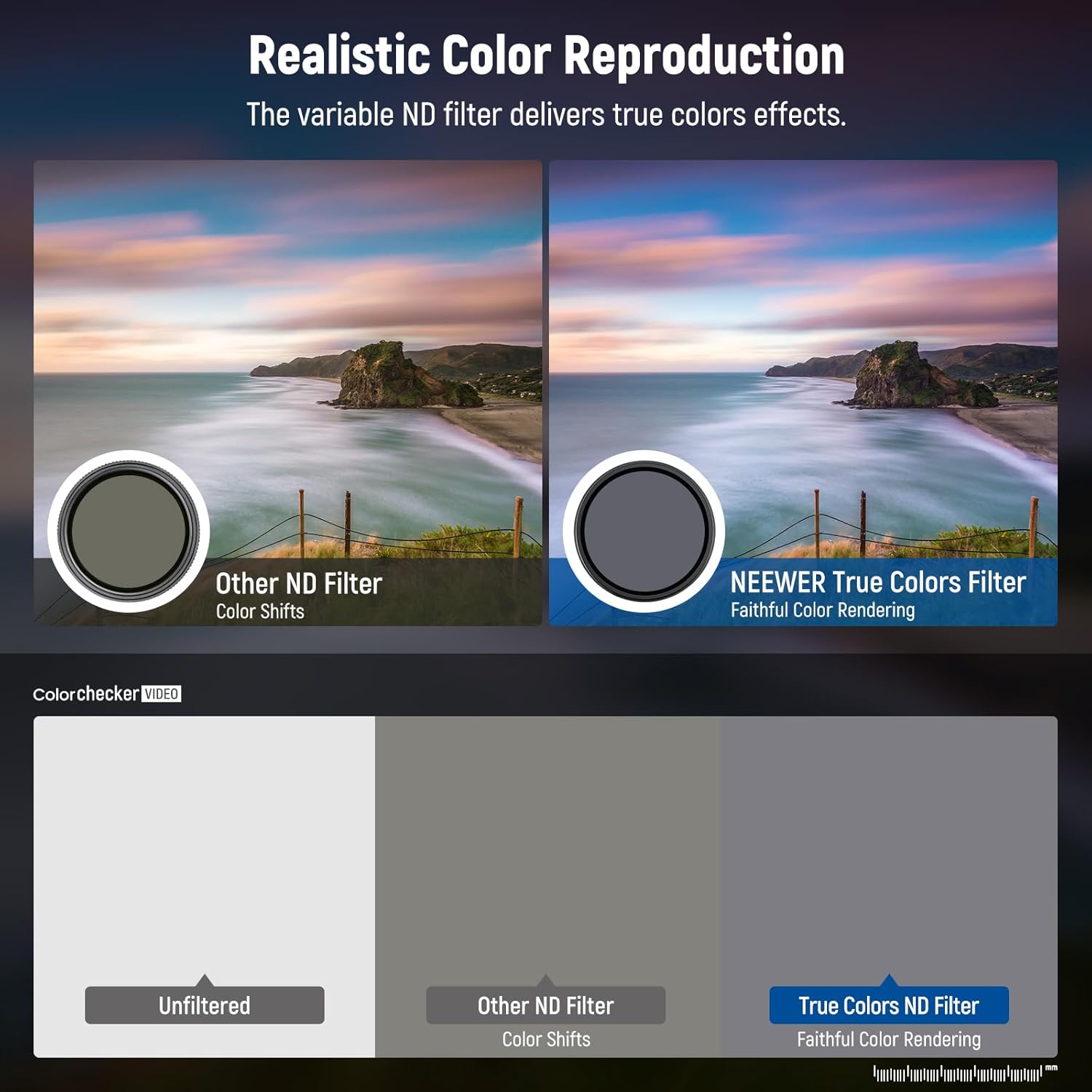
Neewer’s pitch focuses on “true colour” and reducing the need for colour correction later. Whether that’s critical for your workflow depends on your style—if you grade heavily, you may care less than a creator who wants colours to stay believable straight away.
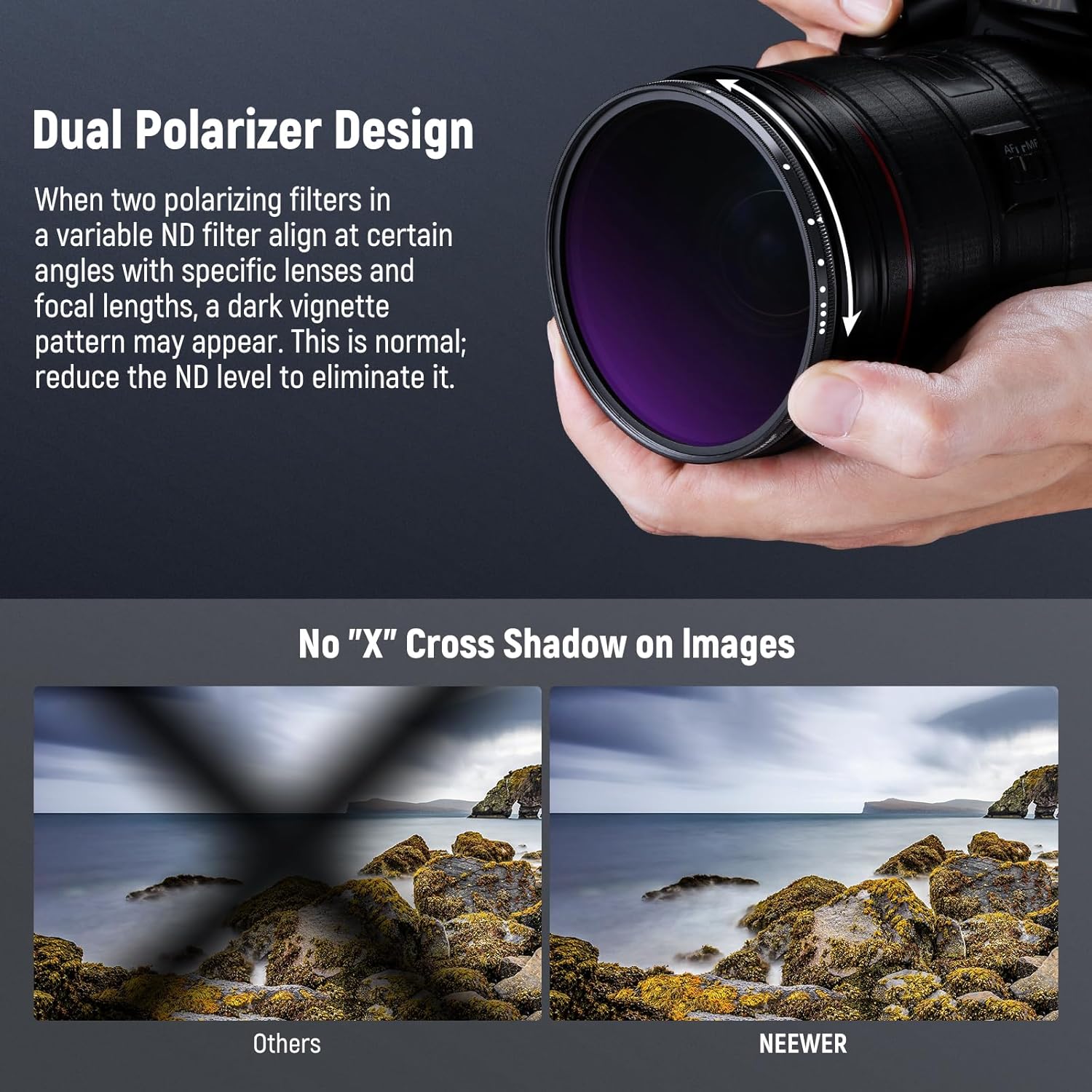
Worth noting: the base description flags that a dark X pattern may appear at maximum aperture. It’s described as a normal variable ND interaction with certain lenses and focal lengths, so it’s not something you can always avoid entirely.
Key features that can make a difference
A couple of design points are meant to help this filter survive real shooting days:
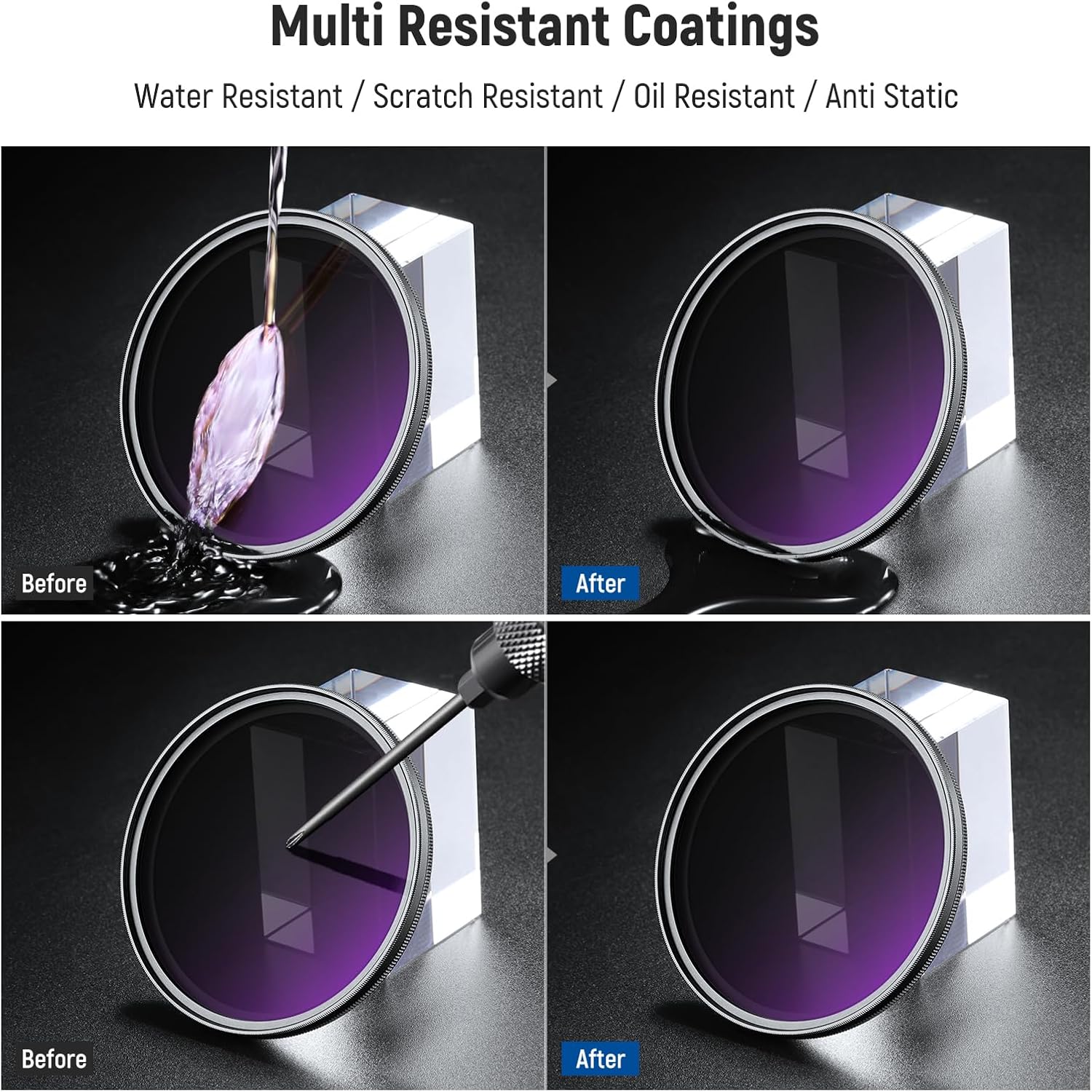
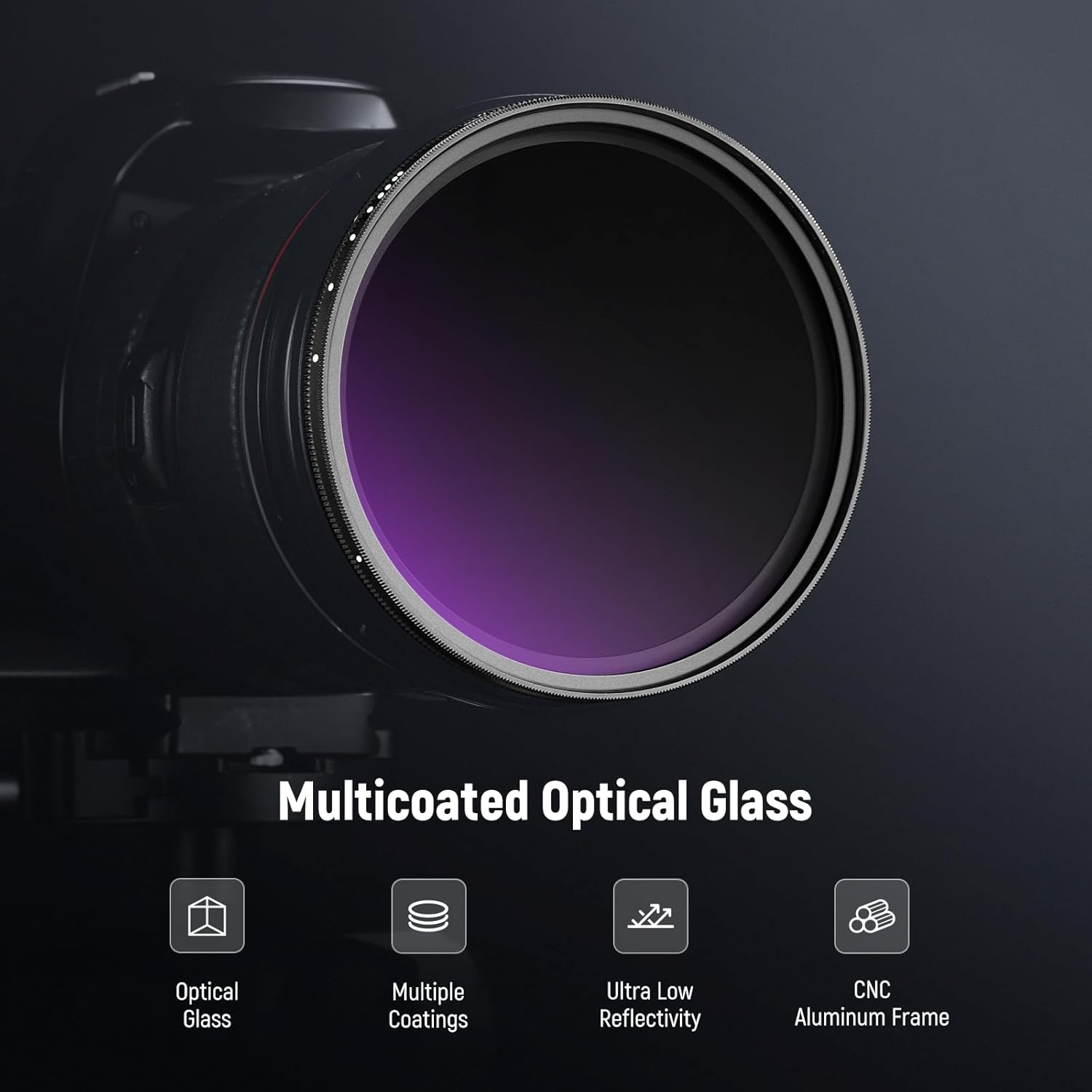
- Multiple coatings on both sides are said to resist water, fingerprints, smudging, and scratches.
- Slim aluminium frame is intended to reduce unwanted vignetting on wide-angle lenses.
- Black anodised aluminium construction should suit frequent mounting and handling.
- CNC precision threading is there for smoother installation and removal.
- An included cleaning cloth supports daily maintenance.
None of this guarantees there won’t be quirks with your specific lens—especially with variable NDs—but the build and handling details are the kind that affect whether a filter becomes “set-and-forget” gear.
ND adjustment: where the hard stops help (and where it can fall short)
The “ND8–2000” label tells you it’s meant to cover a wide range, and the rotation is the mechanism. Precise markings and limited hard stops are intended to make landing on the ND value you want more straightforward.
However, variable ND filters can behave differently depending on lens design, focal length, and how you’re framing. The product description explicitly warns about a dark X pattern at maximum aperture. It also implies that lens compatibility matters, so you shouldn’t assume this will behave the same way on every 82mm lens.
If you’re the sort of shooter who hates having to reframe or re-check footage, fixed NDs can be less fiddly. If you’re more about flexibility and you’re happy to test your settings, a variable ND like this can be a time-saver.
Compatibility and what to double-check before buying
This filter is stated as suitable for any camera lens with an 82mm filter size. The entry is clear that you should confirm fit before purchase.
In practice, you’ll find the lens filter diameter marked on the front or side of your lens, next to the ø symbol (diameter). If your lens doesn’t show 82mm, you’ll need a different filter size—don’t rely on it being “close enough”.
Also, if your work regularly uses maximum aperture on a wide range of lenses or focal lengths, factor in the note about the dark X pattern when shooting wide open.
Who it suits (and who should be cautious)
It’s a good fit if you want one adjustable ND filter for DSLR or mirrorless shooting, particularly for video or controlled exposure in changing light. The hard stops and markings are especially useful if you prefer repeatable settings rather than trial-and-error.
It might not be the best choice if you’re sensitive to variable ND artefacts, or if you often shoot at maximum aperture where the dark X pattern may show up. In those situations, you may want to consider alternatives like fixed ND options or a more consistent approach.
Quick FAQ
Does it replace multiple fixed ND filters?
It’s intended to act as a single adjustable filter across a stated ND8–2000 range (3–11 stops). Whether it fully replaces fixed ND filters for your workflow depends on how tolerant you are of variable ND behaviour at different focal lengths and apertures.
Will it affect colour?
The description claims realistic colour reproduction (“true colour effects”) and aims to eliminate the need for colour correction in post. Still, any ND filter can behave differently with different lenses and lighting, so it’s worth checking results for your own content.
What’s the dark X pattern note about?
The entry says a dark X pattern may appear at maximum aperture, described as a normal phenomenon from the interaction between the variable ND’s two polarising filters and certain lenses/focal lengths.
How do I know it will fit my lens?
Confirm that your lens accepts an 82mm filter (marked next to the ø symbol). Compatibility is based on that diameter.
When it makes sense
Buy the Neewer 82mm Variable ND Filter (ND8–2000) if you value flexible exposure control—especially for video—and you’re comfortable rotating to reach the ND value you want using the marked settings and limited hard stops. It’s also a sensible pick if you care about handling and protection, given the multiple coatings and slim frame aimed at reducing vignetting.
Skip it if your priority is consistent, artefact-free results at maximum aperture across many lenses or focal lengths, because the dark X pattern possibility is explicitly part of the setup. If you want zero surprises, a more fixed approach can be less stressful.
Ultimately, it’s worth it when you’ll actually use the adjustability day to day—and when you’ll take a minute to test your lens at your usual apertures before committing your best footage.