

Neewer HD True Colors 67mm Variable ND2–512 (1–9 stops) Magnetic ND32 Lens Filter
Product description
What it’s for (and why people buy a variable ND)
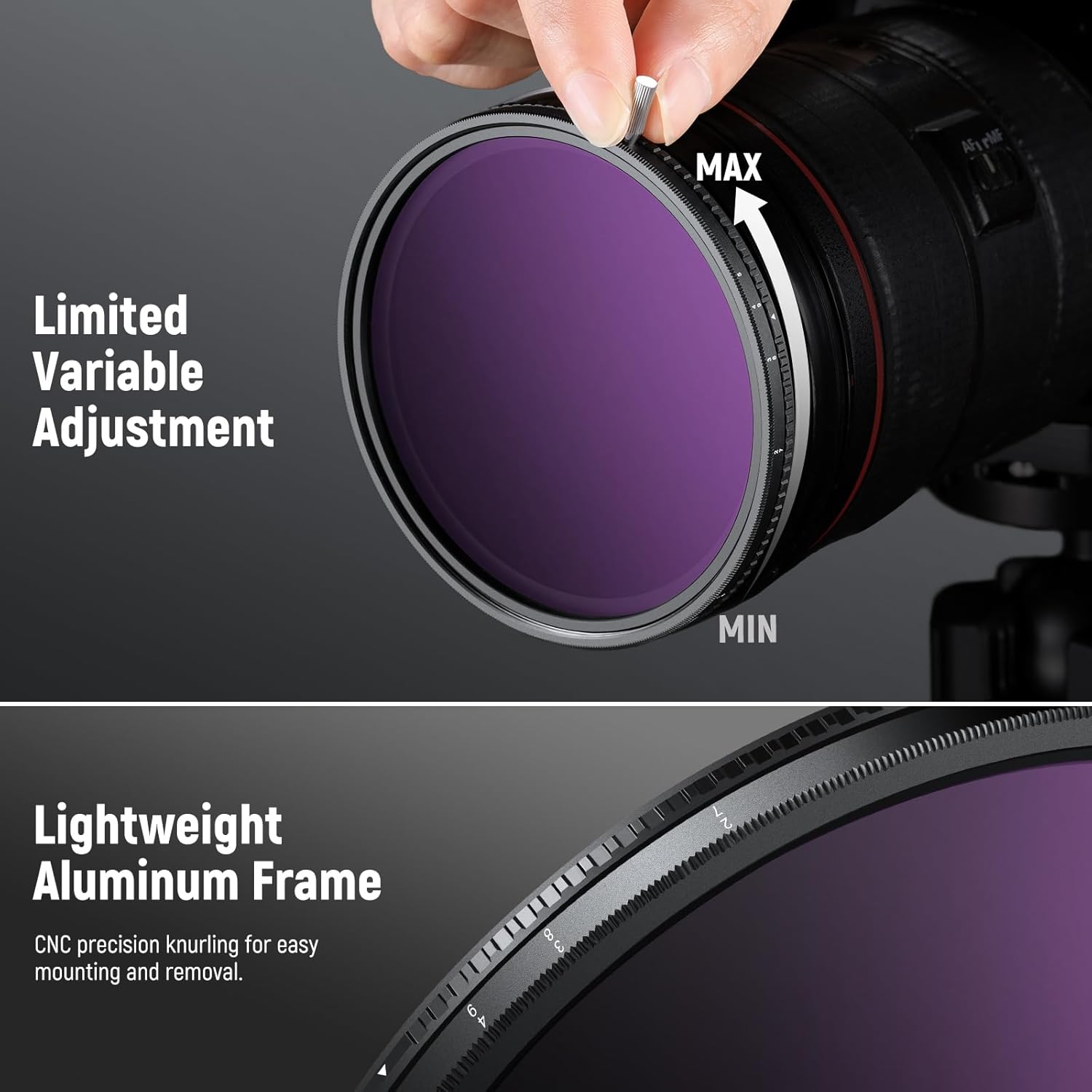
A variable ND filter is one of those upgrades that can feel a bit niche until you actually need it. In practice, it’s a practical way to control exposure without constantly changing filters. This Neewer HD True Colors 67mm variable ND2–512 is designed to help you keep shutter speed, aperture and exposure more predictable when the light is changing, so you can better shape motion—think rivers, waterfalls, and light trails—especially when you’re trying to get a smoother look.
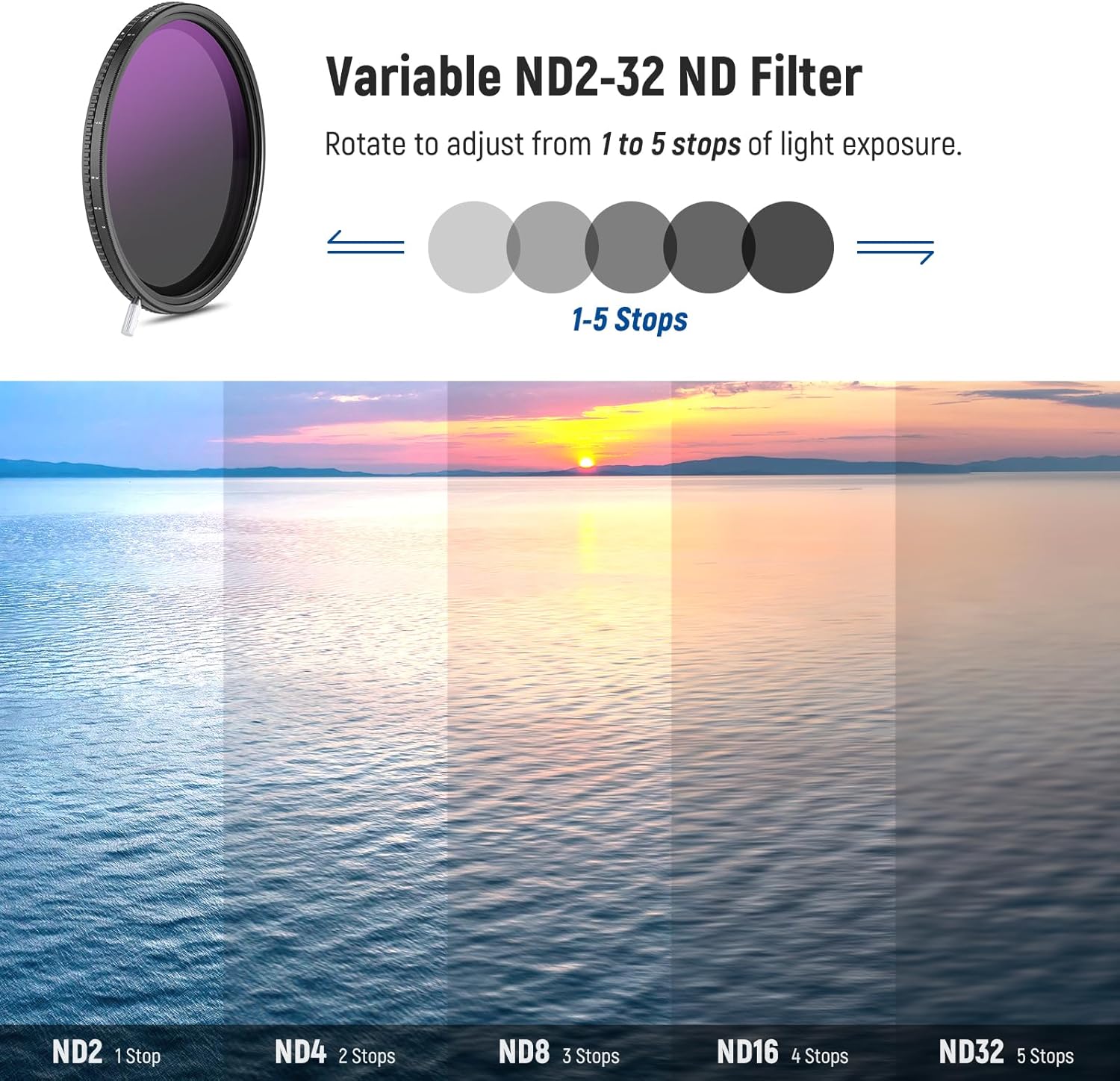
On paper, the big appeal here is the wide adjustment range “from ND2 to ND32”. The description also mentions 1–9 stops of light reduction, which is the kind of spread that can cover a lot of outdoor shooting situations.
The essentials: variable ND range and how the magnetic ND32 fits
The filter is set up as a variable ND from ND2 through ND4, ND8, ND16 to ND32. The numbers represent how much light is allowed through, so as the setting increases you’re reducing light entering the lens.
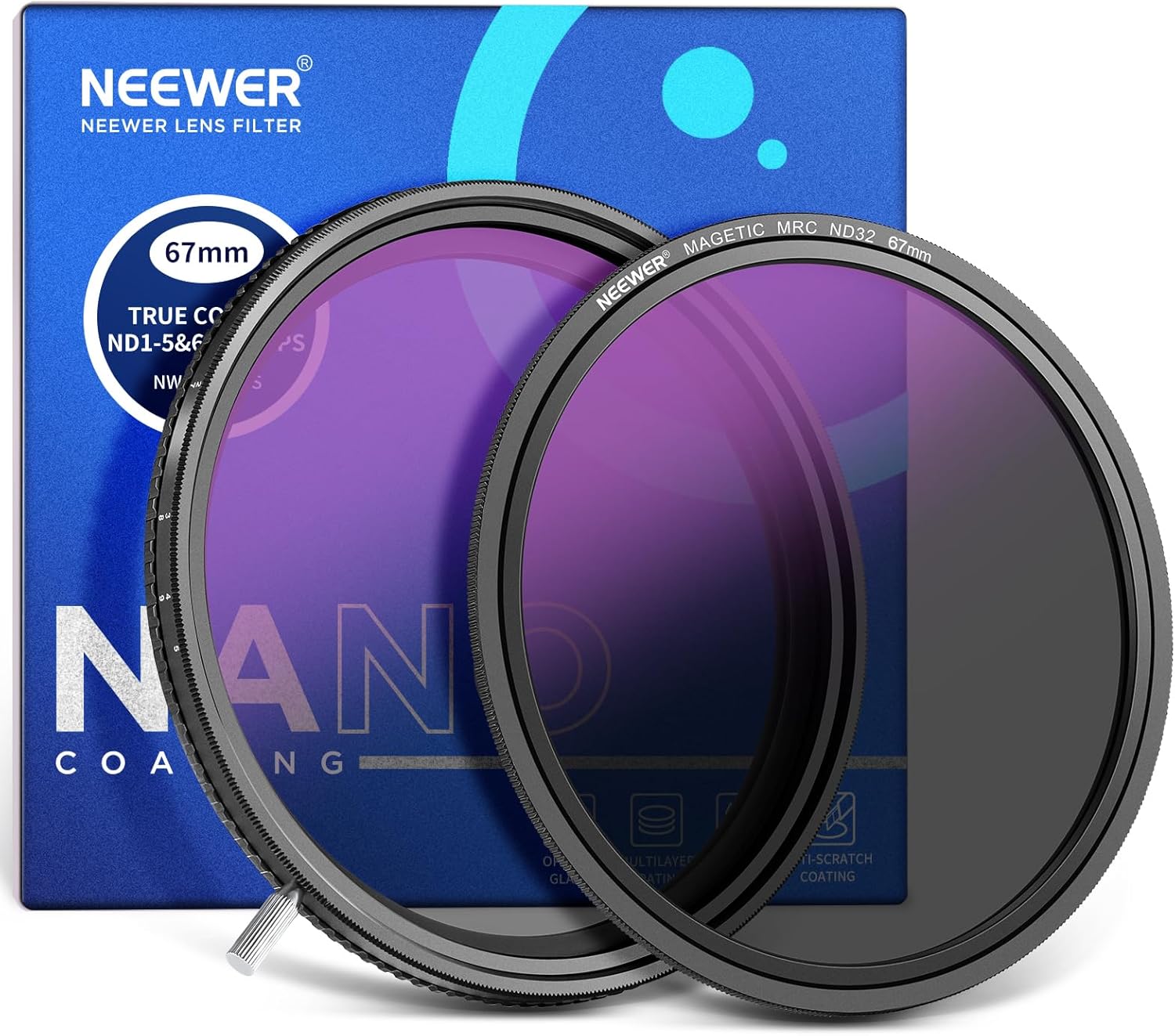
What’s slightly different is the included magnetic stackable ND32 filter. The idea is that you can add that ND32 to extend light reduction further—moving from the variable range up to a higher overall reduction for brighter conditions.
One limitation to keep in mind: the magnetic ND32 filter can’t be used on its own. It has to be stacked with the variable ND. Also, if you need to attach a lens cap, the magnetic ND32 filter may need to be removed.
So if your typical shooting includes bright daylight (and you’re chasing shutter speed control for video or long-exposure looks), it makes sense to consider a system like this rather than buying separate fixed-density filters.
Key features you’ll notice in use
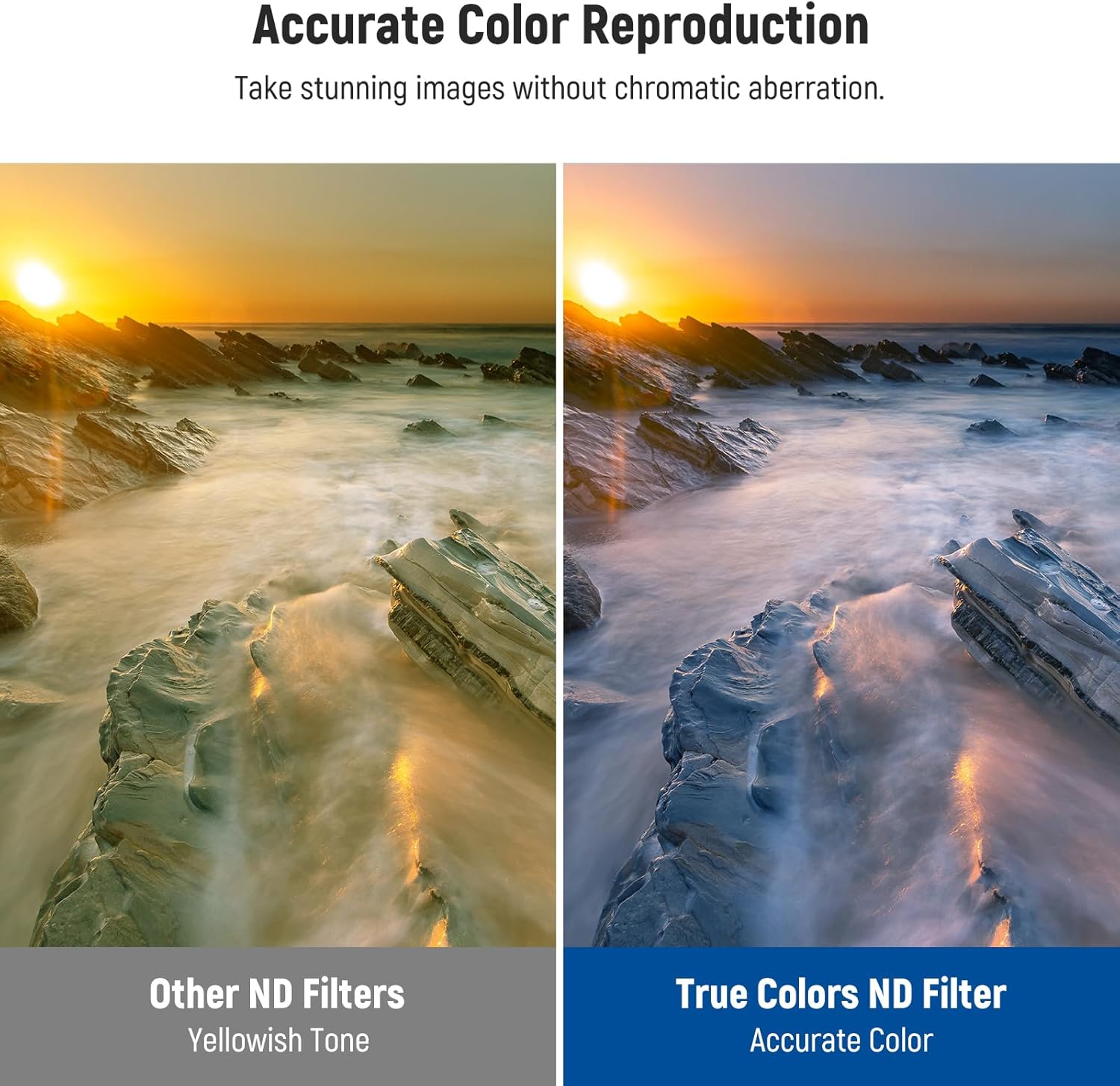
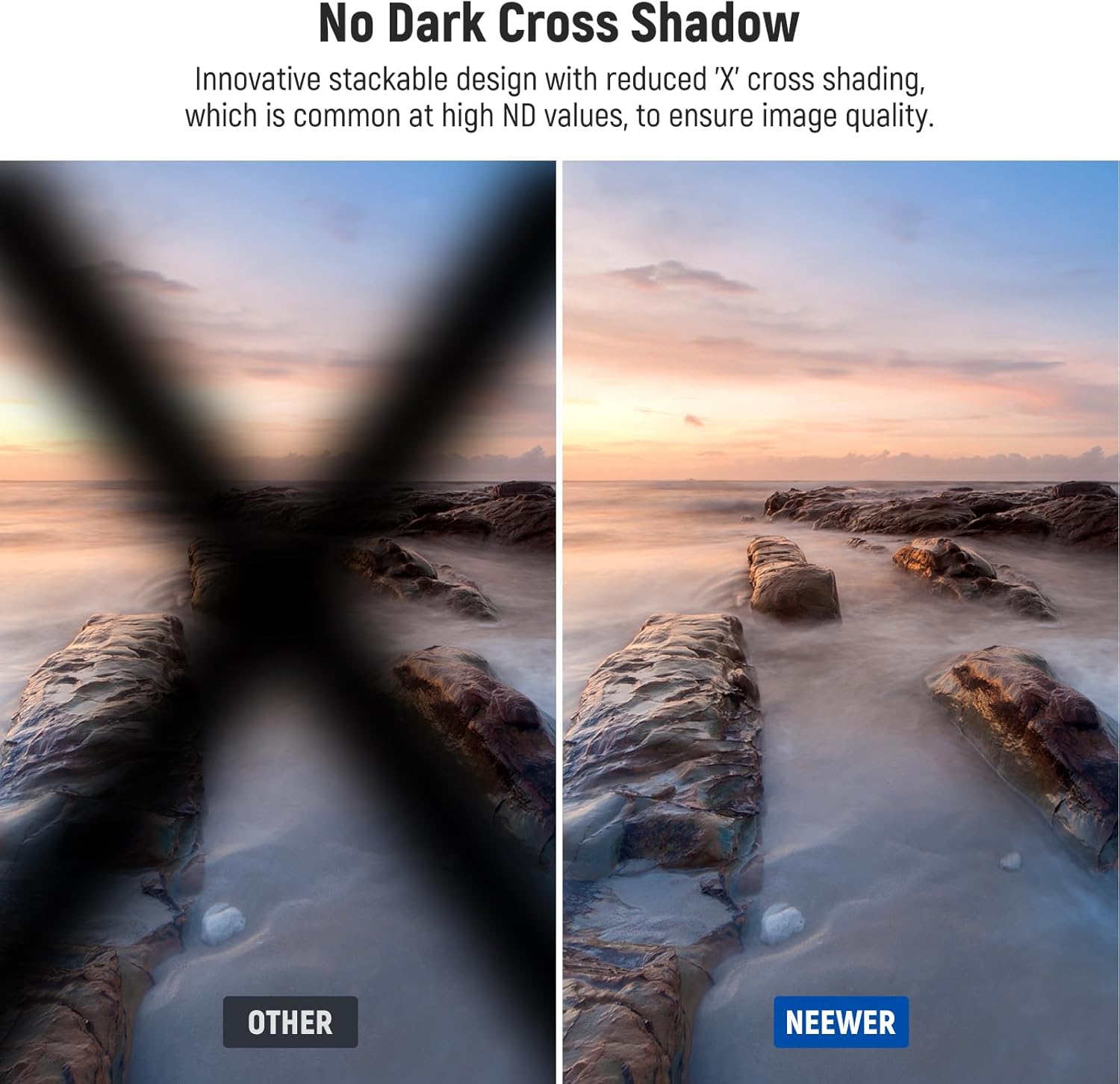
The “HD True Colors” positioning is aimed at reducing colour cast—specifically mentioning no yellow cast, and “true colors” for accurate reproduction. It also claims no X-cross shading and no colour shift, which is a big deal with higher-strength ND settings where cheaper filters can show uneven dark shapes.
There’s also a multi-layer nano coating approach (listed as 30 layers) intended to reduce glare and reflections, while protecting the filter surface against things like dust, oil, fingerprints and scratches. That’s useful day-to-day because filters live at the front of the lens and they pick up smudges quickly.
A small practical note in the description: vignetting may vary depending on lens design and focal length, and the advice is to rotate back if it occurs. In other words, don’t assume it will behave the same way on every lens.
What to watch before you buy
Before you commit, the most important check is the 67mm thread size compatibility. The filter is described as compatible with lenses that have a 67mm thread size. The thread size is typically marked on the front or side of your lens near the diameter symbol.
If your lens is a different size, this won’t be a direct fit, and you’d need to use a different size solution—which could defeat some of the value.
Also, variable ND filters are great for flexibility, but they’re not magic. If you’re particularly sensitive to edge vignetting or uniformity, it’s worth paying attention to the lens/focal length note. Some setups may show vignetting, and the “rotate back” suggestion indicates there’s some dependency on how it’s seated.
Everyday use examples (so you can picture it)
Imagine you’re shooting a waterfall on an overcast morning that slowly clears. With a fixed ND, you’d often end up adjusting your exposure settings manually or switching filters. With a variable ND, you can nudge the ND strength as the brightness changes.
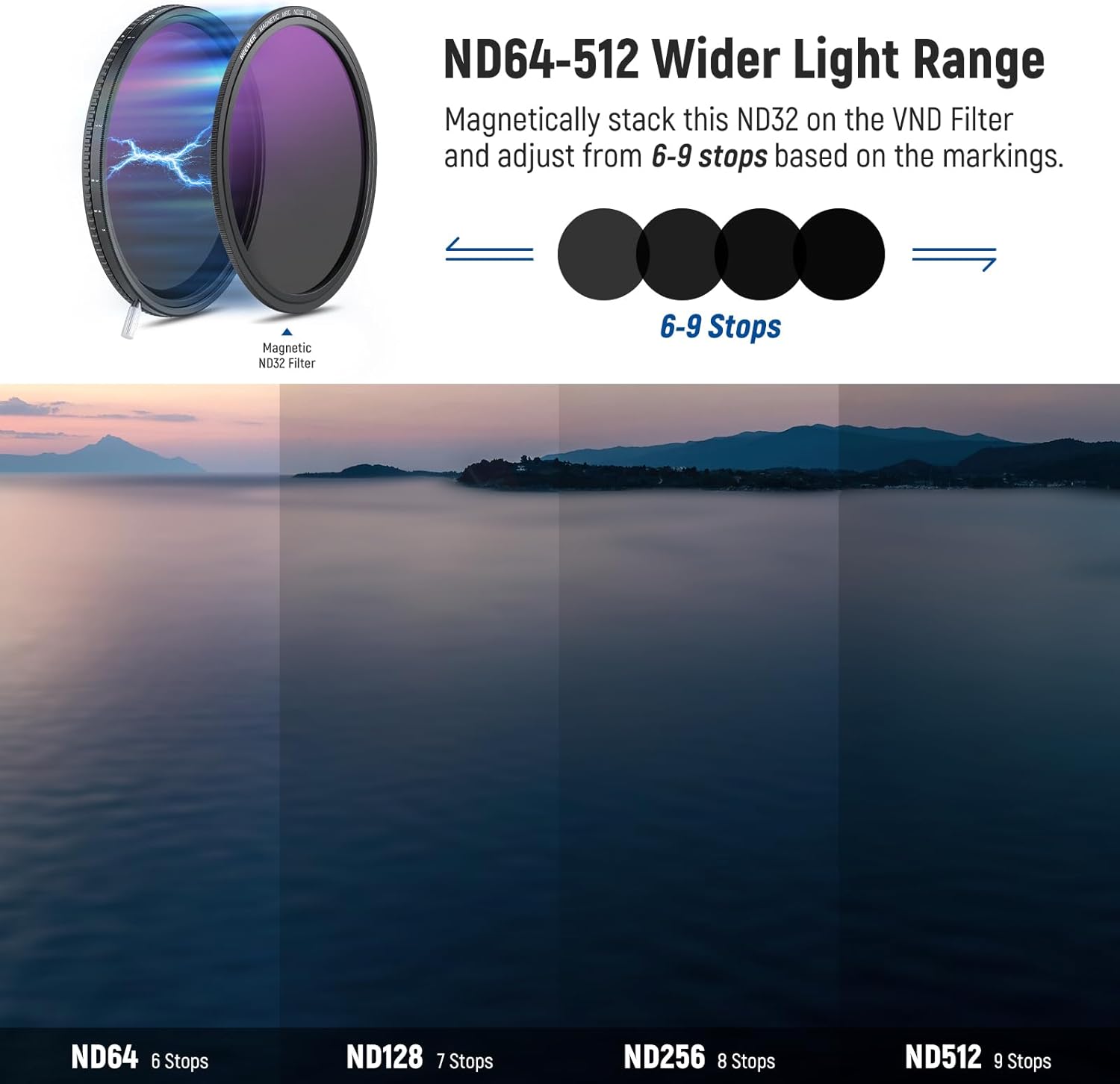
Or, for light trails at dusk moving into brighter conditions, the wide adjustment range could help you keep shutter speed in the sweet spot without taking the filter on and off every few minutes. If the scene gets too bright, that included magnetic ND32 is intended to let you stack extra reduction—though you will need to remember it can’t be used alone.
Who it’s best for (and who may want to skip it)
It’s a solid pick if you want a single variable ND solution for general outdoor long-exposure and motion control, and you want extra headroom for very bright light via the magnetic stackable ND32. It also suits people who care about colour neutrality and avoiding that “X cross” look that can show up on some NDs at higher strengths.
It may not be the best match if your priority is simplicity only—because the magnetic ND32 must be stacked, and it may need to be removed for a lens cap. And if your specific lens/focal length tends to show vignetting with filters, you may find this is a bit more fiddly than a straightforward fixed ND setup.
Is it worth it?
If you shoot outdoors and you regularly need exposure control for motion (video, waterfalls, rivers, light trails), the Neewer HD True Colors variable ND2–512 approach makes sense on paper: a broad adjustment range plus an option to stack for brighter light.
You should consider it more carefully if you don’t shoot scenarios where you need that extra range, or if lens compatibility and vignetting are known pain points for your lenses. In that case, you may prefer a simpler route—either fewer moving parts or a setup that doesn’t require stacking.
Mini FAQ
Is the magnetic ND32 filter usable on its own?
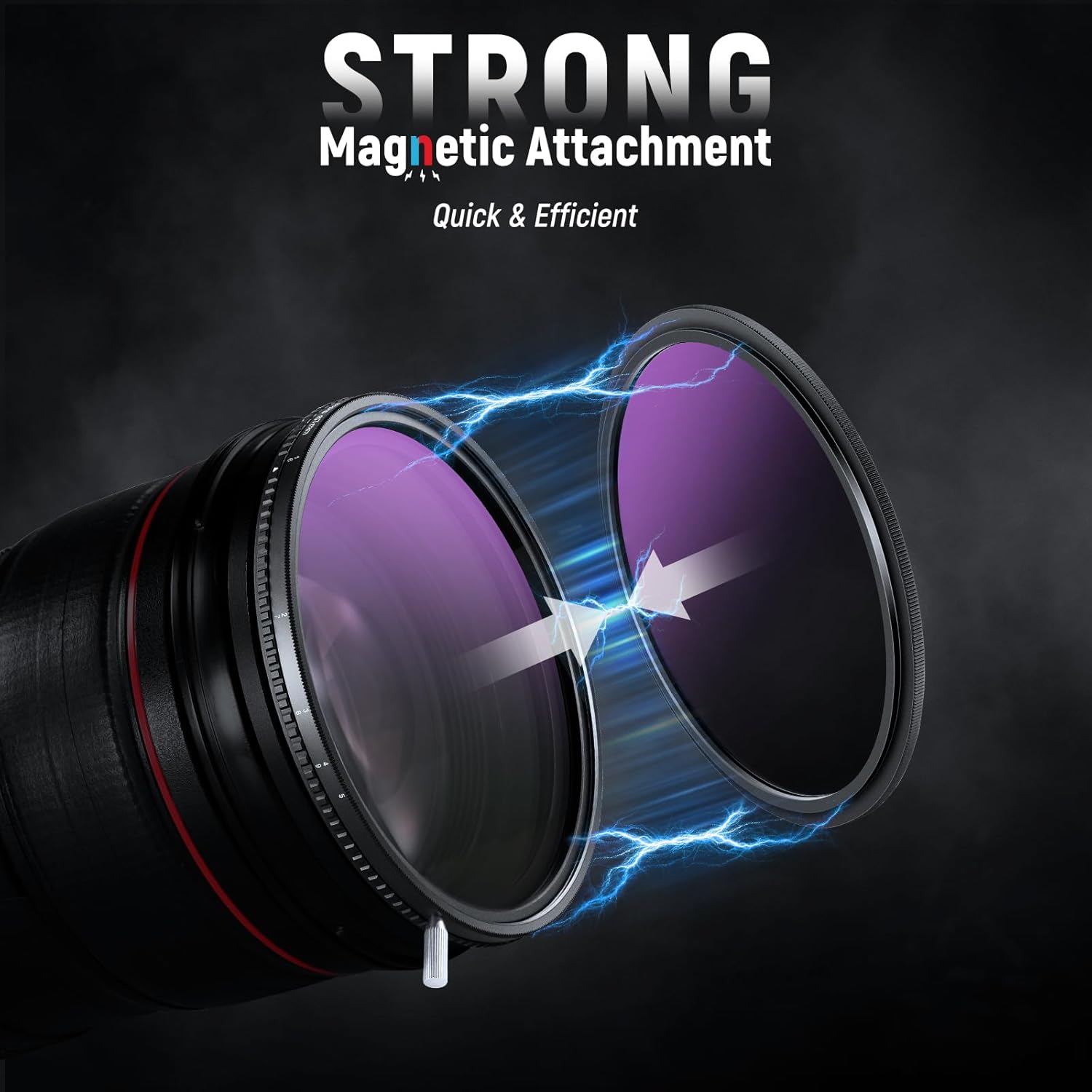
No. The magnetic ND32 filter is described as needing to be stacked with the variable ND, it can’t be used alone.
Will it definitely avoid colour cast?
The filter is described as using “true colors” with no yellow colour cast. That’s the promise, but like any ND, real-world results can vary with lens design and how the filter is seated.
Can I use a lens cap with the magnetic ND32 attached?
The description says you may need to remove the magnetic ND32 filter if you need to attach a lens cap.
What size lens does this fit?
It’s designed for lenses with a 67mm thread size. You should confirm your lens filter thread size before buying.
What about vignetting?
The description notes that vignetting can occur depending on lens design and focal length, and suggests rotating back if it happens.