




MEIRIYFA 5‑Pin XLR Threaded Solder Connector
Product description
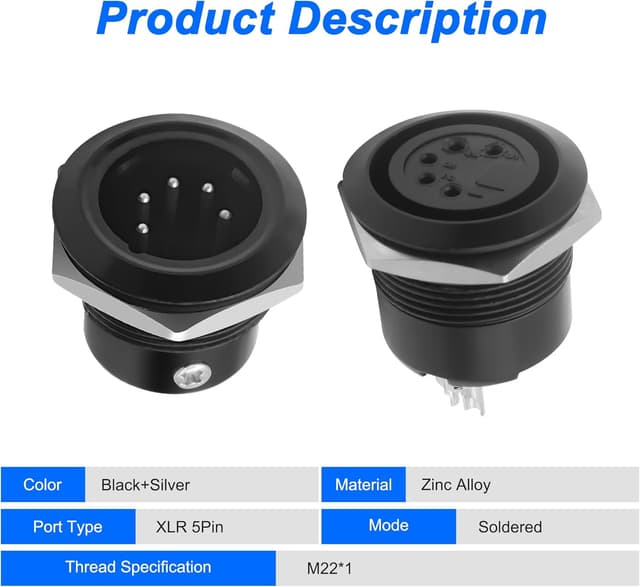
This 5-pin XLR panel mount connector is built for routing balanced audio and DMX signals on stage and in studios, offering a threaded fixing and solder terminals for a secure, permanent connection. It brings a metal shell and nickel-plated contacts together to support clear signal transfer when setting up mixers, speakers or lighting control racks.
Key Points

The connector is designed to be mounted through a panel with a round base and fixed by an M22 x 1 nut, making it straightforward to install in wall plates or equipment racks. It has solder-type pins which suit custom wiring tasks and professional cable assemblies. The zinc alloy body helps with mechanical strength while the nickel-plated contacts aim to resist corrosion, maintaining good contact over time. 🔧

This unit can be used across a range of audio and lighting equipment. For DMX lighting runs, live sound rigs or studio patch bays it provides the familiar XLR interface and a compact footprint that blends into control surfaces. Note that the recommended panel thickness is up to 8 mm according to the manufacturer.
Technical Specifications
- Name: MEIRIYFA 5 Pin XLR Threaded Fixing Solder Connector
- Body material: zinc alloy
- Contacts: nickel-plated, solder terminals
- Mounting thread: M22 x 1, panel cut-out approx. φ22.5 mm
- Maximum panel thickness: ≤8 mm

Usage Recommendations
For reliable connections, use solder with good wetting to the copper conductors and verify each pin against your wiring diagram before tightening the nut. When cutting the panel hole aim for a clean φ22.5 mm aperture to ensure the connector seats flush and the nut threads engage fully. If accessing dense patch bays, consider labelling the cable side to avoid confusion during quick changes. 🎚️
A practical nuance to bear in mind is that solder terminals provide a permanent join which is excellent for fixed installations but less convenient if frequent cable swapping is required. Also, while the nickel plating improves contact life, severe corrosive environments may still require additional protection or periodic inspection according to site conditions.