

JSAUX Professional Guitar Cable 3M – Braided 1/4 Inch Instrument Lead
Reviews
Price
Product description
What it is
The JSAUX Professional Guitar Cable is a 3-metre, unbalanced TS instrument lead designed for electric guitars and a range of other gear. It stands out on paper for its thicker build and multiple insulator shields aimed at reducing interference, static and crackle to help you hear a steadier, cleaner signal.
How it’s built
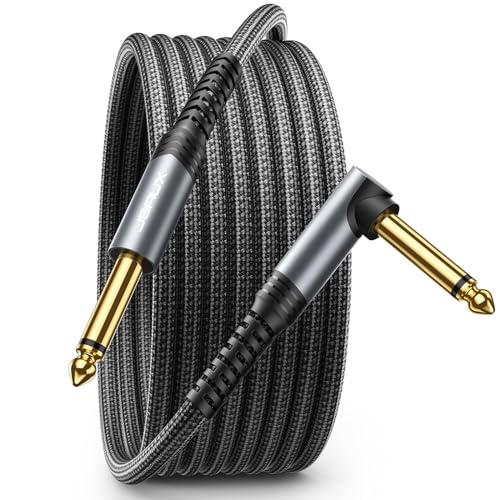
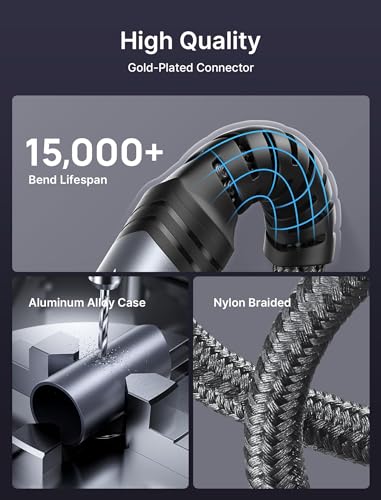
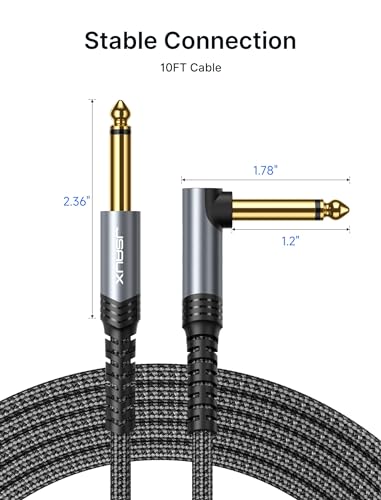
On the hardware side, the cable uses oxygen-free copper conductors to promote stable signal transmission and minimise hum. The exterior is wrapped in premium nylon braid, which contributes to durability and helps prevent tangling in busy practice rooms or on stage. A practical feature is the included strap for winding and storing the lead when not in use. One end of the cable is right-angled, the other straight, which can be handy for arranging cables around stands or backlines.
What it works with
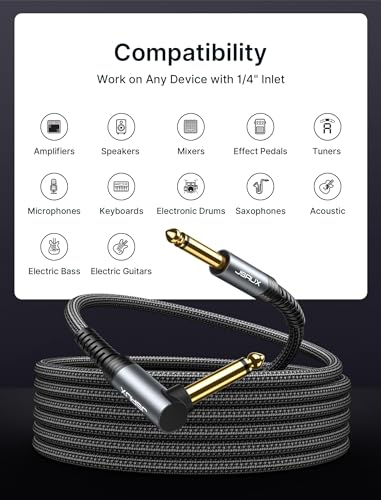
This is a versatile tool for musicians and audio setups. It’s designed to be compatible with electric guitars, basses, amps, drums, keyboards, mandolins and more such as mixers, speakers or microphones. It’s important to note that, as an unbalanced TS cable, it is intended for guitar and instrument use, if you’re pairing with different equipment, ensure you’re not requiring a balanced TRS configuration.
Strengths worth noting
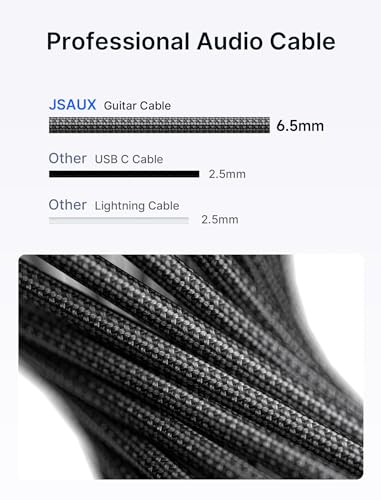
On the positive side, the thicker construction and dual-shield approach aim to minimise interference, which can help deliver a crisper tone with less crackle in environments with multiple electronics. The nylon braiding adds real-world durability and a degree of tangle resistance that many players will appreciate during gigging or practice. The right-angle/straight combination is a practical configuration for on-stage or studio setups where space around a guitar or pedalboard is at a premium.
Potential limitations
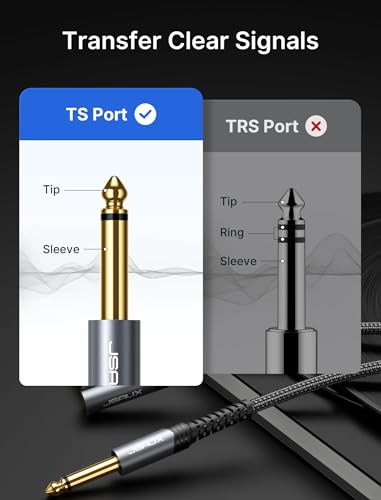
Not everything is perfect for every player. If your sound chain relies on balanced connections or you need TRS for a particular interface, this TS-only design may not be ideal. The cable is tailored for instrument-level signals, users should not expect it to replace specialised pro audio cables in other parts of the system. Some players may notice that the overall sensing of tone is influenced by the cable choice only in conjunction with other components, so it’s wise to test with your exact gear before committing.
Who it’s for
If you’re after a robust, mid-length instrument lead for regular gigging or home studio use and you value durability, reduced noise and easier cable management, this JSAUX cable could be a solid match. It’s particularly well-suited for electric guitars, but its broad compatibility makes it convenient for multi-instrument setups where a reliable unbalanced lead is appropriate.
When to consider alternatives
If you prioritise a balanced connection (TRS) or you need an extremely flexible coil-free feel, you might prefer a different design. Also, if you require a longer or shorter run, or a cable that prioritises ultra-low capacitance for particular pedalboard configurations, there are other options that could better align with those technical preferences.
What to check before buying
- Verify you’re using a TS instrument input and not a TRS mic/line input. This matters for signal compatibility and tone.
- Consider your usual playing environment: on-stage glare and stage rigs can benefit from the shielded design, but test in your space to confirm the level of noise reduction you experience.
- Inspect the connector orientation and body to ensure the right-angle end doesn’t obstruct pedalboard layout or guitar strap hardware.
Practical usage example
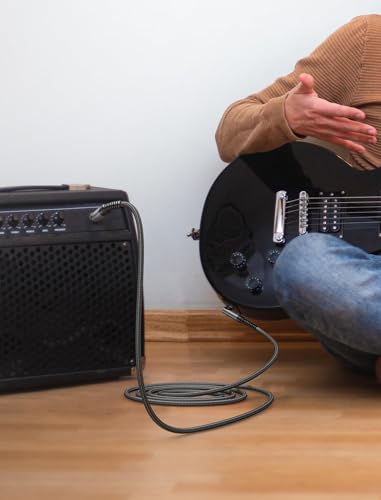
Imagine a rehearsal space with several rigs and a drum kit nearby. You connect your electric guitar to the amp with this 3-metre lead, the thicker shielding helps cut out stray crackle while the braided jacket stands up to daily handling and winding. When you’re packing away, the strap makes it quicker to reel in the cable without it turning into a tangle of tangles, which saves time between songs.
What matters most
If you prioritise a sturdy, stage-ready instrument cable with practical storage and consistent signal integrity for everyday guitar use, this cable delivers on those fronts. It won’t be the best choice if you need TRS, or if your setup demands a cable designed for extremely long runs with precision-controlled impedance.
Final decision
Is it worth it? Worth considering if you want a rugged, mid-length instrument cable that prioritises durability and ease of use for guitar-focused setups. It’s not perfect for every scenario, but for many players it provides a reliable, no-nonsense option that fits common practice or live use without breaking the bank.
FAQ
- What devices can I plug this into? Electric guitars, basses and other instrument-level inputs, plus amps and speakers that accept TS instrument cables.
- Does the cable reduce hum? The design aims to reduce static and crackle through shielding and copper conductors, but results will vary with environment.
- What about compatibility with TRS gear? This is an unbalanced TS lead, for balanced connections you’d need a TRS-type cable.